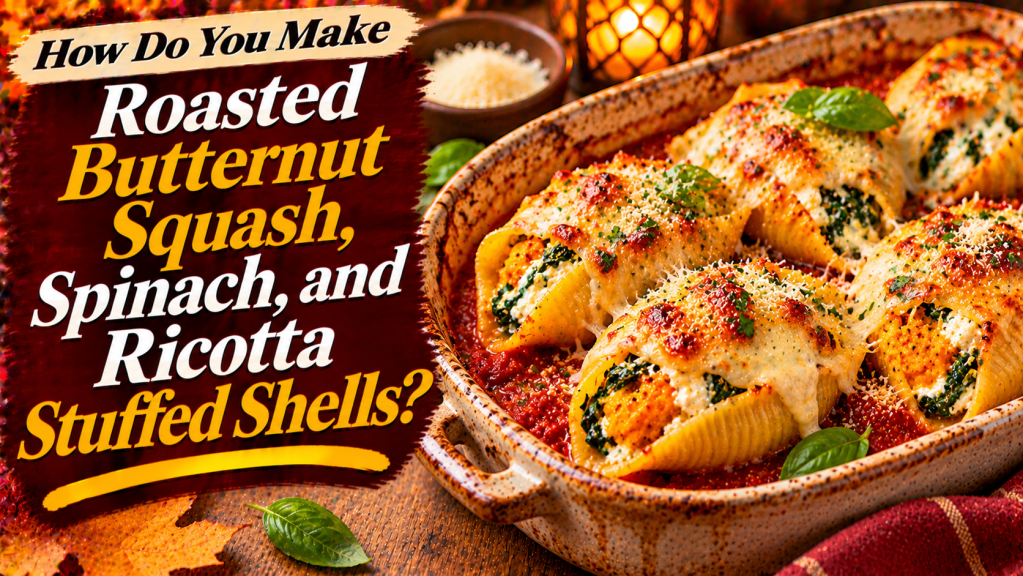
Roasted butternut squash, spinach, and ricotta stuffed shells combine tender jumbo pasta, creamy cheese, sweet roasted squash, and a savory tomato sauce in a bubbling baked casserole. The filling balances naturally sweet squash with garlic, spinach, and Parmesan, making this dish a comforting vegetarian dinner for cool evenings or holiday gatherings.
Roasting the squash instead of boiling it concentrates its flavor and keeps excess water out of the filling. Squeezing the spinach dry is equally important: wet greens can cause the stuffed shells to become watery. A layer of tomato sauce beneath and above the pasta keeps the shells tender as they bake.
Recipe at a Glance
Servings: 6. Prep time: 30 minutes. Squash roasting: 25–35 minutes. Final baking: 25–30 minutes. Oven: 400°F for roasting, 375°F for baking. Equipment: rimmed baking sheet, large pasta pot, colander, mixing bowls, 9-by-13-inch baking dish, and spoon.
Ingredients
Use 20–24 jumbo pasta shells (plus a few extra in case some tear), approximately 3 cups peeled and diced butternut squash, 1 tablespoon olive oil, ½ teaspoon dried sage, ½ teaspoon kosher salt divided, ¼ teaspoon black pepper, 1 cup cooked chopped spinach squeezed very dry, 15 ounces whole-milk ricotta, 1 large egg, ¾ cup grated Parmesan divided, 1 cup shredded mozzarella divided, 2 minced garlic cloves, ¼ teaspoon ground nutmeg if desired, and 3 cups marinara sauce.
Fresh parsley or basil may be used for garnish. The recipe contains wheat, milk, and egg. Check packaged sauces and cheese for ingredients that may matter to guests with allergies. For a strictly vegetarian meal, use Parmesan-style cheese made without animal rennet.
Choosing the Best Butternut Squash
Look for a firm squash that feels heavy for its size and has no mold, soft spots, or leaking areas. A whole squash can be peeled, seeded, and diced, or you can use packaged fresh squash cubes for convenience. Cut the cubes into approximately ¾-inch pieces so they roast evenly and are easy to fold into the ricotta mixture.
If peeling a whole squash, stabilize it on a cutting board before cutting, use a sharp heavy knife carefully, and remove the seeds with a spoon. Avoid pieces that are so large they make filling the shells difficult. Frozen squash may work when thawed and drained, but it may release more moisture and produce a softer filling.
How to Roast Butternut Squash
Preheat the oven to 400°F. Toss the squash cubes with olive oil, dried sage, a little salt, and black pepper. Spread them on a rimmed baking sheet in one layer. Roast for approximately 25–35 minutes, turning halfway through, until tender with golden edges.
Allow the squash to cool for several minutes. Mash about half the roasted cubes with a fork, leaving the remaining pieces intact. This creates a filling with both creamy body and small bites of squash. If the pieces look wet, let steam escape before mixing with cheese.
How to Prepare Spinach for the Filling
You can use freshly sautéed spinach or frozen chopped spinach. For fresh spinach, cook until wilted, cool, chop, and squeeze out as much liquid as practical. For frozen spinach, thaw completely in the refrigerator or according to the package, then press firmly in a clean towel or fine-mesh strainer.
The spinach should be moist but not dripping. Removing excess water is one of the most important steps for a thick filling that stays inside the pasta shells. A cup of thoroughly drained spinach is enough to provide color and a mild earthy flavor without overwhelming the squash.
How to Make Roasted Butternut Squash, Spinach, and Ricotta Stuffed Shells
Prepare the squash first, then boil the pasta while the vegetables cool. Assemble the casserole with a generous layer of sauce so the shell edges do not dry out.
Step 1: Cook the jumbo shells
Bring a large pot of salted water to a boil. Add the jumbo shells and cook about two minutes less than the package’s full recommended time so they remain slightly firm. They will finish cooking in the oven. Stir gently to avoid sticking, drain carefully, and cool enough to handle. Do not rinse aggressively, which can tear delicate shells.
Step 2: Mix the ricotta filling
In a large bowl, combine ricotta, egg, ½ cup Parmesan, ½ cup mozzarella, minced garlic, nutmeg if using, and a little black pepper. Fold in the squeezed spinach and prepared roasted squash. Mix gently until the filling is cohesive, with some squash chunks still visible.
Step 3: Taste the seasoning safely
Because the filling contains raw egg, do not taste it directly. Instead, check the seasonings of the roasted squash and tomato sauce beforehand, or cook a small spoonful of filling in a skillet until thoroughly cooked before tasting. Adjust salt in the remaining mixture if needed.
Step 4: Prepare the baking dish
Reduce the oven temperature to 375°F. Spread approximately 1½ cups marinara evenly across the bottom of a 9-by-13-inch baking dish. This sauce layer prevents the shells from sticking and supplies moisture during baking.
Step 5: Fill the shells
Hold each cooked shell open and spoon in approximately 1½ to 2 tablespoons of filling, depending on its size. Arrange the shells opening-side up in the sauced dish. Do not overpack the pasta because it can split as it heats. Place the shells close together without stacking them.
Step 6: Add sauce and cheese
Spoon the remaining marinara over and around the shells, covering exposed pasta edges while leaving portions of the filling visible. Sprinkle the remaining ½ cup mozzarella and ¼ cup Parmesan across the top. Cover the dish loosely with foil, ensuring the foil is not pressed into the cheese.
Step 7: Bake until bubbling
Bake covered for approximately 20 minutes, then remove the foil and bake another 5–10 minutes until the sauce bubbles and cheese is melted and lightly golden. The casserole should reach 165°F in the center, including the egg-containing filling. A thermometer gives a more reliable result than color alone.
Step 8: Rest and serve
Allow the casserole to stand for five to ten minutes before serving. This helps the filling set and makes the shells easier to lift intact. Garnish with fresh basil or parsley and offer extra Parmesan at the table.
How to Keep Stuffed Shells From Becoming Watery
Three ingredients can introduce unwanted moisture: squash, spinach, and ricotta. Roast squash until tender rather than simmering it in water. Squeeze cooked spinach firmly. If ricotta looks unusually watery, let it drain briefly in a fine-mesh strainer before mixing.
Be equally careful with the pasta. Shells that are overboiled can become fragile and release additional starch into the sauce. Cook them just short of tender and allow the oven to finish the job. A thick but spoonable marinara is more suitable than a very watery tomato sauce.
Choosing the Best Ricotta and Cheese
Whole-milk ricotta produces a richer filling than low-fat ricotta and generally feels creamy. Part-skim ricotta also works, but its texture may be slightly drier or grainier. Mozzarella contributes the melted cheese finish, while Parmesan adds salty, savory depth.
Grate cheese finely so it distributes throughout the filling. If you prefer stronger flavor, substitute a small amount of Pecorino-style cheese, accounting for its saltiness and whether it is made with animal rennet. Fresh mozzarella contains more moisture than low-moisture shredded mozzarella, so use it sparingly to avoid excess liquid.
Homemade Versus Store-Bought Marinara
A good jarred marinara makes this recipe practical on busy evenings. Choose one with a tomato-forward flavor that is not overly sweet. Homemade marinara is also excellent; simmer it until it is thick enough to coat a spoon before using it in the casserole.
For a creamier variation, use a modest amount of béchamel or a tomato-cream sauce instead of some marinara. Keep enough liquid in the dish to prevent the shell edges from hardening, but avoid flooding the pasta. The natural sweetness of butternut squash pairs well with the acidity of tomatoes.
Delicious Variations
For a more savory filling, sauté chopped mushrooms with garlic until their moisture evaporates, then fold them into the ricotta. A few finely chopped fresh sage leaves can intensify the autumn flavor. For a spicy variation, add a small pinch of crushed red pepper to the marinara.
If you want a different vegetable, roasted sweet potato may replace the squash, although it is often sweeter and denser. Chopped kale can substitute for spinach after cooking until tender and squeezing out excess moisture. For a gluten-free version, use a suitable gluten-free jumbo pasta or lasagna-style roll-ups and follow that product’s cooking guidance.
For an egg-free filling, omit the egg and add a little extra finely grated cheese or a suitable binder. The texture may be softer, so allow additional resting time after baking. A dairy-free version requires plant-based ricotta, mozzarella, and Parmesan alternatives; choose products designed for baking and check how they release moisture.
What to Serve With Stuffed Shells
A crisp green salad dressed with lemon vinaigrette balances the rich pasta and cheese. Roasted broccoli, green beans, or sautéed mushrooms are also flavorful accompaniments. Garlic bread or warm crusty bread is an option for soaking up sauce, although the pasta already provides a substantial starch.
For a holiday dinner, serve smaller portions alongside roasted vegetables and a protein dish if desired. The orange squash and green spinach offer attractive color, while the tomato sauce provides familiar comfort-food flavor. Use a wide spatula or serving spoon to lift shells without breaking them.
Make-Ahead Instructions
You can roast the squash and prepare the drained spinach up to two days ahead, keeping each in a covered refrigerator container. Cook the pasta and assemble the entire casserole up to one day ahead, cover securely, and refrigerate. If assembling cold ingredients, allow additional baking time and verify that the center reaches 165°F.
For a freezer-friendly option, assemble the shells in a suitable freezer-safe baking dish without baking. Wrap tightly and freeze for up to two months for best quality. Thaw in the refrigerator before baking, then heat thoroughly. Avoid placing a very cold glass baking dish into a hot oven because thermal shock can cause breakage.
Storage and Reheating
Refrigerate leftovers in shallow sealed containers within two hours of cooking, or within one hour if the surroundings are hotter than 90°F. Use within three to four days. Reheat covered at 350°F with a splash of marinara or water until the center reaches 165°F.
Individual servings can be microwaved covered in a microwave-safe dish until thoroughly heated, with a brief resting period for even temperature. Freezing cooked shells is possible, but the ricotta may become slightly grainier after thawing. Thaw frozen portions safely in the refrigerator.
Frequently Asked Questions
Can I use frozen butternut squash?
Yes. Thaw and drain it thoroughly, then roast or sauté to remove excess moisture before mixing with ricotta.
Can I make stuffed shells without spinach?
Absolutely. Omit the spinach or replace it with well-drained cooked kale or mushrooms. The squash and cheese still make a flavorful filling.
Why are my shells falling apart?
They may have been overcooked during boiling or handled too roughly. Cook just shy of tender, drain gently, and fill once cool enough to handle.
Can I use cottage cheese instead of ricotta?
Yes. Drain cottage cheese if watery and pulse briefly in a blender for a smoother consistency. The flavor and texture will differ slightly.
Can I assemble the dish the night before?
Yes. Cover and refrigerate, then bake until the center reaches 165°F. A cold casserole usually takes longer to heat.
Can I freeze the stuffed shells?
Yes. Assemble in a freezer-safe dish and wrap well. Thaw in the refrigerator before baking for more predictable heating.
Final Thoughts
Roasted butternut squash, spinach, and ricotta stuffed shells combine familiar Italian-inspired comfort food with the flavors of fall. Roast the squash until sweet and tender, drain the spinach carefully, and fill slightly undercooked shells with a creamy cheese mixture. Bake in marinara until bubbling and let rest briefly for a satisfying meal with a balanced mix of savory and seasonal flavors.
Leave a Reply