Author: Brett Murphy

  • Healthy Recipe of the Day: Lemon Herb Chicken Quinoa Bowls

    Healthy Recipe of the Day: Lemon Herb Chicken Quinoa Bowls

    Advertisements

    Healthy eating doesn’t have to mean bland chicken, boring salads, or meals that leave you hungry an hour later. Some of the best healthy recipes are the ones that combine lean protein, whole grains, colorful vegetables, fresh herbs, and a flavorful homemade sauce into one satisfying meal.

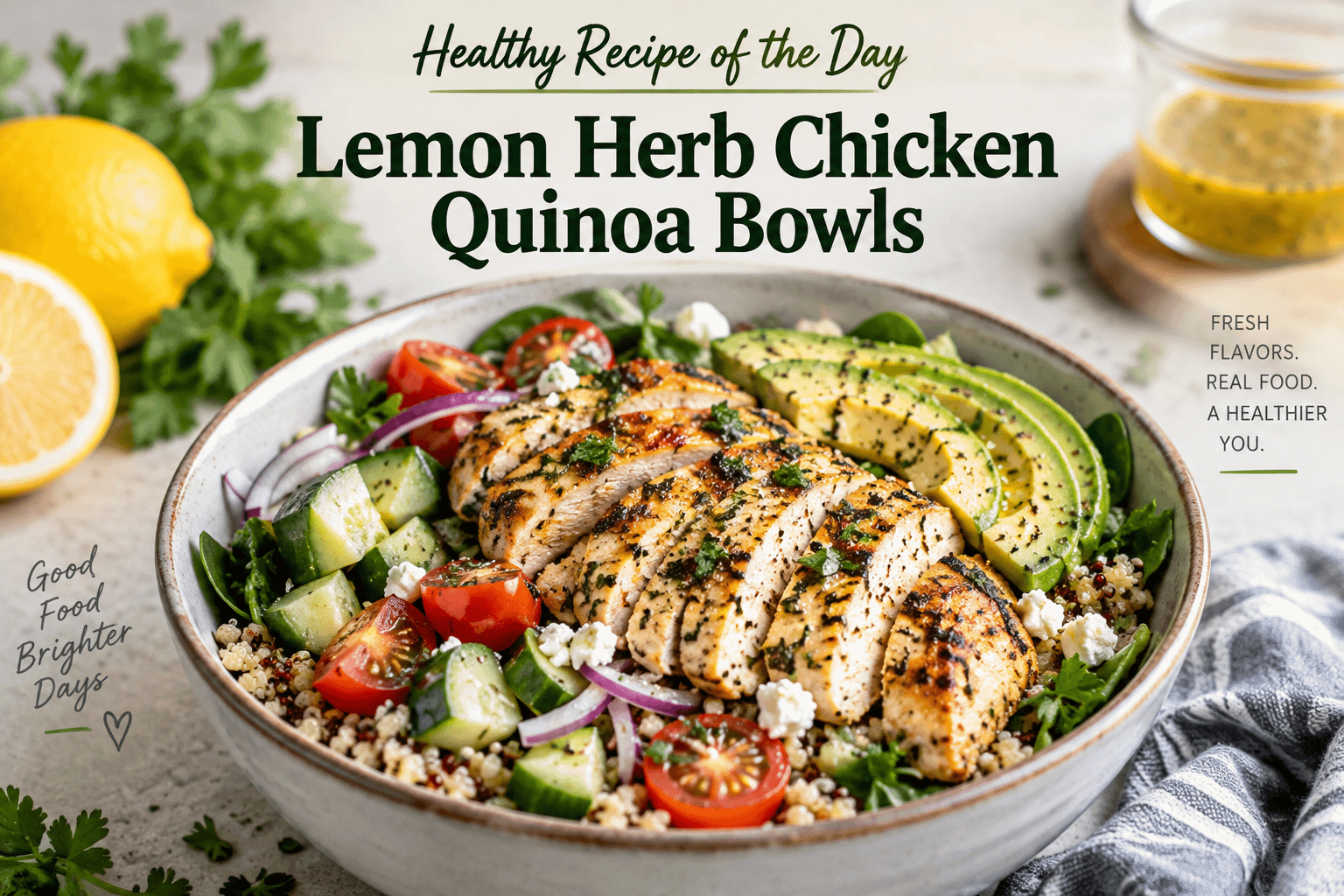
    Today’s Healthy Recipe of the Day is Lemon Herb Chicken Quinoa Bowls, a fresh and filling meal packed with bright Mediterranean-inspired flavors.

    Juicy chicken is seasoned with lemon, garlic, oregano, and herbs before being cooked until tender and golden. It’s then served over fluffy quinoa with crisp cucumber, juicy tomatoes, spinach, red onion, and a simple lemon-herb dressing.

    The result is a colorful bowl that feels light and refreshing while still being substantial enough for lunch or dinner.

    Even better, these bowls are excellent for meal prep. Prepare several portions at the beginning of the week, refrigerate them, and you’ll have an easy homemade meal waiting when life gets busy.

    Why You’ll Love These Lemon Herb Chicken Quinoa Bowls

    There are plenty of reasons to put this recipe into your regular meal rotation.

    High in protein: Chicken and quinoa provide a satisfying protein combination.

    Loaded with vegetables: Tomatoes, cucumber, spinach, and red onion add color, texture, and nutrients.

    Great for meal prep: Most of the ingredients can be prepared ahead of time.

    Easy to customize: Swap vegetables or toppings according to what you have available.

    Fresh and flavorful: Lemon, garlic, herbs, and olive oil create plenty of flavor without relying on heavy sauces.

    Perfect year-round: It is refreshing enough for warm weather but filling enough for a healthy dinner any time of year.

    And perhaps most importantly, it actually tastes like something you’ll look forward to eating.


    Ingredients

    For the Lemon Herb Chicken

    • 1 1/2 pounds boneless, skinless chicken breasts
    • 2 tablespoons olive oil
    • Juice of 1 large lemon
    • 3 cloves garlic, minced
    • 1 teaspoon dried oregano
    • 1 teaspoon dried parsley
    • 1/2 teaspoon dried thyme
    • 1/2 teaspoon paprika
    • 1/2 teaspoon salt
    • 1/4 teaspoon black pepper

    For the Quinoa

    • 1 cup uncooked quinoa
    • 2 cups low-sodium chicken broth or water
    • Pinch of salt

    For the Bowls

    • 2 cups baby spinach
    • 1 large cucumber, chopped
    • 1 1/2 cups cherry tomatoes, halved
    • 1/4 red onion, thinly sliced
    • 1/4 cup chopped fresh parsley
    • 1 avocado, sliced, optional
    • 1/3 cup crumbled feta cheese, optional

    For the Lemon Herb Dressing

    • 3 tablespoons extra-virgin olive oil
    • 2 tablespoons fresh lemon juice
    • 1 teaspoon Dijon mustard
    • 1 small garlic clove, finely minced
    • 1 teaspoon dried oregano
    • 1/2 teaspoon honey
    • Pinch of salt
    • Black pepper to taste

    How to Make Lemon Herb Chicken Quinoa Bowls

    Step 1: Marinate the Chicken

    Place the chicken breasts in a large bowl or resealable food-storage bag.

    Add the olive oil, lemon juice, minced garlic, oregano, parsley, thyme, paprika, salt, and black pepper.

    Massage the marinade into the chicken until every piece is thoroughly coated.

    For the best flavor, refrigerate the chicken in the marinade for approximately 30 minutes.

    If you have additional time, you can let it marinate longer in the refrigerator.

    The lemon and herbs give the chicken its bright, fresh flavor while the garlic adds a savory backbone.


    Step 2: Cook the Quinoa

    While the chicken marinates, prepare the quinoa.

    Place the quinoa in a fine-mesh strainer and rinse thoroughly under cold running water.

    Add the rinsed quinoa to a saucepan with the chicken broth or water and a small pinch of salt.

    Bring everything to a boil.

    Once boiling, reduce the heat to low, cover the saucepan, and simmer according to the package directions, generally around 15 minutes.

    Remove the pan from the heat and allow the quinoa to sit covered for approximately 5 minutes.

    Fluff it gently with a fork.

    Using low-sodium chicken broth instead of water can give quinoa additional flavor without requiring a heavy sauce.


    Step 3: Cook the Chicken

    Heat a large skillet over medium-high heat.

    Remove the chicken from the marinade and discard the leftover marinade.

    Place the chicken into the hot skillet.

    Cook until browned on the outside and completely cooked through. Chicken should reach an internal temperature of 165°F at its thickest point.

    Cooking time will vary depending on the thickness of your chicken breasts.

    Once cooked, transfer the chicken to a cutting board and allow it to rest for approximately 5 minutes.

    Then slice it into strips or bite-sized pieces.

    Resting the chicken before slicing helps keep the juices inside instead of allowing them to immediately run onto the cutting board.


    Step 4: Prepare the Vegetables

    While the chicken is resting, prepare your vegetables.

    Halve the cherry tomatoes.

    Chop the cucumber.

    Thinly slice the red onion.

    Roughly chop the spinach if desired.

    Chop the fresh parsley.

    If you’re adding avocado, wait until shortly before serving to slice it so it stays fresh.

    One of the beautiful things about this recipe is the amount of color you can fit into a single bowl.

    You have green spinach and cucumber, bright red tomatoes, purple onion, fresh herbs, golden chicken, and fluffy quinoa.

    Healthy food doesn’t have to look boring.


    Step 5: Make the Lemon Herb Dressing

    Add the olive oil, lemon juice, Dijon mustard, garlic, oregano, honey, salt, and pepper to a small bowl.

    Whisk until everything is well combined.

    Taste and adjust according to your preference.

    Want it brighter?

    Add another squeeze of lemon.

    Want slightly more sweetness?

    Add a tiny amount of additional honey.

    Want stronger herb flavor?

    Add more oregano or fresh parsley.

    Homemade dressing gives you control over the flavor and allows you to adjust the ingredients to suit your preferences.


    Step 6: Build Your Bowls

    Now comes the fun part.

    Divide the quinoa among four bowls.

    Add a layer of spinach.

    Arrange the sliced lemon-herb chicken over the quinoa.

    Add cucumber, cherry tomatoes, red onion, and parsley.

    If desired, add avocado and a small amount of crumbled feta.

    Drizzle the lemon-herb dressing over everything.

    Finish with freshly ground black pepper and another squeeze of lemon if you like.

    Serve immediately.


    Why Quinoa Works So Well

    Quinoa makes an excellent foundation for bowls because it has a mild, slightly nutty flavor that works with countless ingredients.

    It also provides fiber and protein, making it a useful alternative when you want something different from white rice or pasta.

    Quinoa absorbs surrounding flavors particularly well.

    In this recipe, it catches some of the lemon dressing and juices from the chicken and tomatoes, meaning the bottom of the bowl becomes just as flavorful as the top.

    If you’ve tried plain quinoa before and thought it was boring, cooking it in broth and combining it with flavorful ingredients can make a major difference.


    Don’t Skip the Vegetables

    The vegetables aren’t simply decoration.

    They provide some of the best textures in the entire dish.

    The cucumber provides a cool crunch.

    Cherry tomatoes provide juicy sweetness and acidity.

    Red onion adds sharpness.

    Spinach provides tender greens.

    Fresh parsley adds another layer of freshness.

    Combined with warm chicken and quinoa, you get different flavors and textures in nearly every bite.

    That variety is one reason bowls like this can be so satisfying.


    Easy Ingredient Swaps

    Recipes should work for your kitchen rather than requiring you to purchase every ingredient on a list.

    Don’t have quinoa?

    Use brown rice, wild rice, farro, couscous, or another grain you enjoy.

    Don’t have spinach?

    Try chopped romaine, kale, arugula, or mixed greens.

    Don’t like red onion?

    Leave it out or substitute sliced green onions.

    No cherry tomatoes?

    Regular diced tomatoes work perfectly.

    Want more vegetables?

    Add roasted zucchini, bell peppers, broccoli, asparagus, mushrooms, or carrots.

    You could even add chickpeas for additional texture and substance.


    Make It Mediterranean-Inspired

    Want to take the Mediterranean flavors even further?

    Add some:

    • Kalamata olives
    • Roasted red peppers
    • Chickpeas
    • Feta cheese
    • Fresh dill
    • Hummus
    • Tzatziki
    • Artichoke hearts

    A spoonful of hummus or tzatziki alongside the lemon dressing can make the bowl particularly flavorful.

    You can also serve warm whole-wheat pita bread on the side.


    Make It Spicy

    If you like a little heat, there are several easy ways to spice up these bowls.

    Add crushed red pepper flakes to the chicken marinade.

    Sprinkle cayenne pepper over the chicken.

    Add sliced jalapeños.

    Drizzle the finished bowl with your favorite hot sauce.

    Or add a pinch of cayenne to the lemon dressing.

    The combination of lemon and heat works especially well with grilled or skillet-cooked chicken.


    Meal Prep Instructions

    This recipe is perfect for preparing lunches ahead of time.

    Cook the chicken and quinoa as directed.

    Allow both to cool before assembling your meal-prep containers.

    Divide the quinoa and chicken between containers.

    Add vegetables that store well, such as tomatoes and cucumber.

    Keep the dressing in separate small containers whenever possible.

    Store delicate ingredients such as avocado separately and add them shortly before eating.

    When you’re ready for lunch, reheat the chicken and quinoa if you prefer them warm, then add the fresh vegetables and dressing.

    You can also enjoy the entire bowl cold.

    That makes this a convenient option when you don’t have access to a microwave.


    Turn Dinner Into Tomorrow’s Lunch

    One of the easiest ways to eat homemade meals more frequently is to intentionally cook extra food at dinner.

    Instead of making exactly enough for tonight, prepare an additional serving.

    Pack it before you sit down to eat.

    Now tomorrow’s lunch is already handled.

    This simple habit can reduce the temptation to grab fast food or order something when you’re busy.

    Lemon Herb Chicken Quinoa Bowls are especially useful for this because the ingredients hold up well when stored separately.


    Don’t Overcomplicate Healthy Eating

    Healthy eating can sometimes feel overwhelming because we’re constantly surrounded by complicated rules.

    Avoid this.

    Eat more of that.

    Count everything.

    Measure everything.

    Buy specialty ingredients.

    Follow a complicated meal plan.

    But healthy meals don’t always have to be complicated.

    Sometimes a simple formula works:

    Lean protein + whole grain + vegetables + healthy fat + flavorful seasoning.

    That’s essentially what this bowl provides.

    Chicken supplies the main protein.

    Quinoa provides the grain.

    Spinach, cucumber, tomatoes, and onion provide vegetables.

    Olive oil and optional avocado provide fats.

    Lemon, garlic, mustard, and herbs provide flavor.

    It’s straightforward food made with recognizable ingredients.


    Control Your Portions Without Eating Tiny Meals

    Eating healthier doesn’t necessarily mean making your meals dramatically smaller.

    Instead, consider what occupies the space in your bowl.

    Start with vegetables.

    Add a reasonable portion of quinoa.

    Add your chicken.

    Then finish with your dressing and toppings.

    You can create a bowl that looks abundant and satisfying because vegetables provide plenty of volume.

    The goal shouldn’t be to finish a meal feeling punished.

    A healthy meal should still be enjoyable and satisfying.


    Add More Vegetables

    If you’re trying to include more vegetables in your meals, bowl recipes make it surprisingly easy.

    You don’t have to stop with cucumber, tomato, onion, and spinach.

    Open your refrigerator and see what’s available.

    Leftover roasted broccoli?

    Add it.

    Half a bell pepper?

    Slice it.

    Some carrots?

    Shred them.

    Leftover asparagus?

    Chop it.

    A few mushrooms?

    Sauté them.

    Bowls are incredibly forgiving.

    They are also an excellent way to use small amounts of vegetables before they go to waste.


    Make It on the Grill

    When the weather is nice, cook the chicken outside.

    The lemon-herb marinade works beautifully with grilled chicken.

    Preheat your grill and cook the chicken until it reaches a safe internal temperature of 165°F.

    The slight char from the grill adds another dimension of flavor.

    You can even grill some of the vegetables.

    Try grilling zucchini, bell peppers, red onion, or asparagus and adding them to the bowls.

    Suddenly the recipe becomes a perfect summer dinner.


    Make It Family-Friendly

    One advantage of serving dinner in bowl form is that everyone can customize their own meal.

    Instead of assembling everyone’s bowl yourself, put the ingredients on the table separately.

    Set out:

    Quinoa.

    Chicken.

    Spinach.

    Tomatoes.

    Cucumber.

    Red onion.

    Avocado.

    Feta.

    Dressing.

    Then let everyone build their own bowl.

    Someone who doesn’t like onions can skip them.

    Someone who loves tomatoes can add extra.

    Someone who wants more chicken can add another scoop.

    Someone who prefers everything separate can keep it separate.

    The basic meal remains the same, but everyone gets some control over what goes into their bowl.


    A Healthy Dinner Doesn’t Have to Be Boring

    One of the biggest misconceptions about healthy eating is that flavor has to disappear.

    It doesn’t.

    Flavor can come from lemon.

    Garlic.

    Fresh herbs.

    Spices.

    Mustard.

    Pepper.

    Roasted vegetables.

    Fresh vegetables.

    A little feta.

    A flavorful homemade dressing.

    None of those ingredients require you to turn dinner into something bland.

    In fact, learning how to use citrus, herbs, garlic, spices, and fresh ingredients can make simple meals surprisingly exciting.


    What to Serve With Lemon Herb Chicken Quinoa Bowls

    These bowls are designed to work as a complete meal, so you don’t necessarily need anything else.

    However, if you’re serving them for a larger family dinner, try adding:

    • Roasted vegetables
    • Grilled asparagus
    • Fresh fruit
    • Greek salad
    • Whole-wheat pita
    • Hummus with vegetables
    • Roasted chickpeas
    • A simple vegetable soup

    Keep the side dishes simple and allow the chicken bowls to remain the centerpiece.


    Storage

    Store leftover cooked chicken and quinoa in airtight containers in the refrigerator and use them within a few days.

    For the best texture, keep the dressing separate until you’re ready to eat.

    Fresh avocado should also be added shortly before serving.

    If you’re preparing several lunches, you can portion the chicken and quinoa ahead of time and add fresh ingredients throughout the week.

    Always refrigerate cooked foods promptly and reheat leftovers thoroughly.


    Healthy Recipe of the Day

    Lemon Herb Chicken Quinoa Bowls prove that a healthy meal can be colorful, satisfying, flavorful, and simple at the same time.

    You get tender lemon-garlic chicken, fluffy quinoa, crisp vegetables, fresh herbs, and a bright homemade dressing all together in one bowl.

    Make it exactly as written the first time.

    Then make it your own.

    Add vegetables.

    Swap the grain.

    Increase the herbs.

    Make it spicy.

    Add hummus.

    Grill the chicken.

    Use whatever fresh ingredients you already have.

    Healthy eating becomes much easier when you discover meals you genuinely enjoy rather than meals you feel obligated to eat.

    And this is exactly the kind of recipe worth keeping in your regular rotation: simple enough for a weeknight, nutritious enough to support healthier eating, and flavorful enough that you may actually look forward to the leftovers.

    Would you build your Lemon Herb Chicken Quinoa Bowl with avocado and feta, or keep it simple with chicken, quinoa, and fresh vegetables?
  • Recipe of the Day: Creamy Tuscan Sausage Gnocchi

    Advertisements

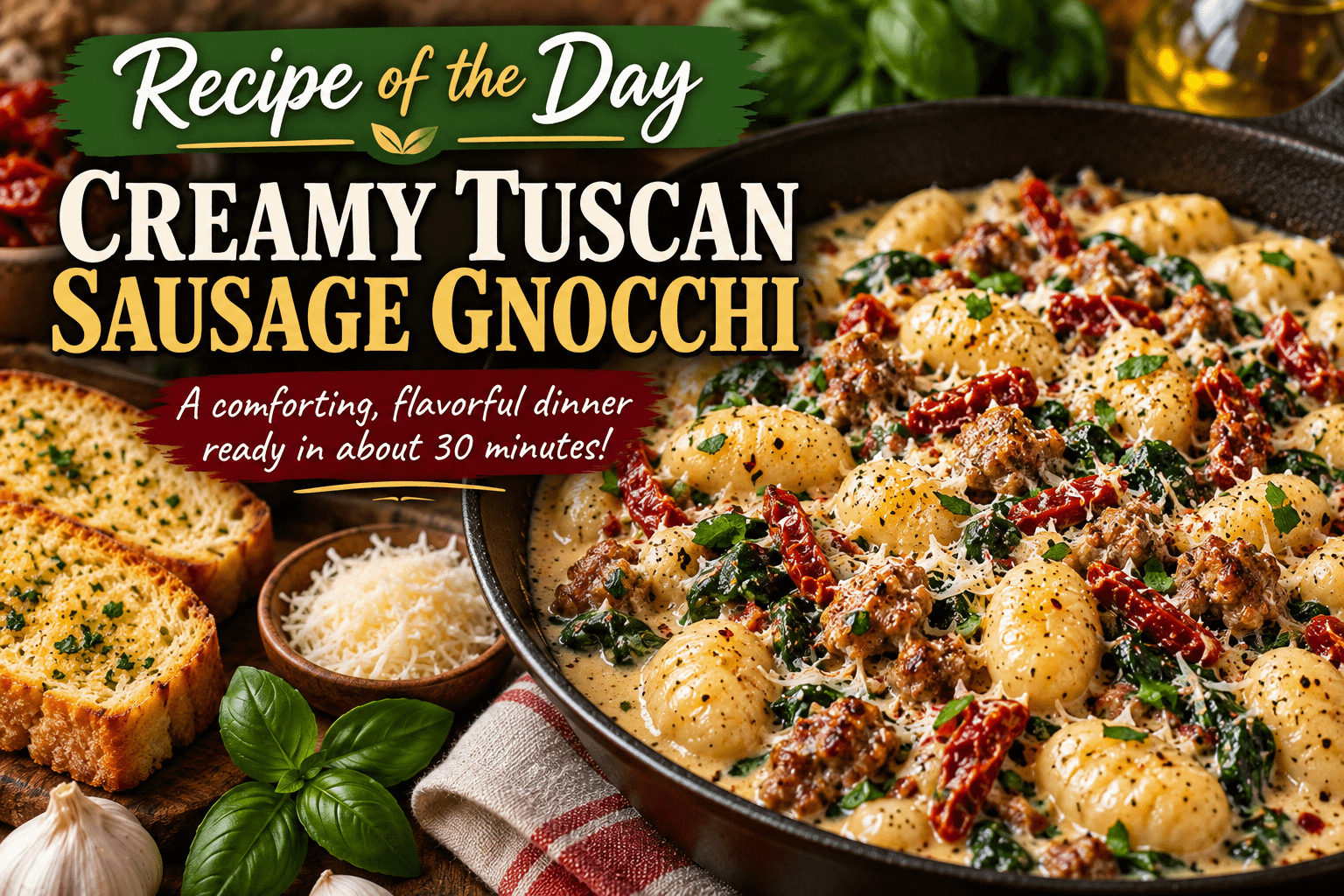
    Some dinners are made for nights when you want something warm, filling, and packed with flavor without spending hours in the kitchen. Creamy Tuscan Sausage Gnocchi is exactly that kind of meal.

    Tender potato gnocchi, savory Italian sausage, sun-dried tomatoes, fresh spinach, garlic, Parmesan cheese, and a rich cream sauce come together in one skillet to create an incredibly satisfying dinner.

    Every bite delivers a little bit of everything: the richness of the cream, the saltiness of Parmesan, the bold flavor of sausage, the slight tang of sun-dried tomatoes, and soft pillows of gnocchi that soak up all that delicious sauce.

    Best of all, this impressive-looking meal can be on the table in about 30 minutes.

    Whether you’re cooking for the family, preparing a cozy weekend dinner, or simply looking for something different to add to your weekly rotation, Creamy Tuscan Sausage Gnocchi deserves a spot on the menu.

    Why You’ll Love This Recipe

    There are plenty of reasons this dish may quickly become a household favorite.

    First, it’s incredibly comforting. Gnocchi already has that satisfying, stick-to-your-ribs quality, and covering it in a creamy Parmesan sauce takes it to another level.

    Second, everything comes together in one skillet. That means less cleanup after dinner.

    The recipe is also easy to customize. You can make it spicy, add extra vegetables, switch the sausage, or adjust the sauce to suit your family’s preferences.

    Most importantly, it tastes like something you might order at an Italian restaurant without requiring complicated cooking techniques.

    What Is Gnocchi?

    Gnocchi are small Italian dumplings traditionally made from potatoes, flour, and sometimes eggs.

    Unlike traditional pasta, gnocchi have a soft, pillowy texture. Their mild flavor also makes them excellent at absorbing sauces.

    For this recipe, packaged potato gnocchi works perfectly and saves a tremendous amount of preparation time.

    You can usually find gnocchi near the dried pasta, refrigerated pasta, or specialty Italian foods section of your grocery store.

    Ingredients

    For the Gnocchi

    • 1 pound potato gnocchi
    • 1 pound Italian sausage, casings removed
    • 1 tablespoon olive oil, if needed
    • 3 cloves garlic, minced
    • 1/2 cup sun-dried tomatoes, drained and chopped
    • 1 teaspoon Italian seasoning
    • 1/4 teaspoon crushed red pepper flakes, optional
    • 1 cup chicken broth
    • 1 cup heavy cream
    • 3/4 cup freshly grated Parmesan cheese
    • 2 cups fresh baby spinach
    • Salt, to taste
    • Freshly ground black pepper, to taste

    Optional Garnishes

    • Additional Parmesan cheese
    • Fresh chopped parsley
    • Fresh basil
    • Crushed red pepper flakes
    • Freshly cracked black pepper

    Instructions

    Step 1: Brown the Sausage

    Heat a large, deep skillet over medium heat.

    Add the Italian sausage and cook for approximately 5 to 7 minutes, breaking it into smaller pieces with a wooden spoon as it cooks.

    Continue cooking until the sausage is browned and cooked through.

    If your sausage is particularly lean, you can add about a tablespoon of olive oil. If it releases a large amount of grease, carefully drain some of the excess while leaving a little behind for flavor.

    Step 2: Add the Garlic and Tomatoes

    Add the minced garlic and chopped sun-dried tomatoes to the skillet.

    Cook for about 1 minute, stirring frequently.

    You want the garlic to become fragrant without allowing it to burn.

    Stir in the Italian seasoning and crushed red pepper flakes if you want a little extra heat.

    Step 3: Build the Sauce

    Pour the chicken broth into the skillet.

    Use your spoon to scrape any browned pieces from the bottom of the pan. Those little bits contain plenty of flavor.

    Pour in the heavy cream and stir everything together.

    Bring the mixture to a gentle simmer.

    Avoid rapidly boiling the cream because a low simmer will give you a smoother sauce.

    Step 4: Add the Gnocchi

    Add the potato gnocchi directly to the skillet.

    Stir so the gnocchi are evenly distributed throughout the sauce.

    Cover the skillet and allow everything to simmer for approximately 4 to 5 minutes, stirring occasionally.

    The gnocchi will soften as they cook while also helping thicken the sauce.

    Check the package directions for your particular brand, as cooking times can vary slightly.

    Step 5: Add the Parmesan

    Reduce the heat to low.

    Gradually stir in the Parmesan cheese.

    Continue stirring until the cheese melts completely into the cream sauce.

    The sauce should become thick, creamy, and rich enough to coat the gnocchi.

    If it becomes thicker than you prefer, add a small splash of chicken broth.

    Step 6: Add the Spinach

    Add the fresh baby spinach.

    Gently stir it into the sauce and continue cooking for another 1 to 2 minutes.

    The spinach will quickly wilt into the creamy mixture.

    Step 7: Season and Serve

    Taste the sauce before adding salt because the sausage and Parmesan already contain plenty of seasoning.

    Add salt and freshly ground black pepper as needed.

    Remove the skillet from the heat and let it rest for approximately 2 minutes.

    Finish with additional Parmesan, parsley, basil, or red pepper flakes.

    Serve immediately while everything is hot and creamy.

    Choosing the Right Italian Sausage

    One of the easiest ways to change the personality of this recipe is by changing the sausage.

    Mild Italian sausage is a great choice when serving the entire family. It provides plenty of flavor without making the dish spicy.

    Hot Italian sausage gives the cream sauce a noticeable kick and pairs particularly well with the richness of the Parmesan.

    You can also use a combination of mild and hot sausage.

    Chicken or turkey Italian sausage can be substituted if you prefer something lighter.

    Whatever variety you choose, properly browning the sausage is important. Allow some pieces to develop a darker brown exterior instead of constantly stirring them. That caramelization creates deeper flavor.

    Why Sun-Dried Tomatoes Work So Well

    Sun-dried tomatoes may be a relatively small part of this recipe, but they make a significant difference.

    Their concentrated tomato flavor cuts through the richness of the cream sauce and Parmesan.

    Oil-packed sun-dried tomatoes work especially well. Drain them before chopping, but don’t worry if a little seasoned oil makes its way into the skillet.

    You can even add a teaspoon of that oil when browning the sausage for additional flavor.

    Make It Spicy

    If you enjoy spicy food, this recipe is easy to turn up a notch.

    Start with hot Italian sausage instead of mild sausage.

    Then add 1/2 teaspoon of crushed red pepper flakes with the garlic.

    For even more heat, sprinkle additional red pepper flakes over each serving.

    The creamy sauce helps balance the spice, so you can create quite a bit of heat without overwhelming the other flavors.

    Add More Vegetables

    Spinach isn’t your only option.

    Try adding sliced mushrooms. Sauté them after browning the sausage and before adding the garlic.

    Chopped zucchini is another good choice.

    You could also add:

    • Roasted red peppers
    • Artichoke hearts
    • Kale
    • Broccoli
    • Asparagus
    • Peas

    This makes the recipe easy to adapt based on whatever vegetables you already have available.

    What to Serve With Creamy Tuscan Sausage Gnocchi

    Because this is already a rich and filling meal, simple sides work best.

    Garlic Bread

    It’s difficult to go wrong with warm garlic bread beside a bowl of creamy gnocchi.

    Use it to soak up any Parmesan cream sauce left on the plate.

    Green Salad

    A crisp green salad provides freshness and helps balance the richness of the main dish.

    A simple vinaigrette works particularly well.

    Roasted Vegetables

    Roasted broccoli, asparagus, Brussels sprouts, or green beans are excellent options.

    Italian Bread

    A warm loaf of crusty Italian bread is perfect for serving alongside the skillet.

    Tips for the Best Creamy Gnocchi

    A few simple techniques can make this easy recipe even better.

    Use freshly grated Parmesan.

    Pre-shredded Parmesan often contains anti-caking ingredients that can prevent it from melting as smoothly into sauces.

    Don’t overcook the gnocchi.

    Gnocchi should be tender but still hold their shape. Cooking them too long can make them overly soft.

    Keep the cream at a gentle simmer.

    High heat isn’t necessary and can negatively affect the texture of the sauce.

    Season at the end.

    Italian sausage, Parmesan, chicken broth, and sun-dried tomatoes can all contribute salt. Taste before adding more.

    Let the finished dish rest.

    Giving the skillet a couple of minutes off the heat allows the sauce to thicken naturally.

    Can You Make It Without Heavy Cream?

    Heavy cream creates the richest sauce, but substitutions are possible.

    Half-and-half can work, although the finished sauce will be thinner.

    You can also try a combination of milk and cream cheese for a different type of creamy consistency.

    When using lighter dairy products, keep the heat low to reduce the chance of separation.

    Storing Leftovers

    Transfer leftover Creamy Tuscan Sausage Gnocchi to an airtight container and refrigerate promptly.

    For best quality, enjoy the leftovers within about 3 to 4 days.

    The sauce will become significantly thicker after refrigeration because the gnocchi continues absorbing some of the liquid.

    That’s completely normal.

    How to Reheat It

    The best way to reheat this meal is gently on the stovetop.

    Place the desired amount in a skillet over low to medium-low heat.

    Add a splash of chicken broth, milk, or cream and stir occasionally until everything is heated through.

    You can also microwave individual portions. Adding a small splash of liquid before reheating helps loosen the sauce.

    Turn It Into Your Own Recipe

    One of the best things about skillet meals is how easily they can evolve.

    Once you’ve made the original version, start experimenting.

    Try chicken instead of sausage.

    Add mushrooms and roasted red peppers.

    Replace spinach with kale.

    Make it spicy with hot Italian sausage and extra red pepper.

    Add additional garlic if you’re a serious garlic lover.

    You could even sprinkle mozzarella over the finished skillet and place it briefly under the broiler for a cheesy baked finish, provided you’re using an oven-safe skillet.

    The basic combination of gnocchi and creamy Parmesan sauce gives you a foundation that can handle plenty of variations.

    A Restaurant-Style Dinner Without the Restaurant

    There are nights when you want more than an ordinary dinner but don’t necessarily want a complicated recipe.

    That’s where Creamy Tuscan Sausage Gnocchi shines.

    It looks impressive.

    It tastes indulgent.

    It fills the kitchen with the aroma of garlic, sausage, herbs, and Parmesan.

    Yet everything comes together in roughly half an hour using ingredients you can find at most grocery stores.

    The tender gnocchi absorbs that creamy sauce while the Italian sausage provides savory richness. Sun-dried tomatoes add brightness, spinach brings freshness, and Parmesan ties everything together.

    Serve it straight from the skillet with some warm garlic bread and a fresh salad, and you’ve got a comforting dinner worthy of becoming a regular part of your recipe rotation.

    Sometimes the recipes people remember most aren’t the ones requiring hours in the kitchen. They’re the simple meals that bring everyone to the table, encourage people to grab seconds, and leave everyone satisfied.

    Would you make your Creamy Tuscan Sausage Gnocchi with mild Italian sausage or turn up the heat with spicy sausage?

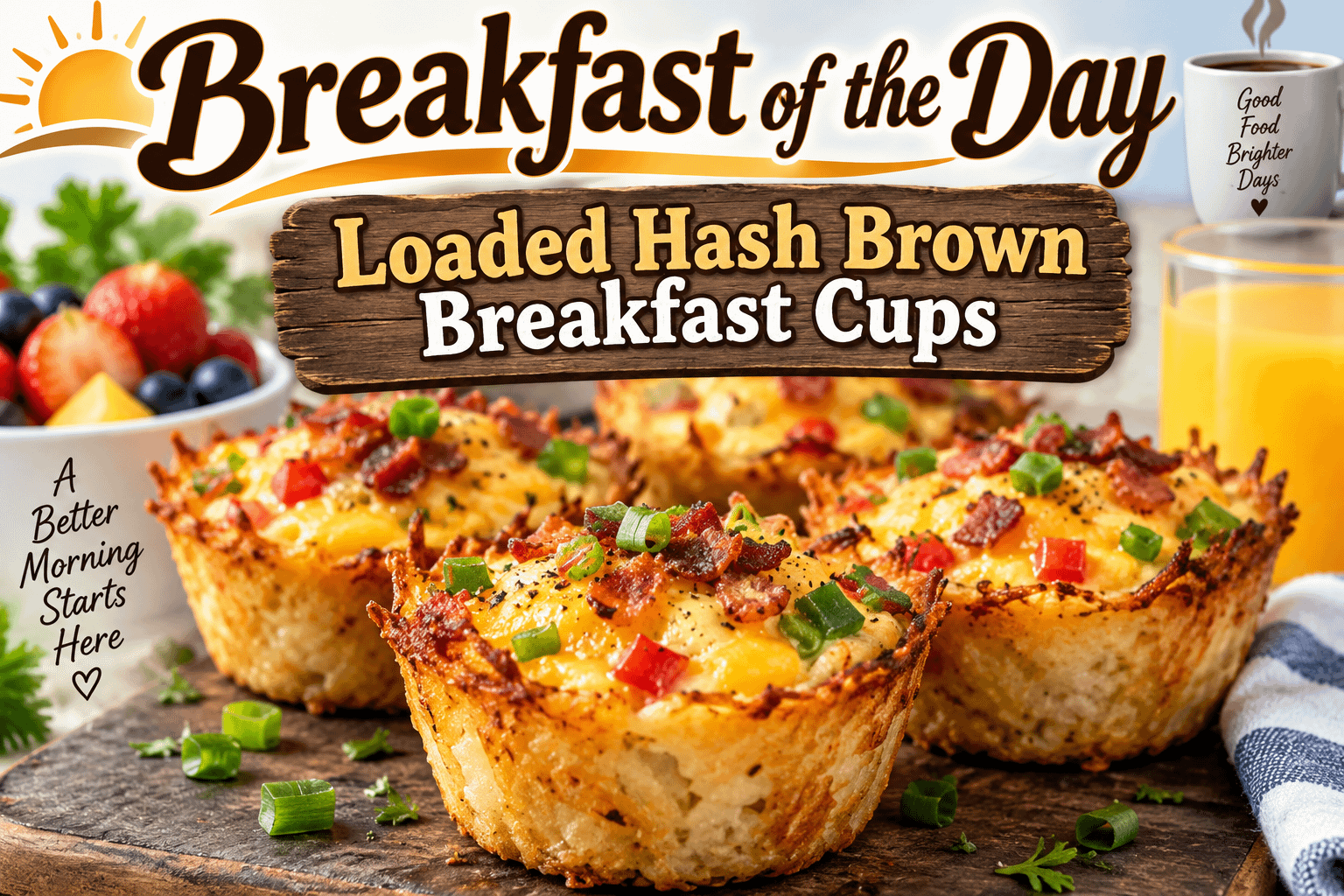
  • Breakfast of the Day: Loaded Hash Brown Breakfast Cups

    Advertisements

    Some mornings call for something more exciting than a bowl of cereal or a piece of toast. You want a breakfast that is warm, filling, packed with flavor, and easy enough to make without spending your entire morning in the kitchen.

    Today’s Breakfast of the Day is Loaded Hash Brown Breakfast Cups — crispy shredded potatoes baked into individual cups and filled with eggs, bacon, cheese, peppers, and onions.

    Think of them as a combination of crispy hash browns, an omelet, and a breakfast casserole, all packed into one convenient little serving.

    They are crispy around the edges, tender in the middle, cheesy on top, and packed with classic breakfast flavors. Better yet, they can be customized with whatever ingredients you have available.

    Whether you’re preparing breakfast for your family, hosting brunch, or looking for something you can make ahead for busy mornings, these Loaded Hash Brown Breakfast Cups deserve a spot on your breakfast menu.

    Why You’ll Love Loaded Hash Brown Breakfast Cups

    There is a lot to love about this recipe, starting with the crispy potato shell.

    Instead of simply serving hash browns alongside your eggs, the hash browns become the container for everything else. Shredded potatoes are pressed into muffin cups and baked until the edges become golden and crispy.

    Then comes the filling.

    Eggs are combined with smoky bacon, colorful bell peppers, onions, and plenty of cheese before being poured into each potato cup.

    Once everything goes back into the oven, the eggs become fluffy, the cheese melts, and the potatoes get even crispier.

    Every bite gives you a little bit of everything.

    You get crispy potatoes, fluffy eggs, salty bacon, melted cheese, and vegetables in one delicious bite.

    Ingredients

    For the Hash Brown Cups

    • 4 cups frozen shredded hash browns, thawed
    • 1 cup shredded cheddar cheese
    • 2 tablespoons melted butter
    • 1/2 teaspoon garlic powder
    • 1/2 teaspoon onion powder
    • 1/4 teaspoon salt
    • 1/4 teaspoon black pepper

    For the Egg Filling

    • 8 large eggs
    • 1/4 cup milk
    • 6 slices bacon, cooked and crumbled
    • 1/2 cup shredded cheddar cheese
    • 1/3 cup diced red bell pepper
    • 1/3 cup diced green bell pepper
    • 1/4 cup finely diced onion
    • 1/4 teaspoon garlic powder
    • Salt and black pepper to taste

    Optional Toppings

    • Chopped green onions
    • Fresh parsley
    • Salsa
    • Hot sauce
    • Sour cream
    • Sliced avocado
    • Extra shredded cheese

    How to Make Loaded Hash Brown Breakfast Cups

    Step 1: Prepare the Oven

    Preheat your oven to 400°F.

    Generously grease a standard 12-cup muffin pan with cooking spray or butter. This is important because the crispy potatoes can stick to the pan if it isn’t properly greased.

    Step 2: Prepare the Hash Browns

    Make sure your frozen hash browns are completely thawed.

    Place them into a clean kitchen towel or several layers of paper towels and squeeze out as much excess moisture as possible.

    Removing the moisture is one of the secrets to getting crispy hash brown cups.

    Transfer the potatoes to a large bowl.

    Add the shredded cheddar cheese, melted butter, garlic powder, onion powder, salt, and black pepper.

    Mix until everything is evenly combined.

    Step 3: Build the Potato Cups

    Divide the hash brown mixture evenly between the 12 muffin cups.

    Use your fingers or the back of a spoon to press the potatoes firmly against the bottom and sides of each muffin cup.

    You want to create a small potato “nest” with enough room in the center for the egg mixture.

    Don’t worry if the potatoes stick up slightly above the muffin pan. Those little pieces can become wonderfully crispy in the oven.

    Step 4: Bake the Hash Brown Shells

    Place the muffin pan into the preheated oven.

    Bake for approximately 18–22 minutes, or until the potatoes begin turning golden brown around the edges.

    Remove the pan from the oven but leave the oven on.

    Now you’re ready for the filling.

    Preparing the Egg Filling

    While the hash brown cups are baking, prepare your bacon and vegetables.

    Cook the bacon until crispy and transfer it to a paper towel-lined plate. Once it has cooled enough to handle, crumble it into small pieces.

    In a large bowl, crack the eggs.

    Add the milk, garlic powder, salt, and black pepper.

    Whisk everything together until the eggs are completely combined.

    Stir in the bacon, diced red pepper, green pepper, onion, and shredded cheddar cheese.

    Mix gently.

    Fill the Hash Brown Cups

    Carefully divide the egg mixture between the partially baked hash brown cups.

    Don’t fill them completely to the top because the eggs will expand slightly while baking.

    Return the muffin pan to the oven.

    Bake for another 12–16 minutes, or until the eggs are completely set in the center.

    You can test them by gently inserting a knife into the center of one breakfast cup. If the eggs are firm and no liquid egg remains, they’re ready.

    Let Them Rest

    Remove the muffin pan from the oven and allow the breakfast cups to rest for about five minutes.

    Run a butter knife carefully around the edges of each cup before lifting them from the pan.

    Serve them warm with your favorite toppings.

    A spoonful of salsa and a few sliced green onions are especially good.

    The Secret to Crispy Hash Browns

    The most important step in this recipe happens before the potatoes ever reach the oven.

    Get rid of the excess moisture.

    Potatoes naturally contain moisture, and frozen hash browns can hold even more after thawing.

    If you put wet potatoes directly into the muffin pan, they’ll steam instead of becoming crispy.

    Place your thawed potatoes inside a clean kitchen towel and squeeze firmly.

    You may be surprised by how much liquid comes out.

    The drier the potatoes are before baking, the better your chances of getting that golden, crispy exterior.

    Giving the potato shells a head start in the oven before adding the eggs also makes a big difference.

    Make Them Your Own

    One of the best things about Loaded Hash Brown Breakfast Cups is how easily you can customize them.

    Sausage Breakfast Cups

    Replace the bacon with cooked breakfast sausage.

    Brown the sausage in a skillet, drain any excess grease, and crumble it into the egg mixture.

    Ham and Cheese

    Use diced ham instead of bacon and combine it with cheddar or Swiss cheese.

    This is also a great way to use leftover ham.

    Southwest Breakfast Cups

    Add cooked chorizo, diced jalapeños, pepper jack cheese, and a small amount of taco seasoning.

    Serve with salsa and avocado.

    Meat Lover’s Breakfast Cups

    Combine bacon, sausage, and diced ham for an extra-hearty breakfast.

    Vegetable Breakfast Cups

    Leave out the meat and add mushrooms, spinach, tomatoes, broccoli, peppers, and onions.

    If you’re using vegetables with a lot of moisture, cook them briefly before adding them to the eggs.

    Spicy Breakfast Cups

    Add diced jalapeños, pepper jack cheese, crushed red pepper flakes, or your favorite hot sauce.

    Cheese Options

    Cheddar is a classic choice, but don’t feel limited to it.

    Try:

    • Pepper jack
    • Monterey Jack
    • Colby Jack
    • Mozzarella
    • Swiss
    • Smoked Gouda
    • Parmesan
    • Mexican cheese blend

    You can even combine two or three cheeses.

    Sharp cheddar and pepper jack make an especially flavorful combination.

    Make-Ahead Breakfast

    These breakfast cups aren’t just delicious when they come straight from the oven.

    They’re also excellent for meal preparation.

    Make a batch on Sunday and you’ll have breakfast ready for several mornings.

    Allow the cooked cups to cool completely before placing them in an airtight container in the refrigerator.

    When you’re ready for breakfast, reheat one or two until warmed through.

    That makes them especially convenient for mornings when you don’t have enough time to cook a complete breakfast from scratch.

    Instead of skipping breakfast or grabbing something on the way out the door, you’ve already got a homemade option waiting.

    Serving Ideas

    Loaded Hash Brown Breakfast Cups can easily stand on their own, but they also work beautifully as part of a larger breakfast or brunch.

    Serve them alongside:

    • Fresh berries
    • Sliced melon
    • Fresh fruit salad
    • Toast
    • Biscuits
    • Cinnamon rolls
    • Pancakes
    • Waffles
    • Yogurt and granola
    • Fresh avocado
    • Breakfast sausage
    • Extra bacon

    For brunch, arrange the breakfast cups on a large serving platter and place several toppings nearby.

    Guests can customize their own with salsa, sour cream, avocado, hot sauce, cheese, or green onions.

    Perfect for Feeding a Crowd

    Traditional egg dishes can sometimes be difficult when you’re cooking for several people.

    Someone wants scrambled eggs.

    Someone else wants bacon.

    Another person wants hash browns.

    With breakfast cups, everything is already combined into individual portions.

    That makes them great for family breakfasts, holiday mornings, weekend brunches, potlucks, or gatherings.

    They’re also easy to grab from a serving platter without needing to scoop portions from a casserole dish.

    Make one batch or double the recipe depending on how many people you’re feeding.

    Breakfast Doesn’t Have to Be Complicated

    A satisfying homemade breakfast doesn’t always require a complicated recipe.

    Sometimes the best meals come from taking familiar ingredients and putting them together in a slightly different way.

    Hash browns are already a breakfast favorite.

    Eggs and bacon are classics.

    Cheese makes almost everything better.

    Put all of them together in a crispy potato cup, and suddenly you’ve turned ordinary breakfast ingredients into something that looks and tastes special.

    That’s exactly what makes these Loaded Hash Brown Breakfast Cups such a great Breakfast of the Day.

    They’re familiar enough that almost everyone will recognize the flavors, but different enough to make breakfast feel exciting.

    Final Thoughts

    Loaded Hash Brown Breakfast Cups bring together some of the best parts of a traditional American breakfast in one convenient serving.

    The crispy potato shell provides the perfect base for fluffy eggs, smoky bacon, vegetables, and melted cheese.

    They’re customizable, portable, make-ahead friendly, and perfect for both everyday breakfasts and weekend brunch.

    Most importantly, they’re simply fun to eat.

    Make them exactly as written the first time, then start experimenting.

    Try sausage instead of bacon.

    Add jalapeños for some heat.

    Load them with vegetables.

    Change the cheese.

    Serve them with salsa.

    Breakfast should be something you look forward to, and sometimes a small twist on familiar ingredients is all it takes to turn an ordinary morning into something a little more delicious.

    Would you make your Loaded Hash Brown Breakfast Cups with bacon, sausage, ham, or vegetables?

  • National Rosa Tequila Day – September 14: Raise a Glass to the Pink Side of Tequila

    Advertisements

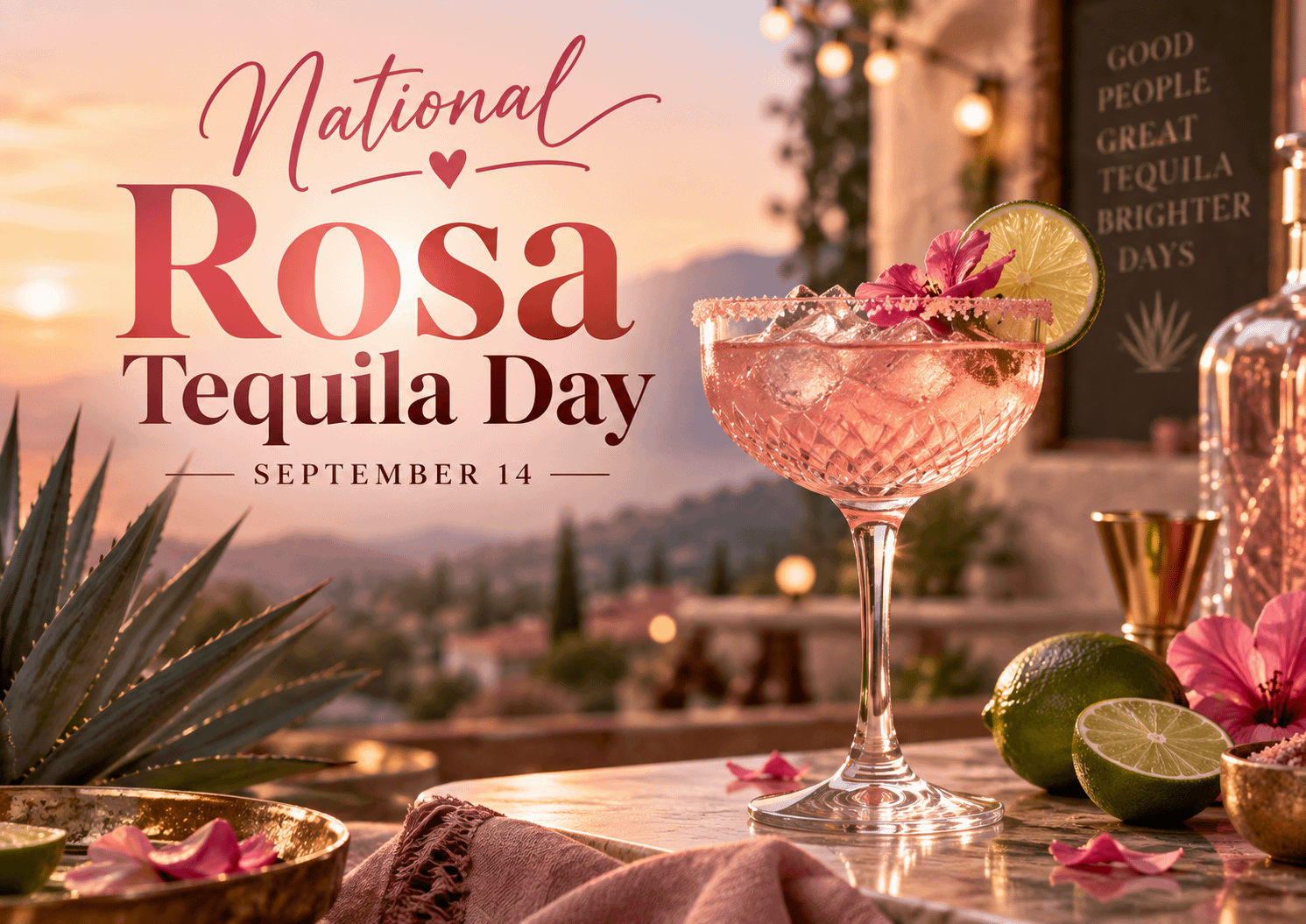
    Every year on September 14, tequila lovers have an opportunity to celebrate one of the most colorful and intriguing variations of Mexico’s famous spirit: National Rosa Tequila Day.

    Rosa tequila immediately stands out because of its beautiful pink or rosy appearance, but there is much more to this spirit than its color. Depending on how it is produced, rosa tequila can bring together the familiar earthy, herbal, and citrus characteristics of agave with softer notes influenced by wine barrels.

    National Rosa Tequila Day is an opportunity to discover something different, experiment with cocktails, learn more about tequila production, gather with friends, and appreciate the craftsmanship behind a spirit that continues to evolve.

    Whether you already enjoy tequila or you have never tasted the rosa variety before, September 14 provides a perfect excuse to explore something new.

    What Is Rosa Tequila?

    Rosa tequila, sometimes called pink tequila, is tequila that develops a pink or rose-colored appearance during its production or finishing process.

    One of the most recognizable approaches involves allowing tequila to rest or finish in barrels that previously held red wine. During contact with the wood, the tequila can pick up color, aroma, and flavor characteristics left behind by the wine.

    The result may have subtle notes of berries, cherries, vanilla, spice, oak, flowers, or fruit while still maintaining the recognizable flavors of cooked agave.

    The exact taste depends heavily on the producer, the type of tequila, the wine barrel used, and how long the tequila remains in contact with the barrel.

    Some rosa tequilas are delicate and lightly colored, while others have a deeper pink appearance and stronger wine-influenced flavors.

    That variety is part of what makes exploring rosa tequila interesting.

    When Is National Rosa Tequila Day?

    National Rosa Tequila Day is celebrated every year on September 14.

    In 2026, September 14 falls on a Monday.

    The celebration has become associated with introducing more people to the rosa tequila style and encouraging tequila fans, bartenders, restaurants, and cocktail enthusiasts to experiment with its distinctive flavor and appearance.

    The modern observance is relatively new. National Today credits Calirosa Tequila with sponsoring the first National Rosa Tequila Day celebration in 2022.

    Why Is Rosa Tequila Pink?

    The pink color of many rosa tequilas comes from their interaction with red-wine barrels.

    Traditional tequila may be aged in oak barrels that previously contained whiskey, bourbon, or other spirits. Rosa tequila producers instead may use barrels associated with red wine.

    As the tequila rests inside the barrel, it interacts with compounds remaining in the wood.

    This can influence both the appearance and taste.

    Instead of the golden or amber tones normally associated with aged tequila, the spirit can develop shades ranging from a light blush to a deeper rose.

    The barrel may also introduce flavors that complement the natural qualities of agave.

    Imagine combining the brightness of tequila with hints of berries, dried fruit, vanilla, spice, and oak.

    That combination helps give rosa tequila its distinctive personality.

    The Story Behind Rosa Tequila

    Tequila itself has centuries of history connected to Mexico, particularly the state of Jalisco and surrounding regions.

    Rosa tequila is a much newer variation within the broader tequila world.

    One story frequently associated with the style involves tequila producer Don Dionisio “Nicho” Real, whose family began producing tequila in the 1940s.

    According to accounts surrounding the modern rosa tequila tradition, red-wine barrels eventually became part of the aging process and producers discovered that the barrels could give tequila a distinctive pink color and additional layers of flavor.

    The style remained relatively uncommon compared with traditional blanco, reposado, and añejo tequila, but interest began increasing significantly during the 2020s.

    As consumers became more interested in premium tequila and experimental barrel finishing, rosa tequila gained greater attention.

    Its appearance certainly helped.

    A glass of naturally pink tequila immediately catches the eye.

    However, the color alone would not have been enough to create lasting interest.

    Drinkers discovered that wine-barrel finishing could also introduce interesting flavor combinations.

    National Rosa Tequila Day eventually emerged as an annual celebration dedicated specifically to this unique tequila style.

    Understanding Traditional Tequila

    To appreciate rosa tequila, it helps to understand traditional tequila.

    Tequila is produced from the blue Weber agave plant and is primarily associated with specific regions of Mexico.

    Agave plants can take several years to mature before they are harvested.

    The heart of the plant, known as the piña, is cooked to convert naturally occurring carbohydrates into fermentable sugars.

    The cooked agave is crushed or processed to extract its juices.

    Those juices are fermented and then distilled.

    What happens afterward helps determine the tequila’s classification and flavor.

    Common tequila categories include:

    Blanco

    Blanco tequila is generally clear and typically bottled shortly after distillation or after only a very short resting period.

    It often displays the brightest expression of agave flavor.

    Reposado

    Reposado means “rested.”

    Reposado tequila spends time aging in oak barrels, developing additional flavors such as vanilla, caramel, spice, and wood.

    Añejo

    Añejo tequila spends significantly longer in barrels.

    The extended aging process can produce deeper flavors such as caramel, chocolate, dried fruit, oak, and spice.

    Extra Añejo

    Extra añejo tequila undergoes extended barrel aging, often producing a richer and more complex spirit.

    Joven

    Joven tequila usually involves a blend or combination of tequila styles.

    Rosa tequila does not necessarily replace these classifications. Instead, “rosa” often describes the barrel-finishing technique or distinctive appearance.

    You may therefore encounter rosa blanco, rosa reposado, or other interpretations depending on the producer.

    What Does Rosa Tequila Taste Like?

    There is no single flavor that defines every rosa tequila.

    However, several characteristics frequently appear.

    You may notice flavors or aromas such as:

    • Cooked agave
    • Citrus
    • Red berries
    • Cherry
    • Strawberry
    • Plum
    • Vanilla
    • Oak
    • Floral notes
    • Honey
    • Caramel
    • Pepper
    • Baking spices
    • Dried fruit

    Some expressions are bright and refreshing.

    Others are richer and more complex.

    The influence of wine barrels can create an interesting bridge between tequila and wine.

    That makes rosa tequila particularly enjoyable for people who enjoy experimenting with different spirits.

    How to Celebrate National Rosa Tequila Day

    There are plenty of ways to celebrate September 14.

    Try Rosa Tequila Neat

    One of the easiest ways to experience rosa tequila is simply to pour a small amount into a tasting glass.

    Instead of immediately drinking it, take a moment to notice the aroma.

    Look for agave, fruit, vanilla, oak, flowers, or spice.

    Then take a small sip.

    Allow the tequila to sit briefly on your palate before swallowing.

    You may notice flavors appearing at different moments.

    Enjoy It Over Ice

    If you prefer your spirits slightly chilled, pour rosa tequila over one large ice cube.

    As the ice slowly melts, it can subtly change the flavor and aroma.

    Make a Rosa Margarita

    The margarita is one of the world’s most famous tequila cocktails, so naturally it works beautifully with rosa tequila.

    Try combining:

    • 2 ounces rosa tequila
    • 1 ounce fresh lime juice
    • ¾ ounce orange liqueur
    • ½ ounce agave syrup if desired

    Shake with ice and strain into a glass.

    A salt rim is optional.

    The drink maintains everything people love about a classic margarita while adding the interesting characteristics of rosa tequila.

    Make a Pink Paloma

    The Paloma is another excellent tequila cocktail.

    Combine:

    • 2 ounces rosa tequila
    • Fresh grapefruit juice
    • Fresh lime juice
    • Agave syrup
    • Sparkling water

    Serve it over ice.

    The grapefruit flavors pair particularly well with many rosa tequilas.

    Create a Rosa Tequila Spritz

    For something lighter, combine rosa tequila with sparkling water and citrus.

    Try:

    • Rosa tequila
    • Grapefruit or blood orange juice
    • Sparkling water
    • Fresh lime
    • Ice

    Serve it in a tall glass and garnish with citrus.

    Organize a Tequila Tasting

    Invite a few friends over and compare different styles of tequila.

    You could include:

    • Blanco
    • Rosa
    • Reposado
    • Añejo

    Taste them side by side.

    Try to identify how barrel aging changes the spirit.

    You may be surprised at how dramatically the flavor can evolve.

    Foods That Pair Well With Rosa Tequila

    National Rosa Tequila Day can also become a food celebration.

    Rosa tequila pairs beautifully with many dishes.

    Tacos

    You can rarely go wrong pairing tequila with tacos.

    Try:

    • Carne asada tacos
    • Chicken tacos
    • Shrimp tacos
    • Fish tacos
    • Carnitas tacos

    Citrus, salsa, cilantro, and grilled meat can complement tequila extremely well.

    Grilled Shrimp

    Shrimp with lime, garlic, and chili provides a refreshing combination with rosa tequila.

    Guacamole

    Fresh avocado, lime, tomato, onion, cilantro, and jalapeño create a classic appetizer that works beautifully with tequila cocktails.

    Grilled Chicken

    Chicken seasoned with citrus, herbs, garlic, and peppers can make an easy National Rosa Tequila Day dinner.

    Charcuterie

    Wine-barrel characteristics can make rosa tequila surprisingly interesting with a charcuterie board.

    Try cheeses, nuts, fruit, cured meats, crackers, and dark chocolate.

    Dark Chocolate

    Chocolate and aged spirits often complement one another.

    A small piece of dark chocolate can bring out vanilla, fruit, or oak characteristics in some rosa tequilas.

    Create a National Rosa Tequila Day Gathering

    September 14 can also become an excuse for a simple gathering with friends.

    You don’t need an elaborate party.

    Create a small tequila-themed evening.

    Set out several mixers, including:

    • Fresh lime juice
    • Grapefruit juice
    • Orange juice
    • Pineapple juice
    • Sparkling water
    • Agave syrup
    • Fresh berries
    • Citrus slices
    • Salt
    • Tajín or chili seasoning

    Then allow everyone to create their own rosa tequila cocktail.

    You could even vote on the best creation.

    Make a Build-Your-Own Margarita Bar

    Another fun option is a margarita station.

    Provide rosa tequila along with different fruits and flavors.

    Guests could choose from:

    Strawberry

    Strawberry puree and lime.

    Blackberry

    Fresh blackberry, lime, and agave.

    Watermelon

    Fresh watermelon juice and lime.

    Mango

    Mango puree with chili seasoning.

    Pineapple

    Pineapple juice and fresh lime.

    The natural pink color of rosa tequila can make these cocktails especially attractive.

    Fun Facts About Tequila

    National Rosa Tequila Day is also an opportunity to learn something about tequila itself.

    Tequila Comes From Blue Agave

    Authentic tequila is produced using blue Weber agave.

    Agave Takes Years to Mature

    Unlike grain crops used for many spirits, agave isn’t harvested every year.

    Plants often require several years of growth before they are ready.

    That makes tequila production heavily dependent on agriculture and long-term planning.

    Tequila Has Geographic Protection

    Just as Champagne is connected to a specific region of France, tequila is protected by rules governing where and how it may be produced.

    Barrel Aging Changes Everything

    Fresh tequila and aged tequila can taste dramatically different.

    Oak barrels can introduce vanilla, caramel, spice, toast, and wood flavors.

    Wine barrels can introduce another layer of fruit and aroma.

    That is exactly what makes rosa tequila so interesting.

    Rosa Tequila Is Made for Creative Cocktails

    Bartenders love ingredients that offer both flavor and visual appeal.

    Rosa tequila provides both.

    Its natural pink appearance immediately creates cocktails that stand out.

    Try experimenting with ingredients such as:

    • Blood orange
    • Grapefruit
    • Strawberry
    • Raspberry
    • Blackberry
    • Hibiscus
    • Pomegranate
    • Watermelon
    • Rosemary
    • Basil
    • Mint
    • Jalapeño
    • Ginger

    The possibilities are nearly endless.

    A Simple Rosa Tequila Cocktail for September 14

    Rosa Sunset

    Ingredients

    • 2 ounces rosa tequila
    • 1 ounce fresh grapefruit juice
    • ½ ounce fresh lime juice
    • ½ ounce agave syrup
    • 2 ounces sparkling water
    • Ice
    • Grapefruit slice for garnish

    Directions

    Fill a cocktail shaker with ice.

    Add the rosa tequila, grapefruit juice, lime juice, and agave syrup.

    Shake until chilled.

    Strain into an ice-filled glass.

    Top with sparkling water.

    Garnish with grapefruit.

    The result is bright, slightly tart, lightly sweet, and refreshing.

    Why National Rosa Tequila Day Is Worth Celebrating

    Food and drink holidays often give us permission to try something we might otherwise overlook.

    National Rosa Tequila Day does exactly that.

    Most people who drink tequila are familiar with margaritas, shots, blanco tequila, and perhaps reposado.

    Rosa tequila introduces another side of the spirit.

    It demonstrates how changing just one part of the production process can dramatically influence the final product.

    A different barrel can change the color.

    It can change the aroma.

    It can change the flavor.

    And suddenly a familiar spirit becomes something completely different.

    That is part of the creativity behind distilling.

    Celebrate Responsibly

    Like every alcohol-related celebration, National Rosa Tequila Day should be enjoyed responsibly.

    Enjoy the flavor rather than focusing on quantity.

    Eat while drinking, stay hydrated, and make transportation plans before consuming alcohol.

    Never drink and drive.

    There’s nothing wrong with enjoying one beautifully made cocktail slowly.

    In fact, slowing down can make it easier to appreciate the flavors that make rosa tequila unique.

    Raise a Pink Glass on September 14

    National Rosa Tequila Day is a celebration of creativity within one of the world’s most famous spirits.

    From its eye-catching pink color to the subtle influence of wine barrels, rosa tequila offers something different for tequila fans to explore.

    You can celebrate by tasting it neat, mixing a margarita, creating a tequila flight, pairing it with dinner, or inviting friends over for a small cocktail night.

    You might even discover a new favorite tequila in the process.

    So when September 14 arrives, grab your glass, squeeze a fresh lime, pour a little rosa tequila, and raise a toast to the pink side of tequila.

    Have you ever tried rosa tequila, and would you drink it straight or use it in a cocktail?

  • National Eat a Hoagie Day – September 14

    Advertisements

    There are sandwiches, and then there are hoagies.

    Packed with layers of meat, cheese, crisp vegetables, seasonings, and dressing inside a long, sturdy roll, the hoagie has earned a special place in American food culture. On September 14, National Eat a Hoagie Day gives sandwich lovers the perfect excuse to order their favorite combination, visit a neighborhood sandwich shop, or build an oversized hoagie at home.

    Whether you prefer a traditional Italian hoagie loaded with cured meats and provolone or something simpler like turkey, cheese, lettuce, and tomato, today is all about enjoying one of America’s most satisfying sandwiches.

    What Is a Hoagie?

    At its simplest, a hoagie is a long sandwich generally made with a sturdy Italian-style roll and filled with meats, cheeses, vegetables, seasonings, and sauces or dressings.

    A traditional Italian-style hoagie might include:

    • Ham
    • Salami
    • Capicola
    • Provolone cheese
    • Lettuce
    • Tomato
    • Onion
    • Oil
    • Vinegar
    • Oregano
    • Peppers

    Of course, there really aren’t many rules.

    Turkey, roast beef, chicken, tuna, meatballs, grilled vegetables, mozzarella, pepper jack, pickles, olives, hot peppers, mayonnaise, mustard, and countless other ingredients can all find their way onto a hoagie.

    That versatility is a big part of the sandwich’s appeal.

    A hoagie can be simple enough for a quick lunch or loaded so heavily that finishing one becomes an accomplishment.

    Where Did the Hoagie Come From?

    The hoagie is strongly connected to Philadelphia and eastern Pennsylvania, although the exact origin of both the sandwich and its name remains debated.

    Several stories have been passed down through the years.

    One of the most famous involves Philadelphia’s Hog Island shipyard around the World War I era. According to the story, Italian immigrant workers brought large sandwiches filled with meats, cheese, and vegetables to work.

    Those sandwiches supposedly became associated with the workers at Hog Island and were called something similar to “hoggies.” Over time, the pronunciation may have evolved into the word “hoagie.”

    Other accounts credit Philadelphia-area sandwich makers and deli families who were serving similar sandwiches during the early 1920s.

    Because several businesses and families have claimed connections to the sandwich’s creation, there isn’t one universally accepted inventor.

    Maybe that’s appropriate.

    The hoagie seems less like something invented on one particular afternoon and more like a food that gradually developed from generations of Italian-American cooking and Philadelphia neighborhood culture.

    Hoagie, Sub, Grinder, or Hero?

    Travel around the United States and you’ll quickly discover that people have very strong opinions about what to call a long sandwich.

    Depending on where you live, you might hear:

    Hoagie

    The name most strongly associated with Philadelphia and southeastern Pennsylvania.

    Submarine or Sub

    Perhaps the most widely recognized term across the United States. The name comes from the sandwich’s long shape, which resembles a submarine.

    Grinder

    A term commonly heard in parts of New England and other areas, sometimes used especially for hot or toasted sandwiches.

    Hero

    Frequently associated with New York.

    Torpedo

    Another regional name inspired by the sandwich’s long shape.

    You may also encounter related sandwiches such as po’boys, although regional sandwich traditions can have their own ingredients, breads, and preparation methods.

    People may debate the terminology forever, but there is one thing most sandwich lovers can agree on:

    They’re delicious.

    What Makes a Great Hoagie?

    A great hoagie begins with the bread.

    The roll has an important job. It must be soft enough to bite through comfortably but sturdy enough to hold meat, cheese, vegetables, oil, vinegar, and other toppings without falling apart.

    A great roll often has a slightly crisp exterior and a soft, chewy interior.

    Then come the ingredients.

    The Meat

    Traditional Italian versions frequently include combinations of cured meats such as salami, ham, and capicola.

    But turkey, roast beef, grilled chicken, and countless other options work just as well.

    The Cheese

    Provolone is one of the classic choices because its flavor pairs beautifully with Italian meats.

    Other popular choices include:

    • American
    • Swiss
    • Mozzarella
    • Cheddar
    • Pepper jack

    The Vegetables

    Cold, crisp vegetables provide an important contrast to rich meats and cheeses.

    Lettuce and tomato are classics, while sliced onion provides a little bite.

    Then you can start experimenting with:

    • Banana peppers
    • Cherry peppers
    • Jalapeños
    • Pickles
    • Olives
    • Cucumbers
    • Roasted peppers

    The Dressing

    Oil and vinegar can transform an ordinary sandwich into something memorable.

    A little oregano, salt, and black pepper can bring everything together.

    Other people prefer mayonnaise, mustard, spicy mustard, garlic spread, or specialty sandwich sauces.

    There’s no reason you can’t combine several.

    The Classic Italian Hoagie

    If you’ve never made your own hoagie, National Eat a Hoagie Day is a great opportunity to try.

    Ingredients

    You’ll need:

    • 1 large Italian hoagie roll
    • 3 slices ham
    • 3 slices Genoa salami
    • 2 or 3 slices capicola
    • 2 or 3 slices provolone cheese
    • Shredded lettuce
    • Sliced tomato
    • Thinly sliced red or white onion
    • Banana peppers or cherry peppers
    • Olive oil
    • Red wine vinegar
    • Dried oregano
    • Salt
    • Black pepper

    Directions

    Slice the roll lengthwise without completely separating the two halves.

    Layer the meats along the bottom of the roll.

    Add the provolone cheese.

    Top everything with shredded lettuce, tomato, onion, and peppers.

    Drizzle a small amount of olive oil and red wine vinegar over the vegetables.

    Finish with oregano, salt, and freshly ground black pepper.

    Close the sandwich, gently press everything together, and enjoy.

    For an even better experience, wrap the completed hoagie tightly in sandwich paper or parchment for several minutes before eating. This can help compress the layers and allow some of the flavors to blend together.

    Create Your Own Ultimate Hoagie

    The fun of National Eat a Hoagie Day is that you don’t have to stick with tradition.

    Try creating your own signature sandwich.

    Turkey Bacon Ranch Hoagie

    Combine:

    Turkey, crispy bacon, provolone, lettuce, tomato, onion, and ranch dressing.

    Spicy Italian Hoagie

    Try:

    Salami, capicola, pepperoni, provolone, lettuce, tomato, jalapeños, hot cherry peppers, oil, vinegar, and oregano.

    Chicken Parmesan Hoagie

    Load your roll with:

    Breaded chicken, marinara sauce, mozzarella, Parmesan cheese, and Italian seasoning.

    Toast until warm and melted.

    Meatball Hoagie

    Fill a toasted roll with:

    Italian meatballs, marinara sauce, mozzarella, and Parmesan.

    It may require several napkins, but that’s part of the experience.

    Roast Beef Hoagie

    Try:

    Thinly sliced roast beef, provolone, lettuce, tomato, onion, horseradish sauce, and pickles.

    Veggie Hoagie

    You don’t need meat to build a great sandwich.

    Combine:

    Provolone or mozzarella, roasted peppers, spinach, tomato, onion, cucumber, olives, banana peppers, oil, vinegar, and Italian seasoning.

    Toasted or Cold?

    Another important sandwich debate:

    Should a hoagie be served cold or toasted?

    Traditional Italian hoagies are frequently served cold, allowing the cured meats, cheese, fresh vegetables, and dressing to remain distinct.

    But plenty of sandwiches benefit from heat.

    A meatball hoagie practically demands melted cheese.

    Chicken Parmesan tastes fantastic inside a toasted roll.

    Even turkey and cheese can become completely different once the cheese starts melting into the bread.

    There is no universal answer.

    National Eat a Hoagie Day is a good excuse to have one of each and conduct your own research.

    How to Celebrate National Eat a Hoagie Day

    Celebrating this food holiday isn’t complicated.

    The obvious answer is:

    Eat a hoagie.

    But you can make the occasion more memorable.

    Visit a Local Sandwich Shop

    Independent delis and neighborhood sandwich shops often have their own signature sandwiches.

    Instead of ordering your usual meal, try something you’ve never had before.

    Build a Hoagie Bar

    Hosting family or friends?

    Create a build-your-own hoagie station.

    Put out:

    Different breads, sliced meats, cheeses, vegetables, peppers, pickles, spreads, oil, vinegar, and seasonings.

    Everyone can create their own combination.

    Order Several and Share

    Can’t decide between Italian, turkey, roast beef, and meatball?

    Order several large sandwiches, cut them into smaller pieces, and let everyone sample different varieties.

    Support a Local Deli

    National food days can also be an opportunity to support neighborhood businesses.

    If you have a favorite sandwich shop, stop in, order lunch, and tell other people about it.

    Post Your Creation

    Built a sandwich you’re proud of?

    Take a picture and share it with friends or on social media.

    You may inspire someone else to celebrate.

    Why We Love Hoagies

    The hoagie’s staying power isn’t difficult to understand.

    It combines several things people love about food.

    They’re Customizable

    No two people have to order the same sandwich.

    Want extra peppers?

    Add them.

    Don’t like onions?

    Leave them off.

    Want four kinds of meat?

    Go for it.

    They’re Convenient

    A hoagie is an entire meal inside a piece of bread.

    There are no complicated utensils required.

    Wrap it up, take it to work, pack it for a picnic, or eat it during a road trip.

    They’re Filling

    Hoagies aren’t usually tiny sandwiches.

    A properly loaded hoagie can easily become a full meal.

    And sometimes half of one is enough.

    Sometimes.

    They Bring People Together

    Sandwich trays have appeared at countless:

    • Birthday parties
    • Sporting events
    • Family gatherings
    • Office lunches
    • School events
    • Picnics
    • Community celebrations

    A large tray of sliced hoagies placed in the middle of a table practically invites everyone to gather around.

    Fun Ways to Make Your Hoagie Better

    There are endless little tricks that can take your sandwich to another level.

    Try lightly toasting the inside of the roll before adding the ingredients.

    Use very thinly sliced onions instead of thick pieces.

    Season the tomatoes directly with salt and pepper.

    Add oregano to the vegetables before adding the dressing.

    Use shredded lettuce instead of whole leaves so every bite gets some crunch.

    Drain wet ingredients like pickles and peppers so the bread doesn’t become soggy.

    And if you’re using oil and vinegar, don’t drown the sandwich.

    You want enough to add flavor without turning your roll into a sponge.

    A Sandwich Worth Celebrating

    National Eat a Hoagie Day may not require decorations, greeting cards, or elaborate traditions.

    All you really need is good bread and your favorite ingredients.

    But beneath the fun food holiday is a sandwich with deep connections to Philadelphia, Italian-American food traditions, neighborhood delis, working-class lunches, family gatherings, and generations of people debating what ingredients belong on the perfect hoagie.

    Maybe that’s why the sandwich has lasted.

    It isn’t fancy.

    It doesn’t need to be.

    A hoagie is simply good food built around good ingredients and made exactly the way you like it.

    So on September 14, stop by your favorite deli or head into the kitchen.

    Grab a fresh roll.

    Pile on the meat.

    Add plenty of cheese.

    Don’t forget the lettuce, tomatoes, onions, peppers, oil, vinegar, and seasonings.

    Then take that first oversized bite and celebrate National Eat a Hoagie Day the way it was meant to be celebrated.

    What’s going on your perfect hoagie — and is there one ingredient you absolutely refuse to put on it?

  • National Cream-Filled Donut Day: A Sweet Celebration Worth Savoring

    Advertisements

    There are some days that practically invite us to forget about counting calories for a moment and simply enjoy something delicious. National Cream-Filled Donut Day is one of those days.

    Celebrated each year on September 14, National Cream-Filled Donut Day honors one of the most indulgent and satisfying members of the donut family: the soft, fluffy donut filled with rich, sweet cream.

    Whether you prefer vanilla cream, chocolate cream, custard, whipped filling, or something a little more adventurous, this day gives donut lovers the perfect excuse to stop by a favorite bakery, pick up a box, and enjoy one of these classic treats.

    A cream-filled donut may look simple from the outside, but one bite reveals what makes it special. Beneath that soft, fried dough is a hidden center of creamy goodness waiting to be discovered.

    And really, isn’t that part of the fun?

    What Is a Cream-Filled Donut?

    A cream-filled donut is usually made from a yeast-raised dough that is fried until golden brown and then filled after cooking.

    Unlike ring-shaped donuts, most cream-filled donuts are round and do not have a hole in the center. That allows bakers to pipe cream, custard, pudding, or another filling directly into the middle.

    Depending on the bakery and recipe, the outside might be covered with powdered sugar, glazed with icing, dipped in chocolate, or topped with colorful sprinkles.

    The filling is where things really get interesting.

    Traditional choices include:

    • Vanilla cream
    • Bavarian cream
    • Pastry cream
    • Chocolate cream
    • Whipped cream
    • Custard
    • Marshmallow-style cream

    Modern bakeries have taken the idea even further, creating donuts filled with everything from cookies-and-cream filling to peanut butter cream, caramel, fruit-flavored cream, cheesecake filling, and more.

    No matter the variety, the basic idea remains irresistible: fluffy donut dough on the outside with something creamy and delicious hidden inside.

    The Delicious History of Donuts

    Donuts have a much longer history than many people realize.

    Fried dough has existed in different cultures for centuries. Various civilizations created their own versions using dough fried in oil and served either sweet or savory.

    European settlers eventually brought fried dough traditions to North America.

    One popular story connects early American donuts to Dutch settlers who made something called olykoeks, meaning “oil cakes.” These were balls of sweet dough fried in fat.

    Over time, donut recipes evolved.

    The familiar ring-shaped donut eventually became one of America’s most recognizable breakfast treats, while filled donuts developed into another beloved style.

    Instead of cutting a hole into the center, bakers could leave the donut whole and add something delicious inside.

    It was a simple idea that created an entirely different donut experience.

    Why Cream-Filled Donuts Are So Popular

    Part of the appeal is the surprise.

    With a glazed donut, you pretty much know what you’re getting before the first bite.

    A cream-filled donut is different.

    The outside may look relatively simple, but once you bite into it, you discover the rich filling inside.

    There is something satisfying about the contrast between textures.

    The donut itself may be light and airy.

    The filling is smooth and creamy.

    The topping might add another layer of sweetness.

    Together, those elements create a dessert—or breakfast treat—that feels far more indulgent than an ordinary piece of fried dough.

    Cream-Filled Donut vs. Boston Cream Donut

    These two donuts sometimes get confused, but they are not exactly the same.

    A traditional cream-filled donut often contains a sweet white or vanilla-style cream filling.

    A Boston cream donut is typically filled with custard or pastry cream and topped with chocolate icing.

    The Boston cream donut was inspired by the famous Boston cream pie, which is actually a cake consisting of layers of sponge cake, custard, and chocolate topping.

    Both are delicious.

    Both are filled.

    But they offer slightly different experiences.

    If you enjoy a light, fluffy filling, a classic cream-filled donut might be your favorite.

    If you prefer rich custard and chocolate, the Boston cream donut may win your vote.

    Of course, National Cream-Filled Donut Day is a perfectly good reason to try both.

    Popular Cream-Filled Donut Flavors

    One of the best things about cream-filled donuts is how many variations exist.

    Vanilla Cream

    Vanilla cream is one of the classics.

    The mild sweetness allows the flavor of the donut itself to shine while adding a rich, smooth center.

    Pair it with powdered sugar or chocolate icing and you have a donut that is hard to beat.

    Chocolate Cream

    Chocolate lovers don’t need much convincing here.

    A chocolate cream-filled donut delivers chocolate flavor from the inside out.

    Some bakeries double down by topping the donut with chocolate icing as well.

    Bavarian Cream

    Bavarian cream is rich, smooth, and custard-like.

    It has become one of the most popular donut fillings and works especially well with chocolate-topped donuts.

    Whipped Cream

    Whipped cream-filled donuts have a lighter texture compared with heavier custard fillings.

    They can be especially delicious when paired with fruit or powdered sugar.

    Cookies and Cream

    Modern donut shops often experiment with creative flavors.

    Cookies-and-cream filling brings crushed chocolate sandwich cookies and sweet cream together inside a fluffy donut.

    Peanut Butter Cream

    For peanut butter fans, this one can be dangerous—in the best possible way.

    Peanut butter cream combined with chocolate icing creates a flavor combination reminiscent of a peanut butter cup.

    Caramel Cream

    Caramel adds a buttery sweetness that pairs beautifully with fried dough.

    Add a little sea salt and you’ve got a salted caramel donut.

    Strawberry Cream

    Strawberry cream provides a fruity twist and can make the donut taste almost like strawberries and cream in pastry form.

    Lemon Cream

    Lemon cream gives the donut a brighter, tangier flavor.

    It can be refreshing compared with heavier chocolate or custard fillings.

    Powdered Sugar or Chocolate Topping?

    Cream-filled donut fans often fall into different camps when it comes to toppings.

    Some people prefer the simplicity of powdered sugar.

    The sugar coats the outside lightly while allowing the cream filling to remain the star.

    Others believe chocolate icing makes everything better.

    Chocolate-topped cream-filled donuts combine three great things:

    Soft donut dough.

    Sweet cream filling.

    Rich chocolate icing.

    It is difficult to argue with that combination.

    Glazed versions are popular too, especially when the filling is flavored.

    How to Celebrate National Cream-Filled Donut Day

    You don’t need an elaborate celebration.

    This is one of those holidays where the food does most of the work.

    Visit a Local Donut Shop

    One of the easiest ways to celebrate is to support a local bakery or donut shop.

    Walk in and ask what filled donuts they have available.

    You might discover something beyond the usual vanilla or Bavarian cream.

    Local bakeries often create seasonal or specialty flavors you will not find everywhere else.

    Try a Flavor You’ve Never Had

    If you always order the same donut, National Cream-Filled Donut Day is a good excuse to branch out.

    Try chocolate cream.

    Try lemon cream.

    Try strawberry.

    Try something completely unexpected.

    You might discover a new favorite.

    Bring Donuts to Work

    Few foods improve a workplace morning faster than someone walking through the door carrying a box of donuts.

    Grab an assortment and share them with coworkers.

    Make sure to include several filled varieties so people can compare favorites.

    Surprise Someone

    Bring a cream-filled donut to someone you care about.

    It is a small gesture, but sometimes the simplest surprises bring the biggest smiles.

    Have a Donut Taste Test

    Buy several cream-filled donuts from different bakeries.

    Cut them into smaller pieces.

    Taste each one.

    Then vote on categories like:

    Best filling.

    Best donut texture.

    Best topping.

    Most creative flavor.

    Best overall.

    It turns dessert into a fun activity with family or friends.

    Make Homemade Cream-Filled Donuts

    Feeling ambitious?

    Try making your own.

    Homemade donuts require a little patience, but there is something incredibly satisfying about biting into a donut you made yourself.

    A basic homemade cream-filled donut typically starts with a yeast dough made from ingredients such as:

    Flour.

    Milk.

    Yeast.

    Sugar.

    Eggs.

    Butter.

    Salt.

    After the dough rises, it is rolled out and cut into circles.

    The donuts rise again before being fried until golden brown.

    Once they cool enough to handle, the fun part begins.

    Fill a piping bag with vanilla cream, custard, chocolate cream, or another filling and pipe it directly into the center.

    Finish with powdered sugar, glaze, or icing.

    Then enjoy them while they are fresh.

    A Simple Vanilla Cream Filling

    If you want an easy filling for homemade donuts, try this basic approach.

    Ingredients

    • 1 cup heavy whipping cream
    • 2 tablespoons powdered sugar
    • 1 teaspoon vanilla extract

    Directions

    Pour the heavy cream into a chilled mixing bowl.

    Beat until the cream begins to thicken.

    Add powdered sugar and vanilla.

    Continue whipping until stiff peaks form.

    Transfer the cream into a piping bag.

    Once your cooked donuts have cooled, make a small opening in the side of each donut and pipe the cream inside.

    Finish with powdered sugar or icing.

    Simple.

    Sweet.

    Delicious.

    Donuts Bring People Together

    There is something social about donuts.

    Think about how often they appear at gatherings.

    Office meetings.

    Church events.

    School functions.

    Family breakfasts.

    Community events.

    Weekend mornings.

    Someone arrives carrying that familiar rectangular bakery box, and suddenly everyone wants to know what is inside.

    People gather around.

    They compare flavors.

    Someone searches for the chocolate one.

    Someone else wants glazed.

    Another person asks if there are any cream-filled donuts left.

    Food has always had the ability to create small moments of connection.

    A donut may not seem important, but sometimes the memories surrounding food are what matter most.

    You might remember going to a donut shop with your parents when you were young.

    Maybe you remember Saturday morning donut runs.

    Maybe someone in your family always picked the same flavor.

    These little traditions become part of our lives without us realizing it.

    Donuts and Morning Traditions

    For many people, visiting a donut shop is part of a weekend routine.

    Maybe you wake up early.

    Grab some coffee.

    Stop at the local donut shop.

    Pick up a dozen.

    Bring them home to the family.

    Everyone opens the box and searches for their favorite.

    There is something comforting about traditions like that.

    Life gets busy.

    Schedules fill up.

    Responsibilities pile on.

    But small routines—coffee and donuts on Saturday morning, for example—give us moments to slow down and enjoy being together.

    National Cream-Filled Donut Day can be a reminder that celebrations don’t always have to be complicated.

    Sometimes happiness can come in a paper bag covered in powdered sugar.

    The Mystery of the First Bite

    Perhaps the greatest challenge with cream-filled donuts is figuring out exactly where the filling begins.

    Take the first bite.

    Nothing.

    Second bite.

    Still mostly donut.

    Then suddenly…

    Cream everywhere.

    Anyone who has eaten enough filled donuts has probably experienced the moment where the filling comes shooting out the other side.

    It might end up on your fingers.

    Your shirt.

    The table.

    Possibly the person sitting across from you if you’re really unlucky.

    But somehow, that is part of the experience.

    Cream-filled donuts aren’t always neat.

    They’re supposed to be enjoyed.

    Coffee and Cream-Filled Donuts

    Few combinations feel more classic than donuts and coffee.

    The slightly bitter flavor of coffee balances the sweetness of the donut.

    Dip a powdered sugar cream-filled donut into hot coffee and you have a combination people have enjoyed for generations.

    Not a coffee drinker?

    Milk works perfectly.

    Hot chocolate is another great option.

    Even iced coffee pairs well with a cream-filled donut on a warm afternoon.

    Supporting Local Bakeries

    National food holidays are also a great opportunity to support small businesses.

    Independent bakeries and donut shops often start working long before sunrise so fresh donuts are ready when customers arrive.

    Some families have operated their shops for decades.

    Others are newer businesses trying to build relationships within their communities.

    Buying a few donuts may seem like a small purchase, but those purchases help local businesses continue doing what they love.

    You may even discover a bakery that becomes your family’s new favorite weekend stop.

    A Sweet Reminder to Enjoy the Little Things

    National Cream-Filled Donut Day may sound like a silly food holiday.

    And maybe it is.

    But there is something useful about occasionally celebrating simple things.

    Not every day needs to be serious.

    Not every moment needs to be productive.

    Sometimes you are allowed to enjoy a donut.

    Sit down.

    Have some coffee.

    Talk with someone you care about.

    Laugh.

    Make a mess with powdered sugar.

    Try something new.

    Life is built from small moments just as much as major milestones.

    A simple treat can create a memory.

    Celebrate National Cream-Filled Donut Day

    On September 14, find your favorite donut shop and grab something filled with cream.

    Go traditional with vanilla.

    Choose Bavarian cream with chocolate icing.

    Try something adventurous like strawberry cheesecake, salted caramel, or cookies and cream.

    Share a box with friends.

    Bring donuts to work.

    Surprise your family.

    Or simply enjoy one quietly with a cup of coffee.

    There are plenty of complicated things in life.

    Choosing how to celebrate National Cream-Filled Donut Day shouldn’t be one of them.

    Find a donut.

    Take a bite.

    And enjoy the sweet surprise waiting inside.

    If you could create your own cream-filled donut, what flavor would you put inside?

  • History & Culture of the Day: September 14

    Advertisements

    September 14 is a date filled with moments that changed nations, inspired music, pushed humanity farther into space, reshaped global economics, and left lasting marks on popular culture. From the flag flying over Fort McHenry that inspired what would become the United States national anthem to the first human-made object reaching the Moon, September 14 reminds us that history is often created in moments when people refuse to surrender, dare to explore, or change the way the world works.

    1812 – Napoleon Enters Moscow

    On September 14, 1812, Napoleon Bonaparte and his Grande Armée entered Moscow during his disastrous invasion of Russia.

    Napoleon had expected the capture of Moscow to force Russia to negotiate. Instead, he found a largely abandoned city. The Russian army had withdrawn, much of the population had left, and fires soon consumed significant portions of Moscow.

    What initially appeared to be one of Napoleon’s greatest accomplishments quickly became a nightmare.

    Without the surrender he expected and with winter approaching, Napoleon eventually ordered his army to retreat. The journey back west became one of history’s most devastating military withdrawals as French forces battled hunger, freezing temperatures, disease, exhaustion, and Russian attacks.

    Only a fraction of the enormous army that entered Russia returned.

    September 14 therefore became part of one of history’s greatest lessons about ambition, logistics, weather, and the danger of assuming that capturing a city automatically means winning a war.

    1814 – The Morning That Inspired “The Star-Spangled Banner”

    One of the most important moments associated with September 14 occurred during the War of 1812.

    British forces had been bombarding Fort McHenry in Baltimore Harbor for roughly 25 hours. American lawyer Francis Scott Key watched the attack from a ship several miles away after helping negotiate the release of American physician William Beanes.

    Throughout the night, British rockets and exploding shells illuminated the sky.

    Key had no way of knowing whether the fort would survive.

    Then morning came.

    As daylight appeared on September 14, 1814, Key saw an enormous American flag still flying above Fort McHenry.

    The fort had not surrendered.

    The British attack had failed.

    Inspired by what he witnessed, Key began writing a poem originally titled “Defence of Fort M’Henry.” The poem would eventually be paired with the melody of an existing song and become known as “The Star-Spangled Banner.”

    The flag itself was enormous. Baltimore flagmaker Mary Pickersgill had created the garrison flag in 1813. It originally measured about 30 feet by 42 feet and contained 15 stars and 15 stripes.

    At dawn, as British forces began withdrawing, the large flag was raised over the fort, where it could be seen from miles away.

    That sight became one of the most famous images in American history.

    From Battlefield Poem to National Anthem

    Francis Scott Key’s poem quickly circulated in newspapers and was sung to the tune of “To Anacreon in Heaven,” a melody associated with English composer John Stafford Smith.

    Over time, Americans increasingly referred to the song as “The Star-Spangled Banner.”

    More than a century would pass before it officially became the national anthem.

    Congress formally designated “The Star-Spangled Banner” as the national anthem of the United States in 1931.

    Today, the original Fort McHenry flag is preserved by the Smithsonian’s National Museum of American History.

    It is more than simply an old flag.

    It represents a moment when a symbol, a military battle, music, poetry, and national identity became permanently connected.

    Few dates demonstrate the relationship between history and culture better than September 14.

    1847 – American Forces Enter Mexico City

    September 14 also holds an important place in the history of the Mexican-American War.

    On September 14, 1847, American forces commanded by General Winfield Scott entered Mexico City following a lengthy military campaign.

    Scott’s army had landed near Veracruz months earlier and fought its way inland toward the Mexican capital.

    The capture of Mexico City effectively brought the major military campaign toward its conclusion, although peace negotiations continued afterward.

    The Mexican-American War ultimately transformed the territorial boundaries of North America. Its consequences influenced political debates inside the United States for years afterward, particularly arguments surrounding the expansion of slavery into newly acquired territories.

    Those disputes would become part of the growing sectional tensions that eventually contributed to the American Civil War.

    1901 – Theodore Roosevelt Becomes President

    Another major turning point occurred on September 14, 1901.

    President William McKinley had been shot by assassin Leon Czolgosz at the Pan-American Exposition in Buffalo, New York, on September 6.

    Initially, McKinley’s condition appeared to improve.

    Then complications developed.

    McKinley died on September 14.

    Vice President Theodore Roosevelt was immediately summoned and sworn in as the 26th president of the United States that afternoon.

    At 42 years old, Roosevelt became the youngest person ever to assume the American presidency.

    His presidency would become one of the most influential of the early 20th century.

    Roosevelt championed what became known as the Square Deal, supported stronger regulation of large corporations, promoted conservation of America’s natural resources, and dramatically expanded the international influence of the presidency.

    The events of September 14, 1901, therefore did much more than transfer power from one president to another.

    They helped begin a new political era.

    1959 – Humanity Reaches the Moon

    Long before astronauts walked across the lunar surface, humanity first reached the Moon with a machine.

    On September 14, 1959, the Soviet Union’s Luna 2 became the first human-made spacecraft to reach another celestial body.

    The spacecraft intentionally crashed into the Moon.

    It may sound like a failure by modern standards, but at the time it was an extraordinary technological achievement.

    For thousands of years, human beings had looked at the Moon from Earth.

    Now something built by human hands had actually reached it.

    Luna 2 became the first spacecraft to impact another celestial body, marking an important milestone in the early Space Age.

    The achievement also intensified the Cold War space race between the Soviet Union and the United States.

    During the following decade, the two nations would compete through satellites, robotic missions, human spaceflight, and eventually attempts to place astronauts on the Moon.

    Ten years after Luna 2, Apollo 11 astronauts Neil Armstrong and Buzz Aldrin would walk across the lunar surface.

    September 14, 1959, helped demonstrate that reaching another world was no longer science fiction.

    It was possible.

    1960 – OPEC Is Founded

    Another event on September 14 would influence international economics for decades.

    Representatives from Iran, Iraq, Kuwait, Saudi Arabia, and Venezuela gathered in Baghdad in September 1960 to discuss the relationship between oil-producing nations and major international petroleum companies.

    On September 14, the Organization of the Petroleum Exporting Countries — OPEC — was established.

    The organization sought greater cooperation among petroleum-producing countries and increased control over their natural resources and oil policies.

    Few commodities have influenced modern civilization as dramatically as petroleum.

    Oil powers transportation, manufacturing, shipping, and enormous portions of the global economy.

    Because of that, decisions made by major oil-producing countries can affect fuel prices, inflation, international relations, and economic growth around the world.

    The founding of OPEC was therefore not simply an organizational meeting.

    It helped reshape the balance of power within the global energy industry.

    1982 – The Death of Princess Grace of Monaco

    September 14 also carries a sad place in entertainment and royal history.

    Grace Kelly had become one of Hollywood’s most glamorous stars during the 1950s before leaving acting after marrying Prince Rainier III of Monaco.

    She became Princess Grace of Monaco, creating one of the most famous intersections between Hollywood celebrity and European royalty.

    After suffering a medical emergency while driving, Grace was involved in a serious automobile crash. She died on September 14, 1982.

    Her death stunned admirers around the world.

    Grace Kelly’s relatively short movie career produced several memorable performances, while her transformation from Academy Award-winning actress to European princess became part of popular culture.

    Decades later, she remains one of Hollywood’s enduring style icons.

    1994 – Baseball Loses the World Series

    For American sports fans, September 14, 1994, is remembered very differently.

    A Major League Baseball players’ strike had begun in August amid a bitter labor dispute between players and team owners.

    Then came the announcement baseball fans had feared.

    On September 14, Major League Baseball canceled the remainder of the season, including the postseason and the World Series.

    It marked the first time since 1904 that an MLB season ended without a champion being crowned.

    The cancellation was especially painful because several historic performances were underway.

    Tony Gwynn was batting .394 and pursuing the extremely rare possibility of finishing a season above .400.

    Matt Williams had 43 home runs and Ken Griffey Jr. had 40 as both chased Roger Maris’ then-record of 61 home runs.

    The Montreal Expos had one of baseball’s best teams.

    None of those stories received their expected conclusion.

    The strike lasted into 1995 and damaged the relationship between professional baseball and many of its fans.

    It remains one of the most controversial labor disputes in American sports history.

    September 14 in Music Culture – Nas Is Born

    September 14 has also produced influential figures in music.

    Nasir Jones, better known as Nas, was born September 14, 1973, in Queens, New York.

    Growing up in Queensbridge, Nas developed a style built around vivid storytelling, observations about street life, and complex lyricism.

    His 1994 debut album Illmatic became one of the most respected albums in hip-hop history and helped establish Nas as one of rap’s most influential lyricists.

    His career illustrates the way hip-hop evolved from a neighborhood-based cultural movement into one of the world’s dominant forms of popular music.

    September 14 in Music History – Amy Winehouse Is Born

    British singer-songwriter Amy Winehouse was born September 14, 1983, in London.

    Winehouse developed a distinctive sound influenced by jazz, soul, R&B, and other styles.

    Her deeply personal songwriting and instantly recognizable voice helped make her one of the most memorable performers of her generation.

    Her album Back to Black achieved international success and earned widespread critical acclaim.

    Winehouse died in 2011 at only 27 years old, but her music continues to influence artists and listeners around the world.

    Her story is one of enormous artistic talent combined with a tragically short life.

    Why September 14 Matters

    When we examine September 14 across centuries, one theme becomes clear: seemingly individual moments can have consequences far beyond the day on which they occur.

    A flag surviving a bombardment inspired a poem that eventually became America’s national anthem.

    Napoleon’s arrival in Moscow appeared to represent victory but instead became part of a catastrophic military campaign.

    The death of one president placed Theodore Roosevelt in the White House and changed the direction of American politics.

    A small Soviet spacecraft crashing into the Moon demonstrated that humanity could reach another world.

    Five oil-producing countries meeting in Baghdad created an organization that would influence the global economy for generations.

    A labor dispute stopped the World Series.

    Artists born on this date later helped shape film and music culture.

    That is what makes studying history valuable.

    History is not simply a collection of names and dates.

    It is the story of decisions, ideas, conflicts, discoveries, creativity, tragedy, and perseverance.

    A Day of Flags, Presidents, Spacecraft, Music and Change

    Perhaps no image represents September 14 better than the American flag flying above Fort McHenry on that September morning in 1814.

    After hours of explosions and uncertainty, it remained visible.

    Francis Scott Key saw it and transformed that moment into words.

    Those words eventually became something generations of Americans would hear before sporting events, national ceremonies, military gatherings, and countless public occasions.

    Yet September 14 extends far beyond that single story.

    It connects battlefields with concert halls, presidents with astronauts, royal palaces with baseball stadiums, and 19th-century warfare with 20th-century space exploration.

    Every generation adds another chapter.

    And when September 14 arrives each year, it offers another opportunity to look backward—not simply to memorize what happened, but to understand how the events of yesterday continue shaping the culture and world we experience today.

    Which September 14 event do you find the most fascinating: the story behind “The Star-Spangled Banner,” Theodore Roosevelt becoming president, Luna 2 reaching the Moon, or another moment from this date?

  • This Day in American History – September 14

    Advertisements

    September 14 holds a special place in American history. It is a date connected to one of the nation’s most recognizable patriotic symbols, the transition of presidential power after an assassination, an important Civil War battle, the Mexican-American War, and events that helped shape American culture and foreign policy.

    Most notably, September 14, 1814, gave the United States the words that would eventually become its national anthem.

    September 14, 1814 – Francis Scott Key Writes “The Star-Spangled Banner”

    The most famous American event associated with September 14 happened during the War of 1812.

    British forces had been attacking Baltimore, Maryland, and during the night of September 13 into the morning of September 14, British warships bombarded Fort McHenry for roughly 25 hours.

    Watching the attack from aboard a vessel in Baltimore Harbor was Washington-area attorney and amateur poet Francis Scott Key.

    Key had traveled with American prisoner-exchange official John Stuart Skinner to negotiate the release of Dr. William Beanes, an American civilian who had been taken prisoner by the British. After securing Beanes’ release, Key and the others were temporarily prevented from returning to shore because they had learned details about the planned British attack.

    That placed Key in a remarkable position to witness the bombardment of Fort McHenry.

    The Flag Was Still Flying

    Throughout the night, Key could see flashes from rockets, cannon fire, and explosions around Fort McHenry.

    When daylight arrived on the morning of September 14, 1814, he saw something that would become one of the most famous images in American history: an American flag was still flying above the fort.

    Major George Armistead ordered a large American flag raised over Fort McHenry that morning to signal that the Americans had successfully resisted the British attack. The flag had been made the previous year by Baltimore flagmaker Mary Pickersgill and her assistants.

    The sight inspired Key to begin writing a poem.

    Originally titled “Defence of Fort M’Henry,” the four-stanza poem was eventually paired with the melody of the popular tune “Anacreon in Heaven.” It became widely known as “The Star-Spangled Banner.”

    From Battlefield Poem to National Anthem

    Key could not have known that the words he wrote in 1814 would eventually become part of American life for generations.

    The song became increasingly popular at patriotic ceremonies, military occasions, sporting events, and other public gatherings.

    More than a century later, Congress officially designated “The Star-Spangled Banner” as the national anthem of the United States on March 3, 1931.

    The original Fort McHenry flag that inspired Key survives today and is preserved by the Smithsonian’s National Museum of American History.

    For Americans, September 14 therefore marks more than a military victory. It marks the moment when an event witnessed during wartime produced words that would eventually represent the country itself.

    September 14, 1847 – American Forces Capture Mexico City

    Another major American military event occurred on September 14 during the Mexican-American War.

    American troops commanded by General Winfield Scott entered Mexico City following a series of battles surrounding the Mexican capital.

    Scott’s campaign had begun months earlier with an amphibious landing near Veracruz. His army then fought its way inland toward Mexico City.

    By September 1847, American troops had overcome Mexican defenses around the capital. On September 14, U.S. forces entered Mexico City and raised the American flag there.

    The capture effectively demonstrated that Mexico could no longer prevent American forces from occupying its capital.

    The war formally ended the following year with the Treaty of Guadalupe Hidalgo in 1848.

    The territorial consequences were enormous. Mexico ceded a vast region to the United States encompassing present-day California, Nevada, Utah, and portions of several other western states.

    The Mexican-American War therefore played an enormous role in shaping the modern map of the United States, while also intensifying political arguments over whether slavery would expand into newly acquired western territories.

    Those arguments would become one of the major forces pushing the nation toward the Civil War.

    September 14, 1862 – The Battle of South Mountain

    September 14 was also an important day during the American Civil War.

    On September 14, 1862, Union and Confederate troops fought the Battle of South Mountain in Maryland.

    Confederate General Robert E. Lee had launched an invasion of Maryland after victories in Virginia. His campaign presented a potentially historic opportunity for the Confederacy.

    A major Confederate victory on Northern soil could have damaged Northern morale, influenced upcoming elections, and possibly encouraged European governments to consider recognizing the Confederacy.

    But Lee’s army had been divided.

    Union commander Major General George B. McClellan gained an extraordinary advantage after Union soldiers discovered a lost copy of Lee’s Special Order 191, which revealed information about Confederate troop movements.

    Union forces moved toward passes through South Mountain, where Confederate soldiers attempted to slow them.

    Fighting occurred around locations including Turner’s Gap, Fox’s Gap, and Crampton’s Gap.

    The Confederates were eventually forced to withdraw, but they succeeded in delaying Union forces long enough for Lee to concentrate much of his army near Sharpsburg, Maryland.

    Just three days later came one of the most famous battles in American history.

    Antietam

    On September 17, 1862, Union and Confederate armies fought the Battle of Antietam.

    The battle became the bloodiest single day in American military history.

    Lee eventually withdrew back into Virginia.

    The result gave President Abraham Lincoln enough of a military advantage to announce the preliminary Emancipation Proclamation, dramatically changing the meaning and direction of the Civil War.

    South Mountain therefore helped set the stage for one of the most consequential moments of the entire conflict.

    September 14, 1901 – President William McKinley Dies

    Another major turning point in American history came on September 14, 1901.

    President William McKinley died from complications caused by gunshot wounds suffered eight days earlier.

    McKinley had been attending the Pan-American Exposition in Buffalo, New York, when he was shot on September 6 by anarchist Leon Czolgosz.

    At first, doctors believed McKinley might recover.

    His condition later deteriorated as infection and gangrene developed around his wounds.

    McKinley died on September 14.

    He was 58 years old.

    His death suddenly placed Vice President Theodore Roosevelt in the presidency.

    Theodore Roosevelt Becomes President

    Roosevelt was only 42 years old when he took the presidential oath of office, making him the youngest person ever to become president of the United States.

    His presidency would significantly reshape American government.

    Roosevelt promoted what became known as his Square Deal, emphasizing greater regulation of corporations, consumer protection, and conservation.

    He also expanded America’s international influence.

    During his presidency, the United States became increasingly active in world affairs, including the construction of the Panama Canal and diplomatic involvement in conflicts abroad.

    Roosevelt also became one of America’s most influential conservation presidents.

    Millions of acres of land were placed under federal protection through national forests, wildlife refuges, monuments, and other conservation programs.

    McKinley’s death therefore produced one of the most significant presidential transitions of the early twentieth century.

    September 14, 1960 – OPEC Is Established

    September 14 also became important to American economic and foreign-policy history because of an event that occurred thousands of miles from the United States.

    Representatives from major oil-producing nations met in Baghdad, Iraq, from September 10 through September 14, 1960.

    Five countries became founding members of the new Organization of the Petroleum Exporting Countries, better known as OPEC:

    Iran, Iraq, Kuwait, Saudi Arabia, and Venezuela.

    The organization was designed to coordinate petroleum policies among oil-producing nations and protect their interests in dealings with international oil companies.

    At the time, the full impact of OPEC on the United States was not yet apparent.

    That would change dramatically.

    During the following decades, OPEC became enormously influential in global energy markets.

    Americans experienced that influence directly during the 1973 oil embargo and energy crisis, when fuel shortages, rising gasoline prices, and long lines at gas stations became national concerns.

    The organization established in September 1960 would therefore become an important factor in American economic policy, international relations, and debates about energy independence.

    September 14, 1985 – “The Golden Girls” Premieres

    Not every important historical event involves wars or presidents.

    September 14 also has a place in American television history.

    On September 14, 1985, NBC premiered a sitcom about four older women sharing a home in Miami.

    That show was “The Golden Girls.”

    Starring Bea Arthur, Betty White, Rue McClanahan, and Estelle Getty, the series became one of the most popular television comedies of its era.

    The show was unusual because its central characters were older women—people who had often been given limited leading roles in American television.

    Through comedy, the program explored aging, relationships, friendship, family, health, sexuality, and independence.

    It ran for seven seasons and became a lasting part of American popular culture.

    Decades later, reruns continue to attract audiences.

    The Historic Importance of September 14

    Few dates demonstrate the variety of American history as clearly as September 14.

    On this date, Americans witnessed events involving war, music, politics, presidential succession, energy policy, and popular culture.

    Yet one event stands above all others.

    The morning of September 14, 1814 produced a symbol that Americans continue to experience more than two centuries later.

    Francis Scott Key looked toward Fort McHenry and saw the American flag still flying after a night of bombardment.

    From that moment came a poem.

    From the poem came a song.

    And from that song eventually came America’s national anthem.

    September 14 Timeline

    1814 — Francis Scott Key begins writing the poem that becomes “The Star-Spangled Banner.”

    1847 — General Winfield Scott’s American forces enter Mexico City during the Mexican-American War.

    1862 — Union and Confederate forces fight the Battle of South Mountain in Maryland.

    1901 — President William McKinley dies from wounds suffered in an assassination attempt, and Theodore Roosevelt becomes president.

    1960 — The Baghdad conference establishing OPEC concludes.

    1985 — “The Golden Girls” premieres on American television.

    Remembering September 14

    History becomes more meaningful when we realize that the traditions, institutions, and symbols surrounding us often began with individual moments.

    A flag surviving a bombardment inspired a poem.

    A presidential assassination unexpectedly placed a young Theodore Roosevelt in the White House.

    A Civil War battle in the Maryland mountains helped lead to Antietam and eventually the Emancipation Proclamation.

    A meeting of oil-producing nations in Baghdad created an organization that would later influence what Americans paid at the gas pump.

    And a television comedy challenged assumptions about who could occupy center stage in American popular culture.

    September 14 reminds us that American history is not one single story. It is a collection of military struggles, political transitions, cultural changes, and ordinary moments that eventually become extraordinary.

    Of all the events that happened on September 14, which one do you think had the greatest lasting impact on the United States?

  • Mocktail of the Day: Heart Shattered

    Advertisements

    Some drinks are bright, cheerful, and made for celebration. Others tell a story before you even take the first sip. Today’s Mocktail of the Day: Heart Shattered falls into that second category.

    The Heart Shattered Mocktail is a dramatic, refreshing alcohol-free drink inspired by the complicated emotions that come with heartbreak, disappointment, and finally deciding to move forward. With deep red berry flavors, tart cranberry, fresh citrus, and a sparkling finish, this mocktail balances sweetness and sharpness in much the same way difficult memories can hold both pain and beauty.

    Visually, this drink should look bold and unforgettable. Deep crimson liquid, crushed ice, sparkling bubbles, and garnishes such as raspberries, blackberries, or a broken-heart-inspired strawberry make it perfect for parties, themed evenings, Valentine’s gatherings, anti-Valentine’s celebrations, girls’ nights, or simply an evening when you want something a little more interesting than soda.

    Best of all, Heart Shattered contains no alcohol, so almost anyone can enjoy the experience.

    What Is the Heart Shattered Mocktail?

    The Heart Shattered is a fruit-forward sparkling mocktail featuring cranberry juice, raspberry flavor, lime juice, and ginger ale or sparkling water.

    The drink begins with tart cranberry juice, which provides its rich red color and slightly sharp flavor. Raspberry syrup or raspberry purée adds sweetness and a deeper berry character. Fresh lime juice brightens everything and prevents the drink from becoming overly sweet.

    Finally, ginger ale adds carbonation and a subtle spicy sweetness that brings all the flavors together.

    The result is a mocktail that tastes refreshing while still having enough complexity to feel like a carefully crafted drink rather than simply mixed fruit juice.

    Why You’ll Love This Mocktail

    The Heart Shattered Mocktail has several qualities that make it worth adding to your drink collection.

    First, the appearance immediately stands out. The dark red color fits the name perfectly and creates a dramatic presentation.

    Second, the flavor balance works beautifully. Cranberry provides tartness, raspberry adds sweetness, lime brings freshness, and ginger ale provides sparkling excitement.

    It is also extremely easy to prepare. You do not need bartending equipment or complicated ingredients.

    Most importantly, it is easy to customize.

    You can make it sweeter, more tart, more sparkling, or even slightly spicy depending on your preferences.

    Heart Shattered Mocktail Recipe

    Ingredients

    For one drink, you will need:

    • 3 ounces cranberry juice
    • 1 ounce raspberry syrup or raspberry purée
    • 1 ounce fresh lime juice
    • 2 to 3 ounces ginger ale
    • Crushed ice
    • Fresh raspberries for garnish
    • Fresh blackberries for garnish
    • Lime wheel or wedge for garnish

    Optional:

    • 1/2 ounce grenadine for a deeper red color
    • Sparkling water instead of ginger ale
    • Fresh mint
    • Strawberry garnish
    • Sugar or crushed candy for the rim

    How to Make the Heart Shattered Mocktail

    Step 1: Prepare the Glass

    Choose a rocks glass, stemless wine glass, or tall cocktail glass.

    For an extra dramatic appearance, lightly wet the rim with a lime wedge and dip it into sugar.

    Crushed red candy can also be used around the rim if you want something especially creative.

    Fill the glass generously with crushed ice.

    Step 2: Add the Cranberry Juice

    Pour approximately 3 ounces of cranberry juice over the ice.

    Cranberry juice forms the base of the drink and gives Heart Shattered its signature deep red appearance.

    If you prefer a slightly less tart drink, cranberry juice cocktail works especially well.

    Step 3: Add Raspberry Flavor

    Pour in 1 ounce of raspberry syrup or raspberry purée.

    Raspberry brings a sweet berry flavor that complements cranberry extremely well.

    If using fresh raspberry purée, the drink may have a slightly thicker texture and stronger natural fruit flavor.

    Step 4: Add Fresh Lime Juice

    Squeeze approximately 1 ounce of fresh lime juice into the glass.

    Fresh citrus is important because it balances the sweetness of the berries.

    Bottled lime juice can work when necessary, but freshly squeezed lime usually gives the drink a brighter flavor.

    Step 5: Add Grenadine

    If you want a darker and more dramatic red drink, add approximately 1/2 ounce of grenadine.

    Pour it slowly so it briefly settles toward the bottom before stirring.

    This can create a beautiful layered effect.

    Step 6: Add the Sparkle

    Top the drink with approximately 2 to 3 ounces of ginger ale.

    Pour slowly so the carbonation stays lively.

    If you want something less sweet, substitute plain sparkling water, lime sparkling water, or club soda.

    Step 7: Stir Gently

    Use a bar spoon or drinking straw to gently combine the ingredients.

    Avoid stirring too aggressively because you want to preserve as much carbonation as possible.

    Step 8: Garnish

    Finish the drink with a few fresh raspberries and blackberries.

    Add a lime wheel or wedge along the rim.

    For an especially creative presentation, slice a strawberry almost completely in half so the two sides separate slightly, creating the appearance of a broken heart.

    What Does Heart Shattered Taste Like?

    Heart Shattered begins with the unmistakable tartness of cranberry.

    Almost immediately, raspberry adds a sweeter berry flavor that softens the cranberry without completely covering it.

    Fresh lime provides another layer of tartness, but this time with a crisp citrus character.

    Then comes the sparkling ginger ale, which lightens the entire drink.

    The bubbles make each sip refreshing while a subtle ginger flavor adds another dimension.

    Overall, Heart Shattered is:

    • Fruity
    • Tart
    • Slightly sweet
    • Refreshing
    • Sparkling
    • Berry-forward
    • Bright and citrusy

    It is sweet enough to feel like a special drink without tasting like liquid candy.

    Make It Sweeter

    Some people prefer mocktails on the sweeter side.

    If that sounds like you, there are several easy adjustments.

    Add another 1/2 ounce of raspberry syrup or grenadine.

    You can also use lemon-lime soda instead of ginger ale.

    Another option is adding a small amount of simple syrup.

    Start with approximately 1/4 ounce and taste before adding more.

    Because cranberry and lime are both naturally tart, it does not take much additional sweetness to dramatically change the flavor.

    Make It More Tart

    If you prefer a sharper, more refreshing drink, increase the lime juice slightly.

    You can also reduce the raspberry syrup.

    Using unsweetened cranberry juice instead of cranberry juice cocktail will create an even stronger tart flavor.

    Top the drink with plain sparkling water instead of ginger ale to reduce sweetness further.

    Fresh Raspberry Version

    For a more natural version of Heart Shattered, skip the raspberry syrup and use fresh berries.

    Place approximately 6 fresh raspberries in the bottom of a shaker or glass.

    Add the lime juice and gently muddle the raspberries until they release their juice.

    Then add cranberry juice and ice.

    Shake or stir thoroughly before pouring into your serving glass.

    Top with ginger ale.

    This version tastes slightly fresher and less candy-like than one prepared with flavored syrup.

    Blackberry Heart Shattered

    Blackberries can create an even darker version of the mocktail.

    Muddle approximately four blackberries with the lime juice.

    Add cranberry juice and raspberry syrup.

    Shake with ice and strain into a glass filled with fresh crushed ice.

    Top with ginger ale.

    The combination of raspberry, blackberry, and cranberry creates an especially rich berry flavor.

    Strawberry Heart Shattered

    Strawberry also works surprisingly well.

    Muddle two sliced strawberries with lime juice.

    Add cranberry juice and a small amount of raspberry syrup.

    Shake everything with ice before pouring.

    Finish with sparkling water or ginger ale.

    Garnish with a strawberry cut into a broken-heart shape.

    Spicy Heart Shattered

    If heartbreak needs a little heat, you can create a spicy version.

    Add one thin slice of jalapeño to the shaker with the raspberry syrup and lime juice.

    Gently muddle.

    Then add cranberry juice and ice.

    Shake briefly and strain into your glass.

    Top with ginger ale.

    The heat appears toward the end of each sip and creates an interesting contrast with the berries.

    Use jalapeño carefully because a small amount can quickly become intense.

    Frozen Heart Shattered

    Heart Shattered can also become a frozen mocktail.

    Add the following to a blender:

    • 3 ounces cranberry juice
    • 1 ounce raspberry syrup
    • 1 ounce lime juice
    • 1 cup ice

    Blend until smooth.

    Pour into a chilled glass.

    Instead of mixing ginger ale into the blender, pour a small splash over the finished frozen drink.

    Garnish with berries.

    The result is somewhere between a frozen lemonade and berry slushie.

    Heart Shattered Party Punch

    This recipe can easily be transformed into a larger punch for parties.

    For approximately eight servings, combine:

    • 3 cups cranberry juice
    • 1 cup raspberry syrup
    • 1 cup fresh lime juice
    • 4 cups ginger ale
    • 1 cup sparkling water
    • Fresh raspberries
    • Fresh blackberries
    • Lime slices

    Combine everything except the ginger ale and sparkling water in a large pitcher or punch bowl.

    Chill until guests arrive.

    Immediately before serving, add the ginger ale and sparkling water.

    Adding the carbonation last helps keep the punch bubbly.

    Place plenty of ice nearby rather than filling the punch bowl completely with ice.

    This prevents the drink from becoming watered down.

    Perfect Occasions for Heart Shattered

    The name gives this mocktail plenty of personality.

    It would work especially well for:

    Valentine’s Day parties where you want an alternative to traditional romantic drinks.

    Anti-Valentine’s celebrations centered around friendship, independence, or moving forward.

    Girls’ nights and friends’ gatherings where everyone wants an Instagram-worthy drink.

    Movie nights featuring romantic comedies or breakup movies.

    Birthday parties where a dramatic red mocktail fits the theme.

    Halloween gatherings where the deep red appearance takes on an entirely different personality.

    Of course, you do not really need an occasion.

    Sometimes a creative drink at home is reason enough.

    Choosing the Right Cranberry Juice

    There are several different cranberry products available, and each creates a slightly different drink.

    Cranberry Juice Cocktail

    This is usually sweeter and easier to drink.

    It produces the most approachable version of Heart Shattered.

    100% Cranberry Juice

    Pure cranberry juice is significantly more tart.

    If using it, you may want to increase the raspberry syrup slightly.

    Cranberry Juice Blend

    Cranberry blends often include apple, grape, or other fruit juices.

    These generally produce a sweeter, softer mocktail.

    Experiment to find the version you prefer.

    Raspberry Syrup Options

    Raspberry syrup is available in many grocery stores and online.

    You can also make your own.

    Homemade Raspberry Syrup

    Combine:

    • 1 cup raspberries
    • 1 cup sugar
    • 1 cup water

    Add everything to a saucepan.

    Bring the mixture to a gentle simmer while stirring.

    Allow it to simmer for approximately five minutes.

    Mash the raspberries slightly with a spoon.

    Remove the saucepan from the heat and allow the mixture to cool.

    Strain through a fine-mesh strainer.

    Store the finished syrup in a covered container in the refrigerator.

    Homemade raspberry syrup can be used for mocktails, lemonade, iced tea, desserts, and sparkling water.

    The Importance of Fresh Citrus

    One of the easiest ways to improve homemade mocktails is using fresh citrus.

    Fresh lime juice brings natural acidity that bottled juice often cannot completely replicate.

    Rolling a lime firmly against the countertop before cutting it can help release more juice.

    One average lime generally provides around an ounce of juice, although this varies depending on size and freshness.

    Choosing the Right Ice

    Ice affects both appearance and flavor.

    Crushed ice looks especially good in Heart Shattered because the red liquid flows between the small pieces of ice.

    It also chills the drink quickly.

    Large cubes melt more slowly, making them a good choice when you expect to sip the drink gradually.

    For parties, you can even freeze raspberries or small pieces of strawberry into ice cubes.

    As they melt, they add another decorative element to the drink.

    Garnish Ideas

    The garnish is where you can really lean into the Heart Shattered theme.

    Try:

    • Raspberries
    • Blackberries
    • Strawberry halves
    • Lime wheels
    • Mint leaves
    • Edible flowers
    • Crushed red candy
    • Red sugar
    • Frozen berries

    A strawberry broken down the center is probably the most fitting garnish.

    It visually reinforces the name without requiring complicated preparation.

    Serving Ideas

    Serve Heart Shattered alongside salty snacks or appetizers.

    The sweet-tart drink pairs especially well with:

    • Cheese boards
    • Chips and salsa
    • Chicken wings
    • Sliders
    • Flatbread
    • Fresh fruit
    • Chocolate-covered strawberries
    • Cheesecake
    • Brownies

    Chocolate and berries are especially good together, making rich chocolate desserts an excellent companion.

    Make-Ahead Tips

    If you’re preparing Heart Shattered for several people, mix the cranberry juice, raspberry syrup, and lime juice ahead of time.

    Keep the mixture refrigerated.

    Do not add ginger ale until shortly before serving.

    Otherwise, the carbonation will disappear.

    You can also prepare garnishes several hours ahead.

    Wash berries and allow them to dry thoroughly before refrigerating them.

    Slice limes closer to serving time so they remain fresh.

    Storage

    The noncarbonated base can generally be refrigerated in a covered container for approximately two to three days.

    Once ginger ale has been added, the drink is best enjoyed immediately.

    Carbonated beverages gradually lose their bubbles after being opened.

    If you have leftover drink mixture, storing it in a tightly sealed bottle may preserve some carbonation, but freshly prepared will always taste better.

    A Mocktail With a Story

    Part of what makes themed drinks fun is that they become more than ingredients in a glass.

    The Heart Shattered Mocktail tells a story.

    The deep red color represents the intensity of emotion.

    The cranberry and lime bring sharpness.

    The raspberry adds sweetness.

    The bubbles lift everything at the end.

    You could almost say the drink moves through heartbreak itself: something sharp, something bittersweet, followed by a little spark that reminds you life keeps moving forward.

    That may sound like a lot of meaning for one glass of cranberry juice, but sometimes the best recipes are the ones that make people smile before they even taste them.

    Final Thoughts

    The Heart Shattered Mocktail is bold, colorful, refreshing, and incredibly easy to make.

    With cranberry juice, raspberry, lime, and ginger ale, it delivers a satisfying combination of sweet berry flavor, tart citrus, and sparkling refreshment.

    Serve it for Valentine’s Day, an anti-Valentine’s celebration, a party with friends, or any evening when you want a drink with a little personality.

    You can keep the classic version simple or experiment with fresh berries, strawberries, blackberries, jalapeño, frozen variations, or decorative garnishes.

    Heartbreak may not always be pretty—but your mocktail certainly can be.

    Would you drink the Heart Shattered after a breakup, or would you rename it once you found love again?

  • Shot of the Day: Giving Up On Love

    Advertisements

    Some shots are sweet. Some are smooth. Some are made to celebrate.

    And then there are shots with a little attitude.

    Today’s Shot of the Day: Giving Up On Love is a bold, bittersweet little drink inspired by those moments when romance feels more exhausting than exciting. Maybe you have been disappointed one too many times, survived a breakup, watched another promising connection fall apart, or simply reached the point where you would rather enjoy a good drink than another complicated conversation.

    The name may sound dramatic, but the shot itself is anything but depressing.

    Giving Up On Love combines smooth vanilla vodka, rich coffee liqueur, and creamy Irish cream with a splash of raspberry liqueur for a surprising fruity finish. The result is creamy, slightly sweet, lightly tart, and strong enough to remind you that sometimes the best response to romantic chaos is simply raising a glass and moving forward.

    Whether you are serving it at a singles party, girls’ or guys’ night, breakup celebration, anti-Valentine’s Day gathering, or just because you appreciate creatively named shots, Giving Up On Love makes an unforgettable addition to the lineup.

    What Is the Giving Up On Love Shot?

    The Giving Up On Love Shot is a dessert-style layered or shaken shooter built around flavors that represent both sides of romance.

    There is sweetness from the vanilla vodka.

    Richness from the coffee liqueur.

    Creaminess from the Irish cream.

    And a slightly tart berry note from raspberry liqueur.

    Together, the flavors create something indulgent without becoming overwhelmingly sweet.

    The dark coffee liqueur and lighter cream also give the drink a dramatic appearance, especially if you carefully layer the ingredients.

    It is the kind of shot that tastes sophisticated enough for adults while still having the playful personality people expect from a party shooter.

    Giving Up On Love Shot Recipe

    Ingredients

    For one shot, you will need:

    • 1/2 ounce vanilla vodka
    • 1/2 ounce coffee liqueur
    • 1/2 ounce Irish cream liqueur
    • 1/4 ounce raspberry liqueur

    Optional garnish:

    • Fresh raspberry
    • Chocolate shavings
    • Cocoa powder
    • Small drizzle of chocolate syrup

    Because shot glasses vary in size, you may need to slightly reduce the quantities for smaller glasses.

    How to Make a Giving Up On Love Shot

    There are two easy ways to prepare this drink.

    You can shake everything together for a smooth and creamy shooter, or carefully layer the ingredients for a more dramatic presentation.

    Shaken Version

    Fill a cocktail shaker halfway with ice.

    Add the vanilla vodka, coffee liqueur, Irish cream, and raspberry liqueur.

    Shake vigorously for approximately 10 to 15 seconds.

    Strain the mixture into a chilled shot glass.

    Garnish with a raspberry or sprinkle of chocolate if desired.

    Serve immediately.

    Layered Version

    Pour the coffee liqueur into the bottom of the shot glass.

    Slowly pour the raspberry liqueur over the back of a spoon.

    Next, carefully layer the Irish cream.

    Finish with the vanilla vodka.

    Layering takes a little patience, and the exact order may vary depending on the density of the brands you use.

    Even if the layers blend slightly, the drink will still taste great.

    What Does the Giving Up On Love Shot Taste Like?

    This shot delivers several flavors in quick succession.

    The first impression is usually creamy and sweet from the Irish cream and vanilla vodka.

    The coffee liqueur follows with roasted coffee, caramel, and chocolate-like notes.

    Finally, the raspberry liqueur adds a fruity brightness that prevents the drink from becoming too heavy.

    It almost tastes like a raspberry mocha dessert with a boozy vanilla finish.

    That combination makes Giving Up On Love especially appealing to people who enjoy drinks such as White Russians, Mudslides, Espresso Martinis, or chocolate-and-berry cocktails.

    Why the Name Works

    A memorable shot deserves a memorable name.

    Giving Up On Love sounds like something someone might dramatically announce after another disappointing dating experience.

    But the humor is exactly what makes it fun.

    The drink does not have to represent actually abandoning love forever.

    Instead, think of it as a playful toast to taking a break from chasing romance.

    Sometimes people need time to focus on themselves.

    Sometimes they need to laugh about dating disasters.

    And sometimes they simply need an amusing drink name that gets everyone at the table talking.

    That makes Giving Up On Love especially appropriate for parties where humor is part of the atmosphere.

    Perfect Occasions for This Shot

    Although you can serve Giving Up On Love anytime, certain occasions make the name particularly entertaining.

    Anti-Valentine’s Day Parties

    Not everyone wants roses, romantic dinners, and heart-shaped everything on February 14.

    Anti-Valentine’s parties have become a fun alternative for friends who would rather celebrate friendship, independence, or simply enjoy a night out together.

    A round of Giving Up On Love shots fits the theme perfectly.

    Breakup Parties

    Some breakups deserve tears.

    Others deserve celebration.

    When someone finally walks away from a relationship that was not working, friends sometimes gather to mark the beginning of a new chapter.

    Giving Up On Love can provide a little humor while everyone raises a glass to whatever comes next.

    Singles Nights

    Hosting a singles party?

    The name alone practically guarantees conversation.

    Serve these as guests arrive and you instantly have an icebreaker.

    Girls’ Night or Guys’ Night

    A relaxed evening with friends is another perfect setting.

    Tell a few dating stories, laugh about terrible dates, and toast to enjoying life regardless of relationship status.

    Bachelor or Bachelorette Parties

    The ironic name also works well during bachelor or bachelorette celebrations.

    Someone may technically be giving up on dating because they finally found the person they want to marry.

    That makes the name even more entertaining.

    Turn It Into a Chocolate-Raspberry Shot

    Chocolate and raspberry are classic partners.

    You can emphasize that flavor combination by modifying the recipe slightly.

    Try:

    • 1/2 ounce vanilla vodka
    • 1/2 ounce chocolate liqueur
    • 1/2 ounce Irish cream
    • 1/4 ounce raspberry liqueur

    Shake everything with ice and strain into a shot glass.

    You will end up with something close to a chocolate-covered raspberry in liquid form.

    Make It Stronger

    Prefer a shooter with more kick?

    Increase the vanilla vodka to 3/4 ounce and reduce the Irish cream slightly.

    Another option is replacing vanilla vodka with regular vodka.

    The flavor becomes less dessert-like and noticeably stronger.

    Bourbon can also create an interesting variation.

    Try:

    • 1/2 ounce bourbon
    • 1/2 ounce coffee liqueur
    • 1/2 ounce Irish cream
    • 1/4 ounce raspberry liqueur

    The whiskey introduces caramel, vanilla, and oak notes that pair surprisingly well with coffee and raspberry.

    Make It Sweeter

    If your guests prefer sweeter shooters, there are several simple options.

    Add a small amount of chocolate liqueur.

    Increase the Irish cream.

    Use whipped cream vodka instead of vanilla vodka.

    Or drizzle chocolate syrup inside the shot glass before pouring.

    Another fun garnish is dipping the rim of the shot glass in chocolate syrup and then coating it with crushed chocolate cookies.

    That turns Giving Up On Love into something closer to a miniature dessert.

    Raspberry Alternatives

    Raspberry liqueur is responsible for the fruity element, but you can substitute other flavors.

    Strawberry liqueur creates a sweeter berry profile.

    Cherry liqueur adds deeper fruit flavor.

    Blackberry liqueur gives the drink a slightly darker and richer taste.

    Orange liqueur creates a completely different but surprisingly delicious chocolate-orange variation.

    You can even experiment with amaretto for a nutty almond note.

    Cocktail recipes are often more flexible than they appear, so do not hesitate to personalize the drink.

    Chill Your Ingredients

    Cold ingredients dramatically improve creamy shots.

    Keep your vodka and liqueurs refrigerated before serving whenever possible.

    You can also chill the shot glasses.

    Place clean glasses in the freezer for approximately 15 to 30 minutes before serving.

    Cold glassware helps keep the drink refreshing while giving the shot a polished presentation.

    Presentation Ideas

    A memorable drink deserves good presentation.

    For Giving Up On Love, you can lean heavily into the playful anti-romance theme.

    Use black or dark red napkins.

    Scatter broken-heart decorations around the serving area.

    Serve the shots on a tray with raspberries and chocolate pieces.

    You could even place a small sign beside them reading:

    “Love may be complicated. Drinks do not have to be.”

    For Valentine-themed parties, use red raspberries and chocolate garnishes to create a romantic appearance while keeping the ironic name.

    Make a Batch for a Party

    When serving several people, preparing individual shots one at a time can become tedious.

    Instead, multiply the recipe.

    For approximately eight shots, combine:

    • 4 ounces vanilla vodka
    • 4 ounces coffee liqueur
    • 4 ounces Irish cream
    • 2 ounces raspberry liqueur

    Add everything to a cocktail shaker in batches with ice.

    Shake thoroughly.

    Strain into chilled shot glasses.

    Do not let the mixture sit on ice for an extended period because melting ice will dilute the drink.

    For large gatherings, you can combine the ingredients in a pitcher and refrigerate them ahead of time.

    Stir well before pouring.

    Pair It With Desserts

    Because Giving Up On Love has coffee, cream, vanilla, and berry flavors, it pairs beautifully with desserts.

    Try serving it alongside:

    • Chocolate cheesecake
    • Brownies
    • Chocolate-covered strawberries
    • Raspberry cheesecake
    • Tiramisu
    • Chocolate mousse
    • Red velvet cupcakes
    • Vanilla cheesecake
    • Chocolate truffles
    • Raspberry brownies

    The shot can almost function as a liquid dessert by itself.

    Create a “Bad Romance” Shot Flight

    For a themed party, Giving Up On Love can become part of a humorous shot flight.

    Create four different shooters and give each one a relationship-inspired name.

    For example:

    First Date
    Something light, fruity, and sweet.

    Red Flag
    A bright red cinnamon or cranberry shooter.

    Heartbreaker
    A strong whiskey-based shot.

    Giving Up On Love
    Your creamy raspberry-coffee finale.

    Serve the four drinks in order and let guests enjoy the story.

    Creative drink flights are excellent for parties because they turn ordinary shots into an experience.

    A Toast to Starting Over

    Despite the name, Giving Up On Love does not have to be cynical.

    Sometimes walking away from a relationship, dating situation, or unhealthy pattern can actually be an act of hope.

    You are not necessarily giving up on love.

    You may simply be giving up on settling.

    There is a difference.

    People sometimes stay in situations that make them unhappy because they fear being alone.

    But taking time for yourself can create space to figure out what you actually want.

    So perhaps the better meaning behind this shot is:

    Giving up on the wrong kind of love.

    Giving up on chasing people who do not choose you.

    Giving up on relationships that constantly drain you.

    Giving up on pretending something is working when it clearly is not.

    And making room for better things.

    That may be a little deeper than most shot recipes need to get, but sometimes the best drink names are the ones that make people laugh and think at the same time.

    Serving Tips

    A few simple techniques will make your Giving Up On Love shots even better.

    Use fresh ice when shaking.

    Chill the glasses whenever possible.

    Measure the ingredients rather than free-pouring so each shot tastes consistent.

    Shake creamy ingredients vigorously to produce a smooth texture.

    Serve immediately after preparation.

    And remember that sweet shots can hide the taste of alcohol surprisingly well.

    Enjoy them slowly and responsibly.

    Final Sip

    The Giving Up On Love Shot combines humor, attitude, and dessert-inspired flavor in one tiny glass.

    Vanilla vodka provides smoothness.

    Coffee liqueur adds richness.

    Irish cream brings a velvety texture.

    Raspberry liqueur delivers the unexpected fruity twist.

    Together, they create a creamy raspberry-coffee shooter that works beautifully for singles nights, breakup parties, anti-Valentine’s celebrations, or any gathering where guests appreciate drinks with unforgettable names.

    And perhaps the real message is not about giving up on love at all.

    Maybe it is about giving up on disappointment, protecting your peace, laughing about what did not work, and raising your glass to whatever comes next.

    Would you order a shot called Giving Up On Love, or would the name hit a little too close to home?

Exit mobile version