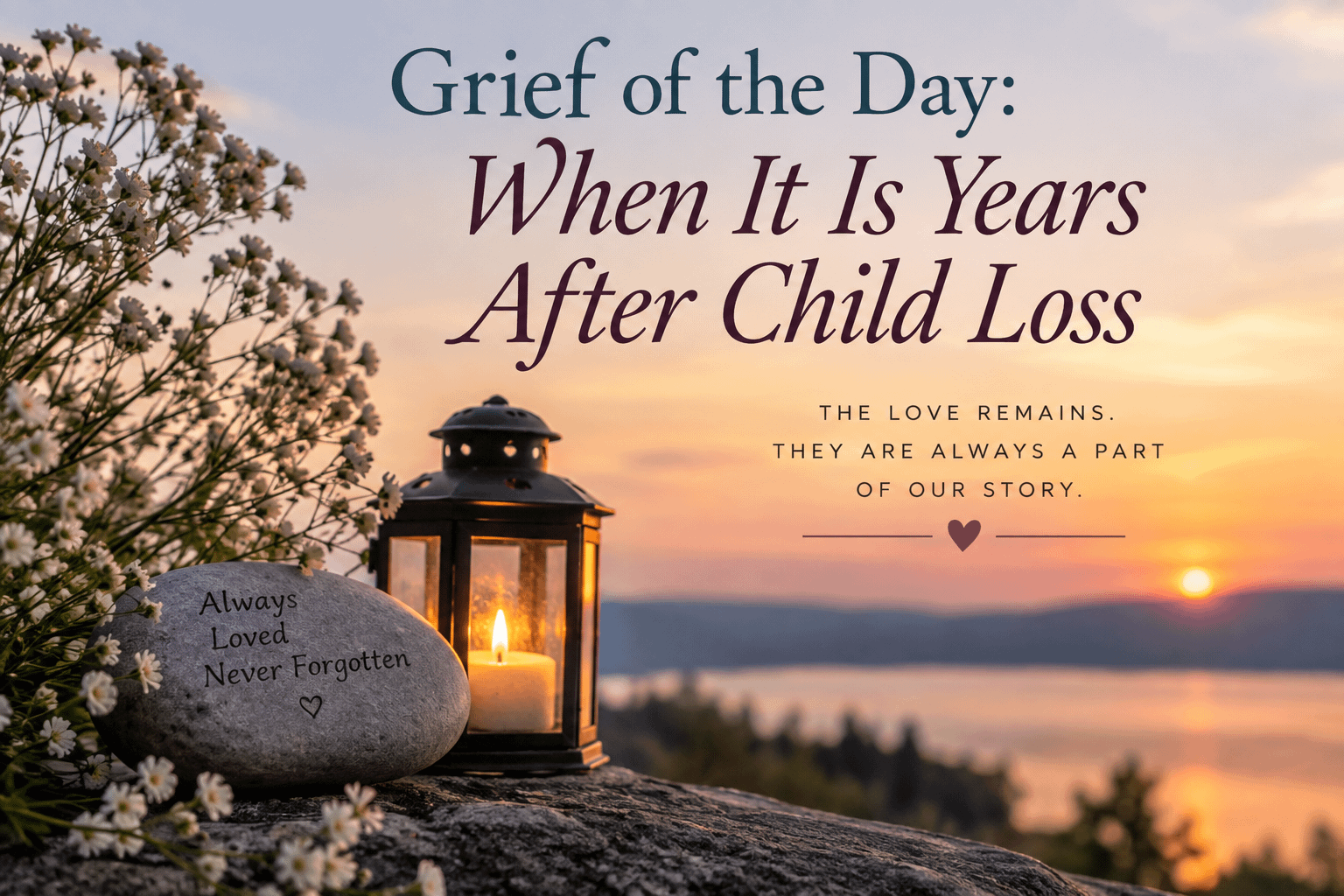
Category: Grief & Child Loss

  • Grief of the Day: When Ordinary Places Become Sacred

    Grief of the Day: When Ordinary Places Become Sacred

    Advertisements

    Some Places Never Feel Ordinary Again

    One of the most unexpected parts of grief is discovering that the world itself changes after loss. Streets you’ve driven hundreds of times suddenly feel different. A favorite restaurant carries more emotion than hunger. A park bench becomes a place of reflection. A bedroom door becomes difficult to open. A church pew feels both comforting and heartbreaking.

    These are no longer just places.

    They become sacred.

    Not because they are famous or beautiful, but because someone you loved left part of themselves there. Their laughter echoed through those rooms. Their footsteps crossed those sidewalks. Their smile filled those spaces. Their life became intertwined with the ordinary, forever changing how you experience them.

    For grieving parents, spouses, siblings, grandparents, and friends, ordinary places often become living reminders that love leaves permanent fingerprints. While time may soften some of the pain, these places continue to carry the weight—and the beauty—of memories that will never fade.

    Why Places Hold So Much Emotion

    Scientists call it contextual memory. Our brains naturally connect people, emotions, sounds, smells, and experiences with physical locations. The smell of fresh-cut grass may remind you of watching your child play baseball. The sound of waves may instantly bring back family vacations. Walking into a familiar room can release memories that have quietly waited beneath the surface.

    Grief heightens these connections.

    The places where life happened become emotional landmarks.

    That is why something as simple as driving past a school can suddenly bring tears. Why hearing a familiar song in a grocery store can stop you in your tracks. Why sitting in your loved one’s favorite chair feels almost impossible one day and deeply comforting the next.

    Your heart remembers what your eyes see.

    Every Place Tells a Story

    Every family has ordinary places filled with extraordinary memories.

    The kitchen where birthday cakes were decorated.

    The driveway where your teenager learned to drive.

    The baseball diamond where countless Saturday mornings were spent cheering.

    The hospital room where precious moments were shared.

    The hiking trail where conversations flowed effortlessly.

    The family cabin where generations gathered around the fire.

    The movie theater where they insisted on sitting in the same seat every visit.

    The local diner where everyone knew their favorite order.

    To someone else, these are simply places.

    To you, they are chapters of a story that continues to shape your life.

    When a Bedroom Becomes a Sanctuary

    For parents who lose a child, perhaps no room becomes more sacred than their child’s bedroom.

    Many parents leave it untouched for months or years.

    The clothes remain folded.

    The shoes stay by the door.

    Favorite books remain on the shelf.

    Photos continue to smile from dressers.

    Some people don’t understand this.

    But grieving parents often do.

    That room is one of the last physical spaces that still feels connected to their child. Walking into it can feel like stepping into a sacred sanctuary where memories remain beautifully alive.

    There is no timetable for changing that room.

    Some parents eventually transform it.

    Others preserve it.

    Neither choice is wrong.

    Healing is deeply personal.

    The Places We Avoid

    Not every sacred place feels comforting.

    Some become incredibly painful.

    The emergency room.

    The cemetery.

    The funeral home.

    The intersection where the accident happened.

    The nursing home.

    The hospice room.

    The empty seat at church.

    The school graduation that should have included your child.

    Sometimes the pain attached to these places feels unbearable.

    You may avoid driving by them.

    You may choose another route.

    You may not return for years.

    That doesn’t make you weak.

    It makes you human.

    Grief often asks more of us than we feel capable of giving.

    Returning When You’re Ready

    Eventually, many grieving people feel drawn back.

    Not because the pain is gone.

    But because love is stronger than fear.

    The first visit is rarely easy.

    You may cry before you even arrive.

    Your hands may shake.

    Your heart may race.

    You may sit quietly for several minutes without saying a word.

    That’s okay.

    There is no correct way to revisit sacred places.

    Some people pray.

    Some speak aloud to their loved one.

    Some bring flowers.

    Some simply sit in silence.

    Every act of remembrance is an expression of enduring love.

    Love Is What Makes a Place Sacred

    Sacred places are not defined by architecture.

    They are defined by relationships.

    A simple swing set becomes holy because a father pushed his daughter there every weekend.

    A fishing dock becomes sacred because it held years of conversations between father and son.

    A front porch becomes priceless because grandparents shared stories there every summer evening.

    A kitchen table becomes unforgettable because it gathered generations together for meals, laughter, and prayers.

    Love transforms ordinary places into lifelong treasures.

    Even after death, that transformation remains.

    The Hidden Gift of Sacred Places

    Although they often bring tears, sacred places also preserve something precious.

    They remind us that our loved one’s life truly happened.

    Sometimes grief can make us fear that memories are fading.

    Returning to meaningful places often awakens forgotten moments.

    You suddenly remember something they said.

    You hear their laugh in your mind.

    You picture the way they smiled.

    You recall tiny details you thought were lost forever.

    Those moments are gifts.

    They remind us that grief has not erased love.

    Creating New Traditions

    Many families discover healing by creating new traditions in meaningful places.

    You might visit your child’s favorite park on their birthday.

    Release balloons responsibly with biodegradable alternatives or plant flowers instead.

    Donate toys to children in their memory.

    Take a family photo every year at their favorite vacation spot.

    Light a candle at church.

    Walk a trail they loved.

    Volunteer for a cause they cared about.

    These traditions don’t replace the person you lost.

    They keep their legacy active.

    Love continues to move forward.

    Sacred Places Around the Holidays

    Holidays often magnify the emotions connected to familiar places.

    The empty chair at Thanksgiving.

    The Christmas tree missing the ornament they always hung.

    The backyard where Easter egg hunts once took place.

    The dining room where birthdays were celebrated.

    These spaces remind us not only of absence but also of incredible blessings.

    The pain exists because the love was real.

    Every holiday memory represents time spent together—a gift that grief cannot erase.

    The Unexpected Places

    Sometimes sacred places appear where you least expect them.

    A gas station where you shared one last conversation.

    A parking lot where you hugged goodbye.

    A highway overlook where you watched the sunset together.

    A coffee shop where dreams were discussed.

    A random street corner where they once made you laugh until you cried.

    These seemingly insignificant places become woven into your heart because love has no rulebook.

    It remembers everything.

    Carrying Sacred Places Within You

    Over time, something beautiful begins to happen.

    You realize the sacredness is no longer limited to physical locations.

    Because your loved one shaped who you are, you carry pieces of them wherever you go.

    Their kindness influences your decisions.

    Their laughter echoes in your memories.

    Their values guide your choices.

    Their love becomes part of your identity.

    Suddenly every sunrise reminds you of hope.

    Every act of kindness honors their memory.

    Every family gathering reflects their influence.

    The sacred places begin to multiply—not because you’re forgetting them, but because their love has become part of the way you see the world.

    For Those Who Feel Alone

    If you are reading this while grieving, know this:

    You are not strange because certain places make you cry.

    You are not weak because a familiar road feels impossible to drive.

    You are not broken because an empty bedroom still feels full of love.

    You are experiencing one of the deepest expressions of the human heart.

    Love leaves footprints.

    Grief simply teaches us where they are.

    A Prayer for Those Visiting Sacred Places

    Heavenly Father,

    Thank You for every memory that reminds us of the people we love. Even when those memories bring tears, help us also recognize them as evidence of lives that deeply mattered.

    Give us courage when we return to places filled with sorrow.

    Fill those moments with Your peace.

    Help us remember that while death changes our lives, it cannot erase love.

    Comfort every grieving heart today.

    Remind us that You walk beside us through every familiar place, every difficult memory, and every sacred moment.

    May we continue honoring those we love by living lives filled with compassion, kindness, gratitude, and hope.

    Amen.

    Final Thoughts

    Grief changes the landscape of our lives. Places that once blended into everyday routines suddenly become monuments to love. They remind us where we laughed, celebrated, struggled, prayed, and simply lived together.

    While others may see an ordinary house, a quiet park, a country road, or a simple restaurant, you see something much more.

    You see a life.

    You see a relationship.

    You see love.

    And love has a remarkable way of making ordinary places sacred forever.

    The beauty of these places is not found in the buildings, the scenery, or the memories alone. It is found in the truth that love continues to exist long after someone is gone. Every sacred place whispers the same gentle reminder: The people we love never truly leave the places they helped shape within our hearts.

    Read More Of Grief & Child Loss

  • Grief of the Day: The Weight of Unanswered Questions

    Advertisements

    Grief has a way of asking questions that life cannot always answer.

    When someone we love dies, our hearts are left searching for meaning in the middle of unimaginable pain. We replay conversations, revisit memories, and examine every detail of what happened, hoping that somewhere, somehow, we will find an explanation that eases the ache. We ask questions because questions give us something to hold onto when everything else feels like it has fallen apart.

    “Why did this happen?”

    “Why them?”

    “Could I have prevented it?”

    “Did they know how much I loved them?”

    “Will I ever feel like myself again?”

    For many grieving people, these questions never fully disappear. They become quiet companions that surface during sleepless nights, birthdays, anniversaries, holidays, or in the silence of an ordinary afternoon. They can feel as heavy as the grief itself.

    The truth is that one of the hardest parts of loss is realizing that some questions may never have answers. Learning to live with that uncertainty is one of grief’s greatest challenges—and one of its deepest lessons.


    Our Hearts Naturally Search for Meaning

    Human beings are wired to make sense of the world.

    When something terrible happens, our minds immediately begin looking for an explanation. We believe that if we can understand why something happened, perhaps the pain won’t feel quite as overwhelming.

    This instinct isn’t a weakness.

    It’s part of being human.

    When we lose someone unexpectedly, especially a child, spouse, parent, sibling, or close friend, our minds often become detectives searching for clues.

    We replay the timeline.

    We remember conversations word for word.

    We wonder if we missed warning signs.

    We imagine different outcomes.

    We convince ourselves that one small change could have altered everything.

    The mind does this because uncertainty is frightening. If we can identify a cause, we feel like we regain some control.

    Unfortunately, grief rarely offers that kind of certainty.


    The Questions That Never Stop

    Every grieving person has their own collection of unanswered questions.

    Some ask:

    • Why did this happen to someone so good?
    • Why couldn’t the doctors save them?
    • Why was I spared?
    • Why didn’t I see it coming?
    • Why didn’t they tell me something was wrong?
    • Why couldn’t I protect them?
    • Why did life have to change so suddenly?

    Others ask questions that only they will ever know.

    Questions whispered into empty rooms.

    Questions spoken through tears.

    Questions written in journals that no one else will ever read.

    These questions aren’t signs that you’re grieving incorrectly.

    They are evidence of how deeply you loved.

    Love naturally seeks understanding.


    The Endless Cycle of “What If”

    Perhaps the most exhausting questions in grief begin with two simple words:

    What if?

    What if I had answered the phone?

    What if I had convinced them not to go?

    What if I had noticed the symptoms sooner?

    What if I had hugged them longer?

    What if I had said one more “I love you”?

    These thoughts can become an endless loop.

    Every imagined possibility creates another.

    Every answer leads to another question.

    Eventually, grief can become less about remembering our loved one and more about trying to rewrite history.

    The painful reality is that no amount of imagining can change what has already happened.

    The “what ifs” promise control, but they only deepen sorrow.


    Guilt Often Disguises Itself as Questions

    Many grieving people don’t realize that beneath their questions lies something even heavier:

    Guilt.

    Sometimes we blame ourselves for things completely outside our control.

    We think:

    “I should have known.”

    “I should have stayed longer.”

    “I should have called.”

    “I should have done more.”

    But hindsight is unfair.

    Looking backward with information you only gained afterward creates impossible expectations.

    You made decisions based on what you knew then—not what you know now.

    That difference matters.

    If someone you love were grieving your loss, would you want them to spend the rest of their life blaming themselves?

    Probably not.

    Offer yourself the same compassion you would offer someone else.


    When There Simply Isn’t an Answer

    One of the cruelest realities of grief is that some tragedies simply have no satisfying explanation.

    Accidents happen.

    Illnesses appear without warning.

    Hearts stop beating.

    Lives change in seconds.

    Sometimes the answer truly is:

    “We don’t know.”

    For many people, those three words feel unbearable.

    But uncertainty doesn’t mean your loved one’s life had no meaning.

    Not understanding why something happened doesn’t erase the love that existed.

    Some mysteries remain mysteries.

    That doesn’t make your love any less real.


    Living Without Closure

    People often encourage grieving individuals to “find closure.”

    While well-intentioned, closure is not always possible.

    You may never have one final conversation.

    You may never hear the apology you deserved.

    You may never understand why events unfolded the way they did.

    You may never receive every answer you long for.

    Healing doesn’t require perfect closure.

    Healing is learning how to carry unanswered questions without allowing them to define your future.

    Acceptance isn’t agreement.

    Acceptance isn’t approval.

    Acceptance is acknowledging reality while choosing not to remain imprisoned by it.


    Faith When Answers Are Missing

    For people of faith, unanswered questions can also become spiritual questions.

    “God, why?”

    “Why did You allow this?”

    “Why didn’t You stop it?”

    These are not sinful questions.

    Throughout Scripture, faithful men and women cried out to God asking why.

    David did.

    Job did.

    Jeremiah did.

    Even Jesus cried,

    “My God, my God, why have You forsaken Me?”

    God is not offended by honest grief.

    He understands broken hearts.

    Faith doesn’t always remove questions.

    Sometimes faith simply gives us the strength to continue trusting even when answers never come.

    There are moments when we don’t understand God’s plan, but we can still trust His character.

    One day, many believers find comfort in the promise that what is hidden now will someday be made clear.

    Until then, faith often means walking forward with unanswered questions while believing we are not walking alone.


    Remember Their Life, Not Just Their Death

    When unanswered questions consume us, it’s easy for the circumstances of our loved one’s death to overshadow the beauty of their life.

    Don’t let the final chapter become the entire story.

    Remember:

    Their laugh.

    Their smile.

    Their kindness.

    Their sense of humor.

    The traditions you shared.

    The lessons they taught you.

    The ordinary moments that became unforgettable simply because they were there.

    Their life deserves far more attention than the mystery surrounding their death.

    Love always tells a bigger story.


    The Courage to Release the Need to Know

    There comes a point in many grief journeys when we quietly realize something important.

    We may never receive every answer.

    And that’s incredibly painful.

    But we also realize that waiting for answers keeps us from embracing the life still in front of us.

    Releasing the need to know everything doesn’t mean we stop caring.

    It means we stop allowing unanswered questions to steal today’s peace.

    We choose to remember with love instead of living entirely through regret.

    That choice takes tremendous courage.


    Peace Doesn’t Always Come From Understanding

    Many people believe peace comes after every question has been answered.

    Grief teaches something different.

    Peace often comes before understanding.

    It comes when we stop demanding explanations from life.

    It comes when we allow ourselves to love without conditions.

    It comes when we recognize that some things will remain mysteries until eternity.

    And somehow…

    Life slowly becomes livable again.

    The pain doesn’t disappear.

    The questions don’t completely vanish.

    But they lose their power to dominate every moment.


    Carrying Love Forward

    The greatest answer to grief isn’t found in solving every mystery.

    It’s found in continuing the love.

    Honor them by speaking their name.

    Share their stories.

    Live the values they taught you.

    Help others who are hurting.

    Smile when memories make you laugh.

    Cry when memories make you ache.

    Both are acts of love.

    Your relationship didn’t end.

    It changed.

    Love continues to exist in the way you remember them, the way you honor them, and the way they shaped the person you are becoming.


    Final Thoughts

    If today you are carrying the heavy burden of unanswered questions, know this:

    You are not alone.

    Nearly everyone who has experienced profound loss has wrestled with the silence that follows tragedy.

    The questions you ask are not signs of weakness.

    They are evidence of deep love.

    It is okay to admit that you don’t understand.

    It is okay to say, “I wish I had answers.”

    It is okay to grieve the questions as much as the loss itself.

    But don’t let unanswered questions convince you that healing is impossible.

    Healing isn’t about solving every mystery.

    Healing is about learning to carry both love and loss together.

    Your loved one is not defined by how they died.

    They are remembered by how they lived, how they loved, and how deeply they changed your life.

    One day, the questions may become quieter.

    The memories will remain.

    The love will remain.

    And even without every answer, you can still find moments of hope, purpose, and peace.

    Because love has never depended on having all the answers—it has always been strong enough to endure the unknown.

  • Grief of the Day: Missing the Sound of Their Voice

    Advertisements

    There are many things grief takes from us that people expect. It takes away future holidays, birthdays, family gatherings, and dreams we once held. But there are quieter losses that can catch us completely off guard. One of the most painful is realizing how much you miss the sound of your loved one’s voice.

    For many grieving people, there comes a moment when they desperately wish they could hear just one more conversation. Not a grand speech. Not a final goodbye. Just an ordinary “Good morning,” a familiar laugh, or the simple way they said your name.

    The silence that follows the loss of someone you love can become one of the loudest parts of grief.

    Whether you lost a child, spouse, parent, sibling, grandparent, or close friend, missing the sound of their voice is a deeply human experience. It is another reminder that grief isn’t only about someone being gone—it is about missing every part of who they were.

    A Voice Becomes Part of Your Life

    We often don’t realize how much someone’s voice becomes woven into our daily routine until it disappears.

    Think about the voices that shaped your life.

    The person who called every evening just to check in.

    The parent who always reminded you to drive safely.

    The spouse who greeted you after work.

    The child who filled the house with laughter.

    The grandparent who always knew exactly what to say when life became difficult.

    Their voices weren’t simply sounds.

    They became comfort.

    They became security.

    They became home.

    When someone dies, the silence they leave behind can feel almost impossible to describe. It isn’t just the absence of conversation—it’s the absence of familiarity, warmth, and connection.

    Ordinary Conversations Become Extraordinary Memories

    One of grief’s cruelest realities is that the conversations we once took for granted become the ones we miss the most.

    You don’t necessarily miss the big speeches.

    You miss things like:

    • “Did you eat today?”
    • “Be careful.”
    • “I’ll be home soon.”
    • “Love you.”
    • “Call me when you get there.”
    • “I’m proud of you.”

    Simple words become priceless once they’re gone.

    You would give almost anything to hear those ordinary phrases one more time because they now represent a life that can never be recreated.

    That longing isn’t unhealthy.

    It’s love searching for something it can no longer physically find.

    The Fear of Forgetting

    Many grieving people carry a private fear they rarely admit aloud.

    “What if I forget what they sounded like?”

    This fear can be heartbreaking.

    At first, every memory feels crystal clear. You can hear their laugh in your mind. You know exactly how they pronounced certain words. You remember the rhythm of their conversations.

    As months and years pass, those memories naturally become softer.

    You may struggle to remember exactly how deep their voice was or how loudly they laughed.

    That realization can trigger another wave of grief.

    Many people begin to panic, believing they are somehow losing their loved one all over again.

    The truth is much kinder.

    Memory changes.

    Love does not.

    Your Brain Changes Memories—Not Your Love

    Grief affects memory in complicated ways.

    Trauma, stress, and time all influence how our minds store experiences.

    This doesn’t mean you loved them any less.

    It doesn’t mean you’re forgetting them.

    Your brain is simply doing what every human brain does.

    The emotional impact of your loved one often lasts much longer than the exact details of their voice.

    You may not remember every sentence they spoke, but you’ll never forget how safe they made you feel.

    You’ll remember their kindness.

    Their patience.

    Their humor.

    Their encouragement.

    Their love.

    Those are the memories that truly define who they were.

    The Treasure of Old Recordings

    If you have saved voicemails, videos, or home movies, they become priceless after someone dies.

    Some grieving people listen to them frequently.

    Others cannot bear to press play.

    Both responses are completely normal.

    There is no correct timetable.

    You may go years without listening to a voicemail because it hurts too much.

    Then one day, when you’re ready, hearing those familiar words can become one of the greatest gifts you have left.

    If you still have recordings, consider making backup copies.

    Technology changes.

    Phones break.

    Accounts get deleted.

    Preserving those memories can bring comfort for years to come.

    When There Are No Recordings

    Not everyone has videos or saved voicemails.

    That can bring another layer of sadness.

    If that’s your situation, know this:

    A person’s voice lives in more places than recordings.

    It lives in the stories others tell.

    It lives in the sayings they repeated.

    It lives in family traditions they started.

    It lives in the lessons they taught.

    It lives in the values they passed on.

    Most importantly, it lives inside the people whose lives they changed.

    Sometimes you’ll hear someone else use one of their favorite expressions.

    Sometimes another family member laughs exactly the way they did.

    Sometimes you find yourself repeating something they always used to say.

    In those moments, their voice hasn’t disappeared.

    It has simply found another way to echo.

    Hearing Them in Your Heart

    Many grieving parents and spouses describe something remarkable.

    Years after their loved one dies, they still know exactly what that person would have said.

    When life becomes difficult, you may instinctively hear their encouragement.

    When you’re making a hard decision, you may already know the advice they would have given.

    When you’re discouraged, you may remember the exact words they used whenever you doubted yourself.

    These moments aren’t strange.

    They are part of what grief experts often call a continuing bond.

    Love doesn’t require physical presence to remain meaningful.

    Your relationship changes.

    It doesn’t disappear.

    The Little Things Can Break Your Heart

    People often assume grief only becomes overwhelming on birthdays, anniversaries, or holidays.

    But grief rarely follows a schedule.

    Sometimes it arrives because:

    • Someone laughs exactly like they did.
    • You hear their favorite song.
    • Their ringtone accidentally plays.
    • Social media reminds you of an old video.
    • You find an old voicemail while cleaning your phone.
    • A child uses one of their favorite sayings.

    Suddenly, you’re standing in the grocery store or sitting in your car with tears running down your face.

    These moments are normal.

    They don’t mean you’re moving backward.

    They mean love still exists.

    Missing Their Voice Doesn’t Mean You’re Stuck

    One of the biggest misconceptions about grief is that continuing to miss someone means you aren’t healing.

    Nothing could be further from the truth.

    Healing doesn’t erase love.

    It doesn’t erase longing.

    Healthy grief isn’t learning how to stop missing someone.

    It’s learning how to carry that missing alongside the life you’re continuing to live.

    You can laugh again.

    You can smile again.

    You can build new memories.

    And still miss hearing their voice every single day.

    Those truths can exist together.

    Keeping Their Voice Alive

    Although no one can replace the sound of your loved one’s voice, there are meaningful ways to honor it.

    You might:

    • Save every voicemail and make multiple backups.
    • Create a memory box with handwritten notes or cards.
    • Write down favorite sayings they often repeated.
    • Record family members sharing stories about them.
    • Watch home videos whenever you’re emotionally ready.
    • Tell younger family members about the person they were.
    • Speak their name often instead of avoiding it.
    • Continue traditions they loved.

    Every story shared keeps their memory alive.

    Every conversation about them allows their influence to continue touching future generations.

    Love Leaves Echoes

    One of the most beautiful truths about grief is that love doesn’t disappear when a person’s voice becomes silent.

    Love changes form.

    It becomes memories.

    It becomes courage.

    It becomes compassion.

    It becomes wisdom.

    It becomes strength you never knew you possessed.

    Their voice may no longer answer the phone.

    It may no longer call your name across the room.

    But the love carried in every conversation still lives inside you.

    That love has shaped who you are.

    It influences your choices, your relationships, your kindness, and your resilience.

    In many ways, your loved one still speaks—through the life you continue to live.

    Final Thoughts

    If today you find yourself missing the sound of someone’s voice, know that you are not alone.

    Nearly every grieving heart has wished for just one more conversation.

    One more laugh.

    One more “I love you.”

    One more ordinary moment that would now mean everything.

    While grief cannot return what has been lost, it reminds us of something incredibly important: people who are deeply loved never truly disappear from our hearts.

    Their voice may fade from memory over time, but the impact of their love never will.

    You may not always remember every word they spoke, but you will always remember how they made you feel.

    And perhaps that is the greatest echo of all.

    Because love never truly falls silent—it simply finds a new way to speak through the hearts of those left behind.

  • Grief of the Day: The Empty Chair That Never Feels Empty

    Advertisements

    Some losses change every part of your life.

    Others change every room you walk into.

    For those who have lost a child, spouse, parent, sibling, or someone whose presence was woven into everyday life, there is often one quiet reminder that never seems to lose its power—the empty chair.

    It might be at the kitchen table where breakfast was shared every morning. It could be a favorite recliner in the living room, a seat on the front porch, or the place they always chose at family gatherings. To anyone else, it looks like an ordinary chair. To you, it tells a story that words cannot fully express.

    People often refer to it as “the empty chair,” but those who grieve know the truth.

    It never really feels empty.

    It is filled with memories.

    It is filled with love.

    It is filled with the life of someone who will always matter.

    A Place That Holds a Lifetime of Memories

    Every family has routines.

    Someone always sits in the same place.

    Maybe they preferred the chair closest to the television. Maybe they liked sitting where they could watch everyone at the dinner table. Perhaps it became “Dad’s chair,” “Mom’s seat,” or the place your son or daughter naturally claimed every evening.

    Those little routines seem insignificant while life is normal.

    Then grief teaches us how meaningful they truly were.

    Suddenly, that familiar place becomes a reminder that life has changed forever.

    You don’t simply remember where they sat.

    You remember their smile.

    The sound of their laughter.

    The way they teased everyone at dinner.

    The stories they loved to tell.

    The conversations that filled the room with warmth.

    That chair becomes a doorway to thousands of memories, all arriving at once.

    The Silence Speaks Loudly

    One of grief’s hardest lessons is discovering just how loud silence can be.

    The room isn’t noisy anymore.

    No footsteps.

    No familiar voice calling your name.

    No laughter from the next room.

    No “I’ll be right there.”

    Just silence.

    And sometimes that silence feels deafening.

    You may catch yourself looking toward their chair without even realizing it. For a brief moment, your heart expects to see them sitting there.

    Then reality gently—or painfully—reminds you that they are gone.

    Those moments can happen years after the loss.

    They are not signs that you’re failing to heal.

    They are signs that love still remembers.

    Grief Lives in Ordinary Moments

    Many people assume grief appears only during anniversaries or holidays.

    Those days are certainly difficult.

    But grief often arrives during the smallest moments.

    Walking past their favorite chair.

    Setting the dinner table.

    Watching a movie they would have loved.

    Buying groceries.

    Hearing a joke they would have laughed at.

    These ordinary moments often hurt the most because they remind us of the ordinary life we no longer have.

    Grief isn’t always dramatic.

    Sometimes it quietly whispers through everyday routines.

    Holidays Make the Empty Chair Impossible to Ignore

    Family celebrations often magnify loss.

    Birthdays.

    Thanksgiving.

    Christmas.

    Mother’s Day.

    Father’s Day.

    Graduations.

    Weddings.

    Sunday dinners.

    While everyone gathers together, one place feels noticeably absent.

    Some families intentionally leave the chair empty as a tribute.

    Others choose to fill every seat because they know their loved one would never want the family to stop living.

    Both choices come from love.

    Neither one is right or wrong.

    What matters is remembering that an occupied chair does not erase the person who once sat there.

    Love doesn’t disappear because someone else takes the seat.

    The Chair You Carry Inside

    Eventually, many grieving people realize there are chairs that exist only in the heart.

    You hear exciting news.

    Your first thought is to call them.

    Then you remember.

    You face a difficult decision.

    You wish you could ask their advice.

    You accomplish something important.

    You wonder what they would have said.

    You experience a beautiful sunset.

    You instinctively wish they could see it too.

    These invisible empty chairs travel with us everywhere.

    They remind us that grief isn’t tied to one room.

    It follows the relationships that shaped our lives.

    For Bereaved Parents, the Chair Holds More Than Memories

    For parents who have lost a child, the empty chair often carries a unique kind of pain.

    Parents are not supposed to outlive their children.

    The future was supposed to include birthdays, careers, weddings, grandchildren, vacations, and countless ordinary moments together.

    Instead, there is an empty place where dreams once lived.

    Every family gathering quietly reminds you of what should have been.

    You may wonder how the world continues moving while your heart still pauses at the sight of that chair.

    The answer is simple.

    Love does not follow a calendar.

    A parent’s love has no expiration date.

    Whether your child was five years old or fifty, they will always be your child.

    That chair will always belong to someone deeply loved.

    When Others Stop Seeing It

    One of the loneliest parts of grief is realizing that other people slowly stop noticing the absence.

    Life moves forward.

    New babies are born.

    Families grow.

    Homes change.

    Furniture gets replaced.

    Years pass.

    But the person you lost never stops being part of your story.

    Others may no longer think about the empty chair.

    You probably do.

    Not every day.

    Not every moment.

    But often enough to remind you that love has permanent roots.

    That doesn’t mean you’re stuck.

    It means your relationship mattered.

    You’re Not Weak Because It Still Hurts

    Society often sends the message that grief should have an ending.

    After enough months or enough years, people expect life to return to normal.

    But grief doesn’t work that way.

    Healing doesn’t erase love.

    Moving forward doesn’t require forgetting.

    Seeing an empty chair and feeling emotional isn’t a setback.

    It’s a reflection of a heart that loved deeply.

    People who have never experienced profound loss may not understand.

    Those who have usually don’t need an explanation.

    One glance toward that familiar place tells the whole story.

    Finding New Ways to Honor Their Presence

    Over time, something beautiful can begin to happen.

    The empty chair slowly becomes more than a symbol of loss.

    It becomes a symbol of legacy.

    You begin telling their stories to younger family members.

    You cook their favorite recipes.

    You celebrate their birthday with acts of kindness.

    You support causes they cared about.

    You laugh at memories that once only made you cry.

    You begin living in ways that reflect the love they gave you.

    Their physical place may remain empty.

    Their influence never does.

    Love Never Leaves the Table

    One of the greatest misconceptions about grief is that healing means letting go.

    In reality, healthy grieving often means learning how to carry someone differently.

    They no longer sit across from you.

    But they still influence your decisions.

    They still inspire your kindness.

    They still shape your character.

    They still motivate you to become the person they believed you could be.

    Love changes form.

    It doesn’t disappear.

    A Gentle Reminder

    If today you find yourself staring at an empty chair and feeling tears well up in your eyes, don’t be ashamed.

    That chair represents more than someone’s absence.

    It represents a life that mattered.

    A relationship that changed you.

    A love that death could never erase.

    Others may only see an empty seat.

    You see birthdays celebrated together.

    Conversations shared over coffee.

    Late-night talks.

    Holiday traditions.

    Laughter.

    Comfort.

    Hope.

    Life.

    The chair may no longer hold the person you love, but it still holds their memory.

    And memory is one of the greatest gifts love leaves behind.

    So if your heart aches today, know that you are not grieving a piece of furniture.

    You are honoring someone whose place in your life can never be replaced.

    The chair may stand empty.

    But because of love, it will never truly feel empty.

    Read More Of Grief & Child Loss

  • Grief of the Day: Learning to Smile Without Feeling Guilty

    Advertisements

    One of the most difficult parts of grief isn’t the sadness.

    It’s the guilt that often comes with feeling happy again.

    After losing someone you love, there may come a moment when you genuinely laugh at a friend’s joke, smile while watching your grandchildren play, enjoy a favorite meal, or find yourself looking forward to tomorrow. Those moments may last only seconds before another emotion quickly takes over.

    Guilt.

    Your heart begins asking questions you never expected.

    “How can I smile when they’re gone?”

    “Shouldn’t I still be crying?”

    “If I can enjoy today, does that mean I’m forgetting them?”

    “Am I dishonoring their memory by moving forward?”

    These questions are shared by countless grieving people. They are especially common among parents who have lost a child, spouses who have lost a lifelong partner, and anyone whose loss forever changed the direction of their life.

    If you’ve ever felt guilty for smiling after loss, you’re not alone.

    In fact, it’s often a sign of how deeply you loved.

    But it’s also a burden you don’t have to carry forever.


    Why Joy Can Feel So Wrong

    When someone you love dies, your entire world changes.

    The future you imagined disappears.

    The routines you once shared end.

    The phone stops ringing.

    The chair remains empty.

    Birthdays become painful reminders.

    Holidays never feel the same.

    For a long time, sadness becomes your normal.

    After months—or even years—of carrying that pain, happiness can begin to feel unfamiliar. Because grief has become such a constant companion, any moment of joy can seem like you’re betraying the person you miss.

    Many grieving people subconsciously believe that staying sad somehow proves the depth of their love.

    The reasoning sounds something like this:

    “If I stop hurting, maybe I didn’t love them enough.”

    But grief doesn’t work that way.

    Pain isn’t the measurement of love.

    Love existed before the loss.

    Love continues after the loss.

    And love remains even when your tears don’t.


    The Lie That Grief Tells Us

    Grief often whispers lies that sound believable.

    It says:

    • “If you’re laughing, you’ve forgotten them.”
    • “If you’re healing, you’re leaving them behind.”
    • “If life becomes enjoyable again, your love must not have been real.”
    • “The longer you suffer, the more you honor them.”

    None of those statements are true.

    The person you lost doesn’t become more important because you remain miserable.

    Your relationship isn’t measured by your suffering.

    Love isn’t proven through endless pain.

    If anything, the depth of your grief already proves how significant they were in your life.

    You don’t have to continue punishing yourself to validate your love.


    As a Parent, the Guilt Can Be Even Greater

    For parents who have lost a child, guilt often becomes one of grief’s heaviest burdens.

    Many fathers and mothers quietly ask themselves questions they never say aloud.

    “Shouldn’t my life have ended too?”

    “How can I celebrate birthdays when my child no longer has one?”

    “Do I deserve happiness when my son or daughter isn’t here to experience it?”

    These thoughts are heartbreaking because they come from unconditional love.

    Parents naturally want to protect their children.

    When that becomes impossible, many feel guilty simply for surviving.

    But surviving is not betrayal.

    Your child loved you.

    Your child laughed with you.

    Your child smiled because of you.

    If they could speak to you today, would they truly ask you to spend every remaining year drowning in guilt?

    Or would they want you to keep living with the same love you gave them?

    Most parents already know the answer.

    Accepting it is simply much harder than hearing it.


    Smiling Doesn’t Mean You’re Done Grieving

    One of the greatest myths about grief is that healing follows a straight line.

    It doesn’t.

    You can smile today and cry tonight.

    You can enjoy a family gathering while secretly wishing one chair wasn’t empty.

    You can celebrate a birthday while mourning another that never came.

    Grief isn’t an emotion you graduate from.

    It’s something you learn to carry.

    The weight never completely disappears.

    But over time, your heart becomes stronger.

    The grief doesn’t necessarily become lighter.

    You simply become more capable of carrying both grief and hope at the same time.


    Healing Is Not Forgetting

    Many grieving people fear that healing means letting go.

    But healing and forgetting are two completely different things.

    You never stop being someone’s parent.

    You never stop loving your spouse.

    You never stop missing your best friend.

    Healing simply means learning how to continue living while carrying their memory.

    You still tell their stories.

    You still celebrate their birthday.

    You still remember their favorite songs.

    You still smile when something reminds you of them.

    Healing doesn’t erase memories.

    It often makes them easier to treasure.

    Instead of every memory bringing overwhelming pain, some eventually begin bringing warmth.

    That isn’t forgetting.

    That’s love maturing.


    Your Loved One Lives Through You

    One of the most beautiful truths about love is that it continues influencing the world long after someone is gone.

    Every lesson they taught you…

    Every value they instilled…

    Every act of kindness they inspired…

    Every tradition you continue…

    Their life continues through yours.

    If your son taught you compassion…

    Show compassion.

    If your wife taught you generosity…

    Live generously.

    If your father taught you integrity…

    Choose integrity.

    If your mother taught you unconditional love…

    Love others the same way.

    Every time you live out the best parts of who they were, you keep part of them alive.


    Joy and Grief Can Sit at the Same Table

    Many people imagine grief and happiness as opposites.

    They’re not.

    They’re companions.

    One doesn’t eliminate the other.

    Imagine sitting at a dinner table.

    Grief has a chair.

    Love has a chair.

    Memories have a chair.

    Hope has a chair.

    Laughter has one too.

    All of them belong there.

    You don’t have to ask one emotion to leave before another can arrive.

    Some days grief speaks the loudest.

    Other days gratitude does.

    Both are part of healing.


    The First Smile Is Often the Hardest

    Many grieving people remember the first time they laughed after their loss.

    They remember exactly where they were.

    Who made them laugh.

    How guilty they immediately felt.

    Some even apologized.

    Others cried because they realized they had laughed.

    That first genuine smile can feel frightening because it reminds you that life is still moving.

    But it’s also a sign that your heart, despite being broken, is still capable of experiencing light.

    That doesn’t erase the darkness.

    It simply proves the darkness hasn’t won.


    Living Is Not Leaving Them Behind

    One of the biggest fears in grief is that moving forward means moving on.

    Those two ideas are completely different.

    Moving on suggests leaving someone behind.

    Moving forward means taking them with you.

    You carry their lessons.

    You carry their love.

    You carry their influence.

    You carry their memory.

    Every new experience includes the invisible presence of someone you still love.

    They become part of your story instead of just part of your past.


    Give Yourself Permission

    Perhaps today is the day you stop asking permission from guilt.

    Give yourself permission to laugh.

    Give yourself permission to enjoy your family.

    Give yourself permission to travel.

    Give yourself permission to celebrate milestones.

    Give yourself permission to love again.

    Give yourself permission to dream about tomorrow.

    None of these things erase yesterday.

    They simply acknowledge that your life still has purpose.

    Your loved one’s chapter may have ended.

    Yours has not.


    A Letter to Your Heart

    If your heart feels guilty for smiling today, read these words slowly.

    You are allowed to heal.

    You are allowed to laugh.

    You are allowed to feel peace.

    You are allowed to build new memories.

    You are allowed to find purpose again.

    None of this means you loved them less.

    It means their love helped shape someone strong enough to keep living.

    The greatest tribute you can offer someone who loved you isn’t endless suffering.

    It’s a life that reflects the love they gave you.


    Final Thoughts

    Learning to smile without feeling guilty is one of grief’s quiet victories.

    It doesn’t happen all at once, and it doesn’t mean your grief is over. There will still be difficult anniversaries, unexpected tears, empty chairs, and moments when the pain feels as fresh as the day your loved one died. Healing is rarely a straight path, and no one should expect it to be.

    But over time, something beautiful begins to happen.

    You realize that your smile doesn’t replace your sorrow—it exists alongside it.

    Your laughter doesn’t erase your memories—it honors the life that filled them.

    Your hope doesn’t diminish your love—it gives that love a future.

    The people we lose never stop being part of who we are. They live in our stories, our values, our traditions, and the quiet moments when we catch ourselves smiling because we remembered something they once said or did.

    So if today brings you a reason to smile, don’t push it away.

    Receive it.

    Let it remind you that while grief has changed your life forever, it has not taken away your ability to experience love, joy, or purpose.

    Your loved one will always have a place in your heart.

    And there is still room there for hope.

  • Grief of the Day: When the World Keeps Moving

    Advertisements

    Life Doesn’t Pause for Grief—But Your Heart Does

    One of the most painful realities of grief is realizing that while your world has come to a complete stop, everyone else’s seems to continue as though nothing happened.

    The morning after your loss, alarms still ring. People hurry to work. Coffee shops fill with conversations. Children laugh on playgrounds. Families make plans for the weekend. Social media is filled with smiling faces, vacations, birthdays, and celebrations.

    Meanwhile, you’re wondering how you’re supposed to get out of bed.

    When you’ve lost someone you deeply love—especially a child, spouse, parent, sibling, or best friend—life no longer feels familiar. Every part of your world has changed, yet the rest of the world appears untouched.

    That contrast can be heartbreaking.

    It can leave you feeling invisible.

    You may even wonder if anyone remembers what happened anymore.

    The truth is, grief creates a different reality. It changes the pace of your life, your priorities, your perspective, and even your identity. While others continue moving forward, you may still be trying to understand how your life changed forever in a single moment.

    If this is where you are today, know this:

    You are not falling behind.

    You are surviving something life-altering.


    The Moment Time Stood Still

    Everyone who has experienced profound loss can usually tell you exactly where they were when their life changed.

    They remember the phone call.

    The knock at the door.

    The hospital room.

    The words they never wanted to hear.

    Those moments become permanently etched into memory.

    Life is often divided into two chapters:

    Before the loss.

    After the loss.

    Everything changes after that point.

    The calendar still moves forward, but emotionally, part of you remains connected to that day.

    Certain dates become sacred.

    Anniversaries become painful.

    Birthdays become reminders of what should have been.

    Even ordinary days can carry extraordinary sadness because grief doesn’t follow a schedule.


    Watching Life Continue Can Feel Cruel

    Many grieving people describe a strange feeling during the first weeks and months after loss.

    It’s almost surreal.

    You sit in your car and watch people laughing.

    You walk through a grocery store while families shop together.

    You hear coworkers discussing vacations.

    You see advertisements celebrating holidays.

    Inside, you wonder:

    “How can everyone act like nothing happened?”

    The answer is simple, but difficult.

    Their lives didn’t stop.

    Yours did.

    That doesn’t mean they don’t care.

    It simply means grief is intensely personal.

    No one else is carrying the weight you’re carrying.

    No one else wakes up with your memories.

    No one else falls asleep missing the same voice.


    The Loneliness That Follows

    One of grief’s greatest companions is loneliness.

    Not because people intentionally leave.

    But because life slowly pulls them back into their routines.

    In the beginning, there are cards.

    Phone calls.

    Flowers.

    Meals.

    Visitors.

    Texts checking in.

    Then…

    The visits become less frequent.

    The calls slow down.

    People stop mentioning your loved one.

    Some become uncomfortable talking about death.

    Others assume enough time has passed.

    But grief doesn’t disappear because a calendar page turns.

    Love doesn’t expire.

    Missing someone doesn’t have an expiration date.

    For bereaved parents especially, there is never a day when your child isn’t your child.

    You don’t stop being a parent because your child is no longer physically here.

    That love continues every single day.


    The Pressure to “Be Better”

    At some point, many grieving people begin sensing an invisible expectation.

    People expect them to smile more.

    Talk about happier things.

    Return to work.

    Resume hobbies.

    Be “back to normal.”

    But there is no normal.

    There is only a new version of life.

    One that includes grief.

    One that includes love.

    One that includes memories.

    Healing isn’t forgetting.

    Healing isn’t pretending everything is okay.

    Healing is learning to carry both joy and sorrow at the same time.

    Some days you’ll do that well.

    Other days you won’t.

    Both are perfectly normal.


    Grief Is Invisible

    One of the cruelest parts of grief is that much of it happens where no one else can see.

    People see you grocery shopping.

    They see you sitting in church.

    They see you attending work.

    They may even compliment you for “doing so well.”

    What they don’t see are the quiet moments.

    The tears in the shower.

    The empty bedroom.

    The favorite chair no one sits in anymore.

    The songs you skip because they’re too painful.

    The family traditions that now feel incomplete.

    The conversations you still have with someone who is no longer physically here.

    The nights when sleep refuses to come.

    The mornings when getting dressed feels impossible.

    Grief is often carried silently.

    Just because people cannot see your pain doesn’t mean it isn’t heavy.


    The Unexpected Triggers

    Healing isn’t linear because memories don’t arrive on schedule.

    Sometimes grief comes with obvious reminders:

    • Birthdays
    • Holidays
    • Death anniversaries
    • Family gatherings

    Other times it arrives unexpectedly.

    A familiar perfume.

    A certain song.

    Driving past a favorite restaurant.

    Seeing someone who looks like your loved one.

    Finding an old voicemail.

    Opening a drawer you haven’t touched in years.

    Even something as simple as hearing laughter can remind you of the person you miss.

    These grief bursts can happen years after loss.

    They don’t mean you’ve stopped healing.

    They mean love is still present.


    Comparing Yourself to Others

    One dangerous habit during grief is comparison.

    You may think:

    “They seem okay.”

    “They’re moving forward.”

    “They’re stronger than I am.”

    The truth is you rarely know what someone else is carrying.

    Many grieving people become experts at hiding pain.

    Some cry only when they’re alone.

    Some never speak about their grief publicly.

    Some appear cheerful because they don’t want to make others uncomfortable.

    There is no correct way to grieve.

    Some people cry every day.

    Some cry very little.

    Some talk constantly.

    Others remain quiet.

    Some heal through helping others.

    Others heal through solitude.

    Your grief belongs to you.

    Don’t compare your healing to someone else’s journey.


    When Guilt Begins to Appear

    As time passes, another emotion often enters grief.

    Guilt.

    You may feel guilty for laughing.

    For taking a vacation.

    For celebrating a birthday.

    For enjoying a meal.

    For smiling during a conversation.

    It can almost feel like happiness betrays the person you lost.

    But happiness is not disloyalty.

    Love and joy can exist together.

    Your loved one would not want every beautiful moment in your future to disappear.

    Moving forward does not mean moving away from them.

    It means allowing their love to become part of the life you continue to build.


    Finding Purpose While Carrying Pain

    One of the most remarkable things about grieving people is their strength.

    Not because they wanted it.

    Because they had no choice.

    Every day you continue living is evidence of courage.

    Some people eventually discover purpose through their pain.

    They volunteer.

    They mentor.

    They comfort other grieving families.

    They start charities.

    They advocate for change.

    They write.

    They speak.

    They simply become more compassionate.

    Pain changes people.

    Sometimes it creates extraordinary kindness.

    The love you still carry has the power to become hope for someone else.


    Give Yourself Permission to Move Slowly

    You don’t need to keep pace with the rest of the world.

    You don’t need to meet anyone else’s expectations.

    Today may simply be about surviving.

    Tomorrow might include hope.

    Next week might include laughter.

    The following day may include tears again.

    Healing is rarely a straight line.

    It’s a winding road filled with setbacks, breakthroughs, memories, and unexpected moments of peace.

    Every small step counts.

    Even getting out of bed.

    Even making breakfast.

    Even taking a walk.

    Even answering one phone call.

    Those small victories matter.

    Celebrate them.


    Your Loved One Lives On

    One of the greatest fears after loss is forgetting.

    Forgetting a voice.

    A laugh.

    A smile.

    A favorite saying.

    The sound of footsteps.

    The way they hugged you.

    But love has a remarkable way of preserving memories.

    Your loved one continues through:

    • Stories shared around the dinner table.
    • Family traditions that remain alive.
    • Lessons they taught you.
    • Values they passed on.
    • Kindness inspired by their life.
    • The love that still lives inside your heart.

    Death changes a relationship.

    It does not erase it.

    The connection remains.

    It simply takes a different form.


    For the Days When the World Feels Too Loud

    There will be days when celebrations feel overwhelming.

    When social media feels unbearable.

    When everyone else’s happiness magnifies your pain.

    On those days, give yourself grace.

    Take a break.

    Turn off your phone.

    Spend time in nature.

    Light a candle.

    Look through old photographs.

    Write a letter to your loved one.

    Pray.

    Cry.

    Rest.

    Healing sometimes requires stepping away from the noise of the world so you can care for your own heart.


    Hope Doesn’t Arrive All at Once

    Many people think healing happens through one life-changing breakthrough.

    Usually, it doesn’t.

    Hope returns quietly.

    It arrives in tiny moments.

    The first genuine smile.

    The first peaceful night’s sleep.

    The first holiday you survive.

    The first time you laugh without guilt.

    The first day you realize you smiled because of a memory instead of crying because of it.

    Healing often whispers before it speaks loudly.

    Those moments deserve to be noticed.


    A Gentle Reminder for Today

    If today feels difficult because the world keeps moving while your heart still aches, remember this:

    You are not weak.

    You are not broken.

    You are not failing.

    You are grieving because you loved deeply.

    There is no timeline for healing.

    No deadline for missing someone.

    No expiration date on love.

    Walk at the pace your heart can manage.

    Rest when you need to.

    Cry when you need to.

    Smile when it naturally comes.

    Remember often.

    Love always.

    The world may keep moving, but your grief deserves compassion, patience, and understanding.


    Final Thoughts

    One day, you may notice that the world still moves—but it no longer feels like it’s leaving you behind. You begin to find your own rhythm. The pain may still be present, but it no longer defines every moment. Instead, it becomes one part of a larger story—a story of enduring love, resilience, and hope.

    Grief is not about letting go of the person you lost. It is about learning to carry their memory into each new chapter of your life. Every act of kindness you show, every memory you share, and every day you choose to keep going becomes a living tribute to them.

    If today feels especially heavy, remember this simple truth: you don’t have to keep pace with the world. You only have to take the next step in front of you. And sometimes, that one step is more than enough.

    Your loved one’s life mattered.

    Your grief matters.

    And so do you.

    Read More Of Grief & Child Loss

  • Grief of the Day: Finding Strength When You Feel Empty

    Advertisements

    There are days in grief when sadness isn’t the strongest emotion.

    Instead, it’s emptiness.

    It’s waking up and feeling like something inside you has disappeared. It’s moving through the day on autopilot because you simply don’t have the emotional energy to do anything else. It’s staring at the ceiling at night wondering how you made it through another day while feeling completely drained.

    If you’ve experienced this kind of emptiness, you know it can be even more frightening than tears.

    At least when you’re crying, you know your heart is still expressing something. But when the tears stop and all that’s left is numbness, silence, and exhaustion, it can make you wonder if you’ll ever feel whole again.

    The truth is that emptiness is a natural part of grief.

    It isn’t a sign that you’ve failed.

    It isn’t a sign that you’ve stopped loving the person you lost.

    And it certainly isn’t a sign that you’ve reached the end of your journey.

    Sometimes, it’s simply the place where your heart rests after carrying more pain than words can describe.


    The Weight of Emotional Exhaustion

    Grief doesn’t just affect your emotions.

    It affects every part of your life.

    It steals your concentration.

    It interrupts your sleep.

    It changes your appetite.

    It drains your motivation.

    It makes simple decisions feel impossible.

    People who haven’t experienced profound loss often wonder why someone who is grieving seems so tired all the time.

    The answer is simple.

    Your brain and your heart are working overtime.

    Every memory, every anniversary, every unexpected reminder requires emotional energy. Your mind constantly adjusts to a reality it never wanted to accept. Even when you’re sitting quietly, grief is doing its work beneath the surface.

    That’s exhausting.

    It’s no wonder many grieving people say they feel empty rather than simply sad.


    When You Feel Like You’ve Lost Yourself

    One of the hardest parts of grief is realizing you aren’t the same person you once were.

    Before your loss, you probably had routines, dreams, and plans.

    You laughed more easily.

    You looked forward to holidays.

    You imagined a future that included the person you loved.

    Then everything changed.

    Now you may find yourself asking:

    • Who am I now?
    • What purpose do I have?
    • Why do things that once mattered feel unimportant?
    • Will I ever enjoy life again?

    These questions are common.

    Grief doesn’t just take a person from your life.

    Sometimes it changes your identity as well.

    Especially after losing a child, spouse, sibling, or parent, it can feel as though a part of who you were disappeared along with them.

    Rebuilding your identity isn’t about replacing your loved one.

    It’s about discovering how to carry their memory while continuing to live your own life.


    Strength Isn’t Always Visible

    We often imagine strength as confidence, determination, or bravery.

    But grief teaches us a different definition.

    Sometimes strength looks like:

    • Taking a shower when you don’t feel like getting out of bed.
    • Answering one text message.
    • Walking outside for five minutes.
    • Going to work even though your heart is breaking.
    • Making dinner when eating feels impossible.
    • Saying, “I’m struggling today.”

    These moments rarely receive applause.

    No one posts about them.

    No one celebrates them.

    Yet they are some of the strongest things a grieving person will ever do.

    Strength isn’t always loud.

    Often, it’s painfully quiet.


    The Danger of Believing the Emptiness

    Grief has a way of whispering lies.

    It tells you:

    “Nothing will ever get better.”

    “You’ll always feel this way.”

    “You’ve lost too much.”

    “There’s no point in trying anymore.”

    But grief isn’t a fortune teller.

    It’s a wounded heart speaking from pain.

    Pain distorts perspective.

    It convinces you that today’s feelings will last forever.

    They won’t.

    You may never stop missing the person you love.

    But you will not always feel exactly as you do today.

    Healing doesn’t erase grief.

    It teaches your heart how to carry it differently.


    Your Loved One Is Still Part of Your Story

    Many grieving people fear that moving forward somehow means leaving their loved one behind.

    Nothing could be further from the truth.

    Love doesn’t end because life changes.

    The person you lost continues to shape your life through:

    • The lessons they taught you.
    • The memories you treasure.
    • The kindness they inspired.
    • The traditions you continue.
    • The love they gave that still lives inside your heart.

    When you smile because of something they once said…

    When you help someone because they taught you compassion…

    When you tell their story…

    You are keeping their legacy alive.

    Love continues long after goodbye.


    Looking for Strength in Small Places

    When your heart feels empty, don’t pressure yourself to make giant changes.

    Look for tiny victories.

    Strength can be found in ordinary moments.

    Perhaps it’s:

    Watching birds outside your window.

    Feeling the warmth of morning sunlight.

    Taking your dog for a walk.

    Reading one chapter of a favorite book.

    Calling someone who understands grief.

    Listening to music that comforts your soul.

    Writing a letter to your loved one.

    Lighting a candle in their memory.

    Praying, even when you don’t have the words.

    These moments won’t erase your pain.

    But they remind your heart that life still contains beauty.

    Healing often arrives in whispers, not dramatic breakthroughs.


    Why Rest Is Part of Healing

    Many grieving people feel guilty for resting.

    They believe they should always be doing something.

    Staying busy.

    Keeping their mind occupied.

    Being productive.

    But grief is work.

    Heavy work.

    Your mind processes memories.

    Your body carries stress.

    Your emotions fluctuate constantly.

    You need rest because healing requires energy.

    Some days your greatest accomplishment may simply be getting through the day.

    That’s enough.

    Rest is not weakness.

    It’s part of recovery.


    Finding Strength Through Helping Others

    Something remarkable often happens during grief.

    The compassion you’ve gained through suffering begins to overflow.

    You notice hurting people more easily.

    You understand silent pain.

    You recognize loneliness.

    You become more patient.

    Many grieving parents, spouses, and family members discover purpose by helping others facing similar losses.

    Not because their own pain has disappeared.

    But because shared pain becomes lighter when carried together.

    Sometimes the strength you can’t find for yourself appears when you offer kindness to someone else.


    When Faith Feels Quiet

    Faith often changes after loss.

    You may pray differently.

    You may ask difficult questions.

    You may feel angry.

    Confused.

    Disappointed.

    Or simply silent.

    Many people believe this means their faith is failing.

    It doesn’t.

    Even the strongest believers experience seasons where God feels distant.

    Yet Scripture reminds us repeatedly that God stays close to the brokenhearted, even when His presence feels hidden.

    Psalm 34:18 says:

    “The Lord is close to the brokenhearted and saves those who are crushed in spirit.”

    Notice that it doesn’t say God is only close when you feel Him.

    His presence isn’t determined by your emotions.

    Sometimes He carries us through seasons we don’t even realize we’ve survived until much later.


    There Is No Deadline for Healing

    One of the greatest pressures grieving people face comes from the expectations of others.

    People ask:

    “Aren’t you doing better?”

    “Hasn’t enough time passed?”

    “When are you going to move on?”

    The truth is…

    Love doesn’t have an expiration date.

    Neither does grief.

    Healing isn’t measured by calendars.

    It’s measured by growth.

    Some days you’ll feel stronger.

    Other days you’ll feel like you’re starting over.

    Both are normal.

    Progress in grief is rarely a straight line.

    It’s more like waves.

    Some are gentle.

    Some crash unexpectedly.

    But over time, you’ll notice something remarkable.

    The waves still come.

    They simply stop knocking you down as often.


    You Are Stronger Than You Feel

    Right now, you may not feel strong.

    You may feel exhausted.

    Lonely.

    Lost.

    Empty.

    But strength isn’t measured by feelings.

    It’s measured by endurance.

    Every day you’ve chosen to keep breathing…

    Every morning you’ve gotten out of bed…

    Every moment you’ve carried your loved one in your heart while continuing to live…

    You’ve demonstrated extraordinary courage.

    You may not see it.

    Others may never fully understand it.

    But it’s there.


    A Gentle Reminder for Today

    If today feels heavy, don’t demand more from yourself than today requires.

    Drink some water.

    Eat something nourishing.

    Take a short walk if you’re able.

    Step outside for fresh air.

    Talk to someone you trust.

    Read something encouraging.

    Pray if your heart allows it.

    Rest if your body needs it.

    And remind yourself:

    You don’t have to conquer tomorrow today.

    You only have to make it through this moment.

    Then the next.

    And the next.


    Final Thoughts: Strength Grows Quietly

    Grief has a way of convincing us that emptiness is permanent.

    It isn’t.

    What feels empty today is often a heart making room to carry both love and loss together.

    You will always miss the person you love.

    Certain dates will always be difficult.

    Some memories will still bring tears.

    But alongside the pain, something else slowly begins to grow.

    Resilience.

    Compassion.

    Wisdom.

    Hope.

    Not because grief disappears, but because your heart learns how to hold both sorrow and love at the same time.

    If today you feel empty, remember this:

    You are not broken beyond repair.

    You are not failing because you’re struggling.

    You are not weak because you’re tired.

    You are a person carrying an incredible loss, and despite everything, you are still here.

    That alone is evidence of remarkable strength.

    So be gentle with yourself today.

    Take one breath.

    One step.

    One moment.

    Even in the emptiest seasons, hope has a way of quietly finding those who refuse to give up.

    And one day, you’ll discover that the strength you were searching for wasn’t something you had to find—it was something that had been growing inside you all along.

    Read More Of Grief & Child Loss

  • Grief of the Day: Grief Doesn’t Always Look Like Tears

    Advertisements

    “Grief does not always look like crying. Sometimes it looks like being easily irritated, tired for no reason, forgetting simple things, avoiding people, or sitting in silence because explaining yourself feels exhausting.”

    These words resonate with countless people who are living through loss. Society often imagines grief as something visible—tears streaming down a face, a broken voice at a funeral, or someone openly expressing sadness. While those moments certainly happen, they tell only a small part of the story.

    The reality is that grief often hides in plain sight.

    It shows up in ways that others don’t recognize. It can look like someone who seems distracted at work, a parent who no longer laughs as often, a friend who stops answering messages, or someone who simply says they’re “fine” because finding the words feels impossible.

    The deepest grief is often the quietest.


    The Invisible Weight of Grief

    One of the hardest parts about grieving is that the world expects you to eventually “return to normal.”

    People may offer condolences in the days following your loss. Meals arrive. Cards are sent. Friends check in.

    Then life moves on.

    But yours doesn’t.

    You wake up every morning carrying the same absence that was there yesterday.

    The person you love is still gone.

    The chair is still empty.

    The phone still doesn’t ring.

    The birthdays, holidays, anniversaries, and ordinary Tuesday afternoons all remind you that life has permanently changed.

    While others see someone who appears functional, they don’t see the emotional weight you’re carrying every minute of every day.

    Grief is invisible, but that doesn’t make it any less real.


    Why Small Things Suddenly Feel Overwhelming

    Many grieving people wonder why they become frustrated over the smallest inconveniences.

    A slow driver.

    A misplaced set of keys.

    An unexpected bill.

    Someone asking one too many questions.

    Normally these wouldn’t matter.

    But grief changes your emotional capacity.

    Imagine carrying a heavy backpack filled with stones every moment of every day. Eventually, adding one more small rock feels unbearable—not because the rock is heavy, but because you’ve already been carrying so much.

    That’s what grief often feels like emotionally.

    Your heart is already exhausted.

    Your mind is already overwhelmed.

    Your spirit is already carrying more than most people realize.

    So the little things suddenly feel much bigger.


    The Exhaustion That Sleep Can’t Fix

    People often ask grieving individuals,

    “Are you getting enough rest?”

    Sometimes the answer is yes.

    Sometimes it doesn’t matter.

    Grief creates a kind of exhaustion that sleep alone cannot cure.

    Your brain is constantly processing memories.

    You’re replaying conversations.

    You’re wondering what you could have done differently.

    You’re thinking about birthdays that will never be celebrated together.

    You’re reliving hospital rooms, phone calls, final hugs, or final words.

    Even when you’re sitting quietly, your mind is working overtime.

    That emotional labor consumes tremendous energy.

    Many bereaved parents describe feeling physically tired despite accomplishing very little during the day.

    That’s because surviving grief is work.

    Heavy work.

    Invisible work.

    Heartbreaking work.


    Grief Brain Is Real

    Have you ever forgotten why you walked into a room?

    Lost your train of thought in the middle of a sentence?

    Forgotten appointments?

    Misplaced your keys repeatedly?

    Read the same paragraph five times without remembering what it said?

    This experience is often called grief brain or brain fog.

    When trauma enters your life, your brain shifts into survival mode.

    Concentration becomes difficult.

    Short-term memory weakens.

    Decision-making feels overwhelming.

    Many grieving people worry they’re becoming forgetful or losing their intelligence.

    They’re not.

    Their brain is simply trying to process one of life’s most devastating experiences.

    Healing takes time.

    Your mind is protecting itself the best way it knows how.


    When Silence Speaks Louder Than Words

    People often ask grieving individuals,

    “How are you doing?”

    Most of us answer,

    “I’m okay.”

    Not because it’s true.

    Because explaining the truth feels impossible.

    How do you explain waking up every morning missing your child?

    How do you describe seeing everyone else move forward while your heart remains anchored to a single moment in time?

    How do you explain that some days simply brushing your teeth feels like an accomplishment?

    Sometimes silence isn’t avoidance.

    It’s survival.

    Talking requires emotional energy.

    Grief often leaves very little of that.


    Why Grieving People Pull Away

    One of the greatest misunderstandings about grief is assuming someone who withdraws no longer wants relationships.

    Usually, the opposite is true.

    They desperately need understanding.

    They simply don’t have the strength to socialize the way they once did.

    Every invitation requires emotional effort.

    Every conversation may include questions they’d rather avoid.

    Every gathering reminds them of the person who should still be there.

    Sometimes staying home feels safer.

    Sometimes sitting alone is less exhausting than pretending everything is okay.

    That doesn’t mean they don’t appreciate the people who continue showing up.

    Often, those quiet acts of love become lifelines.


    The Pressure to “Be Strong”

    Many grieving people hear phrases like:

    • “You’re so strong.”
    • “Your loved one would want you to be happy.”
    • “Everything happens for a reason.”
    • “At least they’re no longer suffering.”

    Although these words are usually spoken with good intentions, they can unintentionally make grieving people feel as though they must hide their pain.

    Strength doesn’t mean pretending you’re okay.

    Strength isn’t never crying.

    Strength isn’t smiling through heartbreak.

    Real strength is getting out of bed when your heart wants to stay hidden.

    It’s continuing to love despite devastating loss.

    It’s surviving another day when you never imagined you could.


    As a Bereaved Father

    Since losing my son, I’ve learned that grief rarely announces itself with dramatic moments anymore.

    Sometimes it appears as fatigue that no amount of sleep seems to fix.

    Sometimes it’s forgetting what I was doing because my mind drifted toward a memory of him.

    Sometimes it’s choosing silence because explaining the depth of my pain feels impossible.

    People often see me writing articles, encouraging others, or helping fellow grieving parents.

    What they don’t always see is the emotional cost behind those words.

    Every article I write carries pieces of my son.

    Every person I help reminds me why I continue moving forward.

    Grief hasn’t disappeared.

    I’ve simply learned to carry it while choosing to live with purpose.

    That doesn’t make the pain smaller.

    It gives the pain somewhere meaningful to go.


    If Someone You Love Is Grieving

    If someone in your life is grieving, remember that what you see is rarely the whole story.

    Instead of saying,

    “Call me if you need anything,”

    try saying,

    “I’m bringing dinner over tonight.”

    Instead of trying to fix their pain, simply sit beside them.

    Allow silence.

    Listen without offering solutions.

    Remember important dates.

    Say their loved one’s name.

    Continue checking in long after everyone else has stopped.

    Sometimes the greatest comfort comes from someone who isn’t trying to remove the pain—they’re simply willing to carry part of it with you.


    Give Yourself Grace

    If you’re grieving today, give yourself permission to be human.

    It’s okay if you’re tired.

    It’s okay if you’re forgetful.

    It’s okay if you’re easily overwhelmed.

    It’s okay if you need quiet.

    It’s okay if your healing doesn’t look like someone else’s.

    Grief has no schedule.

    No finish line.

    No deadline.

    Healing doesn’t mean forgetting.

    It means learning how to continue loving someone whose physical presence is gone while still allowing yourself to embrace the life that remains.


    Hope Can Exist Alongside Grief

    Many people believe hope and grief cannot exist together.

    They can.

    Hope doesn’t erase heartbreak.

    It simply reminds us that heartbreak doesn’t have to erase us.

    You may never stop missing the person you love.

    You may always feel the ache of their absence.

    But little by little, you can begin to smile without guilt.

    Laugh without feeling disloyal.

    Dream again.

    Help others.

    Honor their memory through the way you live.

    The love you shared never disappears.

    It simply changes form.


    Final Thoughts

    Grief is far more than tears.

    Sometimes it looks like exhaustion that no one understands.

    Sometimes it sounds like silence because words are too heavy.

    Sometimes it feels like frustration over little things because your heart is already carrying the unimaginable.

    If this describes where you are today, know that you are not broken.

    You are grieving.

    And there is a difference.

    Be patient with yourself.

    Rest when you need to.

    Accept help when it’s offered.

    Remember that healing is not about leaving your loved one behind—it is about learning to carry their love forward while continuing to live.

    Your grief is real.

    Your love is real.

    And even on the days when your pain is invisible to everyone else, it still deserves compassion—including your own.

  • Grief of the Day: One More Day Without Them

    Advertisements

    Every morning begins with the same truth.

    They are still gone.

    Before your feet touch the floor, before the coffee finishes brewing, before the sun fully rises, there is a quiet realization that settles into your heart. The person you love is not coming home. They won’t call today. They won’t send a text. They won’t laugh at something funny you saw online. They won’t be sitting across the dinner table tonight.

    It is one more day without them.

    For someone who has never experienced profound loss, that sentence may seem simple. But for those of us living with grief, those five words carry the weight of an entire lifetime.

    Every day after loss is another day you have to learn how to live with an absence that never should have existed.

    The Morning Reality

    Grief has a way of greeting you before the rest of the world does.

    Some mornings you wake for just a second and everything feels normal. Then reality quietly returns.

    You remember.

    Your heart sinks.

    The pain comes rushing back.

    It doesn’t matter whether your loved one died three weeks ago or thirty years ago. There are mornings when grief still feels as fresh as it did the day your world changed forever.

    People often assume those moments disappear with time.

    They don’t.

    They simply become less predictable.

    Sometimes you can go days feeling steady before grief suddenly reminds you that someone important is missing from your life.

    The love remains.

    So does the loss.

    Every Day They Miss

    One of the cruelest parts of grief is realizing that your loved one is missing every new chapter of your life.

    They miss birthdays.

    Graduations.

    Family vacations.

    Wedding anniversaries.

    Holiday dinners.

    New grandchildren.

    Career promotions.

    Simple Sunday afternoons.

    Life keeps unfolding, yet the person you most wish could experience it with you isn’t there.

    You find yourself thinking things like:

    “I wish you could have seen this.”

    “You would have loved this.”

    “I wish I could tell you what happened today.”

    Those thoughts never completely stop.

    Love naturally wants to share life with the people who matter most.

    When they’re gone, your heart still reaches for them.

    The World Keeps Moving

    Perhaps one of the loneliest feelings in grief is watching everyone else continue living.

    The grocery store is still busy.

    Children still laugh at playgrounds.

    People complain about traffic.

    Neighbors mow their lawns.

    Coworkers talk about weekend plans.

    Sports continue.

    Movies are released.

    The world never pauses.

    Meanwhile, you’re carrying an invisible weight that feels impossible to explain.

    Sometimes it can feel almost unfair.

    How can life continue when yours changed forever?

    The answer is painful.

    Life continues because it must.

    Eventually, we learn that while the world keeps moving, we don’t have to pretend we aren’t grieving. We can continue living while still carrying our love and our loss together.

    Missing the Ordinary More Than the Extraordinary

    People often think grief centers around birthdays, holidays, and anniversaries.

    Those days are undeniably difficult.

    But many grieving hearts will tell you that the ordinary moments hurt even more.

    Walking through the hardware store.

    Seeing their favorite candy.

    Driving past a place you visited together.

    Hearing a phrase only they used to say.

    Finding one of their old jackets.

    Looking through old text messages.

    Seeing their handwriting on a birthday card.

    Those moments arrive without warning.

    They don’t give you time to prepare.

    One second you’re buying groceries.

    The next you’re standing in an aisle trying not to cry because you walked past their favorite cereal.

    Grief hides inside everyday life.

    The Weight of Silence

    There is a unique silence that comes after losing someone you deeply loved.

    It’s not simply the absence of sound.

    It’s the absence of their voice.

    The absence of their laughter.

    The absence of hearing your name the way only they said it.

    Silence becomes one of grief’s loudest companions.

    You begin to notice just how much space one person occupied in your life.

    One chair.

    One bedroom.

    One phone number.

    One birthday.

    One Christmas stocking.

    One seat at the dinner table.

    One voice.

    Yet somehow losing one person changes everything.

    Love Never Received an Expiration Date

    One of the biggest misconceptions about grief is that healing means loving less.

    Nothing could be further from the truth.

    You don’t heal because your love fades.

    You heal because you slowly learn how to carry that love differently.

    Love doesn’t expire.

    Parents don’t stop loving their children because death entered the story.

    Children don’t stop loving their parents.

    Spouses don’t stop loving each other.

    Best friends don’t suddenly forget decades of shared memories.

    Love simply loses its physical place to land.

    That is why grief hurts so deeply.

    It is love searching for someone it can no longer hold.

    When Others Think You’ve Moved On

    There comes a point where people stop asking how you’re doing.

    Not because they don’t care.

    Because they assume you’re okay.

    Months become years.

    The sympathy cards stop arriving.

    The phone calls become less frequent.

    Others quietly return to normal life.

    Yet your heart still carries the loss every single day.

    This can create a second kind of grief.

    The grief of feeling forgotten.

    People may no longer mention your loved one because they don’t want to upset you.

    Ironically, many grieving people desperately wish someone would simply say their loved one’s name.

    To hear someone remember.

    To know they haven’t been forgotten.

    Because when someone speaks their name, it reminds you that they mattered to others too.

    The Guilt That Grief Brings

    Many grieving people quietly wrestle with guilt.

    Guilt for laughing.

    Guilt for smiling.

    Guilt for enjoying vacation.

    Guilt for celebrating birthdays.

    Guilt for falling in love again.

    Guilt for living.

    You begin wondering questions that have no perfect answers.

    “Would they want me to be happy?”

    “Am I leaving them behind?”

    “Am I forgetting them?”

    The truth is this:

    Living your life does not dishonor theirs.

    Joy does not replace love.

    Healing does not erase memories.

    Moving forward is not moving away.

    You carry them with you wherever you go.

    One More Day Carrying Their Memory

    Although you cannot spend another day with them, you can spend another day honoring them.

    That may look different for everyone.

    You may cook their favorite meal.

    Listen to music they loved.

    Volunteer in their memory.

    Plant flowers.

    Visit a special place.

    Share stories with your family.

    Support others walking through grief.

    Write about them.

    Pray.

    Cry.

    Smile.

    Remember.

    There is no wrong way to honor someone you love.

    The greatest tribute is refusing to let their love disappear from the world.

    My Journey as a Bereaved Father

    As a father who lost his son, I understand what it means to count the days differently.

    People often measure time by birthdays, holidays, or anniversaries.

    Bereaved parents measure time by the days our child should still be here.

    Every achievement carries a bittersweet feeling because there is one person we wish could celebrate beside us.

    There isn’t a morning when my son doesn’t cross my mind.

    Some days I remember his laughter.

    Other days I remember the dreams we never got to fulfill together.

    Sometimes I simply miss hearing his voice.

    But over time, I realized something important.

    I could allow grief to silence my life, or I could use my grief to help someone else survive theirs.

    That decision became my purpose.

    Every article I write.

    Every grieving father I encourage.

    Every bereaved parent who finds hope through my words.

    Each one is another way my son’s life continues making a difference.

    His story didn’t end with his last breath.

    His love continues through mine.

    Grief Changes You Forever

    People often ask when grief ends.

    The answer may not be comforting, but it is honest.

    It doesn’t.

    Not completely.

    You don’t return to who you were before loss.

    You become someone new.

    Someone who understands compassion more deeply.

    Someone who notices lonely people.

    Someone who appreciates ordinary conversations.

    Someone who knows how precious a single moment truly is.

    Loss changes your priorities.

    It changes what matters.

    It changes how you see life.

    While none of us would choose this path, many grieving people eventually discover that pain has given them greater empathy than they ever imagined possible.

    Finding Hope Without Letting Go

    Hope after loss doesn’t mean pretending everything is okay.

    Hope means believing life can still hold meaning.

    It means believing love continues.

    It means believing your story isn’t over.

    Hope allows you to smile without guilt.

    To dream again.

    To laugh again.

    To love again.

    Not because your loved one has been replaced.

    Because their love helped shape the person you are becoming.

    The deepest love leaves the deepest imprint.

    Surviving One Day at a Time

    Sometimes people ask how they are supposed to survive years without someone they love.

    The answer is simpler than it sounds.

    Don’t survive years.

    Survive today.

    Drink the glass of water.

    Take the walk.

    Answer the phone.

    Eat the meal.

    Watch the sunset.

    Pray.

    Rest.

    Then wake up tomorrow and do it again.

    Grief isn’t conquered through giant leaps.

    It is endured through countless small acts of courage.

    Every single day you continue living is evidence of strength you may not even recognize.

    Their Love Still Lives

    Death ends a life.

    It does not end influence.

    It does not end memories.

    It does not end love.

    Your loved one’s kindness may live on through your generosity.

    Their wisdom may shape your decisions.

    Their laughter may echo through family stories.

    Their values may guide your children.

    Their compassion may inspire your own.

    The greatest legacy anyone leaves behind is not found in possessions.

    It is found in the lives they changed.

    If they changed yours, then part of them continues living every day.

    Final Thoughts

    Today is one more day without them.

    There is no way around that truth.

    But today is also one more opportunity to carry their memory with love instead of fear.

    One more opportunity to tell their story.

    One more opportunity to honor the life they lived.

    One more opportunity to show kindness because they taught you compassion.

    One more opportunity to keep walking, even when your heart feels heavy.

    If you are grieving today, know this:

    You are not weak because you still cry.

    You are not failing because you still miss them.

    You are not broken because your heart still aches.

    You are grieving because you loved deeply.

    And that love is one of the most beautiful things you will ever carry.

    One more day without them will never be easy.

    But with each passing day, you prove something remarkable.

    You are still standing.

    You are still loving.

    You are still remembering.

    And in doing so, you ensure that the person you miss continues to leave fingerprints on this world through the life you choose to live.

    Their story did not truly end.

    It continues every time you speak their name, remember their smile, and choose to live with the love they left behind.

    Read More Of Grief & Child Loss

  • October 25, 2021 — The Day My World Changed Forever

    Advertisements

    There are dates that simply pass by on a calendar.

    Then there are dates that forever divide your life into before and after.

    For me, that date is October 25, 2021.

    It was the day my 21-year-old son, Paul, passed away in a car accident. It was the day my heart broke in a way I never knew was possible. It was the day the future I had imagined disappeared forever.

    People often say life can change in an instant.

    I never truly understood what that meant until October 25.

    One moment I was a father looking forward to making more memories with my son.

    The next, I was a bereaved father trying to understand how the world could continue turning while mine had completely stopped.

    The Moment Everything Changed

    Nothing prepares a parent to lose a child.

    There are no words that soften the blow.

    No amount of strength can shield you.

    No amount of faith can prevent the questions that immediately flood your mind.

    “Why him?”

    “Why my son?”

    “Why couldn’t it have been me instead?”

    Those questions echoed through my mind every day for a long time.

    The hardest part wasn’t just accepting that Paul had died.

    The hardest part was realizing I would have to spend the rest of my life learning how to live without someone I never imagined losing.

    As parents, we’re supposed to leave this world before our children.

    We’re supposed to watch them grow older.

    Watch them get married.

    Watch them build careers.

    Watch them become parents themselves.

    We’re supposed to complain about getting older while they tease us about gray hair.

    We’re supposed to have decades together.

    When your child dies, every one of those dreams dies with them.

    You don’t just grieve the person.

    You grieve every future moment that will never happen.

    Paul Was More Than My Son

    Paul wasn’t just my child.

    He was my best friend.

    For years, it was just the two of us.

    Our bond wasn’t built on grand adventures or expensive vacations.

    It was built on everyday life.

    Simple conversations.

    Shared meals.

    Quiet moments.

    Laughter that seemed ordinary at the time but has become priceless in memory.

    One of the things many people don’t know is how much Paul cared for me.

    When I struggled with my health years ago, he stepped into a role no teenager should ever have to fill.

    He reminded me to take my medications.

    He made sure I ate.

    He helped me through difficult days.

    He worried about me.

    He loved me enough to quietly put my needs ahead of his own.

    That was simply who Paul was.

    He had an incredible heart.

    He cared deeply about other people.

    He wasn’t kind because someone was watching.

    He was kind because kindness was who he was.

    That is the legacy he left behind.

    Living Through the Darkness

    After Paul died, I honestly didn’t know if I wanted to keep living.

    I wasn’t suicidal.

    I just couldn’t imagine how life could ever have meaning again.

    Everything reminded me of him.

    His room.

    His favorite foods.

    His birthday.

    Christmas.

    Father’s Day.

    Songs on the radio.

    Driving past places we had been together.

    Even ordinary moments became painful reminders of the life that had been stolen from us.

    Grief isn’t something you leave behind when the funeral ends.

    In many ways, that’s when the real journey begins.

    People return to work.

    Friends slowly stop checking in.

    The casseroles stop coming.

    The sympathy cards stop arriving.

    The world expects you to be “better.”

    But grief doesn’t follow a calendar.

    The pain doesn’t magically disappear after a few weeks or months.

    For many bereaved parents, the pain becomes a lifelong companion.

    You simply learn to carry it differently.

    Learning to Survive One Day at a Time

    People sometimes ask me how I survived.

    The truth is, I didn’t figure it out overnight.

    I survived one hour at a time.

    One morning at a time.

    One deep breath at a time.

    Eventually those hours became days.

    Those days became weeks.

    Those weeks became years.

    Along the way I learned lessons I never wanted to learn.

    I learned that grief comes in waves.

    Sometimes those waves are gentle.

    Other times they knock you completely off your feet.

    I learned that healing isn’t linear.

    You can have a wonderful week and suddenly break down because you hear your child’s favorite song.

    I learned that tears aren’t setbacks.

    They’re evidence of love.

    I learned that healing doesn’t mean forgetting.

    The goal has never been to “get over” losing Paul.

    That will never happen.

    The goal became learning how to carry both grief and love in the same heart.

    Honoring My Son

    One of the biggest turning points in my life came when I realized something.

    I couldn’t choose what happened.

    But I could choose how I responded.

    I could spend the rest of my life drowning in my pain…

    Or I could allow Paul’s life to continue making a difference through mine.

    That realization changed everything.

    It didn’t remove my grief.

    It gave my grief purpose.

    Today I honor Paul in countless ways.

    I say his name.

    I tell his story.

    I celebrate his birthday.

    I remember the little things that made him unique.

    Most importantly, I dedicate my work to helping other grieving parents.

    Every article I write about grief…

    Every father who reaches out saying, “I thought I was the only one.”

    Every mother who tells me she finally feels understood.

    Every family who finds hope after reading something I’ve shared.

    Those moments belong to Paul.

    His compassion lives through acts of compassion.

    His kindness continues every time I choose kindness.

    His love continues every time I remind another grieving parent that they are not alone.

    What Grief Has Taught Me

    If someone had asked me before October 25, 2021, what grief looked like, I would have given a completely different answer.

    Now I know grief isn’t simply sadness.

    Grief is love with nowhere to go.

    It is carrying someone in your heart after you can no longer hold their hand.

    It is hearing their laughter in your memories.

    It is wishing for one more conversation.

    One more hug.

    One more ordinary day.

    Grief has also taught me the importance of being present.

    We often assume we have tomorrow.

    We postpone conversations.

    We delay vacations.

    We put off saying, “I love you.”

    Paul’s death reminded me that tomorrow is never guaranteed.

    Love the people in your life today.

    Forgive quickly.

    Say the words while you still can.

    Make the phone call.

    Take the picture.

    Create the memory.

    One day those moments may become priceless treasures.

    To Every Parent Walking This Road

    If you’re reading this because you’ve lost a child, I want you to know something.

    I see your pain.

    I understand the loneliness.

    I know what it’s like to feel like the world moved on while yours stopped.

    You are not weak for crying.

    You are not broken because some days you can barely function.

    You are not failing because grief still overwhelms you years later.

    The depth of your grief reflects the depth of your love.

    Your child mattered.

    Your love still matters.

    And your life still matters.

    You don’t have to stop loving your child to keep living.

    In fact, one of the greatest ways to honor them is to continue living in a way that reflects the love they gave you.

    My Promise to Paul

    Every morning I wake up, I carry two things.

    I carry my grief.

    And I carry my son’s legacy.

    One is heavy.

    The other gives me strength.

    I cannot change what happened on October 25, 2021.

    If I could, I would trade places with Paul without hesitation.

    Every father would.

    But since I cannot change the past, I can choose how I live today.

    I choose to remember him.

    I choose to speak his name.

    I choose to help others find hope.

    I choose to be the man my son believed I could be.

    That is my promise to him.

    Forever My Son

    October 25, 2021, will always be the worst day of my life.

    It is the day everything I knew fell apart.

    But it is also the day that began a journey I never wanted—a journey that has taught me compassion, resilience, humility, and purpose.

    The pain has never disappeared.

    I don’t expect it ever will.

    But neither has my love.

    Love doesn’t end when a heartbeat does.

    It continues in memories.

    It continues in stories.

    It continues in acts of kindness.

    It continues every time we choose to honor the people we miss.

    Paul will always be my son.

    I will always be his father.

    Nothing—not time, distance, nor death—can change that.

    As long as I have breath, I will continue telling his story, helping other grieving parents, and living a life that reflects the incredible young man he was.

    Because although October 25, 2021, shattered my world, it did not end my love.

    And a father’s love is forever.

    Read More Of Grief & Child Loss

Exit mobile version