Author: Brett Murphy

  • Grief of the Day: When You Have Good News and They Aren’t Here to Tell

    Grief of the Day: When You Have Good News and They Aren’t Here to Tell

    Advertisements

    Grief does not only appear when something goes wrong.

    Sometimes it shows up in the middle of something wonderful.

    You get the promotion you worked toward for years.

    You accomplish something you never thought you could do.

    Someone gives you exciting news.

    You reach a goal.

    You receive an unexpected opportunity.

    Something happens that makes you genuinely happy, and for a brief moment, your heart fills with excitement.

    Then almost automatically, you think:

    I have to tell them.

    And just as quickly, reality comes rushing back.

    You can’t.

    They are gone.

    That realization can turn one of the happiest moments of your day into one of the hardest.

    This is one of the strange contradictions of grief. We expect to miss the people we have lost when we are hurting. We expect birthdays, anniversaries, holidays, photographs, songs, and familiar places to bring back memories.

    What we may not expect is how much we miss them when something good happens.

    Because grief is not only about wanting someone beside you during the difficult moments.

    It is also about desperately wishing they could be there for the beautiful ones.

    Some People Were the First Person You Wanted to Tell

    Most of us have certain people we instinctively reach for when something happens.

    When you have good news, you call them.

    When something funny happens, you text them.

    When you accomplish something, you want them to know.

    When life surprises you, you want to hear their reaction.

    Maybe they were your spouse.

    Your child.

    Your parent.

    Your sibling.

    Your best friend.

    Your grandparent.

    Or someone else whose place in your life could never truly be replaced.

    You did not have to think about contacting them.

    It was automatic.

    You reached for the phone.

    You walked into the other room.

    You waited for them to come home.

    You imagined exactly what they would say.

    Then death changes that routine in a way your heart does not immediately understand.

    Your mind eventually learns that you cannot call them anymore.

    Your heart may continue trying.

    That is why years after someone has died, something wonderful can happen and your first thought can still be:

    Wait until I tell them.

    For one beautiful second, everything feels normal.

    Then you remember.

    And grief returns.

    Happiness Can Trigger Grief Too

    People often associate grief with sadness.

    But grief can be triggered by almost any emotion.

    Even happiness.

    You can be celebrating and grieving simultaneously.

    You can be surrounded by people congratulating you while quietly thinking about the one person whose congratulations you wish you could hear.

    You can smile for a photograph while noticing exactly who is missing from it.

    You can achieve something you have worked toward for years and still feel an emptiness that success cannot fill.

    That does not make you ungrateful.

    It does not mean you cannot appreciate the good things happening in your life.

    It simply means you wish someone you loved could experience them with you.

    Grief has a way of reminding us that some people were woven into our understanding of happiness.

    Their presence made good moments better.

    Their excitement became part of our excitement.

    Their pride mattered.

    Their encouragement mattered.

    Their voice mattered.

    And when they are gone, even wonderful moments can feel incomplete.

    You Can Almost Hear What They Would Say

    Sometimes you know exactly how they would respond.

    You can imagine the smile.

    You can hear the words.

    You know the joke they would make.

    You know whether they would hug you.

    You know whether they would immediately tell someone else because they were so proud.

    You know the expression that would appear on their face.

    That memory can hurt, but it can also become something meaningful.

    The longer someone was part of your life, the more of them you carry within you.

    You remember their advice.

    Their personality.

    Their humor.

    Their reactions.

    Their values.

    Their encouragement.

    Sometimes you can almost have the conversation in your mind because you knew them so well.

    You might think:

    I know exactly what you would say right now.

    There can be comfort in that.

    The conversation may no longer happen the way it once did, but the relationship left an imprint strong enough that you still know how their love would sound.

    Accomplishments Can Feel Bittersweet After Loss

    There may be things you accomplish after someone dies that you desperately wish they could see.

    Maybe you finally bought the house you always talked about.

    Maybe you started a business.

    Maybe you finished school.

    Maybe you got married.

    Maybe you became a parent.

    Maybe you recovered from a difficult period in your life.

    Maybe you traveled somewhere you always talked about visiting together.

    Maybe you finally did something they always encouraged you to do.

    Everyone around you may say:

    “You should be proud.”

    And you are.

    But somewhere underneath the pride is another thought:

    I wish they could see me now.

    That sentence carries both love and heartbreak.

    You want them to see how far you have come.

    You want them to know you kept going.

    You want them to know their encouragement mattered.

    You want them to know that even after losing them, you continued trying.

    Sometimes you may even wonder whether they would be proud of the person you have become.

    Those thoughts can make accomplishments emotional in ways other people may not understand.

    Milestones Make Their Absence Louder

    Certain moments seem almost designed to be shared.

    Graduations.

    Weddings.

    Birthdays.

    Promotions.

    New homes.

    Retirement.

    The birth of a child.

    Starting a new relationship.

    Beginning a new career.

    Reaching an important personal goal.

    During these milestones, the absence of someone you love can become impossible to ignore.

    You look around the room and notice who is there.

    Then your heart notices who isn’t.

    There may be fifty people celebrating with you, yet you find yourself thinking about one missing person.

    That does not mean the people who showed up do not matter.

    It simply means grief does not operate according to numbers.

    One person’s absence can sometimes feel larger than an entire room full of people.

    You May Feel Guilty for Being Happy

    Grief can create complicated feelings around happiness.

    You might catch yourself laughing and suddenly feel guilty.

    You might have a wonderful day and later wonder:

    How can I be this happy when they are gone?

    You might feel as though enjoying life means you are leaving them behind.

    But happiness is not betrayal.

    You do not honor someone by refusing to experience joy for the rest of your life.

    Your suffering is not proof of your love.

    The depth of your sadness does not determine the depth of your relationship.

    You can love someone forever and still laugh.

    You can miss them and enjoy today.

    You can carry grief while creating new memories.

    You can wish they were here while still appreciating the people who are.

    Those truths can exist together.

    Tell Them Anyway

    Sometimes there is something healing about saying the words anyway.

    Maybe you sit somewhere quiet and talk to them.

    Maybe you visit a place that reminds you of them.

    Maybe you look at their photograph.

    Maybe you write them a letter.

    Maybe you simply speak into an empty room:

    “You wouldn’t believe what happened today.”

    Then tell them.

    Tell them about the promotion.

    Tell them about the trip.

    Tell them about your children.

    Tell them about the person you met.

    Tell them about something funny that happened.

    Tell them about the difficult thing you survived.

    Tell them about the dream you finally accomplished.

    Tell them everything you wish you could pick up the phone and say.

    You do not need anyone else’s permission to continue speaking to someone you love.

    Grief changes the relationship, but it does not erase the love that created it.

    Write Down What You Wish You Could Tell Them

    If speaking aloud feels uncomfortable, write.

    Start a journal.

    Write letters.

    Keep notes on your phone.

    Create a document where you record the things you wish you could tell them.

    It can be as simple as:

    “Something happened today that would have made you laugh.”

    Or:

    “I finally did the thing you always told me I could do.”

    These writings can become a record of your continuing relationship with their memory.

    Over time, you may look back and realize how much life has happened since they died.

    You may also see something else.

    You kept going.

    There were days you thought you couldn’t.

    There were moments when the future seemed impossible.

    Yet somehow there are now stories you wish you could tell them.

    That means you continued living.

    Their Encouragement May Still Be Guiding You

    Sometimes the reason you accomplished something is partly because of the person you lost.

    Maybe they believed in you before you believed in yourself.

    Maybe they constantly encouraged you.

    Maybe they challenged you.

    Maybe they reminded you that you were capable of more.

    Maybe they helped you through a difficult period.

    Maybe they taught you lessons you still use today.

    Then perhaps your accomplishment carries part of them within it.

    They may not physically be there to celebrate the result, but something they gave you helped you reach it.

    Their encouragement continues.

    Their lessons continue.

    Their influence continues.

    Their love continues.

    That is one of the ways people remain part of our lives long after death.

    Imagine What They Would Want for You

    When guilt enters your happiness, consider what the person you lost would actually want for you.

    Would they want you to stop living?

    Would they want every happy moment to end in guilt?

    Would they want you to refuse opportunities because they cannot experience them with you?

    Would they want you to believe that smiling means forgetting?

    Probably not.

    Someone who truly loved you would likely want good things for your life.

    They would want you to laugh again.

    They would want you to accomplish things.

    They would want you to meet people.

    They would want you to make memories.

    They would want you to experience moments worth celebrating.

    They would probably want to hear about every one of them.

    Perhaps one way to honor that love is to keep creating stories you would be excited to tell them.

    Let Their Memory Be Part of the Celebration

    You do not have to separate your loved one from the good things happening in your life.

    You can include their memory.

    Wear something that belonged to them.

    Carry their photograph.

    Play their favorite song.

    Make their favorite food.

    Say their name.

    Tell a story about them.

    Visit somewhere meaningful afterward.

    Make a donation in their memory.

    Continue a tradition they loved.

    Or simply take a quiet moment and think:

    We made it.

    There are countless ways to carry someone’s memory into new chapters of your life.

    Their physical absence does not require their complete exclusion.

    New Memories Do Not Replace Old Ones

    One fear grieving people sometimes carry is that moving forward will somehow erase what came before.

    But life does not work that way.

    Creating a new memory does not delete an old one.

    Meeting someone new does not replace someone who died.

    Laughing today does not erase yesterday’s tears.

    Celebrating a new milestone does not make previous milestones less important.

    Your heart can expand.

    It can carry old memories while making new ones.

    It can hold grief and gratitude.

    It can remember someone who died while loving the people who are still here.

    Moving forward does not require abandoning the past.

    Sometimes the Tears Will Come During the Celebration

    Let them.

    If you cry at your graduation because someone important is missing, let yourself cry.

    If you become emotional on your wedding day, let yourself feel it.

    If you receive good news and immediately break down because you cannot call them, let the tears come.

    You do not have to choose between being happy and being sad.

    Grief rarely gives us emotions one at a time.

    Sometimes happiness and heartbreak arrive together.

    Sometimes you laugh through tears.

    Sometimes you smile at a photograph while your heart aches.

    Sometimes you celebrate something wonderful while desperately wishing one person could be standing beside you.

    That is not weakness.

    That is love learning how to exist in a changed world.

    Keep Becoming Someone They Would Be Proud Of

    There is something powerful about allowing the love of someone who died to influence how you continue living.

    Maybe you cannot tell them about every accomplishment.

    But you can continue becoming someone you would be proud to tell them about.

    Be kind.

    Help people.

    Take chances.

    Keep your promises.

    Work toward your dreams.

    Forgive when you can.

    Love deeply.

    Stand back up when life knocks you down.

    Do something meaningful with the time you still have.

    Their story may have ended sooner than you wanted.

    Yours has not.

    You still have pages left to write.

    And you can carry what they taught you into every one of them.

    When You Reach for the Phone

    There may always be moments when your first instinct is to call them.

    Do not be ashamed of that.

    In a strange way, that instinct is evidence of how important they were.

    They were part of your life so deeply that your heart still automatically reaches toward them.

    Maybe that never completely disappears.

    Maybe years from now, something wonderful will happen and you will still think:

    I wish I could tell you.

    There is sadness in that sentence.

    But there is also extraordinary love.

    Because it means they are still one of the people whose opinion matters to your heart.

    Grief of the Day Reminder

    Grief does not only visit during sad moments.

    Sometimes it walks straight into your happiest ones.

    You can receive wonderful news and immediately feel the emptiness of the person who is not there to hear it.

    You can accomplish something incredible and still wish you could hear them say:

    “I’m proud of you.”

    You can celebrate and grieve at the same time.

    When that happens, do not feel guilty.

    Your happiness does not mean you forgot them.

    Your accomplishments do not mean you moved beyond them.

    Your new memories do not erase your old ones.

    Your future does not cancel your past.

    The person you lost helped shape the person standing here today.

    Their encouragement may still influence your choices.

    Their lessons may still guide you.

    Their love may still give you strength.

    Their memory may still motivate you to keep going when life becomes difficult.

    So when something good happens and your first thought is to tell them, you can.

    Say it out loud.

    Write it down.

    Look toward the sky.

    Visit their resting place.

    Hold their photograph.

    Sit somewhere quiet.

    Or simply close your eyes and imagine the reaction you knew so well.

    Tell them about your day.

    Tell them about your victories.

    Tell them about the things you survived.

    Tell them about the person you are becoming.

    And then allow yourself to celebrate.

    You are still here.

    Your life is still unfolding.

    There are still moments ahead that can surprise you, challenge you, change you, and make you smile.

    You do not have to stop loving the person you lost in order to experience them.

    Carry their memory into those moments.

    Let their love remain part of your story.

    And whenever something wonderful happens and your heart immediately says, “I wish you were here so I could tell you,” remember that the instinct itself says something beautiful:

    They mattered.

    They still matter.

    And the love you shared remains important enough that even your happiest moments still reach for them.

    When something good happens in your life, who is the person you still wish you could call first, and what would you tell them today?


  • Inspiration of the Day: You Don’t Need to See the Whole Road

    Advertisements

    There are moments in life when we desperately want to know what comes next.

    We want answers.

    We want certainty.

    We want a clear plan showing us exactly where we are going, how long it will take to get there, and what obstacles we will face along the way.

    But life rarely works that way.

    Sometimes you stand at the beginning of a new chapter without knowing how the story will unfold. Sometimes you have to make a decision without knowing whether it will work. Sometimes you have to keep moving even though you cannot see very far ahead.

    That uncertainty can be frightening.

    But here is something worth remembering today:

    You don’t need to see the whole road to take the next step.

    You only need enough courage to move forward from where you are.

    We Want Certainty Before We Move

    Most of us naturally prefer certainty.

    Before taking a chance, we want to know it will succeed.

    Before beginning something new, we want to know we’re making the right decision.

    Before opening our hearts, we want assurance that we won’t get hurt.

    Before pursuing a dream, we want proof that we’ll accomplish it.

    Before changing direction, we want confirmation that the new road will be better than the old one.

    Unfortunately, those guarantees rarely exist.

    Life often asks us to move before we have all the answers.

    That doesn’t mean making reckless decisions or ignoring wisdom. It means accepting that even the most carefully considered decision will contain some uncertainty.

    You can research.

    You can prepare.

    You can pray.

    You can ask for advice.

    You can consider the risks.

    Eventually, however, you have to decide whether you’re going to remain where you are or take the next step.

    Sometimes the only way to discover what is ahead is to start walking.

    Your Next Step Matters More Than the Entire Plan

    A huge goal can become overwhelming when you think about everything required to accomplish it.

    Maybe you want to build a business.

    Lose weight.

    Improve your finances.

    Repair a relationship.

    Write a book.

    Change careers.

    Learn something new.

    Rebuild your life.

    Strengthen your faith.

    Start over after a difficult season.

    When you look at the entire journey at once, the distance between where you are and where you want to be can feel enormous.

    So stop staring at the entire distance.

    Look at your next step.

    What can you do today?

    Not next year.

    Not six months from now.

    Not once everything becomes easier.

    Today.

    One phone call.

    One application.

    One healthy choice.

    One page.

    One conversation.

    One prayer.

    One hour of work.

    One decision.

    One step.

    It might seem insignificant compared with the size of your goal, but every meaningful journey is built from individual steps.

    Small Steps Can Change the Direction of Your Life

    We often underestimate small decisions because their immediate results aren’t dramatic.

    Imagine turning a ship only a few degrees.

    At first, the difference seems almost meaningless.

    But after traveling hundreds of miles, that small change in direction can lead somewhere completely different.

    Life can work the same way.

    One small decision today might not appear life-changing.

    But that decision can lead to another.

    Then another.

    Then another.

    Eventually you look back and realize your life has changed because you were willing to take one small step when you couldn’t see the entire road.

    Never underestimate what can begin with a simple decision.

    Clarity Often Comes After Movement

    One reason people become stuck is because they’re waiting for complete clarity.

    They think:

    “I’ll start when I know exactly what I’m doing.”

    “I’ll make the change when I’m completely confident.”

    “I’ll pursue the opportunity when I’m sure it’s right.”

    “I’ll take the chance when I know it will work.”

    But clarity frequently comes through action.

    You take a step.

    You learn something.

    You adjust.

    You take another step.

    You discover something you couldn’t have known before you started.

    Then the road becomes a little clearer.

    You don’t always think your way into clarity.

    Sometimes you have to move your way into it.

    You Are Allowed to Change Direction

    Taking the next step doesn’t mean you’re signing a permanent contract with your current direction.

    You are allowed to adjust.

    You are allowed to learn.

    You are allowed to discover that something isn’t right for you.

    You are allowed to change your mind when new information becomes available.

    You are allowed to choose another path.

    Changing direction isn’t always failure.

    Sometimes it’s wisdom.

    Imagine you’re driving somewhere and realize you’ve taken the wrong road.

    Would you continue driving for another hundred miles simply because you’ve already traveled ten miles in the wrong direction?

    Of course not.

    You would turn around.

    Yet people sometimes remain in situations that no longer serve them because they’ve already invested so much time.

    A career.

    A relationship.

    A business idea.

    A personal goal.

    A lifestyle.

    A belief about who they’re supposed to be.

    Your past investment doesn’t require you to continue traveling in a direction you now know is wrong.

    Learn from the journey and choose another road.

    Stop Demanding Answers Life Hasn’t Given You Yet

    There are questions you may not be able to answer today.

    Where will I be five years from now?

    Will this opportunity work?

    Will I meet the right person?

    Will this dream succeed?

    Will life become easier?

    Will the situation I’m facing eventually make sense?

    Sometimes the answer is simply:

    I don’t know yet.

    And that’s okay.

    Not knowing doesn’t mean nothing good is ahead.

    It simply means you haven’t reached that part of the journey.

    Think about some of the best things that have happened unexpectedly in people’s lives.

    A friendship that began through a random conversation.

    An opportunity that appeared after another opportunity disappeared.

    A career that started because someone tried something completely different.

    A relationship that developed at a time nobody expected.

    A new purpose discovered after a difficult chapter ended.

    We don’t know everything waiting ahead.

    That uncertainty can be scary.

    It can also be hopeful.

    Fear Will Try to Keep You Standing Still

    Fear loves certainty.

    It wants guarantees.

    It asks:

    “What if you fail?”

    “What if you embarrass yourself?”

    “What if you make the wrong decision?”

    “What if things don’t work out?”

    Those are legitimate possibilities.

    But fear often forgets another question:

    What if it works?

    What if you learn something valuable?

    What if you meet someone who changes your life?

    What if you discover an ability you didn’t know you had?

    What if you become stronger?

    What if one opportunity leads to another?

    What if the next step puts you on a road you never knew existed?

    Fear tends to show us the worst possible outcome while hiding the possibilities on the other side.

    Courage doesn’t require pretending those risks aren’t real.

    Courage means deciding that possibility is worth exploring anyway.

    You Have Already Walked Through Uncertainty Before

    Think about everything you’ve already experienced.

    There were moments when you didn’t know what was going to happen.

    You probably worried.

    You probably questioned yourself.

    You may have wondered whether you could handle whatever came next.

    Yet you’re here.

    You learned.

    You adapted.

    You survived difficult days.

    You figured things out as you went.

    You became stronger in ways you didn’t expect.

    You didn’t have a map for every situation you’ve faced.

    Yet somehow you kept going.

    Remember that whenever uncertainty tries to convince you that you’re incapable of moving forward.

    You have evidence from your own life that you can handle roads you’ve never traveled before.

    Some Chapters Aren’t Supposed to Make Sense Immediately

    There are seasons in life we understand only after they’ve passed.

    While we’re living through them, they can feel confusing.

    Why did that opportunity disappear?

    Why didn’t that plan work?

    Why did I have to start over?

    Why am I waiting so long?

    Why did my life take this direction?

    Sometimes we eventually understand.

    Sometimes we don’t.

    But either way, you don’t have to understand every chapter to continue writing your story.

    A difficult chapter doesn’t mean the book is finished.

    A confusing chapter doesn’t mean the story has no purpose.

    And a chapter you never wanted doesn’t mean there cannot still be meaningful chapters ahead.

    Keep turning the page.

    The Road Behind You Has Lessons Too

    Moving forward doesn’t mean pretending the past never happened.

    Your past contains lessons.

    Some are beautiful.

    Others came through disappointment.

    You may have learned whom you can trust.

    You may have learned what matters most.

    You may have learned what you’re unwilling to tolerate anymore.

    You may have discovered your own strength.

    You may have learned the importance of boundaries.

    You may have learned how quickly life can change.

    You may have discovered that time with people you love is more valuable than things.

    Take those lessons with you.

    Your past can teach you without controlling you.

    You can remember where you’ve been while continuing toward where you’re going.

    Stop Comparing Your Road to Someone Else’s

    One of the easiest ways to lose confidence in your direction is to constantly look at everyone else’s journey.

    Someone seems further ahead.

    Someone achieved their goal faster.

    Someone has more money.

    Someone found love.

    Someone bought the house.

    Someone built the successful business.

    Someone seems to have everything figured out.

    But you’re seeing only part of their road.

    You don’t know every detour they’ve taken.

    You don’t know every struggle they’ve experienced.

    You don’t know what their journey required.

    More importantly, their road isn’t yours.

    Your timeline doesn’t have to match theirs.

    Your definition of success doesn’t have to match theirs.

    Your destination doesn’t have to match theirs.

    Focus on the road in front of you.

    A Detour Isn’t Always a Disaster

    Sometimes we become frustrated when life doesn’t follow our plan.

    We expected to go one direction, and suddenly circumstances send us somewhere else.

    Our immediate reaction may be:

    “This isn’t supposed to happen.”

    Maybe not.

    But some detours introduce us to possibilities we never would have encountered on our original path.

    A job loss can eventually lead to a different career.

    A failed idea can teach lessons that make the next idea successful.

    A closed door can force us to look for another opportunity.

    A disappointing season can change our priorities.

    An unexpected change can reveal strength we didn’t realize we possessed.

    This doesn’t mean every painful event happens for an obvious reason or that we should pretend difficult experiences don’t hurt.

    It simply means a detour doesn’t automatically mean your journey is ruined.

    There may still be another road forward.

    Faith Doesn’t Require Seeing Everything Ahead

    Faith becomes especially meaningful when the road isn’t clear.

    It’s easy to trust when everything is working exactly as planned.

    It’s much harder when you don’t understand what’s happening.

    Faith says:

    “I can’t see everything ahead, but I believe I can continue.”

    Sometimes faith means praying for guidance and then having enough courage to take the next reasonable step.

    You may not receive a complete blueprint.

    You may simply receive enough strength for today.

    And sometimes today is all you need.

    Tomorrow will have its own steps.

    Don’t Let Yesterday Decide Tomorrow

    Your previous experiences can influence what you expect from the future.

    If you’ve failed before, you may expect failure again.

    If someone betrayed you, you may struggle to trust again.

    If a dream didn’t work, you may hesitate to dream again.

    If you’ve been disappointed, you may protect yourself by expecting disappointment.

    That’s understandable.

    But yesterday doesn’t automatically predict tomorrow.

    New people exist.

    New opportunities exist.

    New choices exist.

    You’ve changed too.

    You’re not approaching tomorrow with exactly the same knowledge you had yesterday.

    You’ve learned things.

    You’ve grown.

    You’ve developed experience.

    You’ve discovered what you want and what you don’t want.

    The road ahead doesn’t have to repeat the road behind.

    Progress Doesn’t Always Look Impressive

    Sometimes progress looks like taking a giant leap.

    Other times it looks like getting out of bed and trying again.

    Progress might be sending the email you’ve avoided.

    Making the appointment.

    Cleaning one room.

    Walking for ten minutes.

    Writing one paragraph.

    Saving a few dollars.

    Having one honest conversation.

    Saying no.

    Saying yes.

    Trying again.

    Resting when you’re exhausted.

    Asking for help.

    Forgiving yourself.

    Progress doesn’t need to impress anyone.

    It only needs to move you in a healthier direction.

    Give Yourself Permission to Move Slowly

    You don’t have to rush because someone else is moving faster.

    Some seasons require speed.

    Others require patience.

    There may be times when your next step is tiny.

    That’s still a step.

    Slow progress is still progress.

    If you’re climbing a mountain, you don’t criticize yourself because you’re not sprinting.

    You understand the terrain is difficult.

    Life has difficult terrain too.

    There are seasons when simply continuing requires enormous strength.

    Give yourself credit for continuing.

    You Don’t Need Everyone to Understand Your Direction

    Not everyone will understand the choices you make.

    People may question your goals.

    They may think you’re dreaming too big.

    They may think you’re changing too much.

    They may prefer the version of you that stayed exactly where you were.

    Listen to wise advice.

    Consider legitimate concerns.

    But don’t surrender your direction simply because someone else doesn’t understand it.

    They aren’t walking your road.

    At some point, you have to decide what kind of life you want to build.

    Today’s Step Can Become Tomorrow’s Breakthrough

    The frustrating thing about progress is that you rarely know which step will become the important one.

    You can work for months without seeing much happen.

    Then suddenly an opportunity appears.

    But that opportunity may only exist because of everything you did beforehand.

    The conversation you started.

    The skill you learned.

    The relationship you built.

    The application you submitted.

    The content you created.

    The habit you developed.

    The decision you made when nobody was watching.

    Breakthroughs often look sudden from the outside.

    But behind them are hundreds of ordinary steps.

    Don’t underestimate today’s ordinary step.

    Trust the Person You’re Becoming

    You may not know exactly where you’re going.

    But you can know who you’re trying to become along the way.

    More patient.

    More courageous.

    More compassionate.

    More disciplined.

    More faithful.

    More honest.

    More generous.

    More willing to learn.

    More willing to forgive.

    More willing to try.

    Destinations matter, but so does the person who arrives there.

    Sometimes the journey changes us more than reaching the destination ever could.

    Take the Step You Can Take Today

    You don’t have to solve your entire future tonight.

    You don’t have to know what your life will look like next year.

    You don’t need every answer.

    Ask yourself something simpler:

    What is one good step I can take today?

    Then take it.

    Maybe tomorrow the road will become a little clearer.

    Maybe it won’t.

    If it doesn’t, take another step.

    Keep learning.

    Keep adjusting.

    Keep believing.

    Keep moving.

    Inspiration of the Day

    You may be standing somewhere today wondering where your life is going.

    Maybe your plans changed.

    Maybe something you expected didn’t happen.

    Maybe you’re beginning again.

    Maybe you’re waiting for an answer.

    Maybe you have a dream but don’t know exactly how to reach it.

    Maybe you’re simply trying to figure out what comes next.

    You don’t need to know the entire journey today.

    You only need the courage for your next step.

    The road may twist.

    There may be detours.

    There may be hills you didn’t expect to climb.

    There may be moments when you have to stop, rest, and gather your strength.

    There may even be times when you realize you need to choose another direction.

    That’s life.

    We aren’t given a perfect map showing every moment ahead.

    We’re given today.

    We’re given choices.

    We’re given opportunities to learn.

    We’re given people to love.

    We’re given lessons from yesterday and possibilities for tomorrow.

    And we’re given the ability to take another step.

    So don’t allow uncertainty to convince you that you’re lost.

    Sometimes you’re simply traveling a road you haven’t seen before.

    Don’t allow fear to tell you that you need every answer before you begin.

    You don’t.

    Take the step you can see.

    Trust yourself to handle the next one when you reach it.

    Keep your faith.

    Keep your hope.

    Keep moving.

    One day you may look back and realize that the road you were once afraid to walk became the road that led you exactly where you needed to grow.

    You don’t need to see the whole road. You just need enough courage to take the next step.

    What is one step you can take today toward the life you still want to build?

  • Motivation of the Day: Build the Life You Keep Thinking About

    Advertisements

    There is probably a version of your life that you think about from time to time.

    Maybe you imagine becoming healthier.

    Maybe you want to build a successful business, find a better career, strengthen your finances, repair an important relationship, develop a new skill, deepen your faith, or simply become happier with the person you see in the mirror.

    You might picture yourself waking up with greater purpose instead of immediately worrying about everything that needs to be done.

    You might imagine finally accomplishing the goal you’ve talked about for years.

    You might wonder what your life could look like if you stopped holding yourself back.

    Those thoughts matter.

    But thinking about a better life and building one are two very different things.

    Motivation of the Day: Build the Life You Keep Thinking About is your reminder that the future you imagine will not usually appear all at once. It is constructed through the decisions you make, the habits you develop, the chances you take, and the work you are willing to do today.

    You don’t need to transform your entire life overnight.

    You simply need to start building.

    The Life You Want Begins With the Life You Have

    It is easy to imagine that everything would be easier if your circumstances were different.

    If you had more money.

    If you had more time.

    If you had more confidence.

    If you were younger.

    If you had made different choices.

    If you had more support.

    If you hadn’t experienced certain setbacks.

    There may be legitimate reasons why your journey has been difficult. Life does not give everyone the same starting point, opportunities, resources, or challenges.

    But eventually, you have to work with what you have.

    You cannot build tomorrow from the life you wish you had yesterday.

    You can only build it from where you are today.

    Look honestly at your current situation.

    What resources do you have?

    What can you learn?

    What can you improve?

    What can you change?

    What is beyond your control?

    What is completely within your control?

    Your starting point does not have to determine your destination.

    It simply tells you where the journey begins.

    Stop Waiting Until You Feel Completely Ready

    One of the biggest obstacles between people and the lives they want is the belief that they need to feel ready before beginning.

    You might tell yourself:

    “I’ll start when things calm down.”

    “I’ll do it when I have more money.”

    “I’ll try when I’m more confident.”

    “I’ll begin next month.”

    “I’ll wait until I know exactly what I’m doing.”

    The problem is that readiness can become a moving target.

    There will almost always be another reason to wait.

    Sometimes confidence comes after you begin.

    Sometimes clarity comes after you take the first step.

    Sometimes opportunities appear only because you put yourself in motion.

    You may never feel completely prepared.

    Start anyway.

    You can learn while moving.

    You can adjust along the way.

    You can make mistakes and correct them.

    Beginning imperfectly can take you farther than endlessly preparing for the perfect beginning.

    Your Future Is Being Built in Ordinary Moments

    When people imagine changing their lives, they often picture dramatic moments.

    Getting the promotion.

    Launching the business.

    Losing the weight.

    Buying the house.

    Finishing the degree.

    Crossing the finish line.

    Those moments are exciting, but they usually represent the result of hundreds or thousands of ordinary decisions that came beforehand.

    Success is often built when nobody is watching.

    It is waking up and doing what needs to be done.

    It is practicing when you’d rather relax.

    It is saving money when you’d rather spend it.

    It is studying when you’d rather scroll through your phone.

    It is exercising when the couch looks more inviting.

    It is sending another application after being rejected.

    It is working on your idea even when nobody else understands it yet.

    These choices can seem insignificant individually.

    Together, they become your life.

    Never underestimate what repeated ordinary actions can eventually create.

    Decide What You Actually Want

    You cannot intentionally build a life you have never defined.

    Ask yourself what you genuinely want.

    Not what social media tells you to want.

    Not what other people expect you to want.

    Not what makes you look successful to strangers.

    What matters to you?

    Maybe success means having more freedom.

    Maybe it means spending more time with family.

    Maybe it means helping people.

    Maybe it means owning something you’ve built yourself.

    Maybe it means financial security.

    Maybe it means living peacefully instead of constantly chasing more.

    Maybe it means waking up knowing your work has purpose.

    Your definition does not have to match anyone else’s.

    The clearer you become about what matters, the easier it becomes to recognize which decisions are moving you toward it.

    Turn the Dream Into Something Specific

    “I want a better life” sounds inspiring, but it isn’t a plan.

    What does better mean?

    If you want better health, define what that looks like.

    If you want financial stability, determine what numbers would represent stability.

    If you want to start a business, identify the first steps required.

    If you want a stronger relationship, decide what you can personally do to strengthen it.

    If you want to learn something new, choose what you’re going to study and when you’re going to practice.

    Dreams become much more powerful when they become specific.

    Instead of:

    “I want to get healthier.”

    Try:

    “I’m going to walk for 20 minutes five days this week.”

    Instead of:

    “I want to write a book.”

    Try:

    “I’m going to write 500 words each morning.”

    Instead of:

    “I want to save money.”

    Try:

    “I’m going to automatically save a specific amount from every paycheck.”

    Specific actions give your dreams somewhere to go.

    You Don’t Need to Change Everything at Once

    Trying to rebuild your entire life simultaneously can quickly become overwhelming.

    You decide you’re going to exercise every day, completely change your diet, wake up at 5:00 a.m., start a business, read a book every week, reorganize your house, save half your income, and somehow become a completely different person by next Monday.

    Then reality arrives.

    You become exhausted.

    The plan collapses.

    You feel disappointed.

    And you return to your old habits.

    Instead, choose one or two areas.

    Build momentum.

    Create sustainable habits.

    Then build on them.

    Think about constructing a house.

    You don’t install the roof before building the foundation.

    Your life works similarly.

    Strong foundations make future growth easier.

    Small Improvements Can Produce Big Changes

    People sometimes dismiss small progress because it doesn’t feel exciting enough.

    But imagine becoming slightly better at something every week.

    After one month, the difference might seem small.

    After six months, you’ll probably notice it.

    After a year, you may barely recognize the person who started.

    That is the power of consistency.

    Read a few pages.

    Walk another block.

    Save another dollar.

    Practice another ten minutes.

    Write another paragraph.

    Learn another skill.

    Make another healthy decision.

    Have another difficult but necessary conversation.

    Take another step.

    Small actions repeated long enough can create results that once seemed impossible.

    Your Habits Are Building Something

    Every habit is constructing part of your future.

    Some habits build strength.

    Others build problems.

    Some habits build confidence.

    Others reinforce fear.

    Some habits create opportunities.

    Others quietly close doors.

    Look at your routine and ask:

    If I continue living exactly this way for the next five years, where will it take me?

    That question can be uncomfortable.

    But it can also be incredibly powerful.

    You do not need to judge yourself harshly.

    Simply pay attention.

    If your current habits are taking you somewhere you don’t want to go, begin changing direction.

    Your habits don’t have to change overnight.

    They simply need to start changing.

    Protect Your Time

    Time is one of the primary materials you’re using to build your life.

    Yet it is incredibly easy to give it away.

    Five minutes scrolling becomes thirty.

    One episode becomes four.

    A quick distraction consumes an entire evening.

    None of these things are necessarily bad. Everyone needs entertainment, relaxation, and rest.

    The problem occurs when distractions regularly consume the time you need for the things you claim matter most.

    Pay attention to where your hours are going.

    You might discover that you don’t need dramatically more time.

    You need to become more intentional with some of the time you already have.

    Even thirty focused minutes each day equals more than 180 hours over a year.

    Imagine what you could build with 180 focused hours.

    Don’t Let Someone Else’s Opinion Design Your Future

    Not everyone will understand what you’re trying to build.

    Some people might doubt you.

    Others might criticize you.

    Some may tell you your idea won’t work.

    And occasionally, criticism contains useful information worth considering.

    But you cannot allow every outside opinion to become a blueprint for your life.

    People often judge possibilities according to their own experiences, fears, and limitations.

    They may not see what you see.

    Listen to good advice.

    Learn from people who know more than you.

    Accept constructive criticism.

    But remember that you are ultimately responsible for your decisions.

    You don’t want to reach the future and realize you abandoned something important simply because someone else didn’t believe in it.

    Failure Is Part of Building

    If you decide to create something meaningful, you are going to make mistakes.

    That is almost unavoidable.

    Some ideas won’t work.

    Some decisions will produce disappointing results.

    Some opportunities won’t happen.

    Some people will say no.

    You may occasionally look back and think, “I should have done that differently.”

    That doesn’t mean you’ve ruined everything.

    Builders make adjustments.

    They discover problems.

    They correct mistakes.

    They redesign.

    They replace what isn’t working.

    Approach your life the same way.

    Failure doesn’t always mean “stop.”

    Sometimes failure means “change the plan.”

    Learn what you can.

    Then continue building.

    Stop Comparing Your Construction Site to Someone Else’s Finished Product

    Comparison can destroy motivation quickly.

    You see someone else’s success and wonder why you’re not there yet.

    But you might be comparing your beginning with their tenth year.

    You don’t know how many mistakes they made.

    You don’t know how many nights they worked.

    You don’t know how many times they nearly quit.

    You don’t know what advantages or disadvantages they had.

    And you usually don’t see their struggles.

    You see the finished result.

    Focus on your own construction site.

    Your responsibility is not to build their life.

    It is to build yours.

    Some Seasons Are for Rebuilding

    Life doesn’t always follow the blueprint we create.

    Sometimes circumstances change everything.

    A relationship ends.

    A job disappears.

    A business fails.

    Financial problems develop.

    Someone you love dies.

    A dream you spent years pursuing no longer feels possible.

    Suddenly, you’re not building the life you originally imagined.

    You’re rebuilding after something changed it.

    Rebuilding can be painful because you remember what used to stand there.

    But rebuilding is still building.

    You may have to begin with smaller goals.

    You may need time to regain your footing.

    You may have to discover who you are now rather than trying to become exactly who you were before.

    There is courage in rebuilding.

    Starting again doesn’t erase what happened.

    It means you’re refusing to let what happened prevent you from creating anything meaningful again.

    Discipline Matters When Motivation Disappears

    Motivation feels great when it arrives.

    You feel energized.

    Focused.

    Determined.

    Everything seems possible.

    But motivation isn’t guaranteed to appear every morning.

    That is where discipline becomes important.

    Discipline means doing what supports your goals even when today’s emotions aren’t cooperating.

    You don’t have to be perfect.

    You won’t always make the best choice.

    But the more frequently you keep promises to yourself, the more you begin trusting yourself.

    That trust matters.

    You begin thinking:

    “I said I would do this, and I did.”

    That creates confidence based on evidence rather than wishful thinking.

    Give Yourself Permission to Change the Blueprint

    The life you wanted ten years ago may not be the life you want today.

    That’s okay.

    People change.

    Priorities change.

    Experiences change us.

    Sometimes you accomplish something you desperately wanted and discover it doesn’t bring the satisfaction you expected.

    Sometimes a completely unexpected opportunity introduces you to a direction you’d never considered.

    Your plan can evolve.

    Changing your goal isn’t automatically quitting.

    Sometimes it means you’ve learned enough to realize you want something different.

    Build intentionally, but remain flexible.

    Use What You’ve Been Through

    Your difficult experiences don’t have to be meaningless.

    The mistakes you’ve made can become wisdom.

    The rejection you’ve experienced can make you stronger.

    The losses you’ve endured can deepen your compassion.

    The challenges you’ve survived can help you understand someone else.

    Your past cannot always be changed.

    But what you do with what you’ve learned is still being written.

    Sometimes the strongest parts of your future are built from lessons you never wanted to learn.

    Create More Than You Consume

    Modern life gives us endless opportunities to consume.

    Videos.

    News.

    Social media.

    Entertainment.

    Other people’s opinions.

    Other people’s accomplishments.

    Other people’s lives.

    There is nothing wrong with enjoying content, but make sure you are creating something too.

    Create ideas.

    Create relationships.

    Create memories.

    Create opportunities.

    Create solutions.

    Create healthier habits.

    Create something you’re proud of.

    You weren’t meant to spend your entire life watching everyone else build theirs.

    Build yours.

    Take One Step Today

    You do not have to solve your entire future before bedtime.

    You need one meaningful action.

    Ask yourself:

    What can I do today that the person I want to become will eventually thank me for?

    Maybe it’s making a phone call.

    Sending an email.

    Going for a walk.

    Updating your résumé.

    Opening a savings account.

    Writing the first page.

    Applying for the opportunity.

    Cleaning your workspace.

    Having the conversation you’ve been avoiding.

    Researching your idea.

    Removing one distraction.

    Whatever it is, do something.

    Tomorrow, do something else.

    Momentum begins when intention becomes action.

    Today’s Motivation Challenge

    Take ten quiet minutes and think about the life you keep imagining.

    Choose one area you’d genuinely like to improve.

    Then write down:

    • Where you are now.
    • Where you want to be.
    • One obstacle standing between the two.
    • One action you can take today.
    • One habit you can repeat this week.

    Keep it simple.

    The goal isn’t to create the perfect five-year plan.

    The goal is to stop leaving the future entirely inside your imagination.

    Do one thing today that begins turning it into reality.

    Final Thoughts

    There is nothing wrong with dreaming about a different future.

    Dreams give us possibilities.

    They remind us that today’s circumstances aren’t necessarily permanent.

    They help us imagine what could be.

    But eventually, the dream needs your participation.

    You have to build.

    You have to make decisions.

    You have to take chances.

    You have to learn.

    You have to make mistakes.

    You have to adjust.

    You have to keep showing up.

    Some days you’ll make enormous progress.

    Other days, the victory will simply be refusing to move backward.

    Both matter.

    Don’t become discouraged because your life isn’t changing as quickly as you’d hoped.

    Strong things often take time to build.

    Keep laying another brick.

    Keep learning another lesson.

    Keep taking another step.

    The life you keep thinking about doesn’t need to remain something you only imagine.

    Start building it today.

    What is one thing you can do today that will move you closer to the life you want to build?

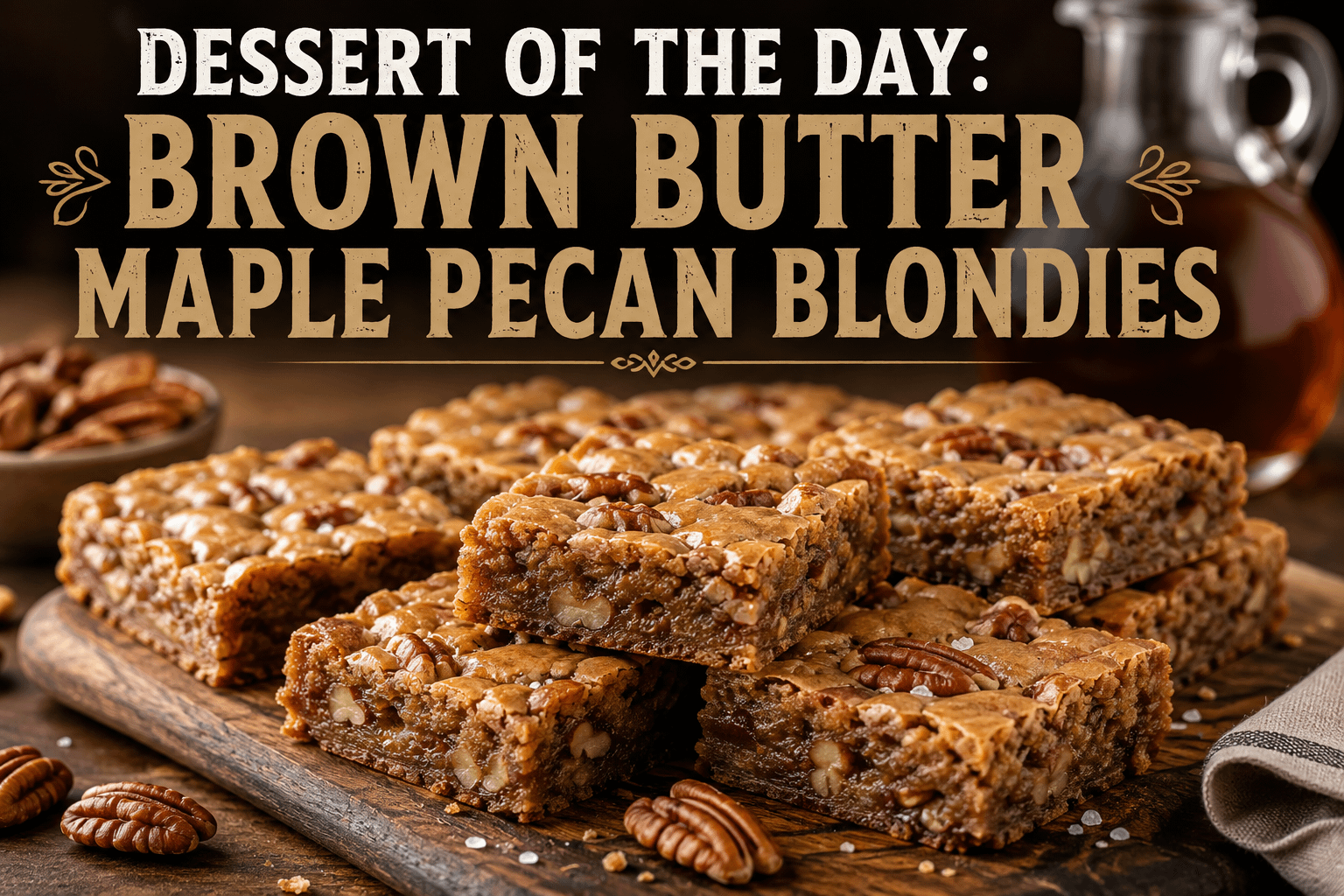
  • Dessert of the Day: Brown Butter Maple Pecan Blondies

    Advertisements

    There is something irresistible about a dessert that fills the kitchen with the warm aromas of toasted butter, maple, brown sugar, vanilla, and roasted pecans. Brown Butter Maple Pecan Blondies bring all of those comforting flavors together in one rich, chewy dessert bar.

    Unlike traditional brownies, blondies don’t rely on cocoa or melted chocolate for their signature flavor. Instead, brown sugar, butter, and vanilla take center stage. For today’s Dessert of the Day, we’re taking that classic blondie foundation and giving it an extra layer of flavor with nutty brown butter, pure maple syrup, and crunchy pecans.

    The result is a dessert with lightly crisp edges, a soft and chewy center, caramel-like sweetness, and toasted pecans in nearly every bite.

    These blondies are also wonderfully practical. You don’t need to decorate them, assemble multiple layers, or spend hours in the kitchen. Everything comes together in one pan, making them a great choice for family gatherings, holiday dessert tables, potlucks, parties, or simply enjoying at home with a cup of coffee.

    If you’re looking for a homemade dessert that’s easy enough for an ordinary evening but flavorful enough for a special occasion, Brown Butter Maple Pecan Blondies deserve a place on your baking list.

    What Makes Brown Butter Maple Pecan Blondies Special?

    The secret begins with the butter.

    Regular melted butter will certainly make a good blondie, but browning the butter transforms its flavor. As butter cooks, its milk solids begin to toast, producing an unmistakably nutty, caramelized aroma.

    Those toasted flavors pair beautifully with maple syrup and brown sugar.

    Then come the pecans.

    Pecans have a naturally buttery flavor that becomes even more pronounced when they’re lightly toasted. Scattered throughout the blondie batter, they provide a pleasant crunch against the soft, chewy texture of the bars.

    Finally, a little maple syrup ties everything together.

    The goal isn’t to make the blondies taste overwhelmingly like pancake syrup. Instead, maple adds another layer of warm sweetness that complements the brown butter and pecans.

    The finished dessert tastes familiar yet a little more special than an everyday blondie.

    Ingredients

    For approximately 16 blondies, you’ll need:

    • 1 cup unsalted butter
    • 1 3/4 cups packed light brown sugar
    • 1/4 cup pure maple syrup
    • 2 large eggs
    • 1 large egg yolk
    • 2 teaspoons vanilla extract
    • 2 cups all-purpose flour
    • 1 teaspoon baking powder
    • 1/2 teaspoon salt
    • 1 teaspoon ground cinnamon
    • 1 cup chopped pecans
    • 1/2 cup white chocolate chips, optional
    • Flaky sea salt for finishing, optional

    For an Optional Maple Glaze

    • 1 cup powdered sugar
    • 2 tablespoons pure maple syrup
    • 1 to 2 tablespoons milk or heavy cream
    • 1/2 teaspoon vanilla extract
    • Pinch of salt

    The blondies are delicious without the glaze, but adding a thin maple drizzle makes them especially attractive for a dessert table or holiday gathering.

    Choosing the Right Maple Syrup

    Pure maple syrup provides the best flavor for this recipe.

    Maple-flavored pancake syrup is usually made primarily from corn syrup or other sweeteners and doesn’t have the same depth as genuine maple syrup.

    Because maple is one of the featured flavors in these blondies, using pure maple syrup makes a noticeable difference.

    You don’t need a large amount. A quarter cup in the batter adds sweetness and maple character without making the blondies overly wet or sugary.

    Toast the Pecans for More Flavor

    You can add pecans directly from the package, but toasting them first makes them considerably more flavorful.

    Spread the chopped pecans on a baking sheet and bake them at 350°F for approximately 5 to 8 minutes.

    Watch them closely.

    Nuts can go from perfectly toasted to burned surprisingly quickly.

    Once you begin smelling their rich, nutty aroma, they’re probably ready.

    Remove them from the oven and allow them to cool while preparing the blondie batter.

    How to Brown Butter

    If you’ve never browned butter before, don’t be intimidated. It’s a simple technique that can dramatically improve the flavor of baked goods.

    Place the butter in a light-colored saucepan or skillet over medium heat.

    A light-colored pan makes it easier to see when the milk solids begin turning brown.

    Allow the butter to melt completely.

    Continue cooking while stirring or swirling the pan occasionally.

    The butter will begin bubbling and foaming. After several minutes, you’ll notice small golden-brown specks developing along the bottom of the pan.

    You’ll also notice the aroma changing.

    Instead of simply smelling like melted butter, it will begin smelling toasted and nutty.

    Once the milk solids are golden brown, immediately remove the pan from the heat.

    Don’t walk away during this process. Brown butter can turn into burned butter quickly.

    Pour the browned butter into a heat-safe mixing bowl, making sure you scrape all those flavorful browned bits from the bottom of the pan.

    Allow it to cool for about 10 to 15 minutes before continuing.

    Step-by-Step Directions

    Step 1: Prepare the Baking Pan

    Preheat your oven to 350°F.

    Line a 9-by-9-inch baking pan with parchment paper, leaving a little extra parchment hanging over two sides.

    This creates handles that make removing the finished blondies much easier.

    Lightly grease the parchment paper.

    Step 2: Brown the Butter

    Brown the butter following the method above.

    Once browned, transfer it to a large mixing bowl and let it cool slightly.

    The butter can still be warm, but it shouldn’t be extremely hot when the eggs are added.

    Step 3: Add the Brown Sugar and Maple Syrup

    Add the brown sugar to the browned butter.

    Whisk until thoroughly combined.

    Pour in the maple syrup and whisk again.

    At this point, the mixture should look thick, glossy, and caramel-like.

    Step 4: Add the Eggs

    Add the two whole eggs and additional egg yolk.

    The extra yolk helps create the rich, chewy texture that makes a great blondie so satisfying.

    Whisk until smooth.

    Add the vanilla extract and mix again.

    Step 5: Combine the Dry Ingredients

    In a separate bowl, whisk together:

    • Flour
    • Baking powder
    • Salt
    • Cinnamon

    Cinnamon is intentionally subtle in this recipe. It shouldn’t turn the dessert into a cinnamon bar. Instead, it provides a warm background flavor that complements the maple and pecans.

    Step 6: Make the Batter

    Gradually fold the dry ingredients into the wet ingredients.

    Don’t overmix.

    Stop once you can no longer see streaks of dry flour.

    Overmixing develops additional gluten and can make the blondies tougher instead of soft and chewy.

    Step 7: Add the Pecans

    Fold approximately three-quarters of the toasted pecans into the batter.

    If you’re using white chocolate chips, fold those in now as well.

    White chocolate adds creamy sweetness, but it’s completely optional.

    Step 8: Fill the Pan

    Spread the batter evenly into your prepared baking pan.

    The batter will be relatively thick, so use a spatula to gently push it into the corners.

    Sprinkle the remaining pecans over the top.

    If desired, add a very light sprinkle of flaky sea salt.

    The contrast between sweet maple blondies and tiny bursts of salt can be fantastic.

    Step 9: Bake

    Bake for approximately 25 to 32 minutes.

    Start checking around the 25-minute mark.

    The edges should look set and lightly golden, while the center should still appear slightly soft.

    Insert a toothpick into the center. You’re looking for moist crumbs rather than completely wet batter.

    Don’t wait until the toothpick is perfectly clean.

    Blondies continue cooking slightly as they cool, and overbaking is one of the easiest ways to lose their desirable chewy texture.

    Step 10: Cool Completely

    Allow the blondies to cool in the pan for approximately 20 minutes.

    Then use the parchment-paper handles to carefully lift them from the pan.

    Transfer them to a cooling rack and let them cool completely before slicing.

    Waiting can be difficult when your kitchen smells like brown butter and maple, but cooling allows the blondies to set properly.

    Make the Optional Maple Glaze

    If you want an additional maple finish, prepare a quick glaze.

    Combine powdered sugar, maple syrup, vanilla, and a pinch of salt.

    Add one tablespoon of milk or cream.

    Whisk until smooth.

    If the glaze is too thick, add additional milk a teaspoon at a time.

    If it becomes too thin, add a little more powdered sugar.

    Drizzle the glaze over completely cooled blondies.

    Allow it to set for approximately 15 to 20 minutes before cutting and serving.

    The Secret to Chewy Blondies

    A great blondie should have a noticeably different texture from ordinary cake.

    The edges can be slightly crisp, but the center should remain dense, soft, and chewy.

    Several parts of this recipe help accomplish that.

    Brown sugar contains more moisture than granulated sugar and contributes to the chewy texture.

    The additional egg yolk adds richness without introducing as much additional liquid as another whole egg.

    Most importantly, don’t overbake the blondies.

    If you’re uncertain whether they’re finished, it’s usually better to remove them when they’re slightly underdone rather than wait until the entire center feels firm.

    They’ll continue setting as they cool.

    Don’t Overmix the Batter

    Once flour enters the bowl, mix only until everything is combined.

    This rule applies to many cookies, brownies, blondies, muffins, and quick breads.

    Aggressively mixing flour encourages gluten development. That’s useful when you’re making chewy bread, but it’s usually undesirable when you’re trying to create tender dessert bars.

    A spatula works particularly well for the final mixing stage because you can gently fold the ingredients together.

    Delicious Variations

    One of the advantages of a basic blondie recipe is how easily it can be customized.

    Maple Walnut Blondies

    Replace the pecans with chopped walnuts.

    Walnuts have a slightly earthier flavor but work wonderfully with maple.

    Maple White Chocolate Blondies

    Increase the white chocolate chips to approximately one cup.

    This creates a sweeter and creamier version.

    Chocolate Chip Maple Blondies

    Add 3/4 cup semisweet chocolate chips.

    Chocolate and maple might not be the first combination that comes to mind, but the bittersweet chocolate balances the sweetness nicely.

    Cinnamon Maple Blondies

    Increase the cinnamon to 1 1/2 teaspoons and add a tiny pinch of nutmeg.

    This creates an especially cozy version for fall.

    Salted Maple Pecan Blondies

    Skip the glaze and finish the bars with flaky sea salt immediately after baking.

    The salt makes the caramel and maple flavors stand out.

    Bourbon Maple Pecan Blondies

    For an adults-only flavor variation, a small splash of bourbon can be added alongside the vanilla.

    Keep the amount modest so you don’t dramatically alter the liquid ratio of the batter.

    Serving Ideas

    Brown Butter Maple Pecan Blondies are excellent served at room temperature, but warming them transforms the experience.

    Heat an individual blondie for about 10 to 15 seconds in the microwave.

    Serve it with a scoop of vanilla ice cream.

    As the ice cream begins melting over the warm blondie, it creates a simple dessert that’s difficult to beat.

    For an even more indulgent presentation, add a drizzle of caramel sauce and a few chopped toasted pecans.

    You could also serve the blondies alongside:

    • Fresh whipped cream
    • Maple ice cream
    • Butter pecan ice cream
    • Vanilla bean ice cream
    • Fresh sliced apples
    • Hot coffee
    • Espresso
    • Hot chocolate
    • Cold milk

    Perfect for Fall — But Delicious All Year

    Maple and pecan naturally make people think of autumn.

    These blondies would be right at home beside pumpkin pie, apple crisp, or pecan pie on a fall dessert table.

    But there’s really no reason to save them for one season.

    They make an easy dessert for birthdays, family dinners, potlucks, cookouts, game nights, office parties, or weekend baking throughout the year.

    Their portability is another advantage.

    Unlike frosted cakes or cream-filled desserts, blondies travel easily. Place them in a covered container and they’re ready for almost any gathering.

    Turn Them Into a Holiday Dessert

    For Thanksgiving or Christmas, cut the blondies into smaller squares and arrange them on a large dessert platter.

    Drizzle them with maple glaze and garnish each square with a small pecan half.

    You can also dust the platter lightly with powdered sugar immediately before serving.

    They’re especially useful on holiday dessert tables because they can be prepared ahead of time, leaving your oven available for other dishes on the day of the celebration.

    Make-Ahead Instructions

    These blondies are actually a great make-ahead dessert.

    Prepare them the evening before you plan to serve them.

    Allow them to cool completely before covering.

    You can leave the blondies uncut overnight and slice them the following day.

    Keeping the entire slab intact until serving can help preserve moisture.

    If you’re using maple glaze, you can add it after the blondies cool or shortly before serving.

    How to Store Brown Butter Maple Pecan Blondies

    Place leftover blondies in an airtight container.

    They’ll generally stay fresh at room temperature for approximately 3 to 4 days.

    If your home is particularly warm, refrigeration can extend their freshness.

    Keep in mind that refrigeration will make them firmer.

    Let refrigerated blondies sit at room temperature for 15 to 20 minutes before eating, or warm one briefly in the microwave.

    Can You Freeze Blondies?

    Absolutely.

    Blondies freeze extremely well.

    For best results, freeze them without the glaze.

    Allow the bars to cool completely and cut them into individual portions.

    Wrap each blondie tightly in plastic wrap, then place the wrapped pieces inside a freezer-safe container or freezer bag.

    They can be frozen for approximately 2 to 3 months.

    When you’re ready to enjoy one, let it thaw at room temperature.

    A quick 10-second trip through the microwave can restore some of that fresh-from-the-oven softness.

    Why Brown Butter Is Worth the Extra Step

    It would certainly be easier to simply melt the butter and continue with the recipe.

    But those extra few minutes spent browning it make a significant difference.

    Brown butter develops toasted, nutty, almost caramel-like notes as the milk solids cook.

    It’s especially effective in recipes where butter is already a major flavor component.

    Cookies, blondies, cakes, frostings, pancakes, and even certain savory dishes can benefit from brown butter.

    In today’s dessert, it works especially well because every other major ingredient supports those flavors.

    Brown sugar brings caramel notes.

    Maple provides deep sweetness.

    Pecans contribute nuttiness.

    Vanilla ties everything together.

    Instead of competing flavors, they build on one another.

    A Simple Dessert That Feels Special

    Some of the best desserts don’t require elaborate decorating or complicated techniques.

    Brown Butter Maple Pecan Blondies are a perfect example.

    They’re familiar enough to feel comforting but different enough to stand out from ordinary brownies or chocolate chip cookies.

    Browning the butter takes only a few additional minutes, yet it transforms the flavor of the entire dessert. Maple syrup adds warmth and richness, while toasted pecans provide the crunch needed to balance the soft center.

    Add the optional maple glaze and they become even more decadent.

    Serve them plain with coffee for an afternoon treat, warm them and add vanilla ice cream after dinner, or cut them into bite-sized squares for a party.

    However you serve them, don’t be surprised if people reach for a second piece.

    Dessert of the Day: Brown Butter Maple Pecan Blondies

    Today’s Dessert of the Day proves that you don’t need a complicated recipe to make something memorable.

    Start with butter and cook it until beautifully browned and nutty. Combine it with brown sugar, pure maple syrup, vanilla, and eggs. Fold in flour and toasted pecans, then bake everything until the edges are golden and the middle remains wonderfully chewy.

    The final result delivers a little bit of everything you could want from a homemade dessert: crisp edges, a soft center, buttery richness, caramel sweetness, maple flavor, and crunchy pecans.

    And if you happen to serve one warm with a melting scoop of vanilla ice cream on top?

    Even better.

    Would you enjoy these Brown Butter Maple Pecan Blondies plain, topped with maple glaze, or served warm with a scoop of vanilla ice cream?

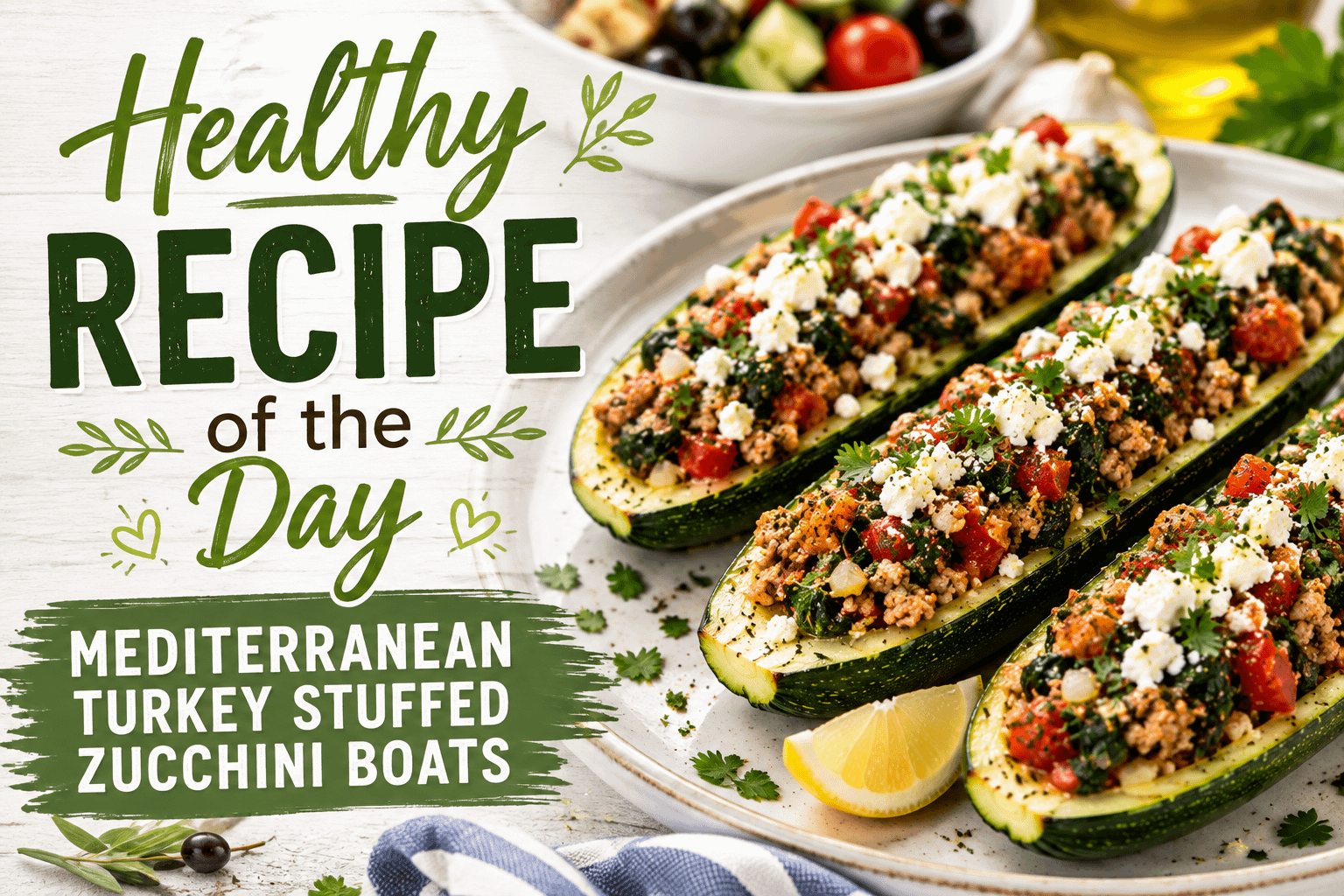
  • Healthy Recipe of the Day: Mediterranean Turkey Stuffed Zucchini Boats

    Advertisements

    If you are looking for a healthy dinner that is satisfying, colorful, and packed with flavor, these Mediterranean Turkey Stuffed Zucchini Boats deserve a place on your menu.

    Tender zucchini halves are filled with a savory combination of lean ground turkey, tomatoes, spinach, garlic, herbs, and feta cheese. The result is a wholesome meal that feels hearty without relying on a heavy sauce, large amount of cheese, or refined carbohydrates.

    One of the best things about stuffed zucchini is how much flavor you can build into such a simple ingredient. Zucchini has a mild taste, which makes it an excellent base for bold Mediterranean-inspired ingredients such as garlic, oregano, tomatoes, lemon, parsley, and feta.

    These zucchini boats also make an excellent option for meal preparation. Make a batch for dinner and save the extras for an easy lunch later in the week.

    Why You’ll Love These Mediterranean Turkey Stuffed Zucchini Boats

    Healthy eating doesn’t have to mean settling for bland meals or tiny portions. A good healthy recipe should leave you feeling satisfied while giving you ingredients you can feel good about eating.

    That’s exactly what these zucchini boats are designed to do.

    They’re filled with lean protein from ground turkey, vegetables from zucchini, spinach, onions, and tomatoes, and plenty of herbs and seasonings.

    You’ll love this recipe because it is:

    • High in protein
    • Packed with vegetables
    • Naturally lower in carbohydrates
    • Easy to customize
    • Great for meal prep
    • Family-friendly
    • Full of Mediterranean-inspired flavor
    • Made with readily available ingredients

    Best of all, everything comes together in a meal that looks impressive but doesn’t require complicated cooking techniques.

    What Makes This a Healthy Recipe?

    The foundation of this recipe is zucchini.

    Zucchini is naturally low in calories while providing nutrients and water. Instead of serving the turkey filling over a large portion of pasta or stuffing it into a heavy bread product, the zucchini itself becomes the edible vessel.

    Lean ground turkey provides the primary source of protein.

    The filling also incorporates spinach and tomatoes, allowing you to add even more vegetables to each serving.

    Feta provides the salty, creamy finish that makes Mediterranean-inspired dishes so satisfying. Because feta has a strong flavor, you don’t need a huge amount to make an impact.

    Finally, fresh lemon juice and herbs add brightness without requiring a rich sauce.

    The combination creates a balanced dinner that doesn’t taste like traditional “diet food.”

    Ingredients

    For the Zucchini Boats

    • 4 medium zucchini
    • 1 tablespoon extra-virgin olive oil, divided
    • 1 pound lean ground turkey
    • 1 small yellow onion, finely diced
    • 3 cloves garlic, minced
    • 1 cup chopped fresh spinach
    • 1 cup diced tomatoes, drained if especially juicy
    • 1 teaspoon dried oregano
    • 1 teaspoon dried basil
    • 1/2 teaspoon smoked paprika
    • 1/2 teaspoon ground black pepper
    • 1/4 teaspoon salt, or to taste
    • 1/4 teaspoon crushed red pepper flakes, optional
    • 1 tablespoon fresh lemon juice
    • 1/2 cup crumbled feta cheese
    • 2 tablespoons chopped fresh parsley

    Optional Garnishes

    • Additional chopped parsley
    • Fresh dill
    • Lemon wedges
    • Diced cucumber
    • Chopped tomatoes
    • A small spoonful of plain Greek yogurt
    • Extra feta cheese
    • Freshly ground black pepper

    How to Make Mediterranean Turkey Stuffed Zucchini Boats

    Step 1: Preheat the Oven

    Preheat your oven to 400°F.

    Lightly coat a large baking dish or rimmed baking sheet with cooking spray or a very small amount of olive oil.

    Step 2: Prepare the Zucchini

    Wash and dry the zucchini.

    Cut each zucchini lengthwise from stem to end, creating two long halves.

    Using a spoon, carefully scoop some of the flesh from the center of each zucchini half. Leave approximately 1/4 inch of zucchini around the sides and bottom so the boats remain sturdy.

    Don’t scoop too aggressively. If the zucchini shell becomes too thin, it may collapse during baking.

    Set the removed zucchini flesh aside rather than throwing it away.

    You’ll use some of it in the turkey filling.

    Arrange the zucchini halves cut-side up in your prepared baking dish.

    Lightly brush them with approximately half of the olive oil.

    Bake for about 8 to 10 minutes while you prepare the filling.

    This short head start helps ensure the zucchini becomes tender by the time the filling is completely heated.

    Step 3: Cook the Ground Turkey

    Heat the remaining olive oil in a large skillet over medium heat.

    Add the diced onion and cook for approximately 3 minutes, stirring occasionally.

    Add the minced garlic and cook for another 30 seconds.

    You want the garlic to become fragrant without allowing it to burn.

    Add the ground turkey.

    Use a wooden spoon or spatula to break the turkey into small pieces as it cooks.

    Continue cooking until the turkey is browned and no longer pink.

    Drain any excess liquid from the skillet if necessary.

    Step 4: Add the Vegetables

    Chop approximately 1/2 cup of the zucchini flesh you removed earlier.

    Add it to the skillet with the turkey.

    Stir in the spinach and diced tomatoes.

    Cook for another 2 to 4 minutes, allowing the spinach to wilt and some of the excess moisture from the vegetables to evaporate.

    This step is important because overly wet filling can make the finished zucchini boats watery.

    Step 5: Season the Filling

    Add:

    • Oregano
    • Basil
    • Smoked paprika
    • Black pepper
    • Salt
    • Crushed red pepper flakes, if desired

    Stir everything together until the seasonings are evenly distributed.

    Cook for approximately another minute.

    Remove the skillet from the heat.

    Add the fresh lemon juice and approximately half of the feta cheese.

    Gently stir.

    Taste the filling and adjust the seasonings if necessary.

    Remember that feta is naturally salty, so it’s usually better to begin with less added salt and increase it only if needed.

    Step 6: Fill the Zucchini

    Remove the partially baked zucchini from the oven.

    Carefully spoon the turkey mixture into each zucchini half.

    Don’t be afraid to pile the filling slightly above the top of the zucchini.

    Sprinkle the remaining feta cheese over the stuffed zucchini boats.

    Step 7: Bake

    Return the baking dish to the oven.

    Bake for approximately 15 to 20 minutes, or until the zucchini is tender and the filling is completely heated through.

    For slightly browned feta, you can place the zucchini under the broiler for the final minute or two.

    Watch carefully because feta can brown quickly.

    Step 8: Add the Finishing Touches

    Remove the zucchini boats from the oven and allow them to rest for approximately 5 minutes.

    Sprinkle with fresh parsley.

    Finish with another squeeze of lemon juice if you enjoy a brighter Mediterranean flavor.

    Serve warm.

    Don’t Overcook the Zucchini

    The ideal zucchini boat should be tender enough to cut easily with a fork but still firm enough to hold its filling.

    Zucchini contains a considerable amount of water, so cooking it for too long can make it soft and watery.

    The exact cooking time will depend on the size of your zucchini.

    Smaller zucchini may cook more quickly, while particularly large zucchini may require several additional minutes.

    Check them toward the end of the cooking time.

    Preventing Watery Zucchini Boats

    One of the biggest challenges with stuffed zucchini recipes is excess moisture.

    Fortunately, there are several easy ways to prevent it.

    First, don’t remove too much zucchini flesh. The remaining shell should be sturdy.

    Second, drain especially juicy tomatoes before adding them to the skillet.

    Third, allow the vegetable and turkey filling to cook for a few minutes before stuffing the zucchini. This gives excess liquid an opportunity to evaporate.

    Finally, don’t cover the zucchini while baking. Leaving them uncovered allows moisture to escape.

    Make It Even More Mediterranean

    There are plenty of ways to build additional Mediterranean flavor into this healthy dinner.

    Try adding sliced Kalamata olives to the filling.

    You could also incorporate chopped artichoke hearts, roasted red peppers, sun-dried tomatoes, fresh dill, or a small amount of fresh mint.

    If you enjoy stronger garlic flavor, add an additional clove.

    For additional brightness, sprinkle fresh lemon zest over the finished zucchini boats.

    These small additions can dramatically change the personality of the dish without requiring an entirely different recipe.

    Turkey Substitutions

    Ground turkey keeps this recipe relatively lean, but it isn’t your only option.

    Ground Chicken

    Lean ground chicken works beautifully and has a similarly mild flavor.

    Extra-Lean Ground Beef

    If you prefer beef, choose a lean variety and drain any excess fat before adding the vegetables.

    Plant-Based Option

    For a meatless version, replace the turkey with cooked lentils, chickpeas, quinoa, or a combination of finely chopped mushrooms and lentils.

    The Mediterranean seasonings work equally well with plant-based fillings.

    Add Whole Grains

    If you want a heartier version, add approximately 1 cup of cooked whole grain to the filling.

    Good options include:

    • Quinoa
    • Brown rice
    • Farro
    • Barley

    Quinoa is especially useful because it blends easily with ground turkey while adding additional texture.

    You may have more filling than will fit inside the zucchini if you add grains. That’s not a problem. Save the extra filling for lunch or serve it alongside the zucchini boats.

    Add More Vegetables

    This recipe is already vegetable-forward, but you can easily add more.

    Finely chopped mushrooms work especially well because they blend into the ground turkey.

    You could also try:

    • Bell peppers
    • Kale
    • Broccoli
    • Cauliflower
    • Carrots
    • Eggplant

    Keep the vegetables chopped fairly small so the filling remains easy to spoon into the zucchini.

    What to Serve With Turkey Stuffed Zucchini Boats

    These zucchini boats can absolutely serve as the main course by themselves, particularly for a lighter dinner.

    If you’d like to build a larger meal around them, there are several healthy side dishes that work beautifully.

    Greek-Style Salad

    Serve the zucchini with cucumber, tomatoes, red onion, olives, and a light lemon vinaigrette.

    Quinoa

    A small serving of quinoa makes the meal more substantial while complementing the Mediterranean flavors.

    Brown Rice

    Simple brown rice is another good choice if you’re feeding people who want a heartier dinner.

    Roasted Vegetables

    Roasted broccoli, cauliflower, asparagus, or Brussels sprouts are all excellent choices.

    Hummus and Fresh Vegetables

    Serve hummus with cucumber slices, carrots, bell peppers, and celery for an easy appetizer or side.

    A Simple Greek Yogurt Sauce

    A cool yogurt sauce is an excellent contrast to the warm turkey filling.

    Combine:

    • 1/2 cup plain Greek yogurt
    • 1 tablespoon lemon juice
    • 1 tablespoon chopped fresh dill
    • 1 small garlic clove, finely minced
    • Pinch of black pepper

    Stir everything together and refrigerate until ready to serve.

    Add a small spoonful over each zucchini boat just before eating.

    You get creaminess without needing a heavy cheese sauce.

    Meal Prep Made Easy

    Mediterranean Turkey Stuffed Zucchini Boats are a great meal-prep recipe because the filling can be prepared ahead of time.

    Cook the turkey mixture according to the recipe, allow it to cool, and store it in an airtight container in the refrigerator.

    You can also prepare and scoop out the zucchini ahead of time.

    When you’re ready for dinner, assemble the zucchini boats and bake them.

    For even faster weekday meals, bake the entire recipe ahead of time and portion the zucchini into individual containers.

    Then lunch or dinner is already waiting.

    How to Store Leftovers

    Allow leftover zucchini boats to cool before placing them in an airtight container.

    Store them in the refrigerator for approximately 3 to 4 days.

    Because zucchini naturally releases moisture after cooking, you may notice a little liquid in the storage container. This is normal.

    You can gently drain away excess liquid before reheating.

    How to Reheat Stuffed Zucchini

    For the best texture, reheat the zucchini boats in the oven.

    Place them in a baking dish and heat at 350°F until warmed through.

    You can also use the microwave when you’re short on time.

    Microwave individual portions in short intervals until hot.

    The zucchini will generally become softer when reheated in the microwave, but the flavor will still be delicious.

    Can You Freeze Stuffed Zucchini Boats?

    You can, but zucchini’s high water content means its texture may become softer after freezing and thawing.

    For better results, freeze the turkey filling separately.

    Allow the cooked filling to cool completely, place it in a freezer-safe container, and freeze it.

    When you’re ready to make dinner, thaw the filling overnight in the refrigerator and prepare fresh zucchini.

    This gives you much better texture while still saving considerable preparation time.

    Turn the Leftover Filling Into Another Meal

    Don’t worry if you end up with extra Mediterranean turkey filling.

    It’s incredibly versatile.

    Spoon it over quinoa or brown rice for a quick grain bowl.

    Add it to a salad.

    Stuff it inside bell peppers.

    Serve it in lettuce wraps.

    Add it to scrambled eggs for breakfast.

    Or combine it with chopped cucumber, tomatoes, hummus, and greens for a Mediterranean-inspired lunch bowl.

    Making ingredients work across multiple meals is one of the easiest ways to make healthy eating more practical.

    Easy Flavor Variations

    Once you understand the basic method, you can transform stuffed zucchini into many different meals.

    Italian Turkey Zucchini Boats

    Replace the Mediterranean seasonings with Italian seasoning and add a small amount of marinara sauce. Finish with part-skim mozzarella.

    Southwest Turkey Zucchini Boats

    Season the turkey with cumin, chili powder, paprika, garlic, black beans, corn, and diced tomatoes.

    Greek Chicken Zucchini Boats

    Use ground chicken with oregano, lemon, spinach, tomatoes, feta, and fresh dill.

    Spicy Turkey Zucchini Boats

    Increase the crushed red pepper and add diced jalapeño or your favorite hot pepper.

    Vegetarian Mediterranean Boats

    Replace the turkey with chickpeas, quinoa, spinach, tomatoes, mushrooms, and feta.

    Each version uses the same simple zucchini-boat technique while creating a completely different dinner.

    Tips for the Best Stuffed Zucchini

    Choose zucchini that are fairly similar in size so they cook at approximately the same rate.

    Don’t scoop the zucchini too thin.

    Cook excess moisture out of your filling before assembling the boats.

    Use fresh lemon juice when possible. Its acidity helps brighten the turkey, vegetables, and feta.

    Don’t overload the recipe with salt before adding feta.

    Use fresh herbs as a finishing ingredient whenever they’re available.

    And don’t worry if the zucchini boats aren’t perfectly shaped. Rustic homemade food doesn’t need to look identical to taste fantastic.

    Healthy Eating Can Still Be Comforting

    There’s a misconception that healthier meals have to remove everything comforting about dinner.

    That doesn’t need to be the case.

    Warm roasted vegetables, seasoned meat, herbs, cheese, and bright Mediterranean flavors can create the same satisfaction we associate with much heavier dishes.

    The goal isn’t necessarily to make every meal as low-calorie as possible.

    It’s to create meals built around nutritious ingredients that you genuinely look forward to eating.

    That’s what makes recipes like these Mediterranean Turkey Stuffed Zucchini Boats so useful.

    They don’t feel like a compromise.

    They feel like dinner.

    Perfect for Busy Weeknights

    Weeknight recipes need to strike a balance between healthy and realistic.

    Most people don’t want to spend two hours preparing dinner after a long day.

    This recipe uses straightforward ingredients and one skillet for the filling. While the zucchini begins baking, you prepare the turkey mixture.

    Everything then finishes together in the oven.

    You can simplify things even further by chopping the onion, garlic, spinach, and zucchini ahead of time.

    With a little preparation, the final meal can come together quickly.

    A Colorful Dinner for Any Season

    Zucchini is particularly abundant during the warmer months, making this an excellent recipe when gardens and farmers markets are overflowing with summer squash.

    But the ingredients are readily available in supermarkets throughout much of the year.

    The green zucchini, red tomatoes, white feta, and fresh herbs also create a naturally colorful presentation.

    That makes these zucchini boats just as appropriate for serving guests as they are for an ordinary Tuesday-night dinner.

    Mediterranean Turkey Stuffed Zucchini Boats at a Glance

    Prep Time: About 15 minutes
    Cook Time: About 30 minutes
    Total Time: About 45 minutes
    Servings: Approximately 4
    Main Protein: Lean ground turkey
    Cooking Method: Skillet and oven
    Difficulty: Easy

    Final Thoughts

    Healthy meals become much easier to stick with when they deliver real flavor, satisfying portions, and enough variety to keep dinner interesting.

    These Mediterranean Turkey Stuffed Zucchini Boats check all of those boxes.

    Tender zucchini provides the base, seasoned ground turkey brings plenty of protein, spinach and tomatoes add more vegetables, and feta, herbs, garlic, and lemon deliver the Mediterranean-inspired flavors that pull everything together.

    They’re easy enough for a weeknight, attractive enough to serve to guests, and practical enough to prepare ahead for busy days.

    Most importantly, this is the kind of healthy recipe that doesn’t make you feel like you’re missing out on anything.

    Whether you serve the zucchini boats by themselves or pair them with a fresh Greek salad, quinoa, roasted vegetables, or a spoonful of homemade yogurt sauce, you’ve got a wholesome dinner packed with flavor.

    What healthy ingredient would you add to your Mediterranean stuffed zucchini boats to make them your own?

  • Recipe of the Day: French Onion Chicken Meatballs

    Advertisements

    There is something incredibly comforting about the rich, savory flavor of French onion soup. Sweet caramelized onions, a deeply flavored broth, melted cheese, and warm herbs come together to create one of those classic dishes that always feels satisfying. Now imagine bringing those same flavors into a hearty skillet filled with tender chicken meatballs.

    That is exactly what you get with today’s Recipe of the Day: French Onion Chicken Meatballs.

    These juicy homemade chicken meatballs are cooked until golden and then nestled into a rich French onion-style sauce made with slowly caramelized onions, beef broth, Worcestershire sauce, garlic, and thyme. Everything is finished with plenty of melted Gruyère or Swiss cheese.

    The result is a warm, cheesy, savory dinner that combines two comfort-food favorites in one skillet.

    Serve these French Onion Chicken Meatballs over creamy mashed potatoes, buttered egg noodles, rice, or alongside crusty bread for soaking up every bit of that delicious onion gravy.

    Why You’ll Love French Onion Chicken Meatballs

    French onion flavors and meatballs may not be the most obvious combination, but once they come together, they make perfect sense.

    Ground chicken provides a lighter base than traditional beef meatballs while still becoming tender and flavorful when seasoned properly. The caramelized onion gravy supplies the richness, while melted cheese gives the finished dish its unmistakable French onion character.

    There are plenty of reasons to add this recipe to your dinner rotation.

    It’s comforting without being overly complicated.

    Everything can be prepared in one large oven-safe skillet.

    The ingredients are easy to find at most grocery stores.

    It’s impressive enough for company but simple enough for an ordinary weeknight.

    Most importantly, that combination of caramelized onions, savory gravy, juicy meatballs, and melted cheese is difficult to resist.

    Ingredients

    For the Chicken Meatballs

    • 1 1/2 pounds ground chicken
    • 1/2 cup plain breadcrumbs
    • 1 large egg
    • 1/3 cup finely grated Parmesan cheese
    • 2 cloves garlic, minced
    • 2 tablespoons finely chopped fresh parsley
    • 1 teaspoon dried thyme
    • 1 teaspoon onion powder
    • 1 teaspoon salt
    • 1/2 teaspoon black pepper
    • 1 tablespoon olive oil

    For the French Onion Sauce

    • 2 tablespoons butter
    • 2 large yellow onions, thinly sliced
    • 1/2 teaspoon salt
    • 1 teaspoon brown sugar, optional
    • 2 cloves garlic, minced
    • 2 tablespoons all-purpose flour
    • 2 cups beef broth
    • 1 tablespoon Worcestershire sauce
    • 1 teaspoon fresh thyme leaves or 1/2 teaspoon dried thyme
    • 1/2 teaspoon black pepper
    • 1 teaspoon Dijon mustard
    • 1 cup shredded Gruyère cheese
    • 1/2 cup shredded Swiss cheese
    • Fresh parsley or thyme for garnish

    Step 1: Make the Chicken Meatball Mixture

    Place the ground chicken in a large mixing bowl.

    Add the breadcrumbs, egg, Parmesan cheese, garlic, parsley, thyme, onion powder, salt, and black pepper.

    Use clean hands or a fork to gently combine the ingredients.

    Avoid aggressively mixing or compressing the meat. Overworking ground chicken can produce dense meatballs instead of the tender texture we’re looking for.

    Mix only until everything is evenly incorporated.

    Step 2: Shape the Meatballs

    Scoop approximately 1 1/2 tablespoons of the chicken mixture at a time and gently roll it between your hands.

    You should end up with approximately 18 to 22 meatballs, depending on their size.

    Keeping the meatballs relatively uniform helps them cook at approximately the same rate.

    Place the finished meatballs on a clean plate while you heat your skillet.

    Step 3: Brown the Chicken Meatballs

    Heat 1 tablespoon of olive oil in a large oven-safe skillet over medium-high heat.

    Once the oil is hot, carefully add the meatballs.

    Work in batches if necessary so you don’t overcrowd the pan.

    Brown the meatballs for approximately 6 to 8 minutes, rotating occasionally so several sides develop a golden crust.

    They don’t have to cook completely through during this stage because they’ll finish cooking in the sauce.

    Transfer the browned meatballs to a plate and set them aside.

    Step 4: Start the Caramelized Onions

    Reduce the heat to medium-low.

    Add the butter to the same skillet.

    Once melted, add the sliced onions and 1/2 teaspoon salt.

    Stir well, scraping up any browned bits left behind by the meatballs. Those browned bits contain plenty of flavor and will become part of the sauce.

    Cook the onions slowly for approximately 25 to 35 minutes.

    Stir every few minutes to prevent burning.

    The onions will gradually soften, shrink, and change from pale yellow to a rich golden brown.

    Don’t Rush the Onions

    This is arguably the most important step in the entire recipe.

    French onion dishes depend heavily on properly caramelized onions.

    Turning the heat too high may brown the outside of the onions quickly, but it won’t create the same deep sweetness.

    Low and slow is the better approach.

    If you want to encourage caramelization, add about 1 teaspoon of brown sugar. It isn’t necessary because onions contain natural sugars, but it can speed things along slightly while adding another hint of sweetness.

    If the skillet becomes too dry during cooking, add a tablespoon or two of broth.

    Step 5: Add the Garlic

    Once the onions are deeply golden and soft, add the minced garlic.

    Cook for approximately 30 to 60 seconds, stirring constantly.

    You want the garlic to become fragrant without burning.

    At this point, your kitchen should smell incredible.

    Step 6: Build the French Onion Gravy

    Sprinkle 2 tablespoons of flour over the onions.

    Stir continuously for approximately one minute.

    The flour will combine with the butter and help thicken the sauce.

    Slowly pour in the beef broth while stirring.

    Add the Worcestershire sauce, thyme, black pepper, and Dijon mustard.

    Stir until everything is thoroughly combined.

    Bring the sauce to a gentle simmer.

    Allow it to cook for approximately 3 to 5 minutes, or until it begins thickening.

    Step 7: Return the Meatballs to the Skillet

    Carefully return the browned chicken meatballs to the skillet.

    Spoon some of the onion gravy over the top.

    Reduce the heat to medium-low, cover, and simmer for approximately 10 to 12 minutes or until the chicken meatballs are completely cooked.

    Ground chicken should reach an internal temperature of 165°F.

    The meatballs will absorb some of the savory sauce as they finish cooking.

    Step 8: Add the Cheese

    Preheat your oven’s broiler.

    Remove the skillet lid.

    Sprinkle the shredded Gruyère and Swiss cheese evenly across the meatballs and onions.

    Place the oven-safe skillet underneath the broiler for approximately 2 to 4 minutes.

    Watch it carefully.

    You want the cheese melted, bubbling, and beginning to develop a few beautiful golden-brown spots.

    Remove the skillet from the oven and allow it to rest for several minutes before serving.

    Finish with fresh parsley or thyme.

    What Makes the Sauce So Good?

    The sauce is what transforms ordinary chicken meatballs into something memorable.

    It starts with the caramelized onions.

    As onions slowly cook, their natural sugars become concentrated, producing a sweetness that balances the savory broth.

    Beef broth provides a deeper flavor than chicken broth, even though we’re using chicken meatballs. Worcestershire sauce contributes another layer of savory complexity.

    Dijon mustard adds subtle tang without making the sauce taste noticeably like mustard.

    Then there is the cheese.

    Gruyère is one of the classic cheeses associated with French onion soup because it melts beautifully while providing a nutty, slightly sweet flavor.

    When all of these components come together, you get a sauce that’s savory, slightly sweet, cheesy, and incredibly satisfying.

    What to Serve With French Onion Chicken Meatballs

    This recipe practically begs to be served with something capable of absorbing the sauce.

    Creamy Mashed Potatoes

    Mashed potatoes might be my favorite option for this dish.

    Place a generous scoop of mashed potatoes on each plate and spoon several meatballs and plenty of French onion gravy over them.

    Buttered Egg Noodles

    Wide egg noodles are another excellent choice.

    Their mild flavor lets the onion sauce remain the star of the meal.

    Rice

    White or brown rice provides a simple and inexpensive base.

    Crusty Bread

    French bread, sourdough, or a crusty baguette works beautifully.

    Use pieces of bread to soak up the remaining sauce.

    Roasted Vegetables

    For something lighter, serve the meatballs alongside roasted broccoli, Brussels sprouts, asparagus, carrots, or green beans.

    Side Salad

    A crisp green salad with a tangy vinaigrette helps balance the richness of the cheese and gravy.

    Tips for Tender Chicken Meatballs

    Chicken meatballs can become dry if they’re overcooked or prepared incorrectly.

    A few simple techniques can make a major difference.

    Don’t Overmix

    Combine the ingredients only until everything comes together.

    Use Breadcrumbs and Egg

    These ingredients help hold moisture inside the meatballs while keeping everything together.

    Don’t Skip the Parmesan

    Parmesan adds both moisture and savory flavor.

    Brown Them First

    Browning creates additional flavor and gives the meatballs an attractive exterior.

    Finish Them in the Sauce

    Instead of cooking the meatballs completely during the browning stage, let them finish gently in the onion gravy.

    They’ll absorb flavor while remaining moist.

    Cheese Substitutions

    Gruyère is wonderful here, but you don’t have to abandon the recipe if you can’t find it.

    Try:

    • Swiss cheese
    • Provolone
    • Fontina
    • Mozzarella
    • Monterey Jack

    You can also combine cheeses.

    Swiss and mozzarella, for example, provide both traditional flavor and an impressive cheese pull.

    Ground Turkey Variation

    Ground turkey works very well as a substitute for ground chicken.

    Use the same quantity and follow the recipe exactly as written.

    Like chicken, ground turkey needs to reach an internal temperature of 165°F.

    Beef Meatball Variation

    Want an even richer meal?

    Replace the ground chicken with lean ground beef.

    The beef meatballs pair naturally with the caramelized onion and beef broth sauce.

    You could also use a mixture of ground beef and pork.

    Mushroom French Onion Meatballs

    Mushroom lovers can easily add another savory element.

    Slice about 8 ounces of cremini or white mushrooms.

    After browning the meatballs, sauté the mushrooms until golden, remove them temporarily, and then prepare the onions.

    Return the mushrooms when you add the broth.

    They’ll make the finished sauce even heartier.

    Add a Little Heat

    French onion dishes aren’t traditionally spicy, but that doesn’t mean you can’t experiment.

    Add:

    • 1/4 teaspoon crushed red pepper flakes
    • A pinch of cayenne pepper
    • Freshly cracked black pepper
    • A small amount of your favorite hot sauce

    Keep the heat moderate so it doesn’t overwhelm the caramelized onions.

    Make It Extra Cheesy

    For serious cheese lovers, increase the total cheese to approximately 2 cups.

    You can also sprinkle a little Parmesan over the Gruyère before broiling.

    The Parmesan will help create a beautifully browned surface.

    Can You Make French Onion Chicken Meatballs Ahead of Time?

    Yes.

    This recipe is actually a good candidate for advance preparation.

    You can form the raw chicken meatballs up to one day ahead. Store them covered in the refrigerator until you’re ready to cook.

    The onions can also be caramelized ahead of time and refrigerated.

    If you want to prepare most of the entire dish beforehand, cook the meatballs and sauce but don’t add the final cheese topping.

    Refrigerate everything in an airtight container.

    When you’re ready to serve, gently reheat the meatballs and sauce, transfer them to an oven-safe skillet or baking dish, add the cheese, and broil.

    Storing Leftovers

    Allow leftovers to cool before transferring them to an airtight container.

    Refrigerate for up to 3 to 4 days.

    Because the sauce thickens considerably when cold, you may need to add a splash of broth or water while reheating.

    How to Reheat

    Place the meatballs and sauce in a covered skillet over medium-low heat.

    Add a small splash of broth if necessary.

    Heat gently until the meatballs are hot throughout.

    Individual portions can also be reheated in the microwave.

    For the best cheesy finish, sprinkle a little fresh cheese over the reheated meatballs.

    Can You Freeze Them?

    Yes, although the texture of the sauce may change slightly after freezing.

    For the best results, freeze the cooked meatballs and onion sauce before adding the final cheese topping.

    Place cooled meatballs and sauce in a freezer-safe container and freeze for up to 2 to 3 months.

    Thaw overnight in the refrigerator.

    Reheat slowly on the stovetop, add fresh cheese, and broil before serving.

    Turn Them Into French Onion Meatball Subs

    Here’s a delicious way to use leftovers.

    Warm the chicken meatballs and onion sauce.

    Split sturdy sub rolls and arrange three or four meatballs inside each roll.

    Spoon caramelized onion gravy over the meatballs and top generously with Gruyère, Swiss, or provolone cheese.

    Place the sandwiches underneath the broiler until the cheese melts.

    You’ll have a French onion-inspired chicken meatball sandwich that’s perfect for lunch or an easy dinner.

    French Onion Chicken Meatballs for a Cozy Dinner

    Some dinners are designed purely around comfort, and French Onion Chicken Meatballs belong firmly in that category.

    You get juicy chicken meatballs, deeply caramelized onions, rich savory gravy, herbs, and bubbling melted cheese all together in one skillet.

    It’s familiar enough to appeal to anyone who loves classic comfort food while still being different from the usual spaghetti and meatballs or chicken dinner.

    The recipe is also flexible.

    Serve it with mashed potatoes when you’re craving something hearty, spoon it over noodles for an easy family dinner, or simply bring the skillet to the table with warm crusty bread and let everyone dig in.

    Taking the extra time to properly caramelize the onions is what makes this meal special. That slow cooking creates the deep, slightly sweet onion flavor that defines French onion dishes. Combined with savory chicken meatballs and melted Gruyère, it turns relatively simple ingredients into a memorable dinner.

    When you’re craving something warm, cheesy, and satisfying, make a skillet of French Onion Chicken Meatballs and don’t forget plenty of bread for soaking up that last spoonful of sauce.

    Would you serve these French Onion Chicken Meatballs over creamy mashed potatoes, buttered noodles, or with a big piece of crusty bread?

  • Breakfast of the Day: Maple Pecan French Toast Casserole

    Advertisements

    There is something especially comforting about waking up to the smell of warm cinnamon, toasted pecans, maple syrup, and buttery bread baking in the oven. Today’s Breakfast of the Day: Maple Pecan French Toast Casserole brings all those classic breakfast flavors together in one warm, satisfying dish.

    Instead of standing over the stove cooking individual slices of French toast, this recipe turns the traditional breakfast favorite into an easy casserole that can feed the whole family. Cubes of bread soak up a rich vanilla-cinnamon custard before being baked until the center becomes tender and almost pudding-like while the top develops deliciously crisp golden edges.

    Then comes the part that makes this breakfast particularly memorable: a buttery maple pecan topping.

    The combination of crunchy pecans, brown sugar, maple syrup, cinnamon, and soft French toast creates a breakfast that feels special enough for a holiday morning but is simple enough to prepare for an ordinary weekend.

    Even better, much of the preparation can be completed the night before. Put everything together before going to bed, refrigerate it overnight, and bake it the next morning.

    If you love breakfasts that are warm, comforting, slightly sweet, and easy to share, Maple Pecan French Toast Casserole deserves a place on your breakfast table.

    What Makes Maple Pecan French Toast Casserole Special?

    Traditional French toast is always delicious, but preparing enough for several people can become a balancing act. Someone usually ends up standing at the stove while everyone else begins eating.

    A French toast casserole solves that problem.

    Everything goes into one baking dish and cooks at the same time. When it comes out of the oven, you can place the casserole on the table and serve everyone together.

    But convenience isn’t the only reason to make it.

    The overnight soaking time allows the bread to absorb the custard throughout. As the casserole bakes, the interior becomes wonderfully soft while exposed pieces of bread turn golden and slightly crisp.

    Pecans add another layer of texture.

    Instead of every bite being soft, you get crunchy toasted nuts scattered across the top. Maple syrup reinforces the breakfast flavor without requiring the casserole to become overwhelmingly sweet.

    It’s somewhere between classic French toast, bread pudding, and a maple pecan breakfast bake.

    Ingredients

    This recipe makes approximately 8 servings.

    For the French Toast Casserole

    • 1 large loaf brioche, challah, or French bread, about 14 to 16 ounces
    • 8 large eggs
    • 2 cups whole milk
    • 1/2 cup heavy cream
    • 1/3 cup pure maple syrup
    • 1/4 cup packed brown sugar
    • 2 teaspoons vanilla extract
    • 2 teaspoons ground cinnamon
    • 1/4 teaspoon ground nutmeg
    • 1/4 teaspoon salt
    • 2 tablespoons butter for greasing the baking dish

    For the Maple Pecan Topping

    • 1 cup chopped pecans
    • 1/2 cup packed brown sugar
    • 1/3 cup all-purpose flour
    • 1 teaspoon ground cinnamon
    • 1/4 teaspoon salt
    • 5 tablespoons cold unsalted butter, cut into small pieces
    • 2 tablespoons pure maple syrup

    Optional Toppings for Serving

    • Warm maple syrup
    • Powdered sugar
    • Fresh strawberries
    • Fresh blueberries
    • Sliced bananas
    • Whipped cream
    • Additional toasted pecans
    • Butter

    Choosing the Best Bread

    The bread is one of the most important parts of any French toast recipe.

    For this casserole, brioche or challah are excellent choices because both are rich, slightly sweet breads that absorb the egg mixture beautifully.

    French bread also works very well and usually produces a casserole with slightly more structure.

    Whatever bread you choose, slightly stale bread is actually better than extremely fresh bread.

    Fresh bread contains more moisture and may become overly soft after absorbing the custard. Bread that has dried slightly can absorb more of the egg mixture without completely falling apart.

    If your bread is fresh, cut it into cubes and spread the pieces across a baking sheet. Leave them uncovered for several hours.

    You can also dry the cubes in a 300°F oven for approximately 10 to 15 minutes. You aren’t trying to toast them completely. You simply want to remove some excess moisture.

    How to Make Maple Pecan French Toast Casserole

    Step 1: Prepare the Baking Dish

    Grease a 9-by-13-inch baking dish generously with butter.

    Make sure you coat the bottom and sides. This helps prevent sticking while also adding a little extra buttery flavor around the edges of the casserole.

    Step 2: Cut the Bread

    Cut your bread into approximately 1-inch cubes.

    Don’t worry about making every piece perfectly uniform.

    Slightly irregular pieces actually work well because some pieces remain underneath the custard while others stick above the surface and become crisp during baking.

    Place all the bread cubes into the prepared baking dish.

    Spread them evenly without packing them down too tightly.

    Step 3: Make the Custard

    In a large mixing bowl, add:

    • Eggs
    • Whole milk
    • Heavy cream
    • Maple syrup
    • Brown sugar
    • Vanilla
    • Cinnamon
    • Nutmeg
    • Salt

    Whisk everything together until the eggs are completely incorporated and the mixture looks smooth.

    Pay particular attention to the brown sugar. Make sure there aren’t large clumps remaining at the bottom of the bowl.

    Step 4: Pour the Custard Over the Bread

    Slowly pour the egg mixture over the bread.

    Try to distribute it across the entire casserole rather than pouring everything into one spot.

    Once the custard has been added, gently press the bread down with the back of a spoon or clean hands.

    You want the bread to absorb the liquid without crushing it.

    Allow the casserole to sit for about 15 minutes if you plan to bake it immediately.

    For even better results, cover the baking dish and refrigerate it overnight.

    Why Overnight French Toast Casserole Works So Well

    Preparing this breakfast the night before isn’t simply about convenience.

    It can improve the texture.

    During several hours in the refrigerator, the bread slowly absorbs the egg, milk, cream, vanilla, cinnamon, and maple mixture.

    Instead of having flavorful custard primarily around the outside of each piece, the flavors penetrate deeper into the bread.

    This creates a soft, rich center once baked.

    It also makes breakfast the next morning much easier.

    There is no need to measure milk, crack eggs, slice bread, or clean multiple mixing bowls first thing in the morning.

    Most of the work has already been completed.

    Make the Maple Pecan Topping

    In a medium bowl, combine:

    • Chopped pecans
    • Brown sugar
    • Flour
    • Cinnamon
    • Salt

    Add the cold butter.

    Using your fingers, a pastry cutter, or a fork, work the butter into the dry ingredients until the mixture resembles coarse crumbs.

    Stir in the maple syrup.

    You should have a crumbly mixture with plenty of visible pecan pieces.

    If you’re preparing the casserole overnight, store the topping separately in an airtight container in the refrigerator.

    Don’t add it to the casserole until you’re ready to bake.

    This helps the topping remain crumbly instead of absorbing moisture overnight.

    Bake the French Toast Casserole

    When you’re ready to bake, preheat your oven to 350°F.

    If the casserole has been refrigerated overnight, remove it from the refrigerator while the oven preheats.

    Sprinkle the maple pecan mixture evenly across the top.

    Bake uncovered for approximately 45 to 55 minutes.

    Cooking time can vary depending on your baking dish, bread, and how deeply the custard has soaked into the casserole.

    The casserole is finished when the center is set and the top is golden brown.

    If you prefer softer French toast, bake closer to 45 minutes.

    For a firmer casserole with more toasted edges, let it bake a little longer.

    If the pecans begin browning too quickly, loosely cover the casserole with aluminum foil during the final portion of baking.

    Let It Rest Before Serving

    This is an important step that is easy to overlook.

    Allow the casserole to rest for approximately 10 minutes after removing it from the oven.

    The custard continues setting slightly during this time.

    Cutting into it immediately may cause the center to appear wetter than it actually is.

    After resting, slice or spoon the casserole onto individual plates.

    The Maple Pecan Flavor Combination

    Maple and pecans are one of those combinations that seem naturally made for breakfast.

    Maple syrup provides a deep sweetness that tastes very different from ordinary granulated sugar.

    Pecans bring a rich, buttery nuttiness along with plenty of crunch.

    Add cinnamon and vanilla and you get a collection of flavors that immediately feels warm and comforting.

    The maple syrup in this recipe isn’t limited to the topping either.

    It’s incorporated directly into the custard.

    That means the maple flavor runs throughout the casserole instead of simply sitting on top.

    How to Serve Maple Pecan French Toast Casserole

    This breakfast is delicious straight from the baking dish, but toppings can make it even better.

    For the classic approach, drizzle warm pure maple syrup over each serving.

    Add a small pat of butter and allow it to melt into the warm casserole.

    For additional sweetness, dust the top lightly with powdered sugar.

    Fresh fruit provides a nice contrast to the richness.

    Try serving it with:

    • Strawberries
    • Blueberries
    • Raspberries
    • Banana slices
    • Apple slices
    • Peaches

    You could also prepare a simple mixed fruit bowl for the table.

    Turn It Into a Complete Breakfast

    Because Maple Pecan French Toast Casserole is fairly rich, savory breakfast foods make excellent companions.

    Serve it alongside scrambled eggs or a vegetable omelet.

    Breakfast sausage or crispy bacon provides a salty contrast to the sweet maple flavor.

    For something lighter, serve it with Greek yogurt and berries.

    Coffee is almost mandatory for anyone who enjoys the classic combination of coffee and maple breakfast flavors.

    Other good drink options include:

    • Hot coffee
    • Iced coffee
    • Café au lait
    • Cold milk
    • Orange juice
    • Apple juice
    • Hot tea

    Put everything together and you have an easy weekend breakfast or brunch spread.

    Helpful Tips for the Best French Toast Casserole

    Use Slightly Dry Bread

    This may be the single most useful tip.

    Very fresh bread can become too soft when soaked in custard.

    Slightly stale or dried bread absorbs the mixture while maintaining more structure.

    Don’t Skip the Salt

    Salt might seem unnecessary in a sweet breakfast casserole, but a small amount helps balance the sugar and enhances the maple, vanilla, cinnamon, and pecan flavors.

    Use Pure Maple Syrup

    For the strongest maple flavor, use real maple syrup rather than pancake syrup.

    You don’t need an enormous amount because the maple is supported by brown sugar and vanilla.

    Keep the Pecans Coarsely Chopped

    Don’t chop the pecans too finely.

    Larger pieces provide better crunch and make the pecan topping more noticeable.

    Watch the Top While Baking

    Nuts can go from beautifully toasted to overly dark relatively quickly.

    Check the casserole during the final 10 to 15 minutes.

    Cover it loosely with foil if necessary.

    Easy Substitutions

    One advantage of breakfast casseroles is their flexibility.

    Milk

    Whole milk creates a rich custard, but you can substitute 2% milk.

    For an even richer version, increase the amount of heavy cream slightly.

    Bread

    Try:

    • Brioche
    • Challah
    • French bread
    • Italian bread
    • Texas toast
    • Cinnamon bread

    Each creates a slightly different texture and flavor.

    Nuts

    Don’t have pecans?

    Walnuts are the easiest substitute.

    You can also use sliced almonds, although they will change the character of the dish.

    Maple Syrup

    Pure maple syrup is recommended, but honey can be used if necessary. The result will obviously have more of a honey flavor than the maple character intended for this recipe.

    Delicious Variations

    Once you know the basic recipe, there are plenty of ways to change it.

    Apple Maple Pecan French Toast Casserole

    Add approximately 1 1/2 cups of peeled diced apples between the bread pieces.

    Granny Smith, Honeycrisp, or Fuji apples all work well.

    The apples soften during baking and pair beautifully with maple and cinnamon.

    Banana Pecan Version

    Layer sliced bananas throughout the casserole before adding the custard.

    Bananas add natural sweetness and make the center particularly soft and rich.

    Blueberry Maple French Toast Casserole

    Add about 1 1/2 cups fresh blueberries.

    Blueberries provide bursts of tart sweetness that help balance the richness of the custard.

    Chocolate Chip Pecan Version

    For a more indulgent breakfast, sprinkle approximately 3/4 cup mini chocolate chips throughout the bread.

    Chocolate, maple, and pecans make this version feel almost like dessert.

    Cinnamon Roll Inspired Version

    Increase the cinnamon slightly and drizzle a simple powdered sugar glaze across the casserole after baking.

    Make-Ahead Instructions

    This recipe is ideal for overnight preparation.

    Prepare the bread and custard according to the recipe.

    Pour the custard over the bread, cover the baking dish tightly, and refrigerate overnight.

    Prepare the pecan topping separately and refrigerate it.

    The following morning, remove the casserole from the refrigerator while your oven preheats.

    Add the topping and bake.

    It’s one of those breakfasts that actually becomes easier when you plan ahead.

    How to Store Leftovers

    Allow leftover French toast casserole to cool before storing.

    Transfer individual portions to airtight containers or cover the baking dish tightly.

    Refrigerate for up to 3 to 4 days.

    The topping will soften somewhat in the refrigerator, but the flavor remains delicious.

    How to Reheat French Toast Casserole

    Individual portions can be reheated in the microwave for a quick breakfast.

    For better texture, use the oven.

    Place the casserole in an oven-safe dish, cover loosely with foil, and warm at 325°F until heated through.

    Remove the foil during the final few minutes if you’d like to restore some crispness to the top.

    Add fresh maple syrup after reheating.

    Can You Freeze French Toast Casserole?

    Yes.

    After baking, allow the casserole to cool completely.

    Cut it into individual portions and wrap them tightly before placing them in a freezer-safe container or freezer bag.

    Freeze for approximately 2 months for the best quality.

    Individual portions make it easy to pull out exactly what you need for breakfast.

    Thaw overnight in the refrigerator before reheating.

    Perfect for Holidays and Weekend Brunch

    While this recipe can certainly be made whenever you’re craving French toast, it is especially useful when you’re feeding several people.

    Consider serving it for:

    Christmas morning, Thanksgiving weekend, Easter brunch, Mother’s Day, Father’s Day, birthdays, family gatherings, sleepovers, or relaxed Sunday breakfasts.

    Overnight preparation means you’re not stuck in the kitchen making individual plates while everyone else is spending time together.

    Put the casserole in the oven, make some coffee, prepare your side dishes, and breakfast is almost done.

    A Breakfast Worth Waking Up For

    Maple Pecan French Toast Casserole takes everything comforting about traditional French toast and turns it into an easy breakfast designed for sharing.

    The bread becomes soft and custardy underneath while developing golden edges on top. Cinnamon and vanilla give every bite that familiar French toast flavor, maple syrup adds rich sweetness, and toasted pecans provide the crunch that brings everything together.

    Perhaps the best part is how little work is required in the morning.

    Prepare it the night before, refrigerate it, add the pecan topping, and let the oven handle breakfast.

    Serve it warm with maple syrup, fresh berries, bacon, sausage, eggs, or simply a hot cup of coffee.

    Whether you’re planning a holiday breakfast, weekend brunch, or simply want something different for the family, this casserole offers an easy way to make an ordinary morning feel a little more special.

    Would you top your Maple Pecan French Toast Casserole with extra maple syrup, fresh berries, whipped cream, or all three?

  • National Hot Cross Bun Day: Celebrating a Sweet, Spiced Tradition

    Advertisements

    Every year on September 11, National Hot Cross Bun Day gives us an opportunity to enjoy one of the most recognizable baked treats in the world: the hot cross bun.

    Soft, lightly sweet, warmly spiced, and traditionally filled with dried fruit, hot cross buns are instantly recognizable by the cross decorating the top. While these buns are most famously connected with Easter and Good Friday, National Hot Cross Bun Day gives them a celebration of their own.

    Whether you pick up a batch from a local bakery, make them from scratch at home, or simply want to learn more about this centuries-old baked treat, National Hot Cross Bun Day is a delicious reason to appreciate a recipe that has survived generations.

    What Is National Hot Cross Bun Day?

    National Hot Cross Bun Day is observed annually on September 11 and celebrates the traditional spiced sweet bun known as the hot cross bun.

    A classic hot cross bun is made from a lightly sweetened yeast dough flavored with spices such as cinnamon, nutmeg, or allspice. Raisins, currants, or other dried fruits are usually mixed throughout the dough.

    The signature feature, of course, is the cross on top.

    Traditionally, the cross is formed with a simple flour-and-water paste before baking, although some modern versions use icing or another sweet topping.

    After baking, the buns may also be brushed with a glaze to give them a beautiful shine and a little additional sweetness.

    The result is somewhere between a dinner roll and a sweet breakfast pastry: soft enough to pull apart, flavorful enough to eat on its own, and especially delicious when served warm with butter.

    The History of Hot Cross Buns

    Hot cross buns have a long and fascinating history.

    Their exact origin is difficult to establish because spiced breads and ceremonial baked goods existed in different cultures long before the modern hot cross bun appeared.

    However, the buns eventually became strongly associated with Christianity, particularly Good Friday.

    The cross on top came to symbolize the crucifixion of Jesus Christ, while the spices used in the buns have traditionally been associated with the spices used in preparing Christ’s body for burial.

    Over the centuries, hot cross buns became deeply connected with Easter traditions, particularly in Britain.

    One frequently repeated story credits a monk at St. Albans in England with creating an early version of the bun during the 14th century. Whether that account represents the precise beginning of the modern hot cross bun or simply one stage in its development, the bread’s history stretches back hundreds of years.

    By the 18th and 19th centuries, hot cross buns had become widely recognized as a Good Friday tradition.

    Eventually, their popularity spread far beyond Britain.

    Today, hot cross buns can be found in bakeries, grocery stores, homes, and cafés throughout many parts of the world.

    Why Is There a Cross on a Hot Cross Bun?

    The cross is the feature that immediately distinguishes a hot cross bun from an ordinary sweet roll.

    For Christians, the cross traditionally represents the crucifixion of Jesus.

    Because hot cross buns became associated with Good Friday—the Friday before Easter Sunday—the symbolism made the bread particularly meaningful during the Easter season.

    There are several ways bakers create the cross.

    Traditional versions commonly use a flour-and-water paste that is piped across the dough before the buns go into the oven.

    Some modern recipes instead add icing after baking. This creates a sweeter, more dessert-like bun.

    Either way, without that recognizable cross, it wouldn’t quite feel like a traditional hot cross bun.

    What Do Hot Cross Buns Taste Like?

    If you’ve never tried one, imagine a soft and fluffy yeast roll combined with the flavors of a lightly spiced fruit bread.

    Traditional hot cross buns aren’t usually overwhelmingly sweet.

    Instead, they balance several different flavors.

    You may taste cinnamon, nutmeg, cloves, allspice, citrus zest, raisins, currants, or other dried fruits depending on the recipe.

    Some recipes also include candied citrus peel.

    Once baked, the outside can be brushed with a sweet glaze, while the inside remains tender and fluffy.

    Serve one warm with a little butter, and it’s easy to understand why people have continued baking them generation after generation.

    The Famous Hot Cross Buns Nursery Rhyme

    Even people who have never eaten a hot cross bun may recognize the name because of the famous nursery rhyme:

    “Hot cross buns! Hot cross buns!”

    The traditional rhyme references selling the buns for small amounts of money and became familiar to generations of children.

    The tune is also commonly used as one of the first melodies children learn when beginning a musical instrument because of its simple sequence of notes.

    As a result, hot cross buns occupy an unusual place in both food history and popular culture.

    They’re simultaneously a traditional baked good, a religious symbol, a seasonal food, and the subject of one of the most recognizable children’s melodies.

    How to Celebrate National Hot Cross Bun Day

    The easiest way to celebrate National Hot Cross Bun Day is also the most delicious: eat a hot cross bun.

    Check your local bakery or supermarket to see whether they carry them. Because hot cross buns are traditionally associated with Easter, they may be more difficult to find during September.

    That makes September 11 an especially good excuse to bake your own.

    Homemade hot cross buns require some patience because you’re working with yeast dough, but they’re not as intimidating as they may appear.

    And there’s something special about pulling apart a freshly baked bun while it’s still slightly warm.

    You can also celebrate by learning about the history behind the bread, sharing a batch with family or friends, or experimenting with modern variations.

    Homemade Hot Cross Buns Recipe

    Want to celebrate National Hot Cross Bun Day in your own kitchen?

    Try making a traditional batch.

    Ingredients

    For the buns:

    • 3 ¾ cups all-purpose flour
    • ¼ cup granulated sugar
    • 2 ¼ teaspoons active dry yeast
    • 1 teaspoon ground cinnamon
    • ½ teaspoon ground nutmeg
    • ½ teaspoon salt
    • 1 cup warm milk
    • ¼ cup unsalted butter, melted
    • 2 large eggs
    • ¾ cup raisins or currants
    • ¼ cup chopped candied orange peel, optional
    • 1 teaspoon orange zest, optional

    For the crosses:

    • ½ cup all-purpose flour
    • 5 to 6 tablespoons water

    For the glaze:

    • 2 tablespoons apricot preserves
    • 1 tablespoon warm water

    Step 1: Activate the Yeast

    Combine the warm milk with a small amount of the sugar and the yeast.

    Allow the mixture to sit for approximately 5 to 10 minutes until it becomes foamy.

    The milk should be warm rather than hot. Excessive heat can damage the yeast and prevent your dough from rising properly.

    Step 2: Prepare the Dough

    In a large mixing bowl, combine the flour, remaining sugar, cinnamon, nutmeg, and salt.

    Add the yeast mixture, melted butter, and eggs.

    Mix everything together until a soft dough begins to form.

    Step 3: Add the Fruit

    Add the raisins or currants.

    If you’re using candied orange peel or fresh orange zest, add those ingredients as well.

    Continue mixing until the fruit is distributed throughout the dough.

    Step 4: Knead the Dough

    Transfer the dough to a lightly floured surface.

    Knead for approximately 8 to 10 minutes, or until the dough becomes smooth and elastic.

    You can also use a stand mixer fitted with a dough hook.

    Step 5: Let the Dough Rise

    Place the dough into a lightly greased bowl.

    Cover it with a clean kitchen towel or plastic wrap and leave it in a warm place for approximately 1 to 1½ hours.

    The dough should roughly double in size.

    Step 6: Shape the Buns

    Gently punch down the risen dough.

    Divide it into approximately 12 equal portions.

    Shape each portion into a smooth ball and arrange the buns in a greased baking dish or on a parchment-lined baking sheet.

    Leave a little space between each bun.

    Step 7: Let Them Rise Again

    Cover the shaped buns and allow them to rise for another 30 to 45 minutes.

    They should become noticeably puffy.

    Meanwhile, preheat your oven to 375°F.

    Step 8: Make the Cross

    Combine ½ cup flour with enough water to create a thick but pipeable paste.

    Transfer the mixture to a piping bag or small plastic bag with one corner snipped.

    Pipe a line across each row of buns in one direction and then another line in the opposite direction, creating crosses on each bun.

    Step 9: Bake

    Bake for approximately 20 to 25 minutes, or until the buns are beautifully golden brown and cooked through.

    Step 10: Add the Glaze

    Combine the apricot preserves with warm water.

    While the buns are still warm, lightly brush the glaze over their tops.

    This gives them their attractive glossy finish.

    Allow them to cool slightly before serving.

    The Best Way to Serve Hot Cross Buns

    Fresh hot cross buns are wonderful while they’re still slightly warm.

    Slice one open and spread it with butter.

    The warmth of the bun begins melting the butter immediately, creating a simple but incredibly satisfying combination.

    Hot cross buns are also excellent toasted.

    Cut one in half, lightly toast it, and add butter, honey, jam, or preserves.

    Pair your bun with coffee or tea for breakfast or an afternoon snack.

    Creative Hot Cross Bun Variations

    Traditional recipes generally feature raisins or currants, but modern bakers have created countless variations.

    Chocolate Hot Cross Buns

    Replace some or all of the dried fruit with chocolate chips.

    You can even add cocoa powder to the dough for an extra-rich chocolate version.

    Cranberry Orange Hot Cross Buns

    Use dried cranberries instead of raisins and add fresh orange zest.

    The tart cranberries and bright citrus flavors work beautifully with the warm spices.

    Apple Cinnamon Hot Cross Buns

    Add small pieces of dried apple and increase the cinnamon slightly.

    This variation is particularly good during the fall.

    Blueberry Hot Cross Buns

    Dried blueberries offer another flavorful alternative to raisins.

    Add lemon zest for a blueberry-lemon combination.

    Extra-Spiced Hot Cross Buns

    If you love warm baking spices, experiment with cinnamon, nutmeg, cloves, ginger, cardamom, or allspice.

    Just remember that spices such as cloves can become overpowering quickly, so a small amount goes a long way.

    What to Do With Leftover Hot Cross Buns

    Don’t throw away hot cross buns simply because they’ve become slightly stale.

    They can be transformed into several delicious dishes.

    Hot Cross Bun French Toast

    Slice the buns in half and use them instead of regular bread when preparing French toast.

    Because the bread already contains fruit and spices, you get additional flavor without much extra work.

    Hot Cross Bun Bread Pudding

    Cut leftover buns into pieces and use them as the base for bread pudding.

    The raisins and spices make them perfect for a rich custard-style dessert.

    Toasted Hot Cross Buns

    Sometimes the simplest solution is the best.

    Toast an older bun until the edges become slightly crisp, then spread it generously with butter.

    How to Store Hot Cross Buns

    Fresh homemade hot cross buns are best enjoyed within a couple of days.

    Once completely cooled, place them in an airtight container or tightly sealed bag and keep them at room temperature.

    Avoid leaving them exposed to the air because they’ll dry out quickly.

    For longer storage, hot cross buns can usually be frozen.

    Wrap them individually or separate them with parchment paper before placing them in a freezer-safe container.

    When you’re ready to eat one, allow it to thaw and then warm it briefly in the oven or microwave.

    Fun Facts About Hot Cross Buns

    Hot cross buns have accumulated plenty of traditions and folklore during their long history.

    In centuries past, some people believed buns baked on Good Friday possessed special properties and wouldn’t spoil during the following year.

    Others believed hanging a hot cross bun inside the kitchen would protect the home or help ensure successful baking.

    Hot cross buns were also sometimes shared between friends as a symbol of friendship and goodwill.

    Sailors were even said to carry them because of beliefs that the buns might offer protection during voyages.

    These traditions are folklore rather than reasons to expect anything supernatural from your breakfast, but they demonstrate just how culturally significant the humble hot cross bun became.

    Few baked goods have accumulated quite so many stories.

    Hot Cross Buns Around the World

    Although strongly connected with British food traditions, hot cross buns are now enjoyed internationally.

    They’re particularly popular in countries influenced by British culinary traditions, including Australia and New Zealand.

    Modern supermarkets and bakeries have also expanded far beyond traditional raisin-filled recipes.

    Depending on where you shop, you might encounter chocolate, apple-cinnamon, fruitless, mocha, caramel, or other creative versions.

    Some people prefer the classics.

    Others look forward to seeing what unusual flavor bakeries create next.

    Either approach keeps the tradition alive.

    Why Food Traditions Matter

    National food days can seem simple—and sometimes that’s exactly what makes them enjoyable.

    But traditional foods also provide connections between generations.

    Someone preparing hot cross buns today may be following techniques that would have been recognizable to bakers hundreds of years ago.

    Ingredients change.

    Recipes evolve.

    Kitchen equipment improves.

    Yet the basic act remains remarkably familiar: combining flour, yeast, milk, spices, and fruit; waiting patiently for the dough to rise; shaping the buns; adding their distinctive crosses; and sharing them with other people.

    Food traditions help preserve small pieces of history in ways we can actually experience.

    We aren’t simply reading about hot cross buns.

    We can smell them baking.

    We can pull one apart while it’s warm.

    And we can understand why generations before us enjoyed doing exactly the same thing.

    Celebrate National Hot Cross Bun Day on September 11

    National Hot Cross Bun Day may not be one of the biggest celebrations on the calendar, but that’s part of its charm.

    It’s a day devoted to appreciating something simple: a warm, fragrant bun filled with fruit and spices.

    On September 11, celebrate by visiting a bakery, trying a hot cross bun for the first time, sharing some with family or friends, or spending an afternoon making a homemade batch.

    Enjoy one warm.

    Add a little butter.

    Pour yourself a cup of coffee or tea.

    And appreciate a baked tradition that has traveled through centuries while remaining instantly recognizable.

    Sometimes celebrating a national day doesn’t require anything complicated.

    Sometimes all you need is a warm bun fresh from the oven.

    What’s your favorite way to enjoy a hot cross bun—warm with butter, toasted, or with your own favorite topping?

  • Patriot Day: Remembering September 11 and Honoring the Heroes Who Served

    Advertisements

    Every year on September 11, Americans observe Patriot Day, a solemn day of remembrance honoring the nearly 3,000 people who lost their lives in the terrorist attacks of September 11, 2001.

    For many Americans, September 11 is a date that needs no explanation.

    It is a date associated with heartbreaking loss, extraordinary courage, selfless sacrifice, and unforgettable acts of humanity. It is a day when we remember those who went to work, boarded airplanes, responded to emergency calls, or simply began an ordinary Tuesday morning without knowing how dramatically the world was about to change.

    Patriot Day gives us an opportunity to remember them.

    It also asks us to remember the firefighters, police officers, paramedics, emergency personnel, military members, volunteers, families, and everyday citizens who demonstrated remarkable courage during one of the darkest days in American history.

    September 11 reminds us of the terrible consequences of hatred, but it also reminds us of something equally important: the extraordinary things ordinary people can do when others need help.

    What Is Patriot Day?

    Patriot Day is observed annually in the United States on September 11 in remembrance of those killed during the terrorist attacks of September 11, 2001.

    On that morning, four commercial airplanes were hijacked by terrorists.

    Two planes were flown into the Twin Towers of the World Trade Center in New York City.

    Another plane struck the Pentagon in Arlington, Virginia.

    A fourth aircraft, United Airlines Flight 93, crashed into a field near Shanksville, Pennsylvania, after passengers and crew members attempted to regain control of the airplane.

    The attacks resulted in the deaths of 2,977 victims, not including the 19 hijackers.

    Those victims came from many different backgrounds, communities, professions, faiths, and countries.

    They were parents.

    They were sons and daughters.

    They were husbands and wives.

    They were brothers and sisters.

    They were friends, coworkers, neighbors, firefighters, police officers, emergency responders, military personnel, airline employees, and travelers.

    Behind the number 2,977 are thousands of individual stories and countless families whose lives changed forever.

    Patriot Day exists so those lives are not forgotten.

    Why Patriot Day Is Observed

    Patriot Day was established following the September 11 attacks as a national day of remembrance.

    Congress passed legislation designating September 11 as Patriot Day, and President George W. Bush signed the measure into law in December 2001.

    Each year, Americans are encouraged to honor the victims through remembrance and reflection.

    Flags are traditionally flown at half-staff at federal buildings and other locations.

    Many communities also observe moments of silence corresponding with significant moments from the attacks.

    Schools, churches, fire departments, police departments, community organizations, government agencies, and families may hold memorial ceremonies, prayer services, volunteer activities, or other commemorations.

    Although the ways people observe the day may differ, the purpose remains the same:

    Remember those who died. Honor those who served. Never forget the events of September 11, 2001.

    Remembering the Victims of September 11

    When history discusses September 11, it is easy to focus on buildings, airplanes, timelines, and statistics.

    But Patriot Day should always bring us back to the people.

    Thousands of families lost someone they loved.

    Parents lost children.

    Children lost parents.

    Spouses lost husbands and wives.

    Brothers and sisters lost siblings.

    Friends lost people they expected to have beside them for decades.

    Some families received final phone calls from loved ones trapped inside buildings or aboard airplanes.

    Others waited desperately for information that would never bring the answer they wanted.

    For those families, September 11 was never simply a historical event.

    It became part of their family story forever.

    That is one reason remembrance matters.

    When we remember those who died, we acknowledge that every life lost mattered.

    They were more than names engraved into memorials.

    They were people who had plans for the evening, plans for the weekend, birthdays they expected to celebrate, children they wanted to watch grow up, careers they were building, vacations they wanted to take, and futures they expected to experience.

    Patriot Day gives the nation an opportunity to say:

    We remember you.

    Honoring the First Responders

    Some of the most powerful stories from September 11 involve first responders who moved toward danger while thousands of others were desperately trying to escape it.

    Firefighters climbed stairwells carrying heavy equipment.

    Police officers helped evacuate buildings and surrounding areas.

    Paramedics treated the injured.

    Emergency dispatchers coordinated responses.

    Port Authority officers guided people toward safety.

    Medical professionals prepared hospitals for casualties.

    Many first responders knew the situation was extraordinarily dangerous.

    They went anyway.

    According to the National September 11 Memorial & Museum, 343 members of the New York City Fire Department, 37 members of the Port Authority Police Department, and 23 members of the New York City Police Department were among those killed as a result of the attacks that day.

    Their sacrifice remains one of the defining examples of courage associated with September 11.

    They demonstrated something worth remembering far beyond Patriot Day:

    Courage does not mean the absence of fear. Sometimes courage means choosing to help someone despite the danger.

    The Courage of Flight 93

    One of the most remarkable stories from September 11 occurred aboard United Airlines Flight 93.

    After learning through phone calls that other hijacked airplanes had already been used in attacks, passengers and crew members realized that their aircraft was likely part of the same terrorist plot.

    They faced an unimaginable decision.

    Instead of remaining passive, passengers and crew members attempted to regain control of the airplane.

    Flight 93 ultimately crashed in a field near Shanksville, Pennsylvania.

    Everyone aboard was killed.

    Investigators determined that the hijackers had intended to strike another target in Washington, D.C.

    The actions of the passengers and crew have therefore become symbols of extraordinary courage and sacrifice.

    They were ordinary people placed in an extraordinary situation.

    And when the moment came, they acted.

    Their story remains an important part of Patriot Day.

    The Heroes Who Didn’t Wear Uniforms

    September 11 also showed America that heroism is not limited to people wearing uniforms.

    Throughout the attacks and their aftermath, ordinary people helped complete strangers.

    Coworkers helped one another down dozens of flights of stairs.

    People carried injured strangers.

    Volunteers distributed food and water.

    Businesses donated supplies.

    People lined up to donate blood.

    Construction workers, ironworkers, engineers, medical professionals, chaplains, counselors, volunteers, and countless others participated in rescue, recovery, and support efforts.

    Some acts were enormous.

    Others were simple.

    But they all mattered.

    Sometimes heroism means running into a burning building.

    Sometimes it means holding someone’s hand.

    Sometimes it means giving blood.

    Sometimes it means preparing meals for exhausted emergency workers.

    Sometimes it means comforting someone who has just experienced unimaginable loss.

    September 11 demonstrated that when tragedy strikes, everyone has the ability to help in some way.

    Remembering Those Who Became Ill After September 11

    The human cost of September 11 did not end when the fires were extinguished.

    Thousands of first responders, recovery workers, survivors, residents, and others exposed to hazardous conditions around the World Trade Center site later experienced serious health problems.

    For some, illnesses appeared years after the attacks.

    This means that the legacy of September 11 continues to affect families and communities decades later.

    When honoring the heroes of 9/11, it is important to remember those who spent days, weeks, and months working through the rubble and participating in recovery efforts.

    Many sacrificed their long-term health while serving others.

    Their service deserves recognition as part of the continuing story of September 11.

    A Nation United in the Aftermath

    The attacks were designed to create fear and division.

    Yet one of the most powerful memories many Americans have of the days following September 11 is how quickly people came together.

    American flags appeared outside homes, businesses, schools, fire stations, and community buildings.

    People attended candlelight vigils.

    Churches and houses of worship opened their doors.

    Neighbors checked on neighbors.

    People donated blood.

    Communities collected supplies.

    Strangers comforted strangers.

    Americans thanked firefighters, police officers, emergency responders, and military personnel.

    There was an overwhelming sense that whatever differences existed between people, something larger connected them.

    That spirit of unity remains one of the most meaningful lessons of Patriot Day.

    We should not need a national tragedy to care about our neighbors.

    We should not need disaster before we recognize the humanity in someone who thinks differently, looks differently, worships differently, or comes from a different background.

    The unity Americans displayed after September 11 is worth remembering just as much as the tragedy itself.

    Patriot Day and National Day of Service and Remembrance

    September 11 has also become associated with service.

    In 2009, federal law formally recognized September 11 as a National Day of Service and Remembrance.

    The idea is powerful.

    Instead of allowing terrorism to have the final word, Americans can respond through acts of kindness and service.

    We can remember lives lost by helping lives around us.

    That might mean volunteering at a food bank.

    It might mean donating blood.

    It might mean helping a veteran.

    It might mean supporting a first responder organization.

    It might mean visiting someone who is lonely.

    It might mean helping a neighbor with groceries.

    It might mean writing thank-you cards to firefighters, police officers, paramedics, nurses, teachers, or other community servants.

    Service does not have to be dramatic to matter.

    A small act of kindness can become part of something much larger.

    Ways to Observe Patriot Day

    There is no single correct way to observe Patriot Day.

    For some people, the day is deeply personal. For others, especially younger generations born after 2001, it may primarily be a day to learn about history.

    Here are meaningful ways to observe September 11:

    Observe a Moment of Silence

    Take a quiet moment to remember those who lost their lives.

    Put away distractions.

    Think about the families who lost loved ones and the people who risked everything to help strangers.

    Sometimes remembrance begins simply by stopping long enough to remember.

    Learn the Stories of the Victims

    Instead of remembering only the number of people killed, learn about individual lives.

    Read their stories.

    Learn about their families, careers, dreams, personalities, and accomplishments.

    A name becomes much more meaningful when we understand the person behind it.

    Thank a First Responder

    Firefighters, police officers, paramedics, dispatchers, emergency medical personnel, and other first responders continue serving communities every day.

    A simple thank-you can mean more than we realize.

    Volunteer

    Turn remembrance into action.

    Volunteer with a local charity, food pantry, community organization, veterans group, school, church, shelter, or nonprofit organization.

    Donate Blood

    Blood donation is another meaningful way to serve your community.

    September 11 demonstrated how quickly communities can need lifesaving resources during emergencies.

    Display the American Flag

    Many Americans choose to display the flag on Patriot Day as a symbol of remembrance, unity, and respect.

    When appropriate, flags are flown at half-staff in honor of those who died.

    Teach Younger Generations

    Every year, more Americans reach adulthood who were born after September 11, 2001.

    For them, 9/11 is history rather than memory.

    Those who remember that day have an important responsibility to explain what happened accurately and respectfully.

    Young people should learn not only about the attacks but also about the courage, sacrifice, compassion, and unity demonstrated afterward.

    Remembering Without Spreading Hatred

    There is another important lesson from September 11.

    The terrorists responsible for the attacks committed horrific acts, but their crimes should never be used as justification for hatred toward entire religions, ethnic groups, nationalities, or communities.

    In the aftermath of September 11, some innocent Muslim, Arab, Sikh, and South Asian Americans experienced harassment, discrimination, and violence.

    That should also serve as a lesson.

    Patriotism should never require hatred of another group.

    We can condemn terrorism completely while refusing to blame innocent people for crimes they did not commit.

    The strongest response to hatred is not more hatred.

    It is courage, justice, compassion, unity, and a commitment to protecting one another.

    What “Never Forget” Really Means

    The phrase “Never Forget” has become closely connected with September 11.

    But what does it truly mean?

    It means remembering the victims.

    It means remembering the first responders.

    It means remembering the passengers and crew of Flight 93.

    It means remembering the families who received devastating phone calls.

    It means remembering those who spent months working at Ground Zero.

    It means remembering those who later became sick.

    It means remembering military families whose lives were affected by the wars that followed.

    It means remembering how fragile an ordinary day can be.

    And perhaps it also means remembering how Americans treated one another afterward.

    People helped.

    People served.

    People prayed.

    People donated.

    People comforted strangers.

    People stood together.

    “Never Forget” should therefore be more than something written beneath an American flag once a year.

    It should influence how we live.

    Patriotism Through Service

    Patriotism can be expressed in many ways.

    Flying the American flag is one.

    Standing respectfully during the national anthem is another.

    Honoring military members and veterans is another.

    But service may be one of the most meaningful expressions of patriotism.

    A strong country depends upon strong communities.

    And strong communities are created when people care about one another.

    Volunteer.

    Help your neighbor.

    Support a local organization.

    Thank a first responder.

    Donate food.

    Mentor a young person.

    Check on an elderly neighbor.

    Support a grieving family.

    Offer kindness to someone who is struggling.

    These actions may seem small compared with the enormous events remembered on September 11.

    But millions of small acts of service can shape a nation.

    Remembering the Families Left Behind

    Patriot Day is also a day to remember those who continued living after losing someone they loved.

    The nation remembers September 11 once a year.

    Families of the victims live with their loss every day.

    Anniversaries can be especially difficult after losing someone.

    Dates carry memories.

    Songs carry memories.

    Photographs carry memories.

    Places carry memories.

    Ordinary moments can suddenly bring someone back into your thoughts.

    For families who lost loved ones on September 11, the anniversary can reopen emotions that have never completely disappeared.

    We should remember them with compassion.

    Grief does not operate according to a calendar.

    There is no deadline for missing someone.

    There is no expiration date on love.

    More Than Two Decades Later

    More than two decades have passed since September 11, 2001.

    The New York City skyline has changed.

    A new generation has grown up.

    The World Trade Center site has become a place of remembrance and renewal.

    The National September 11 Memorial & Museum now preserves the history of the attacks and honors the people who were killed.

    At the memorial, the names of victims are inscribed around two enormous reflecting pools located in the footprints of the original Twin Towers.

    Water flows continuously into the pools.

    Visitors stand beside the names.

    Some leave flowers.

    Some trace names with their fingers.

    Some stand silently.

    It is a powerful reminder that history is ultimately about people.

    Patriot Day Is a Promise to Remember

    Patriot Day is not intended to be a celebration.

    It is a day of remembrance.

    A day of gratitude.

    A day of reflection.

    A day of service.

    And a day to recognize the tremendous courage people can demonstrate during unimaginable circumstances.

    We remember the people who left home on September 11, 2001, expecting an ordinary day and never returned.

    We remember the firefighters who climbed upward while others escaped downward.

    We remember police officers, paramedics, emergency workers, and volunteers who responded without knowing what dangers awaited them.

    We remember the passengers and crew aboard Flight 93 who fought back.

    We remember those who survived.

    We remember those who became sick in the years afterward.

    We remember the families who continue carrying the weight of losing someone they loved.

    And we remember the extraordinary unity and compassion that emerged from extraordinary tragedy.

    Never Forget

    September 11 showed America some of the worst humanity is capable of doing.

    But it also showed us some of the best.

    Courage.

    Sacrifice.

    Compassion.

    Service.

    Love.

    Unity.

    Ordinary people became heroes because when someone needed help, they chose to act.

    That may be one of the greatest lessons we can carry forward from Patriot Day.

    We cannot change what happened on September 11, 2001.

    But we can decide how we remember it.

    We can honor those who died by remembering their lives.

    We can honor the heroes by serving others.

    We can honor the unity of those days by treating our neighbors with compassion.

    And we can teach future generations why September 11 must never become simply another date in a history book.

    On this Patriot Day, may we remember the lives lost, honor the heroes who served, support the families who continue to grieve, and strive to build communities defined not by fear or division, but by courage, kindness, service, and unity.

    We remember September 11, 2001. We honor the fallen. We honor the heroes. We will never forget.

    How will you honor the victims, heroes, first responders, and families of September 11 this Patriot Day?

  • National Day of Service and Remembrance: Honoring September 11 Through Service

    Advertisements

    Every September 11, Americans pause to remember one of the most painful days in the nation’s history. We remember the lives that were lost, the families whose lives were forever changed, the first responders who rushed toward danger, and the countless people who stepped forward to help strangers during an unimaginable tragedy.

    But September 11 has also become a day dedicated to something powerful: service.

    The September 11 National Day of Service and Remembrance, often called the 9/11 Day of Service, encourages Americans to honor those affected by the terrorist attacks of September 11, 2001, by helping others and strengthening their communities.

    In 2026, the observance carries particular significance. September 11, 2026, marks the 25th anniversary of the September 11 attacks.

    Rather than allowing the anniversary to be defined only by tragedy, Americans are encouraged to transform remembrance into meaningful action.

    Whether that means volunteering at a food bank, donating blood, helping a veteran, cleaning a neighborhood park, supporting first responders, checking on an elderly neighbor, or simply performing an unexpected act of kindness, National Day of Service and Remembrance reminds us that everyone has something they can give.

    When Is the National Day of Service and Remembrance?

    The September 11 National Day of Service and Remembrance is observed annually on September 11.

    In 2026, it falls on:

    Friday, September 11, 2026

    According to AmeriCorps, Americans of all ages and backgrounds are encouraged to participate in community service projects on September 11 and during the surrounding days.

    The goal is simple but meaningful: remember those who were lost by helping those who are living.

    Why September 11 Became a Day of Service

    The terrorist attacks of September 11, 2001, changed the United States forever.

    Nearly 3,000 people were killed when terrorists hijacked four commercial airplanes. Two planes struck the World Trade Center towers in New York City, another struck the Pentagon in Virginia, and a fourth, United Airlines Flight 93, crashed in Pennsylvania after passengers and crew members fought back against the hijackers.

    The images of destruction became permanently connected with September 11.

    Yet another part of the story emerged almost immediately.

    People helped each other.

    Firefighters, police officers, paramedics, military personnel, medical workers, volunteers, construction workers, clergy members, neighbors, and ordinary citizens responded.

    Some ran toward danger.

    Others donated blood.

    People distributed food and water.

    Volunteers searched for survivors and later assisted with recovery efforts.

    Communities organized donations.

    People opened their homes.

    Strangers comforted strangers.

    Across the country, Americans asked one simple question:

    How can I help?

    That spirit of service became an important part of how September 11 would eventually be remembered.

    How the 9/11 Day of Service Began

    The movement to transform September 11 into a day dedicated to service began shortly after the attacks.

    According to AmeriCorps, families who had lost loved ones began leading efforts in 2002 to create a meaningful and forward-looking tribute.

    Instead of remembering September 11 exclusively through ceremonies and memorials, they wanted Americans to honor those who died by doing something positive for someone else.

    Those efforts eventually helped establish the September 11 National Day of Service and Remembrance in 2009, with AmeriCorps given responsibility for supporting the effort nationwide.

    Today, AmeriCorps works with 9/11 Day and organizations across the country to encourage volunteerism and community service.

    The idea behind the observance remains powerful:

    Turn remembrance into service.

    The Meaning Behind National Day of Service and Remembrance

    September 11 will always be a solemn anniversary.

    There is no service project that can erase what happened.

    There is no volunteer event that can replace the people who were lost.

    But service gives people a constructive way to remember.

    Instead of focusing only on what America lost that day, the National Day of Service also remembers something that emerged afterward—the willingness of people to help one another.

    It reminds us that compassion can exist during tragedy.

    Courage can appear during fear.

    Generosity can emerge during uncertainty.

    And communities can become stronger when people decide to care for one another.

    That is one reason service is such a meaningful tribute.

    2026 Marks 25 Years Since September 11

    The 2026 National Day of Service and Remembrance carries extraordinary historical significance because it marks 25 years since September 11, 2001.

    A quarter-century has passed.

    For millions of Americans, September 11 remains a vivid personal memory.

    They remember where they were when they heard the news.

    They remember watching television as events unfolded.

    They remember calling family members.

    They remember the uncertainty and fear.

    But an entire generation has now grown up without personal memories of that day.

    Someone born in 2001 is now an adult.

    Today’s schoolchildren know September 11 primarily through history lessons, documentaries, memorials, photographs, and stories told by parents and grandparents.

    That makes remembrance increasingly important.

    The 25th anniversary provides an opportunity not only to remember what happened but also to teach younger generations about the courage, sacrifice, compassion, and unity demonstrated by countless people afterward.

    Service can become part of that education.

    Ways to Participate in the National Day of Service

    You don’t need to organize a massive volunteer project to participate.

    A meaningful act of service can involve hundreds of people—or just one person helping another.

    Here are several ways to honor September 11 through service.

    Volunteer at a Food Bank

    Food insecurity continues to affect families throughout the United States.

    Volunteer opportunities may include sorting donated food, preparing boxes, organizing shelves, distributing groceries, or helping with community food drives.

    You can also organize your own food collection.

    Before collecting donations, contact a local food bank or pantry and ask which items are most urgently needed.

    That simple step can make your donation drive much more useful.

    Serve Meals to People in Need

    Homeless shelters, community kitchens, churches, and nonprofit organizations frequently need volunteers to prepare and distribute meals.

    A warm meal can provide more than nutrition.

    It can provide dignity, kindness, and human connection.

    September 11 can be an opportunity to spend a few hours serving people who might otherwise feel forgotten.

    Donate Blood

    Blood donation is another meaningful form of service.

    Blood supplies are constantly needed for surgeries, emergencies, cancer treatments, trauma patients, and many other medical situations.

    For eligible donors, giving blood can be a powerful way to honor the first responders, medical professionals, volunteers, and ordinary Americans who stepped forward after September 11.

    Help a Veteran

    The effects of September 11 extended far beyond that single day.

    Thousands of American military personnel served in the years following the attacks.

    Consider supporting veterans in your community.

    You might volunteer with a veterans organization, donate needed supplies, visit residents at a veterans facility, assist a veteran with household tasks, or simply spend time listening to someone’s story.

    Sometimes service begins with being present.

    Thank First Responders

    Firefighters, police officers, paramedics, emergency dispatchers, nurses, doctors, and other emergency personnel serve communities every day.

    September 11 provides an appropriate opportunity to recognize their service.

    Consider delivering thank-you cards to a local fire station, organizing a meal for first responders, or encouraging children to write messages of appreciation.

    A simple thank-you can mean more than we realize.

    Help an Elderly Neighbor

    Service doesn’t always require joining an organization.

    Look around your neighborhood.

    Someone may need groceries picked up.

    Someone may need help moving something heavy.

    A yard may need attention.

    Someone living alone may simply appreciate conversation.

    Helping one neighbor may seem small compared with a national volunteer campaign, but service is measured by the difference it makes—not by the number of people watching.

    Clean Up Your Community

    Organize a neighborhood cleanup.

    Pick up litter at a park.

    Clean a beach.

    Remove trash from walking trails.

    Plant flowers.

    Help restore a community garden.

    Beautifying shared spaces is a simple way to create an immediate and visible improvement in your community.

    AmeriCorps specifically encourages community beautification projects as one way people can participate in the 9/11 Day of Service.

    Collect School Supplies

    Teachers and families frequently spend their own money purchasing classroom supplies.

    Consider collecting notebooks, pencils, backpacks, art supplies, tissues, or other materials for a nearby school.

    Contact the school first and ask what teachers and students currently need.

    Your service project can then address an actual need instead of guessing.

    Become a Mentor

    One day of service can become something much bigger.

    Consider mentoring or tutoring a young person.

    Helping a student improve reading skills, complete homework, prepare for college, learn job skills, or simply develop confidence can have an impact lasting far beyond September 11.

    The National Day of Service can become the beginning of a longer commitment.

    Small Acts of Kindness Count Too

    Not everyone can spend several hours volunteering.

    You might have work.

    You might be caring for children or another family member.

    You might have health or mobility limitations.

    That doesn’t mean you cannot participate.

    Service can happen anywhere.

    Pay for someone’s coffee.

    Leave a generous tip.

    Call someone who lives alone.

    Bring dinner to a struggling family.

    Write a thank-you note.

    Donate clothing.

    Give someone encouragement.

    Help a neighbor carry groceries.

    Let someone go ahead of you in line.

    Tell someone that you appreciate them.

    None of these actions will make national headlines.

    They don’t need to.

    The purpose isn’t recognition.

    The purpose is kindness.

    Teach Children About Service

    National Day of Service and Remembrance also offers parents and teachers an opportunity to introduce younger generations to September 11 in an age-appropriate way.

    Children can participate in service projects themselves.

    They might collect canned food, create thank-you cards for firefighters, donate toys, help clean a park, collect pet supplies for an animal shelter, or help an elderly neighbor.

    The lesson becomes larger than history.

    Children learn that remembering difficult events can inspire positive actions.

    They learn that citizenship involves responsibility toward others.

    Most importantly, they learn that kindness is something they can actively practice.

    Remember the First Responders

    One of the most enduring images from September 11 is that of first responders running toward danger while thousands of others were desperately trying to escape.

    Their courage remains an important part of the day’s legacy.

    Firefighters climbed stairwells.

    Police officers helped evacuate buildings.

    Emergency medical personnel treated the injured.

    Dispatchers coordinated emergency responses.

    Medical professionals prepared hospitals for casualties.

    Many responders made the ultimate sacrifice.

    Others later experienced serious health problems associated with their work at the disaster sites.

    Remembering September 11 means remembering their courage and sacrifice.

    Remember the Families

    Behind every name engraved on a September 11 memorial is a family.

    Parents lost children.

    Children lost parents.

    People lost husbands, wives, brothers, sisters, friends, coworkers, and neighbors.

    Twenty-five years does not erase that loss.

    Anniversaries can bring memories back with tremendous intensity.

    While much of the country observes September 11 as a historical anniversary, thousands of families experience it as something deeply personal.

    It is the anniversary of someone they loved dying.

    That should never be forgotten.

    The National Day of Service offers a way to honor those families by demonstrating that their loved ones continue to be remembered.

    Service Doesn’t Have to End on September 11

    Perhaps the greatest lesson of National Day of Service and Remembrance is that service shouldn’t be limited to one day.

    September 11 can be the beginning.

    Someone who volunteers at a food bank may decide to return every month.

    Someone who participates in a neighborhood cleanup might organize another one.

    Someone who begins tutoring a student could continue throughout the school year.

    Someone who visits a lonely neighbor may develop a friendship.

    One day of service can become a lifetime habit.

    That may be one of the most meaningful ways to honor September 11.

    From “Never Forget” to “Never Stop Caring”

    For decades, two words have been associated with September 11:

    Never Forget.

    We should never forget.

    We should remember those who went to work that morning and never returned home.

    We should remember the passengers and crews aboard the airplanes.

    We should remember the first responders.

    We should remember the survivors.

    We should remember the military members who served afterward.

    We should remember the families who continue carrying their loss.

    But remembrance can also inspire another commitment:

    Never stop caring.

    Care about your neighbors.

    Care about your community.

    Care about people who are struggling.

    Care about the lonely.

    Care about veterans.

    Care about first responders.

    Care about children who need mentors.

    Care about families who need food.

    Care enough to do something.

    A Day That Shows What Service Can Mean

    The September 11 National Day of Service and Remembrance demonstrates that even one of America’s darkest days can inspire acts of compassion.

    We cannot change what happened on September 11, 2001.

    We can decide what we do with its memory.

    We can remember.

    We can honor.

    We can teach.

    And we can serve.

    On Friday, September 11, 2026, as America marks 25 years since the attacks, consider finding one way—large or small—to help another person.

    Volunteer.

    Donate.

    Encourage.

    Clean.

    Feed.

    Teach.

    Support.

    Listen.

    Help.

    Because one of the strongest ways to honor those who were lost is to continue the spirit of people who stepped forward when others needed them most.

    This September 11, what act of service or kindness will you do to honor those we lost and make your community a little stronger?

Exit mobile version