Author: Brett Murphy

  • Christmas Day: A Celebration of Love, Light, and Togetherness

    Christmas Day: A Celebration of Love, Light, and Togetherness

    Advertisements

    Christmas Day, celebrated each year on December 25th, is one of the most cherished holidays around the world. It is a day rich with meaning, blending faith, tradition, and heartfelt connection. For many, Christmas is not just a date on the calendar—it is a feeling of warmth, hope, and love that fills hearts and homes alike.

    At its core, Christmas Day commemorates the birth of Jesus Christ, a moment that symbolizes peace, humility, and unconditional love. Churches gather in worship, hymns fill the air, and believers reflect on the message of compassion and grace that Christmas represents. This spiritual foundation reminds us to slow down, look inward, and extend kindness to others.

    Beyond its religious significance, Christmas Day is deeply rooted in family and togetherness. Homes come alive with laughter, shared meals, and treasured traditions passed down through generations. Whether it’s opening gifts in the morning, preparing a special meal, or simply enjoying quiet moments with loved ones, Christmas creates memories that last a lifetime.

    For children, Christmas Day often feels magical—sparkling lights, decorated trees, and the excitement of surprises waiting to be unwrapped. For adults, the magic often lies in giving rather than receiving: seeing joy in someone else’s smile, offering a thoughtful gesture, or providing comfort to those who need it most.

    Yet Christmas Day can also be bittersweet. For those grieving the loss of a loved one, the holiday may bring longing alongside love. In these moments, Christmas becomes a time of remembrance—honoring those who are no longer present while holding onto the love they left behind. Even in sorrow, the season gently reminds us that love never truly fades.

    Ultimately, Christmas Day is about more than gifts or decorations. It is a celebration of light in the darkness, hope in uncertain times, and love that connects us all. Whether spent in joyful celebration, quiet reflection, or remembrance, Christmas Day invites us to open our hearts, cherish one another, and carry its spirit of peace and goodwill into the days ahead. 🎄✨

    Read More Holidays & National Days

  • National Pumpkin Pie Day – A Celebration of an American Beloved Classic

    Advertisements

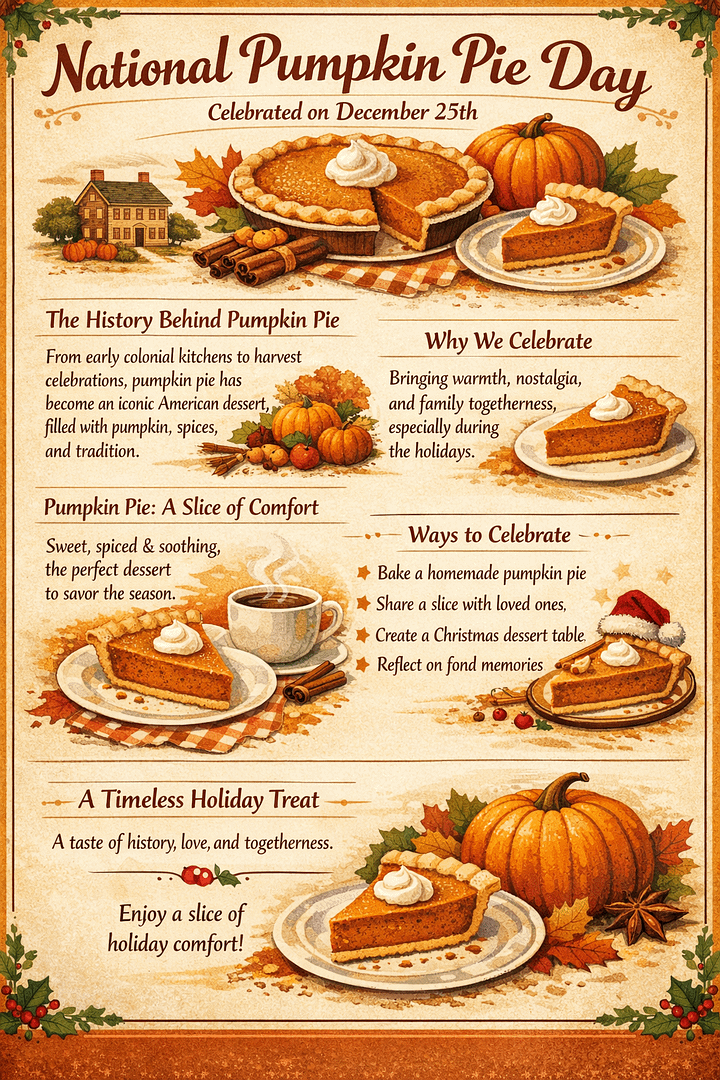
    National Pumpkin Pie Day is a celebration of one of the most beloved desserts in American history—a sweet, spiced symbol of comfort, tradition, and togetherness.

    Observed each year on December 25, National Pumpkin Pie Day reminds us that this iconic dessert isn’t just reserved for Thanksgiving. It’s a year-round favorite, but on Christmas Day, it holds a special place at the table, blending warmth, nostalgia, and a sense of home.


    The History Behind Pumpkin Pie

    Pumpkin pie has deep roots in early American cooking. Native Americans were using pumpkins long before European settlers arrived, and colonists later adapted the squash into sweet and savory dishes. Over time, pumpkin pie evolved into the classic dessert we know today—made with pumpkin purée, warm spices like cinnamon, nutmeg, and cloves, and baked in a flaky crust.

    By the 19th century, pumpkin pie had become firmly associated with harvest celebrations and family gatherings, symbolizing abundance and gratitude.


    Why We Celebrate National Pumpkin Pie Day

    National Pumpkin Pie Day celebrates more than a dessert—it honors tradition, comfort, and the simple joys of sharing food with loved ones. On Christmas Day especially, pumpkin pie often appears alongside other holiday favorites, bridging fall and winter flavors in one familiar bite.

    For many families, pumpkin pie evokes cherished memories: grandparents passing down recipes, children sneaking tastes of filling, and the comforting aroma filling the kitchen on a cold day.


    Pumpkin Pie: A Slice of Comfort

    There’s something deeply soothing about pumpkin pie. Its creamy texture and warm spices bring a sense of calm and familiarity, making it a perfect dessert for reflective moments during the holidays. Whether enjoyed after a festive meal or with a quiet cup of coffee, pumpkin pie offers a moment to slow down and savor the season.


    Ways to Celebrate National Pumpkin Pie Day

    • Bake a homemade pumpkin pie, using a treasured family recipe or trying a new twist like maple or bourbon pumpkin pie.

    • Share a slice with loved ones, neighbors, or friends—especially those spending the holidays alone.

    • Create new traditions, such as a Christmas Day dessert table featuring pumpkin pie as the star.

    • Reflect on memories, honoring loved ones who once baked or shared this special dessert with you.


    A Timeless Holiday Treat

    National Pumpkin Pie Day reminds us that some traditions never fade. With every slice, we taste history, love, and togetherness—ingredients that matter just as much as pumpkin and spice.

    Whether your pie is homemade or store-bought, enjoyed in a bustling dining room or a quiet kitchen, pumpkin pie remains a timeless symbol of warmth and holiday comfort.

    🥧✨

    Read More Holidays & National Days

  • Why Christmas Is Not the Same When Your Loved One Has Angel Wings

    Advertisements

    Christmas is often painted as a season of joy, laughter, and togetherness—a time when families gather, traditions are honored, and memories are made. But when someone you love is no longer physically present, Christmas can feel like a stark reminder of loss rather than celebration. When your loved one has angel wings, the holiday no longer looks or feels the way it once did, and that change can be both heartbreaking and disorienting.

    The Empty Spaces Are Everywhere
    Loss reveals itself in the smallest details. It’s in the empty chair at the table, the missing stocking on the mantel, and the absence of a familiar laugh echoing through the house. These empty spaces are not just physical; they live in conversations that feel incomplete and moments when you instinctively turn to share something—only to remember they are no longer there. At Christmas, when togetherness is emphasized, these gaps feel impossible to ignore.

    Memories Come Flooding Back
    The sights, sounds, and scents of Christmas have a powerful way of unlocking memories. A song on the radio, a favorite holiday recipe, or an ornament pulled from storage can instantly transport you back to moments shared with your loved one. These memories can be both comforting and painful. They remind you of the deep love you shared, but they also underscore the ache of their absence. Christmas becomes a season of remembering as much as celebrating.

    Traditions Feel Different—but They Still Matter
    After loss, traditions may feel too heavy to carry. Some people avoid them altogether, while others cling to them for comfort. There is no right or wrong way. Baking cookies might bring tears instead of laughter. Opening gifts may feel hollow. Yet for many, traditions eventually become a bridge—connecting the past with the present. Over time, some families find ways to adapt traditions, honoring their loved one while allowing space for new meaning to grow.

    Grief Has No Holiday Schedule
    Grief doesn’t pause for Christmas. It doesn’t take a break because the calendar says it’s time to celebrate. In fact, grief often feels sharper during the holidays, when expectations of happiness are everywhere. You may feel pressure to “be okay” for others, even when your heart feels shattered. It’s important to remember that grieving during Christmas is not a failure—it’s a reflection of deep love.

    The Complexity of Mixed Emotions
    Christmas after loss is emotionally complicated. You may feel sadness, anger, gratitude, love, and longing all at once. There may be moments of laughter followed by waves of tears. This emotional whiplash can be exhausting. But these mixed emotions are a sign that love still lives on. Feeling joy doesn’t mean you miss them any less, and feeling sorrow doesn’t mean the season holds no beauty.

    Feeling Disconnected From the World
    While others celebrate, you may feel like an outsider looking in. Social gatherings can feel overwhelming, and cheerful messages may feel painfully out of sync with your reality. It’s okay to step back, to say no, or to celebrate in quieter ways. Protecting your heart during this season is not selfish—it’s necessary.

    Finding Ways to Honor Them
    Many people find comfort in creating intentional moments to honor their loved one during Christmas. Lighting a candle in their memory, donating in their name, visiting a special place, or setting aside time to speak their name aloud can bring a sense of closeness. These acts don’t make the pain disappear, but they can soften it by reminding you that love does not end with death.

    A Season of Gentle Acceptance
    Christmas may never return to what it once was—and that’s okay. The goal is not to “move on” but to move forward while carrying your loved one with you. Over time, the sharp edges of grief may soften, even though the love remains unchanged. Christmas becomes less about perfection and more about presence, reflection, and honoring what truly matters.

    Love That Lives Beyond Angel Wings
    When your loved one has angel wings, Christmas becomes a quieter, more tender season. It may be filled with tears, memories, and moments of longing—but also with enduring love. Though the holiday is no longer the same, their spirit lives on in every memory, every tradition adapted, and every moment you hold them close in your heart. Christmas changes, but love never leaves.

    A Father’s Guide to Surviving the Loss of a Child

  • Christmas Eve: A Night of Anticipation, Meaning, and Quiet Magic

    Advertisements

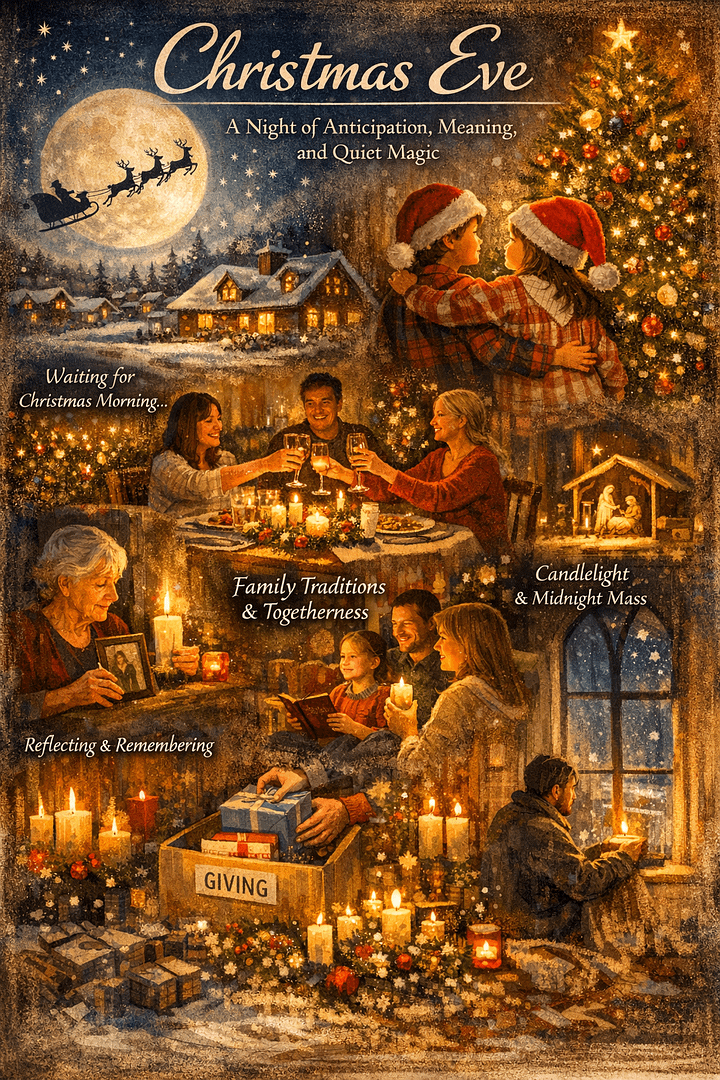
    Christmas Eve, observed on December 24, holds a special place in the hearts of people around the world. It is a night filled with anticipation, tradition, and reflection—a gentle pause before the joy and celebration of Christmas Day. For many, Christmas Eve feels just as meaningful, if not more so, than the holiday itself.

    At its core, Christmas Eve is about waiting. Children eagerly count the hours until morning, imagining stockings filled with surprises and the arrival of Santa Claus. Homes glow with twinkling lights, decorated trees stand proudly, and the air feels charged with excitement. It’s a night where hope feels close and wonder feels possible.

    For families, Christmas Eve is often a time of togetherness. Many gather for special meals, exchange small gifts, or follow cherished traditions passed down through generations. Some families read classic Christmas stories, watch beloved holiday movies, or open one present to ease the suspense. These simple rituals create memories that linger long after the season ends.

    Christmas Eve also carries deep spiritual significance for millions of people. In Christian traditions, it commemorates the night before the birth of Jesus Christ. Candlelight services, midnight Mass, and church gatherings fill the evening with reverence and peace. The soft glow of candles and familiar hymns remind worshippers of themes central to the season—love, humility, hope, and light in the darkness.

    Beyond religious observance, Christmas Eve is a time for reflection. It invites people to slow down in the midst of a busy season and consider what truly matters. Many use this evening to express gratitude, extend forgiveness, or reach out to loved ones they haven’t spoken to in a while. Acts of kindness—whether through giving, volunteering, or simply being present—often feel especially powerful on this night.

    For those who are grieving or experiencing loneliness, Christmas Eve can be bittersweet. The quietness of the night may amplify feelings of absence, yet it can also offer space for remembrance and healing. Lighting a candle, honoring a loved one, or sharing stories can turn sorrow into connection and love.

    Ultimately, Christmas Eve is more than a countdown to Christmas Day. It is a night that embodies the heart of the season—anticipation, compassion, togetherness, and hope. Whether filled with laughter, prayer, reflection, or quiet solitude, Christmas Eve reminds us that even in the stillness, something beautiful is about to arrive.

    Read More Holidays & National Days

  • National Eggnog Day – A Celebration Of An Iconic Holiday Beverage

    Advertisements

    National Eggnog Day is a cozy celebration that invites us to slow down, savor the season, and enjoy one of the most iconic holiday beverages of all time. Observed on December 24, this creamy, spiced drink has become synonymous with Christmas Eve traditions, warm gatherings, and nostalgic memories shared with family and friends.

    A Brief History of Eggnog

    Eggnog’s origins trace back to medieval Europe, where a hot, milky ale called posset was enjoyed by the upper class. When the recipe crossed the Atlantic, Americans adapted it using readily available ingredients like eggs, milk, and rum or bourbon. Over time, eggnog evolved into the rich, chilled holiday drink we know today—sometimes spiked, sometimes alcohol-free, but always comforting.

    What Makes Eggnog So Special

    Eggnog isn’t just a drink; it’s an experience. The blend of milk or cream, sugar, eggs, nutmeg, and cinnamon creates a flavor that feels like the holidays in a glass. For many, the first sip signals that Christmas is truly here. Whether served in a festive mug, topped with whipped cream, or dusted with fresh nutmeg, eggnog carries a sense of tradition and indulgence.

    How People Celebrate National Eggnog Day

    On National Eggnog Day, people celebrate in many ways:

    • Enjoying a classic homemade eggnog recipe passed down through generations

    • Trying dairy-free or vegan versions made with almond, oat, or coconut milk

    • Adding a festive twist with flavors like pumpkin spice, chocolate, or caramel

    • Hosting a Christmas Eve gathering where eggnog is the star of the beverage table

    Some even use eggnog in baking, incorporating it into cakes, cookies, or French toast for an extra seasonal touch.

    A Toast to Holiday Traditions

    National Eggnog Day is more than just a reason to enjoy a delicious drink—it’s a reminder of togetherness, comfort, and cherished traditions. In the midst of holiday hustle, this day encourages us to pause, pour a glass, and enjoy the warmth of the season, whether surrounded by loved ones or quietly reflecting on the year.

    Read More Holidays & National Days

  • What Grieving People Wish You Knew at Christmas

    Advertisements

    Christmas is often described as the most wonderful time of the year—a season filled with lights, laughter, family gatherings, and cherished traditions. But for those who are grieving, Christmas can feel heavy, isolating, and deeply painful. While the world celebrates, grieving hearts are simply trying to survive.

    Here are some things grieving people wish others understood during the Christmas season.

    1. We Still Love Christmas—It Just Hurts Now

    Grief doesn’t erase the love we once had for the holidays. It changes it. Decorations may feel overwhelming, carols may bring tears instead of joy, and traditions can highlight who is missing. We aren’t trying to be negative—we are learning how to exist in a season that no longer looks or feels the same.

    2. Please Say Their Name

    Avoiding the name of the person who died doesn’t protect us—it hurts. Saying their name acknowledges their existence, their impact, and our love. A simple, “I know this must be hard without ___” means more than you realize.

    3. There Is No “Right Way” to Grieve

    Some days we may laugh. Other days we may withdraw. We might attend one event and skip another. Grief doesn’t follow a schedule or social expectations. What looks like strength one day may be pure exhaustion the next.

    4. Invitations Still Matter—even If We Decline

    Being included reminds us we are remembered. Please keep inviting us, even if we say no. Sometimes just knowing we had the option makes the season feel less lonely.

    5. “At Least…” Is Never Comforting

    “At least they’re not suffering.”
    “At least you have other children.”
    “At least you had time with them.”

    These phrases minimize loss, even when well-intended. What helps most is a listening ear and a simple, “I’m so sorry. This is really hard.”

    6. Grief Gets Louder During the Holidays

    Empty chairs, unwrapped gifts, and missing traditions amplify loss. The joy around us can make our sorrow feel even heavier. Christmas doesn’t distract from grief—it often magnifies it.

    7. We May Need Support Long After the Decorations Come Down

    Grief doesn’t end on December 26th. In many ways, it deepens once the noise of the holidays fades. Continued check-ins after Christmas are deeply appreciated.

    8. Small Acts of Kindness Mean Everything

    A text message. A card. A meal. A candle lit in remembrance. These gestures may seem small to you, but to a grieving heart, they are lifelines.

    9. We Are Not Trying to Ruin the Holiday

    If we step away, cry unexpectedly, or seem quieter than usual, it’s not because we don’t care. It’s because love never stops—and neither does grief.

    10. Your Presence Matters More Than Your Words

    You don’t need to fix our pain. You can’t. Just be there. Sit with us. Hold space. Let us talk—or not talk—without pressure.


    A Gentle Reminder

    Grief is love that has nowhere to go. At Christmas, that love often feels overwhelming. Patience, compassion, and understanding go farther than perfect words ever could.

    If you know someone who is grieving this Christmas, the greatest gift you can offer is grace.

    A Father’s Guide to Surviving the Loss of a Child

  • Why Christmas Is Never the Same After Your Child Passes

    Advertisements

    Christmas is often painted as a season of joy—twinkling lights, laughter-filled rooms, and traditions passed lovingly from one generation to the next. For parents who have lost a child, however, Christmas can become one of the most painful times of the year. When a child passes, the holiday is forever changed. The season still arrives on the calendar, but the heart no longer experiences it the same way.

    The Absence Is Louder Than the Celebration

    A child’s presence fills a home in a way nothing else can. Their excitement, their unique laugh, their anticipation of Christmas morning—these are the sounds and moments that once defined the holiday. After a child’s passing, the silence they leave behind can feel overwhelming. Every ornament, every empty chair, every unopened stocking becomes a reminder of what is missing. The joy that once came naturally now feels heavy, often replaced by an ache that words cannot fully express.

    Traditions Become Triggers

    Traditions that once brought comfort and happiness can suddenly become painful reminders of loss. Decorating the tree, baking favorite cookies, or wrapping gifts may feel unbearable because they are deeply tied to memories of your child. Parents may struggle with whether to keep traditions alive, change them, or avoid them altogether. There is no right or wrong choice—only what feels survivable in the moment.

    Grief Collides With Expectations

    Society expects Christmas to be joyful, festive, and full of cheer. For grieving parents, this expectation can feel isolating. Smiles may be forced, invitations declined, and well-meaning phrases like “They’d want you to be happy” can deepen the pain. Grief does not pause for the holidays, and the pressure to appear “okay” can make the season even harder to endure.

    The Loss of Who You Were

    The death of a child doesn’t just take the child—it changes the parent forever. Christmas may bring a painful awareness of who you used to be before loss reshaped your life. The parent who once planned celebrations with excitement now moves through the season carrying sorrow alongside love. This shift in identity is part of why Christmas never feels the same again.

    Love That Has Nowhere to Go

    Perhaps the hardest part is the love that still exists but has no physical place to land. The gifts you long to buy, the hugs you wish to give, the moments you want to share—all of it remains inside you. Christmas magnifies this reality, because it is a season built around giving love, especially to children.

    Finding a Different Kind of Meaning

    While Christmas may never return to what it once was, some parents eventually find new ways to honor their child during the season. Lighting a candle, donating in their name, hanging a special ornament, or simply speaking their name aloud can bring a quiet sense of connection. These acts don’t erase the pain, but they can create space for remembrance alongside grief.

    It Will Never Be the Same—And That’s Okay

    Christmas after the loss of a child is not about “moving on” or “finding joy again” in the way others might expect. It is about surviving, remembering, and allowing yourself grace. The holiday is forever altered because your love is forever altered. And that love—deep, enduring, and unbreakable—is a testament to the child who will always be part of your heart.

    If Christmas feels heavier than joyful, know that you are not alone. Your grief is valid, your love is real, and it is okay if Christmas is never the same again.

    A Father’s Guide to Surviving the Loss of a Child
  • National Christmas Movie Marathon Day 🎄🎬

    Advertisements

    National Christmas Movie Marathon Day is a celebration of one of the most beloved holiday traditions—curling up and watching Christmas movies back-to-back. In the midst of busy schedules, shopping lists, and endless to-do items, this day offers a welcome invitation to slow down, unplug, and fully immerse yourself in the warmth and magic of the season.

    Christmas movies have a timeless charm that transcends generations. Classics like It’s a Wonderful Life, White Christmas, and A Christmas Carol continue to resonate because of their powerful messages about hope, generosity, and second chances. At the same time, modern favorites such as Elf, The Polar Express, The Holiday, and The Santa Clause add humor, whimsy, and fresh perspectives that appeal to all ages. Whether you gravitate toward heartfelt dramas, romantic comedies, animated tales, or laugh-out-loud family films, there’s a Christmas movie for every mood.

    What makes a Christmas movie marathon especially meaningful is the sense of togetherness it creates. Families gather on the couch, children recite lines they know by heart, and friends bond over shared laughter and nostalgia. For those spending the holidays alone, these films can feel like comforting companions, filling the room with familiar music, joyful imagery, and uplifting stories. A movie marathon becomes more than entertainment—it becomes a source of connection and emotional warmth.

    The atmosphere surrounding a movie marathon is just as important as the films themselves. Cozy blankets, festive pajamas, twinkling lights, and the glow of the Christmas tree set the stage. Snacks become part of the tradition, from buttery popcorn and holiday cookies to hot cocoa topped with marshmallows or peppermint. Some people even turn it into an event, planning themed watch lists, decorating cookies between movies, or voting on which film comes next.

    Beyond the fun, Christmas movies often reflect the deeper meaning of the holiday season. Themes of kindness, forgiveness, love, and believing in something greater than yourself are woven into many of these stories. They remind us that miracles can come in unexpected ways, that generosity matters, and that family—whether chosen or given—is worth cherishing.

    National Christmas Movie Marathon Day celebrates these moments of joy, reflection, and togetherness. It encourages us to pause, breathe, and savor the simple pleasures that make the holidays special. Whether you watch a single favorite or spend the entire day hopping from one festive film to the next, this day is about embracing comfort, tradition, and the magic of Christmas—one movie at a time. 🎅🍿✨

    Read More Holidays & National Days

  • National Cookie Exchange Day: A Sweet Celebration of Sharing and Community

    Advertisements

    National Cookie Exchange Day, celebrated annually on December 22, is a heartwarming holiday that captures the true spirit of the season—sharing, connection, and joy. While cookies may be the star of the day, the deeper meaning lies in the relationships strengthened and the memories created through this simple yet meaningful tradition.

    The idea of a cookie exchange has been around for generations, especially during the holiday season when baking becomes a cherished ritual. Families and friends would gather in warm kitchens, passing down recipes that held stories of loved ones and holidays past. Over time, this practice evolved into organized exchanges, where each participant bakes a large batch of one or two cookie varieties and trades them with others. The result is an abundant assortment of flavors, textures, and traditions—without one person shouldering all the work.

    What makes National Cookie Exchange Day so special is its inclusivity. Cookie exchanges can be as casual or elaborate as you like. Some people host festive parties complete with music, decorations, and hot cocoa, while others prefer small, thoughtful exchanges with neighbors or coworkers. Even virtual cookie exchanges have become popular, allowing people to participate by delivering or mailing cookies and sharing recipes online. No matter the format, the purpose remains the same: bringing people together.

    This day also highlights the joy of giving. A box of homemade cookies can be a powerful gesture, especially when shared with those who may feel overlooked during the holidays. Teachers, first responders, healthcare workers, delivery drivers, and community volunteers often receive cookie gifts as a thank-you for their service. Many also use National Cookie Exchange Day as a chance to donate baked goods to shelters, food pantries, or community events, spreading warmth far beyond their own circles.

    National Cookie Exchange Day encourages creativity as well. Bakers experiment with new flavors, decorate cookies with care, and personalize packaging with handwritten notes or recipe cards. These small touches transform cookies from simple treats into heartfelt gifts that carry intention and love.

    In a season that can feel rushed and overwhelming, National Cookie Exchange Day offers a gentle reminder to slow down and savor the moment. It’s a celebration of generosity, tradition, and human connection—wrapped up in the comforting aroma of freshly baked cookies. So gather your ingredients, share your favorite recipes, and let this sweet tradition remind you that sometimes the simplest acts bring the greatest joy. 🍪💛

    Read More Holidays & National Days

  • Humbug Day: Embracing Honesty in the Heart of the Holidays

    Advertisements

    Observed each year on December 21, Humbug Day arrives during one of the most emotionally charged times of the year. While the holiday season is often wrapped in expectations of joy, generosity, and nonstop cheer, Humbug Day offers a refreshing—and much-needed—counterbalance. It reminds us that not everyone experiences the holidays the same way, and that honesty deserves a place alongside celebration.

    The word “humbug” is famously linked to Ebenezer Scrooge from Charles Dickens’ A Christmas Carol, where it represented disdain for holiday excess and forced cheer. Today, however, Humbug Day has evolved into something far more compassionate. Rather than promoting negativity, it encourages authenticity. It gives people permission to acknowledge stress, exhaustion, sadness, or even frustration without feeling like they’re “ruining” the season.

    For many, December can be overwhelming. Financial strain, demanding schedules, travel pressures, social obligations, and family dynamics can take a toll. Others may be navigating grief, loneliness, or memories of loved ones who are no longer present. When the world insists on constant happiness, those feelings can become isolating. Humbug Day gently pushes back against that pressure by saying it’s okay to feel differently.

    What makes Humbug Day especially meaningful is its ability to foster empathy. When we stop pretending that everyone is joyful, we open the door to deeper understanding and compassion. It encourages us to listen more closely, judge less, and offer support instead of expectations. Sometimes, a simple acknowledgment of someone’s struggle can be more powerful than any festive greeting.

    Observing Humbug Day doesn’t mean rejecting the holidays altogether. Instead, it can be a day to set healthy boundaries, simplify plans, or take a break from social demands. It might look like declining an invitation without guilt, choosing rest over obligation, or being honest about your emotional capacity. For some, it’s a reminder to check in with others who may be quietly struggling.

    In a season that often emphasizes perfection, Humbug Day celebrates reality. It honors the full range of human emotions and reminds us that true connection comes from being real—not from forced smiles or scripted cheer. By making space for honesty, Humbug Day helps us approach the holidays with greater kindness, understanding, and balance.

    Sometimes, embracing the “humbug” is what allows genuine joy to return—on our own terms.

    Read More Holidays & National Days

Exit mobile version