Author: Brett Murphy

  • National Lemon Meringue Pie Day – A Zesty Slice of Sweetness

    National Lemon Meringue Pie Day – A Zesty Slice of Sweetness

    Advertisements

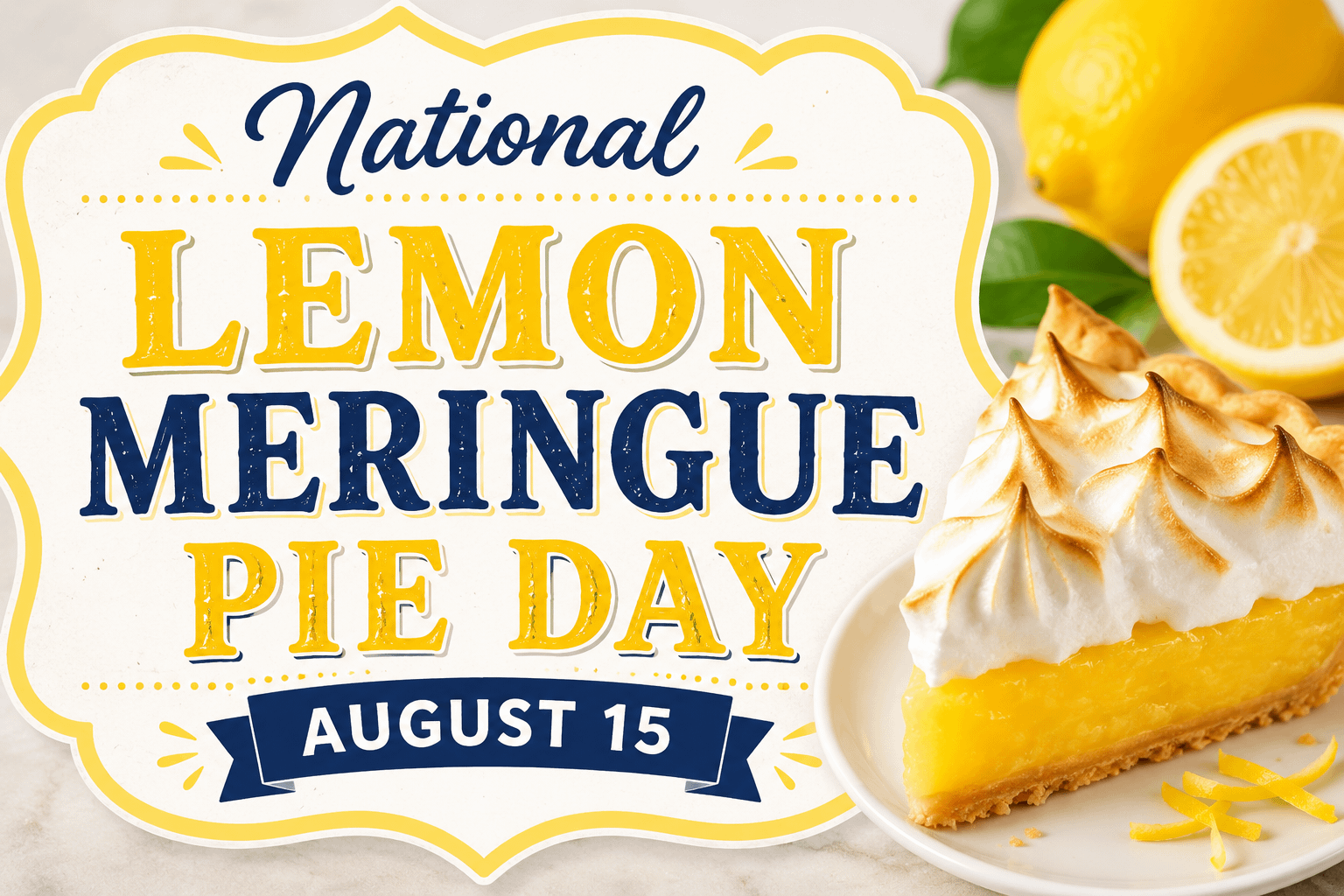
    Every year on August 15, dessert lovers have an especially sweet—and slightly tart—reason to celebrate: National Lemon Meringue Pie Day.

    Few desserts are as instantly recognizable as a beautiful lemon meringue pie. A flaky, buttery crust supports a smooth, vibrant lemon filling, while a generous cloud of meringue rises above it all. The top is lightly toasted until golden peaks appear, creating a dessert that looks every bit as impressive as it tastes.

    Lemon meringue pie brings together flavors and textures that seem made for one another. The lemon filling is bright and tangy. The meringue is light and sweet. The crust adds buttery richness and just enough crispness to complete every bite.

    It’s the kind of dessert that can feel nostalgic and elegant at the same time.

    For some people, lemon meringue pie brings back memories of Sunday dinners, holidays, family reunions, neighborhood bakeries, or visits to an old-fashioned diner. For others, it’s simply one of those classic desserts that deserves to be enjoyed whenever the opportunity presents itself.

    And on August 15, you don’t even need an excuse.

    So grab a fork and get ready to celebrate one of America’s classic pies.


    What Is National Lemon Meringue Pie Day?

    National Lemon Meringue Pie Day is an unofficial food holiday celebrated annually on August 15.

    The day is dedicated to enjoying and appreciating the famous dessert made from three main components:

    • A flaky pastry crust
    • A tart and creamy lemon filling
    • A fluffy meringue topping

    Although the origins of the observance itself aren’t particularly clear, the dessert it celebrates has a fascinating culinary history.

    Like many food holidays, the celebration doesn’t require complicated traditions. You can participate simply by enjoying a slice of lemon meringue pie.

    But if you’re feeling adventurous, August 15 is also a great opportunity to learn how to make one yourself.


    What Makes Lemon Meringue Pie So Special?

    At first glance, lemon meringue pie appears fairly simple.

    Crust.

    Lemon filling.

    Meringue.

    But those three components create an impressive collection of contrasting flavors and textures.

    The Crust

    A traditional pastry crust provides the foundation.

    When properly baked, it should be flaky, slightly crisp, and buttery enough to complement the filling without overpowering it.

    The Lemon Filling

    Then comes the heart of the dessert.

    The lemon filling typically combines fresh lemon juice, lemon zest, sugar, egg yolks, water, butter, and a thickening ingredient such as cornstarch.

    It should be smooth, creamy, bright, and unmistakably lemony.

    Most importantly, it needs balance.

    A great lemon meringue pie shouldn’t taste overwhelmingly sour, but it shouldn’t be so sweet that the lemon disappears either.

    The Meringue

    Finally, there’s the part that gives the dessert its dramatic appearance.

    Meringue is traditionally made by beating egg whites and sugar until the mixture becomes glossy and capable of forming peaks.

    It’s then spread generously over the lemon filling.

    Once browned, those peaks develop beautiful golden edges while the inside remains light and airy.

    Put everything together and one bite can deliver crisp, creamy, tart, sweet, buttery, and fluffy textures and flavors.

    That’s a lot happening in a single slice of pie.


    A Brief History of Lemon Meringue Pie

    Lemon meringue pie didn’t suddenly appear from a single recipe. Instead, it developed gradually as different culinary traditions came together.

    Lemons had already been used in European cooking for centuries. Their bright acidity made them particularly valuable for desserts, sauces, beverages, preserves, and custards.

    Lemon custards and puddings eventually became popular dessert preparations.

    Pastry, of course, had an even longer history.

    Meringue added the final piece.

    European cooks discovered that beating egg whites could create a light foam that became even more stable and sweet when sugar was added.

    Eventually, pastry, lemon custard, and meringue found their way onto the same dessert.

    And something wonderful happened.


    Elizabeth Goodfellow and Early American Lemon Desserts

    One name frequently associated with the development of lemon meringue-style desserts in America is Elizabeth Goodfellow.

    Goodfellow was a respected Philadelphia pastry cook and cooking instructor during the early 19th century.

    She operated a pastry shop and cooking school and became known for teaching women culinary techniques that would influence American cooking.

    Her students recorded recipes and methods associated with her instruction, helping preserve parts of her culinary legacy.

    Desserts involving lemon custard and meringue eventually became increasingly recognizable throughout the 1800s.

    Over time, recipes evolved into what we now recognize as lemon meringue pie.


    Why Lemon and Meringue Work So Well Together

    One reason lemon meringue pie has endured is the balance between acidity and sweetness.

    Imagine eating the lemon filling by itself.

    Depending on the recipe, it could be intensely tart.

    Now imagine eating a large spoonful of sweet meringue.

    Delicious—but potentially very sweet.

    Put them together and they balance each other.

    The lemon cuts through the sweetness of the meringue, while the meringue softens the sharpness of the citrus.

    Then the pastry crust adds another layer of richness.

    It’s a great example of how contrasting flavors can create something better together than they would separately.


    The Importance of Fresh Lemons

    If you’re making lemon meringue pie from scratch, lemons obviously play the starring role.

    Fresh lemon juice delivers acidity and brightness.

    But don’t forget the zest.

    The outer yellow portion of a lemon’s peel contains aromatic oils that provide powerful lemon fragrance and flavor.

    That’s why many recipes use both lemon juice and lemon zest.

    The juice provides tartness.

    The zest provides aroma.

    Together, they create that unmistakable citrus flavor.

    Just remember to zest only the yellow exterior. The white portion beneath the peel, known as the pith, can be bitter.


    The Science Behind Meringue

    Meringue looks almost magical.

    You begin with ordinary egg whites, whip them, and suddenly they expand into a fluffy white cloud several times their original volume.

    But there’s science behind the transformation.

    Egg whites contain proteins.

    As the whites are whipped, those proteins unfold and form structures around tiny air bubbles. The more air incorporated into the mixture, the larger and fluffier it becomes.

    Sugar helps stabilize the foam while adding sweetness.

    The result is a glossy mixture capable of forming those signature peaks.

    However, meringue can be temperamental.

    Even a small amount of grease or egg yolk can make it difficult for egg whites to whip properly.

    That’s why bakers often make sure bowls and beaters are extremely clean before preparing meringue.


    Soft Peaks vs. Stiff Peaks

    If you’ve ever followed a meringue recipe, you’ve probably encountered terms such as soft peaks and stiff peaks.

    But what do they actually mean?

    Soft peaks occur when you lift your whisk or beaters and the meringue forms a peak that gently folds over.

    Stiff peaks stand upright and hold their shape.

    For lemon meringue pie, the egg whites are generally whipped until they can create strong, glossy peaks capable of supporting the decorative topping.

    That’s what creates those beautiful mountains and swirls you see on professionally prepared pies.


    Why the Meringue Has Golden Peaks

    One of the most attractive parts of lemon meringue pie is its toasted appearance.

    The meringue begins bright white.

    After baking or browning, the raised portions turn golden brown.

    The result is a dramatic mixture of white, cream, caramel, and golden tones across the top.

    Some bakers create tall peaks with a spoon.

    Others make smooth waves.

    Professional pastry chefs may pipe elaborate patterns onto the pie.

    Whatever method is used, browning the meringue transforms a relatively simple topping into the dessert’s signature feature.


    A Classic Homemade Lemon Meringue Pie Recipe

    Want to celebrate National Lemon Meringue Pie Day in the kitchen?

    Try making your own.

    Ingredients

    For the Pie

    • 1 baked 9-inch pastry crust
    • 1 1/2 cups granulated sugar
    • 1/3 cup cornstarch
    • 1 1/2 cups water
    • 4 large egg yolks
    • 1/2 cup fresh lemon juice
    • 1 tablespoon finely grated lemon zest
    • 2 tablespoons butter

    For the Meringue

    • 4 large egg whites
    • 1/2 teaspoon cream of tartar
    • 1/2 cup granulated sugar
    • 1/2 teaspoon vanilla extract

    Directions

    Step 1: Prepare the Crust

    Bake your favorite homemade or prepared 9-inch pie crust according to its instructions.

    The crust should be completely baked before adding the lemon filling.

    Set it aside while preparing the remaining components.

    Step 2: Make the Lemon Filling

    Combine the sugar and cornstarch in a medium saucepan.

    Gradually whisk in the water.

    Cook over medium heat while stirring regularly until the mixture begins thickening.

    Meanwhile, lightly beat the egg yolks in a separate bowl.

    Slowly whisk a small amount of the hot sugar mixture into the egg yolks.

    This process is called tempering.

    It gradually raises the temperature of the egg yolks so they don’t immediately scramble when introduced to the hot filling.

    Once tempered, slowly whisk the egg yolk mixture back into the saucepan.

    Continue cooking briefly while stirring.

    Remove from the heat.

    Stir in the fresh lemon juice, lemon zest, and butter.

    Your filling should be smooth, glossy, and beautifully yellow.

    Pour the warm lemon mixture into the baked pie crust.

    Step 3: Prepare the Meringue

    Place the egg whites in a clean mixing bowl.

    Add the cream of tartar.

    Beat until the egg whites become foamy and begin forming soft peaks.

    Gradually add the sugar while continuing to beat.

    Don’t dump all the sugar in at once.

    Slowly incorporating it helps produce smoother, more stable meringue.

    Continue beating until stiff, glossy peaks form.

    Add the vanilla extract and mix briefly.

    Step 4: Top the Pie

    Spread the meringue over the warm lemon filling.

    Make sure the meringue reaches all the way to the crust around the edge.

    This helps create a seal.

    Use the back of a spoon or spatula to create decorative swirls and peaks.

    Step 5: Bake

    Bake at approximately 350°F until the meringue develops a beautiful golden color.

    Watch it carefully.

    Meringue can go from beautifully toasted to overly browned surprisingly quickly.

    Remove the pie from the oven and allow it to cool.

    For clean slices, give the filling plenty of time to set before cutting.


    Common Lemon Meringue Pie Problems

    Making lemon meringue pie can sometimes test a baker’s patience.

    Several things can go wrong, but understanding them can help you create a better pie.

    Runny Lemon Filling

    A lemon filling that doesn’t set properly may not have cooked long enough or may have an incorrect balance of liquid and thickener.

    Give the filling enough time to thicken during cooking and allow the finished pie to cool completely before judging its consistency.

    Meringue That Shrinks

    Sometimes meringue pulls away from the crust as the pie cools.

    Spreading the meringue all the way to the crust can help create a better seal.

    Meringue That Weeps

    Tiny droplets can sometimes appear on meringue.

    This is often called “weeping.”

    Careful preparation, proper sugar incorporation, and avoiding overbaking can help produce a more stable topping.

    A Soggy Crust

    Nobody wants a soggy bottom crust.

    Fully baking the crust before adding the filling helps create a sturdier foundation for the finished pie.


    Creative Lemon Meringue Variations

    Traditional lemon meringue pie is wonderful, but creative bakers have developed plenty of variations.

    Mini Lemon Meringue Tarts

    Make individual tart shells and fill each one with lemon filling and meringue.

    They’re perfect for parties because everyone gets their own dessert.

    Graham Cracker Crust

    Replace traditional pastry with a sweet graham cracker crust.

    It creates a slightly different texture and flavor while still pairing beautifully with lemon.

    Lemon Meringue Bars

    Turn the traditional pie into portable dessert bars.

    A shortbread-style crust, lemon filling, and toasted meringue can deliver the same flavors in an easier-to-serve format.

    Lime Meringue Pie

    Swap lemon for lime to create a different citrus experience.

    Meyer Lemon Meringue Pie

    Meyer lemons tend to have a sweeter and less sharply acidic flavor than many standard lemons.

    Using them can create a softer citrus profile.


    What to Serve With Lemon Meringue Pie

    Lemon meringue pie already has plenty happening, so it doesn’t require much accompaniment.

    A good cup of coffee works beautifully.

    So does hot tea.

    On a warm August afternoon, consider serving it alongside:

    • Iced tea
    • Fresh-brewed coffee
    • Iced coffee
    • Sparkling water with lemon
    • Fresh berries
    • Strawberries
    • Blueberries
    • Raspberries

    Fresh berries are particularly good because they complement the citrus flavor without overwhelming it.


    Why Lemon Desserts Are Perfect for Summer

    National Lemon Meringue Pie Day falls right in the middle of August, making its timing especially appropriate.

    Summer is citrus dessert season.

    When temperatures rise, many people gravitate toward bright, refreshing flavors.

    Lemon delivers exactly that.

    Think about some of the desserts commonly enjoyed during warmer months:

    Lemon bars.

    Lemon cookies.

    Lemon cake.

    Lemon cheesecake.

    Lemon sorbet.

    Lemon icebox pie.

    And, of course, lemon meringue pie.

    The citrus flavor brings a refreshing quality that feels especially appropriate after a summer barbecue or outdoor meal.


    Lemon Meringue Pie at Family Gatherings

    Certain foods become connected to memories.

    You may not remember every conversation from a family dinner years ago, but you might remember the food sitting on the table.

    Maybe someone in your family always made lemon meringue pie.

    Maybe you remember watching a parent or grandparent carefully whip egg whites.

    Perhaps there was always one pie sitting beside the chocolate cake, cookies, and other desserts at holiday gatherings.

    Food can become part of a family’s history.

    Recipes are handed down.

    Handwritten recipe cards become treasured possessions.

    Techniques are taught from one generation to another.

    Eventually, a dessert becomes more than dessert.

    It becomes part of the story.


    The Classic American Diner Pie

    Lemon meringue pie also has strong connections to traditional American diner culture.

    Picture an old-fashioned diner.

    There’s coffee brewing behind the counter.

    A row of stools faces the kitchen.

    And somewhere near the register sits a glass display case filled with pies.

    Apple.

    Cherry.

    Chocolate cream.

    Coconut cream.

    And towering above them all might be a lemon meringue pie with golden peaks reaching toward the glass.

    Pie and coffee became a classic diner combination for generations of Americans.

    Even as food trends change, there’s something wonderfully nostalgic about sitting down with a cup of coffee and a slice of pie.


    Fun Facts About Lemons

    Lemon meringue pie wouldn’t exist without its signature citrus fruit.

    Here are a few interesting things about lemons:

    • Lemon trees are evergreen and can produce fruit throughout much of the year under suitable growing conditions.
    • Lemon juice contains citric acid, which creates its distinctive sour taste.
    • Lemon zest contains aromatic oils responsible for much of the fruit’s fragrance.
    • Lemons are used in both sweet and savory cooking.
    • Lemon juice is commonly used in beverages, marinades, sauces, desserts, and salad dressings.
    • Citrus fruits have traveled around the world through centuries of cultivation and trade.
    • California is one of the major lemon-growing regions in the United States.

    Fun Facts About Meringue

    Meringue deserves some attention of its own.

    There are several major styles of meringue used in baking.

    French Meringue

    This is one of the simplest styles.

    Sugar is gradually beaten into whipped egg whites.

    Swiss Meringue

    Egg whites and sugar are gently heated together before being whipped.

    The result is typically smooth and glossy.

    Italian Meringue

    Hot sugar syrup is gradually poured into whipping egg whites.

    This creates a particularly stable meringue frequently used in professional pastry making.

    Traditional home-style lemon meringue pie is commonly associated with straightforward whipped meringue techniques, although bakers can choose different approaches.


    How to Celebrate National Lemon Meringue Pie Day

    You don’t need to organize a huge event to enjoy August 15.

    Here are several ways to celebrate.

    Bake a Homemade Pie

    If you’ve never made lemon meringue pie before, today is the perfect excuse to try.

    Don’t worry if your first pie doesn’t look bakery-perfect.

    Homemade desserts don’t have to be perfect to be delicious.

    Visit a Local Bakery

    Stop by a neighborhood bakery and see whether lemon meringue pie is available.

    It’s a delicious way to celebrate while supporting a local business.

    Have Pie and Coffee With Someone

    Invite a friend, neighbor, coworker, or family member to share a slice.

    Sometimes the best celebrations are simply an excuse to spend time together.

    Have a Pie-Baking Contest

    Challenge friends or relatives to make their best lemon meringue pie.

    Then conduct a taste test.

    Categories could include:

    Best Flavor

    Best Crust

    Best Meringue

    Most Beautiful Pie

    Best Overall

    Of course, everyone wins because everyone gets pie.

    Try a New Lemon Dessert

    If lemon meringue pie isn’t available, celebrate lemon flavor in another way.

    Make lemon bars, lemon cookies, lemon cupcakes, or another citrus-inspired treat.

    Share Your Pie Online

    Take a picture of your lemon meringue pie before cutting it.

    Those toasted peaks deserve their moment.

    Use hashtags such as #NationalLemonMeringuePieDay, #LemonMeringuePie, #PieLovers, and #DessertLovers.


    Turn August 15 Into a Lemon Dessert Celebration

    If you’re hosting friends or family, why stop at one dessert?

    Create a lemon-themed dessert table.

    Serve lemon meringue pie alongside lemon bars, lemon cookies, lemon cupcakes, lemon pound cake, lemon cheesecake bites, and fresh lemonade.

    Add bowls of fresh berries for color.

    You could even have guests vote for their favorite lemon dessert.

    It turns a quirky food holiday into a memorable late-summer gathering.


    National Lemon Meringue Pie Day Is About Simple Enjoyment

    Not every celebration needs to be serious.

    Some days are simply about appreciating life’s small pleasures.

    National Lemon Meringue Pie Day is one of them.

    It’s an excuse to visit your favorite bakery.

    It’s an excuse to pull out an old family recipe.

    It’s an excuse to learn something new in the kitchen.

    It’s an excuse to invite someone over for dessert.

    And yes, it’s an excellent excuse to eat pie.

    Sometimes sharing dessert with someone can create a memory that lasts much longer than the dessert itself.


    A Slice of Nostalgia

    There’s something comforting about classic desserts.

    Food trends constantly change. New flavors appear, social media introduces elaborate creations, and restaurants continually reinvent familiar dishes.

    Yet the classics remain.

    Apple pie remains apple pie.

    Chocolate cake remains chocolate cake.

    And lemon meringue pie continues to stand proudly with its bright yellow filling and golden peaks.

    Maybe that’s because classic desserts aren’t simply about taste.

    They’re connected to memories.

    They’re connected to family.

    They’re connected to celebrations.

    They’re connected to people.

    A familiar flavor can suddenly remind us of a kitchen we haven’t seen in decades or someone who once sat beside us at the table.

    That’s one of the remarkable things about food.

    It doesn’t simply feed us.

    Sometimes it helps us remember.


    Celebrate National Lemon Meringue Pie Day on August 15

    On August 15, take a moment to appreciate one of the most recognizable desserts around.

    Enjoy the buttery crust.

    Taste the bright lemon filling.

    Dig into that fluffy meringue.

    Maybe make your own pie.

    Maybe support your neighborhood bakery.

    Maybe invite someone over and split a slice.

    Or maybe sit quietly with a cup of coffee and enjoy the whole experience yourself.

    However you choose to celebrate, National Lemon Meringue Pie Day is a reminder that sometimes happiness can be surprisingly simple.

    Sometimes it’s conversation around the kitchen table.

    Sometimes it’s discovering an old family recipe.

    Sometimes it’s baking something from scratch.

    And sometimes it’s nothing more complicated than a beautiful slice of lemon meringue pie waiting on a plate.

    Happy National Lemon Meringue Pie Day!

    Here’s to flaky crusts, tart lemon filling, towering golden meringue, treasured recipes, sweet memories, and one more reason to enjoy dessert on August 15.

    Read More Holidays & National Days

  • National Spirit of ’45 Day – Honoring the Legacy of the Greatest Generation

    Advertisements

    Each year on the second Sunday in August, Americans come together to celebrate National Spirit of ’45 Day, a time dedicated to honoring the courage, sacrifice, and unity of the men and women who lived through World War II. Established to keep alive the memory and values of what has often been called the Greatest Generation, this day reminds us of a time when the nation pulled together with a shared sense of purpose to overcome one of history’s greatest challenges.

    A Day of Remembrance and Gratitude

    National Spirit of ’45 Day was inspired by the iconic photograph of a sailor kissing a nurse in Times Square on August 14, 1945, the day World War II ended. This moment captured the collective relief, joy, and hope of an entire nation ready to rebuild and move forward. The holiday was officially recognized by Congress in 2010, ensuring that future generations would remember not only the events of the war but also the enduring values it brought to light—unity, selflessness, and perseverance.

    The Legacy of the Greatest Generation

    The men and women of the 1940s were more than just wartime heroes. They were innovators, community builders, and problem-solvers who shaped the modern United States. From the battlefields to the home front, they displayed unwavering commitment—whether serving overseas, working in factories, conserving resources, or volunteering in their communities.

    How to Observe National Spirit of ’45 Day

    Honor Veterans and Survivors – Visit local veterans’ organizations, participate in ceremonies, or simply thank someone from that generation for their service and contributions.

    Share Their Stories – Record or pass down personal accounts from family members who lived during World War II.

    Educate the Next Generation – Introduce young people to the history, culture, and lessons of the 1940s through books, documentaries, and museum visits.

    Act with the Spirit of Service – Volunteer, help a neighbor, or engage in community projects to carry forward the values of unity and sacrifice.

    Why It Still Matters Today

    In an era where the world often feels divided, National Spirit of ’45 Day calls us to remember a time when Americans stood side-by-side to face adversity. The resilience, hope, and determination of that generation remain as relevant as ever. By honoring them, we not only preserve their memory but also recommit ourselves to the ideals that helped them triumph over hardship.

    As we reflect on their sacrifices and achievements, we are reminded that the “Spirit of ’45” isn’t just about the past—it’s a timeless call to courage, community, and compassion.

    Read More Holidays & National Days
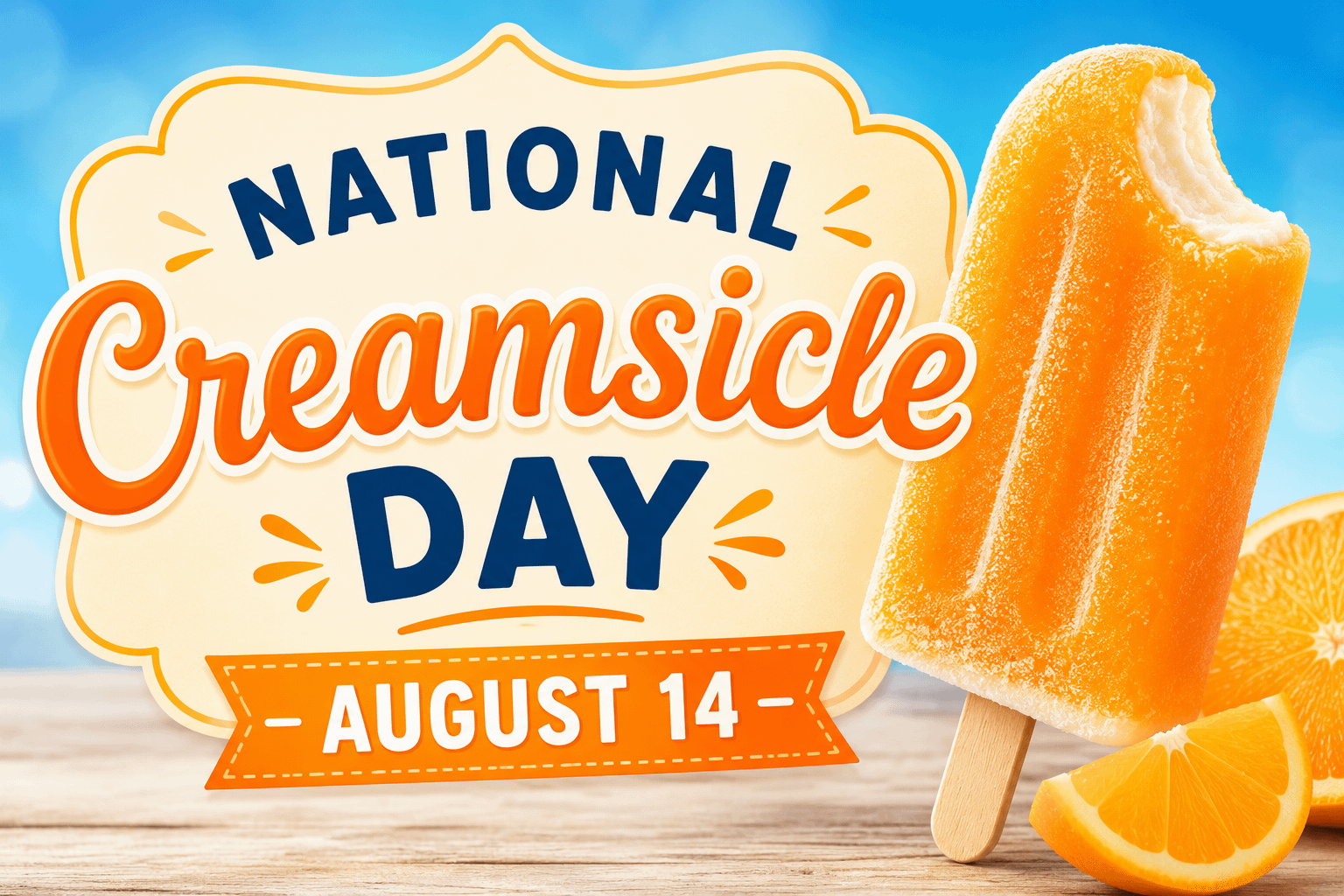
  • National Creamsicle Day – A Cool Celebration of a Summertime Classic

    Advertisements

    There are certain flavors that instantly feel like summer, and few combinations capture that feeling quite like orange and vanilla.

    Every year on August 14, National Creamsicle Day celebrates the cool, creamy, citrusy frozen treat that has been enjoyed by generations. The classic creamsicle—with its refreshing orange exterior and smooth vanilla ice cream center—is more than something sweet to eat on a hot afternoon. For many people, it’s a delicious reminder of childhood summers, neighborhood ice cream trucks, family vacations, swimming pools, backyard adventures, and simpler times.

    National Creamsicle Day gives us the perfect excuse to enjoy this nostalgic frozen favorite while appreciating the memories and traditions that have grown around summertime treats.

    Whether you celebrate with a traditional orange creamsicle, an orange-and-vanilla milkshake, a homemade frozen pop, or a creative creamsicle-inspired dessert, August 14 is all about enjoying one of summer’s most recognizable flavor combinations.

    What Is a Creamsicle?

    A traditional creamsicle combines two frozen desserts in one treat.

    The outside features a sweet and refreshing layer of orange-flavored ice, while the center contains creamy vanilla ice cream.

    It’s a simple combination, but that’s part of its appeal.

    The orange flavor is bright, sweet, and slightly tart. The vanilla center is smooth, mellow, and rich. Together, they create a balance that keeps the treat from feeling too heavy or too sugary.

    One bite might deliver mostly refreshing orange flavor.

    The next might include more vanilla.

    Eventually, the two begin melting together, creating the distinctive orange-and-cream flavor people have come to associate with the creamsicle.

    While orange remains the classic flavor, the basic idea of combining fruity frozen flavors with a creamy center has inspired many variations over the years.

    You might encounter combinations such as strawberry and vanilla, raspberry and cream, lemon and vanilla, lime and cream, mango and vanilla, or peach and cream.

    But when someone mentions a creamsicle, orange and vanilla are usually the flavors that immediately come to mind.

    The Early History of Frozen Treats on Sticks

    The creamsicle’s story is closely connected to the rise of frozen treats on sticks in the United States.

    One of the best-known stories begins with Frank Epperson, who is commonly credited with developing the frozen treat that eventually became known as the Popsicle.

    According to the popular story, Epperson was a child when he accidentally left a mixture of flavored soda powder and water outside overnight with a stirring stick still inside the cup. Cold temperatures froze the mixture around the stick.

    Years later, he began selling frozen treats based on the idea.

    Frozen desserts weren’t new, but putting a frozen flavored treat on a wooden stick made it especially convenient.

    There was no bowl.

    No spoon.

    No complicated preparation.

    You could simply unwrap it and eat it.

    As frozen novelties became increasingly popular during the early decades of the 20th century, manufacturers experimented with different flavors, textures, shapes, and combinations.

    Fruit-flavored ice pops became popular.

    Ice cream bars became popular.

    And eventually, frozen treats combining fruity exteriors with creamy ice cream centers found their place in America’s freezers.

    The orange-and-vanilla combination became one of the most enduring.

    Why Orange and Vanilla Became a Classic Combination

    Some flavors simply seem made for each other.

    Chocolate and peanut butter.

    Strawberries and cream.

    Apple and cinnamon.

    And, of course, orange and vanilla.

    Orange provides brightness and acidity. Vanilla adds richness and sweetness.

    When the two are combined, the vanilla softens the sharper citrus notes while the orange prevents the creamy vanilla flavor from becoming too heavy.

    The result is refreshing and indulgent at the same time.

    That balance helped the flavor combination move far beyond frozen pops.

    Today, “creamsicle” or “orange creamsicle” can describe almost anything featuring the familiar combination of orange and vanilla.

    You’ll find creamsicle-inspired:

    • Cakes
    • Cupcakes
    • Cookies
    • Cheesecakes
    • Pies
    • Milkshakes
    • Smoothies
    • Floats
    • Fudge
    • Pudding
    • Yogurt treats
    • Cocktails
    • Mocktails
    • Ice cream
    • Frozen desserts

    A flavor combination that began as a frozen summertime favorite has become an entire dessert category of its own.

    Why Creamsicles Bring Back So Many Memories

    Food and memory have a powerful relationship.

    A particular smell or flavor can suddenly transport us back decades.

    You might taste something you haven’t eaten since childhood and immediately remember where you were, who you were with, and what life felt like at the time.

    Creamsicles have that effect on many people.

    Maybe they remind you of summer vacation when there was no school and every morning seemed full of possibilities.

    Maybe you remember running through sprinklers in the backyard.

    Perhaps you spent afternoons riding bicycles around the neighborhood until someone called you home for dinner.

    Maybe you remember swimming at the community pool, playing baseball at the park, going camping with your family, or spending long afternoons at the beach.

    And somewhere in those memories might be a frozen treat.

    That’s what makes nostalgic foods special.

    We’re rarely remembering only the food.

    We’re remembering the life surrounding it.

    The Magic of the Neighborhood Ice Cream Truck

    For generations of children, few sounds created more excitement than the music of an approaching ice cream truck.

    You could hear it several blocks away.

    At first, the music might barely be noticeable.

    Then someone would yell:

    “The ice cream truck!”

    Suddenly, whatever game was happening stopped.

    Kids ran toward their houses looking for money.

    Parents searched through pockets, purses, kitchen drawers, or change jars.

    Then came the race back outside.

    Hopefully, the truck hadn’t already passed.

    Standing at the window of an ice cream truck felt like having dozens of possibilities.

    There were colorful ice pops, ice cream sandwiches, fudge bars, cones, character-shaped treats, frozen candy creations, and plenty of other choices.

    And somewhere on the menu, you might find the orange creamsicle.

    The experience wasn’t only about dessert.

    It was an event.

    That’s one reason frozen treats remain so deeply connected to childhood memories.

    Summer Was Different When We Were Kids

    National Creamsicle Day can also be an opportunity to remember how simple summer could feel when we were younger.

    Before adulthood brought schedules, responsibilities, deadlines, bills, and endless things to accomplish, summer days could seem incredibly long.

    You woke up wondering what adventure might happen.

    Maybe you rode your bicycle to a friend’s house.

    Maybe you played basketball until it got dark.

    Maybe you built forts.

    Maybe you went fishing.

    Maybe you spent hours swimming.

    Maybe you simply sat outside talking with friends.

    There didn’t always need to be a complicated plan.

    Sometimes a cold treat from the freezer was enough to make an ordinary afternoon feel special.

    Those simple moments often become some of our strongest memories.

    Creamsicles and the Taste of Nostalgia

    Nostalgia isn’t necessarily about believing everything was better in the past.

    It’s about recognizing that certain moments mattered.

    A creamsicle might remind you of your grandparents’ house.

    It might remind you of vacations with your parents.

    It might bring back memories of brothers, sisters, cousins, childhood friends, or neighbors you haven’t seen in years.

    You might remember sitting on the porch trying to eat your creamsicle before it melted.

    You might remember orange drops running down your fingers.

    You might remember laughing because someone else’s frozen treat fell off the stick.

    Small memories like these may not have seemed important when they happened.

    Years later, they can become priceless.

    How to Celebrate National Creamsicle Day

    There are plenty of delicious ways to celebrate August 14.

    The easiest is simply to enjoy a traditional creamsicle.

    Pick up a box at the grocery store, put them in the freezer, and enjoy one during the hottest part of the afternoon.

    But you can also use the day to experiment with the famous orange-and-vanilla flavor combination.

    Try making a creamsicle milkshake.

    Bake orange-and-vanilla cupcakes.

    Create a creamsicle float.

    Make homemade frozen pops.

    Blend an orange creamsicle smoothie.

    Prepare an orange-and-vanilla cheesecake.

    Or invite friends and family over for a creamsicle-themed dessert night.

    The celebration can be as simple or creative as you’d like.

    Make a Classic Orange Creamsicle Float

    One of the easiest creamsicle-inspired desserts is an orange creamsicle float.

    Ingredients

    • 2–3 scoops vanilla ice cream
    • Orange soda
    • Whipped cream, optional
    • Orange slice, optional
    • Maraschino cherry, optional

    Directions

    Place the vanilla ice cream into a tall glass.

    Slowly pour orange soda over the ice cream. Be careful because the soda can foam quickly when it touches the ice cream.

    Allow the ice cream to begin melting slightly into the orange soda.

    Top with whipped cream if desired.

    Garnish with an orange slice or cherry.

    Serve immediately with a straw and spoon.

    As the vanilla ice cream melts, it blends with the orange soda and creates the familiar creamy citrus flavor.

    Homemade Orange Creamsicle Pops

    You can also create your own version of the classic frozen treat.

    Ingredients

    • Orange juice
    • Vanilla yogurt
    • Milk or cream
    • Vanilla extract
    • Honey or another sweetener, optional

    Directions

    Combine vanilla yogurt with a small amount of milk or cream until smooth.

    Add a little vanilla extract.

    Pour orange juice partially into frozen-pop molds.

    Add some of the vanilla mixture.

    Continue layering the orange and vanilla mixtures until the molds are filled.

    Insert sticks and freeze until completely solid.

    The result won’t necessarily look exactly like the traditional version, but you’ll get that refreshing orange-and-vanilla combination.

    Orange Creamsicle Milkshake

    If you prefer something thick and creamy, turn the flavor into a milkshake.

    Combine vanilla ice cream with orange sherbet and a splash of milk.

    Blend until smooth.

    For extra orange flavor, add a small amount of orange juice or orange zest.

    Pour into a tall glass and top with whipped cream.

    It’s basically summer in a glass.

    A Lighter Creamsicle Smoothie

    You can also make a lighter version of the flavor combination.

    Try blending:

    • Fresh orange segments
    • Vanilla Greek yogurt
    • Ice
    • A splash of milk
    • Vanilla extract
    • A little honey if additional sweetness is needed

    Blend until smooth.

    The combination provides the familiar orange-and-vanilla taste while creating something closer to a breakfast or afternoon smoothie.

    Host a Creamsicle Dessert Bar

    National Creamsicle Day can become a fun family gathering.

    Set up a small dessert station with:

    • Vanilla ice cream
    • Orange sherbet
    • Orange soda
    • Whipped cream
    • Sprinkles
    • Orange slices
    • Vanilla cookies
    • Chocolate chips
    • Cherries
    • Crushed cookies
    • Waffle cone pieces

    Let everyone create their own creamsicle-inspired sundae or float.

    Children can build colorful creations while adults enjoy a nostalgic flavor from their own childhood.

    Sometimes the best celebrations are the easiest ones.

    Have a Creamsicle Taste Test

    Another fun idea is to purchase several different orange-and-cream frozen treats and conduct a family taste test.

    Rate each one based on:

    Orange flavor: Is it sweet, tart, or somewhere in between?

    Creaminess: How smooth is the vanilla center?

    Balance: Does one flavor overpower the other?

    Texture: Is the outside icy enough? Is the center creamy enough?

    Overall favorite: Which one would you buy again?

    You could even include homemade versions in the competition.

    Create New Memories With an Old Favorite

    Nostalgia is wonderful, but National Creamsicle Day doesn’t have to be only about looking backward.

    It can also be about creating new memories.

    Buy a box and share them with your children or grandchildren.

    Invite a friend over for creamsicle floats.

    Make homemade frozen pops together.

    Sit outside on a warm August evening and enjoy dessert while talking.

    Take something that reminds you of yesterday and make it part of today.

    Years from now, someone might remember that afternoon.

    The Science Behind Why Frozen Treats Are So Refreshing

    There’s a reason cold desserts are especially appealing during summer.

    When temperatures rise, our bodies naturally seek ways to cool down. Cold foods and beverages create an immediate cooling sensation in the mouth, which can feel especially satisfying after spending time outside.

    Fruit flavors such as orange also tend to taste bright and refreshing.

    Combine that with the cold temperature of the frozen treat and you have something perfectly suited for August weather.

    The vanilla center adds another sensory experience.

    Instead of eating something that’s entirely icy, you alternate between the firmer frozen orange layer and the softer creamy center.

    That contrast is part of what makes creamsicles so satisfying.

    Fun Creamsicle Facts

    Here are a few fun things to remember while celebrating National Creamsicle Day:

    • Orange and vanilla are the flavors most commonly associated with the classic creamsicle.
    • The treat combines the refreshing characteristics of an ice pop with the richness of ice cream.
    • Frozen treats on sticks became popular because they’re portable and don’t require bowls or utensils.
    • Orange-and-vanilla flavor combinations have expanded far beyond frozen desserts.
    • Creamsicle-inspired recipes now include cakes, pies, cookies, drinks, cheesecakes, and many other creations.
    • August is an ideal time to celebrate because the holiday arrives during some of the hottest weeks of summer in the United States.
    • Homemade creamsicle-inspired frozen pops can be made with only a few ingredients.

    Creamsicle Flavors Beyond Orange

    Orange may always be the classic, but there are plenty of other fruit-and-cream combinations worth trying.

    Strawberry and Vanilla

    Sweet strawberries pair naturally with creamy vanilla.

    Raspberry and Cream

    The slight tartness of raspberry provides a delicious contrast with vanilla.

    Peach and Vanilla

    This combination is perfect during peach season and can create a dessert reminiscent of peaches and cream.

    Lemon and Vanilla

    Lemon adds a stronger tart flavor that can be balanced beautifully by sweet vanilla.

    Mango and Cream

    Tropical mango makes a refreshing summertime variation.

    Pineapple and Vanilla

    Pineapple adds tropical sweetness and acidity that pairs well with creamy flavors.

    You can experiment with almost any fruit you enjoy.

    A Perfect Late-Summer Celebration

    August 14 arrives during the later part of summer.

    For many families, school may already be approaching or beginning.

    Vacations may be ending.

    The days are slowly becoming shorter.

    Summer won’t last forever.

    That’s another reason National Creamsicle Day feels perfectly timed.

    It gives us a reminder to enjoy summer while it’s still here.

    Sit outside.

    Enjoy the sunshine.

    Have dinner on the patio.

    Watch the sunset.

    Take an evening walk.

    And maybe finish the day with something cold from the freezer.

    Sometimes the Simplest Things Make Us Happy

    We often think happiness has to come from something big.

    A major accomplishment.

    An expensive vacation.

    A new purchase.

    A huge celebration.

    But some of life’s best moments are surprisingly ordinary.

    Eating ice cream with someone you love.

    Watching the sunset.

    Laughing with an old friend.

    Sitting outside on a summer evening.

    Hearing a song you haven’t heard in years.

    Or tasting something that suddenly brings back a childhood memory.

    National Creamsicle Day celebrates something incredibly simple.

    A frozen dessert.

    Yet that little frozen dessert can remind us that joy doesn’t always have to be complicated.

    A Treat That Connects Generations

    One reason classic foods survive is because they’re passed from one generation to another.

    Parents introduce children to foods they loved growing up.

    Grandparents share favorites with grandchildren.

    Eventually, younger generations create their own memories around those same foods.

    The setting changes.

    The people change.

    The world changes.

    But some traditions continue.

    A child eating an orange creamsicle today might experience the same excitement someone experienced decades ago.

    That’s a small but meaningful connection between generations.

    Slow Down and Enjoy the Moment

    There’s also something National Creamsicle Day can teach us beyond dessert.

    Frozen treats force us to pay attention.

    You can’t leave a creamsicle sitting around too long.

    It melts.

    You have to enjoy it while it’s there.

    In a small way, summer works the same way.

    The warm evenings won’t last forever.

    Children won’t stay young forever.

    Vacations end.

    Seasons change.

    Life moves forward.

    That’s why it’s important to notice the simple moments while we’re living them.

    We often don’t realize something is becoming a memory until years later.

    So enjoy the creamsicle.

    Enjoy the sunshine.

    Enjoy the conversation.

    Enjoy the people around you.

    Sometimes ordinary moments become the ones we miss most.

    National Creamsicle Day Is a Celebration of Summer

    National Creamsicle Day doesn’t require decorations, presents, or elaborate plans.

    It simply gives us another reason to enjoy summer.

    Maybe you celebrate by buying your favorite frozen treat.

    Maybe you make something homemade.

    Maybe you introduce your children or grandchildren to a dessert you loved when you were their age.

    Or maybe you sit outside alone for a few peaceful minutes and enjoy the familiar combination of orange and vanilla.

    There’s no wrong way to celebrate.

    Celebrate National Creamsicle Day on August 14

    On August 14, grab your favorite orange-and-vanilla frozen treat and celebrate National Creamsicle Day.

    Enjoy a traditional creamsicle straight from the freezer.

    Make an orange creamsicle float.

    Blend a milkshake.

    Create homemade frozen pops.

    Bake an orange-and-vanilla dessert.

    Or simply use the day as an excuse to enjoy something sweet during the final weeks of summer.

    And when you take that first bite, pay attention to where your memories take you.

    Maybe you’ll remember chasing the neighborhood ice cream truck.

    Maybe you’ll picture the house where you grew up.

    Maybe you’ll remember summer vacations, swimming pools, childhood friends, family gatherings, or afternoons that seemed like they would last forever.

    That’s the wonderful thing about nostalgic foods.

    They don’t just remind us of what we used to eat.

    They remind us of who we were, who we were with, and the moments that helped shape our lives.

    So this August 14, unwrap a creamsicle, find a comfortable place to sit, and enjoy a little taste of summer.

    Happy National Creamsicle Day!

    Read More Holidays & National Days

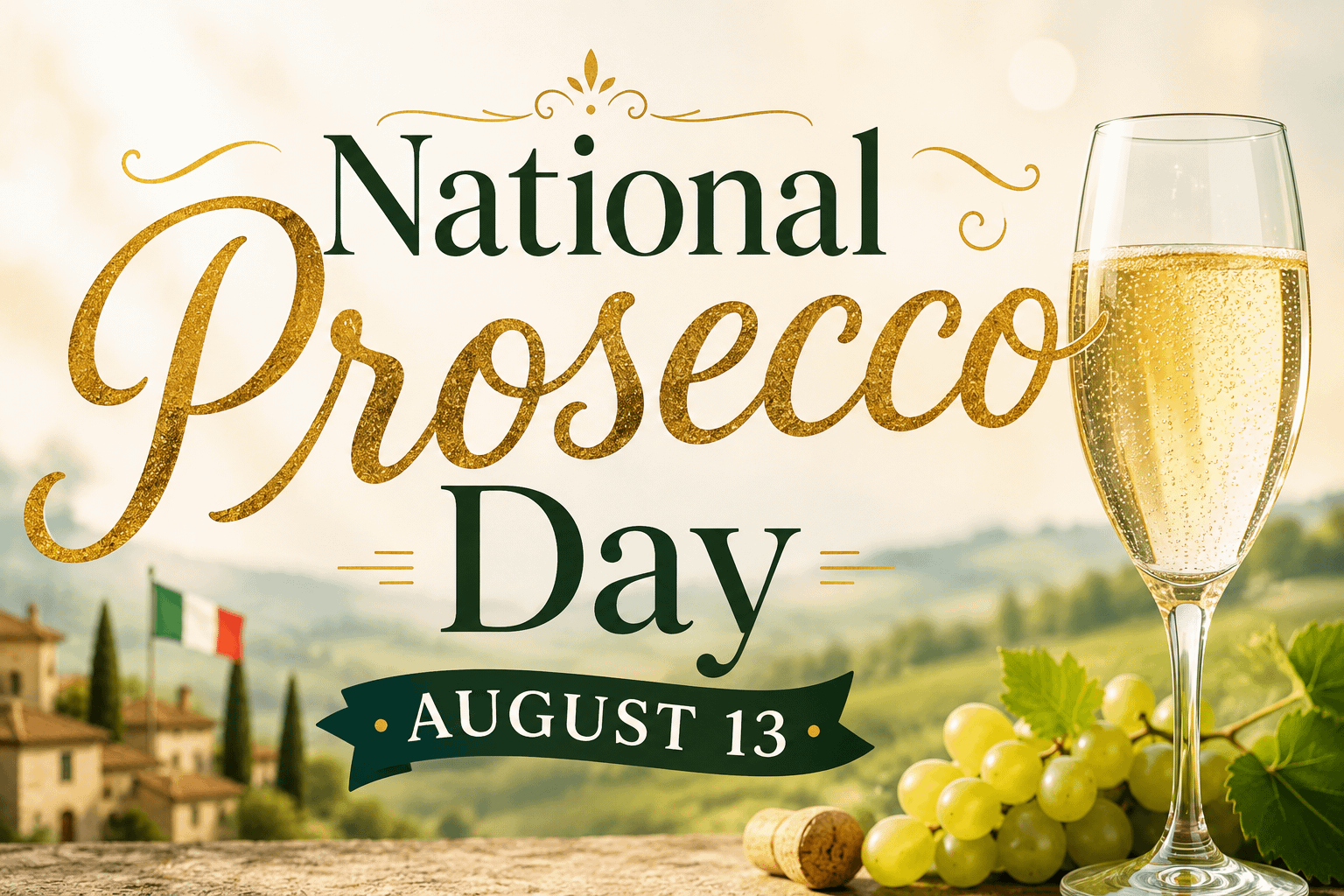
  • National Prosecco Day – August 13 – A Toast to Bubbles, Joy, and Celebration

    Advertisements

    Every year on August 13, wine lovers have a wonderfully bubbly reason to raise their glasses and celebrate National Prosecco Day.

    Light, refreshing, fruity, and filled with delicate bubbles, Prosecco has grown from an Italian specialty into one of the world’s most recognizable sparkling wines. You’ll find it poured at weddings, served alongside weekend brunch, mixed into refreshing cocktails, paired with elegant dinners, and opened simply because someone decided an ordinary evening deserved a little celebration.

    National Prosecco Day arrives during the heart of summer, making August 13 an ideal time to chill a bottle, prepare a few appetizers, gather some friends, and enjoy a sparkling taste of Italy.

    But there is much more to Prosecco than bubbles.

    Behind every glass is a long tradition of Italian winemaking, distinctive grapes, beautiful wine-growing regions, and a style of sparkling wine that has become associated with friendship, food, relaxation, and celebration.

    So pour yourself a glass and discover what makes Prosecco worth celebrating.


    What Is National Prosecco Day?

    National Prosecco Day is celebrated annually on August 13 as a day dedicated to appreciating Prosecco and the culture surrounding this famous Italian sparkling wine.

    The celebration encourages people to learn more about Prosecco, discover different styles, experiment with sparkling cocktails, pair it with food, or simply enjoy a chilled glass with friends.

    You don’t need to be a wine expert to participate.

    That’s actually part of Prosecco’s charm.

    It can be sophisticated enough for an elegant dinner while remaining approachable enough for a casual backyard gathering.

    National Prosecco Day is ultimately about enjoying something refreshing while appreciating the moments and people that make life worth celebrating.


    What Exactly Is Prosecco?

    Prosecco is an Italian sparkling wine produced primarily from the Glera grape.

    Authentic Prosecco is associated with designated wine-producing areas in northeastern Italy, particularly within Veneto and Friuli-Venezia Giulia.

    While bottles can vary considerably, Prosecco is generally known for being aromatic, crisp, refreshing, and fruit-forward.

    Common aromas and flavors can include:

    • Green apple
    • Golden apple
    • Pear
    • Peach
    • Apricot
    • Lemon
    • Citrus
    • Melon
    • White flowers
    • Honeysuckle

    Depending on the particular bottle and style, you’ll find differences in sweetness, acidity, intensity, and carbonation.

    Some Prosecco is wonderfully dry and crisp, while other bottles offer a noticeably softer or sweeter experience.

    That’s one reason exploring different bottles can be so enjoyable.


    The Glera Grape: The Heart of Prosecco

    At the center of Prosecco is the Glera grape.

    Glera is a white grape known for producing fresh, aromatic wines with characteristics that lend themselves particularly well to sparkling wine production.

    The grape’s natural qualities help produce the bright fruit flavors and refreshing acidity that people commonly associate with Prosecco.

    Apple, pear, citrus, peach, and floral characteristics frequently emerge in the finished wine.

    The result is a sparkling wine that tends to feel fresh rather than heavy.

    That refreshing quality makes Prosecco especially enjoyable during warm weather—which makes an August celebration particularly appropriate.


    Where Does Prosecco Come From?

    Prosecco’s identity is closely connected to northeastern Italy.

    The designated production areas extend through portions of Veneto and Friuli-Venezia Giulia, regions known for their long agricultural and winemaking traditions.

    Within the broader Prosecco-producing territory are areas especially respected for their sparkling wines.

    One of the best-known is the hilly landscape surrounding Conegliano and Valdobbiadene.

    The vineyard-covered hills in this area are an important part of Prosecco’s cultural story and demonstrate just how deeply wine production has shaped the landscape and traditions of northeastern Italy.

    For generations, grape growers and winemakers have developed techniques suited to the climate, geography, and grapes of the region.

    When you pour authentic Prosecco, you’re therefore enjoying something closely tied to a particular place and winemaking tradition.


    A Brief History of Prosecco

    The story of Prosecco stretches back centuries, although the sparkling wine enjoyed today developed gradually as winemaking methods evolved.

    Wine has been produced throughout northeastern Italy for generations, with local grape varieties playing an important role in regional agriculture and culture.

    Over time, improvements in fermentation and sparkling wine production made it possible to create the consistently lively, aromatic style now associated with Prosecco.

    As production increased and transportation improved, Prosecco moved beyond regional markets.

    Italian restaurants introduced more people around the world to it.

    Travelers discovered it while visiting Italy.

    Bartenders incorporated it into cocktails.

    Restaurants began pouring it at brunch.

    Consumers looking for an approachable sparkling wine embraced it.

    Eventually, Prosecco became an international phenomenon.

    Today, opening a bottle feels perfectly natural whether you’re celebrating a wedding or simply enjoying Sunday brunch.


    Prosecco vs. Champagne: They Aren’t the Same

    One of the most common misconceptions about sparkling wine is that every bottle with bubbles is Champagne.

    It isn’t.

    Champagne and Prosecco are distinct wines with different geographical origins, grapes, production traditions, and flavor profiles.

    Champagne comes from the Champagne region of France.

    Prosecco comes from designated regions of northeastern Italy.

    Champagne traditionally uses grape varieties including Chardonnay, Pinot Noir, and Pinot Meunier.

    Prosecco is produced primarily from Glera.

    There is also an important difference in the way most bottles get their bubbles.

    Traditional Champagne generally undergoes its secondary fermentation inside individual bottles.

    Most Prosecco uses what is commonly called the Charmat or tank method.


    How Does Prosecco Get Its Bubbles?

    Those beautiful bubbles don’t appear by accident.

    During Prosecco production, a second fermentation typically takes place inside large pressurized tanks.

    During fermentation, yeast converts sugars into alcohol while producing carbon dioxide.

    Because the fermentation occurs within a sealed pressurized environment, that carbon dioxide becomes incorporated into the wine.

    The sparkling wine is then filtered and bottled while maintaining pressure.

    This production method helps retain the fresh, aromatic, fruit-forward characteristics that distinguish many Proseccos.

    Rather than emphasizing the toastier qualities often associated with long bottle-aged sparkling wines, Prosecco frequently highlights fresh fruit and floral characteristics.

    The result is something bright, lively, and immediately inviting.


    Understanding Prosecco Labels

    Walking into a wine shop and looking at several bottles of Prosecco can be confusing.

    You’ll encounter different classifications and sweetness levels.

    Knowing a few basic terms can make choosing a bottle easier.

    Prosecco DOC

    DOC stands for Denominazione di Origine Controllata.

    This classification identifies Prosecco produced according to established regulations within designated areas.

    Prosecco DOCG

    DOCG represents a more specific classification associated with certain historic production areas and stricter geographical standards.

    You may encounter names such as Conegliano Valdobbiadene Prosecco Superiore DOCG when browsing higher-tier bottles.

    You don’t need to memorize every classification to enjoy Prosecco, but understanding the labels can make exploring different bottles much more interesting.


    Is Prosecco Sweet or Dry?

    Here’s where wine terminology can sometimes surprise newcomers.

    Not every bottle labeled with a familiar-looking sweetness term tastes exactly how someone unfamiliar with wine terminology might expect.

    Prosecco is available across several sweetness levels.

    You’ll commonly encounter terms such as:

    Brut – generally a drier style and a popular choice for people who prefer less sweetness.

    Extra Dry – despite the name, it can actually taste slightly sweeter than Brut.

    Dry – generally sweeter still.

    Sweetness can dramatically influence how a Prosecco tastes and which foods complement it best.

    If you’ve tried Prosecco before and thought it was too sweet—or not sweet enough—you may simply need to explore another style.


    What Does Prosecco Taste Like?

    Every bottle is different, but Prosecco is often celebrated for fresh fruit and floral characteristics.

    Imagine biting into a crisp pear or green apple on a warm summer afternoon.

    Add hints of peach, lemon, flowers, and delicate sweetness, then combine those flavors with refreshing bubbles.

    That’s the general personality many people love about Prosecco.

    The bubbles provide energy and freshness while acidity keeps the wine lively.

    Because the flavor profile tends to be approachable, Prosecco can appeal even to people who don’t regularly drink wine.


    How Should Prosecco Be Served?

    Prosecco is generally at its best when served chilled.

    A cold serving temperature helps highlight its refreshing qualities and makes it particularly enjoyable during summer.

    Place the bottle in the refrigerator before serving or chill it in an ice bucket.

    Once opened, pour carefully because sparkling wine can foam quickly.

    You can serve Prosecco in traditional flutes, sparkling wine glasses, or regular wine glasses.

    A wider wine glass can actually provide more room for the aromas to develop, while a flute helps showcase the visual beauty of the bubbles.

    Ultimately, use the glass you enjoy.

    National Prosecco Day isn’t a wine exam.

    It’s a celebration.


    How to Open Prosecco Safely

    Movies make launching a sparkling wine cork across the room look exciting.

    In reality, a controlled opening is usually better.

    Start by removing the foil.

    Keep your thumb firmly over the cork while loosening the wire cage.

    Point the bottle away from yourself, other people, windows, and anything breakable.

    Hold the cork securely while slowly twisting the bottle, rather than aggressively twisting the cork.

    Allow the pressure to gently push the cork outward.

    A soft pop is all you need.

    Then pour and enjoy.


    The Best Foods to Pair With Prosecco

    One of Prosecco’s greatest strengths is how easily it pairs with food.

    Its acidity, fruitiness, and carbonation can complement everything from appetizers to desserts.

    Consider serving it with:

    • Prosciutto
    • Salami
    • Mild cheeses
    • Fresh mozzarella
    • Parmesan
    • Bruschetta
    • Olives
    • Shrimp
    • Crab
    • Smoked salmon
    • Sushi
    • Grilled fish
    • Chicken
    • Light pasta dishes
    • Salads
    • Fresh fruit
    • Pastries
    • Light desserts

    The bubbles can be particularly enjoyable with salty or rich foods because the sparkling wine refreshes your palate between bites.


    Build a Prosecco Charcuterie Board

    National Prosecco Day is a great opportunity to create a simple appetizer board.

    Start with a few cheeses.

    Add cured meats such as prosciutto and salami.

    Then include crackers or slices of crusty bread.

    Fill the remaining spaces with:

    • Grapes
    • Strawberries
    • Peaches
    • Pear slices
    • Olives
    • Almonds
    • Walnuts
    • Honey
    • Fig spread
    • Dark chocolate

    Place the board in the center of the table, open a chilled bottle, and you have an easy National Prosecco Day celebration.


    Why Prosecco Is Perfect for Brunch

    Few drinks have become as closely associated with brunch as sparkling wine.

    Prosecco works beautifully with many classic brunch foods because it is refreshing enough to accompany both savory and sweet dishes.

    Pair it with:

    • Eggs Benedict
    • Omelets
    • Breakfast potatoes
    • Smoked salmon
    • Avocado toast
    • French toast
    • Pancakes
    • Waffles
    • Croissants
    • Fresh berries
    • Fruit salad

    And, of course, Prosecco is also an excellent base for brunch cocktails.


    Classic Prosecco Cocktails

    One of the most enjoyable ways to celebrate National Prosecco Day is by turning your bottle into a refreshing cocktail.

    Bellini

    The Bellini is one of Italy’s most famous sparkling cocktails.

    Traditionally combining peach purée with Prosecco, it offers a simple mixture of fruit and bubbles that feels made for summer.

    August is an especially good time to enjoy one because fresh peaches are readily associated with the season.

    Aperol Spritz

    Another Italian classic combines Prosecco with Aperol and soda water.

    Serve over ice with an orange slice for a colorful bittersweet summer drink.

    Mimosa

    Although many sparkling wines can be used, Prosecco works wonderfully in a mimosa.

    Combine chilled Prosecco with orange juice for one of brunch’s most recognizable cocktails.

    Elderflower Prosecco Spritz

    Pair Prosecco with elderflower liqueur and sparkling water for something light, floral, and refreshing.

    Strawberry Prosecco

    Add sliced strawberries or strawberry purée to chilled Prosecco for an incredibly easy summer drink.

    Peach and Raspberry Prosecco

    Add a few fresh raspberries and peach slices to your glass before pouring in Prosecco.

    The presentation is beautiful, and the fruit adds a seasonal touch.


    Prosecco Rosé

    Traditional Prosecco isn’t the only option you might encounter.

    Prosecco Rosé adds another colorful dimension to the category.

    Its attractive pink appearance makes it especially popular for celebrations, summer gatherings, romantic dinners, showers, brunches, and special occasions.

    Depending on the bottle, you may notice strawberry, raspberry, citrus, floral, or red-fruit characteristics alongside the freshness associated with Prosecco.

    If you’ve never tried Prosecco Rosé, National Prosecco Day provides an excellent excuse.


    Host a Prosecco Tasting at Home

    Want to turn August 13 into a small event?

    Host a Prosecco tasting.

    You don’t need dozens of bottles.

    Choose three or four different styles and invite friends to compare them.

    Give everyone a small pour and ask them to consider:

    Appearance: Is it pale yellow, golden, or pink?

    Aroma: Do you notice apple, pear, peach, citrus, or flowers?

    Sweetness: Does it taste dry or noticeably sweet?

    Acidity: Does it feel crisp and refreshing?

    Bubbles: Are they delicate or lively?

    Finish: What flavors remain after swallowing?

    The point isn’t determining who knows the most about wine.

    It’s discovering what everyone enjoys.

    You might be surprised by which bottle becomes the favorite.


    Create an Italian-Inspired National Prosecco Day Dinner

    If you want to make National Prosecco Day more memorable, build an entire dinner around it.

    Appetizer

    Start with bruschetta topped with tomatoes, basil, garlic, and olive oil.

    First Course

    Serve a light pasta dish, perhaps with lemon, garlic, herbs, or seafood.

    Main Course

    Try grilled chicken, shrimp, fish, or another dish that won’t overwhelm the sparkling wine.

    Dessert

    Finish with fresh berries, peaches, a light cake, or another delicate dessert.

    Add chilled Prosecco throughout the meal, and suddenly an ordinary August evening feels like a miniature Italian celebration.


    Turn August 13 Into a Summer Patio Celebration

    National Prosecco Day arrives at one of the best times of year for outdoor entertaining.

    Set up a patio table or backyard gathering with chilled bottles, fresh fruit, appetizers, and music.

    String lights can transform an ordinary backyard into something special as the sun goes down.

    Keep the food simple.

    Serve cheese, crackers, bruschetta, shrimp, fruit, and small desserts.

    The point isn’t creating an elaborate event.

    It’s slowing down and enjoying a summer evening.


    Fun Ways to Celebrate National Prosecco Day

    There are countless ways to enjoy August 13.

    Open a bottle you’ve never tried.
    Explore a different producer, sweetness level, or Prosecco Rosé.

    Make Bellinis.
    Combine seasonal peaches with chilled Prosecco.

    Host brunch.
    Invite friends or family over for breakfast foods and sparkling cocktails.

    Prepare an Italian dinner.
    Pair your Prosecco with pasta, seafood, bruschetta, cheese, and fresh vegetables.

    Create a charcuterie board.
    Build an easy grazing board with Italian-inspired ingredients.

    Host a tasting.
    Compare several different bottles and discover your favorite.

    Toast someone important.
    Use the occasion to recognize someone who has made a positive difference in your life.

    Celebrate something small.
    Don’t wait for a major milestone. Raise a glass to progress, friendship, family, or simply another summer day.


    Why Has Prosecco Become So Popular?

    Part of Prosecco’s tremendous appeal is that it occupies a comfortable space between casual and celebratory.

    Opening a bottle instantly makes something feel a little more special.

    Yet you don’t necessarily need a formal occasion.

    It works at:

    • Weddings
    • Anniversaries
    • Birthday parties
    • Bridal showers
    • Holiday celebrations
    • Weekend brunches
    • Dinner parties
    • Backyard gatherings
    • Romantic dinners
    • Casual get-togethers

    That versatility has allowed Prosecco to become part of everyday social culture.

    People don’t only open sparkling wine when something enormous happens anymore.

    Sometimes Tuesday is enough.


    The Sound of Celebration

    There’s something unmistakable about opening sparkling wine.

    The bottle comes out of the refrigerator.

    Someone removes the foil.

    The wire cage loosens.

    Everyone nearby instinctively looks over.

    Then comes the familiar pop.

    Almost immediately, people expect something good to happen.

    Glasses appear.

    Someone starts pouring.

    A toast follows.

    That’s part of the magic surrounding sparkling wine.

    Before anyone even tastes it, opening the bottle changes the atmosphere.

    Prosecco doesn’t simply accompany celebrations.

    In many ways, it helps create them.


    Celebrate the Ordinary Moments Too

    National Prosecco Day also offers a simple reminder about life.

    We spend a lot of time waiting for major milestones before allowing ourselves to celebrate.

    We wait for birthdays.

    Weddings.

    Anniversaries.

    Promotions.

    Graduations.

    Retirement.

    Major accomplishments.

    But life is mostly made up of ordinary days.

    And ordinary days contain plenty of moments worth appreciating.

    Dinner with someone you love.

    Laughing with an old friend.

    Watching a summer sunset.

    Finishing something you’ve worked hard on.

    Getting through a difficult week.

    Receiving unexpected good news.

    Spending an evening with family.

    Finding a little peace after a stressful day.

    These moments may never appear on a calendar, but they still matter.

    Sometimes the best toast is simply:

    “Here’s to today.”


    Prosecco Is About Connection

    Wine has been bringing people around tables for generations.

    Food and drink become part of our stories because we often experience them alongside other people.

    Think about your favorite meals.

    Chances are you remember more than what you ate or drank.

    You remember who was sitting across from you.

    You remember the conversation.

    You remember the laughter.

    You remember the occasion.

    You remember how you felt.

    National Prosecco Day can therefore be more than a celebration of sparkling wine.

    It can be a celebration of connection.

    Call someone you haven’t seen recently.

    Invite friends over.

    Prepare dinner with your partner.

    Sit outside and watch the sunset.

    Raise a glass to someone you miss.

    Celebrate the people who have helped shape your life.

    Those are the moments worth remembering.


    A Toast to Summer

    August has a unique feeling.

    Summer isn’t quite over, but you can sense the season beginning to move forward.

    The days are still warm.

    The evenings are still long.

    Backyards are still filled with conversations.

    Vacations are still happening.

    Fresh summer produce is everywhere.

    National Prosecco Day lands right in the middle of this beautiful transition.

    That makes August 13 a wonderful opportunity to slow down before summer disappears.

    Sit outside.

    Enjoy dinner.

    Watch the sunset.

    Pour something sparkling.

    Put your phone down for a little while.

    Talk.

    Laugh.

    Enjoy the people around you.

    Summer always seems to pass faster than expected.

    Make some memories while it’s still here.


    National Prosecco Day – August 13

    National Prosecco Day on August 13 celebrates one of Italy’s most famous sparkling wines and everything people have come to associate with it—food, friendship, summer, laughter, connection, and celebration.

    You can celebrate with an elegant Italian dinner or a simple glass on the patio.

    Make a Bellini.

    Try Prosecco Rosé.

    Create a charcuterie board.

    Host a tasting.

    Invite friends over for brunch.

    Or simply chill a bottle and raise a glass at sunset.

    There doesn’t have to be a major accomplishment behind every toast.

    Sometimes being together is enough.

    Sometimes making it through another week is enough.

    Sometimes appreciating what you have right now is enough.

    So on August 13, pour a glass, enjoy the bubbles, and celebrate the moments—big and small—that make life special.

    Happy National Prosecco Day! 🥂🇮🇹

    A Final Toast

    Here’s to good food.

    Here’s to good friends.

    Here’s to family.

    Here’s to summer evenings.

    Here’s to laughter around the table.

    Here’s to new beginnings and unforgettable memories.

    And here’s to remembering that life doesn’t always need a special occasion before we allow ourselves to celebrate it.

    Cheers to National Prosecco Day!

    Read More Holidays & National Days

  • Join The Pickax Creator Program

    Advertisements

    The Pickax Creator Program

    Are you ready to turn your creativity into impact—and income? Dive into the Pickax Creator Program, an empowering platform that invites creators like you to share content, build influence, and monetize your ideas.

    What’s the Program All About?

    Effortless Onboarding

    Signing up to be a Creator is simple—no follower minimums or gatekeeping. Just navigate to the Settings tab, tap “Become a Creator”, complete the approval process, and you’re in.

    Verified Status for Visibility
    Only users with a Verified Account can apply to become Creators. Verification involves identity confirmation (e.g., government ID), or special alternative routes like pseudonyms or business accounts.

    This ensures that your content and identity are trusted and discoverable on the platform.

    Monetization Made Easier

    Once you’re in, you’ll unlock multiple monetization streams:
    Subscription Model – Offer exclusive content behind a paywall. Creators keep most of the revenue; Pickax takes just a 10% platform fee.

    Advertising Revenue Share – Earn commission from ads placed within your articles when they convert through unique tracking links or promo codes.

    Affiliate Marketing – Promote products or services and get paid commissions for sales originating from your content.

    Why This Matters

    The Pickax Creator Program stands out for its ease and inclusivity—no barrier of entry, no hidden requirements. Whether you’re an emerging writer, educator, artist, or entrepreneur, it’s a flexible canvas to grow your audience and earn on your terms.

    Join Pickax today! https://pickax.com/?referralCode=0mvx4ds&refSource=copy

    Read More Opportunities & Growth

  • National Filet Mignon Day – August 13

    Advertisements

    Every year on August 13, steak lovers have an especially delicious reason to heat up the grill, pull out the cast-iron skillet, visit a favorite steakhouse, or plan an unforgettable dinner at home. National Filet Mignon Day celebrates one of the most famous, tender, and luxurious cuts of beef in the world.

    Filet mignon has earned a reputation as a special-occasion steak. You’ll often find it served at upscale restaurants, anniversary dinners, romantic date nights, holiday celebrations, birthday meals, and elegant gatherings. Its smaller size may make it look modest compared with a massive ribeye or porterhouse, but what filet mignon lacks in size, it makes up for with remarkable tenderness.

    For many steak enthusiasts, few things compare with slicing into a perfectly cooked filet and discovering a tender, juicy center beneath a beautifully browned crust.

    National Filet Mignon Day isn’t simply an excuse to eat steak. It’s also an opportunity to appreciate the craftsmanship involved in selecting, seasoning, and cooking a quality cut of beef.

    So grab your steak knife and bring your appetite. Let’s celebrate National Filet Mignon Day.

    What Is Filet Mignon?

    Filet mignon comes from the beef tenderloin, a long, narrow muscle that runs along the animal’s spine.

    The tenderloin performs relatively little strenuous work compared with muscles in areas such as the shoulder or legs. Because of this, it develops less tough connective tissue.

    The result is exceptionally tender meat.

    Individual steaks cut from portions of the tenderloin are commonly sold as filet mignon or tenderloin steaks.

    Filet mignon is usually cut relatively thick, creating the familiar round or slightly oval steak commonly seen at steakhouses.

    Unlike ribeye, which is prized for its abundant marbling and rich beef flavor, filet mignon is typically much leaner. Its flavor tends to be milder and more delicate.

    But tenderness is where filet mignon shines.

    A properly prepared filet can practically melt in your mouth.

    Where Does the Name “Filet Mignon” Come From?

    The name filet mignon comes from French terminology.

    “Filet” can refer to a boneless piece or strip of meat, while “mignon” carries meanings associated with something small, delicate, or dainty.

    The name is fitting.

    Filet mignon is generally smaller than many traditional steakhouse cuts and is prized for its delicate texture.

    Over time, the French name became deeply associated with fine dining in the United States. Today, even people who rarely eat steak often recognize filet mignon as one of the premium choices on a steakhouse menu.

    Why Is Filet Mignon So Tender?

    Tenderness is the defining characteristic of filet mignon.

    Muscles become stronger and often tougher when they’re used frequently. Since the tenderloin doesn’t perform the heavy workload associated with many other muscles, it remains exceptionally soft.

    This naturally tender texture means filet mignon doesn’t usually require lengthy marinades or slow cooking methods designed to break down tough fibers.

    Instead, it responds beautifully to quick, high-heat cooking.

    Searing, grilling, and broiling can all produce excellent results.

    The goal is usually to develop a flavorful browned exterior while maintaining a juicy, tender interior.

    Why Is Filet Mignon Considered a Premium Steak?

    Several factors contribute to filet mignon’s premium reputation.

    One of the biggest is availability.

    Each animal provides only a relatively small amount of tenderloin compared with the quantity of meat available from larger sections.

    Limited supply combined with strong demand makes tenderloin one of the more valuable cuts.

    Its famous tenderness also increases its appeal.

    When people want to celebrate something important, they’re often willing to spend a little extra on a memorable meal.

    That has helped filet mignon become associated with anniversaries, Valentine’s Day, birthdays, promotions, engagements, graduations, holiday dinners, and other milestone occasions.

    A Brief History of Filet Mignon

    People have eaten beef for thousands of years, but the specific cuts and terminology familiar to today’s diners developed gradually alongside changes in butchery and culinary traditions.

    French cooking had an enormous influence on Western fine dining, particularly when it came to sauces, meat preparation, restaurant service, and culinary terminology.

    As French-inspired cuisine became influential in hotels and upscale American restaurants, French names and techniques became increasingly familiar to diners.

    Filet mignon eventually became firmly established as a luxury steak in American dining culture.

    During the growth of classic American steakhouses, premium steaks became symbols of celebration, success, hospitality, and indulgence.

    Filet mignon fit perfectly into that world.

    Today, it remains a steakhouse favorite while also being readily available for home cooks who want to recreate the experience in their own kitchens.

    What Does Filet Mignon Taste Like?

    Filet mignon offers a different experience from heavily marbled steaks.

    Its flavor is generally mild, clean, and delicate.

    A ribeye, for example, contains more internal fat and therefore delivers a richer and often more intense beef flavor.

    Filet mignon’s biggest attraction is its texture.

    When properly cooked, it should be exceptionally tender and easy to slice.

    Because the meat is relatively lean and subtly flavored, filet mignon pairs beautifully with rich ingredients.

    Popular accompaniments include:

    • Garlic herb butter
    • Sautéed mushrooms
    • Caramelized onions
    • Peppercorn sauce
    • Béarnaise sauce
    • Red wine reduction
    • Blue cheese butter
    • Roasted garlic
    • Fresh rosemary
    • Fresh thyme
    • Bacon

    These additions complement the steak without taking away from its naturally tender texture.

    Choosing Filet Mignon at the Store

    Cooking a great steak starts before you ever turn on the stove.

    When shopping for filet mignon, look for steaks that are relatively even in thickness. Uniform steaks generally cook more predictably.

    Color and freshness are important as well.

    If you’re purchasing from a butcher counter, don’t hesitate to ask questions about thickness, grade, preparation, and recommended cooking methods.

    For a special meal, choosing thicker steaks can create that impressive steakhouse-style presentation.

    Thick steaks also make it possible to achieve a deeply browned exterior while maintaining the desired doneness inside.

    Preparing Filet Mignon Before Cooking

    Filet mignon doesn’t need complicated preparation.

    In fact, simplicity often produces excellent results.

    Before cooking, pat the steaks dry with paper towels. Removing excess surface moisture helps create better browning.

    Season generously with salt and freshly ground black pepper.

    You can also add garlic powder, onion powder, or another favorite steak seasoning, but avoid overwhelming the meat.

    A great filet doesn’t need dozens of ingredients.

    Salt, pepper, high heat, and good cooking technique can take you surprisingly far.

    How to Pan-Sear Filet Mignon

    Pan-searing is one of the easiest ways to create steakhouse-style filet mignon at home.

    A cast-iron skillet is particularly useful because it retains heat extremely well.

    Preheat the skillet until it’s very hot.

    Add a small amount of oil suitable for high-heat cooking.

    Carefully place the steaks into the pan.

    Once the steak touches the skillet, resist the temptation to constantly move it around. Leaving it in place allows a browned crust to develop.

    Flip the steak and sear the opposite side.

    During the final stages of cooking, add butter, crushed garlic cloves, rosemary, and thyme.

    As the butter melts and becomes infused with the aromatics, tilt the skillet slightly and spoon the hot butter over the steaks.

    That butter-basting process adds tremendous flavor.

    For particularly thick filets, the steaks can be transferred to the oven after searing to finish cooking more evenly.

    How to Grill Filet Mignon

    There’s something special about steak cooked outdoors.

    Preheat your grill thoroughly before cooking.

    Season the filet mignon simply and place it over high heat to develop a flavorful crust and attractive grill marks.

    Because filet mignon steaks are often thick, you may need to move them to a lower-temperature section of the grill after the initial sear.

    This allows the interior to continue cooking without burning the exterior.

    Avoid repeatedly flipping or pressing down on the steaks.

    Give the grill time to do its job.

    Why a Meat Thermometer Is Helpful

    Cooking filet mignon entirely by appearance can be difficult, particularly when dealing with thick steaks.

    An instant-read meat thermometer removes much of the guesswork.

    This is especially useful when cooking expensive cuts.

    Remember that meat can continue cooking slightly after it’s removed from the heat.

    That phenomenon is often called carryover cooking.

    If you’re trying to hit a particular level of doneness, keep that additional temperature increase in mind.

    Don’t Forget to Rest the Steak

    You’ve cooked your filet perfectly.

    Now comes one of the hardest parts.

    Wait.

    Allow the steak to rest for several minutes before slicing into it.

    Resting gives the juices inside the meat time to redistribute.

    Cutting immediately can cause more of those flavorful juices to spill onto the plate.

    Use the resting time to finish your vegetables, plate the potatoes, pour the drinks, or prepare your sauce.

    Then sit down and enjoy.

    Bacon-Wrapped Filet Mignon

    One of the most popular variations is bacon-wrapped filet mignon.

    Because filet mignon is relatively lean, wrapping bacon around the outside adds richness, saltiness, and smoky flavor.

    The combination creates a delicious contrast between tender beef and savory bacon.

    It’s also visually impressive, making bacon-wrapped filet a popular choice for special occasions.

    Pair it with garlic mashed potatoes and roasted vegetables and you have a meal worthy of a steakhouse.

    Filet Mignon With Garlic Herb Butter

    Compound butter is another easy way to elevate filet mignon.

    Combine softened butter with ingredients such as minced garlic, parsley, rosemary, thyme, salt, and black pepper.

    Roll the mixture into a log and refrigerate it until firm.

    Once your filet mignon has finished cooking, place a slice of the flavored butter on top.

    The butter slowly melts across the hot steak, creating an instant sauce.

    Simple doesn’t get much better than that.

    Classic Sauces for Filet Mignon

    While filet mignon can absolutely stand on its own, sauces can transform the steak into something even more luxurious.

    Peppercorn sauce adds creamy richness and peppery bite.

    Béarnaise sauce brings buttery richness with herbal and slightly tangy notes.

    Red wine reduction provides deep, concentrated flavor.

    Mushroom sauce adds an earthy element that pairs beautifully with beef.

    Blue cheese sauce or butter gives the steak a bold, tangy finish.

    Experimenting with different sauces is also a fun way to celebrate National Filet Mignon Day.

    The Perfect Side Dishes

    Filet mignon deserves equally memorable sides.

    Potatoes

    It’s difficult to go wrong with steak and potatoes.

    Try:

    • Garlic mashed potatoes
    • Loaded baked potatoes
    • Roasted baby potatoes
    • Crispy smashed potatoes
    • Scalloped potatoes
    • French fries
    • Potato gratin

    Vegetables

    Vegetables add freshness and color to the plate.

    Excellent choices include:

    • Roasted asparagus
    • Grilled zucchini
    • Green beans
    • Broccoli
    • Roasted Brussels sprouts
    • Creamed spinach
    • Glazed carrots
    • Grilled corn

    Mushrooms and Onions

    Few steak toppings are more classic than sautéed mushrooms and onions.

    Cook them slowly with butter, garlic, and seasonings until deeply browned and flavorful.

    Spoon them over the filet just before serving.

    Turn It Into Surf and Turf

    Want to make National Filet Mignon Day even more extravagant?

    Add seafood.

    Filet mignon pairs wonderfully with:

    • Lobster tail
    • Garlic butter shrimp
    • Scallops
    • Crab legs
    • Crab cakes

    The combination of tender beef and seafood creates the classic surf-and-turf dinner.

    Add potatoes and vegetables and you’ve created an impressive restaurant-style meal at home.

    Filet Mignon vs. Ribeye

    One of the great steak debates is filet mignon versus ribeye.

    The two steaks offer completely different experiences.

    Filet mignon is prized for tenderness. It’s leaner, milder, and incredibly soft.

    Ribeye contains considerably more marbling, giving it rich beef flavor and a juicy texture.

    Someone who values tenderness may prefer filet mignon.

    Someone who prioritizes bold beef flavor may choose ribeye.

    Neither steak has to win.

    They simply satisfy different cravings.

    Filet Mignon vs. New York Strip

    New York strip offers another interesting comparison.

    Strip steak typically has a firmer texture and more pronounced beef flavor than filet mignon.

    Filet is softer and more delicate.

    That’s one reason steakhouses sometimes offer meals that allow diners to experience different cuts.

    Each section of beef provides its own combination of flavor, tenderness, fat, and texture.

    The Classic American Steakhouse Experience

    Filet mignon has become deeply connected with American steakhouse culture.

    Think about the classic steakhouse atmosphere.

    Dim lighting.

    Comfortable booths.

    Warm bread arriving at the table.

    A crisp salad.

    Baked potatoes loaded with toppings.

    Creamed spinach.

    Sautéed mushrooms.

    Then comes the centerpiece—a sizzling steak.

    Steakhouses aren’t simply about eating beef. For many people, they’re associated with celebrations and memories.

    Families gather there for birthdays.

    Couples celebrate anniversaries.

    Friends celebrate promotions.

    Parents take their children out after graduations.

    Business partners mark successful deals.

    Filet mignon has become part of those experiences.

    Create a Steakhouse Night at Home

    You don’t need to leave home to enjoy National Filet Mignon Day.

    Create your own steakhouse night.

    Dim the lights, set the table, put on some music, and prepare a complete meal.

    Start with a simple appetizer or salad.

    Follow it with filet mignon, mashed potatoes, sautéed mushrooms, and asparagus.

    Finish with cheesecake, chocolate cake, crème brûlée, or another favorite dessert.

    Sometimes creating an experience around a meal makes the food even more memorable.

    Fun Facts About Filet Mignon

    Here are a few things that make filet mignon interesting:

    Filet mignon comes from the tenderloin. This muscle’s location and limited workload help explain its tenderness.

    Only a limited amount is available. That’s one reason tenderloin commands premium prices.

    It’s lean compared with several other premium steaks. Filet doesn’t generally have the heavy marbling of ribeye.

    Tenderness is its signature characteristic. People frequently choose filet specifically because of its soft texture.

    It loves butter. Garlic butter and herb butter are classic filet accompaniments.

    Bacon makes a natural partner. Wrapping filet in bacon adds fat and smoky flavor.

    It’s perfect for surf and turf. Lobster, shrimp, crab, and scallops all complement filet beautifully.

    Simple seasoning works. Salt and pepper may be all you need when starting with quality beef.

    Common Filet Mignon Cooking Mistakes

    Even a premium steak can disappoint when handled incorrectly.

    One common mistake is cooking the steak straight from a wet package without drying the exterior.

    Surface moisture can interfere with browning.

    Another mistake is using a pan that isn’t hot enough.

    Without sufficient heat, the steak may cook before developing that desirable crust.

    Overcooking is another risk because filet mignon is relatively lean.

    Constantly cutting into the steak to check the center also releases juices and can make presentation less attractive.

    Using a thermometer is usually a better approach.

    And finally, don’t forget the resting period.

    A few minutes of patience can improve the final result.

    How to Celebrate National Filet Mignon Day

    There are plenty of ways to enjoy August 13.

    Prepare filet mignon at home and experiment with cast-iron cooking.

    Fire up the backyard grill and invite friends or family over for steak night.

    Visit a favorite local steakhouse.

    Try bacon-wrapped filet mignon.

    Make homemade garlic herb butter.

    Create a surf-and-turf dinner.

    Experiment with mushroom, peppercorn, blue cheese, or red wine sauce.

    Compare filet mignon with another favorite steak cut.

    Or simply sit down with someone important to you and enjoy a great meal together.

    Food celebrations are often as much about the people around the table as the food itself.

    Make the Meal About More Than Steak

    One of the best parts about special meals is their ability to bring people together.

    A dinner doesn’t need to celebrate a birthday or anniversary to become memorable.

    Sometimes an ordinary evening becomes special simply because everyone slows down long enough to enjoy it.

    National Filet Mignon Day can be an excuse to do exactly that.

    Put away the phones.

    Sit around the table.

    Share stories.

    Laugh.

    Enjoy the meal without rushing.

    Years from now, you probably won’t remember every steak you’ve eaten.

    But you may remember the people who were sitting beside you.

    Why National Food Days Are Fun

    National food days give us an excuse to discover something new or revisit an old favorite.

    They can encourage people to try a new restaurant, experiment in the kitchen, learn about ingredients, or simply enjoy something they already love.

    National Filet Mignon Day is especially easy to appreciate.

    You don’t need elaborate decorations or complicated traditions.

    You just need an appetite.

    Whether your filet comes from an upscale steakhouse, neighborhood restaurant, butcher shop, supermarket, or backyard grill, the goal is simply to enjoy it.

    Celebrating National Filet Mignon Day on August 13

    National Filet Mignon Day celebrates much more than an expensive piece of beef.

    It celebrates craftsmanship, cooking, dining traditions, special occasions, and one of the most tender cuts available.

    Filet mignon’s appeal comes from simplicity.

    Start with quality beef.

    Season it well.

    Cook it carefully.

    Let it rest.

    Add your favorite sides.

    Then enjoy it with people who make the meal worthwhile.

    Whether you prefer your filet grilled over an open flame, seared in cast iron, wrapped in bacon, topped with garlic herb butter, covered with mushrooms, or paired with lobster, there’s no wrong way to join the celebration.

    So on August 13, fire up the grill, heat the skillet, make a steakhouse reservation, or plan a special dinner at home.

    Raise your fork to one of the world’s most celebrated steaks and enjoy every tender bite.

    Happy National Filet Mignon Day!

    Read More Holidays & National Days

  • National Julienne Fries Day – Celebrating a Crispy Classic

    Advertisements

    There are few foods capable of bringing people together quite like a basket of hot, crispy French fries. Whether they’re sitting beside a cheeseburger, accompanying a sandwich, covered with cheese and toppings, or simply served with ketchup, fries have become one of the most recognizable comfort foods around.

    But on August 12, one particular style gets its moment in the spotlight.

    Welcome to National Julienne Fries Day, a celebration dedicated to those wonderfully thin, golden, matchstick-shaped potatoes that deliver plenty of crunch in every bite.

    Julienne fries may be simple, but that’s part of their charm.

    Take a potato, cut it into thin strips, cook those strips until beautifully golden, add some salt, and suddenly one of the world’s humblest vegetables becomes something incredibly difficult to stop eating.

    For fry lovers, National Julienne Fries Day is the perfect excuse to order an extra basket, experiment with homemade fries, discover a new dipping sauce, or turn ordinary fries into an unforgettable loaded creation.

    So grab the ketchup—or ranch, garlic aioli, cheese sauce, barbecue sauce, or whatever you prefer—and let’s celebrate the crispy classic.

    What Is National Julienne Fries Day?

    National Julienne Fries Day is celebrated every year on August 12.

    The day recognizes julienne fries, which are potatoes cut into long, thin strips before being cooked until crispy and golden.

    They’re often similar to what many people call shoestring fries.

    Because julienne fries are thinner than many traditional French fries, they have plenty of surface area available to become crispy during cooking.

    And for people who believe the crispy pieces at the bottom of the fry basket are always the best ones, that’s a major advantage.

    National Julienne Fries Day gives us an opportunity to appreciate not only the finished fries but also the culinary cutting technique responsible for creating them.

    What Does “Julienne” Mean?

    Julienne isn’t simply another name for a French fry.

    It’s a culinary cutting technique.

    To julienne an ingredient means cutting it into long, thin pieces resembling matchsticks.

    The technique can be used on many foods and vegetables, including:

    • Potatoes
    • Carrots
    • Bell peppers
    • Celery
    • Zucchini
    • Cucumbers
    • Leeks
    • Beets

    The goal is to create relatively uniform pieces.

    Uniformity isn’t just about making food look attractive. Pieces that are approximately the same thickness tend to cook more evenly.

    When this technique is used on potatoes and those thin pieces are fried, baked, or air-fried until crispy, you’ve got julienne fries.

    A Culinary Technique With Centuries of History

    The julienne cut isn’t a modern invention created specifically for French fries.

    The term has deep roots in European culinary history.

    Historical references to julienne-style preparation go back centuries, and the exact origin of the name isn’t completely certain.

    The technique eventually became firmly established in classical cooking and continues to be taught in professional kitchens today.

    That makes your humble basket of julienne fries part of a culinary tradition much older than the modern fast-food restaurant.

    The next time you’re eating them, you can tell yourself you’re participating in culinary history.

    Of course, you can also just enjoy the fries.

    That’s probably easier.

    Why Are Julienne Fries So Crispy?

    The defining feature of a great julienne fry is usually its crunch.

    The reason largely comes down to shape.

    A thick potato wedge has a relatively large amount of fluffy potato inside compared with its crispy exterior.

    A thin fry has proportionally more exterior surface.

    That means more of the potato has an opportunity to become browned and crisp.

    Julienne fries therefore offer something particularly appealing to crunch lovers:

    more crispy edges in every handful.

    Their thin size also means they can cook relatively quickly.

    The downside is that thin fries can move from perfectly golden to overcooked faster than thicker fries, so paying attention during cooking is important.

    Julienne Fries vs. Shoestring Fries

    You’ll sometimes hear the terms julienne fries and shoestring fries used interchangeably.

    They’re certainly close relatives.

    Both involve potatoes cut into very thin strips.

    The distinction can become somewhat flexible depending on the restaurant, cook, or recipe. Julienne refers primarily to the cutting technique, while “shoestring” commonly describes exceptionally thin fries.

    Either way, if someone puts a basket of thin, crispy potatoes in front of you, debating terminology probably isn’t your first priority.

    Eating them is.

    The Wonderful World of French Fry Styles

    Julienne fries are only one member of a very large fry family.

    Depending on where you eat, you may encounter dozens of different styles.

    Julienne Fries

    Thin, straight, matchstick-shaped potatoes designed for maximum crispiness.

    Shoestring Fries

    Extremely thin fries that can become exceptionally crunchy.

    Straight-Cut Fries

    The classic French fry shape commonly served at restaurants and fast-food establishments.

    Crinkle-Cut Fries

    Recognizable by their wavy ridges.

    Those ridges create additional texture and provide plenty of places for sauces and seasonings to cling.

    Steak Fries

    Much thicker than julienne fries.

    Steak fries emphasize the fluffy interior of the potato while still developing a browned exterior.

    Waffle Fries

    Potatoes sliced into a distinctive lattice pattern.

    Their large surface area makes them excellent for scooping up dipping sauces.

    Curly Fries

    Spiral-cut potatoes frequently paired with bold seasonings.

    Potato Wedges

    Thick wedges with a substantial potato interior.

    Cottage Fries

    Round potato slices that are fried or baked.

    Every style has something different to offer.

    But when you’re craving maximum crunch, julienne fries are difficult to beat.

    How to Make Homemade Julienne Fries

    One of the best ways to celebrate National Julienne Fries Day is to make a batch yourself.

    You don’t need a restaurant kitchen.

    You primarily need potatoes, a way to cut them thinly, and a little patience.

    Choosing Your Potatoes

    Russet potatoes are a popular choice for fries because their starch content can help produce a fluffy interior and crispy exterior.

    However, other potatoes can work too.

    Experimenting with different varieties is part of the fun.

    Ingredients

    You’ll need:

    • Russet potatoes
    • Cooking oil appropriate for your cooking method
    • Salt
    • Optional seasonings
    • Your favorite dipping sauces

    That’s really all you need for the basic version.

    Step 1: Wash the Potatoes

    Scrub your potatoes thoroughly under running water.

    Whether you peel them is entirely up to you.

    Leaving the skin on adds texture and creates a slightly more rustic fry.

    Step 2: Create the Julienne Cut

    Carefully cut the potatoes into long, thin matchsticks.

    A sharp chef’s knife works, but a mandoline equipped with the appropriate blade can make it easier to create consistent pieces.

    The important thing is uniformity.

    If some fries are extremely thin while others are much thicker, the thin pieces may burn before the thick pieces finish cooking.

    Step 3: Soak the Cut Potatoes

    Place the cut potatoes into a bowl of cold water.

    This helps rinse away some surface starch.

    After soaking, drain the potatoes.

    Step 4: Dry Them Thoroughly

    This step is extremely important, particularly if you’re deep frying.

    Use clean kitchen towels or paper towels to remove as much moisture as possible.

    Water and hot frying oil do not mix safely.

    Your potatoes should be thoroughly dry before going anywhere near hot oil.

    Step 5: Cook Until Golden

    Cook your fries until they’re crisp and golden.

    Avoid overcrowding your fryer, pan, baking sheet, or air-fryer basket.

    When potatoes are crowded together, they can steam rather than crisp properly.

    Working in batches may take longer, but the results can be much better.

    Step 6: Season While Hot

    Season your fries immediately after cooking.

    Salt sticks better while the fries are still hot.

    This is also the perfect moment to add your favorite specialty seasoning.

    Step 7: Serve Immediately

    Fries are one food that doesn’t improve while sitting around.

    Serve them hot.

    Grab your favorite dipping sauce and enjoy.

    Air-Fryer Julienne Fries

    Don’t want to deep fry?

    An air fryer can be an excellent alternative.

    Thinly slice your potatoes, soak and dry them, and then lightly coat them with oil.

    Place them into the air-fryer basket without packing them too tightly.

    Cook until crispy, shaking the basket occasionally so the fries cook more evenly.

    Because air fryers vary considerably in power and design, keep an eye on the potatoes rather than relying entirely on one cooking time.

    The thinner the fries, the faster they can brown.

    Oven-Baked Julienne Fries

    You can also celebrate National Julienne Fries Day using your oven.

    After cutting and drying your potatoes, toss them lightly with oil and seasonings.

    Arrange them across a baking sheet.

    Don’t pile them on top of one another.

    Giving the fries room allows hot air to circulate around them.

    Turn the fries during cooking to encourage browning on multiple sides.

    Baked fries may have a somewhat different texture from deep-fried fries, but they can still be deliciously crispy.

    Take Your Fries Beyond Salt

    Classic salted fries are fantastic.

    But National Julienne Fries Day is the perfect time to experiment.

    Garlic Parmesan Julienne Fries

    Toss freshly cooked fries with:

    • Garlic
    • Grated Parmesan
    • Parsley
    • Salt
    • Black pepper

    Finish with a little extra Parmesan before serving.

    Cajun Julienne Fries

    Sprinkle your fries with Cajun seasoning for a combination of savory, smoky, and spicy flavors.

    Serve with ranch or spicy mayonnaise.

    Chili-Lime Fries

    Season hot fries with chili powder and fresh lime.

    The combination of heat, salt, acidity, and crispy potato creates an addictive snack.

    Ranch Fries

    Ranch isn’t only for dipping.

    Try seasoning fries with ranch seasoning immediately after cooking.

    Then serve ranch on the side if you want to double down.

    No judgment here.

    Old Bay-Style Fries

    Seafood-inspired seasoning can add a salty, savory kick that works surprisingly well with crispy potatoes.

    Serve alongside seafood or simply enjoy them as a snack.

    Truffle Parmesan Fries

    Add a small amount of truffle oil, grated Parmesan, herbs, and salt for a restaurant-inspired variation.

    A little truffle flavor can go a long way.

    The Ultimate Julienne Fries Dipping Sauce Guide

    Fries without dipping sauce are perfectly acceptable.

    But fries with several dipping sauces?

    Now you’ve got a celebration.

    Ketchup

    We have to start with the classic.

    Sweet, tangy tomato ketchup remains one of the most recognizable fry pairings.

    Ranch

    Cool and creamy ranch pairs beautifully with salty fries, especially fries seasoned with spicy flavors.

    Garlic Aioli

    Garlic aioli can transform simple fries into something that feels considerably more upscale.

    Spicy Mayo

    Mix mayonnaise with your favorite hot sauce for a quick dipping sauce.

    Honey Mustard

    Sweet, tangy, and creamy.

    Honey mustard works particularly well with seasoned fries.

    Barbecue Sauce

    Smoky and sweet barbecue sauce adds an entirely different personality to fries.

    Buffalo Sauce

    If you love heat, Buffalo-style sauce brings plenty of it.

    Pair with ranch or blue cheese dressing.

    Cheese Sauce

    Few things require explanation when melted cheese is involved.

    Dip the fries directly into cheese sauce or pour it over the entire basket.

    Gravy

    Hot gravy poured over fries transforms a side dish into serious comfort food.

    Malt Vinegar

    If you enjoy a sharp acidic bite, malt vinegar is a classic partner for fried potatoes.

    Turn Julienne Fries Into a Meal

    Why stop at dipping?

    Use your fries as the foundation for something much bigger.

    Loaded Bacon Cheese Fries

    Start with crispy julienne fries and add:

    • Melted cheese
    • Crispy bacon
    • Green onions
    • Sour cream
    • Jalapeños

    Serve immediately.

    Chili Cheese Fries

    Pile hot chili over crispy fries and finish with shredded or melted cheese.

    Add onions and jalapeños for even more flavor.

    BBQ Pulled Pork Fries

    Top fries with:

    • Pulled pork
    • Barbecue sauce
    • Cheese
    • Green onions

    Now your side dish has officially become dinner.

    Buffalo Chicken Fries

    Add chopped Buffalo chicken, cheese, ranch or blue cheese dressing, and green onions.

    Cheeseburger Fries

    Top fries with seasoned ground beef, cheddar cheese, diced pickles, onions, tomatoes, and burger sauce.

    It’s essentially a cheeseburger without the bun.

    Breakfast Julienne Fries

    Who says fries have to wait until lunch?

    Top crispy potatoes with:

    • Scrambled or fried eggs
    • Bacon
    • Sausage
    • Cheese
    • Green onions
    • Breakfast gravy

    Suddenly National Julienne Fries Day starts at breakfast.

    Create a Julienne Fry Bar

    If you’re celebrating with friends or family, turn August 12 into a build-your-own fry night.

    Prepare a large batch of fries and set out toppings such as:

    • Cheddar cheese
    • Mozzarella
    • Parmesan
    • Bacon
    • Chili
    • Pulled pork
    • Shredded chicken
    • Jalapeños
    • Green onions
    • Diced tomatoes
    • Sour cream
    • Guacamole
    • Pickles

    Then create a sauce station with ketchup, ranch, barbecue sauce, garlic aioli, Buffalo sauce, honey mustard, cheese sauce, and spicy mayo.

    Everyone can create their own combination.

    It transforms an inexpensive food into a fun interactive meal.

    Sweet Potato Julienne Fries

    Regular potatoes don’t have to enjoy the entire celebration.

    Sweet potatoes work beautifully when cut into thin strips.

    Their natural sweetness creates an interesting contrast with salty, smoky, or spicy seasonings.

    Try sweet potato julienne fries with:

    • Smoked paprika
    • Cinnamon
    • Cajun seasoning
    • Garlic
    • Chili powder
    • Sea salt

    Serve them alongside spicy mayo, honey mustard, garlic aioli, or ranch.

    Why Fries and Burgers Became Such a Perfect Pair

    Some food combinations seem inseparable.

    Peanut butter and jelly.

    Cookies and milk.

    Bacon and eggs.

    And burgers and fries.

    The combination works because the foods provide contrasting textures and complementary flavors.

    A juicy burger is soft, savory, and rich.

    Julienne fries are salty and crispy.

    Take a bite of burger followed by a crunchy fry, and each food provides something the other doesn’t.

    Add a cold drink and you’ve created one of America’s most recognizable casual meals.

    Fries Around the World

    Fried potatoes may be familiar across America, but cultures around the world have developed their own ways of enjoying them.

    Depending on where you travel, you might encounter fries served with mayonnaise, vinegar, curry sauce, cheese, meat, gravy, garlic sauces, or combinations you may never have considered.

    That’s one of the wonderful things about potatoes.

    They’re essentially a blank culinary canvas.

    The potato provides the foundation.

    The seasonings, toppings, sauces, and cooking techniques provide the personality.

    Why We Love Crispy Foods

    There’s something particularly satisfying about hearing a crunch when you bite into food.

    Texture plays an enormous role in how we experience meals.

    Julienne fries deliver that sensory experience beautifully.

    You smell the freshly cooked potatoes.

    You see the golden edges.

    You pick up a fry that’s still hot.

    Then comes the crunch.

    Add salt and your favorite sauce and you’ve got several different sensory experiences happening at once.

    Sometimes food doesn’t need to be complicated to be memorable.

    Fun Ways to Celebrate National Julienne Fries Day

    National food holidays are supposed to be fun.

    You don’t need an elaborate celebration.

    Here are a few ideas for August 12.

    Make Homemade Julienne Fries

    Start with potatoes and create your own batch from scratch.

    Visit Your Favorite Restaurant

    Order fries from a favorite burger restaurant, diner, pub, or local restaurant.

    Try a Restaurant You’ve Never Visited

    Use the holiday as an excuse to search for somewhere known for great fries.

    Try Three Different Dipping Sauces

    Order or make several sauces and conduct your own taste test.

    Have a Family Fry Night

    Make a big batch and let everyone choose their seasonings and toppings.

    Create Loaded Fries

    Turn an ordinary basket into dinner by adding cheese, meat, vegetables, and sauces.

    Try Sweet Potato Fries

    Give your celebration a different flavor.

    Hold a Fry Taste Test

    Buy fries from several restaurants and compare them.

    Rate each one based on:

    • Crispiness
    • Saltiness
    • Potato flavor
    • Texture
    • Dipping potential
    • Overall taste

    Then crown your official National Julienne Fries Day champion.

    Share Your Fries Online

    Take a picture of your creation and share it with friends or followers.

    Food holidays are even more enjoyable when other people join the conversation.

    What Makes the Perfect Julienne Fry?

    Everyone has different preferences, but a great julienne fry usually has several important qualities.

    Crispy Exterior

    The outside should provide that satisfying crunch.

    Tender Center

    Even though julienne fries are thin, there should still be some potato texture inside.

    Golden Appearance

    A beautifully browned fry immediately looks appetizing.

    Proper Seasoning

    Too little salt and fries can taste bland.

    Too much and the potato disappears beneath the seasoning.

    Finding the right balance matters.

    Served Hot

    This might be the most important rule.

    A great fry should reach the table while it’s still hot and crispy.

    Don’t Underestimate the Humble Potato

    It’s easy to overlook potatoes because they’re so familiar.

    But think about how many different foods can come from one ingredient.

    A potato can become:

    • French fries
    • Mashed potatoes
    • Baked potatoes
    • Hash browns
    • Potato chips
    • Tater tots
    • Potato pancakes
    • Potato skins
    • Scalloped potatoes
    • Roasted potatoes
    • Potato soup
    • Potato salad
    • Loaded fries

    Few ingredients are quite as versatile.

    Julienne fries are another reminder that changing something as simple as the shape of an ingredient can create an entirely different eating experience.

    National Julienne Fries Day Is About Simple Enjoyment

    Not every celebration needs fireworks, decorations, presents, or elaborate plans.

    Sometimes a celebration can be as simple as sitting down with someone you care about and sharing a basket of fries.

    That’s part of the appeal of National Julienne Fries Day.

    It celebrates an ordinary food that has become part of countless memories.

    Think about how many times fries have appeared during everyday moments.

    Maybe they were beside a burger during a family dinner.

    Maybe you shared a basket with friends while watching a game.

    Maybe they came with lunch during a road trip.

    Maybe you grabbed some from a drive-thru after a long day.

    Maybe you ordered loaded fries while catching up with someone you hadn’t seen in a while.

    Foods become meaningful partly because of the moments surrounding them.

    A French fry may be simple.

    The memories created around the table aren’t always simple at all.

    A Crispy Classic Worth Celebrating

    National Julienne Fries Day reminds us that some of the most enjoyable foods don’t need dozens of ingredients or complicated preparation.

    Sometimes all you need is a potato, a good knife, some heat, a little salt, and your favorite dipping sauce.

    The julienne cut transforms the ordinary potato into thin matchsticks capable of becoming wonderfully crisp and golden.

    Then comes the fun part.

    Keep them simple with salt.

    Dip them in ketchup.

    Cover them in garlic and Parmesan.

    Add Cajun seasoning.

    Dunk them in ranch.

    Smother them with chili and cheese.

    Pile barbecue pork on top.

    Turn them into breakfast.

    Or create an entire fry bar and let everyone build their own masterpiece.

    There really isn’t a wrong way to celebrate.

    On August 12, give this crispy classic the attention it deserves.

    Order an extra basket at your favorite restaurant, make homemade julienne fries in your kitchen, break out several dipping sauces, and share them with friends or family.

    Because sometimes one of life’s simplest pleasures is also one of the tastiest:

    a hot, salty, perfectly crispy French fry.

    Happy National Julienne Fries Day!

    Read More Holidays & National Days
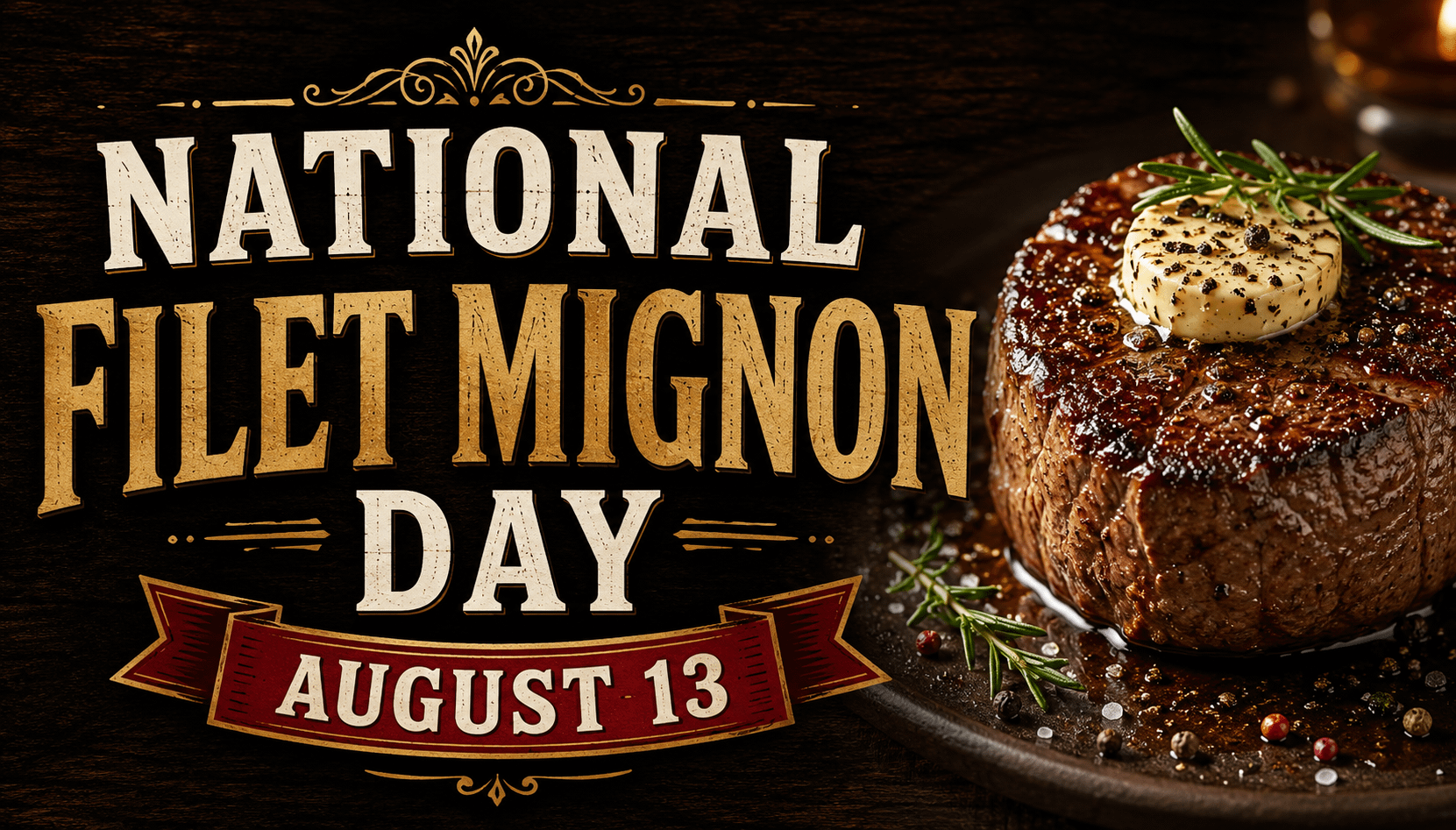
  • The Pickax Creator Program

    Advertisements

    Are you ready to turn your creativity into impact—and income? Dive into the Pickax Creator Program, an empowering platform that invites creators like you to share content, build influence, and monetize your ideas.

    What’s the Program All About?
    Effortless Onboarding
    Signing up to be a Creator is simple—no follower minimums or gatekeeping. Just navigate to the Settings tab, tap “Become a Creator”, complete the approval process, and you’re in.
    pickax.com

    Verified Status for Visibility
    Only users with a Verified Account can apply to become Creators. Verification involves identity confirmation (e.g., government ID), or special alternative routes like pseudonyms or business accounts.
    pickax.com
    This ensures that your content and identity are trusted and discoverable on the platform.

    Monetization Made Easier
    Once you’re in, you’ll unlock multiple monetization streams:

    Subscription Model – Offer exclusive content behind a paywall. Creators keep most of the revenue; Pickax takes just a 10% platform fee.
    pickax.com

    Advertising Revenue Share – Earn commission from ads placed within your articles when they convert through unique tracking links or promo codes.
    pickax.com

    Affiliate Marketing – Promote products or services and get paid commissions for sales originating from your content.
    pickax.com

    Why This Matters
    The Pickax Creator Program stands out for its ease and inclusivity—no barrier of entry, no hidden requirements. Whether you’re an emerging writer, educator, artist, or entrepreneur, it’s a flexible canvas to grow your audience and earn on your terms.

    Join Pickax today! https://pickax.com/?referralCode=0mvx4ds&refSource=copy

    Read More Opportunities & Growth

  • Honoring My Son on National Son’s and Daughter’s Day

    Advertisements

    National Son’s and Daughter’s Day, observed on August 11, is meant to be a day to celebrate our children, appreciate the time we have with them, and recognize the incredible place they hold in our lives.

    For many parents, today may mean spending extra time with their sons and daughters, sharing photographs, making memories, calling them just to say “I love you,” or thinking about how quickly the years have passed.

    For me, this day carries a different kind of meaning.

    I am still a father.

    I will always be a father.

    But my son is no longer physically here for me to call, hug, sit beside, or spend the day with.

    So today, I honor him through memory.

    I honor him through love.

    And I honor him by continuing to carry him with me through the life I am still living.

    A Father Never Stops Being a Father

    One of the things I have learned through grief is that death can change a relationship, but it cannot erase it.

    My son may no longer be physically beside me, but he will always be my son.

    There is no expiration date on fatherhood.

    There is no moment when a grieving father suddenly stops loving his child because that child has passed away.

    If anything, the love remains while searching for somewhere to go.

    Before loss, we express our love through conversations, hugs, laughter, advice, celebrations, meals together, birthdays, holidays, and ordinary everyday moments.

    After loss, we have to learn another language of love.

    We speak their names.

    We tell their stories.

    We look through photographs.

    We remember their laughter.

    We visit the places that remind us of them.

    We write about them.

    We help others because of them.

    We find ways to keep their memory alive.

    That is part of what National Son’s and Daughter’s Day has become for me.

    It is another opportunity to say:

    My son was here.

    He mattered.

    He was loved.

    And he will never be forgotten.

    Remembering the Person He Was

    When someone passes away, people sometimes begin talking about that person primarily in terms of their death.

    But my son’s life was so much more than the way it ended.

    He had a personality.

    He had dreams.

    He had laughter.

    He had things he enjoyed.

    He had moments that made me proud.

    He had a heart that affected the people around him.

    He was a person with an entire story.

    As his father, I want that story remembered.

    That is one reason I continue writing about grief and child loss. Yes, writing helps me process some of what I carry, but it also gives me another way to preserve my son’s memory.

    Every time I write about him, part of his story continues.

    Every time his memory encourages another grieving parent, something meaningful comes from the love I still have for him.

    Grief Doesn’t Cancel Gratitude

    National Son’s and Daughter’s Day can bring complicated emotions for grieving parents.

    There is sadness because someone we desperately wish were here is missing.

    There can also be gratitude.

    I am grateful that I had the privilege of being my son’s father.

    I am grateful for the memories we created.

    I am grateful for the conversations, laughter, ordinary days, difficult days, and everything in between.

    Would I want more time?

    Of course.

    No amount of time would ever have felt like enough.

    But grief has taught me that gratitude and heartbreak can occupy the same heart.

    I can be devastated that my son is gone while also being incredibly thankful that he was part of my life.

    One feeling doesn’t erase the other.

    The Ordinary Memories Become Priceless

    Something else grief has taught me is how valuable ordinary moments really are.

    Before losing someone, we often think the biggest memories will be birthdays, vacations, graduations, holidays, and other milestones.

    Those memories certainly matter.

    But after someone you love dies, you may find yourself missing things you never realized would become precious.

    A conversation.

    A joke.

    Sitting together watching television.

    Eating a meal.

    A phone call.

    Hearing their footsteps.

    Seeing their name appear on your phone.

    Even hearing them complain about something.

    The things that once seemed ordinary can become the memories you would give almost anything to experience one more time.

    That is why days like National Son’s and Daughter’s Day can also carry an important message for parents whose children are still here:

    Don’t wait for a special occasion to appreciate them.

    Tell them you love them.

    Call them.

    Listen to them.

    Spend time with them.

    Take the picture.

    Make the memory.

    Forgive the small things.

    Enjoy the ordinary moments.

    Because sometimes the ordinary moments become the ones we miss the most.

    Turning My Grief Into Something Meaningful

    I cannot change what happened.

    That reality has been one of the hardest things to accept.

    No amount of wishing, bargaining, anger, or heartbreak can rewrite the past.

    But I can decide what I do with the love that remains.

    One way I honor my son is by trying to help other people.

    Sometimes that means writing about grief.

    Sometimes it means listening to someone who needs to talk.

    Sometimes it means reminding another grieving parent that their child deserves to be remembered.

    Sometimes it simply means showing kindness when someone is struggling.

    These actions cannot bring my son back.

    Nothing can.

    But they allow his memory to continue influencing the person I choose to become.

    If something I write helps another grieving father feel understood, my son’s memory is part of that.

    If my experiences help someone feel less alone, his life continues creating ripples beyond the years he physically lived.

    That matters to me.

    Saying His Name Matters

    Many grieving parents understand the strange silence that sometimes develops after losing a child.

    People may stop mentioning your child’s name because they are afraid they will upset you.

    But what many people don’t understand is that we are already thinking about our children.

    Hearing their names doesn’t suddenly remind us that they died.

    We never forgot.

    For many of us, hearing someone else say our child’s name is actually comforting.

    It tells us:

    You remember them too.

    That can mean more than people realize.

    I never want my son’s name or story to disappear simply because time continues moving forward.

    I want to remember.

    I want to talk about him.

    I want the people who knew him to remember.

    And I want people who never had the opportunity to meet him to understand that he was an important part of this world and an incredibly important part of mine.

    Grief Changes, but Love Doesn’t

    People sometimes talk about “moving on” after loss.

    I don’t believe that accurately describes what happens when you lose a child.

    You don’t simply move on from your son or daughter.

    You learn how to move forward while carrying them.

    There is a difference.

    Moving forward doesn’t mean forgetting.

    It doesn’t mean you have stopped grieving.

    It doesn’t mean the relationship no longer matters.

    It means somehow learning to continue living while carrying both love and loss.

    Some days I carry that weight better than others.

    There are days when memories bring smiles.

    There are days when those same memories bring tears.

    Sometimes they bring both.

    That is grief.

    It doesn’t follow a straight line or a predictable schedule.

    To Other Parents Missing a Child Today

    If you are reading this because you have also lost a son or daughter, I want you to know that there is no correct way to observe a day like today.

    You don’t have to be strong.

    You don’t have to turn your grief into something inspirational.

    You don’t have to celebrate if celebrating feels impossible.

    You can cry.

    You can laugh at a favorite memory.

    You can look through photographs.

    You can visit a special place.

    You can light a candle.

    You can write your child a letter.

    You can make their favorite meal.

    You can tell someone a story about them.

    You can simply sit quietly and remember.

    Whatever helps you feel connected to your child is enough.

    Their life mattered.

    Your relationship mattered.

    And the love you have for them still matters.

    To Parents Whose Children Are Still Here

    Today also gives me an opportunity to share something I wish everyone understood before experiencing loss.

    Time is precious.

    We hear that phrase so often that it can become easy to ignore.

    But it is true.

    We assume there will always be another conversation.

    Another dinner.

    Another birthday.

    Another holiday.

    Another opportunity to say what needs to be said.

    Life doesn’t guarantee us those moments.

    So hug your children.

    Tell them you love them.

    Tell them you’re proud of them.

    Listen when they want to talk.

    Put the phone down occasionally and simply be present.

    Make memories even when nothing special is happening.

    One day, those ordinary memories may become some of the most valuable things you possess.

    My Son Is Still Part of My Story

    Losing my son changed me forever.

    There is a version of myself that existed before his death and another version that has had to learn how to survive afterward.

    I cannot return to the person I was before.

    But I can continue trying to become someone my son would be proud of.

    That has become part of how I honor him.

    I can keep helping people.

    I can keep writing.

    I can keep speaking honestly about grief.

    I can keep showing compassion to people carrying pain that others cannot see.

    I can keep getting up when grief tells me it would be easier to stay down.

    And I can continue saying his name and sharing his story.

    Because as long as I am here, my son will remain part of my story.

    Today, I Honor My Son

    On this National Son’s and Daughter’s Day, there is an empty space beside me that can never truly be filled.

    I wish my son were here.

    I wish I could hear his voice again.

    I wish I could have another conversation, another laugh, another ordinary day.

    But since I cannot change what happened, I will continue doing what I can.

    I will remember him.

    I will speak his name.

    I will tell his story.

    I will help others when I can.

    I will carry the lessons his life gave me.

    And I will continue trying to live in a way that honors the privilege I had of being his father.

    Death may have taken away the future I thought we would have together.

    But it did not take away the past we shared.

    It did not erase the memories.

    And it certainly did not erase the love.

    Today isn’t only about grieving the son I lost.

    It is about celebrating the son I was blessed to have.

    He was here.

    He mattered.

    He changed my life.

    He will always be my son.

    And I will always be his dad.

    Happy National Son’s and Daughter’s Day to my son.

    I love you. I miss you. And I will carry you with me for the rest of my life.

    A Father’s Guide to Surviving the Loss of a Child

  • National Son’s and Daughter’s Day: Celebrating the Love, Joy, and Unbreakable Bond of Family

    Advertisements

    Every year on August 11, National Son’s and Daughter’s Day gives parents and families a meaningful reason to celebrate the children who have changed their lives forever.

    Being a parent is more than a title. It is a lifetime of love, responsibility, sacrifice, worry, pride, memories, lessons, laughter, and countless moments that become part of who we are.

    From the first time we hold our children to the moment we realize they have grown into adults, the journey can seem to move faster than we ever imagined.

    One day, you’re holding a tiny hand while crossing the street.

    Then you’re watching them walk into school.

    Before you know it, they’re learning to drive, graduating, beginning careers, falling in love, building families, and creating lives of their own.

    Yet no matter how old our children become, something remains unchanged:

    They will always be our children.

    National Son’s and Daughter’s Day is a reminder to appreciate that relationship.

    It isn’t about expensive presents or elaborate celebrations.

    It’s about time.

    It’s about connection.

    It’s about memories.

    And most importantly, it’s about love.

    For families who are fortunate enough to spend the day together, August 11 is an opportunity to create another memory.

    For parents whose children live far away, it can be an opportunity to make a phone call and reconnect.

    And for parents whose son or daughter has passed away, the day can become a deeply personal time of remembrance—a day to honor a love that death could never erase.

    When Is National Son’s and Daughter’s Day?

    National Son’s and Daughter’s Day is observed annually on August 11.

    Although the exact origins of the modern August 11 observance aren’t completely clear, the idea of dedicating a special day to sons and daughters has a surprisingly long history.

    Accounts of an earlier Sons’ and Daughters’ Day go back to the 1930s. J. Henry Dusenberry of Missouri reportedly promoted the idea after hearing a child wonder why mothers and fathers had special days but children did not.

    An early tradition encouraged parents to place flowers representing their children in a vase and display it prominently in their homes. Parents could look at the flowers throughout the day and think about their children—including those who had already grown up and moved away.

    The observance reportedly spread, and by the mid-1940s, organizations in numerous states were participating.

    Decades later, another attempt was made to establish a Sons’ and Daughters’ Day nationally. In 1972, Congressman Claude Pepper submitted a request connected with creating such an observance, although it never became an official federal holiday.

    The August 11 version of National Son’s and Daughter’s Day can be documented by at least the late 1980s.

    Today, the tradition continues informally as a reminder for parents to spend meaningful time with their children and let them know how important they are.

    Why National Son’s and Daughter’s Day Matters

    Most parents don’t need a national day to love their children.

    That happens every day.

    But sometimes we need reminders to express that love.

    Modern life can become incredibly busy.

    We work.

    We pay bills.

    We answer messages.

    We run errands.

    We make appointments.

    We take care of our homes.

    We deal with problems.

    We worry about tomorrow.

    And while all of that is happening, life keeps moving.

    Children keep growing.

    Parents keep getting older.

    Years continue passing.

    That’s why a day like National Son’s and Daughter’s Day can have meaning.

    It reminds us to stop for a moment and recognize what truly matters.

    Sometimes the most important thing you can give your child isn’t something you can buy.

    It’s your attention.

    Your encouragement.

    Your presence.

    Your support.

    Your time.

    And your love.

    The Incredible Bond Between Parents and Children

    There are many relationships we experience throughout life, but few compare with the bond between a parent and child.

    Parents often know their children in ways nobody else ever will.

    They remember the beginning.

    The first smile.

    The first word.

    The first steps.

    The scraped knees.

    The bedtime stories.

    The school pictures.

    The birthday parties.

    The Christmas mornings.

    The first day of school.

    The nervous moments.

    The accomplishments.

    The disappointments.

    The graduations.

    The celebrations.

    And thousands of seemingly ordinary moments in between.

    Parents see their children grow from someone who needs them for almost everything into independent adults capable of making their own decisions.

    That transition isn’t always easy.

    But watching your child become their own person can also be one of the greatest privileges of parenthood.

    The Ordinary Moments Often Become the Most Precious

    When we think about making memories, we sometimes imagine vacations, birthdays, graduations, holidays, weddings, and other major events.

    Those moments certainly matter.

    But some of our most treasured memories come from ordinary days.

    Sitting together at the dinner table.

    Driving somewhere together.

    Watching television.

    Making breakfast.

    Walking through a store.

    Listening to music.

    Talking about absolutely nothing important.

    Laughing at an inside joke.

    Hearing your child walk through the front door.

    Getting a random phone call.

    Receiving a text message.

    Sharing a meal.

    Those moments can seem insignificant while they’re happening.

    Years later, they may become priceless.

    Life has a way of teaching us that ordinary moments weren’t ordinary at all.

    They were pieces of our lives that we didn’t yet realize we’d someday miss.

    Children Grow Up Faster Than We Realize

    Parents hear it constantly when their children are young:

    “Enjoy it. They grow up fast.”

    At the time, it may sound like another cliché.

    Then it happens.

    You blink, and the baby is walking.

    You blink again, and they’re starting school.

    Then they’re teenagers.

    Then they’re graduating.

    Then they’re adults.

    Suddenly you’re looking at old photographs wondering how those years disappeared so quickly.

    Parenthood teaches us an important lesson about time:

    We don’t get to keep any stage forever.

    That’s why being present matters.

    Don’t spend every moment worrying about the next stage.

    Enjoy this one.

    Take pictures.

    Have conversations.

    Ask questions.

    Listen to their stories.

    Laugh with them.

    Encourage their dreams.

    Show up when they need you.

    Create memories.

    Because someday, the moments happening right now will become the memories you look back on.

    Tell Your Children You Love Them

    It sounds simple.

    But sometimes the most important things are.

    Tell your children you love them.

    Don’t assume they know.

    Say it.

    Whether they’re five years old or fifty-five years old, hearing those words from a parent can still matter.

    Tell them:

    “I love you.”

    “I’m proud of you.”

    “I believe in you.”

    “I’m glad you’re my son.”

    “I’m glad you’re my daughter.”

    “I’m always here for you.”

    Words can stay with people for years.

    Sometimes one encouraging sentence from a parent becomes something a child remembers throughout their entire life.

    Celebrate Who Your Children Are

    Every child is different.

    One may be outgoing while another is quiet.

    One may love sports while another loves books.

    One may enjoy art, music, technology, cooking, nature, business, or something completely unexpected.

    Our children aren’t supposed to become copies of us.

    Part of loving them is learning who they are.

    Ask about their interests.

    Learn about what excites them.

    Listen when they talk about their goals.

    Celebrate their accomplishments.

    Encourage them when things don’t work out.

    Be curious about the person they’re becoming.

    Sometimes children don’t need their parents to solve everything.

    They simply need to know someone believes in them.

    Meaningful Ways to Celebrate National Son’s and Daughter’s Day

    There isn’t one correct way to celebrate August 11.

    The best celebration is something that brings your family closer together.

    Spend Uninterrupted Time Together

    Put the phones away for a little while.

    Have a conversation without distractions.

    Go for a walk.

    Sit outside.

    Play a game.

    Watch a movie.

    Cook dinner together.

    The activity isn’t nearly as important as being present.

    Have a Family Dinner

    Food has a wonderful way of bringing people together.

    Cook your children’s favorite meal, order from a restaurant everyone enjoys, have a backyard barbecue, or let everyone help prepare dinner.

    Then sit together and talk.

    Ask everyone to share a favorite family memory.

    You may be surprised by the moments your children remember.

    Look Through Old Photographs

    Pull out old photo albums or scroll through family pictures together.

    You might discover photographs you haven’t seen in years.

    Talk about where the pictures were taken.

    Tell the stories behind them.

    Laugh at the hairstyles.

    Remember old vacations.

    Talk about people you love.

    Pictures have an incredible ability to reconnect us with moments we thought we’d forgotten.

    Recreate an Old Family Memory

    Did you have a restaurant you visited when the kids were younger?

    A park?

    A vacation destination?

    A favorite meal?

    A board game everyone used to play?

    Recreate the experience.

    Sometimes revisiting an old tradition can remind everyone just how far you’ve come together.

    Start a New Tradition

    You don’t need to have young children to start a family tradition.

    Make August 11 your annual family dinner.

    Take a family photograph every year.

    Cook the same meal.

    Go somewhere special.

    Write letters to one another.

    Whatever you choose, repeating the tradition can make the day increasingly meaningful over time.

    Write Your Child a Letter

    One of the most meaningful gifts costs almost nothing.

    Write a letter.

    Tell your child what you admire about them.

    Share your favorite memories.

    Tell them about the moment they came into your life.

    Explain what being their parent has meant to you.

    Tell them what you’re proud of.

    And remind them how deeply they’re loved.

    That letter could become something they treasure for the rest of their life.

    National Son’s and Daughter’s Day With Adult Children

    Parenthood doesn’t end when a child turns 18.

    The relationship simply changes.

    Your adult children may have careers.

    They may have spouses or partners.

    They may have children of their own.

    They may live across town or across the country.

    Life becomes busy for everyone.

    That can make intentionally staying connected even more important.

    Call them.

    Invite them to dinner.

    Send a message.

    Ask how they’re really doing.

    Tell them you’re thinking about them.

    You don’t need a long speech.

    Sometimes a simple message is enough:

    “Happy National Son’s and Daughter’s Day. No matter how old you get, you’ll always be my child. I love you and I’m proud of you.”

    Celebrate the Parent-Child Relationship Beyond August 11

    National Son’s and Daughter’s Day lasts only one day.

    The message behind it shouldn’t.

    Try to make connection part of everyday life.

    Call more often.

    Listen more carefully.

    Put the phone down.

    Say “I love you.”

    Say “I’m proud of you.”

    Apologize when you’re wrong.

    Forgive when you can.

    Make time.

    Take pictures.

    Celebrate accomplishments.

    Show up during difficult moments.

    And never assume there will always be another opportunity.

    Life is unpredictable.

    The time we have together is precious.

    When National Son’s and Daughter’s Day Is Painful

    For many families, August 11 is joyful.

    For others, it can be incredibly difficult.

    There are parents whose relationships with their children are complicated.

    There are parents separated from their children by distance.

    There are parents dealing with estrangement.

    There are parents watching children struggle.

    And there are parents whose son or daughter has passed away.

    For them, a day celebrating children can carry a completely different weight.

    Seeing parents posting pictures with their children may bring happiness for them while simultaneously reopening your own grief.

    Both feelings can exist at once.

    You can be happy for another family while deeply missing your own child.

    For Parents Whose Son or Daughter Has Passed Away

    There are losses in life that change us.

    The death of a child is one of them.

    When your son or daughter dies, the world may continue moving, but part of your world has permanently changed.

    Birthdays arrive.

    Holidays return.

    Anniversaries pass.

    Seasons change.

    Other children grow older.

    Life continues.

    But you continue carrying someone with you who should still be here.

    National Son’s and Daughter’s Day can become another date that reminds you of the empty chair, the missing voice, the phone call that no longer comes, and the future you thought you would share.

    But there is something important to remember:

    You are still their parent.

    Death does not erase parenthood.

    It doesn’t erase the years you shared.

    It doesn’t erase the memories.

    And it certainly doesn’t erase love.

    Your son will always be your son.

    Your daughter will always be your daughter.

    Love Doesn’t End When Someone Dies

    Grief exists because love existed first.

    And when someone we love dies, that love doesn’t suddenly disappear.

    It changes.

    Instead of creating new memories with them, we protect the memories we already have.

    Instead of hearing their voice, we remember how it sounded.

    Instead of taking new photographs, we treasure the ones we already have.

    Instead of seeing them walk through the door, we remember the thousands of times they did.

    The relationship becomes different.

    But the love remains.

    That’s why days like National Son’s and Daughter’s Day can become meaningful remembrance days for grieving parents.

    You may not be able to celebrate the way you once would have.

    But you can still honor your child.

    Ways to Remember a Son or Daughter Who Has Passed Away

    There is no correct way to remember someone you love.

    Grief is deeply personal.

    Do whatever brings you comfort.

    Light a Candle

    Light a candle in your child’s memory and spend a few quiet moments thinking about them.

    Look Through Photographs

    Choose some favorite pictures and remember the stories behind them.

    Don’t focus only on the loss.

    Remember the life.

    Remember the laughter.

    Remember the adventures.

    Remember who they were.

    Play Their Favorite Music

    Music has a powerful connection with memory.

    Listen to songs they loved or music that reminds you of time spent together.

    Cook Their Favorite Meal

    Food carries memories too.

    Prepare something your child loved and share stories about them while eating it.

    Visit Somewhere Meaningful

    Visit their resting place, a favorite park, beach, restaurant, hiking trail, hometown location, or somewhere connected to a happy memory.

    Do Something Kind in Their Memory

    Pay for someone’s coffee.

    Donate to a meaningful cause.

    Help someone who is struggling.

    Volunteer.

    Perform a random act of kindness.

    Allow your child’s memory to continue creating goodness in the world.

    Say Their Name

    One of the simplest things can also be one of the most meaningful.

    Say their name.

    Talk about them.

    Tell their stories.

    Remember them openly.

    A person doesn’t stop being part of a family because they died.

    Don’t Be Afraid to Talk About Children Who Have Passed

    People sometimes avoid mentioning someone’s deceased child because they’re afraid of upsetting the parent.

    But many grieving parents are already thinking about their child.

    Hearing their child’s name doesn’t create the grief.

    The grief is already there.

    What mentioning their child can do is remind them that someone else remembers.

    Ask about them.

    Listen to stories.

    Look at pictures.

    Allow parents to talk about their children without feeling like they’re making everyone uncomfortable.

    Sometimes one of the greatest gifts you can give a grieving parent is simply saying:

    “Tell me about your son.”

    or

    “Tell me about your daughter.”

    Keeping Their Memory Alive

    Our children leave marks on our lives.

    Their personalities influence us.

    Their words stay with us.

    Their kindness affects others.

    Their humor becomes part of family stories.

    Their lessons remain.

    Their photographs capture moments in time.

    Their lives become woven into ours.

    Keeping someone’s memory alive doesn’t mean refusing to move forward.

    It means carrying their love forward with you.

    You can continue living while remembering.

    You can laugh again without forgetting.

    You can experience happiness without betraying your grief.

    You can build new memories while still treasuring the old ones.

    Love doesn’t require us to remain frozen in the past.

    It gives us something meaningful to carry into the future.

    The Importance of Taking Pictures

    We sometimes complain that people take too many pictures.

    But photographs become more valuable with time.

    Take the picture.

    Take the family selfie.

    Record the video.

    Capture the birthday.

    Photograph the ordinary Tuesday afternoon.

    Take pictures when everyone is dressed up.

    Take pictures when nobody is.

    Don’t wait until everything looks perfect.

    Years from now, you probably won’t care whether the house was messy or someone’s hair wasn’t perfect.

    You’ll care about the people in the photograph.

    Pictures become little time machines.

    They allow us to see faces exactly as they were during a moment we can never physically return to.

    Ask Questions While You Can

    Another beautiful way to strengthen family relationships is through conversation.

    Ask your children questions.

    What are they dreaming about?

    What are they worried about?

    What are they proud of?

    What do they want to accomplish?

    What was their favorite childhood memory?

    What family tradition do they love?

    What do they remember differently than you?

    Parents can also share their own stories.

    Tell your children about your childhood.

    Tell them what life was like when you were their age.

    Tell them about their grandparents.

    Share the family stories that shouldn’t disappear.

    One day, those stories may become part of what your children pass on to the next generation.

    Forgive the Imperfections

    No family is perfect.

    Parents make mistakes.

    Children make mistakes.

    People say things they regret.

    There are disagreements.

    There are misunderstandings.

    There may be seasons when relationships become distant.

    National Son’s and Daughter’s Day can also be a reminder that relationships sometimes deserve another chance.

    That doesn’t mean ignoring serious harm or abandoning healthy boundaries.

    But when reconciliation is safe and possible, sometimes a phone call, apology, conversation, or simple “I miss you” can open a door.

    Pride can steal years from relationships.

    Love sometimes requires us to be the person willing to reach out first.

    What Children Really Remember

    Children may remember some gifts.

    They may remember certain birthday parties or vacations.

    But many of their strongest memories will involve how they felt around you.

    Did they feel loved?

    Did they feel safe?

    Did they feel heard?

    Did they know you believed in them?

    Did you show up?

    Did you laugh together?

    Did you encourage them when they failed?

    Did you celebrate when they succeeded?

    Material things eventually disappear.

    The emotional impact we have on another person’s life can last much longer.

    Parenthood Is a Lifetime Journey

    There is no point when parents suddenly know everything.

    Parenthood is a lifelong process of learning.

    We learn from our children.

    We learn from our mistakes.

    We learn patience.

    We learn sacrifice.

    We learn how deeply another person’s happiness can affect our own.

    And sometimes we learn just how strong love can be.

    Our children change us.

    They challenge us.

    They inspire us.

    They worry us.

    They make us laugh.

    They make us proud.

    And they teach us that our hearts are capable of holding more love than we ever imagined.

    A Reminder for August 11

    This National Son’s and Daughter’s Day, don’t worry about creating the perfect celebration.

    Create a genuine one.

    Call your children.

    Hug them.

    Sit with them.

    Listen.

    Laugh.

    Remember.

    Take pictures.

    Tell stories.

    Say the words you’ve been meaning to say.

    If your children are grown, remind them they will always have a home in your heart.

    If they’re far away, remind them that distance doesn’t change love.

    And if your son or daughter is no longer physically beside you, take time to honor the life, memories, and love you shared.

    Final Thoughts: They Will Always Be Our Children

    National Son’s and Daughter’s Day is more than another date on the calendar.

    It is a reminder.

    A reminder that time moves quickly.

    A reminder that ordinary moments matter.

    A reminder that relationships need attention.

    A reminder to say what is in our hearts while we have the opportunity.

    And perhaps most importantly, it is a reminder that the bond between a parent and child can become one of the most powerful relationships of our lives.

    Children grow up.

    They move away.

    They build their own lives.

    Families change.

    And sometimes, heartbreakingly, parents must continue living after a child has passed away.

    But love has an extraordinary ability to remain.

    So on August 11, celebrate your sons and daughters.

    Celebrate the little children holding your hand.

    Celebrate the teenagers discovering themselves.

    Celebrate the adult children building lives of their own.

    Celebrate the children living miles away.

    And remember the sons and daughters who are no longer physically here but remain forever part of their families.

    Make the call.

    Give the hug.

    Take the picture.

    Tell the story.

    Say their name.

    And above all else, say:

    “I love you.”

    Because there may be no greater message behind National Son’s and Daughter’s Day than this:

    Our children are part of our hearts, part of our stories, and part of who we become. No matter how much time passes or how life changes, they will always be our sons and daughters—and they will always be loved.

    Read More Holidays & National Days
Exit mobile version