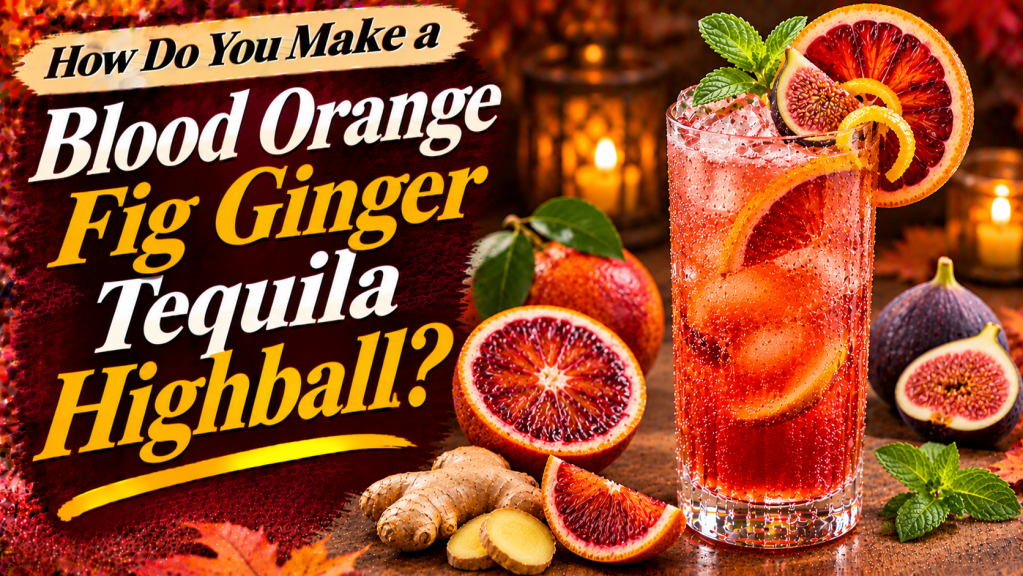
A blood orange fig ginger tequila highball combines bright citrus, rich fig sweetness, gently spicy ginger, and blanco tequila in a tall sparkling drink. Blood orange juice adds a ruby hue, while a quick homemade fig-ginger syrup gives the cocktail an autumn-inspired flavor. Chilled club soda lightens the mixture and makes it refreshing rather than overly sweet.
The key is balancing the ingredients. Dried figs can make a syrup thick and sugary, while blood oranges vary in acidity. Use measured amounts, strain the syrup thoroughly, and add sparkling water only after mixing the still ingredients. This recipe also includes an alcohol-free option for guests who prefer the same fruit-and-ginger flavors without tequila.
Recipe at a Glance
Yield: one cocktail, plus extra syrup for several drinks. Active mixing time: 5–8 minutes. Syrup preparation: 15 minutes plus cooling. Glassware: highball or Collins glass. Equipment: small saucepan, fine-mesh strainer, jigger, citrus juicer, cocktail shaker, and bar spoon.
Ingredients for the Cocktail
Use 1½ ounces blanco tequila, 1½ ounces freshly squeezed blood orange juice, ½ ounce fresh lime juice, ½ ounce cooled fig-ginger syrup, 2–3 ounces chilled plain club soda, and fresh ice. Optional garnishes include a blood orange wheel, a thin slice of fresh fig when available, and a small piece of candied ginger.
Ingredients for the Fig-Ginger Syrup
Use ½ cup water, ¼ cup granulated sugar, three dried figs with stems removed and chopped, and 1 inch fresh ginger, thinly sliced. The figs add their own sweetness, so this syrup uses less added sugar than a standard one-to-one simple syrup. The batch makes approximately enough for three to five cocktails, depending on evaporation and straining.
Choosing the Best Blood Oranges
Blood oranges come in several varieties and may range from orange flesh with red streaks to a deep crimson interior. Their sweetness varies by variety and ripeness. Select fruit that feels heavy for its size, has no mold or soft leaking areas, and smells fresh when cut.
Wash the fruit before cutting, particularly if using a wheel for garnish. Squeeze and strain to remove seeds. Depending on the size, you may need one or two oranges for 1½ ounces juice. Ordinary navel oranges can substitute when blood oranges are unavailable; the finished drink will be more golden than red.
Why Use Figs in a Tequila Drink?
Figs have an earthy, honey-like sweetness that pairs well with the fresh agave flavor of tequila. Dried figs work particularly well for syrup because they are available in many markets year-round and soften as they simmer. They also contribute a warm brown color that deepens the orange juice.
Fresh figs may be substituted when in season, although their moisture content and sweetness differ. If using fresh figs, halve or chop two small ripe fruits, simmer briefly, then strain. Start with less syrup in the finished cocktail and adjust after tasting.
How to Make Fig-Ginger Syrup
Combine water, sugar, chopped dried figs, and ginger slices in a small saucepan. Warm over medium-low heat, stirring until the sugar dissolves. Bring to a gentle simmer for approximately five minutes, then turn off the heat.
Let the figs and ginger steep for another five minutes. Mash the softened fig pieces lightly with a spoon to release their flavor without turning them into a thick paste. Strain through a fine-mesh sieve into a clean heat-safe container. Avoid forcing all of the pulp through the sieve, which may leave the drink gritty.
Cool the syrup promptly and refrigerate covered. Use within one week and discard it if it develops mold, an off odor, or signs of spoilage. Homemade fruit syrup is not shelf-stable. If it becomes very thick while cooling, stir in a little clean warm water before refrigerating.
How to Make a Blood Orange Fig Ginger Tequila Highball
Prepare the syrup ahead of time so it is completely cool, then chill the citrus and club soda before mixing.
Step 1: Chill the glass
Place a highball glass in the refrigerator for several minutes or fill it temporarily with ice water. Empty the water before adding fresh serving ice. Chilled glassware helps preserve the drink’s carbonation.
Step 2: Prepare the citrus
Wash the blood orange and lime. Slice a thin blood orange wheel for garnish, then squeeze 1½ ounces orange juice and ½ ounce lime juice. Strain away seeds and large pulp pieces.
Step 3: Measure tequila and syrup
Add 1½ ounces blanco tequila and ½ ounce cooled fig-ginger syrup to a cocktail shaker. Measure rather than free-pour so the strength and sweetness remain consistent.
Step 4: Add the juices
Pour the blood orange and lime juices into the shaker. Stir briefly to combine with the thicker fig syrup. If the oranges are especially sweet, begin with a slightly smaller amount of syrup.
Step 5: Shake with ice
Fill the shaker with fresh ice, secure the lid, and shake briskly for approximately 10–15 seconds. Shaking chills the mixture, blends the syrup, and introduces a controlled amount of dilution. Never add carbonated club soda to the sealed shaker.
Step 6: Strain into the serving glass
Fill the chilled highball with fresh ice, then strain the shaken mixture over it. Double-strain through a fine sieve if any fig fibers remain. Natural cloudiness from fresh juice is normal.
Step 7: Add the sparkling finish
Slowly add two to three ounces of chilled club soda. Stir once or twice gently with a long spoon. Taste a small sip. If the result feels too concentrated, add a little more soda; if too sweet, add a teaspoon of fresh lime juice.
Step 8: Garnish and serve
Tuck the blood orange wheel beside the ice. If available, add a thin fresh fig slice or a tiny piece of candied ginger. Serve immediately, while the citrus aroma and carbonation are fresh.
Which Tequila Works Best?
Blanco tequila is an excellent choice because its fresh agave and citrus-friendly character complement fig and ginger. Choose a balanced 100-percent-agave blanco that you enjoy in mixed drinks. Reposado tequila works too, contributing subtle vanilla and oak notes that make the cocktail feel warmer.
Avoid very sweet flavored tequilas when following the recipe as written. If using one, reduce fig syrup because the drink can become cloying. Keep the spirit measure the same when making substitutions.
How to Balance the Sweetness
Blood orange juice may be naturally sweet, while lime provides the sharp acidity that prevents the fig syrup from dominating. If the drink is overly tart, add another teaspoon of cooled syrup. If it tastes too sweet, add lime juice or more plain soda.
Make adjustments one at a time and taste between them. Increasing tequila is not a good way to correct an overly sweet cocktail because it changes the alcohol content without necessarily improving the balance.
How Strong Should the Ginger Flavor Be?
Ginger should add a lively warming finish, not overpower the fig and orange. Thinly sliced ginger infused for a short period usually provides plenty of flavor. Older ginger may be more fibrous and potent, so taste the syrup before deciding to steep longer.
For a more pronounced ginger note, add one additional thin slice during simmering, then strain thoroughly. Do not add dried ground ginger directly to the shaker, since it may leave sediment.
Delicious Variations
For a rosemary blood orange highball, add a small fresh rosemary sprig to the fig syrup during the final two minutes of steeping. Remove it promptly to avoid an overpowering woody flavor. For a spicier version, replace part of the club soda with nonalcoholic ginger beer, reducing syrup because the mixer may already contain sugar.
For a deeper winter version, add a small cinnamon stick to the syrup while simmering and remove before cooling. A white rum substitution creates a lighter sugarcane variation, while gin contributes botanical notes. Each changes the flavor, so taste after adjusting the mixer.
For a lower-sweetness option, use only a quarter ounce fig-ginger syrup and three or four ounces club soda in a larger glass. A touch of orange zest can add aroma without increasing sweetness.
How to Make an Alcohol-Free Blood Orange Fig Ginger Highball
Combine two ounces freshly squeezed blood orange juice, half an ounce lime juice, half an ounce fig-ginger syrup, and one ounce chilled water or unsweetened decaffeinated black tea in a shaker. Shake with ice, strain into a tall glass with fresh ice, and top with three to four ounces plain club soda.
The tea adds a mild tannic note, while water lets the fruit stand out more clearly. Garnish with orange and ginger. Make sure all optional mixers and flavorings are alcohol-free if strict avoidance matters, and clearly distinguish the mocktail from the tequila version when entertaining.
How to Make a Batch for Eight
Combine 12 ounces blanco tequila, 12 ounces blood orange juice, four ounces lime juice, and up to four ounces fig-ginger syrup in a chilled pitcher. Begin with three ounces syrup, taste, and add more if needed. Refrigerate the noncarbonated mixture until serving.
Pour one-eighth of the chilled base into each ice-filled highball, then top with two to three ounces chilled club soda. Do not mix all of the soda into the pitcher early, or the bubbles will disappear. For a gathering, label the alcoholic batch clearly and prepare an alcohol-free pitcher separately.
What to Serve With This Cocktail
The fruit-and-ginger combination pairs with aged cheeses, mushroom crostini, grilled shrimp, roasted chicken, and lightly spiced vegetable skewers. Blood orange provides acidity that contrasts with rich appetizers, while figs complement savory cheese and herb flavors.
At holiday gatherings, offer water, food, and the mocktail version alongside measured cocktails. A simple citrus garnish makes the drink attractive without needing elaborate decoration.
Make-Ahead and Storage Tips
Prepare the fig-ginger syrup a day or two in advance and keep refrigerated in a clean covered container. Squeeze blood orange and lime juice close to serving for the freshest aroma. Keep sliced fruit refrigerated until needed.
A noncarbonated cocktail base can be assembled shortly before a gathering and stored chilled, but do not add ice or soda until serving. Finished highballs do not store well because carbonation fades and melting ice dilutes the drink. Refrigerate perishable fruit products promptly.
Frequently Asked Questions
Can I use bottled blood orange juice?
Yes, preferably unsweetened. Check the ingredient list, taste it, and reduce the syrup if the juice contains added sugar.
Can I substitute regular oranges?
Yes. Fresh navel orange juice works well, although the color and acidity may differ. Adjust lime to maintain a fresh citrus finish.
Can I use fresh figs instead of dried figs?
Yes. Use two small ripe figs, chop them, and simmer briefly. Fresh figs may produce a lighter syrup with a different texture.
Can I use ginger ale instead of club soda?
Yes, but ginger ale usually adds sweetness. Reduce the fig syrup initially and taste before making further adjustments.
Can I use mezcal instead of tequila?
Yes. Mezcal adds smoky notes that can complement fig, although a strongly smoky variety may overshadow the delicate orange. Use the same measured portion.
Do I need a shaker?
No. Stir the still ingredients thoroughly over ice in a mixing glass, strain into the highball, and top with club soda. A shaker helps distribute thicker fruit syrup more easily.
Why is my drink cloudy?
Fresh blood orange juice and fig syrup contain natural fruit particles. Double-straining helps create a smoother appearance, but some cloudiness is expected.
Final Thoughts
A blood orange fig ginger tequila highball brings together bright citrus, gently sweet fruit, warming ginger, and fresh agave character in a refreshing sparkling drink. Keep the syrup light, taste the citrus, and finish with chilled soda right before serving. Enjoy responsibly, or prepare the alcohol-free variation for the same seasonal flavors.
Leave a Reply