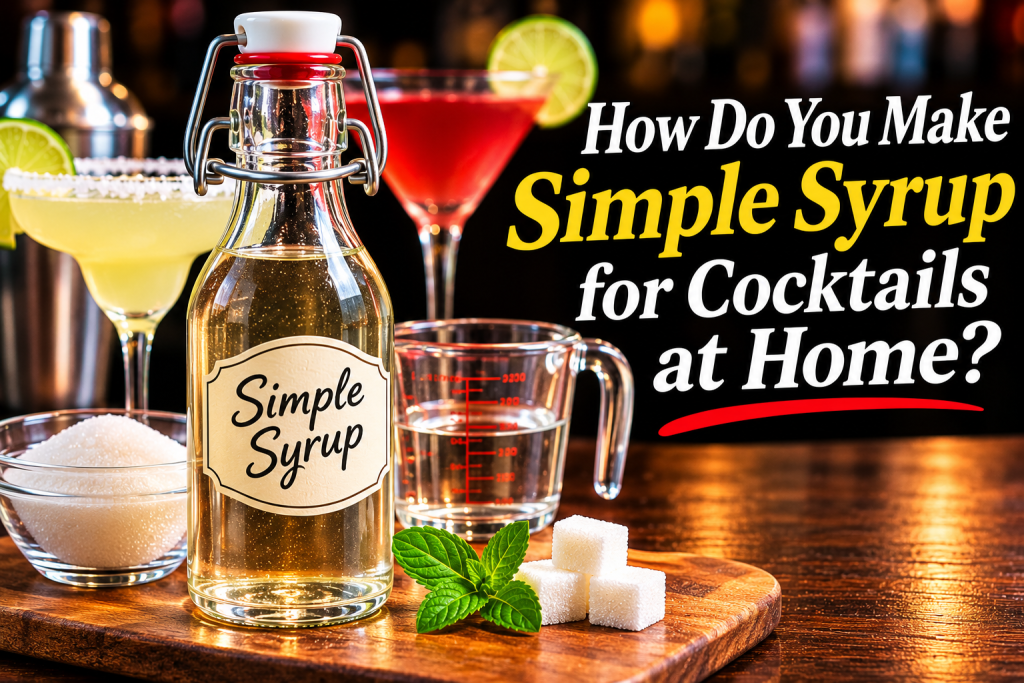
Making simple syrup for cocktails at home is easy: dissolve sugar in water, allow the mixture to cool, and store it in the refrigerator. This basic sweetener helps balance tart citrus, bitter ingredients, and strong spirits in drinks ranging from margarita variations to daiquiris, mojitos, and whiskey sours. You need only two inexpensive ingredients, a saucepan or clean jar, and a few minutes of preparation.
What Is Simple Syrup?
Simple syrup is a liquid solution of sugar and water. Unlike granulated sugar, which may settle at the bottom of a cold cocktail, dissolved sugar disperses quickly and evenly. That makes syrup useful when shaking, stirring, or building drinks directly in a glass. Plain simple syrup has a relatively neutral flavor, allowing the rum, gin, whiskey, tequila, fruit, or herbs in a recipe to remain the focus.
Easy Homemade Simple Syrup Recipe
Ingredients
- 1 cup granulated white sugar
- 1 cup water
Equipment
- Small saucepan or heat-safe mixing container
- Spoon or whisk
- Clean glass bottle or food-safe jar with lid
- Measuring cup or kitchen scale
Step-by-Step Instructions
- Measure the sugar and water. For consistent bar-style syrup, use equal weights of each; equal cups also work for a convenient home version but produce a different concentration.
- Combine the ingredients in a small saucepan over low to medium-low heat.
- Stir gently until the sugar crystals disappear and the liquid becomes clear. A rolling boil is unnecessary.
- Remove the pan from the heat. Allow the syrup to cool before handling or bottling.
- Transfer to a thoroughly clean container, seal, label with the preparation date, and refrigerate.
- Use the chilled syrup in cocktails, mocktails, lemonade, or iced tea.
This method makes a neutral syrup that mixes readily into cold drinks. If you want a smaller batch, halve both ingredients while preserving your chosen ratio. Avoid making more than you expect to use within a short period.
What Is the Correct Sugar-to-Water Ratio?
The standard professional ratio for simple syrup is 1:1 by weight: one part sugar to one part water. For example, combine 200 grams sugar with 200 grams water. Many casual recipes instead use one cup sugar and one cup water. Both work, but they are not exactly equivalent because a cup of granulated sugar weighs less than a cup of water. When following a cocktail recipe, knowing which convention the author used can improve consistency.
What Is Rich Simple Syrup?
Rich simple syrup usually contains two parts sugar to one part water by weight. It is sweeter and more concentrated, so less is needed for the same sweetness. Some bartenders favor it for spirit-forward drinks because it contributes less water. Do not replace regular syrup with the same volume of rich syrup without adjusting the recipe.
Can You Make Simple Syrup Without a Stove?
Yes. Put measured sugar and room-temperature water into a clean jar, close it securely, and shake or stir until fully dissolved. This cold-process method requires more patience, especially with concentrated syrup. Do not assume undissolved grains will disappear once the mixture is poured over ice. Continue mixing until the liquid is clear.
Do You Need to Boil Simple Syrup?
No. Gentle warmth speeds dissolution, but vigorous boiling is unnecessary. Prolonged boiling also evaporates water, potentially changing the concentration. If the mixture begins boiling, lower the heat and remove it once the sugar dissolves. Always let hot syrup cool before putting it in a container that could crack or deform.
What Kind of Sugar Works Best?
White Granulated Sugar
White sugar is the easiest starting point because it produces a clean, relatively neutral syrup. It is ideal for recipes where you want to preserve the original flavors of citrus and spirits.
Demerara or Turbinado Sugar
Less-refined brown sugars can create a richer syrup with subtle caramel or molasses notes. Demerara syrup pairs particularly well with some whiskey, rum, and tiki-style drinks. Because these sugars differ in flavor and crystal size, dissolve them completely and taste before using.
Brown Sugar
Light or dark brown sugar produces a deeper molasses character. It can be appealing in autumn drinks, coffee cocktails, and recipes with cinnamon or vanilla, but it will change the taste of delicate cocktails.
Honey and Agave
Honey syrup and agave syrup are useful cocktail sweeteners, but they are not identical to sugar-based simple syrup. Honey has floral notes, while agave can contribute its own flavor and sweetness concentration. When substituting, start with a modest amount and adjust.
How Long Does Homemade Simple Syrup Last?
Homemade syrup is not automatically shelf-stable. Keep it refrigerated in a clean, tightly closed container. For ordinary 1:1 home syrup, a conservative approach is to make small batches and use them within one to two weeks. Concentrated rich syrup may last longer under proper conditions, but its sugar content is not a guarantee of safety. Added fruit, fresh herbs, or other perishable ingredients may shorten storage life.
How Can You Tell if Syrup Has Spoiled?
Discard syrup that develops mold, unusual cloudiness, unexpected bubbles, fermentation, or an off smell. Never taste questionable syrup to test whether it is safe. Use a clean utensil or pour directly from the bottle instead of dipping used spoons into it. Date the container so you can track its age.
Can You Freeze Simple Syrup?
Yes, freezing small portions can be practical when you rarely make cocktails. Use a freezer-safe container with room for expansion, or portion into a suitable tray. High-sugar syrups may not freeze completely solid. Thaw in the refrigerator and check for changes in appearance or odor before use. Freezing does not restore syrup that was already spoiled.
How Much Simple Syrup Should You Add to a Cocktail?
There is no single correct amount. Many individual sour-style cocktail recipes start with roughly half to three-quarters of an ounce, but the ideal quantity depends on the spirit, citrus juice, other sweet ingredients, and syrup concentration. Start with a reliable recipe. If the drink tastes too tart, increase syrup in small increments; if it is cloying, reduce it next time rather than adding large amounts of extra liquor.
How Do You Measure Syrup Without a Jigger?
One US fluid ounce equals two tablespoons. Half an ounce equals one tablespoon, and a quarter ounce equals one and a half teaspoons. Measuring spoons are a useful backup when you do not have a cocktail jigger.
Best Cocktails to Make With Homemade Simple Syrup
Classic Daiquiri
Combine two ounces white rum, one ounce fresh lime juice, and three-quarters of an ounce standard simple syrup. Shake with ice and strain into a chilled coupe. Adjust the syrup to suit the lime’s acidity and your preferred balance.
Whiskey Sour
Shake two ounces whiskey, three-quarters of an ounce fresh lemon juice, and three-quarters of an ounce simple syrup with ice. Strain into a glass. Some variations include egg white or a pasteurized alternative for a foamy texture.
Mojito
Gently combine mint leaves, lime juice, and simple syrup; add white rum and ice, then top with soda water. Avoid pulverizing mint, which can introduce harsh vegetal flavors. Syrup helps the sweetness distribute evenly.
Tom Collins
Combine gin, fresh lemon juice, and simple syrup, then serve over ice with soda water. Add the carbonated mixer last to preserve its bubbles.
Lemon Drop
Vodka, fresh lemon juice, and simple syrup create a bright, tart cocktail. Some versions also use orange liqueur, which contributes additional sweetness and citrus flavor.
How Do You Make Flavored Simple Syrup?
Once you master plain syrup, you can infuse it with complementary flavors. Add clean flavoring ingredients while the syrup is warm, allow them to steep briefly, then strain and refrigerate. Start with small batches because fresh ingredients can shorten safe storage time.
Mint Simple Syrup
Add a small handful of washed fresh mint to warm finished syrup. Steep until the flavor is noticeable, then remove the leaves. Use in mojito variations, lemonade, or alcohol-free sparkling drinks.
Ginger Simple Syrup
Simmer sliced fresh ginger gently in water, strain, and use the flavored water to dissolve sugar. Ginger syrup complements whiskey, citrus, and tropical drinks.
Cinnamon Simple Syrup
Steep a cinnamon stick in warm syrup, then remove it when the spice level suits your taste. This version works in apple, pear, and seasonal cocktails.
Vanilla Simple Syrup
Add a small amount of vanilla extract or steep a split vanilla bean in the warm syrup. Vanilla works well in coffee-based drinks and dessert-inspired cocktails.
Berry Simple Syrup
Gently warm berries with water, strain carefully, and dissolve sugar into the flavored liquid. Refrigerate promptly and use this perishable variation sooner than plain syrup.
Common Simple Syrup Mistakes to Avoid
Using Too Much Heat
High heat can evaporate water and change the intended concentration. Gentle warming is enough for ordinary syrup.
Failing to Dissolve the Sugar
Undissolved crystals create uneven sweetness. Stir until the mixture is clear before cooling.
Mixing Up Rich and Standard Syrup
A recipe written for 1:1 syrup may become overly sweet when made with the same amount of 2:1 syrup. Label bottles clearly.
Using Dirty Containers
A clean, sealed bottle and refrigerated storage reduce contamination risks. Avoid topping up old syrup with fresh syrup without washing the container.
Adding Too Much to the Drink
Syrup is concentrated sweetness. Measure carefully and balance it against citrus, bitterness, and other sweet mixers.
Is Homemade Simple Syrup Better Than Store-Bought?
Homemade syrup is inexpensive, customizable, and easy to prepare with only sugar and water. Store-bought syrup offers convenience and may have a longer unopened shelf life because of commercial processing or preservatives. Neither is automatically superior in every cocktail. Check ingredient labels, concentration, and storage instructions, then choose the option that fits how frequently you make drinks.
Frequently Asked Questions
Can I use powdered sugar to make simple syrup?
It is not ideal. Some powdered sugars contain starch that can cloud the mixture or affect texture. Granulated sugar is more predictable.
Can I use tap water?
Yes, if it is safe to drink and tastes good. Filtered water may be preferable when tap water has a noticeable flavor.
Why did my simple syrup crystallize?
Crystallization can occur when the syrup is concentrated, water evaporates, or sugar crystals remain around the container. Gentle reheating with a little water may redissolve crystals in otherwise fresh syrup, but discard any syrup showing spoilage.
Does simple syrup contain alcohol?
No. Plain sugar-and-water syrup is alcohol-free, though the finished cocktail may contain alcohol.
Can I use simple syrup in mocktails?
Absolutely. It sweetens lemonades, iced teas, fruit spritzers, and many alcohol-free drinks.
Can I substitute maple syrup?
Yes in some recipes, but maple syrup adds a distinctive flavor and has a different sweetness profile. Use it when that flavor complements the drink.
Why is my simple syrup cloudy?
Cloudiness may result from ingredients or incomplete dissolution, but unexpected cloudiness during storage can indicate spoilage. If you are uncertain, discard it.
Should I refrigerate simple syrup before using it?
Yes, allow it to cool and refrigerate it. Chilled syrup also helps avoid warming a cold cocktail.
Final Thoughts
Making simple syrup at home is one of the easiest ways to improve cocktail consistency. Dissolve sugar in water, cool it, and store it safely in the refrigerator. Understand whether your recipe uses standard or rich syrup, measure rather than guess, and adjust sweetness in small increments. Once you have mastered the basic version, experiment with mint, ginger, cinnamon, or fruit for drinks that suit your taste. A simple bottle of homemade syrup gives you control over sweetness without requiring expensive bar equipment.
Leave a Reply