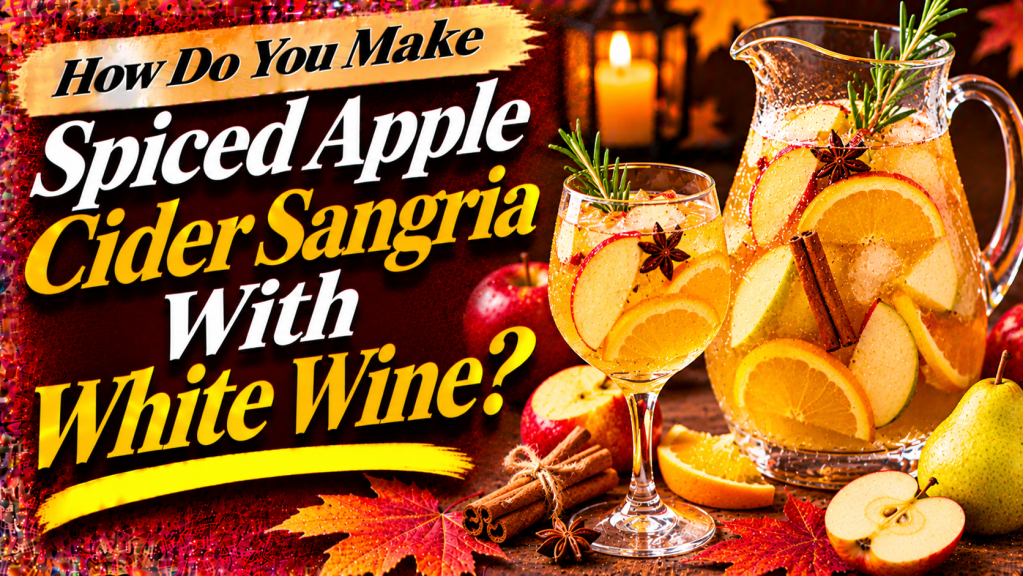
Spiced apple cider sangria with white wine is made by combining a dry white wine, nonalcoholic apple cider, fresh apples, pears, orange slices and whole warming spices, then chilling the mixture so the fruit and wine flavors mingle. This festive pitcher cocktail is especially convenient for Thanksgiving because the base can be assembled ahead of time and served straight from the refrigerator.
Spiced Apple Cider Sangria With White Wine Recipe
Prep time: 15 minutes | Chill time: 2 to 4 hours | Yield: Approximately 8 servings | Method: Stir and refrigerate
Ingredients
- 1 bottle (750 ml, approximately 25 ounces) dry white wine, such as Pinot Grigio or Sauvignon Blanc
- 2 cups chilled pasteurized nonalcoholic apple cider
- ½ cup apple brandy or ordinary brandy, optional
- ¼ cup freshly squeezed orange juice
- 1 tablespoon pure maple syrup, optional, to taste
- 1 medium crisp red apple, cored and thinly sliced
- 1 medium firm pear, cored and thinly sliced
- 1 orange, thinly sliced into rounds
- 2 whole cinnamon sticks
- 2 whole star anise, optional
- 3 whole cloves, optional
- 1 cup chilled plain sparkling water or club soda, optional, to add just before serving
- Ice for serving
- Fresh rosemary sprigs, optional garnish
Equipment
- Large 2- to 3-quart pitcher
- Long stirring spoon
- Measuring cups and citrus juicer
- Sharp knife and cutting board
- Wineglasses or tumblers
How to Make Spiced Apple Cider Sangria With White Wine
- Wash the apple, pear and orange. Remove the apple and pear cores, and cut the fruit into thin slices. Leave the fruit skins on for color and texture.
- Pour the dry white wine and nonalcoholic apple cider into a large pitcher.
- Add the optional brandy and fresh orange juice. Stir in maple syrup only after tasting the cider and wine together.
- Add the prepared apple slices, pear slices and orange rounds.
- Place two cinnamon sticks and the optional star anise and cloves in the pitcher. Use the optional spices sparingly so they do not dominate the fruit.
- Stir gently to distribute the ingredients, then cover the pitcher and refrigerate for two to four hours.
- Taste before serving. If the spice flavor has become strong enough, remove the whole spices with a spoon or strainer.
- Divide the sangria and some of the fruit among ice-filled glasses.
- For a sparkling finish, top each glass with a little chilled club soda or sparkling water. Garnish with rosemary if desired.
The finished batch contains approximately 58 fluid ounces before the optional sparkling water and without counting fruit displacement. Eight portions of roughly seven ounces are a practical serving size. A one-cup addition of sparkling water increases the total liquid yield to about 66 ounces.
What Does White Wine Apple Cider Sangria Taste Like?
This sangria balances crisp, lightly acidic white wine with the mellow sweetness of apple cider. Fresh pears soften the flavor, oranges contribute bright citrus, and cinnamon adds a familiar autumn aroma.
Compared with a red-wine fall sangria, the white-wine version is generally lighter in color and body. It is especially attractive when prepared with thin fruit slices that remain visible through the golden liquid.
Whole spices should be supportive rather than overpowering. A brief chill allows cinnamon and star anise to release aroma without creating an excessively strong infusion. The taste can become stronger with extended steeping, which is why the recipe recommends checking the spices after a few hours.
Which White Wine Works Best for Sangria?
Pinot Grigio
Pinot Grigio is a dependable choice for a crisp, fruit-forward sangria. Its light body generally allows apples and pears to remain noticeable without adding too much sweetness.
Sauvignon Blanc
Sauvignon Blanc gives the sangria a brighter, more acidic finish. It works particularly well when your cider is quite sweet or when you plan to serve the drink with savory Thanksgiving foods.
Unoaked Chardonnay
Unoaked Chardonnay can be a good choice when you prefer a slightly fuller flavor. Avoid strongly oaked styles if you want the fresh apple and pear notes to remain dominant.
Dry Riesling
A dry Riesling can bring fragrant orchard-fruit notes and good acidity. Check the bottle’s sweetness description, because some Rieslings are notably sweet. A sweet wine may make added maple syrup unnecessary.
Choose a wine you would happily drink on its own. Sangria does not require an expensive bottle, but an unpleasantly harsh or stale wine will not improve merely because fruit is added.
Why Use Nonalcoholic Apple Cider?
Nonalcoholic apple cider supplies sweetness and a recognizable autumn apple flavor without adding a second fermented beverage. It is often richer in texture than clear apple juice and pairs naturally with white wine, orange and cinnamon.
Read the label carefully. Hard cider contains alcohol and changes the total strength of the recipe. Apple cider vinegar is entirely different and should not be used as a substitute.
Pasteurized cider is a practical choice when serving guests who may be at increased risk from unpasteurized juices. Keep it refrigerated after opening and follow the manufacturer’s storage instructions.
If only clear apple juice is available, use the same quantity but begin without maple syrup. The resulting sangria may be lighter in both color and apple character.
Choosing Fruit for the Best Texture
Use crisp, firm apples such as Honeycrisp, Pink Lady or Fuji. Firmer fruit holds its shape during chilling and remains pleasant to eat after the drink is poured.
Choose a pear that is ripe enough to have flavor but not so soft that it breaks apart in the pitcher. Bosc and firm Anjou pears work well. Very ripe pears may become mushy during an extended soak.
Fresh oranges add color and citrus fragrance. Slice them thinly and remove any seeds before adding them to the pitcher. If the orange has a particularly thick layer of bitter white pith, reduce its steeping time.
Wash all fruit under running water. Because the fruit is left in the drink, clean produce and utensils are important.
How to Add Cinnamon, Cloves and Star Anise
Whole spices offer the best control because they can be removed after steeping. Two cinnamon sticks give a gentle warm aroma to a pitcher-sized batch. Star anise introduces a licorice-like note, so it is optional and may not suit every guest.
Cloves are also strong. A few whole cloves are enough for a large pitcher, and they should be removed before serving so guests do not accidentally bite them. A reusable food-safe spice infuser makes removal especially easy.
Avoid adding large amounts of ground cinnamon directly to the pitcher. It will not dissolve fully and may leave a powdery layer on the surface or a gritty residue at the bottom.
Should You Add Brandy to White Wine Sangria?
Brandy is optional. A small amount of apple brandy can deepen the orchard-fruit character and add warmth, while ordinary brandy introduces additional complexity.
The sangria is still an alcoholic cocktail without brandy because it contains wine. Omitting the brandy produces a lighter version and lets the cider and fruit remain more prominent.
If you choose to include it, use the recommended half cup for the entire eight-serving batch. Do not add spirits simply to make the drink stronger; the balanced fruit and spice flavors are the main attraction.
How to Adjust the Sweetness
Begin by combining the wine and cider, then taste. Apple cider sweetness varies considerably, and a fruit-forward white wine may already create the balance you want.
If the mixture seems too tart, add pure maple syrup one teaspoon at a time. Stir thoroughly to distribute it. If it tastes too sweet, increase the citrus slightly or add a little plain sparkling water to individual glasses.
Avoid adding a large quantity of syrup before the fruit has steeped. The pears and orange can contribute sweetness during refrigeration, so a final adjustment immediately before serving is more reliable.
Can You Make Spiced Apple Cider Sangria Ahead?
Yes. Prepare the sangria two to four hours before your gathering for a balanced infusion. Cover the pitcher and store it in the refrigerator.
For overnight preparation, mix the wine, cider and orange juice and keep the fruit and whole spices in separate containers until closer to serving. This helps preserve the fruit texture and prevents the cinnamon and cloves from becoming too dominant.
Always add sparkling water just before serving. Carbonation gradually escapes from a pitcher, so mixing it in hours ahead will produce a flat drink.
How to Double the Sangria Recipe
For approximately sixteen servings, use:
- 2 bottles (750 ml each) dry white wine
- 4 cups nonalcoholic apple cider
- Up to 1 cup brandy, optional
- ½ cup fresh orange juice
- Up to 2 tablespoons maple syrup, optional
- 2 crisp apples, thinly sliced
- 2 firm pears, thinly sliced
- 2 oranges, thinly sliced
- 4 cinnamon sticks
- Optional star anise and cloves, adjusted conservatively
- Up to 2 cups sparkling water for serving
Divide the mixture between two large pitchers if a single container is too small. Refrigerate both until guests arrive and add sparkling water only when pouring individual glasses.
Prepare a clearly labeled alcohol-free alternative so that guests who avoid wine also have a festive option.
Spiced Apple Cider Sangria Variations
Cranberry White Wine Apple Sangria
Add half a cup of unsweetened cranberry juice and reduce the cider by the same amount. The drink will have a pinkish hue and a sharper fruit finish.
Ginger Apple Cider Sangria
Replace the optional sparkling water with chilled nonalcoholic ginger beer. This adds a spicy, sparkling character that pairs well with cinnamon.
Pear and Rosemary White Wine Sangria
Add an extra pear and a small rosemary sprig to the pitcher. Remove the rosemary after a short infusion so it does not overwhelm the wine.
Maple Cinnamon Sangria
Add a little pure maple syrup and omit the star anise. The result leans toward classic apple-and-cinnamon flavors.
Sparkling White Wine Sangria
Use still dry white wine for chilling, then top each glass with a small splash of chilled brut sparkling wine at serving time. Reduce the amount of still wine slightly if you want a lighter overall pour.
How to Make a Nonalcoholic Spiced Apple Cider Sangria
For an alcohol-free pitcher, combine three cups chilled nonalcoholic apple cider, two cups white grape juice and half a cup fresh orange juice. Add thin apple, pear and orange slices along with one cinnamon stick.
Refrigerate for one to two hours, then remove the cinnamon and add one to two cups chilled sparkling water immediately before serving.
Choose juices and sparkling mixers labeled alcohol-free if strict avoidance matters. This mocktail is generally sweeter than the wine version, so use additional sparkling water or a squeeze of lemon if needed.
What to Serve With White Wine Apple Cider Sangria
The sangria works well with baked Brie, creamy goat cheese, sharp cheddar, roasted nuts and savory pastry appetizers. Its acidity and light fruit profile provide contrast to buttery foods.
At Thanksgiving dinner, the drink complements roasted turkey, herb stuffing, roasted squash, glazed carrots and other seasonal vegetables. A smaller glass may also pair nicely with apple crisp or a fruit-based dessert.
Keep a pitcher of chilled water nearby and clearly identify alcoholic and nonalcoholic beverages. Fruit-filled sangria can taste deceptively light even when it contains wine and brandy.
Common Mistakes to Avoid
Using sweet wine and sweet cider without tasting: The combined drink can become cloying. Start with dry wine and adjust sweetness later.
Leaving spices in the pitcher overnight: Whole cloves and star anise may develop an overpowering flavor with prolonged steeping.
Using overripe fruit: Soft pears can break apart and cloud the sangria.
Adding sparkling water too early: Carbonation is best preserved by topping individual glasses immediately before serving.
Serving without sufficient chilling: Refrigeration helps the wine, fruit and cider integrate and creates a refreshing finished drink.
Confusing regular cider with hard cider: The recipe already contains wine and optional brandy; use nonalcoholic apple cider for the fruit component.
Frequently Asked Questions
Can I use Pinot Grigio for apple cider sangria?
Yes. Pinot Grigio is one of the easiest choices because its crisp flavor complements cider, apples and pears.
Can I make white wine sangria without brandy?
Yes. Simply omit it. The drink still contains alcohol from the wine, but the overall flavor is lighter.
How long should the sangria chill?
Two to four hours is a useful starting point. Taste after two hours and remove whole spices when the flavor is where you want it.
Can I use apple juice instead of apple cider?
Yes. It produces a lighter result, so choose a good-quality juice and adjust sweetness after tasting.
Is white wine apple cider sangria served with ice?
It can be. Serve over fresh ice in individual glasses, especially if the pitcher will be sitting out briefly during a gathering. Keep the main batch refrigerated.
Can I freeze leftover sangria?
Freezing is not ideal for preserving the texture of wine-soaked fruit. It is better to refrigerate leftovers promptly and enjoy them within a day or two.
Is this sangria alcohol-free?
No. The primary recipe contains white wine and optionally brandy. A separate nonalcoholic version is provided above.
Final Thoughts
Spiced apple cider sangria with white wine brings together crisp wine, orchard fruit and warm autumn spices in a simple make-ahead pitcher cocktail. Choose a dry wine, use good-quality nonalcoholic cider, allow the fruit to infuse in the refrigerator and add bubbles only when serving. The result is a festive option for Thanksgiving dinner or a seasonal gathering.
Leave a Reply