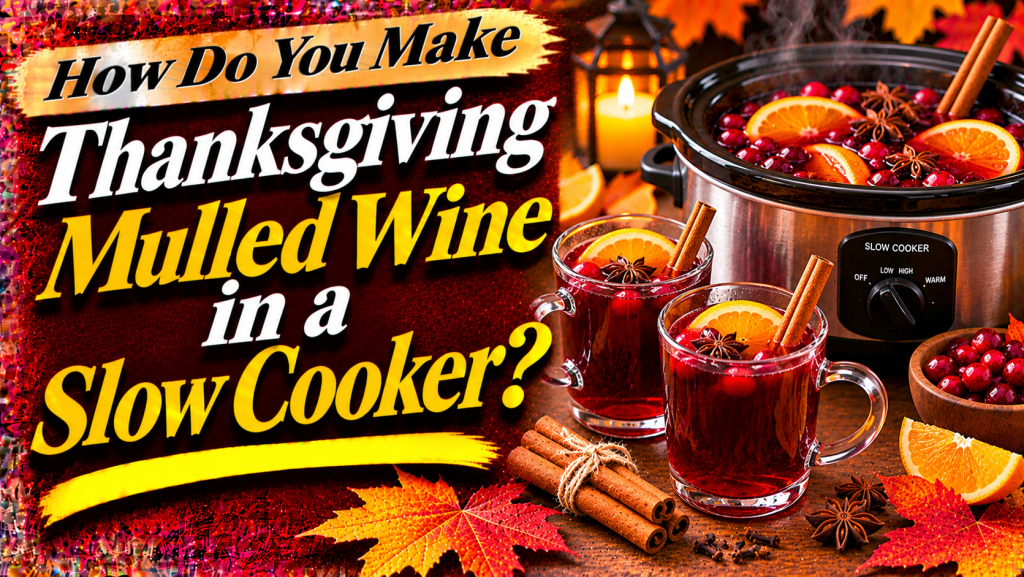
Thanksgiving mulled wine in a slow cooker is made by gently warming red wine with orange slices, apple cider, cinnamon, cloves and star anise. The slow cooker lets the spices infuse without requiring constant attention, making this an easy warm cocktail for a holiday gathering. Keep the heat low, avoid boiling the wine, and serve in heatproof mugs with a fresh orange slice.
Thanksgiving Slow Cooker Mulled Wine Recipe
Prep time: 10 minutes | Cook time: 1 to 2 hours on low | Yield: Approximately 8 servings of 6 ounces each
Ingredients
- 2 bottles (750 ml each) dry or medium-dry red wine
- 1 cup pasteurized nonalcoholic apple cider
- 1 large orange, scrubbed and thinly sliced
- 3 cinnamon sticks
- 5 whole cloves
- 2 whole star anise, optional
- 3 tablespoons pure maple syrup or honey, optional, to taste
- ¼ cup brandy, optional
- 1 small apple, thinly sliced, optional
- Extra orange slices or cinnamon sticks for serving
Equipment
- 4- to 6-quart slow cooker
- Measuring cups
- Spoon and ladle
- Fine-mesh strainer or slotted spoon
- Heatproof mugs
- Kitchen thermometer, useful for checking temperature
How to Make Thanksgiving Mulled Wine in a Slow Cooker
- Wash the orange and optional apple under running water. Slice thinly, removing visible seeds.
- Pour both bottles of red wine and one cup of nonalcoholic apple cider into the slow cooker.
- Add the orange slices, cinnamon sticks, cloves, optional star anise and apple slices.
- Add one tablespoon of maple syrup or honey initially, reserving the remainder until after tasting.
- Cover and set the slow cooker to low. Heat for approximately one to two hours, checking periodically, until the wine is thoroughly warm and aromatic. Cooking time varies by appliance.
- Avoid letting the wine boil or simmer vigorously. If it begins bubbling, reduce the heat or switch off the cooker.
- Taste carefully, then add more maple syrup if needed. Stir in the optional brandy near the end.
- Remove the whole spices with a slotted spoon or strain them out. Ladle the wine into heatproof mugs and garnish with fresh orange slices.
- Serve warm, keeping the remaining batch at a safe serving temperature without prolonged boiling.
This recipe starts with about 58½ ounces of liquid before optional brandy, sweetener and fruit displacement. After warming and ladling around the fruit, expect approximately eight generous portions. Actual yield varies.
What Does Thanksgiving Mulled Wine Taste Like?
Mulled wine has the dark fruit character of red wine combined with the fragrance of cinnamon, citrus, cloves and sometimes star anise. Apple cider softens the wine’s acidity and brings an orchard-fruit note that fits Thanksgiving.
The sweetness is adjustable. A dry red wine gives a more balanced foundation than a sweet red wine when combined with cider. Maple syrup or honey can be added in small amounts, but the drink should not taste like spiced sugar syrup.
Unlike sangria, which is usually served chilled, mulled wine is served gently warmed. Heating releases spice aromas, making the beverage especially inviting during cold-weather gatherings.
The Best Red Wine for Mulled Wine
Merlot
Merlot is smooth, fruit-forward and often has moderate tannins. Its plum and berry notes work naturally with orange and cinnamon.
Garnacha or Grenache
These wines can offer soft red-fruit flavors and approachable acidity. They are a good choice if you want a lighter, fruitier warm wine.
Zinfandel
A fruit-forward Zinfandel can work well for a more robust, warming drink. Choose a bottle that is not excessively sweet or high in alcohol.
Cabernet Sauvignon
Cabernet Sauvignon can be used, but strongly tannic or heavily oaked examples may taste harsher when warmed. A softer, fruitier style is generally preferable.
You do not need an expensive bottle for mulled wine, but choose a wine you would willingly drink on its own. Heating will not rescue wine that is spoiled or unpleasant.
Why the Slow Cooker Works So Well
A slow cooker provides steady, relatively gentle heat and keeps a large quantity of wine contained while the spices infuse. It also frees up a burner on a Thanksgiving day when the stove may be crowded with other dishes.
Slow cookers vary in their actual low and warm temperatures. Some run hot enough to simmer beverages, so check the liquid during the first hour rather than assuming the low setting will always prevent bubbling.
For the best flavor, remove whole spices after they have infused sufficiently. Leaving cloves and star anise in the pot throughout an all-day gathering can produce an overpowering or slightly bitter taste.
How Long Should You Cook Mulled Wine?
One to two hours on low is a useful starting point for a standard slow cooker, but the real goal is to heat the wine thoroughly while allowing the spices to release their flavor.
Begin tasting after about an hour. The cinnamon and orange may already be noticeable. If the flavor seems light, continue warming for another 30 minutes and taste again.
Avoid cooking mulled wine for six or eight hours simply because that is common for many slow-cooker meals. Prolonged heat can alter the wine’s aroma and increase evaporation. Once the drink tastes balanced, remove the spices and use the appliance’s appropriate setting for service.
Should Mulled Wine Boil?
No. Mulled wine is generally best when gently heated rather than boiled. Vigorous bubbling can drive off aromatic compounds and some alcohol, concentrate flavors unpredictably and produce a flatter-tasting beverage.
Heating the wine does not make it alcohol-free. The amount of alcohol that remains depends on temperature, duration, vessel shape and other conditions. Always treat the finished beverage as alcoholic.
If the slow cooker begins simmering vigorously, turn it down or off temporarily. Use a kitchen thermometer if you want more control, and follow the slow-cooker manufacturer’s guidance.
The Best Spices for Thanksgiving Mulled Wine
Cinnamon
Cinnamon sticks provide a gentle sweet-spice aroma without the cloudy sediment produced by ground cinnamon. Three sticks work well for a two-bottle batch.
Whole Cloves
Cloves are powerful. Five whole cloves are enough to add depth without dominating the orange and wine. Count them before adding so they can be removed easily.
Star Anise
Star anise provides a licorice-like aroma. It is optional because some guests dislike its flavor. Use one or two whole stars rather than powdered star anise.
Other Options
A few cardamom pods, thin ginger slices or a small strip of orange zest can add complexity. Avoid adding every possible spice at once. Choose two or three complementary flavors and let the wine remain recognizable.
Why Add Orange and Apple Cider?
Orange gives mulled wine a bright citrus note. Thin slices release their fragrance as they warm, although too much thick white pith can introduce bitterness over time. Remove the slices if the mixture starts to taste overly bitter.
Nonalcoholic apple cider provides a distinctly autumn flavor and balances the red wine. A pasteurized product is convenient for entertaining and suitable for recipes where the cider will be mixed with alcoholic wine.
You can substitute unsweetened apple juice if cider is unavailable, though the drink may taste lighter. Hard cider is not interchangeable without changing the alcohol content.
How to Sweeten Mulled Wine Without Making It Too Sweet
Start with one tablespoon of maple syrup for the batch, then taste after the wine has warmed and the spices have infused. Many red wines and ciders already supply enough natural sweetness.
Maple syrup adds an autumn note. Honey has a different floral character and should be stirred thoroughly into warm liquid. Brown sugar can be used instead, provided it is fully dissolved.
If the finished wine seems too sweet, add a splash of dry red wine or extra citrus rather than more spices. If it is too tart, increase sweetener one teaspoon at a time.
Can You Add Brandy to Slow Cooker Mulled Wine?
Yes. A quarter cup of brandy adds warmth and depth to a two-bottle batch. Stir it in close to serving time, after the wine has been heated gently.
Brandy is optional and should not be added merely to make the beverage stronger. Without it, the wine already contains alcohol and the spice flavors remain pronounced.
When serving guests, clearly label the beverage as containing wine and optional spirits. A nonalcoholic spiced cider is a useful separate alternative.
How to Double the Recipe for a Crowd
For approximately sixteen servings, use:
- 4 bottles dry or medium-dry red wine
- 2 cups nonalcoholic apple cider
- 2 large oranges, sliced
- 6 cinnamon sticks
- 10 whole cloves
- Up to 4 star anise, optional
- Up to 6 tablespoons maple syrup, adjusted to taste
- ½ cup brandy, optional
Use a slow cooker large enough for the liquid and fruit without exceeding its maximum fill line. A six- to eight-quart cooker may be appropriate depending on the model.
If the entire batch will not fit, prepare it in two slow cookers instead. Allow enough time for the greater volume to warm, checking the temperature and flavor periodically.
Can You Make Mulled Wine Ahead of Time?
The orange can be washed and sliced earlier in the day, and whole spices can be measured ahead. Store cut fruit covered in the refrigerator.
To prepare the wine base in advance, combine the wine, cider and spices in a covered container and refrigerate for a short period. Remove the spices once their flavor is noticeable so the mixture does not become overly intense.
Warm the prepared base gently when ready to serve. Avoid repeatedly heating and cooling the same large quantity.
How to Store and Reheat Leftover Mulled Wine
Remove the fruit and spices before storing so the flavors do not continue developing. Cool the wine promptly and transfer it to clean covered containers.
Refrigerate leftovers and use within two to three days for best flavor. Reheat gently in a saucepan or slow cooker without boiling. The drink may taste more concentrated after storage, so adjust with a small splash of cider if needed.
Do not leave leftovers sitting overnight in a switched-off slow cooker. As with other prepared beverages, careful storage is important.
Thanksgiving Mulled Wine Variations
Cranberry Orange Mulled Wine
Add half a cup of unsweetened cranberry juice and reduce the cider by the same amount. The cranberry gives a sharper fruit note and a festive color.
Maple Cinnamon Mulled Wine
Use pure maple syrup as the sweetener and omit the star anise. This produces a simple cinnamon-and-orange version that pairs naturally with Thanksgiving food.
Ginger Spiced Mulled Wine
Add three or four thin slices of fresh ginger to the slow cooker. Remove them after warming for a fresh, peppery finish.
Apple Pear Mulled Wine
Add one sliced pear and a few extra apple slices. The fruit contributes a fragrant orchard character and makes an attractive pitcher-style presentation.
White Mulled Wine
Replace the red wine with a dry white wine and reduce the warming spices slightly. A white mulled wine is typically lighter and more citrus-forward.
Nonalcoholic Thanksgiving Mulled Cider
To make an alcohol-free warm drink, replace the wine with four cups pasteurized nonalcoholic apple cider and two cups unsweetened cranberry juice. Add an orange, two cinnamon sticks and three whole cloves.
Warm on low in the slow cooker until fragrant, then remove the whole spices. Taste and add a little maple syrup only if needed.
Keep the alcohol-free version in a separate, clearly identified cooker or heatproof dispenser. It is not enough to simply cook ordinary wine longer and assume the alcohol disappears.
What to Serve With Thanksgiving Mulled Wine
Mulled wine pairs with sharp cheeses, roasted nuts, baked Brie, turkey sliders and savory pastry appetizers. Its warm spice profile complements roasted squash and sweet potatoes.
It is often best offered as a welcoming drink before dinner or a small serving afterward. If serving with the main meal, provide water and lighter nonalcoholic options as well.
For dessert, ginger cookies, apple crisp and shortbread are natural pairings. The drink is already aromatic and may not require an additional sweet garnish.
Common Mistakes to Avoid
Boiling the wine: High heat can change aroma and flavor. Warm gently.
Overusing cloves: A small amount is sufficient for a large batch.
Leaving spices in the pot for hours: Remove them after the flavor reaches the desired strength.
Adding all the sweetener at once: Taste after warming and sweeten gradually.
Overfilling the slow cooker: Observe the maximum fill line and allow room for fruit.
Assuming heated wine is alcohol-free: Mulled wine remains alcoholic even after warming.
Frequently Asked Questions
How long does mulled wine take in a slow cooker?
Generally one to two hours on low for a two-bottle batch, depending on the appliance. Aim for thoroughly warm wine and balanced spice flavor rather than a fixed cooking time.
Can I make mulled wine without brandy?
Yes. Brandy is optional. Red wine, cider, citrus and warming spices are enough for a flavorful batch.
What wine should I use for Thanksgiving mulled wine?
Merlot, Garnacha and other approachable dry or medium-dry reds work well. Avoid strongly tannic or overly sweet bottles.
Can I leave mulled wine on warm all day?
It is better to remove the spices once the flavor is balanced and follow your appliance’s food-safe hot-holding instructions. Prolonged warming can make the wine taste flat or overcooked.
Does mulled wine still contain alcohol?
Yes. Warming does not reliably remove all alcohol. The beverage should be served and labeled as alcoholic.
Can I use ground cinnamon?
Whole cinnamon sticks are preferred because they are easier to remove and produce less sediment. Ground cinnamon can make the beverage cloudy or gritty.
Can I make mulled wine the night before?
You can prepare ingredients and refrigerate a base ahead, but the most fragrant result comes from gently warming the wine and spices closer to serving.
Final Thoughts
Thanksgiving mulled wine in a slow cooker is a convenient way to serve a warm, aromatic holiday drink without occupying a stove burner. Use a pleasant red wine, whole spices, orange and nonalcoholic apple cider, and keep the heat gentle. Taste after an hour, remove the spices once balanced and serve in heatproof mugs for a cozy Thanksgiving gathering.
Leave a Reply