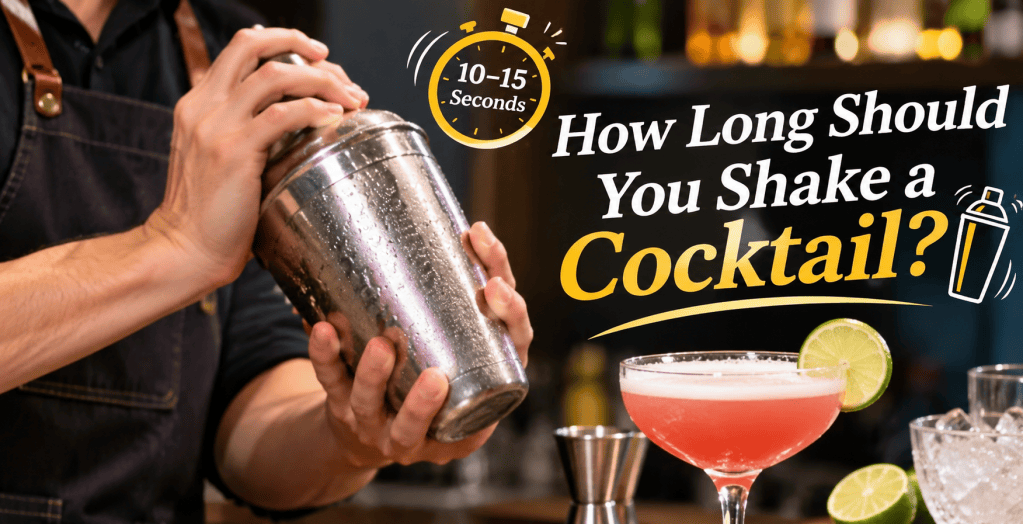
Shaking a cocktail might seem like one of the simplest parts of making a drink, but the amount of time you spend shaking can make a noticeable difference in its flavor, temperature, texture, and overall quality. Whether you are preparing a classic margarita, a refreshing daiquiri, or a creamy espresso martini, knowing how long to shake a cocktail can help you create better drinks at home.
The general rule is to shake most cocktails for 10 to 15 seconds with ice. However, the ideal shaking time depends on the ingredients, the type of ice, the temperature of the ingredients, and the texture you want to achieve.
Some cocktails need only a quick shake, while others benefit from a longer shake to develop a smooth, frothy consistency.
Understanding why shaking matters and how to recognize when a cocktail is ready can help you make drinks that taste more balanced and professional.
Why Do You Shake a Cocktail?
Shaking a cocktail does much more than combine ingredients. It performs several important functions that affect the finished drink.
When you shake a cocktail with ice, you accomplish four main things.
1. Chilling the Drink
One of the primary reasons for shaking a cocktail is to lower its temperature quickly.
As the ice moves through the liquid, it absorbs heat and begins melting. This process rapidly chills the ingredients, creating the refreshing temperature associated with a properly prepared cocktail.
A well-shaken cocktail should feel noticeably cold when served.
2. Diluting the Ingredients
Although adding water to a cocktail might sound undesirable, controlled dilution is essential for a balanced drink.
As ice melts during shaking, a small amount of water mixes with the ingredients.
This dilution helps soften strong alcohol flavors, balance acidity, and create a smoother drinking experience.
Without enough dilution, cocktails can taste overly strong, sharp, or unbalanced.
3. Mixing Different Ingredients
Some cocktail ingredients do not combine easily through stirring alone.
Citrus juices, syrups, cream, egg whites, and other ingredients often benefit from vigorous shaking.
Shaking distributes these ingredients throughout the drink, helping create a more consistent flavor.
4. Creating Texture and Aeration
Shaking introduces tiny air bubbles into the liquid.
These bubbles can give cocktails a lighter texture and sometimes create a frothy surface.
Drinks containing pineapple juice, egg whites, aquafaba, or coffee can develop especially noticeable foam when shaken properly.
This is one reason shaking is important for cocktails where texture matters as much as flavor.
How Long Should You Shake a Cocktail With Ice?
For most cocktails, 10 to 15 seconds of vigorous shaking is an excellent starting point.
This is generally enough time to chill the ingredients, introduce appropriate dilution, and combine everything thoroughly.
However, shaking time can vary depending on the recipe.
| Cocktail type | Recommended shaking time |
|---|---|
| Margarita | 10–15 seconds |
| Daiquiri | 10–15 seconds |
| Whiskey Sour | 10–15 seconds with ice |
| Cosmopolitan | 10–15 seconds |
| Lemon Drop Martini | 10–15 seconds |
| Espresso Martini | 15–20 seconds |
| Pineapple Juice Cocktail | 10–15 seconds |
| Creamy Cocktail | 15–20 seconds |
| Egg White Cocktail | 10–15 seconds with ice, plus a dry shake if needed |
These times are practical starting points rather than strict rules.
The temperature of your ingredients, the amount and size of your ice, and the type of shaker can influence how quickly the cocktail reaches the desired temperature and dilution.
Is 10 Seconds Enough to Shake a Cocktail?
Yes, 10 seconds can be enough for many cocktails, especially when using plenty of solid ice and ingredients that are already relatively cool.
A vigorous 10-second shake can quickly chill and dilute a drink.
However, a cocktail containing warm ingredients or ingredients that require more aeration may benefit from a slightly longer shake.
For example, a simple margarita made with tequila, lime juice, and orange liqueur may be ready after approximately 10 to 15 seconds.
An espresso martini may benefit from additional shaking to develop its characteristic foamy surface.
The important factor is not simply how many seconds you shake, but whether the cocktail has reached the desired temperature, dilution, and texture.
Can You Shake a Cocktail for Too Long?
Yes, it is possible to shake a cocktail longer than necessary.
Although shaking with ice does not automatically ruin a drink after a certain number of seconds, excessive shaking can introduce more dilution than intended.
As the ice melts, additional water enters the cocktail.
If too much water is added, the drink may lose some of its intended flavor intensity.
Overly diluted cocktails can taste weak, watery, or less balanced.
However, it is important to understand that shaking time alone does not determine dilution.
Ice quality, ice size, ingredient temperature, and the amount of liquid also play significant roles.
Large, solid ice cubes generally melt more slowly than small pieces of crushed ice.
For most standard cocktails, shaking vigorously for approximately 10 to 15 seconds is a reliable way to avoid unnecessary over-dilution.
How Do You Know When a Cocktail Is Shaken Enough?
You do not always need a timer to determine when a cocktail is ready.
Experienced bartenders often rely on several physical signs.
The shaker becomes extremely cold.
One of the easiest indicators is the temperature of the cocktail shaker.
As the ingredients chill, the outside of a metal shaker becomes very cold.
Depending on the surrounding humidity, condensation or frost may develop on its surface.
The sound of the ice changes.
As ice moves inside the shaker, its shape and size may change.
Some bartenders listen to the sound of the ice while shaking, although this is not a precise way to measure dilution.
The drink develops the desired texture.
Cocktails containing ingredients that create foam may become lighter and frothier.
A properly shaken espresso martini, for example, should develop a noticeable foam layer when poured.
The finished drink tastes balanced.
Ultimately, flavor is one of the most important indicators.
A properly shaken cocktail should taste cold, balanced, and refreshing without seeming excessively watery.
Should You Shake a Cocktail Hard or Gently?
Most cocktails that require shaking benefit from a firm, vigorous motion.
Gentle shaking may combine the ingredients, but it may not chill or aerate them as efficiently.
A proper shake should move the ice forcefully through the liquid.
You do not need exaggerated movements or complicated bartending techniques.
Instead, focus on maintaining a controlled, consistent shaking motion.
How to Shake a Cocktail Properly
-
Add the cocktail ingredients to a shaker.
-
Fill the shaker with an appropriate amount of solid ice.
-
Secure the shaker tightly.
-
Hold it firmly with both hands if needed.
-
Shake vigorously for approximately 10 to 15 seconds.
-
Strain the cocktail into the appropriate serving glass.
-
Add the garnish and serve immediately.
Always make sure the shaker is securely closed before shaking.
For most drinks, a simple back-and-forth motion works perfectly.
The goal is to move the ice efficiently through the ingredients rather than perform elaborate movements.
Does the Type of Ice Affect Shaking Time?
Yes. The size, shape, and condition of the ice can influence how quickly a cocktail chills and dilutes.
Large Ice Cubes
Large, solid ice cubes generally melt more slowly because they have less surface area relative to their volume.
They are often useful when you want controlled dilution.
Cocktails shaken with large cubes may require slightly different shaking times depending on the ingredients and how vigorously you shake.
Standard Ice Cubes
Regular ice cubes from a freezer or ice machine work well for most home cocktails.
They provide a practical balance between chilling and dilution.
For many recipes, standard cubes and a 10-to-15-second shake produce good results.
Crushed Ice
Crushed ice has considerably more exposed surface area.
This allows it to chill and dilute drinks quickly.
However, crushed ice can also break down rapidly during vigorous shaking.
For cocktails traditionally served over crushed ice, the preparation method may involve a brief shake, a whip shake, or building the drink directly in the glass.
Wet or Partially Melted Ice
Ice that has been sitting out and has already begun melting can introduce extra water into a cocktail.
For consistent results, use fresh, solid ice whenever possible.
How Long Should You Shake a Margarita?
A classic margarita generally needs approximately 10 to 15 seconds of vigorous shaking with ice.
Margaritas contain citrus juice, which benefits from shaking.
The process combines the tequila, lime juice, and orange liqueur while creating a cold, refreshing drink.
Tips for Shaking a Margarita
Use freshly squeezed lime juice when possible.
Add enough ice to chill the drink effectively.
Shake firmly rather than gently swirling the ingredients.
Strain into a prepared margarita glass or rocks glass.
If serving the margarita over fresh ice, remember that the drink will continue diluting gradually as the serving ice melts.
A properly shaken margarita should taste bright, refreshing, and balanced.
How Long Should You Shake an Espresso Martini?
An espresso martini often benefits from approximately 15 to 20 seconds of vigorous shaking.
This cocktail is especially dependent on texture.
The combination of coffee, vodka, and coffee liqueur can create a foamy surface when shaken effectively.
Fresh espresso can contribute to the foam, although the exact results depend on the coffee and other ingredients.
Because freshly brewed espresso may be hot, allowing it to cool somewhat before shaking can help manage dilution.
Shake vigorously with plenty of solid ice.
When strained into a chilled martini or coupe glass, the cocktail should develop a smooth foam layer.
The foam may settle into a distinct layer shortly after pouring.
How Long Should You Shake a Whiskey Sour?
A traditional whiskey sour made with whiskey, lemon juice, and simple syrup generally requires approximately 10 to 15 seconds of shaking with ice.
However, whiskey sours made with egg white may require an additional technique.
This technique is called a dry shake.
What Is a Dry Shake?
A dry shake involves shaking cocktail ingredients without ice.
It is commonly used when a recipe includes egg white or another foaming ingredient.
Without ice, the ingredients can be shaken to help develop a smooth, airy foam.
A common method is to dry shake for approximately 10 to 15 seconds, then add ice and shake for another 10 to 15 seconds.
Some bartenders reverse the process by shaking with ice first and performing the dry shake afterward.
Both methods can produce a foamy whiskey sour.
If using raw egg whites, consider pasteurized eggs to reduce food safety risks.
Should You Shake or Stir a Cocktail?
Not every cocktail should be shaken.
One of the most important bartending skills is understanding when to shake and when to stir.
The choice depends largely on the ingredients and the desired texture.
Cocktails That Are Usually Shaken
Cocktails containing citrus juice, fruit juice, dairy, egg whites, or other ingredients that benefit from aeration are commonly shaken.
Examples include:
-
Margarita
-
Daiquiri
-
Whiskey Sour
-
Cosmopolitan
-
Lemon Drop
-
Espresso Martini
-
Sidecar
Shaking helps combine ingredients while producing a colder, more aerated drink.
Cocktails That Are Usually Stirred
Cocktails made primarily with spirits and other clear alcoholic ingredients are often stirred.
Examples include:
-
Manhattan
-
Old Fashioned
-
Negroni
-
Martini
Stirring chills and dilutes the drink while generally preserving a smoother, clearer appearance.
A shaken martini is still a valid personal preference, but it will typically have a different texture and appearance than a stirred martini.
Does Shaking a Cocktail Make It Stronger?
Shaking does not increase the amount of alcohol in a cocktail.
The alcohol content is determined primarily by the ingredients and their quantities.
However, shaking can change how strong the drink tastes.
As ice melts, water dilutes the alcohol.
This can soften the sharpness of spirits and make the drink taste smoother.
For example, a margarita that has been shaken properly may taste less harsh than the same ingredients mixed without ice.
The drink has not gained alcohol.
Instead, the ingredients have become colder and more diluted.
Shaking also introduces air, which can change the way the cocktail feels in your mouth.
Does Shaking a Cocktail Make It Colder Than Stirring?
Shaking generally chills cocktails more quickly than gentle stirring under comparable conditions.
The vigorous movement creates extensive contact between the liquid and ice.
This allows heat to transfer rapidly from the ingredients into the ice.
However, both shaking and stirring can produce properly chilled cocktails.
The difference is often related to speed, aeration, dilution, and texture rather than whether one technique is universally better.
A stirred Manhattan can be just as enjoyable and appropriately chilled as a shaken margarita.
The correct technique depends on the drink.
What Happens If You Do Not Shake a Cocktail Long Enough?
Under-shaking can affect the quality of a cocktail in several ways.
First, the drink may not become cold enough.
Second, the ingredients may not receive enough dilution to balance their flavors.
Third, ingredients such as citrus juice, syrup, and cream may not become fully incorporated.
Finally, cocktails that rely on aeration may lack their intended texture.
For example, an espresso martini that receives only a brief shake may develop less foam.
A whiskey sour containing egg white may also lack the smooth, airy texture associated with proper shaking.
If a cocktail tastes unusually sharp or warm, insufficient shaking may be one possible explanation.
Should You Shake Cocktails With Soda or Carbonated Ingredients?
No. You should generally avoid shaking cocktails after adding carbonated ingredients such as soda, tonic water, sparkling wine, or sparkling water.
Carbonated liquids release gas when agitated.
Shaking them inside a sealed cocktail shaker can cause pressure to build rapidly.
This may force the shaker open and create a messy or potentially dangerous situation.
Instead, shake the noncarbonated ingredients first.
Strain them into the serving glass, add the carbonated ingredient, and stir gently if necessary.
For example, when preparing a cocktail with vodka, lime juice, and ginger beer, shake the vodka and lime juice if the recipe calls for it, then add the ginger beer in the serving glass.
This preserves carbonation and avoids unnecessary pressure inside the shaker.
What Are the Most Common Cocktail Shaking Mistakes?
Even simple cocktails can suffer from a few common preparation mistakes.
Shaking for Too Short a Time
A quick two- or three-second shake may not provide enough chilling or dilution for many recipes.
Aim for approximately 10 to 15 seconds as a starting point.
Using Too Little Ice
Too little ice can lead to inconsistent chilling and excessive melting.
Use enough solid ice to chill the cocktail effectively while leaving room for movement inside the shaker.
Using Ice That Is Already Melting
Wet, partially melted ice can introduce extra dilution.
Fresh ice generally provides more predictable results.
Shaking Carbonated Ingredients
Never seal a carbonated drink inside a shaker and shake vigorously.
Add carbonated ingredients after shaking.
Shaking Every Cocktail
Some cocktails are designed to be stirred rather than shaken.
Choosing the correct technique helps preserve the intended texture and appearance.
Waiting Too Long Before Serving
Freshly shaken cocktails are best served promptly.
Allowing the drink to sit in the shaker with ice can result in additional dilution.
Strain and serve as soon as the cocktail is ready.
Frequently Asked Questions About Shaking Cocktails
Is 15 Seconds the Perfect Shaking Time?
Fifteen seconds is a useful starting point for many cocktails, but it is not a universal rule. The ideal time depends on the ingredients, ice, and desired texture.
Should You Shake a Cocktail for 30 Seconds?
Most standard cocktails do not require 30 seconds of vigorous shaking with ice. Longer shaking may be useful in certain preparations, but it can also introduce unnecessary dilution.
How Long Should You Shake a Cocktail Without Ice?
A dry shake commonly lasts approximately 10 to 15 seconds. It is often used for cocktails containing egg white or other ingredients that benefit from foam development.
Why Do Bartenders Shake Cocktails So Hard?
Vigorous shaking helps chill, dilute, mix, and aerate ingredients efficiently. It can also create the texture needed for certain cocktails.
Can You Shake a Cocktail in a Mason Jar?
A sturdy, undamaged jar with a secure lid can be used as an improvised shaker for noncarbonated drinks, but glass may break or leak. A purpose-built cocktail shaker is safer and more reliable.
Should You Fill a Cocktail Shaker Completely With Ice?
You should use a generous amount of ice, but avoid overfilling the shaker. Leave enough room for the ice and liquid to move effectively.
Does Shaking Longer Create More Foam?
Longer or more vigorous shaking can increase aeration in some cocktails, especially those containing coffee, pineapple juice, or egg white. However, foam production also depends on the ingredients, and additional shaking does not always improve the result.
Do You Need a Cocktail Shaker to Make Good Drinks?
Not necessarily. Some cocktails can be stirred directly in a glass or mixing vessel. However, a proper shaker is especially useful for drinks containing citrus juice, cream, or foaming ingredients.
Final Thoughts: How Long Should You Shake a Cocktail?
For most cocktails, 10 to 15 seconds of vigorous shaking with ice is the best starting point.
This provides enough time to chill the ingredients, introduce dilution, combine flavors, and create the refreshing texture associated with a well-made drink.
Cocktails that rely on foam, such as espresso martinis and egg white whiskey sours, may require additional shaking or a separate dry shake.
The most important lesson is that cocktail shaking is about achieving the right balance rather than following an exact number of seconds.
Pay attention to the temperature of the shaker, the type of ice, the ingredients, and the finished drink’s flavor and texture.
With a little practice, you can learn to recognize when a cocktail is perfectly shaken without needing to watch the clock.
Whether you are making a classic margarita, a refreshing daiquiri, or an espresso martini for a special occasion, mastering the proper shaking technique is one of the simplest ways to improve your homemade cocktails.
Leave a Reply