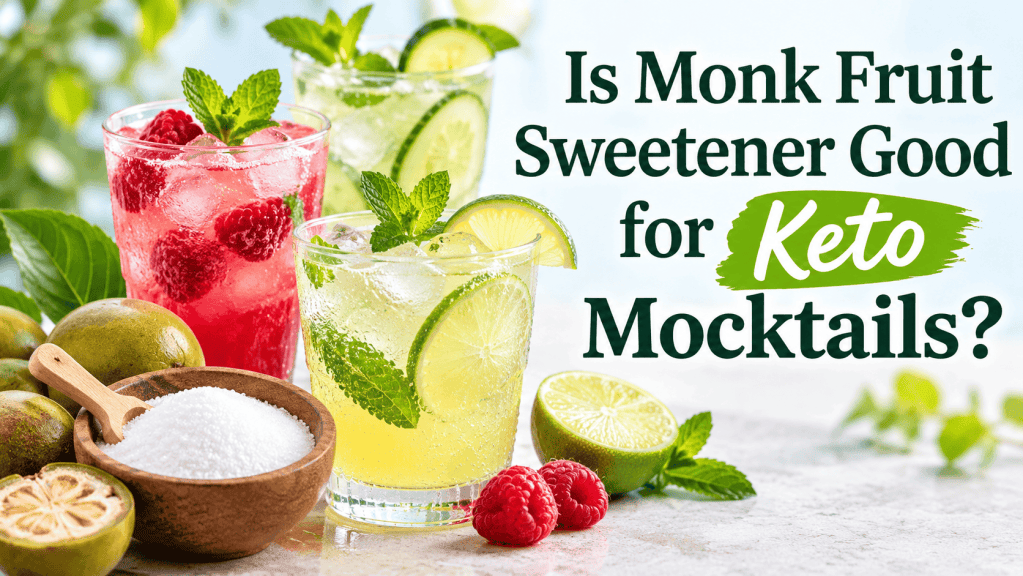
When making delicious keto-friendly mocktails, finding the right sweetener can make all the difference. Traditional mocktails often rely on sugar, simple syrup, fruit juice, and other high-carbohydrate ingredients to create their refreshing flavors. Unfortunately, those ingredients can quickly increase the carbohydrate content of a drink.
That is where monk fruit sweetener comes in.
Monk fruit has become a popular sugar alternative for people following ketogenic and low-carb diets. Its intense sweetness, minimal impact on blood sugar, and versatility make it an appealing option for homemade sugar-free beverages.
But is monk fruit sweetener actually good for keto mocktails? Does it taste like regular sugar? Can you use it in sparkling drinks, fruity mocktails, and homemade syrups?
The answer is yes. Pure monk fruit sweetener is an excellent option for keto mocktails because it provides sweetness without adding meaningful carbohydrates or sugar. However, choosing the right product and understanding how to use it can make a significant difference in the flavor and texture of your drinks.
What Is Monk Fruit Sweetener?
Monk fruit sweetener is a natural sugar substitute made from monk fruit, a small round fruit native to southern China.
The fruit, also known as luo han guo, has been used for centuries in traditional preparations. Today, its sweet compounds are extracted and used to create sugar alternatives.
Unlike regular sugar, monk fruit gets most of its sweetness from naturally occurring compounds called mogrosides.
These compounds are significantly sweeter than ordinary table sugar.
In fact, concentrated monk fruit extracts can be approximately 100 to 250 times sweeter than sugar, depending on their composition.
Because of this intense sweetness, only a small amount is needed to sweeten beverages.
Monk fruit sweeteners are commonly available in several forms:
-
Pure concentrated monk fruit extract
-
Liquid monk fruit sweetener
-
Granulated monk fruit blends
-
Powdered monk fruit sweetener
-
Monk fruit combined with erythritol or allulose
Each version works slightly differently in mocktail recipes.
For the smoothest results, liquid monk fruit sweetener or a readily dissolving powdered product is often the easiest choice.
Why Is Monk Fruit Sweetener Good for Keto Mocktails?
Monk fruit offers several advantages for anyone trying to enjoy sweet, flavorful drinks while limiting carbohydrates.
1. Monk Fruit Contains Little to No Sugar
One of the biggest benefits of pure monk fruit sweetener is that it does not contain the sugar found in traditional sweeteners.
Regular sugar contributes approximately 4 grams of carbohydrates per teaspoon.
That might not seem like much, but a mocktail containing several teaspoons of sugar or a generous amount of simple syrup can quickly become high in carbohydrates.
Pure monk fruit extract provides sweetness without the same carbohydrate contribution.
This makes it particularly useful for keto mocktails that need a little extra sweetness without added sugar.
However, commercial monk fruit products sometimes contain additional ingredients, so checking the nutrition label is important.
2. Monk Fruit Has Minimal Impact on Blood Sugar
Another reason monk fruit is popular in keto recipes is its minimal effect on blood glucose.
Pure monk fruit mogrosides generally do not raise blood sugar the way ordinary sugar does.
This can make monk fruit appealing to people who want to reduce their sugar consumption.
However, products marketed as monk fruit sweeteners are not always made entirely from monk fruit extract.
Some contain added sugars or other carbohydrates that may affect blood glucose.
Anyone managing diabetes should consider the complete ingredient list and nutritional information rather than assuming every monk fruit product behaves identically.
3. Monk Fruit Is Extremely Sweet
Because concentrated monk fruit extract is much sweeter than sugar, a small amount can go a long way.
This is especially helpful when making keto mocktails because you can adjust the sweetness without adding large quantities of syrup or sweetener.
For example, a few drops of concentrated liquid monk fruit may be enough to sweeten a glass of sparkling lime water.
The exact amount depends on the product’s concentration.
Always begin with a small amount and taste before adding more.
4. Monk Fruit Works With Many Mocktail Flavors
Monk fruit is versatile enough to complement a wide variety of keto-friendly ingredients.
It works particularly well with:
-
Fresh lime juice
-
Lemon juice
-
Mint leaves
-
Cucumber
-
Basil
-
Unsweetened sparkling water
-
Club soda
-
Unsweetened coconut milk
-
Small portions of berries
-
Sugar-free flavored sparkling water
This flexibility makes it possible to prepare everything from refreshing citrus spritzers to creamy tropical-inspired mocktails.
Does Monk Fruit Sweetener Taste Like Regular Sugar?
Monk fruit sweetener tastes sweet, but it does not always taste exactly like ordinary sugar.
Pure monk fruit extract can have a distinctive flavor, particularly when used in larger amounts.
Some people notice a mild fruity taste or a lingering sweetness.
Others find certain monk fruit products have an aftertaste.
The flavor depends on several factors, including the concentration, processing method, and additional ingredients.
For example, monk fruit blended with erythritol may have a slight cooling sensation.
Monk fruit blended with allulose may produce a more sugar-like sweetness.
In mocktails, citrus juice, herbs, and sparkling water can help balance the sweetness and make the finished drink taste more natural.
The key is moderation.
Using too much monk fruit can overwhelm the other flavors.
What Is the Best Type of Monk Fruit Sweetener for Mocktails?
Not every monk fruit product performs equally well in cold beverages.
Here is how the most common options compare.
| Monk fruit sweetener | Best use in mocktails |
|---|---|
| Liquid monk fruit | Cold sparkling drinks and quick recipes |
| Pure powdered monk fruit extract | Drinks requiring very small amounts of sweetener |
| Monk fruit with erythritol | Homemade syrups and blended beverages |
| Monk fruit with allulose | Smooth, sugar-like sweetness and syrups |
| Granulated monk fruit blend | Recipes where the product can dissolve completely |
Liquid monk fruit sweetener is often the most convenient choice for keto mocktails.
It mixes easily into cold beverages without leaving undissolved granules at the bottom of the glass.
Pure powdered monk fruit can also work well, but it must be measured carefully because concentrated extracts are extremely sweet.
Granulated blends may require additional stirring or dissolving in water before being added to cold drinks.
How Much Monk Fruit Sweetener Should You Use in a Mocktail?
The amount of monk fruit needed depends on the type and concentration of the sweetener.
Pure monk fruit extract is dramatically sweeter than regular sugar, while many granulated monk fruit blends are designed to replace sugar at a 1:1 ratio.
Because products vary so much, there is no universal measurement that works for every brand.
A practical approach is to follow the manufacturer’s sugar-equivalency directions.
For a single serving of a keto mocktail:
-
Prepare the drink without sweetener.
-
Add a small amount of monk fruit according to the product’s instructions.
-
Stir thoroughly.
-
Taste the drink.
-
Add more sweetener gradually until the flavor is balanced.
This method prevents overly sweet drinks and allows the natural flavors of the ingredients to stand out.
Remember that a drink containing fresh berries or flavored sparkling water may need less additional sweetness than one made primarily with lemon or lime juice.
How Do You Make a Keto Mocktail With Monk Fruit Sweetener?
One of the easiest ways to use monk fruit is in a refreshing citrus mocktail.
This recipe combines sparkling water, fresh lime, and mint for a simple sugar-free drink.
Easy Monk Fruit Lime Sparkler Recipe
Prep Time: 5 minutes | Servings: 1 | Difficulty: Easy
Ingredients
-
1 cup unsweetened sparkling water
-
1 tablespoon fresh lime juice
-
Monk fruit sweetener equivalent to 1–2 teaspoons of sugar, adjusted to taste
-
4–5 fresh mint leaves
-
Ice cubes
-
Lime wedge for garnish
Instructions
-
Add the fresh lime juice to a tall glass.
-
Add the monk fruit sweetener and stir until evenly mixed.
-
Gently press the mint leaves to release their aroma.
-
Add the mint leaves and ice cubes to the glass.
-
Slowly pour in the sparkling water.
-
Stir gently to combine.
-
Taste and adjust the sweetness if necessary.
-
Garnish with a fresh lime wedge and serve immediately.
Why This Recipe Works
The lime juice provides bright acidity, while monk fruit balances the tartness without adding sugar.
Fresh mint creates a cooling, refreshing flavor, and sparkling water gives the drink a light, bubbly texture.
The result is a simple keto-friendly mocktail that can be prepared in minutes.
Can You Make Monk Fruit Simple Syrup for Keto Mocktails?
Yes. Monk fruit can be used to prepare a sugar-free sweetening syrup for homemade mocktails.
However, pure monk fruit extract does not provide the same thickness or texture as traditional sugar.
For a simple liquid sweetener, you can dissolve monk fruit in water.
Easy Monk Fruit Sweetening Syrup
Ingredients
-
1 cup water
-
Monk fruit sweetener equivalent to ½ cup of sugar, according to the product label
Instructions
-
Pour the water into a small saucepan.
-
Warm over low heat.
-
Add the monk fruit sweetener.
-
Stir until fully dissolved.
-
Remove from the heat.
-
Allow the mixture to cool completely.
-
Transfer to a clean, covered container.
-
Refrigerate and use promptly.
This produces a sweetened liquid rather than a thick traditional simple syrup. Its sweetness and texture will depend on the monk fruit product used.
Because this homemade version contains no preserving concentration of sugar, it should not be treated as shelf-stable. Make small batches, keep refrigerated, and discard if there are signs of spoilage.
For a syrup with a fuller, more sugar-like mouthfeel, a monk fruit and allulose blend may work better.
What Are the Best Keto Mocktails to Make With Monk Fruit?
Monk fruit can be used in many different mocktail recipes.
Here are several refreshing combinations worth trying.
1. Monk Fruit Strawberry Lime Mocktail
Combine a few mashed strawberries with fresh lime juice, sparkling water, and monk fruit sweetener.
The strawberries provide natural fruit flavor, while the lime creates a refreshing tartness.
Use a modest portion of strawberries to keep the carbohydrate content manageable.
2. Sugar-Free Cucumber Mint Cooler
Mix fresh cucumber slices, mint leaves, lemon juice, cold water, and monk fruit.
This drink is light, refreshing, and especially enjoyable during warm weather.
3. Keto Raspberry Lemon Spritzer
Muddle a small handful of raspberries with fresh lemon juice.
Add monk fruit sweetener, ice, and unsweetened sparkling water.
The raspberries provide a bright berry flavor without requiring large amounts of fruit juice.
4. Monk Fruit Coconut Lime Mocktail
Combine unsweetened coconut milk, fresh lime juice, monk fruit sweetener, and ice.
Shake or blend until smooth.
This creates a creamy tropical-inspired mocktail without traditional sugary coconut mixers.
5. Sugar-Free Blackberry Basil Sparkler
Muddle a few blackberries with fresh basil leaves.
Add lemon juice, monk fruit sweetener, and club soda.
The combination of berries and herbs creates a sophisticated mocktail suitable for entertaining.
6. Keto Ginger Lime Fizz
Combine fresh lime juice, a little freshly grated ginger, monk fruit sweetener, and sparkling water.
This drink delivers a lively ginger flavor without the sugar commonly found in regular ginger ale.
Is Monk Fruit Better Than Stevia for Keto Mocktails?
Both monk fruit and stevia are popular sugar alternatives for ketogenic diets.
They provide intense sweetness without the carbohydrate content of ordinary sugar.
However, their flavors are slightly different.
| Feature | Monk fruit | Stevia |
|---|---|---|
| Keto-friendly in pure form | Yes | Yes |
| Contains added sugar naturally | No | No |
| Blood sugar impact | Minimal | Minimal |
| Possible aftertaste | Fruity or lingering | Herbal, licorice-like, or bitter |
| Available in liquid form | Yes | Yes |
| Works in cold mocktails | Yes | Yes |
Some people prefer monk fruit because they find its flavor smoother than stevia.
Others prefer stevia because they are accustomed to its sweetness.
Neither option is universally better.
The best choice depends on personal taste and the specific product being used.
For citrus-based and fruity mocktails, monk fruit is often an excellent starting point.
Can Monk Fruit Sweetener Kick You Out of Ketosis?
Pure monk fruit extract is unlikely to interfere with ketosis when consumed in normal amounts.
It provides sweetness without the digestible carbohydrate load associated with regular sugar.
However, there is an important distinction between pure monk fruit extract and commercial monk fruit sweetener blends.
Some blends contain ingredients that contribute carbohydrates.
For example, products containing maltodextrin, dextrose, or added sugar may not be as keto-friendly as their packaging initially suggests.
Additionally, the other ingredients in a mocktail matter.
A drink sweetened with monk fruit can still contain substantial carbohydrates if it includes large amounts of pineapple juice, orange juice, regular lemonade, or sweetened coconut products.
Monk fruit does not automatically make an entire mocktail keto-friendly.
The total carbohydrate content of the finished drink determines how well it fits into a ketogenic eating plan.
Are There Any Downsides to Using Monk Fruit in Mocktails?
Although monk fruit has several benefits, there are a few potential disadvantages.
Some Products Have an Aftertaste
Certain concentrated monk fruit sweeteners may leave a lingering sweetness.
Using smaller amounts and balancing the drink with citrus can help.
Monk Fruit Blends May Contain Other Sweeteners
Many commercial products combine monk fruit with erythritol, allulose, or other ingredients.
These additions affect flavor, texture, and sometimes digestion.
For example, larger quantities of some sugar alcohols may cause digestive discomfort in sensitive individuals.
Granulated Sweeteners May Not Dissolve Easily
Some granulated monk fruit blends do not dissolve quickly in cold water.
This can create a slightly gritty texture.
Liquid sweeteners or pre-dissolved mixtures are usually better choices for cold mocktails.
Monk Fruit Can Be More Expensive Than Sugar
Concentrated monk fruit products sometimes cost more than ordinary sugar.
However, because pure extracts are so sweet, small amounts may last a long time.
How Do You Choose a Keto-Friendly Monk Fruit Sweetener?
When shopping for monk fruit sweetener, reading the ingredient label is one of the most important steps.
Look for products that contain pure monk fruit extract or clearly identified low-carb sweetener blends.
Consider the following:
-
Ingredient list: Check for added sugar, dextrose, or maltodextrin.
-
Carbohydrate information: Review the serving size and total carbohydrate content.
-
Sweetness concentration: Determine whether the product is a concentrated extract or a sugar replacement blend.
-
Form: Choose liquid monk fruit for convenient mixing in cold drinks.
-
Flavor: Consider whether the product has additional flavors or ingredients.
Products labeled sugar-free may still contain carbohydrates from other ingredients.
Also remember that U.S. nutrition labels can round very small amounts of carbohydrates down to zero per serving.
For anyone carefully tracking daily carbohydrate intake, both serving size and ingredient composition matter.
Tips for Making Better Keto Mocktails With Monk Fruit
A few simple techniques can improve the flavor of homemade keto mocktails.
Start With Less Sweetener
Monk fruit can become overpowering when too much is added.
Begin with a small amount and increase gradually.
Balance Sweetness With Acidity
Fresh lemon and lime juice can help balance sweet flavors.
This creates a more refreshing drink instead of one that tastes overly sweet.
Use Fresh Herbs
Mint, basil, and rosemary can add complexity without requiring sugary mixers.
Choose Unsweetened Carbonated Water
Club soda, plain sparkling water, and unsweetened flavored seltzers are excellent bases for keto mocktails.
Avoid High-Sugar Juices
Traditional fruit juices can contribute substantial carbohydrates.
Use small portions of lower-sugar fruits, citrus juice, or unsweetened flavorings instead.
Chill Your Ingredients
Cold ingredients can make a mocktail taste more refreshing.
Chilling the sparkling water and serving the drink over ice also helps preserve its crisp flavor.
Experiment With Different Monk Fruit Products
If one monk fruit sweetener has an unpleasant aftertaste, another formulation may taste better.
Liquid extracts and monk fruit-allulose blends can produce different results.
Frequently Asked Questions About Monk Fruit in Keto Mocktails
Is monk fruit sweetener completely carb-free?
Pure monk fruit extract contains negligible digestible carbohydrates. However, commercial monk fruit blends may contain additional ingredients that contribute carbohydrates.
Always check the nutrition label.
Can you use monk fruit in sparkling water?
Yes. Monk fruit works very well in sparkling water, especially when using a liquid version.
Add fresh lemon, lime, mint, or berries for additional flavor.
Does monk fruit dissolve in cold drinks?
Liquid monk fruit mixes easily into cold beverages.
Pure powdered extracts may also dissolve well, but some granulated blends require extra stirring.
Can you use monk fruit instead of simple syrup?
Yes. Monk fruit can replace the sweetness provided by simple syrup.
However, it may not create the same thickness or mouthfeel.
A monk fruit-allulose blend may be useful when a more syrup-like texture is desired.
Is monk fruit healthier than regular sugar?
Replacing added sugar with pure monk fruit can reduce the sugar and calorie content of a beverage.
However, monk fruit should not be considered a health treatment, and the overall nutritional quality of a drink depends on all its ingredients.
Can you use monk fruit in frozen keto mocktails?
Absolutely.
Monk fruit works in blended mocktails made with ice, unsweetened coconut milk, citrus, and small portions of berries.
For smoother results, use liquid monk fruit or a product that dissolves completely.
Is monk fruit safe to use every day?
Monk fruit sweeteners are generally considered safe for use in foods and beverages. In the United States, certain purified monk fruit extracts have been the subject of FDA-reviewed GRAS notices.
As with any sweetener, moderation and individual tolerance are sensible considerations.
What flavors go best with monk fruit?
Monk fruit pairs particularly well with lemon, lime, strawberry, raspberry, blackberry, cucumber, mint, ginger, and coconut.
These flavors help create refreshing drinks while balancing the sweetener’s distinctive taste.
Final Thoughts: Is Monk Fruit Sweetener Good for Keto Mocktails?
Monk fruit sweetener is one of the most convenient options for making delicious keto-friendly mocktails without traditional added sugar.
Its intense sweetness, minimal effect on blood sugar, and compatibility with a wide variety of flavors make it especially useful in homemade beverages.
Whether you enjoy sparkling citrus drinks, refreshing berry mocktails, creamy coconut beverages, or herb-infused spritzers, monk fruit can provide the sweetness you want without relying on ordinary sugar.
For the best results, choose a product with keto-compatible ingredients, start with a small amount, and adjust the sweetness to match your personal preferences.
Liquid monk fruit is particularly convenient for cold drinks, while monk fruit-allulose blends can be useful when you want a smoother, more syrup-like consistency.
Most importantly, remember that a successful keto mocktail depends on the complete recipe, not just the sweetener.
By combining monk fruit with unsweetened sparkling water, fresh citrus, herbs, and carefully portioned fruit, you can create flavorful mocktails that fit comfortably into a low-carb lifestyle.
The bottom line: Yes, monk fruit sweetener is an excellent choice for keto mocktails, especially when you want refreshing, naturally sweetened drinks without the added sugar found in traditional recipes.
Leave a Reply