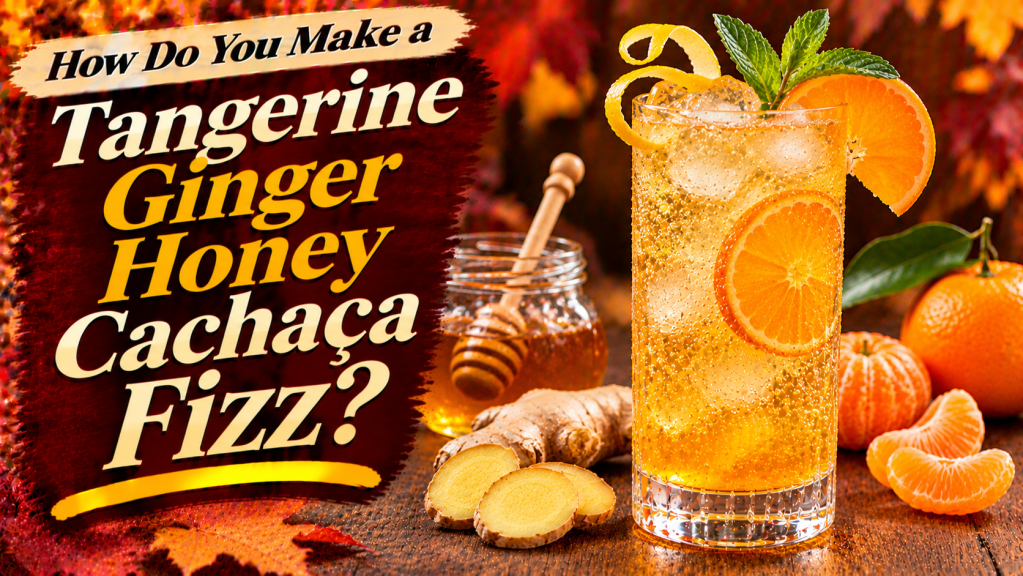
A tangerine ginger honey cachaça fizz is a bright sparkling cocktail with juicy citrus, fresh ginger, gentle honey sweetness, and the distinctive grassy-sugarcane character of Brazilian cachaça. Fresh lemon adds a crisp sour edge, while chilled club soda lifts the mixture into an easygoing long drink. It is a refreshing alternative to a conventional rum cocktail and works beautifully for holiday gatherings or casual entertaining.
The best version balances citrus, sweetness, and ginger without masking the cachaça. Tangerines can vary widely in acidity and sugar content, so the measurements are a starting point. Make a small batch of ginger honey syrup, use fresh-squeezed fruit, and add the carbonated mixer only after chilling the other ingredients.
Recipe at a Glance
Yield: 1 cocktail. Active preparation: 5–8 minutes with prepared syrup. Syrup preparation: 10–15 minutes plus cooling. Serving glass: highball or Collins. Equipment: citrus juicer, fine-mesh strainer, small saucepan, cocktail shaker, jigger, and long spoon.
Ingredients for the Cocktail
Use 1½ ounces unaged cachaça, 1½ ounces freshly squeezed tangerine juice, ½ ounce fresh lemon juice, ½ ounce ginger honey syrup, 2–3 ounces chilled plain club soda, and enough fresh ice to fill a tall glass. Garnish with a thin tangerine wheel and a small piece of fresh ginger or a sprig of mint if desired.
For ginger honey syrup, use ¼ cup mild honey, ¼ cup water, and 1 inch fresh ginger cut into thin slices. This makes enough for several drinks. Clover honey is a good neutral choice; strongly flavored honey can overwhelm the tangerine. Taste the syrup after steeping because ginger strength varies.
What Is Cachaça?
Cachaça is a Brazilian distilled spirit made from fermented fresh sugarcane juice. It is not identical to most common rums, which are often made from molasses, although both come from sugarcane. Unaged cachaça can taste fresh, herbal, and lightly fruity, making it especially good with citrus.
Aged cachaça may bring woody, vanilla, or spice notes depending on the barrel used. It can work in this recipe, but an unaged version highlights the fresh tangerine and ginger. Choose a bottle intended for cocktails and follow standard measured pouring practices.
Choosing the Best Tangerines
Use ripe tangerines that feel heavy for their size and have a fragrant peel without mold or soft, leaking spots. Clementines and other mandarins are practical alternatives. Depending on fruit size and juiciness, you may need two or three fruits for 1½ ounces of juice.
Wash the fruit before cutting it, even if you plan to discard the peel. Remove seeds after squeezing. Reserve a thin wheel or a strip of peel for garnish. If your fruit is very sweet, you may want slightly less honey syrup; if it is sharply tart, use the full amount.
How to Make Ginger Honey Syrup
Combine the honey and water in a small saucepan over low heat and stir until the honey is fully dissolved. Add the sliced ginger. Warm until steaming but do not boil vigorously; aggressive heat can make the syrup overly concentrated as water evaporates.
Remove from heat and allow the ginger to steep for five to ten minutes. Taste a cooled spoonful after five minutes. Strain through a fine sieve into a clean heat-safe container, cool promptly, and refrigerate covered for up to one week. Diluted honey syrup is not shelf-stable. Honey should never be given to infants younger than one year, although this alcoholic cocktail is for adults.
How to Make a Tangerine Ginger Honey Cachaça Fizz
Have the syrup cooled and the club soda chilled before mixing. The recipe comes together quickly once the ingredients are measured.
Step 1: Chill a tall glass
Place a highball or Collins glass in the refrigerator for several minutes. You can also fill it with ice water temporarily, then empty it and replace with fresh ice before pouring. Cold glassware helps slow dilution and preserve carbonation.
Step 2: Juice the citrus
Squeeze fresh tangerines until you have 1½ ounces juice, then squeeze half an ounce of lemon juice. Strain both to remove seeds and excessive pulp. A small amount of natural tangerine pulp is fine, but too much may make the finished fizz feel thick.
Step 3: Measure cachaça and syrup
Pour 1½ ounces cachaça, the measured tangerine juice, lemon juice, and half an ounce of cooled ginger honey syrup into a cocktail shaker. Stir briefly to disperse the honey syrup. Start with slightly less syrup if the tangerines are particularly sweet.
Step 4: Shake with ice
Fill the shaker with fresh ice and seal securely. Shake vigorously for about 10–15 seconds, until the outside of the shaker feels cold. This combines the citrus, spirit, and sweetener while introducing a little dilution. Never add club soda to a sealed shaker because carbonation can build pressure.
Step 5: Strain over fresh ice
Fill the serving glass with clean ice and strain the chilled base over it. For a very smooth presentation, use a fine-mesh sieve along with the shaker strainer. The drink should appear pale golden-orange and smell of fresh citrus and ginger.
Step 6: Add the sparkling finish
Slowly top with 2–3 ounces chilled plain club soda. Stir gently one or two times with a long spoon to combine without flattening the bubbles. Taste. If the drink is too sweet, add a little more club soda or a teaspoon of lemon juice.
Step 7: Garnish and serve
Add a thin tangerine wheel or twist of peel to the glass. A small mint sprig brings extra freshness but is optional. Serve immediately while cold and fizzy. Avoid adding thick pieces of ginger that might make the glass awkward to drink from.
How to Balance Sweetness and Acidity
Tangerines are generally sweeter and gentler than lemons, so a little lemon juice gives this fizz definition. Honey softens the tartness, and ginger provides a peppery finish. The drink should not taste like straight juice or sweet syrup.
If the final cocktail is too tart, stir in a teaspoon of chilled ginger honey syrup. If too sweet, add a teaspoon of fresh lemon and a splash of club soda. Make one adjustment at a time, tasting between additions. Adding more cachaça does not correct a sweetness problem and increases alcoholic strength.
What Makes a Good Ginger Flavor?
Fresh ginger can range from pleasantly warm to quite sharp depending on age and variety. Thinly sliced ginger releases flavor into the syrup without making it difficult to strain. A short infusion usually produces cleaner results than leaving grated ginger sitting in the syrup indefinitely.
For a stronger ginger note, steep another two or three minutes, then strain. If the syrup becomes very hot or pungent, use a smaller portion and add plain honey syrup if more sweetness is needed. Avoid adding ground dried ginger directly to the finished drink, where it may create sediment.
Can You Use Rum Instead of Cachaça?
Yes. White rum creates a familiar tropical citrus fizz, but it may lack the fresh, grassy sugarcane character of cachaça. Lightly aged rum brings a softer, slightly richer flavor. Use the same measured quantity, then adjust the nonalcoholic ingredients to your taste.
The spirit is meant to complement the tangerine, not overpower it. Strongly flavored spiced rums can compete with ginger and should be used cautiously. A moderately priced white rum is a practical substitute if cachaça is unavailable.
Delicious Variations
For a tangerine mint fizz, add three or four fresh mint leaves to the shaker and shake gently without aggressive muddling. For a rosemary version, briefly steep a small rosemary sprig with ginger in the syrup and strain both ingredients out before cooling.
A chili-ginger variation can include a very small pinch of chili flakes in the syrup, but strain thoroughly and use sparingly. For a drier drink, reduce honey syrup to a quarter ounce and add extra club soda. For a tangerine ginger beer fizz, replace some of the soda with nonalcoholic ginger beer; reduce syrup because many ginger beers contain sugar.
A blood orange version uses freshly squeezed blood orange juice instead of tangerine, giving a deeper color and a different sweet-tart balance. Fresh grapefruit may also be used, although it has a more bitter character and grapefruit can interact with certain medications.
How to Make an Alcohol-Free Tangerine Ginger Honey Fizz
Combine 2 ounces fresh tangerine juice, half an ounce lemon juice, half an ounce ginger honey syrup, and one ounce chilled water or unsweetened decaffeinated black tea. Shake with ice and strain into a highball filled with fresh ice. Top with three or four ounces chilled plain club soda and garnish with tangerine.
The tea adds gentle tannic depth, while water allows the fresh citrus to stand out. This version contains no distilled spirit, and it keeps the same ginger-citrus character. Check optional mixers for alcohol if strict avoidance is important. Clearly label the mocktail separately from the alcoholic cocktail at gatherings.
What to Serve With This Cocktail
The fresh citrus and ginger pair nicely with grilled shrimp, roasted chicken, coconut rice, vegetable skewers, fresh mango salsa, and savory appetizers. Mild cheeses, citrus-dressed salads, and lightly spiced roasted nuts also work well.
For a holiday gathering, serve the fizz beside a platter of roasted vegetables and a lighter appetizer spread. The bubbles and lemon provide contrast to creamy or rich foods. Offer water and the alcohol-free version so everyone has a suitable choice.
How to Make a Pitcher for Eight
Combine 12 ounces cachaça, 12 ounces fresh tangerine juice, 4 ounces lemon juice, and 4 ounces cooled ginger honey syrup in a pitcher. Stir and refrigerate until cold. Taste and adjust the sweetness carefully before serving, remembering that club soda will dilute the base.
For each serving, pour one-eighth of the mixture into an ice-filled highball and top with 2–3 ounces club soda. Garnish with tangerine. Keep the sparkling water separate until pouring; adding it to a pitcher ahead of time causes the bubbles to escape.
Make-Ahead and Storage Tips
Make ginger honey syrup a day or two in advance and refrigerate it in a clean covered container. Squeeze fresh tangerine and lemon juice close to serving for the brightest aroma. Keep opened juices refrigerated according to package instructions and cut garnishes shortly before use.
The measured noncarbonated cocktail base can be refrigerated briefly before a party, but do not add ice or club soda until serving. A finished fizzy drink is not suitable for storage because it becomes flat and diluted as the ice melts. Discard fruit juice or syrup if it develops mold or an unusual smell.
Frequently Asked Questions
Is cachaça the same as rum?
They are related sugarcane spirits, but cachaça is made from fermented fresh sugarcane juice and is traditionally associated with Brazil. Many rums use molasses, so the flavors can differ.
Can I use clementines instead of tangerines?
Yes. Clementines are a type of mandarin and work well. Taste their juice and adjust the syrup according to sweetness.
Can I use bottled tangerine juice?
Yes, preferably unsweetened. Fresh juice generally has a brighter aroma, but bottled juice is convenient if you balance the acidity and sweetness.
Can I use regular honey instead of syrup?
You can, but straight honey does not dissolve as easily in a cold shaker. Diluting it with warm water first produces a smoother, more consistent drink.
Why is my fizz not bubbly?
The club soda may have been opened too long ago, added too early, or stirred excessively. Use chilled freshly opened soda and add it at the last moment.
Do I need a cocktail shaker?
No. Stir the still ingredients thoroughly over ice in a mixing glass, strain into a tall glass, and add soda. Shaking generally blends the honey syrup and citrus more efficiently.
Can I make this drink without ginger?
Yes. Prepare plain honey syrup and keep the remaining ingredients the same. A small thyme or mint garnish adds fragrance without ginger spice.
Final Thoughts
A tangerine ginger honey cachaça fizz combines bright seasonal citrus, gently warming ginger, and the distinctive fresh-sugarcane flavor of Brazilian cachaça. Make a restrained ginger syrup, measure the lemon carefully, and add sparkling water only when serving. Enjoy responsibly, or prepare the alcohol-free version for the same lively citrus and ginger flavors.
Leave a Reply