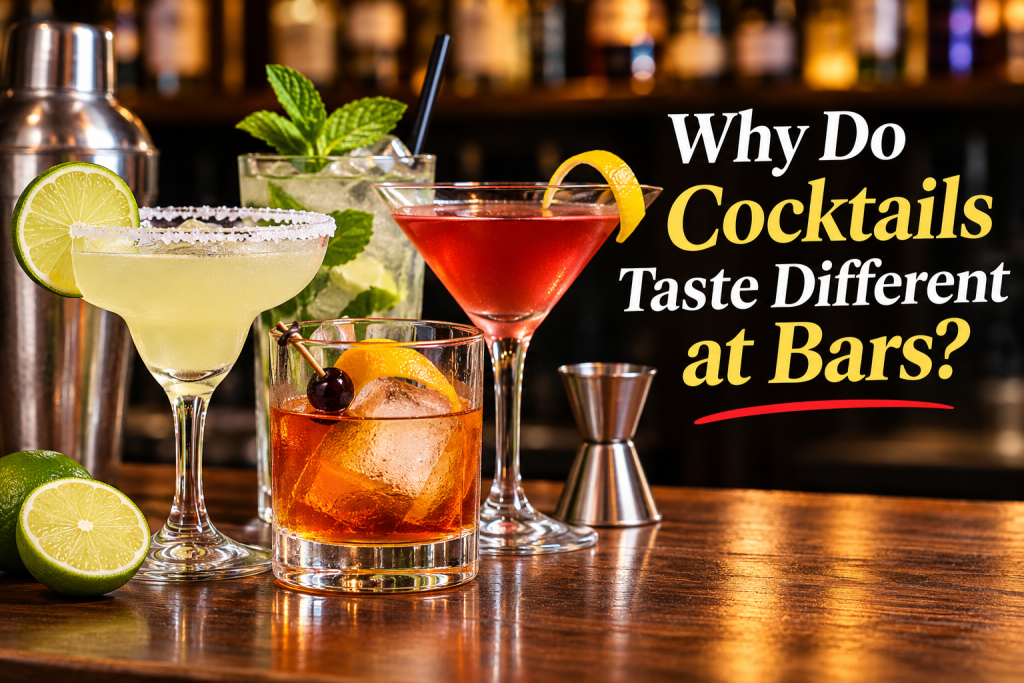
Have you ever enjoyed a cocktail at a bar, followed the recipe at home, and wondered why your version tasted different? The answer usually involves more than the brand of liquor. Ice, dilution, fresh ingredients, measurements, temperature, mixing methods, and even glassware all influence the finished drink. Understanding these details can help you recreate your favorite cocktails without expensive equipment.
Why Do Cocktails Taste Better at Bars?
Professional bartenders make drinks repeatedly and learn to control the small variables that determine flavor. A balanced cocktail has the right proportions of alcohol, sweetness, acidity, bitterness, and water. Bars are not automatically better than home kitchens, but consistent preparation gives them an advantage.
1. Bartenders Measure Ingredients Carefully
Free-pouring by eye can easily change a recipe. A little extra liquor makes a drink harsher; too much syrup makes it cloying. Bartenders often use a jigger to repeat the same ratios. A classic margarita starting point is two ounces of tequila, one ounce of fresh lime juice, and one ounce of orange liqueur. Even small deviations change the balance.
How to improve measurements at home
Measure each ingredient before experimenting. One fluid ounce equals two tablespoons, so ordinary kitchen measuring spoons can work when a jigger is unavailable. Record any successful adjustments so you can reproduce them.
2. Fresh Ingredients Make a Difference
Fresh lime and lemon juice provide bright acidity and aromatic compounds that may be diminished or altered in bottled products. This matters especially in margaritas, mojitos, gimlets, and daiquiris. Fresh fruit, ripe berries, and recently prepared garnishes can also improve flavor. Frozen fruit is a useful alternative when fresh produce is unavailable.
Not every bottled mixer is poor quality, but two products labeled lime juice or cranberry juice may have very different sweetness, acidity, and ingredients. Check the label and taste your mixer before adding it.
3. Ice Is an Ingredient, Not Just a Decoration
Ice chills a cocktail and melts into it. That melting is dilution, and controlled dilution makes many cocktails smoother and more integrated. Too little can leave a drink sharp; too much makes it watery. Fresh ice made with good-tasting water also prevents freezer odors from entering the glass.
Different ice shapes
Large cubes are useful in drinks served slowly over ice, such as an Old Fashioned. Standard cubes work well for shaking and everyday mixed drinks. Crushed ice suits juleps and some tropical drinks, where rapid chilling and changing dilution are part of the experience. Clear ice is attractive, but clarity alone does not guarantee a better cocktail.
4. Shaking and Stirring Produce Different Results
Shaking rapidly chills, dilutes, and aerates a drink. It is particularly effective for cocktails containing citrus juice, fruit puree, cream, or egg white. Margaritas, daiquiris, and whiskey sours are usually shaken. Stirring chills and dilutes with less aeration, preserving a silky texture and clear appearance in spirit-forward cocktails such as Manhattans, martinis, and Negronis.
For many shaken drinks, roughly 10 to 15 seconds is a useful starting point, but the ideal time depends on ice, ingredients, and equipment. Follow the recipe and evaluate the temperature and texture rather than treating any single number as universal.
5. Sweet and Sour Balance Changes Everything
Great cocktails rarely taste like only sugar, citrus, or alcohol. Bartenders balance these components so that they complement each other. Too much simple syrup can overwhelm fruit and spirits; too much lime juice makes a drink unpleasantly tart. Bitters and other aromatic ingredients can add complexity without necessarily adding much sweetness.
How to fix an unbalanced drink
If a cocktail is too sweet, reduce the syrup next time or make a small measured adjustment with citrus where appropriate. If it is too sour, add a little sweetener. If the alcohol seems harsh, check chilling and dilution before pouring in extra juice. Change one variable at a time so you know what improved the recipe.
6. Spirit Brands and Styles Matter
Two tequilas, rums, gins, or whiskeys can have very different flavor profiles. Gin botanicals, whiskey barrel notes, and tequila production styles all affect cocktails. Orange liqueurs also vary in sweetness and alcohol strength. Replacing a bar’s ingredients with a different brand can change the result even if your measurements are identical.
Expensive alcohol is not automatically better for mixed drinks. A reliable, moderately priced spirit that suits the recipe may perform better than a costly bottle whose delicate flavors disappear behind strong mixers. If you love a specific bar cocktail, ask what brands they use.
7. House-Made Syrups Can Be the Missing Ingredient
Many bars make their own simple syrup, honey syrup, ginger syrup, and flavored syrups. Standard simple syrup uses equal parts sugar and water by weight; rich syrup often uses two parts sugar to one part water. These versions have different sweetness concentrations, so substituting one for another without adjusting the quantity changes the cocktail.
Homemade syrups allow control over sweetness and added flavors such as cinnamon, mint, or ginger. They are inexpensive to prepare, but should be made with clean equipment, refrigerated, and discarded if they develop mold, fermentation, or off odors.
8. Temperature Affects Flavor
A warm cocktail can seem more alcoholic and less refreshing than the same drink properly chilled. Cold temperatures affect how we perceive sweetness, aroma, and alcohol. Bartenders manage temperature with ice and sometimes chilled glasses. For drinks served without ice, put the glass in the refrigerator or briefly chill it with ice water before serving.
9. Glassware Influences the Experience
A rocks glass, coupe, highball, and martini glass are not interchangeable in every practical sense. Shape influences warming, aroma delivery, and how you sip. A tall glass leaves room for carbonated mixers and ice; a coupe suits a chilled drink served without ice. You do not need an expensive glass collection, but appropriate serving vessels help.
10. Garnishes Contribute Aroma and Flavor
An orange or lemon twist releases aromatic oils over a drink. Mint adds an herbal scent, olives bring savory notes, and a salted rim changes each sip of a margarita. A garnish may look decorative while actually being part of the flavor design. Use fresh garnishes and follow the recipe’s instructions for expressing citrus peel.
11. Dilution Is Essential to a Balanced Cocktail
Some people assume a stronger cocktail is always better, but many classics require water from melting ice to taste harmonious. Stirring and shaking provide both cooling and dilution. For large-batch cocktails, bartenders sometimes add measured water in advance to approximate that effect. Avoid adding unmeasured water to an individual drink, because it can quickly become thin.
12. Bars May Use Different Recipes
There is no single recipe for every drink bearing the same name. One margarita may contain agave syrup; another may rely entirely on orange liqueur for sweetness. A house Old Fashioned may use specialty bitters or flavored syrup. If you are recreating a restaurant cocktail, ask about its proportions and any house ingredients rather than relying only on a generic recipe.
13. Mixers Vary Widely
Tonic water ranges from bitter and dry to noticeably sweet. Ginger beer may be spicy or mild. Sweetened cranberry juice cocktail is different from unsweetened cranberry juice. Fresh and packaged pineapple juice can vary in acidity and texture. Carbonation matters too: flat soda makes a mixed drink feel less lively. Add sparkling mixers last and stir gently.
14. Practice Creates Consistency
Experienced bartenders develop a feel for chilling, dilution, and balance through repetition. Home bartenders can do the same. Pick one cocktail, use consistent measurements, and make one controlled adjustment each time. Keep a short note of the brands, ratios, ice, and mixing time that work best.
15. Atmosphere Can Change How a Drink Seems to Taste
Flavor perception is not determined solely by chemical ingredients. Presentation, expectations, lighting, music, and company can affect enjoyment. A beautifully garnished cocktail served in a favorite bar may feel more special than the same recipe in a kitchen glass. Thoughtful presentation at home can improve the experience even without changing the recipe.
How to Make Bar-Quality Cocktails at Home
Start with a tested recipe and measure accurately. Use fresh citrus where it matters, clean ice, appropriate mixing methods, and a suitable glass. A shaker, jigger, strainer, bar spoon, and citrus juicer cover most basic needs. You do not have to buy every specialty tool at once.
Taste the result and adjust one ingredient at a time. For drinks served over ice, use fresh serving ice after shaking when the recipe calls for it. For carbonated drinks, add the sparkling ingredient just before serving. Finish with the intended garnish instead of skipping it.
Easy Cocktails for Practicing Bar Techniques
Margarita
Tequila, fresh lime juice, and orange liqueur teach sweet-and-sour balance and shaking. Compare small changes in the citrus ratio.
Old Fashioned
Whiskey, sugar, and bitters show how stirring, dilution, and citrus oils can transform a spirit-forward drink.
Daiquiri
Rum, fresh lime, and simple syrup make a simple three-ingredient test of precision and balance.
Whiskey Sour
Whiskey, lemon, and sweetener demonstrate how acidity and sweetness work together. Some versions include egg white or a pasteurized alternative for foam.
Gin and Tonic
Try different tonic waters with the same gin to see how much a mixer changes flavor. Add fresh ice and an appropriate garnish.
Frequently Asked Questions
Why does my homemade margarita taste different from a restaurant margarita?
The tequila, orange liqueur, lime juice, proportions, or dilution may differ. Restaurants may also use agave syrup or a house recipe.
Why do bar cocktails taste stronger?
Some contain more alcohol or less mixer, but perceived strength also depends on temperature, sweetness, and dilution. A smooth drink can still contain substantial alcohol.
Why do my cocktails taste watery?
Too much mixer, prolonged melting ice, or excessive dilution during preparation can weaken flavor. Measure ingredients and serve promptly.
Do bartenders use special ingredients?
Some use house-made syrups, specialty bitters, fresh juices, or particular spirits, but careful technique can make ordinary ingredients taste excellent.
Does a cocktail shaker improve flavor?
It improves drinks that benefit from aeration, rapid chilling, and thorough mixing. Spirit-forward cocktails are often better stirred.
Can inexpensive alcohol make good cocktails?
Yes. Choose a spirit appropriate to the recipe and focus on fresh mixers, accurate proportions, and proper dilution.
Why does the same cocktail taste different at two bars?
Bars may use different recipes, brands, ice, mixers, and techniques. Even small differences in sweetness or dilution are noticeable.
Final Thoughts
Cocktails taste different at bars because every preparation detail affects the final result. Fresh ingredients, accurate measurements, ice, mixing technique, dilution, temperature, glassware, and garnishes all play a role. The good news is that these skills are learnable. Practice with a favorite recipe, pay attention to balance, and make small adjustments. A satisfying cocktail depends less on expensive equipment than on understanding how its ingredients work together.
Leave a Reply