Knee pain can make the idea of starting an exercise routine seem intimidating. Walking long distances, running, jumping, or climbing stairs may feel uncomfortable, particularly if you have not exercised regularly for some time. Fortunately, there are gentler ways to become more active.
Some of the best low-impact exercises for beginners with knee pain include stationary cycling, water walking, swimming, short walks on level surfaces, and gentle seated strengthening exercises. The most suitable activity depends on the cause of your symptoms, your mobility, and how your knee responds to movement.
If your knee pain is new, severe, or follows an injury, seek appropriate medical assessment before beginning an exercise program. The following suggestions are intended as general information for people who can safely participate in gentle activity.
Why low-impact exercise can be helpful
Low-impact activities generally avoid the repetitive landing forces associated with running and jumping. Some activities, such as cycling or swimming, also reduce the amount of body weight supported by the knee.
According to the Centers for Disease Control and Prevention (CDC), suitable physical activity can improve movement, reduce joint discomfort associated with arthritis, and support overall well-being.
Strengthening the muscles around the hips and knees may also improve your ability to perform everyday tasks. However, no single exercise is suitable for every cause of knee pain. A physical therapist can help identify movements appropriate for your condition.
1. Stationary cycling
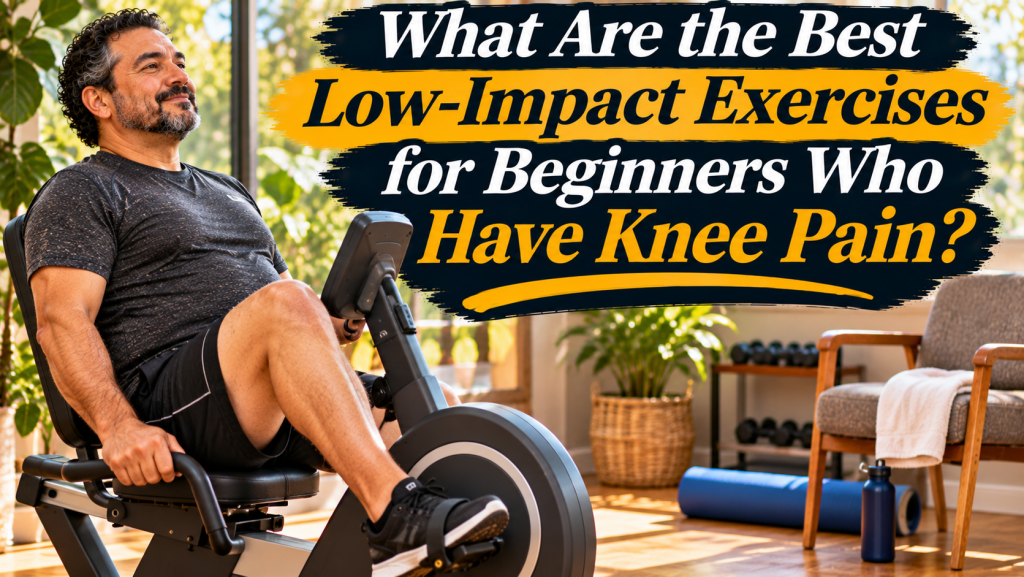
A stationary bicycle allows you to exercise while seated. It can be particularly appealing if walking for an extended period causes discomfort.
Begin with a comfortable seat position and minimal resistance. Your knee should remain slightly bent when the pedal reaches its farthest point. A seat that is too close may require uncomfortable knee bending.
Try pedaling slowly for three to five minutes. If your knee tolerates the movement, gradually extend the duration over subsequent sessions.
A recumbent bicycle offers additional back support and may be easier for some beginners to mount and use. Choose equipment that accommodates your body size and mobility.
2. Water walking
Water provides buoyancy, which reduces the amount of weight your legs support during standing and walking. This makes pool-based exercise an attractive option for many people who experience joint discomfort on land.
In a supervised pool with a safe entry and exit, begin walking slowly through waist-deep or chest-deep water. Take comfortable steps without forcing your knee into a deep bend.
Start with a few minutes and rest when necessary. If you have difficulty balancing, consider working with an aquatic exercise instructor or physical therapist.
Water exercise may not be suitable for everyone, including people with certain wounds or medical conditions. Ask a healthcare professional if you are unsure.
3. Swimming
Swimming provides cardiovascular exercise without requiring you to support your full body weight on your feet.
Choose a stroke and kicking motion that do not aggravate your knee. Some people find the breaststroke kick uncomfortable because of the rotational forces it can create around the joint.
If swimming laps feels too demanding, gentle movement in a shallow pool may be a more manageable starting point.
You do not need to swim continuously. Alternate short periods of activity with rest and build your endurance gradually.
4. Short walks on flat surfaces
Walking is convenient because it does not require specialized exercise equipment. However, it is still a weight-bearing activity and may not be comfortable for everyone with knee pain.
Start on a smooth, level surface such as an indoor hallway or a well-maintained sidewalk. Wear supportive footwear and choose a distance that allows you to return safely without becoming exhausted.
For some beginners, a two- to five-minute walk is enough initially. Avoid steep hills, uneven trails, and prolonged stair climbing if they worsen your symptoms.
You can divide your walking time into several brief sessions rather than trying to complete a long walk all at once.
5. Seated knee extensions
Gentle knee extensions activate the muscles at the front of the thigh. They can be performed using a sturdy chair and do not require ankle weights.
- Sit upright in a stable chair with both feet on the floor.
- Slowly lift one foot forward, straightening the knee only as far as feels comfortable.
- Briefly maintain the position without locking or forcing the joint.
- Lower your foot slowly.
- Try five repetitions on each side, if tolerated.
Begin without added resistance. If extending the knee increases pain, reduce the range of movement or stop the exercise.
6. Gentle heel slides
Heel slides allow you to practice bending and straightening your knee in a supported position.
- Lie on your back on a firm, comfortable surface.
- Slowly draw one heel toward your body, bending your knee within a comfortable range.
- Slide your heel away again until the leg returns to its starting position.
- Repeat up to five times if the movement is comfortable.
If getting down to the floor is difficult, a firm bed may be more accessible. You can also discuss a seated alternative with a physical therapist.
Avoid forcing the heel farther toward your body than your knee comfortably permits.
7. Seated upper-body exercises
If weight-bearing activities are particularly challenging, seated upper-body movements can provide another way to stay active while limiting demands on the knee.
Sit in a sturdy chair with your back supported and feet positioned comfortably. Try gentle arm raises, shoulder movements, or biceps curls using no weights initially.
You can gradually introduce light resistance if appropriate. Breathe normally throughout the movement and avoid holding your breath.
These exercises are not a substitute for knee-specific rehabilitation, but they can provide an accessible starting point for general physical activity.
8. Modified tai chi
Tai chi uses slow, controlled movements and can help develop balance and body awareness. Some programs are specifically adapted for people with joint problems.
Look for a beginner class that offers supported or seated alternatives. Avoid deep knee bends, prolonged single-leg positions, or twisting movements that cause discomfort.
If you have balance problems or your knee frequently gives way, obtain professional advice before attempting standing movements independently.
A simple beginner exercise routine
The following is an example for someone with stable knee symptoms who has been advised that gentle exercise is appropriate. Adjust the routine according to your individual needs.
Monday: Gentle cycling
Try five minutes of easy stationary cycling with low resistance. Follow this with a few comfortable seated knee extensions if appropriate.
Tuesday: Seated movements
Perform a few minutes of seated upper-body activity and gentle knee movements. Take breaks as needed.
Wednesday: Rest or light activity
Allow time for recovery. If your knee feels comfortable, continue your ordinary daily activities or take a short, easy walk.
Thursday: Choose a comfortable aerobic activity
Try water walking, cycling, or walking on a level surface. Begin with a duration that you have previously tolerated.
Friday: Gentle strengthening
Repeat the seated knee extensions and upper-body movements, provided they have not aggravated your symptoms.
Saturday and Sunday: Flexible activity and recovery
Choose one comfortable activity you enjoy and allow sufficient recovery time. There is no requirement to exercise every day during your first week.
As your tolerance improves, you can gradually increase your activity. Change one element at a time, such as duration or resistance, rather than increasing everything simultaneously.
How to tell whether an exercise is appropriate
Pay attention to how your knee feels before, during, and after activity. Mild muscle fatigue can occur when you begin using muscles in unfamiliar ways, but sharp joint pain, increasing swelling, or a feeling that the knee may collapse are reasons to stop.
Notice how your symptoms respond later in the day and the following morning. If they are noticeably worse, reduce the intensity or duration next time and seek advice if the problem persists.
Choose activities that feel manageable rather than attempting to match another person’s pace. Your current ability is the starting point for your routine.
What exercises should beginners with knee pain approach cautiously?
Some movements introduce higher forces, deeper knee bending, or rapid changes of direction. Running, jumping exercises, deep loaded squats, and repeated stair workouts may be difficult for someone with active knee symptoms.
These activities are not necessarily prohibited forever. Their suitability depends on your condition, strength, movement tolerance, and professional guidance.
If a movement regularly causes discomfort, there is usually a gentler alternative that allows you to remain active while addressing your symptoms appropriately.
When should you seek medical care for knee pain?
Arrange a medical evaluation if knee discomfort persists, worsens, repeatedly interferes with daily activities, or is associated with recurrent locking or instability.
Seek urgent medical attention if you cannot bear weight or move the knee, experience severe pain or substantial swelling, notice a deformity following an injury, or have a hot, red, swollen knee with fever or illness. These symptoms can indicate a condition requiring prompt assessment.
Exercise should not be used as a substitute for evaluating a possible injury or infection.
Frequently asked questions
Is walking or cycling better for knee pain?
Both can be suitable, depending on the underlying condition and individual tolerance. Cycling allows you to remain seated, while walking develops weight-bearing endurance. Choose the option that feels comfortable and is appropriate for your condition.
Can I exercise with knee arthritis?
Many people with knee arthritis benefit from regular, joint-friendly activity. A healthcare professional can help you determine which movements and levels of intensity are appropriate.
Do I need exercise equipment to get started?
No. A stable chair, a comfortable walking surface, and suitable footwear may be sufficient for several beginner activities.
How long should a beginner exercise session last?
Three to five minutes may be a reasonable starting point for some activities. Increase the duration gradually as tolerated instead of treating a particular time target as mandatory.
Should I push through knee pain?
No. Do not force movements that produce sharp pain, worsening swelling, instability, or significant discomfort. Stop, modify the activity, and obtain medical advice when needed.
Start with movement that works for your knees
Becoming more active does not require immediately beginning a demanding workout. Short cycling sessions, gentle water exercise, seated movements, and comfortable walks can provide different ways to develop a sustainable routine.
Choose activities that match your abilities, allow enough recovery time, and seek professional guidance when symptoms indicate a need for individualized care. The goal is to support your mobility and overall health without unnecessarily aggravating your knee.
Leave a Reply