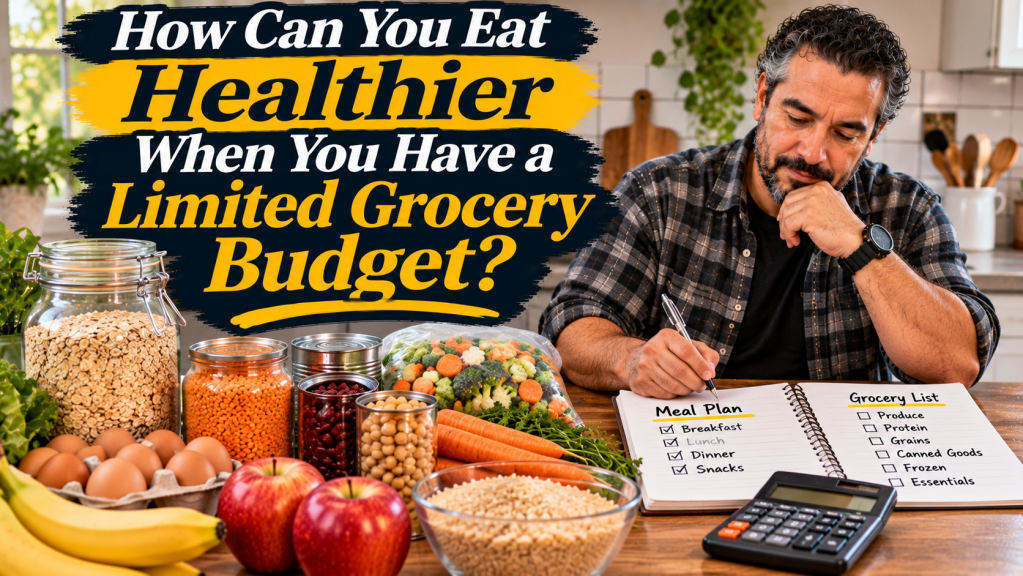
Eating healthier on a limited grocery budget can feel challenging, especially when the cost of food competes with rent, utilities, transportation, and other essential expenses. Fortunately, nutritious meals do not always require expensive specialty ingredients, organic produce, supplements, or elaborate recipes.
You can eat healthier while spending less by planning meals around affordable ingredients, purchasing a combination of fresh, frozen, and canned foods, choosing economical sources of protein, and reducing food waste. The best approach is one that fits your budget, cooking facilities, dietary needs, and available time.
1. Start with the food you already have
Before going to the grocery store, look through your refrigerator, freezer, and pantry. You may already have enough ingredients to prepare several meals with only a few additional purchases.
A bag of rice, canned beans, frozen vegetables, and an onion can become a satisfying rice bowl. Leftover cooked chicken can be added to soup, sandwiches, or a vegetable skillet. Oatmeal and peanut butter can provide the foundation for a simple breakfast.
Write down ingredients that need to be used soon and plan meals around them. Check that perishable foods have been stored safely before using them.
This approach can help you avoid buying duplicate groceries and make better use of food you have already paid for.
2. Build your grocery list around affordable staples
A few versatile ingredients can provide the foundation for many different meals. Compare prices at your usual stores and choose foods your household actually enjoys.
Affordable protein sources
- Dried or canned beans
- Lentils and split peas
- Eggs
- Peanut butter
- Canned salmon or light tuna
- Plain yogurt
- Chicken thighs or other poultry cuts when affordable
- Tofu, depending on local prices
Beans and lentils provide both protein and fiber. Combining different protein sources throughout the week can add variety without relying on expensive cuts of meat.
Affordable grains and starches
- Rolled oats
- Brown rice or other rice varieties
- Whole-wheat pasta
- Whole-grain bread
- Potatoes
- Corn or whole-wheat tortillas
Whole grains offer fiber and other nutrients. Choose versions that fit your budget and preferences. You do not need to replace every familiar food at once.
Affordable fruits and vegetables
- Carrots
- Cabbage
- Onions
- Seasonal apples or bananas
- Frozen mixed vegetables
- Frozen spinach or broccoli
- Canned tomatoes
- Canned fruit packed in water or juice
Prices vary considerably depending on location, season, and availability. A frozen vegetable may offer better value than a fresh alternative in one store but not another.
3. Plan meals that share the same ingredients
Meal planning becomes more economical when several dishes use the same groceries. Instead of purchasing a different collection of ingredients for every recipe, choose a few foods you can prepare in several ways.
For example, a bag of brown rice, carrots, onions, eggs, beans, and frozen vegetables can support vegetable fried rice, bean and rice bowls, soup, and breakfast scrambles.
A package of chicken thighs can provide dinner with roasted vegetables one evening and a filling for tacos or wraps the following day.
Planning around shared ingredients helps reduce the number of items you need to buy. It can also make cooking easier because you become familiar with the foods and preparation methods you use regularly.
Leave some flexibility in your plan so you can substitute a less expensive ingredient if the original item is unavailable or costs more than expected.
4. Use frozen and canned produce when it makes sense
Fresh produce is not the only nutritious option. Frozen vegetables and fruit can provide valuable nutrients and are convenient when you are cooking smaller portions. Canned produce can also be useful, particularly if you have limited freezer space.
The USDA’s healthy eating on a budget guidance encourages using affordable pantry ingredients and frozen or canned vegetables to stretch meals.
Look for plain frozen vegetables without rich sauces if you want more control over the seasoning. Compare sodium levels in canned vegetables and beans, and choose no-salt-added or lower-sodium versions when practical. Draining and rinsing regular canned beans can help reduce some of their sodium.
For canned fruit, look for products packed in water or juice rather than heavy syrup if you want to limit added sugar.
Buy the options that provide the best combination of price, convenience, nutritional value, and minimal waste for your situation.
5. Compare unit prices rather than package prices
A larger package is not necessarily the least expensive option, and a smaller package may cost more per ounce.
Many grocery stores display the unit price beside the total selling price. This allows you to compare similar products sold in different package sizes.
For example, an imaginary 16-ounce bag of oats priced at $2.40 costs 15 cents per ounce. A 32-ounce bag priced at $4 costs 12.5 cents per ounce. The larger bag offers a lower price per ounce, provided you can afford the initial purchase and use the entire package.
Bulk purchasing is not always practical. Consider your available storage, transportation, and how quickly you can use the food. Spending less today may be more important than achieving the lowest possible unit price.
Store-brand groceries are also worth comparing with name-brand products. Look at the nutritional information and ingredient list as well as the price.
6. Make simple, satisfying meals
Healthy eating does not need to involve complicated recipes. A useful starting point is to combine a protein source, vegetables or fruit, and a grain or other starchy food. Add a suitable source of fat and seasonings according to your preferences.
Lentil and vegetable soup
Combine lentils, carrots, onions, canned tomatoes, water or broth, and herbs. Simmer until the lentils and vegetables are tender. Serve with bread or rice for a more substantial meal.
Black bean and rice bowls
Serve cooked rice with heated black beans, sautéed vegetables, and salsa. Add a little cheese, plain yogurt, or an egg if you have one available.
Vegetable and egg scramble
Cook chopped onions and thawed frozen vegetables in a little oil. Add beaten eggs and stir until fully cooked. Serve with toast or potatoes.
Overnight oats
Combine oats with milk or an appropriate fortified alternative, refrigerate overnight, and add sliced banana, peanut butter, or cinnamon before eating.
These ideas are flexible rather than fixed meal requirements. Adjust quantities and ingredients to meet your appetite and dietary needs.
7. Cook extra portions when you have time
Preparing additional food during a cooking session can reduce the effort needed to make another meal later. Cook extra rice, beans, soup, or roasted vegetables if you have suitable storage.
Divide cooked leftovers into shallow containers and refrigerate them promptly. USDA food safety guidance recommends keeping refrigerated leftovers at 40°F or below, chilling them within two hours of cooking or within one hour in temperatures above 90°F, and using them within three to four days.
Freeze portions you do not expect to eat within that period. Label containers with the preparation date, and reheat cooked leftovers to 165°F.
If you lack reliable refrigeration or freezer space, choose smaller meals prepared shortly before eating instead of batch cooking large quantities.
8. Keep inexpensive convenience foods available
Cooking from scratch is not always possible. Long working hours, disability, caregiving responsibilities, and limited kitchen equipment can make meal preparation difficult.
Convenient foods such as canned beans, frozen vegetables, quick-cooking oats, whole-grain bread, and plain yogurt can reduce preparation time. Compare labels for sodium, added sugars, and other nutrients that matter for your needs.
A peanut butter sandwich with fruit, a microwave potato topped with beans, or a bowl of oatmeal can be a practical meal when you have little time.
You do not need to cook every ingredient from scratch to make thoughtful food choices.
A sample five-day meal plan using affordable ingredients
The following example shows how a small selection of groceries can be used repeatedly. It is not a prescribed diet or a guarantee of a particular grocery cost. Adjust portion sizes, snacks, and ingredients to meet your needs.
Monday
Breakfast: Oatmeal with banana and peanut butter.
Lunch: Black bean and rice bowl with frozen vegetables.
Dinner: Roasted chicken thighs with potatoes and carrots.
Tuesday
Breakfast: Scrambled eggs and whole-grain toast.
Lunch: Leftover chicken wrap with cabbage.
Dinner: Lentil and tomato soup with bread.
Wednesday
Breakfast: Plain yogurt with oats and an apple.
Lunch: Leftover lentil soup.
Dinner: Vegetable fried rice with eggs.
Thursday
Breakfast: Oatmeal with peanut butter and cinnamon.
Lunch: Mashed chickpea sandwich with sliced carrots.
Dinner: Chicken and vegetable skillet with rice.
Friday
Breakfast: Eggs, toast, and fruit.
Lunch: Black bean and vegetable wrap.
Dinner: Whole-wheat pasta with tomato sauce, lentils, and spinach.
Include additional meals or snacks if you need them. Fruit, yogurt, toast, or homemade popcorn can be affordable options, depending on local prices and dietary preferences.
What if your grocery budget cannot cover enough food?
Meal planning and comparison shopping can help stretch a food budget, but they cannot resolve every financial difficulty. If purchasing adequate food is becoming difficult, consider exploring available assistance.
In the United States, the Supplemental Nutrition Assistance Program (SNAP) provides eligible households with benefits for purchasing food. Local food banks, community pantries, and other community organizations may also offer groceries.
The Special Supplemental Nutrition Program for Women, Infants, and Children (WIC) serves eligible participants during pregnancy, postpartum periods, infancy, and early childhood.
Availability, eligibility, and program rules vary. Contact your state or local program office for information that applies to your circumstances.
Frequently asked questions
Do I need to buy organic food to eat healthier?
No. Conventional fruits, vegetables, grains, and protein foods can all contribute to nutritious meals. Choose foods you can afford and prepare safely.
Are canned beans as useful as dried beans?
Both can be excellent choices. Dried beans often have a lower cost per serving, while canned beans are ready to use and may save time and cooking energy. Follow package directions when preparing dried beans.
Is it cheaper to cook at home?
Preparing meals at home can be economical when you use affordable ingredients and avoid waste. However, the actual cost depends on portion sizes, equipment, energy costs, and available alternatives.
How can I eat healthier without a full kitchen?
Depending on your facilities, consider oats, lower-sodium canned beans, nut butter, whole-grain bread, and fruit. Refrigerated foods require reliable cold storage. A microwave can expand your options if you have access to one.
Should I skip meals to save grocery money?
Regularly going without sufficient food can undermine your health. If you are struggling to afford enough food, explore assistance programs and community resources. A registered dietitian can provide individualized support when needed.
Make healthier eating fit your real life
You do not need a perfect meal plan or expensive ingredients to make useful changes to your eating habits. Start with affordable foods you enjoy, find simple ways to combine them, and make the most of what you purchase.
Your grocery budget is only one factor in your food choices. Time, access, health, cooking facilities, and personal preferences matter too. Choose practical changes that support your well-being without placing unnecessary demands on your finances.
Leave a Reply