There are moments in life when emotions become so intense that they feel almost impossible to manage.
Anger takes over.
Grief becomes overwhelming.
Anxiety makes it difficult to think clearly.
Fear convinces you that everything is falling apart.
Sadness becomes so heavy that getting through an ordinary day feels exhausting.
Sometimes several emotions hit at once, leaving you wondering how you’re supposed to keep functioning when everything inside you feels out of control.
During those moments, one of the healthiest things you can do is ask for help.
You don’t have to wait until you’ve reached your breaking point. You don’t have to have all the right words. And you don’t have to understand exactly why you’re feeling the way you do.
Sometimes the first step is simply saying:
“I’m struggling right now, and I need someone.”
Strong Emotions Are Part of Being Human
Everyone experiences difficult emotions.
We get angry.
We become overwhelmed.
We worry.
We grieve.
We feel rejected, disappointed, lonely, frustrated, embarrassed, afraid, or hopeless.
Having powerful emotions doesn’t automatically mean something is wrong with you. Emotions are part of the way we respond to what happens in our lives.
The problem begins when those emotions become so intense that they start controlling your behavior, interfering with everyday life, damaging relationships, or making it difficult to make safe decisions.
Maybe you’ve noticed yourself yelling at people you love.
Maybe you’re withdrawing from everyone.
Maybe you’re making impulsive decisions because you’re angry.
Maybe anxiety keeps you awake night after night.
Maybe grief hits you so hard that you can’t concentrate.
Maybe you feel like you’re constantly on the edge of exploding or breaking down.
Those are moments when reaching out can matter.
You Don’t Have to Handle Everything Alone
Many people have learned to hide emotional pain.
They tell themselves:
“I’ll deal with it.”
“Nobody needs to know.”
“I should be able to handle this myself.”
“Other people have bigger problems.”
“I don’t want to burden anyone.”
But asking for help isn’t the same thing as giving up responsibility for your emotions.
In fact, it can be part of taking responsibility for them.
When you recognize that your emotions are becoming difficult to manage and choose to reach out before they lead you somewhere harmful, you’re doing something constructive.
You are saying, “Something isn’t right, and I want to deal with it before it gets worse.”
Start With Someone You Trust
Help doesn’t always have to begin in a therapist’s office.
Sometimes it begins with a conversation.
Call a friend.
Talk to your spouse or partner.
Reach out to a family member.
Speak with someone from your faith community.
Tell a trusted coworker that you’re having a difficult day.
You don’t necessarily need that person to solve the problem.
Sometimes you just need someone to listen.
You might say:
“I’m overwhelmed and could really use someone to talk to.”
Or:
“I’m having trouble controlling my emotions today. Can you stay with me for a while?”
You don’t need an eloquent explanation.
You just need to open the door.
Give Yourself Space Before You React
When emotions are extremely intense, try not to make major decisions in the heat of the moment when you can safely postpone them.
If you’re furious, give yourself time before sending that message.
If you’re overwhelmed, step away from the argument.
If you’re panicking, focus on slowing things down before trying to solve everything at once.
Take some slow breaths.
Drink some water.
Go somewhere quieter.
Take a walk if it’s safe.
Write down what you’re feeling.
Call someone you trust.
Remind yourself that you don’t have to solve your entire life during the most emotionally intense five minutes of your day.
Creating even a little distance between an emotion and your reaction can help you make a more deliberate choice.
Learn What Triggers Your Strongest Emotions
Emotions can sometimes seem to come out of nowhere, but patterns often become clearer when we pay attention.
Maybe certain conversations trigger anger.
Maybe loneliness becomes worse at night.
Maybe anniversaries or holidays intensify grief.
Maybe work stress follows you home.
Maybe exhaustion makes everything feel more difficult.
Maybe social media increases anxiety or comparison.
Maybe conflict with one particular person repeatedly leaves you emotionally drained.
Try keeping track of what happens before your emotions become overwhelming.
Ask yourself:
What happened?
What was I thinking?
What was I feeling physically?
What emotion appeared first?
How did I respond?
What helped me calm down?
Recognizing patterns can help you prepare for difficult situations instead of always being surprised by them.
Don’t Ignore Your Physical Health
Your emotional and physical well-being can affect each other.
When you’re exhausted, hungry, dehydrated, under prolonged stress, or physically unwell, managing difficult emotions may become harder.
Basic self-care won’t solve every emotional problem, but it can give your body a better foundation for handling stress.
Try to prioritize adequate sleep, regular meals, movement, hydration, time outdoors, and breaks from constant stimulation when possible.
Sometimes we expect ourselves to manage enormous emotional pressure while giving our bodies almost none of what they need to recover.
Know When It’s Time for Professional Help
Friends and family can provide valuable support, but sometimes you need more than a conversation with someone you know.
Consider reaching out to a qualified mental-health professional if your emotions repeatedly feel unmanageable, interfere with work or relationships, contribute to substance misuse or dangerous behavior, or make everyday functioning increasingly difficult.
Professional support can help you understand what you’re experiencing and develop healthier ways of responding to difficult emotions.
Seeking help doesn’t mean you have failed.
It means you’re recognizing that something deserves attention.
You wouldn’t necessarily ignore severe physical symptoms and simply hope they disappear. Emotional distress deserves attention too.
Asking for Help Before a Crisis Matters
One mistake people sometimes make is believing they need to wait until things become unbearable before asking for help.
You don’t.
You can reach out early.
You can talk to someone when you notice yourself becoming unusually angry.
You can seek support when anxiety begins interfering with your sleep.
You can ask for help when grief becomes especially heavy.
You can make an appointment when you’ve noticed that you aren’t feeling like yourself.
Early support may prevent a difficult situation from becoming an emergency.
If You Feel Like You Might Hurt Yourself or Someone Else
There are times when emotional distress becomes an immediate safety issue.
If you believe you may hurt yourself or someone else, can’t keep yourself safe, or feel that you’re in an immediate crisis, seek urgent help rather than trying to handle the situation alone.
In the United States, you can call or text 988 to reach the Suicide & Crisis Lifeline. If there is immediate danger, call 911 or go to the nearest emergency department.
If possible, stay with a trusted person and move away from weapons, medications, or anything else you might use impulsively to cause harm.
A crisis deserves immediate support.
You Are Allowed to Say, “I Need Help”
Sometimes those three words are incredibly difficult:
I need help.
Especially if you’re usually the person everyone else depends on.
Especially if you’re accustomed to keeping your problems private.
Especially if you’ve spent years convincing yourself that strength means handling everything alone.
But strength can also look like recognizing your limits.
It can look like making the phone call.
It can look like sitting across from someone and admitting that you’re struggling.
It can look like scheduling an appointment.
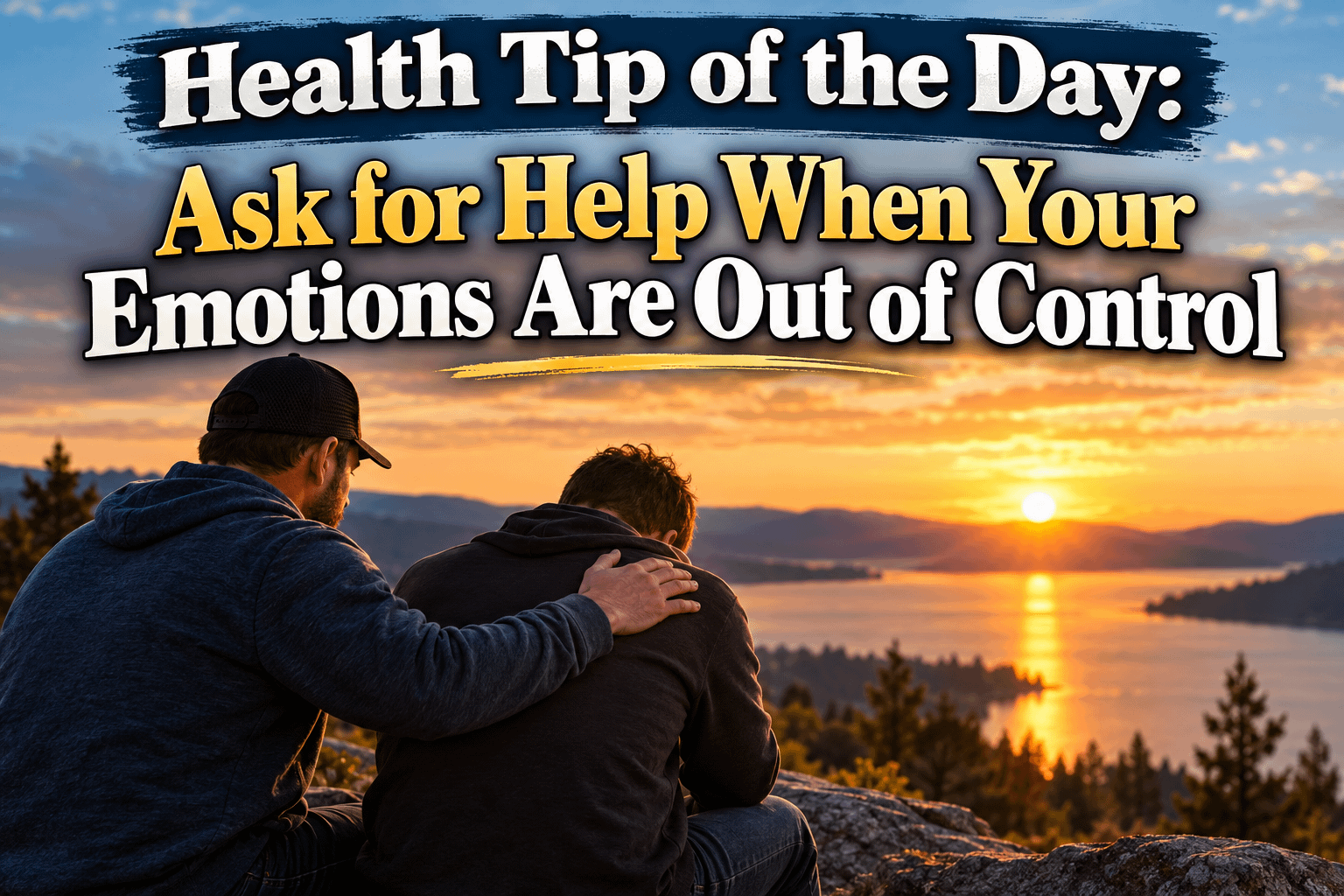
It can look like allowing someone to sit beside you when you don’t have the words to explain what you’re feeling.
Health Tip of the Day
Ask for help when your emotions are out of control.
Don’t wait until anger destroys a relationship.
Don’t wait until anxiety consumes your days.
Don’t wait until grief completely isolates you.
Don’t wait until emotional pain turns into a crisis.
Reach out.
Talk to someone.
Give yourself time before reacting.
Pay attention to what triggers you.
And seek professional support when you need more help than the people around you can provide.
You don’t have to solve everything today.
Sometimes today’s victory is simply recognizing:
“I’m not doing well right now, and I shouldn’t go through this moment alone.”
That one decision—to reach out instead of shutting everyone out—can be the beginning of getting your emotions back to a place where you can breathe, think, and decide what comes next.
When your emotions become overwhelming, who is the person you know you can reach out to?