Category: Health & Wellness

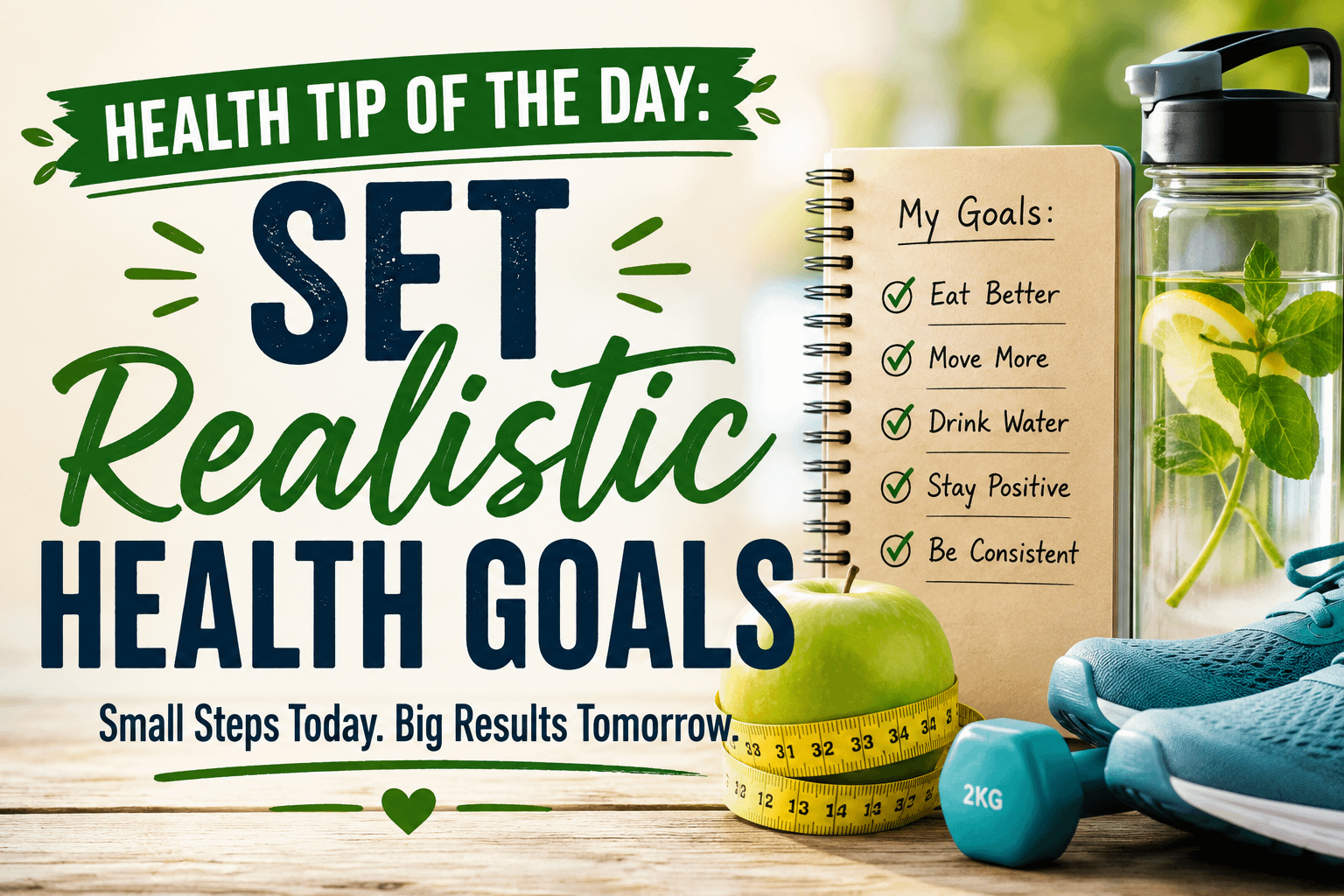
  • Health Tip of the Day: Set Realistic Health Goals

    Health Tip of the Day: Set Realistic Health Goals

    Advertisements

    Every January, millions of people promise themselves that this will be the year they finally get healthy. They buy gym memberships, throw out unhealthy food, commit to strict diets, and create ambitious fitness plans. Yet within a few weeks, many of those goals are abandoned—not because people lack motivation or determination, but because the goals they set were simply too difficult to maintain.

    The truth is that good health isn’t built through dramatic changes made overnight. It is built through consistent, realistic habits that become part of your daily life.

    If you want lasting results, the key isn’t setting bigger goals—it’s setting better ones.

    Why People Often Fail at Health Goals

    Many people approach health with an “all-or-nothing” mindset.

    They tell themselves:

    • “I’m never eating sugar again.”
    • “I’m going to work out every single day.”
    • “I’ll lose 40 pounds before summer.”
    • “I’m cutting out all carbs immediately.”

    While these goals may sound inspiring, they’re often unrealistic for most people. Life happens. Work gets busy. Family responsibilities increase. Stress appears unexpectedly. When one setback occurs, many people feel like they’ve failed completely and give up.

    Instead of viewing one missed workout or one unhealthy meal as failure, view it as a normal part of the journey. Long-term health is about consistency—not perfection.

    The Difference Between Goals and Habits

    Goals give you direction.

    Habits create results.

    For example, your goal may be to lower your blood pressure. The habits that help you reach that goal might include:

    • Walking for 30 minutes five days a week.
    • Eating more vegetables.
    • Reducing sodium intake.
    • Drinking more water.
    • Managing daily stress.
    • Sleeping at least seven hours each night.

    Your daily habits are what ultimately determine your success.

    Start Smaller Than You Think

    One of the biggest secrets to lasting change is starting with goals that almost seem too easy.

    Instead of saying:

    “I’ll exercise every day.”

    Start with:

    “I’ll take a 15-minute walk after dinner three times this week.”

    Instead of saying:

    “I’m giving up fast food forever.”

    Try:

    “I’ll cook dinner at home three nights this week.”

    Instead of saying:

    “I’m drinking a gallon of water every day.”

    Begin with:

    “I’ll replace one soda with water each day.”

    These smaller goals are easier to accomplish, which builds confidence and creates momentum.

    Build Confidence Through Success

    Every time you achieve a goal, your confidence grows.

    Your brain begins to associate healthy choices with success rather than struggle.

    This positive reinforcement makes it much easier to continue making healthy decisions.

    Imagine climbing a staircase.

    You don’t leap from the bottom to the top.

    You take one step at a time.

    Health works exactly the same way.

    Make Your Goals SMART

    Health experts often recommend using SMART goals because they provide structure and clarity.

    Your goals should be:

    Specific

    Clearly define what you want to accomplish.

    Instead of:

    “I want to eat healthier.”

    Say:

    “I’ll eat one serving of vegetables with lunch and dinner.”

    Measurable

    Track your progress.

    Instead of:

    “I’ll drink more water.”

    Say:

    “I’ll drink eight glasses of water each day.”

    Achievable

    Choose goals that fit your current lifestyle.

    If you’ve never exercised regularly, committing to two hours a day isn’t realistic.

    Starting with 20 or 30 minutes is much more sustainable.

    Relevant

    Choose goals that matter personally.

    Perhaps you want more energy to play with your children.

    Maybe you want to reduce your risk of diabetes.

    Maybe you simply want to feel better every day.

    Personal reasons create lasting motivation.

    Time-Bound

    Give yourself a realistic timeframe.

    For example:

    “For the next four weeks, I’ll walk every Monday, Wednesday, and Friday.”

    Having a timeline helps you stay focused.

    Focus on Progress Instead of Perfection

    Perfection doesn’t exist.

    Even professional athletes miss workouts.

    Nutrition experts enjoy dessert.

    Doctors have stressful days.

    Healthy people are not perfect people.

    They’re simply people who return to healthy habits after setbacks.

    One unhealthy meal doesn’t ruin your progress.

    One missed workout doesn’t erase weeks of consistency.

    One difficult week doesn’t define your health journey.

    Keep moving forward.

    Celebrate Small Victories

    Too many people ignore their progress because they haven’t reached the finish line.

    Celebrate when you:

    • Complete your first week of meal planning.
    • Lose your first five pounds.
    • Walk farther than last month.
    • Lower your blood pressure.
    • Improve your cholesterol numbers.
    • Choose fruit instead of chips.
    • Drink water instead of soda.
    • Sleep better.
    • Feel less stressed.

    Each of these victories is proof that your efforts are paying off.

    Set Goals in Different Areas of Health

    Good health is about much more than weight.

    Consider creating goals in several areas of wellness.

    Physical Health

    • Walk 8,000–10,000 steps daily.
    • Exercise three to five times each week.
    • Stretch every morning.
    • Improve flexibility.
    • Build strength.

    Nutrition

    • Eat more whole foods.
    • Add vegetables to every dinner.
    • Reduce processed foods.
    • Drink more water.
    • Cook at home more often.

    Mental Health

    • Practice gratitude every day.
    • Spend less time on social media.
    • Journal your thoughts.
    • Read for 20 minutes daily.
    • Practice mindfulness or prayer.

    Sleep

    • Go to bed at the same time each night.
    • Limit screen time before bed.
    • Aim for seven to nine hours of sleep.
    • Create a relaxing bedtime routine.

    Emotional Health

    • Spend quality time with loved ones.
    • Learn to say no.
    • Ask for help when needed.
    • Practice forgiveness.
    • Focus on positive relationships.

    When you improve multiple areas of your life, your overall health benefits.

    Prepare for Obstacles

    Every health journey includes challenges.

    You might experience:

    • Busy work schedules.
    • Family emergencies.
    • Vacations.
    • Holidays.
    • Illness.
    • Lack of motivation.
    • Bad weather.

    Rather than letting obstacles stop you, create backup plans.

    If you can’t go to the gym…

    Take a walk around your neighborhood.

    If you don’t have time to cook…

    Choose healthier options when eating out.

    If it’s raining…

    Do a short workout inside your home.

    Flexibility helps maintain consistency.

    Track Your Progress

    Seeing improvement can be incredibly motivating.

    Keep a journal or use an app to record:

    • Weight changes.
    • Blood pressure.
    • Daily steps.
    • Exercise sessions.
    • Water intake.
    • Sleep hours.
    • Healthy meals.
    • Mood improvements.

    You may not notice daily progress, but over weeks and months, the changes become obvious.

    Find an Accountability Partner

    It’s often easier to stay committed when someone supports your journey.

    This could be:

    • A spouse.
    • A friend.
    • A family member.
    • A coworker.
    • A walking partner.
    • A fitness coach.

    Encouragement and accountability can make difficult days much easier.

    Be Patient with Yourself

    Healthy change takes time.

    Weight loss may happen gradually.

    Strength develops over months.

    Healthy habits become automatic through repetition.

    The important thing is not how quickly you improve—but that you continue improving.

    Remember, you’re not competing with anyone else.

    You’re simply working toward becoming a healthier version of yourself.

    Remember Your “Why”

    Motivation comes and goes.

    Purpose lasts.

    Ask yourself why your health matters.

    Maybe you want to:

    • Watch your children grow up.
    • Play with your grandchildren.
    • Reduce medication.
    • Prevent chronic disease.
    • Feel confident.
    • Have more energy.
    • Travel comfortably.
    • Live a longer life.

    Your “why” will carry you through the days when motivation fades.

    Healthy Living Is a Lifelong Journey

    There is no finish line when it comes to health.

    The goal isn’t to diet for a month.

    The goal is to create habits that support you for decades.

    Every healthy choice you make today becomes an investment in your future.

    Small improvements may seem insignificant in the moment, but over the course of months and years, they add up to remarkable transformations.

    Final Thoughts

    Setting realistic health goals is one of the most effective ways to create lasting change. Instead of chasing quick fixes or impossible standards, focus on building habits that fit your lifestyle and can be sustained over time.

    Remember that progress is measured one decision at a time. Every healthy meal, every walk around the block, every extra glass of water, and every good night’s sleep is another step toward becoming the healthiest version of yourself.

    Don’t be discouraged if your journey isn’t perfect. What matters most is that you keep moving forward. Small, consistent actions have the power to create extraordinary results, and the best time to begin is today.

    Your future health is shaped not by one big decision, but by the many small choices you make each day. Set realistic goals, stay patient with yourself, celebrate your progress, and trust the process. Your healthiest life starts with one achievable step.

  • Health Tip of the Day: Don’t Skip Breakfast

    Advertisements

    Give Your Body the Fuel It Needs Every Morning

    They say breakfast is the most important meal of the day, and while everyone’s nutritional needs are different, starting your morning with a balanced meal can make a significant difference in your overall health. After spending six to ten hours sleeping without food, your body wakes up ready to replenish its energy stores. A nutritious breakfast provides the vitamins, minerals, protein, healthy fats, and carbohydrates your body and brain need to function at their best.

    Many people skip breakfast because they’re busy, trying to lose weight, or simply don’t feel hungry in the morning. While missing breakfast occasionally isn’t likely to harm your health, making it a daily habit can leave you feeling sluggish, reduce your concentration, and increase the temptation to overeat later in the day.

    Making time for breakfast is one of the simplest health habits you can adopt, and it often sets the tone for healthier choices throughout the rest of the day.


    What Happens to Your Body Overnight?

    While you sleep, your body continues to work hard. Your heart keeps beating, your lungs continue breathing, your brain processes memories, your muscles repair themselves, and your body carries out countless essential functions.

    Since you aren’t eating during this time, your body uses stored energy to keep everything running smoothly. By morning, your blood sugar levels have naturally dropped, and your glycogen stores—the body’s primary source of stored carbohydrates—have begun to decrease.

    Breakfast helps replenish these energy stores and signals your body that it’s time to begin another active day.

    Think of your body like a car. After driving all day yesterday, the fuel tank is running low. Breakfast is the first opportunity to refill that tank before heading out again.


    Why Breakfast Is Important

    Eating breakfast regularly offers benefits that go far beyond simply satisfying your hunger.

    1. Boosts Energy Levels

    Food is fuel. Without it, your body has less energy available for everyday tasks.

    A healthy breakfast helps you:

    • Feel more awake.
    • Reduce morning fatigue.
    • Improve physical endurance.
    • Stay energized until lunch.

    Rather than relying on multiple cups of coffee or sugary drinks, nutritious foods provide longer-lasting energy.


    2. Improves Brain Function

    Your brain uses a significant amount of your body’s energy. Without adequate nutrition, mental performance may suffer.

    Studies have shown that eating breakfast may improve:

    • Concentration
    • Memory
    • Problem-solving skills
    • Alertness
    • Productivity

    Whether you’re heading to work, attending school, or working from home, breakfast helps prepare your brain for the day’s challenges.


    3. Helps Control Hunger

    Skipping breakfast often leads to extreme hunger by late morning or lunchtime.

    When this happens, you’re more likely to:

    • Eat larger portions.
    • Grab unhealthy snacks.
    • Crave sugary foods.
    • Overeat during later meals.

    Eating a satisfying breakfast helps stabilize your appetite and reduces the likelihood of impulsive eating throughout the day.


    4. Supports a Healthy Metabolism

    Breakfast literally means “breaking the fast.”

    After fasting overnight, your body benefits from receiving nutrients that support normal metabolic function.

    A balanced breakfast encourages your body to efficiently use energy while providing the nutrients needed for countless biological processes.


    5. Helps Maintain Stable Blood Sugar

    Meals that combine protein, fiber, and healthy fats can help prevent large spikes and crashes in blood sugar.

    More stable blood sugar often means:

    • Fewer energy crashes.
    • Better mood.
    • Reduced cravings.
    • Improved focus.
    • More consistent energy throughout the day.

    The Best Foods to Eat for Breakfast

    Rather than focusing on eating a large breakfast, focus on eating a balanced one.

    Protein

    Protein helps keep you full and supports muscle maintenance and repair.

    Excellent sources include:

    • Eggs
    • Greek yogurt
    • Cottage cheese
    • Turkey bacon
    • Turkey sausage
    • Protein shakes
    • Peanut butter
    • Almond butter

    Aim for approximately 20–30 grams of protein if possible.


    Healthy Carbohydrates

    Carbohydrates provide your body’s preferred source of energy.

    Choose nutrient-dense options like:

    • Oatmeal
    • Whole-grain toast
    • Whole-grain cereal
    • Brown rice breakfast bowls
    • Sweet potatoes
    • Whole-wheat tortillas

    Whole grains digest more slowly than refined grains, providing longer-lasting energy.


    Healthy Fats

    Healthy fats help you stay full while supporting heart and brain health.

    Good choices include:

    • Avocados
    • Walnuts
    • Almonds
    • Chia seeds
    • Flaxseed
    • Pumpkin seeds
    • Natural nut butters

    Fruits

    Fruit adds vitamins, minerals, antioxidants, hydration, and fiber.

    Popular choices include:

    • Blueberries
    • Strawberries
    • Bananas
    • Apples
    • Oranges
    • Grapefruit
    • Kiwi

    Adding fruit naturally sweetens your breakfast without relying on processed sugars.


    Vegetables

    Breakfast isn’t limited to traditional breakfast foods.

    Vegetables such as:

    • Spinach
    • Tomatoes
    • Mushrooms
    • Bell peppers
    • Onions
    • Broccoli

    can easily be added to omelets, breakfast burritos, or smoothies.


    Healthy Breakfast Ideas

    If you’re looking for inspiration, try these balanced breakfasts:

    High-Protein Breakfast

    • Scrambled eggs
    • Whole-grain toast
    • Fresh fruit

    Overnight Oats

    Combine:

    • Oats
    • Greek yogurt
    • Chia seeds
    • Almond milk
    • Blueberries

    Prepare the night before for a quick morning meal.


    Breakfast Smoothie

    Blend together:

    • Greek yogurt
    • Frozen berries
    • Banana
    • Spinach
    • Protein powder
    • Unsweetened almond milk

    Ready in just minutes.


    Avocado Toast

    Top whole-grain toast with:

    • Mashed avocado
    • Sliced tomato
    • Fried or poached egg
    • Everything bagel seasoning

    Cottage Cheese Bowl

    Mix cottage cheese with:

    • Pineapple
    • Strawberries
    • Walnuts
    • Cinnamon

    A refreshing, protein-rich breakfast.


    Breakfast Doesn’t Have to Be Big

    Many people avoid breakfast because they think they need to prepare an elaborate meal.

    The truth is, even a small breakfast is better than none.

    Examples include:

    • A banana and peanut butter.
    • Greek yogurt.
    • Hard-boiled eggs.
    • A protein shake.
    • Apple slices with almonds.
    • Whole-grain toast with almond butter.

    Even eating something light can help replenish your energy.


    Common Breakfast Mistakes

    Eating Too Much Sugar

    Many breakfast foods marketed as “healthy” contain large amounts of added sugar.

    Watch out for:

    • Sugary cereals
    • Sweet pastries
    • Donuts
    • Frosted muffins
    • Sweetened coffee drinks

    These foods often lead to energy crashes a few hours later.


    Skipping Protein

    A breakfast made entirely of carbohydrates may leave you hungry sooner.

    Including protein helps you stay satisfied longer.


    Not Drinking Water

    After sleeping for several hours, your body can become mildly dehydrated.

    Drinking a glass of water before or with breakfast helps support hydration and may improve energy and alertness.


    Tips for Busy Mornings

    If mornings feel rushed, try these strategies:

    • Prepare overnight oats before bed.
    • Cook egg muffins for the week.
    • Portion fruit into containers.
    • Freeze smoothie ingredients in bags.
    • Keep healthy grab-and-go snacks available.
    • Wake up just 10 minutes earlier.
    • Pack breakfast to eat at work if necessary.

    Planning ahead makes healthy choices much easier.


    Can You Skip Breakfast If You’re Not Hungry?

    Some people naturally don’t feel hungry immediately after waking.

    Instead of forcing yourself to eat a large meal, consider:

    • Drinking water first.
    • Eating within a couple of hours.
    • Choosing something light.
    • Listening to your body’s hunger cues.

    The goal isn’t to eat out of obligation but to provide your body with consistent nourishment.


    Building Better Morning Habits

    Breakfast works best when it’s part of an overall healthy routine.

    Consider adding these habits:

    • Drink water before coffee.
    • Stretch for five minutes.
    • Avoid checking your phone immediately after waking.
    • Eat mindfully instead of rushing.
    • Get outside for fresh air.
    • Plan your meals for the day.

    Small habits practiced consistently create lasting results.


    The Long-Term Benefits of Eating Breakfast

    People who regularly eat balanced breakfasts often experience:

    • Better daily nutrition.
    • More consistent energy.
    • Improved concentration.
    • Better workout performance.
    • Healthier eating patterns.
    • Greater productivity.
    • Better mood throughout the day.

    While breakfast alone won’t transform your health overnight, it can become one of the foundational habits that support a healthier lifestyle.


    Final Thoughts

    Healthy living is built on small, intentional choices repeated over time. Eating breakfast is one of those simple habits that can positively influence your energy, mood, focus, and nutrition for the rest of the day.

    You don’t need a gourmet meal or an hour in the kitchen. A bowl of oatmeal, a smoothie, a couple of eggs, or a piece of whole-grain toast with peanut butter can provide the nourishment your body needs to begin the day with strength and purpose.

    If you’ve been skipping breakfast, challenge yourself to eat a balanced morning meal for the next week. Pay attention to how you feel. You may notice improved energy, fewer cravings, better focus, and a more positive outlook throughout the day.

    Remember, good health isn’t about making one perfect choice—it’s about making better choices consistently.

    Health Tip of the Day: Don’t skip breakfast. Every healthy day begins by giving your body the fuel it needs to thrive.

    Read More Health & Wellness

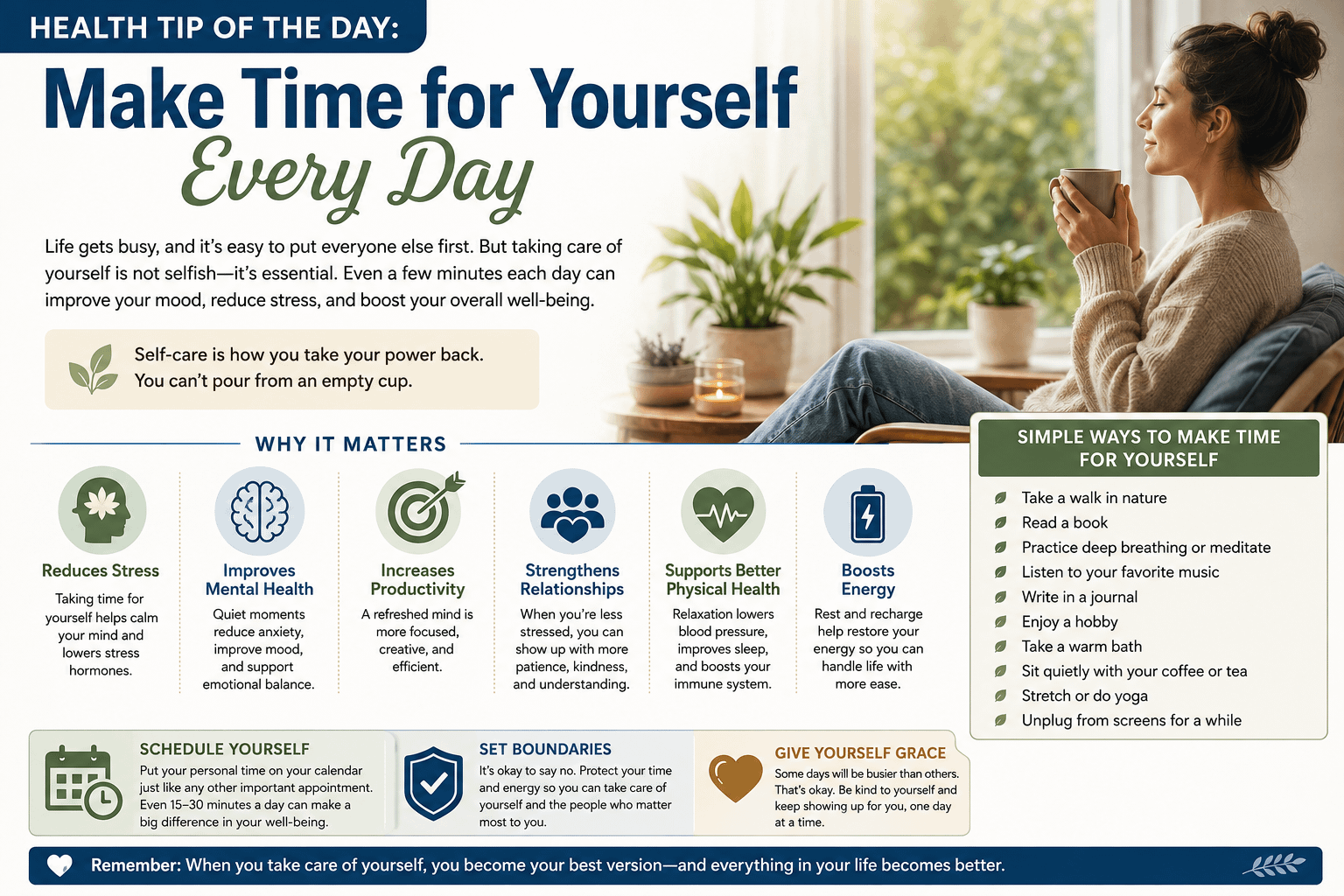
  • Health Tip of the Day: Make Time for Yourself Every Day

    Advertisements

    Life has a way of filling every available minute. Work deadlines, family obligations, household chores, appointments, emails, social media, and unexpected responsibilities often leave little room for one important person—you. Many people wake up each morning already thinking about everyone else they need to help before considering their own well-being.

    If this sounds familiar, you’re not alone.

    One of the healthiest habits you can develop isn’t a new diet, exercise routine, or supplement. It’s making a conscious decision to set aside time for yourself every single day.

    Today’s Health Tip: Make time for yourself every day.

    This doesn’t require hours of free time or an expensive getaway. Even 15 to 30 minutes devoted entirely to your own physical, mental, or emotional well-being can make a remarkable difference. Those small moments of self-care can improve your mood, reduce stress, sharpen your focus, strengthen your relationships, and help you become healthier in every area of life.

    Taking care of yourself isn’t selfish—it is one of the most important investments you can make.


    Why We Often Put Ourselves Last

    Many people have been taught that putting others first is the right thing to do. Parents sacrifice for children. Caregivers devote themselves to loved ones. Employees stay late to finish projects. Friends become the person everyone relies on.

    While generosity and responsibility are admirable qualities, constantly neglecting your own needs can have serious consequences.

    When you continuously give without allowing yourself time to recover, your energy slowly disappears. Stress builds, patience becomes harder to find, and eventually even simple tasks begin to feel overwhelming.

    You may notice signs such as:

    • Feeling exhausted even after sleeping
    • Losing motivation
    • Becoming easily irritated
    • Feeling emotionally numb
    • Struggling to concentrate
    • Experiencing headaches or muscle tension
    • Having difficulty sleeping
    • Feeling anxious throughout the day

    These are often your body’s way of saying it needs rest and attention.


    Your Health Depends on Recovery

    Think about athletes.

    Professional athletes don’t improve because they train nonstop. They become stronger because they combine hard work with proper recovery.

    Your mind works the same way.

    Constant mental activity without breaks eventually decreases productivity, creativity, and emotional resilience.

    Daily personal time allows your brain to recover from the demands of life.

    During moments of relaxation:

    • Your breathing slows.
    • Your heart rate decreases.
    • Stress hormones begin to decline.
    • Your muscles release tension.
    • Your nervous system becomes more balanced.

    Over time, these small periods of recovery can significantly improve your overall health.


    The Physical Benefits of Daily Personal Time

    Many people think self-care only benefits mental health, but it also improves physical health.

    Making time to relax each day may help:

    Lower Blood Pressure

    Chronic stress keeps your body in “fight or flight” mode. Regular relaxation helps your cardiovascular system recover.

    Improve Sleep Quality

    People who consistently unwind before bedtime often fall asleep faster and experience deeper, more restorative sleep.

    Strengthen Your Immune System

    Long-term stress weakens immune function. Relaxation allows your body to better defend itself against illness.

    Reduce Muscle Tension

    Stress often causes tight shoulders, neck pain, headaches, and back discomfort. Quiet moments and gentle stretching help release built-up tension.

    Increase Energy

    Although resting seems like doing less, it actually helps restore the energy needed to accomplish more later.


    Mental Health Benefits

    Taking daily personal time also supports emotional wellness.

    Reduces Anxiety

    Stepping away from constant demands gives your mind an opportunity to slow racing thoughts and regain perspective.

    Improves Focus

    A rested brain processes information more efficiently, helping you make better decisions throughout the day.

    Encourages Creativity

    Many of our best ideas appear during quiet moments rather than busy ones. Walking, journaling, or simply sitting outside can inspire creative thinking.

    Improves Emotional Control

    When you’re well-rested emotionally, you’re less likely to react impulsively during stressful situations.


    You Can’t Pour from an Empty Cup

    Imagine carrying a pitcher of water and pouring a little into everyone else’s glass all day long.

    Eventually, the pitcher becomes empty.

    No matter how much you want to help others, you can’t give what you no longer have.

    Your emotional energy works exactly the same way.

    Self-care refills your pitcher.

    When you regularly care for yourself, you have more patience, kindness, compassion, and energy to share with others.


    What Personal Time Looks Like

    One of the biggest misconceptions about self-care is that it has to be elaborate.

    It doesn’t.

    Your daily personal time should simply be something that helps you feel refreshed.

    Some ideas include:

    Enjoy Nature

    Take a walk around your neighborhood.

    Sit by a lake.

    Listen to birds singing.

    Watch a sunset.

    Fresh air and natural surroundings often calm the mind.

    Read

    Even reading ten pages of a good book can transport your mind away from daily stress.

    Journal

    Writing down your thoughts helps organize emotions, reduce anxiety, and improve self-awareness.

    Try writing:

    • Three things you’re grateful for.
    • One goal for tomorrow.
    • A challenge you’re facing.
    • Something that made you smile today.

    Exercise

    Movement doesn’t have to mean an intense workout.

    A leisurely walk, gentle stretching, yoga, or cycling can improve both physical and mental health.

    Pray or Meditate

    Quiet reflection helps many people find peace, hope, and perspective during difficult seasons.

    Listen to Music

    Your favorite songs can instantly improve your mood and reduce stress.

    Enjoy a Hobby

    Painting, woodworking, photography, baking, knitting, fishing, gardening, or playing an instrument all provide healthy mental breaks.


    Schedule Yourself

    One reason self-care often doesn’t happen is because we expect it to happen naturally.

    Unfortunately, busy schedules rarely leave extra time.

    Treat personal time like an appointment.

    Put it on your calendar.

    Protect it the same way you would protect:

    • A doctor’s appointment
    • A work meeting
    • A family event
    • An important deadline

    When you schedule yourself, you’re communicating that your well-being matters too.


    Learn the Power of Saying No

    Sometimes making time for yourself requires setting healthy boundaries.

    Many people overcommit because they don’t want to disappoint others.

    However, constantly saying yes often means saying no to yourself.

    Healthy boundaries might sound like:

    • “I can’t today.”
    • “I’m unavailable this evening.”
    • “I need some time to recharge.”
    • “Maybe another day.”

    Protecting your time isn’t rude.

    It’s responsible.


    Reduce Screen Time

    Technology is useful, but it also demands constant attention.

    Many people spend several hours every day:

    • Checking social media
    • Reading emails
    • Watching television
    • Scrolling news feeds
    • Responding to messages

    Consider spending part of your personal time away from screens.

    Instead:

    • Sit outside.
    • Read a printed book.
    • Practice breathing exercises.
    • Take a walk.
    • Have an uninterrupted conversation.
    • Simply enjoy silence.

    You may be surprised how refreshing it feels.


    The Importance of Doing Nothing

    Modern society celebrates constant productivity.

    We often feel guilty if we’re not accomplishing something.

    But resting is productive.

    Doing nothing for a few minutes allows your brain to process information, recover from stress, and prepare for the next challenge.

    Silence isn’t wasted time.

    It’s healing time.


    Self-Care Changes Relationships

    When you’re constantly exhausted, even small frustrations can feel overwhelming.

    When you’re rested, you’re more likely to:

    • Listen patiently.
    • Communicate kindly.
    • Solve problems calmly.
    • Show empathy.
    • Enjoy spending time with loved ones.

    Taking care of yourself improves every relationship in your life.


    Small Habits Create Big Results

    You don’t have to completely redesign your schedule.

    Start with simple habits:

    • Wake up 15 minutes earlier.
    • Drink your morning coffee outside.
    • Take a short walk after dinner.
    • Read before bed.
    • Stretch each morning.
    • Practice gratitude every evening.
    • Listen to calming music during your commute.

    Small daily habits often create life-changing results over months and years.


    Give Yourself Grace

    There will be days when life gets busy and your routine is interrupted.

    That’s okay.

    Self-care isn’t about perfection.

    It’s about consistency.

    Tomorrow is another opportunity to make yourself a priority.

    Celebrate progress rather than striving for perfection.


    Final Thoughts

    Your responsibilities are important.

    Your family is important.

    Your career is important.

    But so are you.

    Making time for yourself every day isn’t about escaping responsibilities or avoiding hard work. It’s about giving your body, mind, and spirit the care they need to continue living well.

    When you regularly recharge, you’ll have more energy to pursue your goals, care for the people you love, and enjoy the moments that make life meaningful.

    Remember, self-care isn’t a luxury reserved for special occasions. It’s a daily habit that helps you become healthier, stronger, calmer, and happier.

    Today’s health tip is one worth practicing every day:

    Make time for yourself.

    Even a few quiet moments today can become the foundation of a healthier tomorrow.

    Read More Health & Wellness

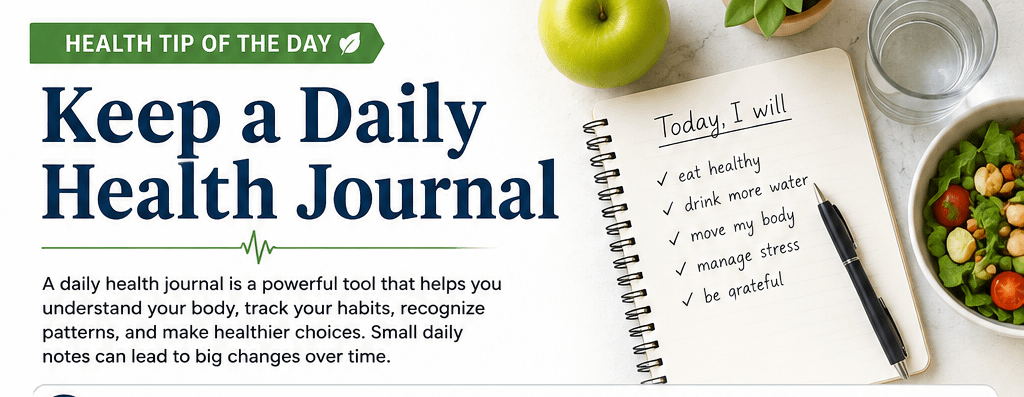
  • Health Tip of the Day: Keep a Daily Health Journal

    Advertisements

    When most people think about improving their health, they often focus on eating better, exercising more, or getting enough sleep. While these habits are all essential, there’s another simple practice that can dramatically improve your overall wellness without costing a dime: keeping a daily health journal.

    A health journal is much more than a diary. It’s a personal record of your habits, symptoms, emotions, and progress that helps you better understand your body and mind. By writing down your daily experiences, you begin to notice patterns that would otherwise go unnoticed. Those insights can help you make smarter decisions, stay motivated, and take control of your well-being.

    Whether your goal is to lose weight, improve your mental health, manage a chronic condition, reduce stress, or simply live a healthier life, a daily health journal can become one of the most valuable tools in your wellness journey.


    Why a Health Journal Works

    It’s easy to think you’ll remember how you felt yesterday or what you ate three days ago—but our memories are far from perfect. We often underestimate unhealthy habits and overestimate healthy ones.

    Writing things down creates awareness. Awareness leads to understanding, and understanding leads to better choices.

    For example, after a few weeks of journaling, you might discover:

    • You sleep better on days when you exercise.
    • Your headaches usually occur after skipping breakfast.
    • Drinking more water reduces your afternoon fatigue.
    • Stress causes you to snack on unhealthy foods.
    • You feel happier after spending time outdoors.
    • Certain foods upset your stomach.
    • Your anxiety increases when you don’t get enough sleep.

    Without tracking these details, these connections can easily be missed.


    The Science Behind Journaling

    Research has shown that journaling can have positive effects on both physical and mental health.

    People who regularly write about their thoughts and daily experiences often report:

    • Lower stress levels
    • Better emotional regulation
    • Improved sleep quality
    • Greater self-awareness
    • Increased motivation
    • Better adherence to healthy habits
    • Improved management of chronic illnesses

    Simply spending a few minutes reflecting on your day can help reduce mental clutter and improve your overall outlook.


    What Should You Include?

    Your journal doesn’t need to be complicated. In fact, the simpler it is, the more likely you’ll stick with it.

    Here are some areas worth tracking.


    Sleep

    Sleep is one of the foundations of good health.

    Each day, record:

    • Bedtime
    • Wake-up time
    • Total hours slept
    • Sleep quality (1–10)
    • Number of times you woke up
    • How rested you felt

    Over time, you’ll notice what helps—or hurts—your sleep quality.


    Nutrition

    Food fuels every part of your body.

    Write down:

    • Meals
    • Snacks
    • Water intake
    • Fruits and vegetables
    • Sugary drinks
    • Alcohol
    • Portion sizes
    • Cravings

    Don’t focus on perfection.

    Instead, focus on awareness.

    Many people naturally begin making healthier food choices simply because they’re paying attention.


    Exercise

    Movement is medicine.

    Track:

    • Walking
    • Running
    • Cycling
    • Weight training
    • Stretching
    • Yoga
    • Sports
    • Housework
    • Yard work

    Include:

    • Duration
    • Intensity
    • How you felt before
    • How you felt afterward

    Even a short walk deserves recognition.


    Water Intake

    Hydration affects nearly every function of your body.

    Track:

    • Glasses of water
    • Sports drinks
    • Coffee
    • Tea
    • Soda

    Many people discover they aren’t drinking nearly enough water until they actually measure it.


    Mood

    Mental health deserves just as much attention as physical health.

    Each day, write a few words describing your emotional state.

    Examples:

    • Happy
    • Calm
    • Excited
    • Hopeful
    • Frustrated
    • Sad
    • Overwhelmed
    • Grateful

    Also ask yourself:

    • What made today better?
    • What made today harder?

    You’ll begin recognizing emotional triggers and positive influences.


    Stress Levels

    Rate your daily stress from 1–10.

    Then write:

    • What caused stress?
    • How did you respond?
    • What helped?

    This simple exercise encourages healthier coping strategies instead of reacting automatically.


    Symptoms

    Your body constantly communicates with you.

    Track symptoms like:

    • Headaches
    • Back pain
    • Joint pain
    • Allergies
    • Digestive issues
    • Fatigue
    • Dizziness
    • Muscle soreness
    • Blood pressure
    • Blood sugar
    • Heart rate

    These records can be incredibly useful during doctor visits.


    Medications and Supplements

    Keeping track of medications improves consistency.

    Record:

    • Medication taken
    • Time taken
    • Vitamins
    • Supplements
    • Missed doses
    • Side effects

    This habit becomes especially valuable if you’re managing multiple prescriptions.


    Weight and Measurements

    If weight loss is one of your goals, avoid weighing yourself multiple times a day.

    Instead, record:

    • Weekly weight
    • Waist measurement
    • Clothing fit
    • Energy level
    • Fitness improvements

    Sometimes the scale doesn’t move even though your health is improving.


    Record Your Wins

    Many people only document problems.

    Instead, celebrate victories.

    Examples include:

    • Walked 30 minutes
    • Ate vegetables with every meal
    • Drank 64 ounces of water
    • Went to bed before 10:00 PM
    • Said no to junk food
    • Took all medications
    • Reduced stress
    • Tried a new healthy recipe
    • Completed a workout
    • Lost one pound

    Small victories build momentum.


    Your Journal Doesn’t Need to Be Perfect

    One mistake people make is believing they have to record everything.

    You don’t.

    Even writing for five minutes each evening can make a huge difference.

    Consistency matters far more than perfection.


    Paper or Digital?

    There’s no right answer.

    Choose whichever method you’ll actually use.

    Popular options include:

    Traditional Notebook

    Simple, inexpensive, and distraction-free.

    Planner

    Great if you already organize your daily schedule.

    Smartphone Notes

    Always available and easy to update.

    Spreadsheet

    Excellent for people who enjoy charts and progress tracking.

    Health Apps

    Many apps automatically track:

    • Steps
    • Sleep
    • Heart rate
    • Calories
    • Water intake
    • Exercise

    Some people even combine apps with handwritten reflections.


    Questions to Ask Yourself Every Day

    If you’re unsure what to write, answer these simple questions:

    • How did I sleep?
    • What healthy choices did I make today?
    • What unhealthy habits showed up?
    • How active was I?
    • How much water did I drink?
    • How stressed did I feel?
    • What made me smile today?
    • What challenged me?
    • What am I grateful for?
    • What’s one thing I can improve tomorrow?

    These questions encourage reflection without taking much time.


    How a Health Journal Builds Better Habits

    Healthy living isn’t about making one perfect decision.

    It’s about making thousands of small decisions over time.

    A journal helps you see those decisions clearly.

    Instead of saying:

    “I think I’m eating healthier.”

    You’ll know.

    Instead of wondering:

    “Why am I always tired?”

    You’ll often find the answer hidden in your own notes.

    That awareness becomes one of your greatest tools for lasting change.


    When to Review Your Journal

    Writing is only half the process.

    Take a few minutes each week or month to review your entries.

    Ask yourself:

    • What habits improved?
    • What habits slipped?
    • What patterns do I notice?
    • What’s helping my health?
    • What’s holding me back?

    Regular reviews turn information into action.


    Remember That Progress Takes Time

    One healthy meal won’t transform your body.

    One workout won’t dramatically improve your fitness.

    Likewise, one bad day won’t ruin your progress.

    Health is built through consistency.

    A journal reminds you that success comes from showing up day after day, even when progress feels slow.


    Final Thoughts

    Keeping a daily health journal is one of the simplest yet most effective ways to take an active role in your well-being. It encourages mindfulness, builds accountability, and helps you uncover valuable insights about your body, emotions, and daily habits. Over time, those small notes become a detailed picture of your health journey, showing not only where you’ve struggled but also how far you’ve come.

    Remember, your journal isn’t meant to be perfect—it’s meant to be honest. Some days you’ll have victories worth celebrating, while other days will remind you that growth takes patience. Both are valuable. Every entry is another opportunity to learn, adjust, and move forward with greater confidence.

    The healthiest life isn’t created overnight. It’s built one decision, one habit, and one day at a time. By keeping a daily health journal, you’re giving yourself the gift of awareness, and awareness is often the first step toward lasting change. Start today with just a few lines, and you’ll be surprised how much those small daily reflections can shape a healthier, happier future.

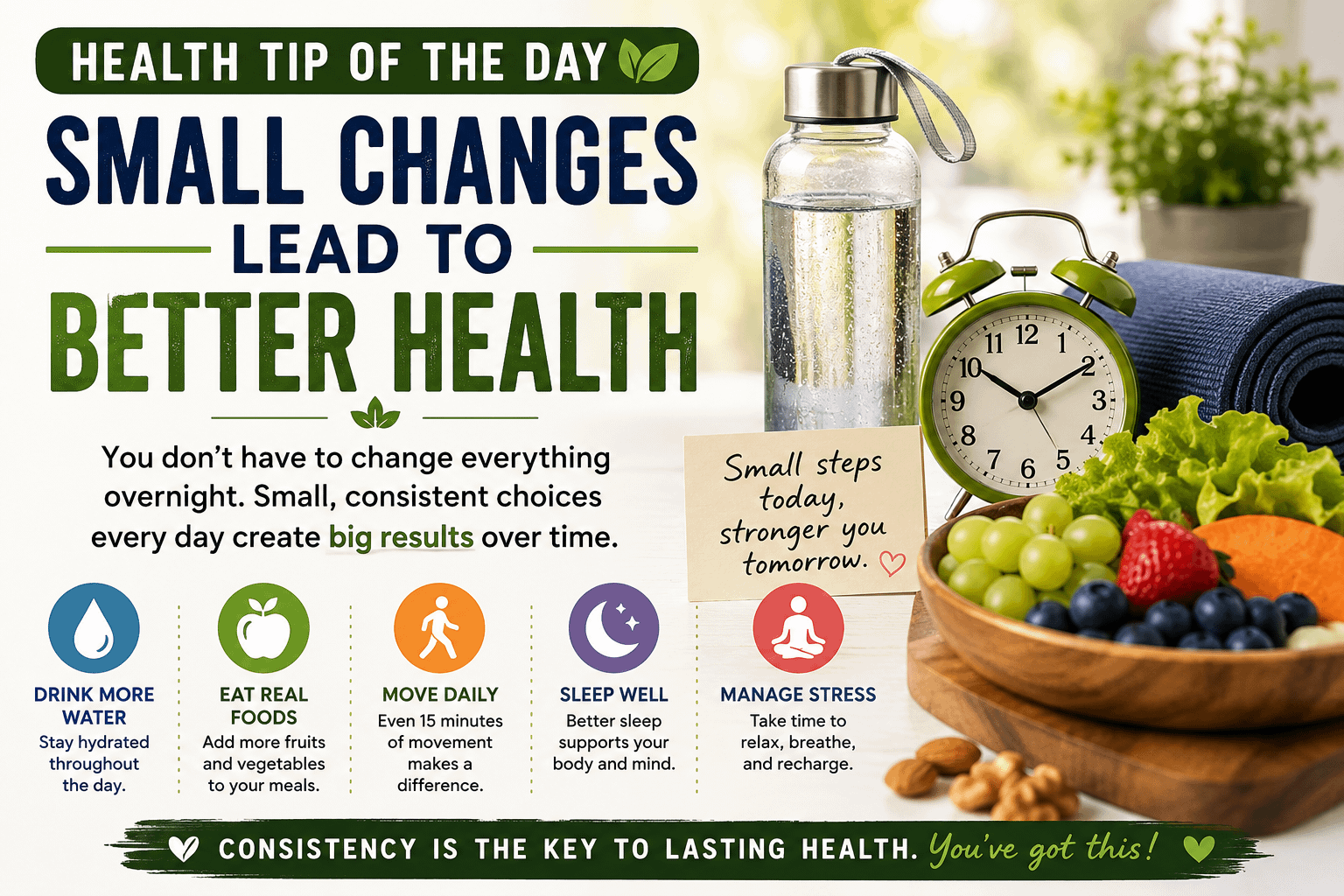
  • Health Tip of the Day: Small Changes Lead to Better Health

    Advertisements

    When many people decide it’s time to improve their health, they often believe they need to completely transform their lives overnight. They commit to strict diets, promise to exercise every day, eliminate all of their favorite foods, and set unrealistic expectations. While the enthusiasm is admirable, this “all-or-nothing” approach often leads to frustration, burnout, and giving up after just a few weeks.

    The truth is much simpler: lasting health is rarely the result of one giant decision. Instead, it is built through hundreds of small choices made consistently over time. Every healthy habit you adopt—no matter how insignificant it seems—moves you closer to a stronger body, a healthier mind, and a longer, more fulfilling life.

    The little things matter. Drinking one more glass of water. Choosing grilled chicken instead of fried. Walking around the block after dinner. Going to bed thirty minutes earlier. Taking a break from your phone to stretch or breathe deeply. These actions may seem too small to matter today, but together they create meaningful, lasting change.

    Why Small Changes Are More Effective Than Big Changes

    One of the biggest reasons people fail to maintain healthy habits is because they try to change everything at once. Radical lifestyle changes demand enormous amounts of willpower, and willpower eventually runs out.

    Small habits work because they fit naturally into your daily routine. They don’t feel overwhelming, and they are easier to repeat until they become automatic.

    Think about brushing your teeth. You don’t debate whether you’ll do it each morning because it has become part of your routine. Healthy habits can become just as automatic when you build them gradually.

    Success comes from consistency—not intensity.

    The Science of Habit Building

    Our brains are designed to seek routines. Every repeated behavior strengthens neural pathways that make the habit easier over time.

    Research has shown that people who focus on making tiny improvements are far more likely to maintain healthy behaviors than those who attempt dramatic lifestyle overhauls.

    Instead of asking yourself:

    “How can I lose 50 pounds?”

    Ask:

    “What’s one healthy decision I can make today?”

    That simple shift in thinking reduces pressure while increasing your chances of long-term success.

    Small Healthy Choices That Make a Big Difference

    Improving your health doesn’t require expensive gym memberships or complicated meal plans. Here are simple habits that almost anyone can begin today.

    Drink More Water

    Water supports nearly every function in your body, including digestion, circulation, temperature regulation, and brain function.

    Try:

    • Drinking a glass of water first thing in the morning
    • Carrying a reusable water bottle
    • Replacing one sugary beverage each day with water

    Even small increases in water intake can improve your energy levels and concentration.

    Add More Fruits and Vegetables

    You don’t have to become vegetarian overnight.

    Instead:

    • Add berries to your breakfast.
    • Include a side salad with lunch.
    • Snack on carrots or apples.
    • Add vegetables to soups, pasta, or casseroles.

    Each serving provides vitamins, minerals, antioxidants, and fiber that support your overall health.

    Move Your Body Every Day

    Exercise doesn’t have to mean spending an hour at the gym.

    Movement is movement.

    Consider:

    • Walking for 15–20 minutes
    • Parking farther away
    • Taking the stairs
    • Stretching during television commercials
    • Dancing while cleaning the house

    Even moderate physical activity improves heart health, strengthens muscles, boosts mood, and reduces stress.

    Prioritize Better Sleep

    Sleep is often overlooked, yet it’s one of the most powerful health tools available.

    Quality sleep helps:

    • Repair muscles
    • Strengthen the immune system
    • Improve memory
    • Balance hormones
    • Support weight management
    • Reduce stress

    Simple ways to sleep better include:

    • Going to bed at the same time each night
    • Turning off electronics 30–60 minutes before bed
    • Keeping your bedroom cool and dark
    • Limiting caffeine later in the day

    Reduce Added Sugar

    You don’t need to eliminate every dessert.

    Instead, begin by making one healthier substitution each day.

    For example:

    • Choose fruit instead of candy.
    • Drink unsweetened tea.
    • Skip sugary soda with lunch.
    • Read food labels to identify hidden sugars.

    Small reductions can improve energy while lowering the risk of chronic diseases.

    Manage Stress One Moment at a Time

    Stress affects nearly every system in the body.

    Chronic stress can contribute to:

    • High blood pressure
    • Anxiety
    • Depression
    • Poor sleep
    • Digestive issues
    • Weakened immunity

    Healthy stress management doesn’t require hours of meditation.

    Try:

    • Five minutes of deep breathing
    • A short walk outside
    • Listening to calming music
    • Reading a book
    • Journaling your thoughts
    • Spending time with loved ones

    Even a few quiet moments each day can make a noticeable difference.

    Celebrate Every Small Victory

    One of the biggest mistakes people make is believing that only major accomplishments deserve celebration.

    Did you choose water instead of soda?

    Celebrate it.

    Did you take a walk today?

    Celebrate it.

    Did you eat one healthy meal?

    Celebrate it.

    Every positive decision reinforces your commitment to living a healthier life.

    Success isn’t measured by perfection—it’s measured by persistence.

    Don’t Let One Bad Day Become a Bad Week

    Everyone has days when they overeat, skip a workout, or choose convenience over nutrition.

    That’s normal.

    The healthiest people aren’t perfect—they simply return to healthy habits quickly.

    Instead of thinking:

    “I ruined my diet.”

    Think:

    “I’ll make my next meal a healthy one.”

    One unhealthy choice never defines your overall health.

    Healthy Living Is a Lifelong Journey

    Your body changes over time, and your habits will evolve with it. There will be seasons when exercise is easier and seasons when rest becomes more important. The goal is not to chase perfection but to build a lifestyle you can sustain through life’s ups and downs.

    When you focus on gradual improvement rather than immediate results, healthy choices become part of who you are instead of something you feel forced to do. Over time, those choices compound into greater energy, improved fitness, better sleep, stronger immunity, and a more positive outlook on life.

    Final Thoughts

    It’s easy to underestimate the power of small decisions because their impact isn’t always visible immediately. Yet every healthy meal, every walk around the neighborhood, every extra glass of water, and every good night’s sleep is an investment in your future.

    The healthiest people aren’t necessarily the ones making dramatic changes. They’re the ones making consistent choices day after day.

    Remember, you don’t have to change your entire life today. Start with one healthy habit. Practice it until it becomes second nature. Then add another. Before long, you’ll discover that those small daily improvements have created a healthier, happier version of yourself.

    Health Tip of the Day: Small changes may seem insignificant in the moment, but they are the building blocks of lifelong health. Start where you are, use what you have, and take one healthy step today. Your future self will thank you.

    Read More Health & Wellness

  • Health Tip of the Day: Consistency Beats Perfection

    Advertisements

    Every day, millions of people decide they want to become healthier. They buy a new gym membership, start an ambitious diet, purchase expensive workout equipment, or promise themselves that “this time will be different.” They begin with excitement and determination, convinced that success depends on doing everything perfectly.

    Then life happens.

    A busy work schedule gets in the way. A family gathering includes unhealthy food. An unexpected illness interrupts a workout routine. A stressful week leads to skipped meals or late-night snacking. Suddenly, that perfect plan feels broken, and many people give up entirely.

    The problem isn’t a lack of desire. It’s the belief that health requires perfection.

    The truth is that consistency beats perfection every single time. Small, repeated actions will always outperform occasional bursts of perfection followed by long periods of inactivity. If you truly want lasting health, focus less on being flawless and more on showing up every day, even if your effort isn’t perfect.

    Why Perfection Is So Dangerous

    Perfection sounds like a good goal, but it often becomes one of the biggest obstacles to success.

    Many people develop an “all-or-nothing” mindset. They believe they must follow their plan exactly or not at all.

    It often sounds like this:

    • “I already ate a donut this morning, so I might as well eat whatever I want today.”
    • “I missed my Monday workout, so I’ll just start again next week.”
    • “I don’t have time for a full workout, so there’s no point in exercising.”
    • “I can’t afford organic food, so healthy eating isn’t possible.”

    These thoughts create unnecessary setbacks.

    Health isn’t ruined by one unhealthy meal.

    Fitness isn’t destroyed by one missed workout.

    Likewise, one healthy meal won’t instantly transform your body.

    Health is built by what you consistently do—not what you occasionally do.

    The Power of Small Daily Habits

    Healthy living isn’t about making huge changes overnight.

    It’s about creating habits so small they become part of your everyday life.

    Imagine making just one positive choice every day:

    • Drinking one extra glass of water.
    • Walking for 20 minutes.
    • Parking farther away from the store.
    • Eating one serving of vegetables.
    • Choosing fruit instead of candy.
    • Stretching before bed.
    • Going to sleep 30 minutes earlier.

    None of these actions seem life-changing on their own.

    But performed consistently for months or years, they dramatically improve your health.

    Success doesn’t come from one amazing day.

    It comes from thousands of ordinary days.

    Healthy Habits Compound Over Time

    Think about brushing your teeth.

    Brushing once doesn’t give you healthy teeth forever.

    Instead, brushing every day prevents problems before they start.

    Health works the same way.

    One workout won’t make you fit.

    One salad won’t make you healthy.

    One good night’s sleep won’t erase months of exhaustion.

    But repeating healthy behaviors consistently creates long-term results.

    Just as interest compounds in a savings account, healthy habits compound in your body.

    Every healthy decision builds upon the last.

    Motivation Comes and Goes

    Many people wait until they “feel motivated.”

    Unfortunately, motivation is temporary.

    Some mornings you’ll wake up energized.

    Other mornings you’ll feel tired.

    Some days you’ll be excited to cook healthy meals.

    Other days you’ll want fast food.

    That’s perfectly normal.

    Successful people don’t depend on motivation.

    They depend on routines.

    Routines remove the need to constantly make decisions.

    Instead of asking:

    “Do I feel like exercising today?”

    Your routine simply says:

    “It’s time for my walk.”

    The less you rely on motivation, the easier healthy living becomes.

    Progress Is Better Than Perfect

    Many people underestimate what small improvements can accomplish.

    If your normal routine includes no exercise, then walking around the block is progress.

    If you usually drink three sodas each day, replacing one with water is progress.

    If you normally stay awake until midnight, going to bed at 11:00 PM is progress.

    Progress doesn’t have to be dramatic.

    It simply has to move you in the right direction.

    Small improvements repeated consistently often produce greater results than dramatic changes that only last a few weeks.

    Learn to Bounce Back Quickly

    Everyone experiences setbacks.

    Vacations happen.

    Birthdays happen.

    Holidays happen.

    Stressful weeks happen.

    Illness happens.

    The healthiest people aren’t those who never slip.

    They’re the ones who recover quickly.

    Imagine driving down the highway.

    If your car drifts slightly toward the shoulder, you don’t abandon the trip.

    You gently steer back into your lane.

    Healthy living works the same way.

    One unhealthy meal isn’t failure.

    One skipped workout isn’t failure.

    One difficult week doesn’t erase months of good choices.

    Simply steer yourself back toward your healthy habits.

    Don’t Compare Your Journey to Others

    Social media often makes health look effortless.

    You’ll see fitness influencers with perfect meals, six-pack abs, and flawless workout routines.

    What you don’t see are:

    • Their difficult days.
    • Their setbacks.
    • Their missed workouts.
    • Their unhealthy meals.
    • Their personal struggles.

    Everyone has challenges.

    Your goal isn’t to live someone else’s life.

    Your goal is to become healthier than you were yesterday.

    Measure your progress against your own past—not someone else’s highlight reel.

    Build Habits That Fit Your Life

    One of the biggest mistakes people make is trying to copy someone else’s routine.

    A schedule that works for one person may be impossible for another.

    Instead, create habits that fit your lifestyle.

    If mornings are busy, exercise in the evening.

    If cooking every meal isn’t realistic, prepare healthy lunches ahead of time.

    If you dislike running, find another activity you enjoy such as swimming, biking, dancing, or hiking.

    The best exercise is the one you’ll actually do.

    The best healthy diet is one you can maintain.

    Consistency matters more than choosing the “perfect” plan.

    Celebrate Small Wins

    Many people wait until they lose 50 pounds before celebrating.

    Don’t wait.

    Celebrate every milestone.

    Celebrate drinking more water.

    Celebrate choosing healthier snacks.

    Celebrate walking farther than last week.

    Celebrate sleeping better.

    Celebrate lowering your blood pressure.

    Celebrate sticking with your routine for another week.

    Every healthy decision deserves recognition because every healthy decision moves you forward.

    Health Includes Your Mind Too

    Consistency isn’t only important for physical health.

    It’s equally important for mental and emotional well-being.

    Simple daily habits like:

    • Reading for 15 minutes
    • Spending time outdoors
    • Practicing gratitude
    • Talking with a friend
    • Praying or meditating
    • Limiting screen time before bed

    can reduce stress and improve emotional resilience over time.

    Your mental health deserves the same consistent care as your physical health.

    Focus on What You Can Control

    You cannot control everything.

    You can’t always control:

    • Your work schedule.
    • The weather.
    • Traffic.
    • Unexpected emergencies.
    • Other people’s choices.

    But you can control:

    • Whether you drink water today.
    • Whether you take a short walk.
    • Whether you choose healthier foods.
    • Whether you get enough sleep.
    • Whether you start again after a setback.

    Focusing on what you can control removes unnecessary stress and helps you stay committed to your health goals.

    Long-Term Health Is a Lifestyle

    Healthy living isn’t a 30-day challenge.

    It isn’t a quick fix.

    It isn’t about fitting into a certain size for one special event.

    True health is about creating a lifestyle you can maintain for years.

    When your habits become part of who you are, staying healthy becomes much easier.

    You no longer exercise because you’re forcing yourself.

    You exercise because it’s simply what you do.

    You don’t choose healthy meals because you’re dieting.

    You choose them because they help you feel your best.

    That’s the difference consistency makes.

    Final Thoughts

    Perfection is an impossible standard that often leads to frustration and disappointment. Consistency, however, is achievable for everyone. Every healthy choice you make—no matter how small—is a step toward a stronger body, a clearer mind, and a healthier future.

    Remember that lasting transformation doesn’t happen because of one incredible workout, one perfectly balanced meal, or one week of flawless discipline. It happens because you continue making good choices, even when life isn’t perfect.

    There will be days when you feel motivated and days when you don’t. There will be successes, setbacks, celebrations, and challenges. None of those moments define your journey. What defines your journey is your willingness to keep moving forward.

    So today, don’t aim for perfection.

    Aim to drink one more glass of water.

    Aim to take one more walk.

    Aim to eat one healthier meal.

    Aim to get one better night’s sleep.

    Then do it again tomorrow.

    Because in the end, consistency doesn’t just beat perfection—it creates the healthy, fulfilling life you’ve been working toward, one day at a time.

    Read More Health & Wellness

  • Health Tip of the Day: Build Healthy Habits One Step at a Time

    Advertisements

    Living a healthier life doesn’t require a complete overhaul overnight. In fact, trying to change everything at once is one of the main reasons people abandon their health goals. The secret to lasting wellness isn’t perfection—it’s consistency. Every healthy lifestyle is built on small, manageable habits that become part of your daily routine over time.

    Whether your goal is to lose weight, increase your energy, improve your heart health, reduce stress, or simply feel better each day, success begins with one simple decision followed by another. Every healthy choice you make today becomes the foundation for a healthier tomorrow.

    The journey toward better health isn’t about making giant leaps. It’s about taking one step, then another, until those steps become second nature.

    Why Small Changes Work Better Than Big Changes

    When people decide to improve their health, they often set unrealistic expectations.

    They tell themselves:

    • “I’m going to exercise every day.”
    • “I’m never eating sugar again.”
    • “I’m cutting out all carbs.”
    • “I’m waking up at 5 a.m. every morning.”

    While those goals sound motivating, they can quickly become overwhelming. When life gets busy—and it always does—those drastic plans are often the first things to disappear.

    Small changes, however, are different.

    Instead of trying to change your entire lifestyle overnight, focus on improving just one area at a time.

    For example:

    • Drink one additional glass of water each day.
    • Replace one sugary drink with water.
    • Walk for ten minutes after dinner.
    • Add one serving of vegetables to lunch.
    • Go to bed fifteen minutes earlier.
    • Stretch for five minutes after waking up.

    These actions may seem insignificant, but repeated daily, they create remarkable results.

    Healthy habits grow stronger through repetition, not intensity.

    The Science Behind Healthy Habits

    Our brains naturally seek routines because they conserve energy. Once a behavior becomes automatic, it requires less mental effort to perform.

    Think about brushing your teeth.

    You probably don’t have to remind yourself every morning because it has become part of your daily routine.

    Healthy eating, regular exercise, drinking enough water, and getting adequate sleep can become just as automatic.

    The key is consistency.

    Research has shown that repeating a behavior in the same context helps it become a habit over time. While there isn’t a magic number of days for habit formation, the more consistently you practice a healthy behavior, the more natural it becomes.

    That’s why choosing one small habit often leads to lasting success.

    Focus on Progress, Not Perfection

    One unhealthy meal doesn’t ruin your diet.

    One missed workout doesn’t erase your fitness progress.

    One late night doesn’t destroy healthy sleep habits.

    The biggest obstacle isn’t making mistakes—it’s believing those mistakes mean you’ve failed.

    Many people adopt an “all-or-nothing” mindset.

    They think:

    “I already skipped today’s workout, so this week is ruined.”

    Or:

    “I ate dessert, so I might as well eat whatever I want.”

    Healthy living doesn’t work that way.

    Every decision is independent.

    Every meal is a new opportunity.

    Every morning is a fresh start.

    Successful people aren’t successful because they’re perfect.

    They’re successful because they keep showing up after setbacks.

    Start With Habits That Feel Easy

    One of the smartest strategies is to make healthy habits almost impossible to fail.

    Instead of saying:

    “I’m going to walk five miles every day.”

    Start with:

    “I’m going to walk around the block.”

    Instead of:

    “I’m going to spend an hour at the gym.”

    Begin with:

    “I’m going to exercise for ten minutes.”

    Once the habit exists, it’s much easier to build upon it.

    Small wins create momentum.

    Momentum creates confidence.

    Confidence creates consistency.

    Consistency creates results.

    Stack New Habits Onto Existing Ones

    One effective strategy is called habit stacking.

    Instead of creating an entirely new routine, attach a healthy habit to something you already do every day.

    For example:

    • After brushing your teeth, drink a glass of water.
    • After making your morning coffee, stretch for five minutes.
    • After dinner, take a short walk.
    • Before watching television, prepare tomorrow’s lunch.
    • Before going to bed, write down three things you’re grateful for.

    Your existing routines become reminders for your new healthy behaviors.

    Build an Environment That Supports Success

    Willpower is helpful, but your environment often determines your choices.

    Make healthy decisions easier.

    Keep fresh fruit where you’ll see it.

    Store unhealthy snacks out of sight.

    Fill a reusable water bottle every morning.

    Lay out workout clothes the night before.

    Prepare healthy lunches ahead of time.

    Place a yoga mat where you’ll walk past it.

    Small environmental changes remove obstacles and make healthy choices more convenient.

    Don’t Forget About Mental Health

    Physical health and mental health work together.

    Building healthy habits isn’t only about nutrition and exercise.

    Your emotional well-being matters just as much.

    Healthy mental habits include:

    • Practicing gratitude.
    • Spending time outdoors.
    • Limiting excessive social media use.
    • Reading instead of endless scrolling.
    • Spending time with supportive people.
    • Taking breaks throughout the workday.
    • Practicing deep breathing or prayer.
    • Allowing yourself time to rest without guilt.

    A healthy mind supports a healthy body.

    Make Sleep a Priority

    Sleep is one of the most overlooked aspects of good health.

    Without enough quality sleep:

    • Energy decreases.
    • Stress increases.
    • Hunger hormones become unbalanced.
    • Concentration suffers.
    • Recovery slows.
    • Immune function weakens.

    Simple bedtime habits can improve sleep quality:

    • Go to bed at the same time each night.
    • Limit caffeine late in the day.
    • Turn off electronic devices before bedtime.
    • Keep your bedroom cool and dark.
    • Read a book instead of scrolling your phone.

    Good sleep strengthens every other healthy habit you’re trying to build.

    Stay Active Throughout the Day

    Exercise doesn’t always require a gym membership.

    Movement is what matters.

    Simple ways to stay active include:

    • Taking the stairs.
    • Parking farther away.
    • Walking during phone calls.
    • Stretching every hour while working.
    • Gardening.
    • Playing with your children or grandchildren.
    • Walking your dog.
    • Dancing while cleaning your home.

    Every movement counts.

    The goal isn’t perfection—it’s reducing long periods of inactivity.

    Fuel Your Body With Better Choices

    Healthy eating doesn’t require strict diets or eliminating every favorite food.

    Instead, focus on balance.

    Choose whole foods more often.

    Eat colorful fruits and vegetables.

    Include lean protein.

    Choose whole grains.

    Drink plenty of water.

    Enjoy treats occasionally without guilt.

    Healthy eating is about nourishing your body, not punishing yourself.

    Learn to Expect Setbacks

    Life will interrupt your routine.

    Vacations.

    Illness.

    Busy work schedules.

    Family emergencies.

    Stressful seasons.

    These aren’t failures.

    They’re simply part of life.

    The important thing is returning to your healthy habits as soon as possible.

    Never wait until Monday.

    Never wait until next month.

    Never wait until New Year’s Day.

    Restart today.

    Celebrate Every Small Victory

    Every healthy decision deserves recognition.

    Celebrate when you:

    • Walk an extra mile.
    • Drink enough water.
    • Cook dinner at home.
    • Skip an unnecessary sugary snack.
    • Finish a workout.
    • Choose fruit instead of candy.
    • Wake up feeling refreshed.
    • Reach a weekly goal.

    Celebrating progress reinforces positive behavior and keeps motivation high.

    Remember, success is built from hundreds of small victories—not one giant accomplishment.

    Your Future Is Built One Choice at a Time

    Imagine where you’ll be one year from now if you improve by just one percent each day.

    Those tiny improvements compound over time.

    One healthy meal becomes healthier eating.

    One short walk becomes an active lifestyle.

    One glass of water becomes proper hydration.

    One early bedtime becomes consistent quality sleep.

    One encouraging decision becomes a healthier life.

    You don’t need to become a different person overnight.

    You simply need to become a little healthier than you were yesterday.

    Final Thoughts

    The healthiest people aren’t necessarily the ones with perfect diets or flawless fitness routines. They’re the ones who consistently make good choices, even when life gets busy. Healthy habits are not built through dramatic changes—they are built through small actions repeated day after day.

    Choose one healthy habit to begin this week. Keep it simple, stay consistent, and be patient with yourself. Over time, those small efforts will grow into a lifestyle that supports better physical health, improved mental well-being, increased energy, and a greater quality of life.

    Remember, every healthy life begins with a single step. Take yours today.


    Key Takeaways

    • Start with one small, achievable healthy habit.
    • Focus on consistency rather than perfection.
    • Build new habits onto existing daily routines.
    • Make your environment support healthy choices.
    • Prioritize sleep, hydration, nutrition, movement, and mental wellness.
    • Expect setbacks, but don’t let them stop your progress.
    • Celebrate small victories because they lead to lasting success.
    • Healthy habits become easier with repetition and patience.

    Read More Health & Wellness

  • Health Tip of the Day: Take a 10-Minute Walk Every Day

    Advertisements

    Small Steps Can Lead to Big Health Benefits

    When people think about improving their health, they often imagine intense workouts, expensive gym memberships, or hours of exercise every week. While those things can certainly help, one of the most effective habits you can develop is also one of the simplest: taking a 10-minute walk every day.

    Just ten minutes of walking can improve your physical health, boost your mental well-being, and help you build a routine that lasts. The key isn’t perfection—it’s consistency. A short walk each day is far better than planning an hour-long workout that never happens.

    If you’re looking for an easy way to improve your overall health, lace up your shoes and take that first step.


    Why Walking Is So Good for Your Body

    Walking is one of the safest and most natural forms of exercise. Nearly everyone can do it regardless of age or fitness level, and it requires no special equipment other than a comfortable pair of shoes.

    Even a brief daily walk helps your body by:

    • Improving circulation
    • Strengthening your heart
    • Lowering blood pressure
    • Burning calories
    • Supporting healthy weight management
    • Increasing energy levels
    • Strengthening muscles and joints
    • Improving balance and coordination

    Over time, these small daily walks can significantly reduce your risk of heart disease, stroke, type 2 diabetes, and other chronic illnesses.


    A Boost for Your Heart

    Your heart is a muscle, and like every muscle, it becomes stronger with regular activity.

    Walking helps:

    • Improve cardiovascular fitness
    • Increase healthy blood flow
    • Lower resting heart rate
    • Reduce bad cholesterol (LDL)
    • Increase good cholesterol (HDL)

    Just ten minutes of brisk walking can gently raise your heart rate and begin improving your cardiovascular health.


    Walking Supports Mental Health

    Walking doesn’t just benefit your body—it also benefits your mind.

    During a walk, your brain releases chemicals that naturally improve your mood, including:

    • Endorphins
    • Serotonin
    • Dopamine

    These “feel-good” chemicals can help reduce:

    • Stress
    • Anxiety
    • Mild depression
    • Mental fatigue

    Many people notice they think more clearly after taking even a short walk outdoors.


    Improve Your Energy Naturally

    It may seem strange, but moving your body actually gives you more energy.

    Walking increases oxygen flow throughout your body and improves circulation, helping you feel:

    • More alert
    • Less sluggish
    • Better focused
    • More productive

    Instead of reaching for another cup of coffee during an afternoon slump, try taking a quick walk around the block.


    Walking Helps Manage Weight

    While a 10-minute walk won’t burn hundreds of calories, it contributes to a healthier lifestyle.

    Walking:

    • Burns calories
    • Supports metabolism
    • Helps preserve muscle
    • Encourages healthier habits

    People who begin walking regularly often find themselves making healthier food choices and becoming more active throughout the day.


    Better Digestion

    One of the best times to walk is after a meal.

    A short walk can help:

    • Improve digestion
    • Reduce bloating
    • Help regulate blood sugar levels
    • Decrease feelings of sluggishness after eating

    Even five to ten minutes after dinner can make a noticeable difference.


    Walking Can Improve Sleep

    Regular movement during the day helps regulate your body’s natural sleep cycle.

    Daily walking may help you:

    • Fall asleep faster
    • Sleep more deeply
    • Wake up feeling refreshed

    Morning walks are especially beneficial because exposure to natural sunlight helps regulate your internal clock.


    Strengthen Bones and Joints

    Walking is a low-impact, weight-bearing exercise that helps maintain healthy bones.

    Benefits include:

    • Stronger bones
    • Improved joint flexibility
    • Better balance
    • Reduced stiffness

    For many people, walking is easier on the knees and hips than higher-impact exercises like running.


    Build a Healthy Habit

    One of the greatest strengths of a 10-minute walk is that it’s achievable.

    Instead of thinking:

    “I have to exercise for an hour.”

    Try thinking:

    “I only need ten minutes.”

    Small habits become lifelong routines because they feel manageable.

    Over time, those ten minutes may naturally become fifteen, twenty, or even thirty.


    Easy Ways to Fit Walking Into Your Day

    Finding ten minutes is often easier than we think.

    Try:

    • Walking before breakfast
    • Taking a walk during lunch
    • Parking farther away
    • Walking while talking on the phone
    • Taking the stairs when possible
    • Walking after dinner
    • Walking the dog
    • Walking with family or friends

    The goal isn’t speed—it’s consistency.


    Make It Enjoyable

    You’re more likely to continue walking if you enjoy the experience.

    Consider:

    • Listening to music
    • Playing an audiobook
    • Listening to a podcast
    • Walking in nature
    • Exploring new neighborhoods
    • Inviting a friend
    • Walking with your spouse
    • Watching the sunrise or sunset

    Turning your walk into something you look forward to makes the habit easier to maintain.


    Every Step Counts

    Don’t worry if you miss a day.

    Health isn’t built from perfection—it’s built from returning to healthy habits again and again.

    A ten-minute walk may seem small today, but over weeks, months, and years, those steps add up to thousands of healthier choices.

    Remember:

    • One walk becomes a routine.
    • One routine becomes a lifestyle.
    • One lifestyle can change your future.

    Final Thoughts

    You don’t have to transform your life overnight to become healthier. Sometimes the most meaningful improvements begin with the simplest actions.

    A daily 10-minute walk can improve your heart, strengthen your body, clear your mind, reduce stress, and help you build lasting healthy habits. Whether you walk around your neighborhood, through a local park, or simply around your workplace, every step is an investment in your well-being.

    So today, set aside just ten minutes. Step outside, breathe deeply, and start walking. Your future self will thank you.


    Health Tip of the Day

    Take a 10-minute walk every day. Small steps taken consistently can lead to a healthier heart, a clearer mind, and a stronger body.

    Read More Health & Wellness

  • Health Tip of the Day: Start Your Morning with a Glass of Water

    Advertisements

    What if one of the healthiest choices you could make each day took less than a minute?

    You don’t need expensive supplements, complicated diets, or intense workout routines to begin improving your health. Sometimes, the smallest habits produce the greatest long-term benefits. One of those habits is drinking a glass of water immediately after waking up.

    Your body depends on water for nearly every function it performs. From circulating blood and regulating body temperature to helping your brain think clearly and your digestive system function properly, water is essential for life. Yet after spending six to eight hours sleeping without drinking anything, your body wakes up needing hydration.

    Making it a daily habit to drink a glass of water before your morning coffee, breakfast, or checking your phone is one of the simplest investments you can make in your health.

    Why Your Body Wakes Up Dehydrated

    While you sleep, your body continues working. You breathe, sweat, repair tissues, regulate hormones, and perform countless biological processes throughout the night. All of these activities use water.

    Even though you aren’t physically active while sleeping, your body loses fluids through:

    • Breathing
    • Perspiration
    • Natural metabolic processes

    By morning, it’s common to be mildly dehydrated. This dehydration may not be severe enough to make you feel thirsty, but it can still affect how you feel.

    You may notice:

    • Morning fatigue
    • Dry mouth
    • Brain fog
    • Headaches
    • Difficulty concentrating
    • Low energy

    Drinking water soon after waking helps replace the fluids your body has lost overnight and prepares you for the day ahead.

    Water Powers Nearly Every Organ

    The human body is made up of approximately 60% water, making hydration essential for maintaining good health.

    Water helps:

    • Carry oxygen and nutrients to your cells
    • Remove waste products through urine and sweat
    • Protect joints by lubricating cartilage
    • Cushion the brain and spinal cord
    • Regulate body temperature
    • Support healthy circulation
    • Maintain healthy blood pressure
    • Keep muscles functioning properly

    Without enough water, every system in your body has to work harder.

    A Natural Morning Energy Boost

    Many people reach for coffee as soon as they wake up because they feel exhausted. While caffeine certainly has its place, dehydration is often part of the reason people feel sluggish in the morning.

    Water helps improve circulation and allows oxygen and nutrients to reach your muscles and brain more efficiently.

    Instead of relying solely on caffeine, try this simple routine:

    1. Wake up.
    2. Drink a full glass of water.
    3. Wait 10 to 15 minutes.
    4. Then enjoy your morning coffee or tea.

    Many people find they feel noticeably more refreshed after hydrating first.

    Supports Brain Function

    Even mild dehydration can impact your ability to think clearly.

    Research has shown that inadequate hydration may affect:

    • Attention
    • Memory
    • Mood
    • Decision-making
    • Reaction time

    Because your brain contains a large amount of water, staying hydrated helps it perform at its best.

    Starting your day hydrated can improve mental clarity before work, school, meetings, or other daily responsibilities.

    Helps Your Digestive System Get Started

    Water is an essential part of healthy digestion.

    Drinking water first thing in the morning helps your digestive system prepare for breakfast by supporting the production of digestive juices and encouraging normal movement through your intestines.

    Adequate hydration may help:

    • Prevent occasional constipation
    • Improve bowel regularity
    • Support nutrient absorption
    • Keep the digestive tract functioning efficiently

    When paired with a fiber-rich breakfast, morning hydration becomes even more beneficial.

    Supports Heart Health

    Your heart works continuously to pump blood throughout your body.

    When you’re dehydrated, blood volume decreases slightly, causing your heart to work harder to circulate oxygen and nutrients.

    Proper hydration helps support:

    • Healthy blood flow
    • Normal circulation
    • Stable blood pressure
    • Cardiovascular efficiency

    While drinking water alone isn’t a cure for heart disease, maintaining good hydration is an important part of overall cardiovascular wellness.

    May Reduce Morning Headaches

    One overlooked cause of morning headaches is dehydration.

    Although headaches can have many causes—including stress, poor sleep, or medical conditions—starting the day with water may help prevent dehydration-related headaches for some people.

    If you frequently wake up with headaches, consider whether you’re drinking enough water throughout the day and discuss persistent symptoms with your healthcare provider.

    Helps Support Healthy Kidneys

    Your kidneys filter approximately 50 gallons of blood every day.

    Water helps your kidneys:

    • Remove toxins
    • Filter waste
    • Balance minerals
    • Produce urine efficiently

    Chronic dehydration may increase the risk of kidney stones in some individuals, making consistent hydration an important preventive habit.

    Can Help Manage Appetite

    Many people confuse thirst with hunger.

    Before reaching for an unnecessary snack, drinking water may help you determine whether your body actually needs food or simply needs hydration.

    Having water before breakfast may also help you become more mindful about your food choices throughout the day.

    It’s not a weight-loss shortcut, but it’s a healthy habit that supports mindful eating.

    Supports Healthy Skin

    Healthy skin begins from within.

    Water contributes to healthy skin by helping maintain:

    • Skin hydration
    • Elasticity
    • Circulation
    • Nutrient delivery

    While water isn’t a miracle cure for acne or aging, staying hydrated supports your skin’s natural ability to function and repair itself.

    Healthy skin also depends on:

    • Nutritious foods
    • Quality sleep
    • Sun protection
    • Stress management
    • Regular exercise

    Water is simply one important piece of the puzzle.

    Helps Your Muscles Perform Better

    Your muscles rely on water to function properly.

    Even mild dehydration may contribute to:

    • Muscle fatigue
    • Reduced endurance
    • Increased cramping risk
    • Slower recovery

    If you exercise in the morning, drinking water before your workout helps prepare your body for physical activity.

    Supports a Healthy Metabolism

    Water plays a role in many metabolic processes that convert food into energy.

    Although drinking water isn’t a magic metabolism booster, adequate hydration helps your body efficiently carry out the chemical reactions needed to sustain life.

    Combined with nutritious eating and regular exercise, hydration supports overall metabolic health.

    Builds Positive Daily Momentum

    One healthy decision often leads to another.

    When you start your day by drinking water, you’re more likely to continue making healthy choices throughout the day.

    That one simple action may encourage you to:

    • Eat a balanced breakfast
    • Take a morning walk
    • Stretch your muscles
    • Practice gratitude
    • Take your medications or vitamins as directed
    • Make healthier lunch choices
    • Drink more water throughout the day

    Healthy lifestyles aren’t built from occasional major efforts—they’re built from consistent daily habits.

    How Much Water Should You Drink?

    A good goal is 8 to 16 ounces (1–2 cups) shortly after waking.

    However, hydration needs vary depending on:

    • Age
    • Body size
    • Physical activity
    • Climate
    • Medical conditions
    • Pregnancy or breastfeeding
    • Medications

    The best indicator of good hydration is usually pale yellow urine and drinking enough fluids throughout the day to avoid persistent thirst.

    Ways to Make It a Daily Habit

    Creating lasting habits often depends on making them easy.

    Here are several ways to remember:

    Keep Water Beside Your Bed

    Place a reusable water bottle or glass on your nightstand before going to sleep.

    Drink Before Coffee

    Create a rule that coffee only comes after you’ve finished one glass of water.

    Pair It With Another Habit

    Habit stacking is an effective strategy.

    For example:

    • Turn off your alarm.
    • Drink water.
    • Brush your teeth.
    • Stretch for five minutes.

    Repeating the same sequence each morning helps make the habit automatic.

    Add Natural Flavor

    If plain water feels boring, try adding:

    • Lemon slices
    • Lime
    • Fresh mint
    • Cucumber
    • Orange slices

    These additions can make hydration more enjoyable without adding much sugar.

    Common Hydration Myths

    Myth: Coffee Doesn’t Count

    Coffee contributes to your daily fluid intake, although plain water is still the best first choice after waking.

    Myth: You Must Drink Eight Glasses Exactly

    Hydration needs differ from person to person. Focus on drinking consistently throughout the day rather than obsessing over a specific number.

    Myth: You Only Need Water When You’re Thirsty

    Thirst is one sign of dehydration, but by the time you feel thirsty, your body may already be slightly dehydrated. Drinking water regularly helps prevent this.

    When to Drink More Water

    You may need extra fluids if you:

    • Exercise regularly
    • Spend time outdoors in hot weather
    • Have a fever
    • Experience vomiting or diarrhea
    • Work in physically demanding jobs
    • Live in dry climates

    Listen to your body and increase your water intake when conditions require it.

    The Long-Term Benefits of Consistency

    One glass of water won’t dramatically transform your health overnight.

    However, drinking water every morning for months and years can contribute to:

    • Better hydration
    • Improved energy
    • Healthier digestion
    • Better concentration
    • More consistent healthy habits
    • Improved overall wellness

    Small actions repeated daily often produce the biggest long-term results.

    Final Thoughts

    Good health doesn’t always come from dramatic lifestyle changes. More often, it’s built through simple choices repeated consistently over time.

    Starting each morning with a glass of water is one of those choices. It nourishes your body after a night’s rest, supports your brain and digestive system, encourages healthier routines, and helps prepare you for whatever the day brings.

    Tomorrow morning, before reaching for your coffee, your phone, or your to-do list, reach for a glass of water instead. It may seem like a small step, but over time, small healthy habits can lead to meaningful improvements in how you feel and how you live.


    Health Tip of the Day

    “Your body has been working hard while you slept. Start every morning by giving it the one thing it needs most—a refreshing glass of water. Small healthy habits practiced consistently create a lifetime of better health.”

    Read More Health & Wellness

  • When the Anniversary of a Trauma Hits You: Why It Hurts Again and How to Get Through It

    Advertisements

    There are days on the calendar that most people see as ordinary.

    Then there are dates that forever changed your life.

    The anniversary of a traumatic event can arrive quietly, but its impact can feel overwhelming. Whether it’s the day you lost someone you love, survived an accident, experienced abuse, received devastating news, or endured another life-altering event, your mind and body often remember—even when you wish they wouldn’t.

    If you’ve ever wondered why you’re suddenly anxious, emotional, exhausted, or unable to concentrate as a certain date approaches, you’re not imagining it. What you’re experiencing is commonly known as an anniversary reaction, and it is a well-documented response to trauma.

    The important thing to remember is this:

    Feeling the weight of that day does not mean you’re moving backward. It means your heart is remembering something that mattered deeply.

    What Is an Anniversary Reaction?

    An anniversary reaction occurs when emotional or physical symptoms return around the date of a traumatic event. Sometimes it happens on the exact day. Other times it begins days or even weeks beforehand.

    Your brain stores traumatic memories differently than ordinary memories. Instead of filing them neatly away, it often associates them with dates, seasons, weather, sounds, smells, music, or even seemingly unrelated events.

    Without realizing it, your nervous system begins preparing for danger because it remembers what happened before.

    That’s why someone may suddenly experience:

    • Sadness
    • Anxiety
    • Panic attacks
    • Trouble sleeping
    • Nightmares
    • Fatigue
    • Irritability
    • Difficulty concentrating
    • Loss of appetite
    • Increased appetite
    • Feelings of loneliness
    • Crying unexpectedly
    • Physical aches and pains

    These reactions are your body’s way of remembering.

    Trauma Lives in More Than Your Memory

    Many people believe trauma is only something we think about.

    In reality, trauma affects the entire body.

    Researchers have found that traumatic experiences can influence:

    • Heart rate
    • Stress hormones
    • Muscle tension
    • Sleep cycles
    • Immune function
    • Digestion
    • Breathing patterns

    Sometimes your body remembers before your mind does.

    You may wake up feeling uneasy without understanding why until you realize what date is approaching.

    That realization often brings clarity:

    “That’s why I’ve been feeling this way.”

    Why It Can Feel Like It Just Happened

    One of the most frustrating parts of trauma anniversaries is how fresh the pain can seem.

    Years may have passed.

    Life may have changed.

    You’ve worked hard to heal.

    Yet suddenly it feels like you’re right back where you started.

    That doesn’t mean healing failed.

    Trauma memories are often stored differently than everyday memories. They can be recalled with remarkable emotional intensity because the brain originally viewed the event as life-threatening or deeply significant.

    Healing doesn’t erase the memory.

    It changes how you carry it.

    Everyone Experiences Trauma Anniversaries Differently

    No two people respond the same way.

    Some become emotional.

    Others become numb.

    Some withdraw.

    Others stay busy to avoid thinking.

    Some feel angry.

    Others become quiet.

    There is no “correct” way to react.

    Your experience is shaped by your personality, support system, coping skills, previous trauma, and the meaning the event holds in your life.

    Never compare your healing journey to someone else’s.

    Grief and Trauma Often Walk Together

    Many traumatic anniversaries involve loss.

    The death of a spouse.

    The loss of a child.

    A divorce.

    A medical diagnosis.

    The end of a friendship.

    A natural disaster.

    Military service.

    Violence.

    The anniversary often reminds us not only of what happened—but also of everything that never got to happen afterward.

    Birthdays that weren’t celebrated.

    Vacations never taken.

    Conversations never finished.

    Dreams left incomplete.

    That secondary grief can sometimes hurt just as much as the original event.

    You May Feel Guilty for Smiling

    Many survivors notice another painful emotion.

    Guilt.

    You may think:

    “Why am I laughing today?”

    “Shouldn’t I still be grieving?”

    “Am I forgetting them?”

    “Am I disrespecting what happened?”

    Healing often creates guilt because joy can feel like betrayal.

    But healing does not erase love.

    Moving forward does not mean moving on.

    You can remember the past while still embracing the future.

    Healthy Ways to Prepare for a Trauma Anniversary

    Planning ahead often helps reduce emotional overwhelm.

    Consider these ideas:

    Give Yourself Permission to Feel

    Don’t pressure yourself to “stay strong.”

    Allow yourself to cry.

    Allow yourself to rest.

    Allow yourself to remember.

    Suppressing emotions usually prolongs them.

    Reduce Your Schedule

    If possible, avoid filling the day with stressful obligations.

    Leave room to breathe.

    Your emotional energy may already be stretched thin.

    Reach Out to Someone Safe

    Tell a trusted friend or family member:

    “Tomorrow may be difficult for me.”

    You don’t have to carry it alone.

    Sometimes simply knowing someone understands can ease the burden.

    Honor What Was Lost

    Some people find comfort by:

    • Visiting a meaningful place
    • Looking through photographs
    • Lighting a candle
    • Writing a letter
    • Saying a prayer
    • Listening to meaningful music
    • Donating to a charity
    • Helping someone else

    Creating purpose around the day can transform it from only pain into remembrance.

    Take Care of Your Body

    Trauma affects physical health too.

    Try to:

    • Stay hydrated
    • Eat nourishing meals
    • Go for a gentle walk
    • Stretch
    • Practice slow breathing
    • Prioritize sleep

    Small acts of self-care help regulate your nervous system.

    What If You Feel Like You’re Falling Apart?

    Sometimes an anniversary hits much harder than expected.

    You may experience:

    • Flashbacks
    • Severe anxiety
    • Depression
    • Panic attacks
    • Thoughts that life feels hopeless
    • Emotional numbness lasting weeks

    If these symptoms become overwhelming or interfere with daily life, reaching out to a licensed mental health professional is a sign of strength—not weakness.

    You don’t have to face trauma alone.

    Healing is often something we do together.

    If Someone You Love Is Facing a Trauma Anniversary

    You don’t need perfect words.

    You simply need presence.

    Instead of trying to fix their pain, consider saying:

    “I’m thinking of you today.”

    “I remember what today means.”

    “You don’t have to go through today alone.”

    “I’m here if you want company.”

    Sometimes silence, a hug, or simply sitting together speaks louder than any advice.

    Healing Doesn’t Mean Forgetting

    Many people worry they’ll eventually forget.

    The sound of a laugh.

    The face of someone they loved.

    The life they once had.

    But healing isn’t about forgetting.

    It’s about learning how to remember without being completely consumed.

    The memory stays.

    The pain slowly changes.

    One day, the tears may come with gratitude instead of despair.

    That day doesn’t mean you’ve loved less.

    It means you’ve learned to carry both love and loss together.

    Finding Hope Beyond the Anniversary

    Every anniversary reminds us that something significant happened.

    But it also reminds us of something else.

    You survived.

    Even if survival didn’t feel brave.

    Even if you struggled every day.

    Even if you questioned whether you could continue.

    You are still here.

    Every sunrise after trauma is evidence that hope continues to exist—even when it feels distant.

    Healing isn’t measured by whether you stop hurting.

    It’s measured by whether you keep living despite the hurt.

    And every year you continue moving forward, you’re writing another chapter that trauma never intended for you to have.

    Final Thoughts

    Trauma anniversaries are never easy.

    Some years they may pass quietly.

    Other years they may knock the wind out of you.

    Both experiences are normal.

    Be gentle with yourself.

    Honor your emotions without letting them define your future.

    Remember the people you love.

    Remember how far you’ve come.

    And remember this:

    The anniversary marks the day your life changed—but it does not have to define every day that follows.

    There is room for grief.

    There is room for healing.

    There is room for hope.

    Even after the hardest dates on the calendar.

    A Father’s Guide to Surviving the Loss of a Child

Exit mobile version