Category: Health

  • When You Stand Alone to Fight the Demons

    When You Stand Alone to Fight the Demons

    Advertisements

    There are battles in life that no crowd can see.

    No applause. No backup. No cheering section waiting behind you.

    Just you… standing in the middle of emotional exhaustion, grief, fear, heartbreak, anxiety, addiction, loneliness, trauma, or memories that refuse to let go. Some demons don’t show themselves on the outside. They live quietly inside your thoughts, whispering doubts when the world becomes silent.

    And sometimes, the hardest part is realizing you are fighting them alone.

    There are moments when people disappear during your darkest seasons. The phone gets quieter. Messages stop coming. Invitations fade. People who once promised they would always be there suddenly become distant when your pain becomes too heavy for them to carry.

    That loneliness changes a person.

    When you stand alone to fight your demons, you discover how exhausting survival can become. You wake up tired before the day even begins. You smile when necessary while carrying storms nobody notices. You learn how to function while emotionally bleeding inside. You become both the wounded soul and the person trying to save it.

    Some days, victory is simply getting out of bed.

    Some days, victory is not giving up.

    People often misunderstand strength. They think strength means never breaking down, never crying, never struggling. But real strength is continuing to fight while breaking inside. Real strength is surviving nights when your mind tells you to quit. Real strength is carrying grief that never fully leaves while still trying to live with purpose.

    Standing alone teaches you painful lessons.

    It teaches you who truly cares.

    It teaches you how silence can feel louder than words.

    It teaches you that some people love the healed version of you but disappear during the healing process.

    But it also teaches you something powerful: you are stronger than you ever imagined.

    Because every time you survive another hard day, another sleepless night, another emotional collapse, you prove something to yourself that nobody can take away. You prove that even wounded, exhausted, and emotionally overwhelmed, you are still standing.

    The demons may return from time to time.

    The grief may still visit unexpectedly.

    The anxiety may still tighten its grip.

    The memories may still hurt.

    But survival changes you. Fighting alone builds a resilience most people will never fully understand. You become someone who knows how to keep moving forward despite pain. You become someone who values peace differently. You become someone who understands invisible battles and shows compassion to others quietly fighting their own wars.

    And maybe that is the hidden purpose within suffering.

    Not to destroy you.

    But to deepen you.

    To soften your heart while strengthening your spirit.

    To remind you that even in isolation, your story is not over.

    If you are standing alone right now fighting demons nobody sees, please remember this:

    You are not weak because you struggle.

    You are not failing because healing takes time.

    You are not broken because life wounded you deeply.

    And you are not invisible, even if it feels that way tonight.

    Every scar carries proof that you survived something that tried to destroy you.

    Keep fighting.

    Keep breathing.

    Keep moving forward one day at a time.

    Because sometimes the people carrying the heaviest battles are also the ones carrying the greatest strength.

    Read More Health & Wellness

  • Sometimes the Person Who’s Been There for Everyone Else Needs Someone to Be There for Them

    Advertisements

    There is a certain kind of exhaustion that doesn’t come from physical labor, lack of sleep, or long days at work. It comes from always being the person everyone leans on.

    The helper.
    The listener.
    The fixer.
    The encourager.
    The dependable one.

    The person who answers the phone no matter the hour. The one who checks on others first. The one who gives advice, support, comfort, and strength even while quietly fighting their own battles inside.

    People often assume that the strongest person in the room is doing just fine.

    But strength can be deceiving.

    Sometimes the person who smiles the most is hurting the deepest. Sometimes the person lifting everyone else up is barely holding themselves together. Sometimes the person who never asks for help has simply grown used to believing nobody notices when they need it.

    There are people walking through life carrying grief they never fully talk about, stress they hide behind humor, loneliness buried beneath responsibilities, and emotional exhaustion masked by kindness.

    And because they continue showing up for everyone else, people forget they are human too.

    The truth is, even the strongest hearts get tired.

    Even the people who give endless support need reassurance. Even the ones who comfort others need comfort themselves. Even the person who always says, “I’m okay,” sometimes wishes someone would look a little deeper and ask again.

    Being the dependable one can become isolating.

    You begin to feel like your purpose is to carry everyone else’s pain while keeping your own hidden. You become so focused on making sure others are alright that you stop asking yourself whether you are alright.

    And over time, that emotional weight becomes heavy.

    Not because helping others is wrong, but because nobody was meant to carry life alone.

    Support should not only flow one direction.

    The people who constantly pour into others also deserve someone willing to pour into them. They deserve someone who notices when their smile feels forced. Someone who checks in without needing a reason. Someone who listens without judgment. Someone who reminds them that they do not always have to be strong.

    Because strength is not pretending you never struggle.

    Real strength is allowing yourself to be human.

    It is admitting when you are tired. It is recognizing when your soul feels overwhelmed. It is understanding that needing support does not make you weak—it makes you real.

    Too often, society praises people for being endlessly selfless while ignoring the emotional cost that comes with constantly carrying others.

    But the caregivers need care too.
    The encouragers need encouragement too.
    The strong ones need support too.

    A simple message can matter more than you realize.

    “How are you really doing?”
    “I appreciate you.”
    “You don’t have to carry everything alone.”
    “I’m here for you too.”

    Sometimes those words reach a person who has spent far too long feeling invisible in their own pain.

    And maybe that is the reminder we all need today:

    Check on the strong friend.
    Check on the helper.
    Check on the person who never complains.
    Check on the one everyone depends on.

    Because sometimes the person who has been there for everyone else is quietly hoping someone will finally be there for them too.

    Read More Health & Wellness

  • When You Get Injured and No One Checks on You

    Advertisements

    There is a different kind of pain that comes with being injured.
    Not just the physical pain.
    Not just the sleepless nights, the discomfort, the limitations, or the exhaustion that follows you from morning until night.

    It is the silence.

    It is realizing that when you are hurt, struggling, or barely getting through the day, the people you thought would notice somehow do not. The phone stays quiet. The messages never come. No one asks if you are okay. No one asks if you need anything. And slowly, the injury becomes more than physical — it becomes emotional too.

    Sometimes the hardest part of being injured is not the injury itself.
    It is discovering how alone healing can feel.

    You start noticing things you never paid attention to before. You realize how many people only show up when you are strong, useful, entertaining, or able to carry your responsibilities without complaint. But the moment you slow down, disappear for a while, or can no longer function at full speed, the world keeps moving without hesitation.

    That realization hurts.

    There are people silently fighting through pain every single day while still trying to work, pay bills, take care of responsibilities, and keep themselves together emotionally. Many of them are doing it completely alone. They smile through discomfort because they do not want to become a burden. They stay quiet because experience has taught them that most people only care for a moment before returning to their own lives.

    And yet, despite that loneliness, they keep going.

    That is what people often misunderstand about quiet suffering. Just because someone is still standing does not mean they are okay. Some people become experts at hiding pain because they feel they have no other choice. They learn how to suffer privately. They learn how to limp emotionally while pretending everything is fine.

    But deep down, almost everyone wants the same thing when they are hurting:
    to know someone cares.

    Not a grand speech.
    Not pity.
    Just simple human kindness.

    A text saying, “How are you feeling today?”
    A call asking, “Do you need anything?”
    A moment where someone remembers you exist even when you are not at your best.

    Small acts of compassion matter more than people realize.

    When nobody checks on you during difficult moments, it can make you question your worth. It can make you feel invisible. But the truth is, your value is not determined by who remembered to call or who forgot to ask if you were okay. Sometimes people are distracted. Sometimes they assume someone else checked in. Sometimes people simply do not know how to show up during hard times.

    Still, the loneliness is real.

    If you are going through that kind of season right now, do not let it harden your heart completely. Pain has a way of tempting people to stop caring because they feel uncared for. But one of the strongest things a person can do is continue being compassionate even after experiencing neglect themselves.

    Your pain can either make you bitter or make you more aware of how deeply people need kindness.

    One day, you may become the person who checks on someone else because you remember exactly how it felt when nobody checked on you. You may become the reason another hurting person feels seen, valued, and remembered during one of the hardest moments of their life.

    And sometimes, those who suffer quietly become the most compassionate people in the world because they know exactly what silence feels like.

    Healing is not always fast.
    Loneliness does not disappear overnight.
    But your struggle matters, even if nobody says it out loud.

    So if nobody has checked on you lately, let this be your reminder:

    Your pain is real.
    Your exhaustion is real.
    Your feelings are valid.
    And even in silence, your life still matters.

    Read More Health & Wellness

  • What to Do When You Have a Complex Migraine

    Advertisements

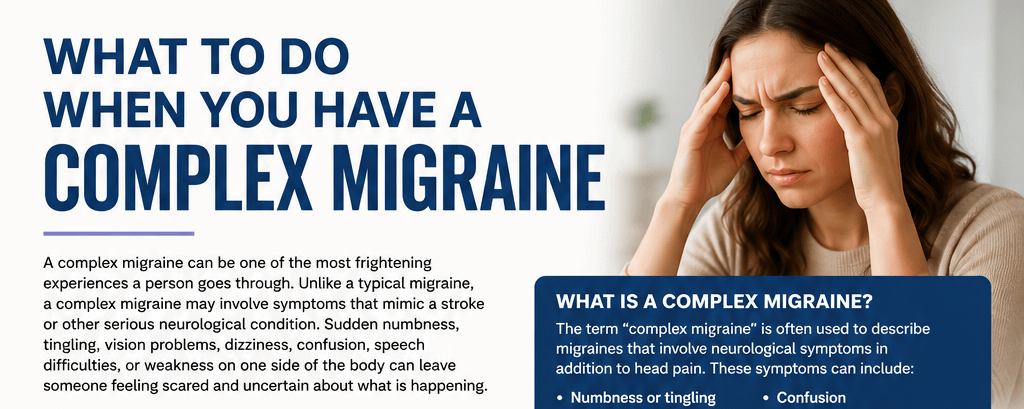
    A complex migraine can be one of the most frightening experiences a person goes through. Unlike a typical migraine, a complex migraine may involve symptoms that mimic a stroke or other serious neurological condition. Sudden numbness, tingling, vision problems, dizziness, confusion, speech difficulties, or weakness on one side of the body can leave someone feeling scared and uncertain about what is happening.

    While some complex migraines are not life-threatening, they should never be ignored—especially if symptoms are new, severe, or unusual.

    What Is a Complex Migraine?

    The term “complex migraine” is often used to describe migraines that involve neurological symptoms in addition to head pain. These symptoms can include:

    Numbness or tingling
    Temporary weakness
    Vision changes or blind spots
    Difficulty speaking
    Dizziness or balance problems
    Confusion
    Sensitivity to light and sound
    Intense throbbing headache
    Nausea or vomiting

    Some people experience aura symptoms before the headache begins, while others may experience neurological symptoms during or even without a severe headache.

    Because the symptoms can resemble a stroke, it is important to take them seriously.

    When to Seek Emergency Help

    You should seek immediate medical attention if:

    It is your first migraine with neurological symptoms
    Symptoms appear suddenly and intensely
    You have weakness or paralysis
    You have difficulty speaking or understanding speech
    You lose consciousness
    Symptoms last longer than usual
    You experience chest pain or severe confusion

    Never assume symptoms are “just a migraine” without proper medical evaluation.

    What to Do During a Complex Migraine
    1. Stop What You’re Doing

    As soon as symptoms begin, slow down and find a safe place to sit or lie down. Avoid driving, operating machinery, or continuing stressful activity.

    Complex migraines can affect balance, coordination, and concentration.

    2. Reduce Stimulation

    Migraines often worsen with sensory overload. Try to move into a quiet, dark, calm environment.

    Helpful steps include:

    Turning off bright lights
    Lowering screen brightness
    Reducing noise
    Closing your eyes
    Resting in a cool room

    Sometimes simply reducing stimulation can help prevent symptoms from escalating.

    3. Hydrate

    Dehydration is a common migraine trigger. Sip water slowly throughout the episode.

    Avoid:

    Excess caffeine
    Alcohol
    Sugary energy drinks

    Electrolyte drinks may help some people recover more comfortably.

    4. Take Prescribed Medication

    If your doctor has prescribed migraine medication, take it exactly as directed at the earliest signs of symptoms.

    Common treatments may include:

    Triptans
    Anti-nausea medication
    Pain relievers
    Preventive migraine medications

    Do not take new medications without medical guidance, especially if you are unsure whether symptoms could be related to something more serious.

    5. Monitor Your Symptoms

    Keep track of:

    When symptoms started
    What symptoms appeared
    How long they last
    Possible triggers
    Pain intensity
    Foods, stress, sleep, or weather changes

    A migraine journal can help doctors identify patterns and treatment options.

    Common Migraine Triggers to Avoid

    Many people with complex migraines discover certain triggers increase the likelihood of attacks.

    Common triggers include:

    Stress or anxiety
    Lack of sleep
    Dehydration
    Skipping meals
    Bright or flashing lights
    Hormonal changes
    Strong smells
    Alcohol
    Excess caffeine
    Certain foods like aged cheese, processed meats, or artificial sweeteners

    Identifying personal triggers can make a significant difference in reducing episodes.

    Recovery After a Complex Migraine

    After symptoms improve, many people experience what is called a “migraine hangover” or postdrome phase.

    You may feel:

    Exhausted
    Mentally foggy
    Emotionally drained
    Sensitive to light or sound
    Weak or sore

    Give yourself time to recover fully. Rest, hydration, light meals, and sleep can help the body stabilize.

    Long-Term Management

    If you experience recurring complex migraines, it is important to work closely with a healthcare professional or neurologist.

    Long-term management may include:

    Preventive medications
    Stress management
    Sleep improvement
    Regular exercise
    Dietary adjustments
    Trigger tracking
    Routine medical follow-up

    Ignoring recurring neurological symptoms can delay proper treatment and increase anxiety around future episodes.

    Final Thoughts

    A complex migraine can feel overwhelming and even terrifying, especially when symptoms affect speech, movement, or sensation. While migraines can be powerful, understanding how to respond calmly and safely can help reduce fear and improve recovery.

    Listen to your body. Take symptoms seriously. Seek medical care when needed. And remember that managing migraines often involves both immediate care during attacks and long-term lifestyle adjustments that support overall neurological health.

    Read More Health & Wellness

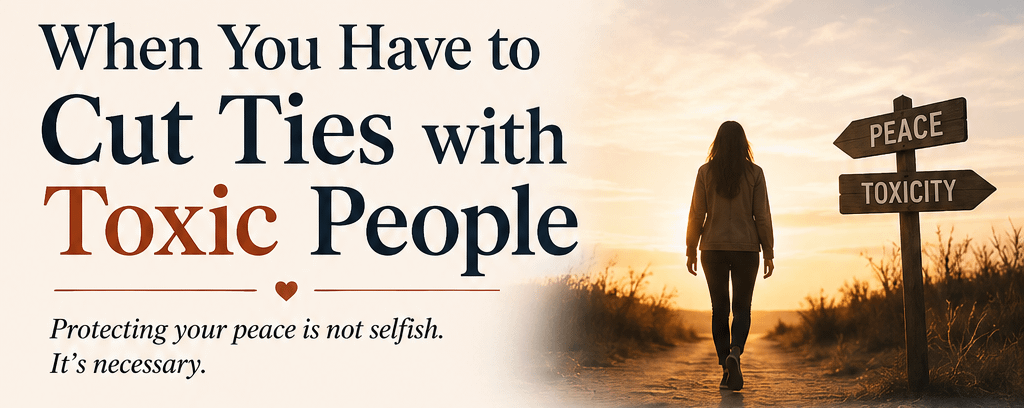
  • When You Have to Cut Ties with Toxic People

    Advertisements

    There are some decisions in life that break your heart even when you know they are necessary. One of the hardest is realizing that someone you care about has become emotionally harmful to your peace, your confidence, and your well-being. Walking away from toxic people is rarely something anyone truly wants to do. Most people hold on for far too long because they love deeply, forgive repeatedly, and hope things will eventually change.

    But sometimes the most painful relationships are the ones that slowly teach you how little of yourself you have left.

    Toxic relationships are not always loud or obvious in the beginning. Sometimes they start with subtle disrespect, manipulation disguised as concern, emotional inconsistency, constant criticism, guilt-tripping, dishonesty, or behaviors that leave you emotionally exhausted. Over time, these patterns begin affecting your mental health, your confidence, and even the way you see yourself.

    You may find yourself constantly anxious around them, overthinking every conversation, apologizing for things that are not your fault, or walking on eggshells just to avoid conflict. Instead of feeling safe, valued, and respected, you begin feeling emotionally drained and emotionally unsafe.

    The difficult truth is that toxic people often thrive on control, chaos, and emotional dependency. Some may manipulate through anger, silence, guilt, blame, or victimhood. Others may constantly take from you emotionally without ever giving support in return. They may only appear when they need something, disappear when you need help, or repeatedly hurt you while expecting endless forgiveness.

    One of the most damaging parts of toxic relationships is how they slowly normalize emotional pain. You begin accepting behavior you once promised yourself you would never tolerate. You convince yourself that things will improve if you just try harder, love harder, forgive more, or stay patient longer.

    But relationships cannot heal when only one person is fighting for them.

    Sometimes people confuse loyalty with self-sacrifice. They believe walking away makes them weak, selfish, or uncaring. In reality, there is strength in recognizing when a relationship is harming your emotional health. There is courage in choosing peace over constant emotional battles.

    Cutting ties with toxic people does not mean you hate them. It does not mean you stopped caring. Often, it means you finally realized that caring about someone should not require destroying yourself in the process.

    This can be especially difficult when the toxic person is someone deeply connected to your life — a close friend, family member, romantic partner, or someone you shared years of memories with. The emotional attachment can make you question your decision repeatedly. You may remember the good moments and wonder if things could still change. You may feel guilty for creating distance or fear what others will think.

    But healing cannot fully happen in environments that continue to wound you.

    There are moments when protecting your peace becomes necessary for survival. Sometimes the healthiest thing you can do is step away from people who consistently bring confusion, negativity, emotional instability, manipulation, or pain into your life.

    Setting boundaries with toxic people is rarely easy. In fact, toxic individuals often become upset when boundaries are introduced because boundaries remove their ability to control your emotions, your time, or your energy. They may accuse you of changing, becoming distant, selfish, dramatic, or cold. But boundaries are not punishments. Boundaries are acts of self-respect.

    Healthy people respect boundaries. Toxic people resent them.

    When you begin distancing yourself from toxic relationships, you may experience grief in ways you did not expect. You are not only grieving the person — you are grieving the version of the relationship you hoped could exist. You are grieving the memories, the future you imagined, and the emotional investment you poured into someone who may never have valued you the way you deserved.

    Loneliness can sometimes follow the decision to walk away. Silence may feel uncomfortable after becoming used to chaos. Peace may even feel unfamiliar at first because you spent so much time surviving emotional instability.

    But slowly, healing begins.

    You start noticing that your mind feels calmer. Your anxiety begins easing. You no longer dread certain phone calls, messages, or interactions. You stop carrying the emotional weight of constantly trying to fix someone who refuses to change. Little by little, you rediscover your own voice, your confidence, and your emotional strength.

    You begin learning that healthy relationships do not leave you constantly questioning your worth.

    The people who truly love and value you will not repeatedly break your spirit. They will communicate with respect, show accountability, support your growth, and bring peace into your life instead of constant emotional confusion.

    One of the greatest lessons life teaches is that not everyone deserves unlimited access to your heart. Some people enter your life to teach you the importance of boundaries, self-worth, and emotional protection.

    Choosing peace over toxicity is not weakness. It is wisdom.

    And sometimes the strongest thing you can do is walk away from what hurts you, even when it hurts to let go.

    Because your healing matters.

    Your peace matters.

    And you deserve relationships that nourish your soul instead of draining it.

    Read More Health & Wellness

  • When Fear of Being Hurt Again Hits You

    Advertisements

    There comes a moment after pain where your heart no longer reacts the same way it once did. Trust becomes cautious. Love feels risky. Vulnerability starts to feel dangerous. Whether the hurt came from heartbreak, betrayal, abandonment, rejection, or loss, emotional pain has a way of teaching the mind to protect itself at all costs.

    When fear of being hurt again hits you, it can feel overwhelming. You may pull away from people who genuinely care about you. You may overthink simple conversations, question people’s intentions, or convince yourself that history will repeat itself. Sometimes the fear becomes so strong that loneliness begins to feel safer than connection.

    But fear is not always a sign that you should stop loving, trusting, or hoping. Often, it is simply proof that what hurt you mattered deeply.

    Fear After Pain Is Human

    When someone experiences emotional pain, the heart naturally becomes guarded. Your mind remembers what it felt like to be disappointed, lied to, ignored, abandoned, or broken. It begins creating emotional walls to prevent that pain from happening again.

    The problem is that those walls may keep pain out — but they can also keep healing, love, and peace out too.

    Fear can make you:

    Avoid emotional conversations
    Push away healthy relationships
    Assume the worst before anything happens
    Struggle with trust
    Overanalyze words and actions
    Feel emotionally numb
    Expect people to leave
    Hide your true feelings

    These reactions do not mean you are weak. They mean you have been wounded.

    Healing Does Not Mean You Forget

    One of the biggest misconceptions about healing is believing you must completely erase the pain before moving forward. Real healing is not pretending the hurt never happened. It is learning how to carry wisdom without carrying constant fear.

    You can remember the lessons without living trapped by them.

    The truth is:

    Not everyone will betray you.
    Not everyone will leave.
    Not everyone will misuse your heart.
    Not every ending means another disaster is coming.

    Fear speaks from old pain. Healing speaks from growth.

    Sometimes Fear Is Really Self-Protection

    Many people criticize themselves for being guarded, but often the fear of being hurt again comes from survival. Your heart learned to become cautious because it was trying to protect you from repeating unbearable pain.

    The challenge is learning the difference between healthy caution and emotional imprisonment.

    Healthy caution says:

    “I will take my time and pay attention.”

    Fear says:

    “Never trust anyone again.”

    Healthy caution protects your peace.

    Fear isolates your soul.

    Give Yourself Permission to Heal Slowly

    You do not need to rush into vulnerability just because others expect you to “move on.” Healing after emotional pain takes time. Some wounds heal quietly. Others reopen unexpectedly through memories, anniversaries, songs, places, or certain conversations.

    Be patient with yourself during those moments.

    Some days you will feel strong.
    Some days you will feel triggered.
    Some days you will want connection.
    Some days you will want isolation.

    Healing is rarely linear.

    What matters most is continuing to move forward, even slowly.

    You Are Allowed to Love Again

    Fear often convinces people that avoiding emotional risk will protect them forever. But a life completely closed off from trust, love, friendship, or connection can become emotionally exhausting.

    You deserve relationships where:

    You feel safe
    You feel respected
    You feel heard
    You are not constantly questioning your worth
    You can be honest without fear

    The right people will not punish you for healing slowly.

    They will understand that broken trust takes time to rebuild.

    When Fear Hits, Ground Yourself in Truth

    When old fears resurface, remind yourself:

    The past is part of your story, not your destiny.
    You survived before, and you are stronger now.
    Fear is an emotion, not a prophecy.
    Healing takes courage.
    You are allowed to hope again.

    The heart may become cautious after pain, but it was never created to live in permanent fear.

    One day, you may realize that the bravest thing you ever did was allowing yourself to believe in love, trust, peace, and connection again after everything you survived.

    Read More Health & Wellness

  • What to Do When the Pain of the Past Hits You

    Advertisements

    There are moments in life when the past suddenly finds its way back into your heart. Sometimes it happens quietly — through a memory, a song, a photograph, or a familiar place. Other times it arrives without warning, crashing into your thoughts and emotions with overwhelming force. Old heartbreaks, betrayals, grief, regrets, trauma, or painful experiences can reopen wounds you thought had healed.

    When the pain of the past hits you, it can feel confusing and exhausting. You may wonder why something you thought you moved on from still hurts so deeply. But healing is not always a straight line. Pain revisits us because the heart remembers what mattered, what wounded us, and what changed us.

    The important thing is not to let the pain destroy your progress. Instead, learn how to face it with honesty, patience, and strength.

    1. Allow Yourself to Feel It

    One of the worst things you can do is pretend the pain is not there. Suppressing emotions often causes them to grow heavier over time. Cry if you need to. Sit quietly with your thoughts. Acknowledge the hurt instead of running from it.

    Feeling pain does not make you weak. It makes you human.

    Healing begins the moment you stop fighting your emotions and start understanding them.

    2. Remind Yourself That the Past Cannot Control Today

    The past may explain your scars, but it does not have to define your future. Painful experiences can influence your thoughts, relationships, and confidence if you allow them to stay in control.

    When old pain resurfaces, remind yourself:

    You survived it.
    You are not the same person you were back then.
    You have grown through what you endured.
    Today is a new opportunity to move forward.

    The goal is not to erase the past but to stop living trapped inside it.

    3. Avoid Isolating Yourself

    Pain often convinces people to withdraw from others. You may feel like nobody understands what you are carrying. But isolation can deepen sadness, anxiety, and hopelessness.

    Reach out to someone you trust:

    A close friend
    A family member
    A counselor
    A support group
    Someone who listens without judgment

    You do not have to carry every burden alone.

    Sometimes healing begins with simply being heard.

    4. Take Care of Yourself Physically

    Emotional pain affects the body as much as the mind. Stress and unresolved emotions can lead to exhaustion, headaches, anxiety, poor sleep, and lack of motivation.

    When pain hits:

    Drink water
    Eat nourishing food
    Get fresh air
    Move your body
    Rest when needed
    Avoid unhealthy coping habits

    Small acts of self-care remind your mind and body that you still matter, even on difficult days.

    5. Stop Reopening Wounds on Purpose

    Sometimes people unintentionally keep themselves stuck in pain by constantly revisiting what hurt them. Re-reading old messages, checking social media, replaying arguments, or obsessing over “what if” scenarios can prevent healing.

    There is a difference between remembering and reliving.

    Protect your peace by setting boundaries with anything that repeatedly drags you backward emotionally.

    6. Give Yourself Grace for Healing Slowly

    Many people become frustrated with themselves for still hurting. They believe they should be “over it” by now. But emotional wounds do not follow a schedule.

    Some pain changes you forever. Certain losses leave permanent marks on the heart. That does not mean you are broken. It means you experienced something meaningful enough to leave an impact.

    Healing is not about forgetting.
    It is about learning how to carry the memory without letting it destroy you.

    7. Focus on What Still Exists in Your Life

    Pain has a way of narrowing your focus until all you can see is what hurt you. But even in difficult seasons, there are still things worth holding onto:

    People who care about you
    Goals still waiting for you
    Peaceful moments
    New opportunities
    Reasons to keep going

    The pain of the past may always visit from time to time, but it does not have to steal every beautiful thing from your present.

    8. Turn Your Pain Into Wisdom

    Some of the strongest, kindest, and most compassionate people became that way because they survived difficult experiences. Pain can either harden the heart or deepen it.

    Use your experiences to:

    Encourage others
    Become wiser
    Set healthier boundaries
    Appreciate life more deeply
    Grow emotionally and spiritually

    Your story still has purpose, even after heartbreak.

    Final Thoughts

    When the pain of the past hits you, remember this: setbacks in healing do not erase progress. Difficult memories returning does not mean you failed. It simply means you are human and still healing.

    Be patient with yourself on the hard days.
    Speak to yourself with kindness.
    Give yourself room to breathe.
    And never forget how strong you have already been to make it this far.

    The past may visit your mind from time to time, but it does not own your future. Hope, healing, peace, and joy are still possible — one day, one step, and one moment at a time.

    Read More Health & Wellness

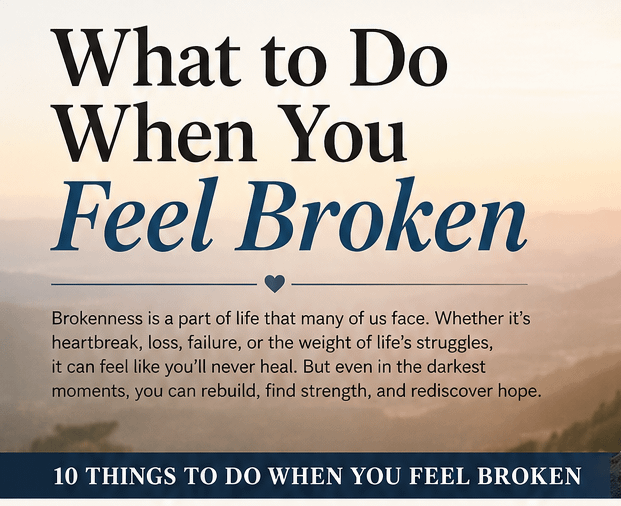
  • What to Do When You Feel Broken

    Advertisements

    There are moments in life that leave scars no one else can fully see. Moments when your heart feels exhausted, your mind feels overwhelmed, and your spirit feels worn down from carrying too much for too long. Feeling broken is not always dramatic or obvious. Sometimes it looks like silence. Sometimes it looks like losing motivation, struggling to trust people, isolating yourself, or simply feeling emotionally numb while pretending everything is okay.

    Brokenness can come from many places:

    The loss of someone you love
    Heartbreak or betrayal
    Childhood wounds
    Financial struggles
    Anxiety or depression
    Disappointment in yourself
    Feeling rejected, abandoned, or forgotten
    Carrying years of emotional pain without healing

    When you feel broken, even everyday life can become difficult. Simple things like getting out of bed, answering messages, or finding joy in things you once loved may suddenly feel exhausting.

    But even in those moments, one truth remains important:

    Feeling broken does not mean you are beyond healing.

    Brokenness Does Not Mean You Are Weak

    Many people believe strength means never falling apart. But real strength is continuing to move forward while carrying pain no one else understands.

    Strong people cry.
    Strong people struggle.
    Strong people feel overwhelmed sometimes.

    Being broken is not proof that you failed. Often, it is proof that you have survived more than most people realize.

    The problem is that many hurting people become experts at hiding their pain. They smile while silently suffering. They encourage everyone else while neglecting themselves. They become emotionally drained because they spend so much energy pretending they are okay.

    You do not have to hide your pain to deserve love, support, or healing.

    1. Be Honest About What Hurts

    Healing cannot begin if you constantly avoid the truth about what is hurting you.

    Sometimes people distract themselves to avoid emotional pain:

    Staying constantly busy
    Overworking
    Scrolling endlessly online
    Numbing emotions
    Pretending everything is fine
    Avoiding difficult conversations

    But buried pain does not disappear. It waits.

    Take a moment to ask yourself:

    What is truly hurting me?
    What have I been avoiding emotionally?
    What am I carrying that I never properly processed?

    Honesty may feel uncomfortable at first, but it is often the first step toward emotional freedom.

    You cannot heal wounds you refuse to acknowledge.

    2. Stop Punishing Yourself for Being Human

    One of the most painful parts of brokenness is self-blame. Many people replay every mistake they ever made and convince themselves they ruined everything.

    You may think:

    “I should have known better.”
    “I’m not good enough.”
    “I always mess things up.”
    “Maybe I deserved this pain.”

    But healing requires learning the difference between accountability and self-destruction.

    Yes, everyone makes mistakes. Everyone has regrets. Everyone has moments they wish they could redo. But constantly attacking yourself emotionally will not change the past — it will only deepen the wound.

    You deserve grace too.

    Sometimes people hold themselves hostage to old versions of themselves instead of allowing growth to happen.

    You are not required to remain trapped in your worst moments forever.

    3. Allow Yourself to Grieve

    Many people only associate grief with death, but grief also comes from:

    Lost relationships
    Lost dreams
    Lost trust
    Lost time
    Lost versions of yourself

    Sometimes what breaks you is mourning the life you thought you would have.

    Grief is complicated because healing is not linear. Some days you may feel okay. Other days the pain may return unexpectedly.

    That does not mean you are failing.

    Healing often comes in waves.

    Allow yourself to cry if needed. Allow yourself to miss people. Allow yourself to feel sadness without judging yourself for it.

    Ignoring grief does not make you stronger. Processing it does.

    4. Take Care of Your Mind and Body

    When emotional pain becomes overwhelming, people often neglect themselves physically. But your mental and emotional health are deeply connected to how you care for your body.

    Start small if necessary:

    Drink more water
    Get enough sleep
    Eat consistently
    Go outside for sunlight
    Move your body gently
    Spend less time around negativity
    Reduce things that worsen your anxiety

    You do not need to fix your entire life overnight. Focus on stabilizing yourself one step at a time.

    Small routines can create emotional grounding during chaotic seasons.

    5. Stop Isolating Yourself Completely

    Pain often convinces people to withdraw from everyone. While temporary solitude can help, complete isolation can make emotional wounds feel heavier.

    You do not have to carry everything alone.

    Talk to someone safe:

    A trusted friend
    Family member
    Pastor
    Support group
    Therapist or counselor

    Sometimes healing begins simply by being heard.

    You are allowed to ask for support without feeling like a burden.

    Many people suffer silently because they fear vulnerability. But emotional walls built for protection can eventually become prisons.

    Connection matters.

    6. Give Yourself Permission to Heal Slowly

    One of the hardest parts of healing is patience.

    People often expect themselves to “move on” quickly, especially after heartbreak, trauma, or loss. But emotional recovery does not follow a schedule.

    Some wounds take longer because they affected you deeply.

    Do not compare your healing journey to someone else’s.
    Do not shame yourself for still hurting.
    Do not believe that slow healing means failed healing.

    Some of the deepest emotional injuries require time, reflection, and grace.

    You are rebuilding yourself emotionally, mentally, and spiritually. That process deserves patience.

    7. Protect Your Peace

    When you feel broken, your emotional energy becomes limited. This means protecting your peace becomes even more important.

    You may need to:

    Set boundaries
    Spend less time with toxic people
    Distance yourself from constant drama
    Stop revisiting things that reopen wounds
    Limit negative influences online
    Say no without guilt

    Not everyone deserves unlimited access to your heart.

    Healing sometimes requires creating space between yourself and what continually harms you.

    Protecting your peace is not selfish. It is necessary.

    8. Focus on Small Victories

    When life feels overwhelming, large goals can feel impossible. Instead of focusing on everything that is wrong, focus on small progress.

    Celebrate things like:

    Getting through the day
    Going outside
    Eating a healthy meal
    Reaching out for help
    Choosing not to give up
    Getting out of bed when it felt difficult

    Small victories matter more than you realize.

    Healing is often built through consistent small steps, not sudden dramatic changes.

    9. Remember That Brokenness Can Produce Strength

    Some of the strongest people carry invisible scars.

    Pain changes people, but it does not have to destroy them.

    Many people discover:

    Greater empathy
    Emotional maturity
    Wisdom
    Compassion
    Faith
    Resilience
    through their hardest seasons.

    The very experiences that broke you may eventually become the experiences that help someone else survive.

    Your pain may shape you, but it does not have to define you forever.

    10. Hold Onto Hope Even When It Feels Difficult

    There may be days when hope feels far away. Days when you question whether things will ever improve. But emotions are temporary, even when they feel permanent.

    The version of you that feels broken today will not necessarily be the version of you forever.

    Healing can happen slowly.
    Peace can return.
    Joy can return.
    Love can return.
    Purpose can return.

    Do not let temporary pain convince you that your future is hopeless.

    Sometimes the hardest seasons produce the strongest people.

    Final Thoughts

    Feeling broken can make life feel heavy in ways words cannot fully describe. It can affect your confidence, your relationships, your faith, and your sense of self. But brokenness is not the end of your story.

    You are still worthy of love.
    Still worthy of healing.
    Still worthy of peace.
    Still worthy of a future.

    Take things one day at a time. Be gentle with yourself during difficult seasons. Rest when needed. Ask for help when necessary. Keep moving forward, even if your steps feel small.

    One day, you may realize that the season that nearly destroyed you also taught you how strong you truly are.

    Read More Health & Wellness

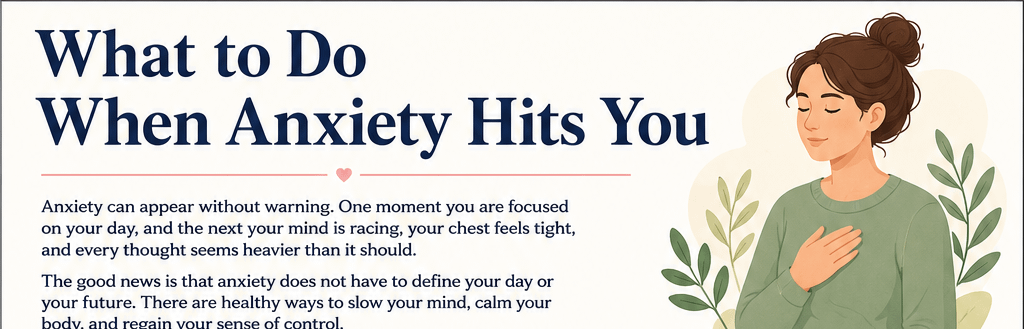
  • What to Do When Anxiety Hits You

    Advertisements

    Anxiety can appear without warning. One moment you are focused on your day, and the next your mind is racing, your chest feels tight, and every thought seems heavier than it should. Anxiety has a way of making small problems feel overwhelming and simple decisions feel impossible. While anxiety is a normal human response to stress, fear, or uncertainty, it is important to know how to respond when it begins to take control of your thoughts and emotions.

    The good news is that anxiety does not have to define your day or your future. There are healthy ways to slow your mind, calm your body, and regain your sense of control.

    Pause and Breathe

    One of the first things anxiety affects is your breathing. Many people begin taking shallow, rapid breaths without realizing it, which can increase feelings of panic and tension.

    When anxiety hits, stop for a moment and focus on slow breathing.

    Try this simple method:

    Inhale slowly through your nose for 4 seconds
    Hold your breath for 4 seconds
    Exhale slowly through your mouth for 6 seconds
    Repeat several times

    Slowing your breathing sends a message to your body that you are safe, helping your nervous system calm down.

    Ground Yourself in the Present

    Anxiety often pulls your mind into “what if” thinking. Your thoughts race toward future fears, imagined problems, or worst-case scenarios.

    Grounding techniques help bring your focus back to the present moment.

    A popular grounding exercise is the 5-4-3-2-1 method:

    5 things you can see
    4 things you can touch
    3 things you can hear
    2 things you can smell
    1 thing you can taste

    This technique helps interrupt anxious thoughts and reconnects your mind with reality instead of fear.

    Challenge Your Thoughts

    Anxiety can convince you that every fear is true. It can make temporary situations feel permanent and manageable problems feel hopeless.

    When anxious thoughts appear, ask yourself:

    Is this fear based on facts or assumptions?
    Am I imagining the worst possible outcome?
    What would I tell someone I care about if they felt this way?

    Learning to question anxious thinking can reduce its power over your emotions.

    Move Your Body

    Physical movement is one of the most effective natural ways to reduce anxiety. Walking, stretching, exercising, or even stepping outside for fresh air can help release built-up tension.

    Exercise helps your body release endorphins, which naturally improve mood and reduce stress.

    You do not need an intense workout. Even a short walk can help reset your mind and lower anxious energy.

    Avoid Feeding the Anxiety

    When anxiety rises, many people begin scrolling endlessly through social media, replaying problems in their mind, or isolating themselves. Unfortunately, these habits can make anxiety stronger.

    Instead:

    Step away from negative news or online arguments
    Limit caffeine if you are already feeling anxious
    Avoid overthinking conversations or situations repeatedly
    Focus on something productive or calming

    Sometimes your mind needs quiet more than stimulation.

    Talk to Someone You Trust

    You do not have to carry anxiety alone. Talking to a trusted friend, family member, mentor, or counselor can help you process what you are feeling.

    Many times, speaking your fears out loud reduces their intensity. Anxiety grows stronger in silence but weaker when shared with supportive people.

    Asking for support is not weakness. It is emotional strength.

    Give Yourself Grace

    One of the hardest parts of anxiety is the frustration that comes with it. People often criticize themselves for struggling or feel embarrassed for having anxious thoughts.

    Be patient with yourself.

    Healing takes time. Emotional strength is built gradually, not instantly. Some days will feel easier than others, and that is okay.

    You are human, not perfect.

    Focus on What You Can Control

    Anxiety often grows when life feels uncertain or overwhelming. Instead of focusing on everything that could go wrong, focus on what you can control today.

    You may not control every situation, but you can control:

    Your attitude
    Your response
    Your habits
    Your effort
    Your choices

    Small positive actions create stability during anxious moments.

    Know When to Seek Professional Help

    If anxiety becomes constant, overwhelming, or begins interfering with daily life, it may be time to seek professional support.

    Therapists, counselors, and medical professionals can provide tools, guidance, and treatment options that help many people successfully manage anxiety.

    There is no shame in getting help. Mental health matters just as much as physical health.

    Final Thoughts

    Anxiety can feel powerful in the moment, but feelings are temporary. You are stronger than the fear trying to overwhelm you. Even during difficult moments, you are still capable of healing, growing, and moving forward.

    Take things one breath, one step, and one moment at a time.

    You do not have to have everything figured out today. Sometimes the bravest thing you can do is simply keep going.

    Read More Health & Wellness

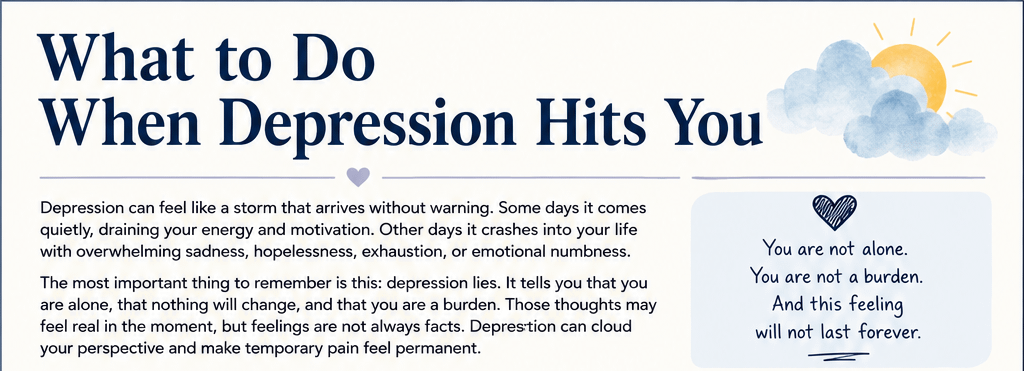
  • What to Do When Depression Hits You

    Advertisements

    Depression can feel like a storm that arrives without warning. Some days it comes quietly, draining your energy and motivation. Other days it crashes into your life with overwhelming sadness, hopelessness, exhaustion, or emotional numbness. When depression hits, even the smallest tasks can feel impossible. Getting out of bed, answering messages, eating, or simply making it through the day may take every ounce of strength you have.

    The most important thing to remember is this: depression lies. It tells you that you are alone, that nothing will change, and that you are a burden. Those thoughts may feel real in the moment, but feelings are not always facts. Depression can cloud your perspective and make temporary pain feel permanent.

    Start With Small Steps

    When depression is heavy, stop focusing on fixing your entire life all at once. Focus on the next small step.

    Drink a glass of water.
    Open the curtains.
    Take a shower.
    Eat something nourishing.
    Walk outside for five minutes.
    Text someone you trust.

    Small actions may seem insignificant, but they create movement. Healing often begins with tiny decisions repeated consistently.

    Don’t Isolate Yourself

    Depression often makes people pull away from others. You may feel like disappearing, avoiding conversations, or shutting the world out completely. Isolation, however, usually deepens emotional pain.

    Reach out to someone safe:

    A friend
    A family member
    A pastor
    A support group
    A counselor or therapist

    You do not need to have perfect words. Sometimes simply saying, “I’m struggling right now,” is enough.

    Human connection can remind you that you are not fighting alone.

    Stop Fighting Yourself

    Many people become angry with themselves during depression. They criticize themselves for not being productive, positive, or strong enough. But healing does not happen through self-hatred.

    Talk to yourself with compassion instead of cruelty.

    You are not weak for struggling.
    You are not lazy for feeling exhausted.
    You are not failing because you need help.

    Mental and emotional pain deserve care just like physical pain does.

    Avoid Making Permanent Decisions During Temporary Darkness

    Depression can distort reality and make the future look hopeless. During these moments, avoid making major life decisions based entirely on emotional pain.

    Give yourself time.
    Rest before reacting.
    Talk to someone before making drastic choices.

    The emotions you feel today may not reflect how you will feel weeks or months from now.

    Take Care of Your Body

    Your mental health and physical health are deeply connected. While exercise, sleep, and nutrition are not magical cures, they can help support emotional stability.

    Try to:

    Get enough rest
    Move your body daily
    Limit alcohol or substance use
    Spend time outdoors
    Stay hydrated
    Eat balanced meals

    Even a short walk in sunlight can help break the heaviness depression creates.

    Let Yourself Feel Without Shame

    You do not have to pretend you are okay all the time. Cry if you need to. Rest if you need to. Be honest about your emotions instead of burying them.

    Healing is not about never feeling pain.
    It is about learning how to move through pain without losing yourself completely.

    Seek Professional Help When Needed

    There is strength in asking for help. Therapy, counseling, support groups, or medical treatment can provide tools and support that make recovery possible.

    If depression becomes overwhelming or you feel unsafe, reach out immediately to a trusted person, mental health professional, or crisis service. You deserve support, protection, and care.

    Hold On to Hope

    Depression may convince you that nothing will ever improve, but many people who once felt completely hopeless eventually found healing, peace, purpose, and joy again.

    You do not have to have everything figured out today.
    You only need to keep going one step at a time.

    Some days survival itself is an act of courage.

    And even in your darkest moments, your life still has value.

    Read More Health & Wellness
Exit mobile version