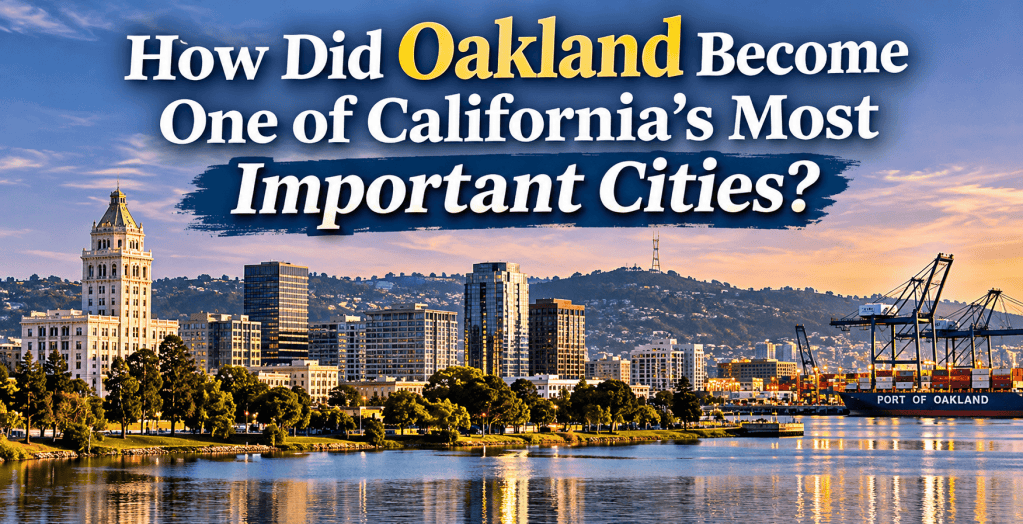
Oakland, California, is one of the most historically significant cities in the San Francisco Bay Area. Known for its busy port, diverse communities, industrial history, cultural influence, and transportation networks, Oakland has played a major role in shaping California’s economy and identity.
But Oakland did not become an important California city overnight.
Its transformation from a landscape of oak-covered hills, wetlands, and small settlements into a major commercial and cultural center took generations. Railroads, shipping, manufacturing, migration, and community activism all contributed to Oakland’s growth.
Understanding how Oakland became one of California’s most important cities means looking beyond its modern skyline and exploring the historical developments that helped establish its influence throughout Northern California and beyond.
What Was Oakland Like Before It Became a Major City?
Long before Oakland became a bustling urban center, the land was home to Indigenous communities who had lived along the eastern shores of San Francisco Bay for thousands of years.
The Ohlone people, including Chochenyo-speaking communities, inhabited the region and developed relationships with its waterways, grasslands, oak woodlands, and natural resources.
They gathered acorns, harvested shellfish, fished in the bay, hunted wildlife, and maintained communities throughout the East Bay.
The landscape looked dramatically different from the Oakland residents recognize today.
Large oak trees covered portions of the region, while creeks, marshlands, and open grasslands stretched toward the shoreline.
During the Spanish colonial period, the region became part of a larger system of missions and ranching settlements. Spanish colonization disrupted Indigenous communities through displacement, disease, forced labor, and changes to traditional ways of life.
In the early nineteenth century, much of present-day Oakland became part of Rancho San Antonio, a Mexican-era land grant associated with Luis María Peralta.
The Peralta family’s holdings extended across substantial portions of what would eventually become Oakland, Berkeley, Alameda, and surrounding communities.
These early developments established the landownership patterns that would influence Oakland’s transformation during the California Gold Rush.
How Did the California Gold Rush Help Oakland Grow?
The California Gold Rush of 1848 changed Northern California forever.
Thousands of people traveled west hoping to find gold, creating enormous demand for transportation, housing, food, lumber, supplies, and commercial services.
San Francisco quickly emerged as a major destination for arriving ships and travelers.
However, the growing population also created opportunities across San Francisco Bay.
Oakland’s location along the eastern waterfront made it an attractive place for transportation connections, settlements, and businesses serving the expanding regional economy.
The East Bay offered land for development and access to routes connecting the waterfront with agricultural communities farther inland.
Entrepreneurs recognized the area’s potential.
Among them was Horace Carpentier, who became an influential and controversial figure in Oakland’s early development.
Carpentier and other investors pursued waterfront property, transportation opportunities, and commercial development during the city’s formative years.
Oakland was incorporated as a town in 1852 and officially became a city in 1854.
Although the settlement remained relatively small compared with San Francisco, its location gave it an important advantage.
Oakland was positioned to become a transportation gateway between the Pacific Coast and California’s interior.
Why Was Oakland’s Location So Important?
Geography played a major role in Oakland’s rise.
Situated on the eastern shore of San Francisco Bay, Oakland had access to one of the most valuable natural harbors on the West Coast.
Its location provided several advantages.
Oakland could connect maritime shipping with inland transportation routes, accommodate industrial and commercial development, and serve communities throughout the growing East Bay.
Unlike San Francisco, which occupied a peninsula, Oakland had direct land connections to the broader East Bay and the interior of California.
This made the city particularly valuable for railroad expansion.
Businesses could move products from inland California to Oakland’s waterfront, where goods could be transferred onto ships.
Similarly, imported merchandise could arrive by water and continue eastward through railroad networks.
These connections helped transform Oakland into a regional distribution center.
As California’s population increased, Oakland’s geographic advantages became even more important.
How Did the Transcontinental Railroad Transform Oakland?
One of the most important events in Oakland’s history was the arrival of the transcontinental railroad.
The first transcontinental railroad was completed in 1869, connecting the eastern United States with California through a continuous rail route.
Oakland became the western terminus of the Central Pacific Railroad’s transcontinental service later that year.
This development dramatically increased the city’s economic importance.
Passengers and freight traveling across the country could reach Oakland, where ferry connections provided transportation to San Francisco.
The Oakland waterfront became a major transportation hub.
Railroad terminals, freight facilities, warehouses, and supporting businesses developed around the expanding transportation network.
The railroad also encouraged residential growth.
Workers, merchants, and families settled in Oakland because of its increasing employment opportunities and convenient access to regional transportation.
Rail connections supported the movement of agricultural products, manufactured goods, building materials, and other merchandise.
Oakland was no longer simply a small community across the bay from San Francisco.
It had become a major western gateway for the nation’s railroad system.
That role would shape the city’s economy for generations.
How Did Oakland Become an Industrial Powerhouse?
Railroad development created the foundation for Oakland’s industrial expansion.
During the late nineteenth and early twentieth centuries, manufacturing businesses increasingly recognized the city’s advantages.
Oakland offered railroad connections, waterfront access, industrial land, and a growing workforce.
Factories and industrial facilities produced machinery, processed food, assembled vehicles, and manufactured products used throughout California.
The city’s industrial economy included shipbuilding, metalworking, transportation equipment, food processing, and other manufacturing activities.
Industrial employment attracted workers from different regions of the United States and from abroad.
As Oakland expanded, neighborhoods developed around factories, railroad yards, and commercial districts.
Industrial growth also increased demand for housing, schools, roads, utilities, and public transportation.
Oakland’s economy became increasingly diverse.
Instead of depending on a single industry, the city developed a combination of transportation, shipping, manufacturing, retail, and professional services.
This economic diversity helped establish Oakland as one of Northern California’s major employment centers.
What Role Did the 1906 San Francisco Earthquake Play in Oakland’s Growth?
The devastating San Francisco earthquake and fires of April 18, 1906, had a major impact on Oakland.
The disaster destroyed large sections of San Francisco and displaced thousands of residents.
Many people crossed the bay seeking temporary shelter, employment, and permanent homes.
Oakland became an important destination for earthquake refugees.
Relief efforts helped provide food, shelter, and assistance to people affected by the disaster.
Some displaced residents eventually returned to San Francisco, while others established new lives in Oakland and surrounding East Bay communities.
Businesses also explored opportunities to relocate or expand across the bay.
The population growth associated with this period accelerated Oakland’s development.
New housing, commercial buildings, and neighborhood services emerged as the city continued expanding.
Although Oakland had already been growing before the earthquake, the disaster reinforced its position as a major urban center within the Bay Area.
It also demonstrated the importance of having multiple population and commercial centers around San Francisco Bay.
How Did the Port of Oakland Become So Important?
One of Oakland’s greatest economic advantages has been its waterfront.
The Port of Oakland developed into a major commercial shipping center, connecting Northern California with international markets.
During the nineteenth century, the waterfront supported ferries, rail transportation, and cargo operations.
Over time, improvements to shipping channels, terminals, and harbor facilities allowed the port to handle increasing commercial traffic.
The modern Port of Oakland was established in 1927.
During the twentieth century, the port expanded its facilities to accommodate larger ships and changing shipping technology.
A particularly important development was the rise of containerized shipping.
Instead of loading merchandise individually, shipping companies increasingly transported goods inside standardized containers.
Oakland became an early major adopter of containerized cargo operations on the West Coast.
Containerization made shipping more efficient by reducing handling time and improving connections between ships, trucks, and trains.
The Port of Oakland developed into one of the country’s important container ports.
It became especially valuable to agricultural exporters throughout Northern California and the Central Valley.
Products such as nuts, fruits, wine, and other agricultural goods could travel through Oakland to international destinations.
Imported consumer products, machinery, and industrial materials also entered the region through its shipping terminals.
Today, the port remains an essential part of Oakland’s economic identity.
Its operations support employment in transportation, logistics, warehousing, trucking, and international trade.
How Did World War II Change Oakland?
World War II accelerated Oakland’s industrial and population growth.
As the United States expanded wartime production, the Bay Area became a major center for shipbuilding, military logistics, and manufacturing.
Oakland’s transportation infrastructure and industrial facilities made it particularly important to the war effort.
Shipyards and factories throughout the East Bay required large numbers of workers.
People migrated to the region from across the United States, including many African Americans leaving the South in search of industrial employment and greater economic opportunities.
Women also entered wartime industrial jobs in large numbers.
These demographic changes transformed Oakland’s neighborhoods and communities.
The city’s African American population increased significantly during the wartime years, contributing to cultural, social, and political developments that would influence Oakland for decades.
Wartime growth also created challenges.
Housing shortages, overcrowding, racial discrimination, and unequal employment opportunities affected many residents.
After the war, Oakland continued experiencing economic and demographic changes as industries adjusted to peacetime production.
The legacy of World War II remained visible in the city’s neighborhoods, labor history, and cultural identity.
How Did Oakland Become a Center of African American Culture and History?
Oakland’s importance extends far beyond its economy.
The city became one of the West Coast’s most influential centers of African American culture, community organization, and political activism.
The Great Migration and wartime industrial employment brought many Black families to Oakland.
These communities established churches, businesses, social organizations, cultural institutions, and neighborhood networks.
West Oakland became particularly important in African American history.
The neighborhood developed a vibrant cultural environment shaped by railroad workers, musicians, entrepreneurs, and families.
Seventh Street became known for its entertainment venues, restaurants, and jazz and blues music.
Musicians and performers contributed to a thriving nightlife that helped establish Oakland’s reputation as a cultural center.
However, African American residents also faced housing discrimination, employment barriers, and unequal access to public resources.
These experiences helped inspire organized movements demanding greater equality and community representation.
Oakland eventually became nationally recognized for its contributions to civil rights activism and Black political organizing.
Why Was the Black Panther Party Founded in Oakland?
One of the most significant chapters in Oakland’s modern history began in 1966.
That year, Huey P. Newton and Bobby Seale founded the Black Panther Party for Self-Defense in Oakland.
The organization emerged during a period of widespread concern about police brutality, racial inequality, poverty, and political representation.
The Black Panther Party became known nationally for its activism, political philosophy, and confrontations with law enforcement.
It also developed community programs addressing local needs.
These included free breakfast programs for children, health initiatives, educational efforts, and other community services.
The organization attracted national attention and became an influential part of the Black Power movement.
Its history remains complex and includes debates over its political strategies, internal conflicts, and encounters with government authorities.
Nevertheless, Oakland’s connection to the Black Panther Party established the city as an important location in the history of American civil rights and community activism.
The movement’s influence extended far beyond California.
How Did Oakland Become a Major Transportation Center?
Transportation has remained central to Oakland’s development.
The city’s importance began with ferries, railroads, and waterfront shipping, but later expanded through highways, bridges, airports, and regional transit.
The opening of the San Francisco–Oakland Bay Bridge in 1936 dramatically improved transportation between Oakland and San Francisco.
Before the bridge, ferries played a major role in moving passengers and vehicles across the bay.
The bridge created a direct roadway connection between the two cities.
It encouraged commuting, regional commerce, and further development throughout the East Bay.
Another major transformation came with the development of Bay Area Rapid Transit, commonly known as BART.
BART began passenger service in 1972, initially operating in the East Bay.
The system eventually connected Oakland with San Francisco and other communities across the region.
Oakland became a central part of the regional rapid-transit network.
The city’s airport also expanded its importance.
Oakland International Airport, now branded as San Francisco Bay Oakland International Airport, has served commercial aviation, cargo transportation, and regional travel.
Together, the port, airport, bridges, highways, freight railroads, and BART helped establish Oakland as one of the Bay Area’s most important transportation centers.
How Did Oakland’s Diverse Communities Shape the City?
Oakland’s cultural identity developed through generations of migration and settlement.
People from many backgrounds contributed to the city’s neighborhoods, businesses, traditions, and institutions.
African American, Chinese American, Mexican American, Latino, European immigrant, and other communities helped shape Oakland’s development.
The city’s Chinatown became an important commercial and cultural center for Chinese immigrants and their descendants.
Oakland’s Fruitvale district developed strong Latino cultural traditions, including Mexican restaurants, markets, community organizations, and neighborhood celebrations.
East Oakland became home to numerous communities whose cultural influences helped shape the city’s music, food, art, and local identity.
Oakland’s diversity contributed to its reputation as a place where different cultures intersect.
Restaurants, festivals, neighborhood businesses, and community institutions reflect this history.
The city’s cultural influence extends beyond traditional celebrations.
Oakland has contributed significantly to music, literature, visual arts, sports, and social movements.
Its identity is closely connected to the experiences of the people who built and continue to shape its communities.
How Did Oakland Influence California’s Music and Entertainment?
Oakland developed a distinctive musical identity that influenced California and American popular culture.
During the early twentieth century, jazz and blues musicians performed in West Oakland’s entertainment districts.
Later generations contributed to funk, soul, hip-hop, and other musical styles.
Oakland became particularly influential in West Coast hip-hop.
Artists such as Too Short, MC Hammer, and members of Digital Underground helped bring Oakland’s musical culture to national audiences.
The city’s music often reflected neighborhood experiences, social conditions, local pride, and cultural creativity.
Oakland also became associated with the broader Bay Area hyphy movement during the 2000s.
Beyond music, the city developed important artistic communities.
Theaters, galleries, performance spaces, and cultural organizations contributed to Oakland’s reputation as a creative center.
This artistic influence became another reason Oakland mattered beyond its geographic boundaries.
How Did Professional Sports Contribute to Oakland’s National Recognition?
Professional sports helped introduce Oakland to millions of Americans.
For decades, the city was associated with major professional sports franchises.
The Oakland Raiders became an important part of the city’s identity, developing a passionate fan base and winning championships during their history in Oakland.
The Oakland Athletics brought Major League Baseball success to the city, including three consecutive World Series championships from 1972 through 1974 and another title in 1989.
The Golden State Warriors also played their home games in Oakland for many years.
The Warriors’ championship seasons helped establish the city as an important location in professional basketball history.
Although these franchises eventually moved their home operations away from Oakland, their historical connections remain significant.
Sports created shared experiences for residents and brought national attention to Oakland.
They also contributed to the city’s cultural identity and community pride.
How Did Oakland’s Economy Change After the Industrial Era?
Like many American industrial cities, Oakland experienced major economic changes during the second half of the twentieth century.
Manufacturing employment declined as businesses relocated, production methods changed, and economic activity shifted.
Some industrial facilities closed or reduced operations.
These changes affected working-class neighborhoods and contributed to unemployment and economic hardship.
Oakland also experienced the consequences of suburbanization.
As residents and businesses moved to surrounding communities, the city’s population and tax base faced new pressures.
Highway construction and urban redevelopment projects disrupted established neighborhoods, particularly in West Oakland.
At the same time, Oakland continued developing other economic sectors.
Healthcare, education, government, logistics, professional services, and retail became increasingly important.
The Port of Oakland remained a major economic asset.
Downtown Oakland also experienced periods of reinvestment and redevelopment.
Former industrial properties were converted into housing, commercial spaces, and mixed-use developments.
The city’s economy gradually shifted from a primarily industrial foundation toward a more diversified urban economy.
Why Did Oakland Become Important to the Modern Bay Area Economy?
Oakland’s modern economic importance comes from its combination of transportation infrastructure, commercial activity, institutions, and regional connections.
The city occupies a strategic position between San Francisco, Berkeley, the East Bay suburbs, and inland Northern California.
Its port connects international trade with regional transportation networks.
Its airport provides passenger and cargo service.
Its BART stations and highways connect residents and workers with employment centers throughout the Bay Area.
Oakland is also home to major healthcare organizations, educational institutions, public agencies, and businesses.
The city’s proximity to Silicon Valley and San Francisco has influenced its economic development.
As technology and professional-service industries expanded throughout the Bay Area, Oakland attracted businesses and residents seeking access to the region’s economy.
However, economic growth also created challenges.
Rising housing costs, displacement, homelessness, and unequal access to economic opportunities became major concerns.
These issues illustrate the complicated relationship between urban growth and community stability.
Oakland’s modern importance is therefore connected not only to its economic achievements but also to its ongoing efforts to address the consequences of development.
What Challenges Has Oakland Faced Throughout Its History?
Oakland’s rise has never been a simple story of uninterrupted prosperity.
The city has faced economic downturns, racial discrimination, neighborhood displacement, public safety concerns, and political disagreements.
Industrial decline affected employment opportunities and household incomes.
Urban renewal projects sometimes displaced long-established communities.
Housing shortages and rising costs created pressure on families and small businesses.
Transportation projects improved regional mobility but also divided some neighborhoods.
Environmental concerns emerged around industrial areas, highways, and port operations.
Residents living near major transportation corridors have faced concerns about air pollution and public health.
Despite these challenges, Oakland has maintained strong traditions of community organizing, cultural expression, and neighborhood activism.
Residents have repeatedly worked to preserve local history, support community institutions, and influence the city’s future.
Understanding these challenges is essential to understanding Oakland’s development.
Its history includes both remarkable economic achievements and difficult struggles over who benefits from growth.
What Makes Oakland Different From Other Major California Cities?
Oakland’s importance comes from a combination of characteristics that few California cities share in exactly the same way.
San Francisco developed into a major financial, commercial, and cultural center.
Los Angeles became internationally recognized for entertainment, trade, and its enormous metropolitan economy.
Sacramento became California’s state capital.
Oakland developed a distinctive identity centered on transportation, shipping, manufacturing, cultural diversity, and community activism.
Its railroad history connected California to the rest of the United States.
Its port connected Northern California to international markets.
Its industrial businesses supported regional employment and production.
Its neighborhoods became centers of cultural creativity and political organizing.
Its transportation infrastructure helped connect the Bay Area.
Together, these developments gave Oakland an influence extending well beyond its population or geographic size.
Oakland’s importance cannot be measured solely by the number of residents living within its city limits.
Its historical contributions to commerce, transportation, culture, and social change make it an essential part of California’s story.
Frequently Asked Questions About Oakland’s Rise
When did Oakland become an important California city?
Oakland began developing into a major California city during the second half of the nineteenth century. Its importance increased significantly after it became the western terminus of transcontinental railroad service in 1869. Industrial growth, port development, and population expansion further strengthened its position during the twentieth century.
Why did Oakland grow so quickly?
Oakland grew because of its location along San Francisco Bay, access to railroad transportation, industrial employment opportunities, and expanding shipping facilities. The 1906 San Francisco earthquake and World War II also contributed to significant population growth.
Was Oakland originally more important than San Francisco?
No. San Francisco developed into the region’s dominant commercial center during the Gold Rush. Oakland became important partly because it provided railroad connections, industrial facilities, and waterfront transportation that complemented San Francisco’s economy.
What industry made Oakland famous?
Rail transportation, shipping, and manufacturing were central to Oakland’s early economic development. Over time, the Port of Oakland became one of the city’s most recognizable economic institutions.
Why is Oakland important to California history?
Oakland played major roles in the development of the transcontinental railroad, West Coast shipping, industrial manufacturing, wartime production, African American cultural history, and the civil rights movement.
Is Oakland still an important California city today?
Yes. Oakland remains a major transportation, commercial, and cultural center. Its port, airport, regional transit connections, businesses, and diverse communities continue to contribute to the Bay Area and California.
Conclusion: How Oakland Became One of California’s Most Important Cities
Oakland’s transformation from an Indigenous homeland and nineteenth-century settlement into a major California city reflects the larger history of the American West.
Its location along San Francisco Bay created opportunities for transportation and trade.
The California Gold Rush encouraged settlement and commercial development.
The transcontinental railroad established Oakland as a gateway connecting California with the rest of the country.
Industrial expansion and waterfront shipping created employment and economic growth.
The 1906 San Francisco earthquake and World War II brought population changes that helped reshape the city.
Later, Oakland became nationally influential through its cultural communities, music, professional sports, and civil rights activism.
Today, Oakland remains an important part of Northern California’s transportation network, economy, and cultural landscape.
Oakland became one of California’s most important cities because it connected people, industries, communities, and markets in ways that helped shape the entire Bay Area.
Its history is not simply the story of a city growing larger.
It is the story of a community that helped connect California to the nation and the world while developing a cultural identity entirely its own.
Leave a Reply