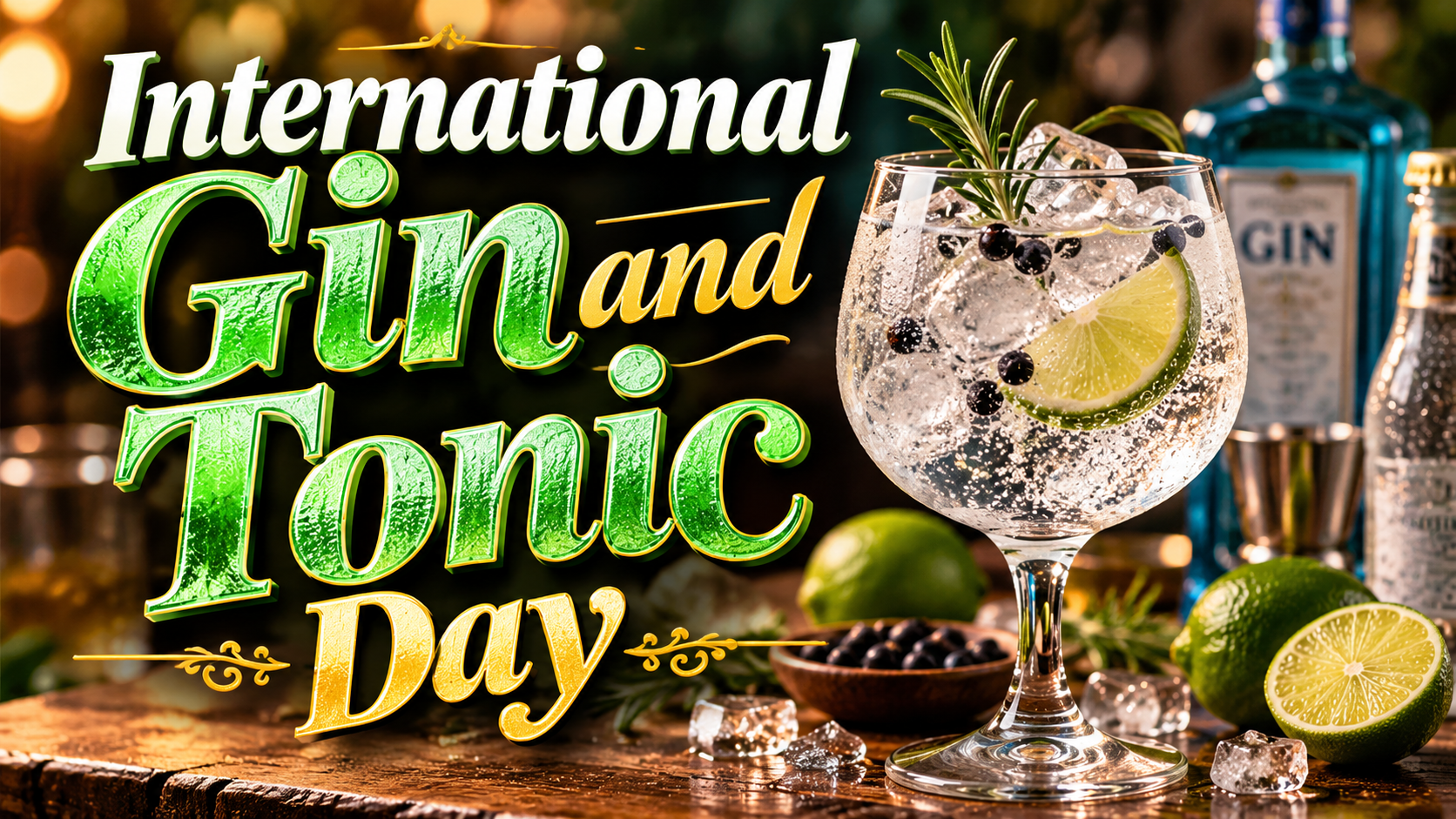
Few cocktails have managed to remain as simple, refreshing, and recognizable as the gin and tonic. With just a few basic ingredients, this classic drink has traveled from its historical roots to bars, restaurants, patios, celebrations, and homes around the world.
International Gin and Tonic Day, celebrated each year on October 19, gives gin lovers an opportunity to raise a glass to one of the world’s most enduring mixed drinks.
At first glance, the gin and tonic could hardly be simpler: gin, tonic water, ice, and usually a wedge or slice of lime. But behind that simplicity is an interesting history involving medicine, British colonialism, quinine, changing tastes, and generations of bartenders who transformed a practical mixture into a celebrated cocktail.
Today, the gin and tonic can be traditional or creative. Different styles of gin, flavored tonic waters, citrus fruits, herbs, berries, spices, and other garnishes have created seemingly endless variations.
So, whether you prefer yours with nothing more than gin, tonic, and lime or enjoy experimenting with new flavors, International Gin and Tonic Day is an opportunity to appreciate this remarkably versatile drink.
When Is International Gin and Tonic Day?
International Gin and Tonic Day is observed on October 19.
The celebration encourages people around the world to enjoy and appreciate the classic gin and tonic while exploring its history and the many variations that have developed over the years.
It is also a great occasion for anyone interested in cocktails to learn a little more about what is actually in their glass.
Because although the modern gin and tonic is usually associated with relaxation and social occasions, its story began for a very different reason.
The History Behind the Gin and Tonic
The history of the gin and tonic is closely connected with quinine, a substance derived from the bark of cinchona trees.
Quinine became historically important because of its use against malaria. During the era of the British Empire, British personnel stationed in malaria-prone regions, particularly India, encountered quinine as part of malaria prevention and treatment practices.
There was one major problem.
Quinine was extremely bitter.
People therefore began combining quinine preparations with ingredients that could make the bitterness more tolerable. Water and sugar helped, and eventually spirits and citrus became associated with the mixture as well.
Gin was already popular among the British, making it a natural addition.
Over time, the combination evolved.
Commercial tonic water eventually provided a much more convenient and considerably more enjoyable way to experience quinine’s distinctive bitterness. Modern tonic water contains far less quinine than historical medicinal preparations and should be considered a beverage rather than a method of preventing or treating malaria.
What started with medicinal roots gradually evolved into something completely different:
the gin and tonic we know today.
What Makes a Gin and Tonic Special?
Part of the gin and tonic’s lasting appeal comes from its simplicity.
A traditional version requires only a few ingredients:
- Gin
- Tonic water
- Ice
- Lime or another garnish
But simplicity does not mean every gin and tonic tastes the same.
Gin itself can contain a wide range of botanicals. Juniper is its defining flavor, but different gins can feature citrus peel, coriander, roots, herbs, flowers, spices, and other botanicals.
Tonic waters also vary considerably.
Some are sweeter. Others emphasize bitterness or citrus. Modern craft tonic waters may incorporate additional botanical flavors.
Combine different gins, tonics, and garnishes, and a seemingly simple cocktail suddenly offers countless possibilities.
A Classic Gin and Tonic Recipe
If you are celebrating International Gin and Tonic Day, you do not need an elaborate cocktail recipe.
Sometimes the classic version is exactly what you want.
Ingredients
- 2 ounces gin
- 4–6 ounces chilled tonic water
- Plenty of ice
- Lime wedge or lime wheel
Directions
Fill a highball or balloon glass generously with ice.
Pour the gin over the ice.
Slowly add the chilled tonic water. Pouring gently helps preserve the carbonation.
Give the drink a light stir.
Garnish with a fresh lime wedge or wheel.
Serve immediately and enjoy responsibly.
You can adjust the amount of tonic depending on how strong or light you prefer your cocktail.
Why Ice Matters More Than You Might Think
Ice is sometimes treated as an afterthought, but it can make a noticeable difference in a gin and tonic.
A glass filled with plenty of good-quality ice helps keep the drink colder.
When a cocktail stays cold, the ice generally melts more slowly. That means less rapid dilution and a more consistent flavor while you drink it.
Large, solid ice cubes can work particularly well.
Start with a chilled glass if you want to take things another step further.
Then make sure your tonic water is cold before pouring it.
A warm mixer poured over a small amount of melting ice can quickly turn an otherwise excellent gin and tonic into a watery drink.
The Importance of the Tonic
When people talk about gin and tonics, gin often receives most of the attention.
But tonic water represents a large portion of the finished cocktail.
Choosing the right tonic can therefore make a substantial difference.
Classic tonic water provides the familiar combination of carbonation, sweetness, and bitterness. Other varieties may emphasize citrus, floral notes, herbs, or lower sugar content.
Experimenting with tonic water is one of the easiest ways to change the character of the drink without changing the gin.
Try pouring the same gin with two different tonic waters.
You might be surprised by how different the finished cocktails taste.
Beyond the Lime Wedge
Lime is probably the garnish most closely associated with a gin and tonic, and there is a reason it works so well.
Its acidity and citrus aroma complement both gin’s botanicals and tonic’s bitterness.
But lime is far from your only option.
Depending on the gin, you might experiment with:
Lemon: Bright and familiar, particularly good with citrus-forward gins.
Grapefruit: Adds a slightly bitter citrus character that can complement tonic beautifully.
Orange: Offers a sweeter citrus aroma.
Cucumber: Provides a fresh, cooling flavor.
Rosemary: Adds a fragrant herbal quality.
Mint: Creates an especially refreshing variation.
Basil: Can provide an unexpected but pleasant herbal note.
Berries: Strawberries, raspberries, blueberries, or blackberries can add color and subtle fruit flavors.
The goal is not necessarily to pack the glass with garnishes.
Instead, choose one or two ingredients that complement the botanical character of your gin.
Gin and Tonic Variations to Try
International Gin and Tonic Day is also a perfect excuse to experiment.
Cucumber Gin and Tonic
Add several thin cucumber slices to your traditional gin and tonic.
The cucumber provides a crisp, refreshing flavor that works particularly well with botanical gins.
Grapefruit Gin and Tonic
Replace the lime with fresh grapefruit.
You can add a grapefruit wedge or a strip of grapefruit peel for additional aroma.
Rosemary Gin and Tonic
Add a small sprig of rosemary.
Gently clap or rub the rosemary before placing it in the glass to release some of its aroma.
Berry Gin and Tonic
Add several fresh berries to the glass before pouring the tonic.
You can leave them whole for subtle flavor or lightly muddle them for a stronger fruit presence.
Orange Gin and Tonic
Add an orange wheel or orange peel.
This can work especially well with gins featuring warm spices or citrus botanicals.
Turn It Into a Gin and Tonic Tasting
If you are celebrating with other adults, you can turn International Gin and Tonic Day into a small tasting experience.
Instead of simply making identical drinks, provide a few combinations of gin, tonic, and garnishes.
For example, you could offer citrus, cucumber, rosemary, berries, and mint alongside several tonic varieties.
Then everyone can experiment with different combinations.
You can even compare how the same tonic changes when paired with different gins.
It becomes less about simply drinking a cocktail and more about discovering how ingredients interact.
As always, keep servings reasonable and make sure everyone who drinks alcohol has a safe way home.
Don’t Forget a Nonalcoholic Option
You do not need alcohol to participate in the spirit of the celebration.
Alcohol-free gin alternatives have become increasingly available, but you can also make a simple tonic-based mocktail.
Fill a glass with ice and combine tonic water with lime, cucumber, mint, rosemary, or fresh berries.
For something less bitter, substitute sparkling water for part of the tonic.
You still get the cold, bubbly, botanical experience without the alcohol.
This is especially useful if you are hosting a gathering because everyone can have something festive in their glass.
Gin and Tonic Food Pairings
The crisp and botanical qualities of a gin and tonic can pair well with a variety of foods.
Seafood is a natural choice, particularly grilled shrimp, fish, oysters, or ceviche.
It can also complement salty snacks, charcuterie, olives, nuts, grilled vegetables, and lighter appetizers.
For a casual International Gin and Tonic Day gathering, you do not need an elaborate meal.
Try serving a spread of cheeses, crackers, olives, nuts, fresh fruit, and small appetizers.
The simplicity fits the drink itself.
Why the Gin and Tonic Has Lasted
Cocktail trends constantly change.
Certain drinks become incredibly popular for a few years before disappearing from menus. Others are rediscovered decades later.
The gin and tonic has demonstrated remarkable staying power.
One reason is that it occupies an interesting space between simplicity and complexity.
Anyone can understand the basic recipe.
Gin plus tonic.
But enthusiasts can spend years exploring different gins, botanicals, tonic waters, garnishes, ratios, glasses, and preparation techniques.
You can make one in a couple of minutes at home or order an elaborate version at a cocktail bar.
Both are still unmistakably gin and tonics.
That flexibility has helped the drink survive changing generations and changing tastes.
A Drink With a Story
Perhaps the most fascinating thing about the gin and tonic is how dramatically its purpose changed.
Its historical roots are connected with attempts to make bitter quinine preparations more palatable in places where malaria posed a serious threat.
Today, it is enjoyed primarily because people like the taste.
The medicinal necessity disappeared from the modern cocktail, but the distinctive bitter flavor remained.
It is a good example of how food and drink traditions evolve.
Ingredients created or combined for practical purposes can eventually become part of culture, celebration, and tradition.
Celebrate International Gin and Tonic Day
On October 19, International Gin and Tonic Day gives us a reason to appreciate one of the world’s classic cocktails.
Keep things traditional with gin, tonic, ice, and lime.
Experiment with cucumber and mint.
Try grapefruit and rosemary.
Compare different tonic waters.
Or make yourself an alcohol-free botanical tonic and join the celebration without the gin.
There really isn’t one single perfect gin and tonic.
Part of the enjoyment is discovering the combination you prefer.
Just remember that the drink’s simplicity can hide its strength. Measure your gin rather than free-pouring, pace yourself, drink water, and never drive after drinking alcohol.
A cocktail with this much history deserves to be enjoyed rather than rushed.
So fill the glass with ice, add your favorite gin and tonic, finish it with a garnish, and raise a glass to a cocktail that transformed from historical medicinal roots into an international classic.
How do you like your gin and tonic—traditional with lime, or do you have a favorite gin, tonic, and garnish combination?

Leave a Reply