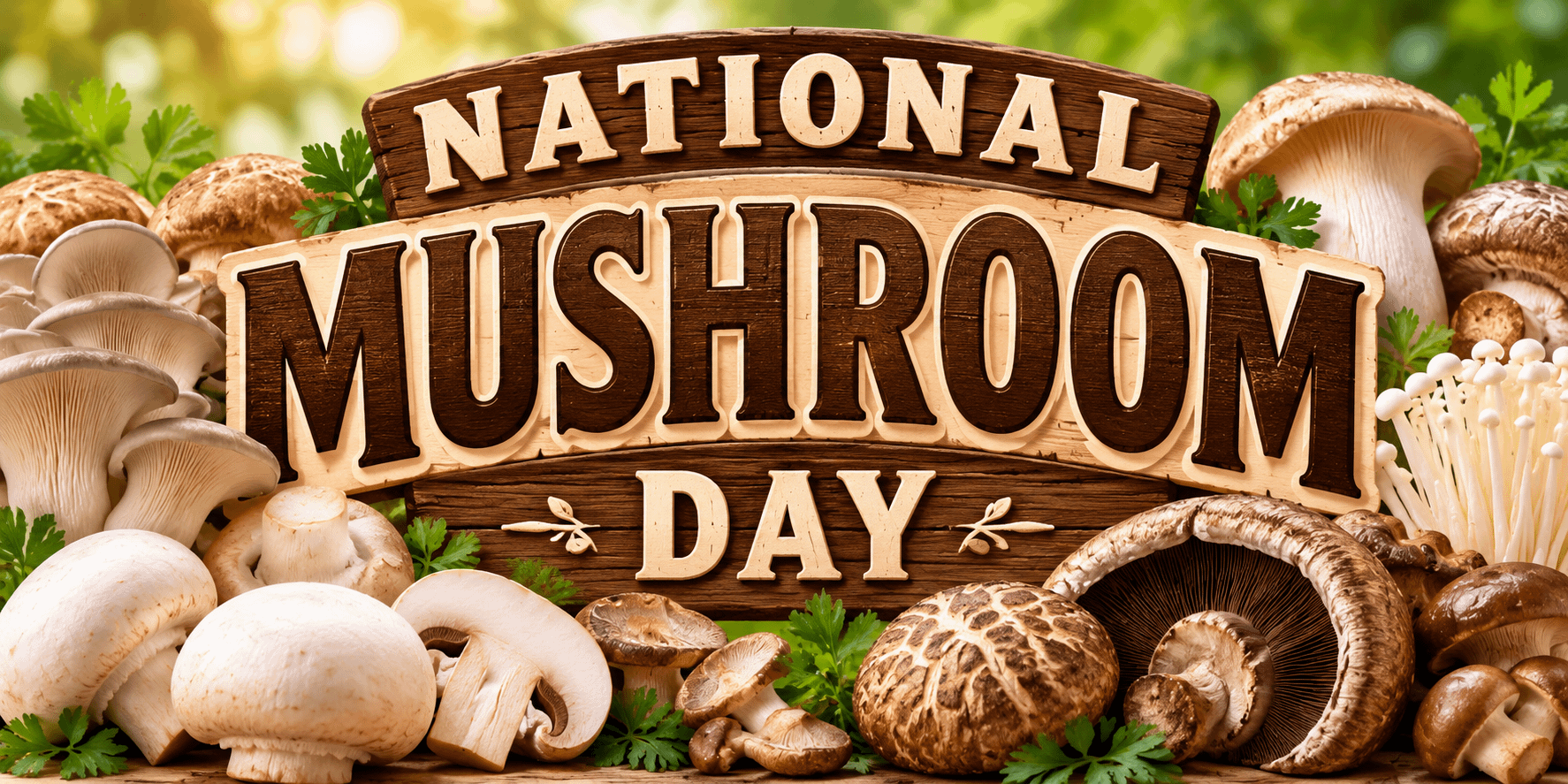
Every year, National Mushroom Day gives us an opportunity to celebrate one of the most unusual, versatile, and fascinating foods found in nature: the mushroom.
Mushrooms may not always receive the same attention as colorful fruits or leafy vegetables, but they have earned an important place in kitchens around the world. From mushrooms sautéed with garlic and butter to mushroom pizza, creamy soups, pasta dishes, omelets, burgers, gravies, and hearty casseroles, there are countless ways to enjoy them.
National Mushroom Day is a great excuse to try a variety you have never tasted, cook an old favorite, or simply learn more about these remarkable organisms.
And mushrooms really are remarkable. They aren’t plants at all. They belong to their own biological kingdom—the fungi kingdom—and what we commonly call a mushroom is generally the fruiting body of a fungus.
So today, let’s celebrate the humble mushroom and everything it brings to our tables.
A Food With an Ancient History
Humans have been gathering and eating mushrooms for thousands of years.
Wild mushrooms have long been part of traditional cuisines throughout Europe, Asia, North America, and other regions. Different cultures developed their own ways of preparing mushrooms, using whatever varieties grew naturally in their environments.
Some mushrooms became prized delicacies. Others became everyday ingredients.
Over time, people also learned how to cultivate certain varieties rather than relying entirely on wild harvesting. Today, commercially grown mushrooms allow people to enjoy them throughout the year.
One of the most familiar varieties in American supermarkets is the white button mushroom. But that familiar little mushroom represents only a tiny part of the enormous world of fungi.
Mushrooms Aren’t Actually Vegetables
Most grocery stores place mushrooms next to vegetables, and we usually cook with them as if they were vegetables.
Scientifically, however, mushrooms aren’t vegetables.
Plants generally obtain energy through photosynthesis. Fungi work differently. They obtain nutrients by breaking down organic material in their environment.
The mushroom that appears above the soil, wood, or other growing material is often just the visible reproductive structure of a much larger fungal organism.
Below the surface can be an extensive network of microscopic threads called mycelium.
This hidden network is one of the reasons fungi are so fascinating. What we see above ground may represent only a small portion of the organism.
Popular Types of Edible Mushrooms
Walk through a well-stocked produce department or farmers market and you may discover far more mushroom varieties than you expected.
White button mushrooms are among the most common. Their mild flavor makes them useful for pizzas, salads, soups, omelets, sauces, and countless other recipes.
Cremini mushrooms, sometimes called baby bellas, have a slightly deeper and earthier flavor.
Portobello mushrooms are mature forms of the same species as white button and cremini mushrooms. Their large caps and substantial texture make them especially popular for grilling, stuffing, or using as a meat substitute in certain dishes.
Shiitake mushrooms are known for their savory flavor and are frequently found in Asian-inspired soups, stir-fries, noodle dishes, and sauces.
Oyster mushrooms have delicate caps and a mild flavor. When properly cooked, their texture can make them an interesting addition to many savory meals.
Maitake mushrooms, also known as hen-of-the-woods, grow in clusters and have a distinctive earthy character.
Enoki mushrooms are recognizable by their long, slender stems and tiny caps. They are commonly used in soups, noodle dishes, and other Asian cuisines.
Morel mushrooms are highly prized for their distinctive honeycomb-like appearance and rich flavor.
There are many more edible species around the world, making mushrooms an ingredient you could continue exploring for years.
Why Mushrooms Are So Popular in Cooking
One of the biggest reasons mushrooms work in so many dishes is their savory quality.
They are associated with umami, the savory taste often described alongside sweet, sour, salty, and bitter.
That savory character allows mushrooms to add depth to a meal without requiring complicated preparation.
Even something as simple as sautéing sliced mushrooms can transform them.
As mushrooms cook and lose moisture, their flavors become concentrated. Add garlic, herbs, onions, black pepper, or a little butter or olive oil, and an ordinary package of mushrooms can become an impressive side dish.
They can also complement meat rather than replace it.
Mushrooms pair well with steak, chicken, pork, pasta, eggs, potatoes, rice, and numerous other ingredients.
That’s versatility worth celebrating.
Nutritional Benefits of Mushrooms
Mushrooms can also contribute useful nutrients to a balanced diet.
Depending on the variety and growing conditions, mushrooms can provide B vitamins and minerals such as selenium, copper, and potassium. They are generally low in calories and contain relatively little fat before oils, butter, cheese, cream, or other ingredients are added during preparation.
Some mushrooms can also provide vitamin D, particularly when they have been exposed to ultraviolet light.
Of course, nutritional values differ among varieties and products, so mushrooms shouldn’t be treated as some magical cure-all food.
They are simply another nutritious ingredient that can fit nicely into a varied diet.
One of the Best Pizza Toppings
You can’t celebrate mushrooms without talking about pizza.
Mushrooms have become a classic pizza topping for good reason.
Their earthy flavor works wonderfully with tomato sauce, melted cheese, garlic, sausage, pepperoni, onions, bell peppers, olives, and many other toppings.
The heat of the oven cooks the mushrooms while concentrating their savory flavor.
For mushroom lovers, there is something particularly satisfying about a pizza covered with plenty of sliced mushrooms and bubbling cheese.
And if you want even more mushroom flavor, try combining several varieties on the same pizza.
Simple Garlic Butter Mushrooms
National Mushroom Day deserves something delicious, and you don’t need an elaborate recipe to celebrate.
Ingredients
- 1 pound mushrooms, cleaned and sliced
- 2 tablespoons butter
- 1 tablespoon olive oil
- 3 cloves garlic, minced
- Salt to taste
- Black pepper to taste
- Fresh parsley, chopped
- Optional thyme or rosemary
Directions
Heat the olive oil and butter in a large skillet over medium-high heat.
Add the mushrooms without overcrowding the pan. Allow them to cook for a few minutes before stirring so they have an opportunity to brown.
Continue cooking until the mushrooms have released much of their moisture and developed a golden-brown color.
Add the minced garlic during the final minute or two of cooking.
Season with salt and black pepper.
Finish with fresh parsley and, if desired, thyme or rosemary.
Serve them alongside steak or chicken, spoon them over mashed potatoes, mix them into pasta, add them to eggs, or simply eat them as a side dish.
Sometimes the simplest mushroom recipes are the best.
Try a Mushroom Burger
Another fun way to celebrate National Mushroom Day is with a mushroom burger.
You can take this in two completely different directions.
The first is a traditional beef burger covered with sautéed mushrooms and melted Swiss cheese. Add caramelized onions and you have an incredibly flavorful combination.
The second is using a large portobello mushroom cap as the centerpiece of the sandwich.
Marinate the mushroom with olive oil, garlic, herbs, and seasonings before grilling or roasting it. Place it on a toasted bun and add your favorite toppings.
Both approaches celebrate mushrooms in their own delicious way.
Add Mushrooms to Breakfast
Mushrooms don’t have to wait until dinner.
They can be fantastic at breakfast.
Sauté mushrooms with onions and fold them into scrambled eggs. Add them to an omelet with spinach and cheese. Include them in a breakfast casserole. Serve them with potatoes and eggs.
A mushroom, spinach, and cheese omelet is an especially easy National Mushroom Day breakfast.
Mushrooms bring savory flavor to breakfast without overpowering everything else on the plate.
Make a Comforting Mushroom Soup
As autumn approaches and cooler weather begins arriving in many places, mushroom soup becomes especially appealing.
Creamy mushroom soup is a classic comfort food, but mushrooms also work beautifully in broth-based soups.
Combine mushrooms with onions, garlic, herbs, broth, and vegetables for something warm and satisfying.
Homemade mushroom soup also shows how much flavor mushrooms can contribute to a dish. Slowly cooking them with onions and aromatics creates a rich base before you even add the broth.
Mushroom Pasta for Dinner
Pasta and mushrooms are another excellent combination.
Start by sautéing mushrooms until they are nicely browned. Add garlic and onions or shallots.
From there, you can create several different sauces.
For something rich, add cream and Parmesan cheese.
For something lighter, use olive oil, garlic, herbs, Parmesan, and a little pasta water.
You could also add spinach, chicken, sausage, peas, or roasted vegetables.
Finish with freshly ground black pepper and parsley.
It’s a relatively simple meal that can taste like something you’d order at a restaurant.
Mushrooms and the Environment
Mushrooms are fascinating beyond the dinner table.
Fungi play essential roles in ecosystems.
Many fungi help decompose dead organic material, returning nutrients to the environment. Others form relationships with plants, including partnerships involving plant roots and fungal networks.
Without fungi, forests and other ecosystems would function very differently.
The mushrooms we notice growing from the ground or fallen trees are visible reminders of enormous biological processes happening around us every day.
A Warning About Wild Mushrooms
National Mushroom Day may inspire you to notice mushrooms growing outdoors, but there’s an important safety message worth emphasizing.
Never eat a wild mushroom simply because you think you recognize it.
Some poisonous mushrooms can resemble edible species, and identification mistakes can cause severe illness or even death.
Photos, smartphone applications, or quick internet searches shouldn’t be considered sufficient confirmation that a wild mushroom is safe to eat.
Unless you have appropriate expertise or guidance from a qualified local expert, enjoy observing and photographing wild mushrooms rather than eating them.
For your National Mushroom Day meal, commercially cultivated mushrooms from a reputable grocery store or food supplier are the safer choice.
How to Celebrate National Mushroom Day
There are plenty of easy ways to join the celebration.
Try a mushroom variety you’ve never eaten before. Order mushroom pizza from your favorite pizza restaurant. Make garlic butter mushrooms. Cook mushroom pasta for dinner. Add mushrooms to your morning omelet. Make homemade mushroom soup. Grill a portobello mushroom. Visit a farmers market and see which cultivated mushrooms are available.
You could even make a mushroom tasting plate using several varieties prepared in similar ways.
The goal doesn’t have to be complicated.
National food days are often simply opportunities to slow down and appreciate ingredients we normally take for granted.
From the Forest Floor to the Dinner Table
Mushrooms are easy to overlook.
They aren’t brightly colored like berries. They aren’t sweet like peaches. They don’t have the universal popularity of potatoes.
But beneath their relatively simple appearance is something extraordinary.
Mushrooms represent an enormous and fascinating biological kingdom, play important ecological roles, and have become treasured ingredients in cuisines throughout the world.
They can be delicate or hearty.
They can complement meat or become the centerpiece of a meal.
They can appear at breakfast, lunch, dinner, or even as an appetizer.
You can put them on pizza, toss them into pasta, cook them into soup, add them to eggs, grill them, roast them, stuff them, or simply sauté them with butter and garlic.
That’s quite an accomplishment for something so humble.
Celebrate National Mushroom Day
National Mushroom Day is ultimately about appreciating an ingredient that has been part of human food traditions for generations.
Pick up some mushrooms and experiment in the kitchen.
Try a new variety.
Cook an old favorite.
Order the mushroom pizza.
Make a mushroom and Swiss burger.
Prepare a big skillet of garlic mushrooms.
Or simply learn something new about the remarkable fungal world beneath our feet.
However you choose to celebrate, give mushrooms their moment in the spotlight.
What is your favorite way to eat mushrooms—on pizza, in pasta, with steak, in an omelet, or cooked another way?