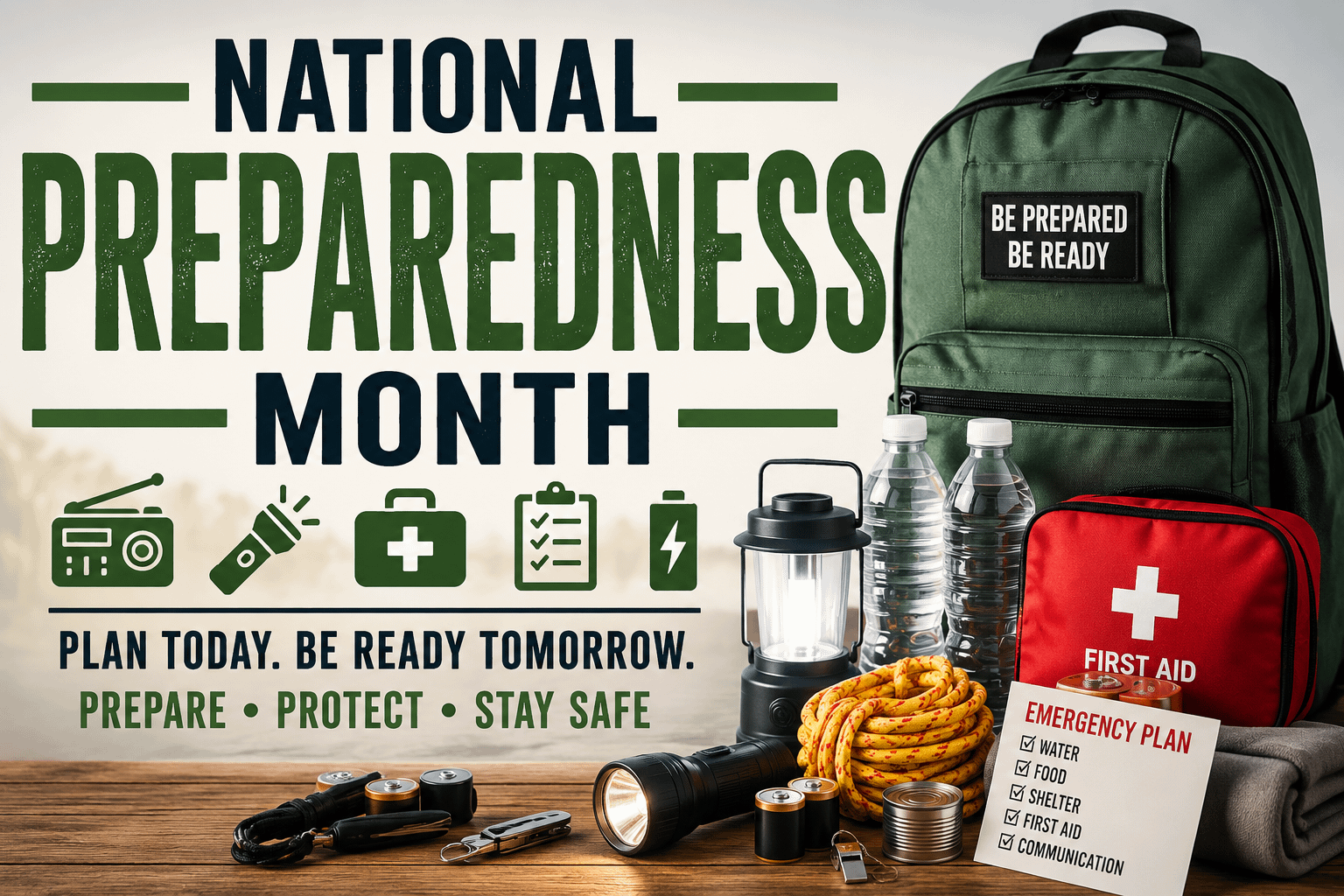
Every September, National Preparedness Month serves as an important reminder that emergencies can happen at any time—and being prepared before they occur can make a major difference.
Natural disasters, power outages, severe weather, wildfires, earthquakes, floods, and other emergencies can disrupt everyday life with little warning. While we cannot prevent every emergency, we can take practical steps to protect ourselves, our families, our homes, and our communities.
National Preparedness Month encourages everyone to ask a simple but important question:
If an emergency happened today, would I be ready?
What Is National Preparedness Month?
National Preparedness Month is observed throughout September in the United States to encourage individuals, families, businesses, schools, and communities to prepare for emergencies and disasters.
Preparedness doesn’t mean living in fear of what might happen. It means recognizing potential risks and making reasonable plans ahead of time.
When an emergency occurs, there may not be enough time to figure everything out. Roads could be closed. Electricity and internet service may be unavailable. Stores could temporarily close. Family members might be in different locations.
Having a plan beforehand can reduce confusion when every minute matters.
Start With a Family Emergency Plan
One of the most valuable things you can do during National Preparedness Month is create or review your household emergency plan.
Everyone in your household should understand what to do if you cannot stay at home, where you will meet if you become separated, and how you will communicate if normal phone service is disrupted.
Choose a meeting location close to home and another outside your immediate neighborhood. Families should also consider identifying an out-of-area contact who can help relay information if local communication becomes difficult.
Make sure children understand the plan in an age-appropriate way.
Don’t simply create the plan and forget about it. Review and practice it periodically.
Build an Emergency Supply Kit
Emergency supplies can become extremely important when normal services are temporarily unavailable.
A basic preparedness kit may include:
- Water
- Nonperishable food
- Flashlights
- Extra batteries
- Battery-powered or hand-crank radio
- First-aid supplies
- Necessary medications
- Phone chargers and portable power banks
- Personal hygiene products
- Copies of important documents
- Cash
- Blankets or warm clothing
- Pet food and supplies
- Basic tools
- Whistle
- Dust masks
- Manual can opener
Your emergency supplies should reflect the specific needs of your household.
Someone with a disability, an older adult, a household with young children, or a family with pets may need additional supplies.
Periodically inspect your emergency kit and replace expired food, medications, batteries, or other items.
Don’t Forget Water
Water is one of the most important emergency supplies.
A disruption to local infrastructure can sometimes make normal drinking-water sources temporarily unavailable or unsafe. Keeping an emergency water supply gives your household an important layer of protection.
Water isn’t only needed for drinking. It can also be necessary for preparing food and basic sanitation.
Store emergency water properly and periodically check your supplies.
Know the Risks Where You Live
Preparedness isn’t exactly the same everywhere.
Someone living in California may need to pay particular attention to earthquakes and wildfires, while people in other parts of the country may face hurricanes, tornadoes, flooding, extreme winter weather, or other regional hazards.
Learn about the emergencies most likely to affect your community.
Knowing your risks allows you to build a preparedness plan around situations you are actually likely to encounter.
Prepare for Power Outages
Extended power outages can affect lighting, refrigeration, communication, heating, cooling, medical equipment, and many other parts of everyday life.
Keep flashlights where they are easy to find rather than relying entirely on candles.
Portable power banks can help keep phones charged, but they need to be charged themselves. Make checking them part of your regular preparedness routine.
If someone in your household depends on electrically powered medical equipment, emergency planning becomes especially important. Develop an appropriate backup plan with the relevant medical provider and utility resources.
Have a Plan for Your Pets
Pets are members of the household, and they need emergency plans too.
Keep extra pet food, water, medications, carriers, leashes, identification information, and other essential supplies readily available.
Think about where you could take your animals if evacuation became necessary. Some emergency shelters or temporary accommodations may have restrictions regarding pets, so researching options beforehand can save valuable time.
Keep Important Documents Protected
Imagine having to leave your home quickly.
Would you know where your important documents were?
Consider securely organizing copies of identification, insurance information, emergency contacts, medical information, property records, and other essential documents.
Digital backups can also be helpful when stored securely.
The goal is to avoid searching through drawers and filing cabinets when you should be concentrating on getting yourself and your family to safety.
Prepare Your Vehicle
Emergencies don’t always happen while you’re home.
A basic emergency kit in your vehicle can be useful during severe weather, evacuations, breakdowns, or unexpected delays.
Depending on your location and season, useful items could include water, snacks, a flashlight, charging equipment, first-aid supplies, blankets, appropriate clothing, and other basic necessities.
Keeping your vehicle adequately fueled or charged can also be important when conditions suggest an evacuation may become necessary.
Make Preparedness Affordable
Building an emergency kit doesn’t necessarily require purchasing everything at once.
Start with what you already have.
Then add one or two items whenever your budget allows.
You could dedicate each week of September to a different area:
Week One: Create your emergency plan.
Week Two: Build or update your emergency supply kit.
Week Three: Organize important documents and emergency contacts.
Week Four: Practice your plan and identify anything you overlooked.
Small steps can eventually create a much stronger level of preparedness.
Check on Your Neighbors
Preparedness isn’t only an individual responsibility. Strong communities can help one another during difficult situations.
Consider elderly neighbors, people living alone, individuals with disabilities, or anyone who may need additional assistance during an emergency.
You don’t have to become responsible for someone else’s entire emergency plan. Simply knowing your neighbors and maintaining communication can make a meaningful difference.
During a disaster, a simple knock on the door or phone call could help someone who otherwise might be overlooked.
Teach Children Without Frightening Them
Children should understand basic emergency preparedness, but conversations don’t need to make them afraid.
Teach them practical information such as their full name, important phone numbers when age appropriate, where the family meeting locations are, and who trusted adults are.
Practice emergency procedures calmly.
The goal is to replace uncertainty with knowledge.
Pay Attention to Emergency Alerts
During an active emergency, reliable information is essential.
Learn how emergency notifications are distributed in your community and consider enabling appropriate alerts on your phone.
Weather radios and other backup communication methods can also be useful if internet or cellular service becomes unavailable.
During an emergency, follow instructions from appropriate local authorities regarding evacuation routes, shelter locations, road closures, and other safety information.
Preparedness Is an Ongoing Habit
One of the biggest misconceptions about emergency preparedness is that you can build a kit once and never think about it again.
Families change.
Medications change.
Phone numbers change.
Children grow.
Pets come into our lives.
Food and batteries expire.
Emergency plans should evolve along with your household.
Consider reviewing your emergency plan and supplies every six months or at another regular interval that works for you.
National Preparedness Month is a perfect annual reminder to give everything a thorough inspection.
Don’t Wait for the Emergency
Most people expect tomorrow to look a lot like today.
Usually it does.
But emergencies are defined by their ability to interrupt normal life.
Preparedness gives you options when those interruptions occur.
You don’t need a bunker filled with years of supplies. You don’t need to spend thousands of dollars. And you don’t need to live every day expecting disaster.
You simply need to prepare responsibly for realistic possibilities.
Make a plan.
Build your supplies.
Know your risks.
Protect important information.
Talk with your family.
Check on your neighbors.
And periodically review everything.
Final Thoughts
National Preparedness Month reminds us that the best time to prepare for an emergency is before one happens.
September provides an opportunity to look around your home and ask what would happen if the electricity went out, you had to evacuate quickly, normal communication stopped working, or your family became separated.
Even one small preparedness step today can make you better equipped for tomorrow.
Emergency preparedness isn’t about expecting the worst.
It’s about being ready to protect what matters most when the unexpected happens.
How prepared is your household for an emergency—and what is one thing you could add to your emergency plan or supply kit this month?
Leave a Reply