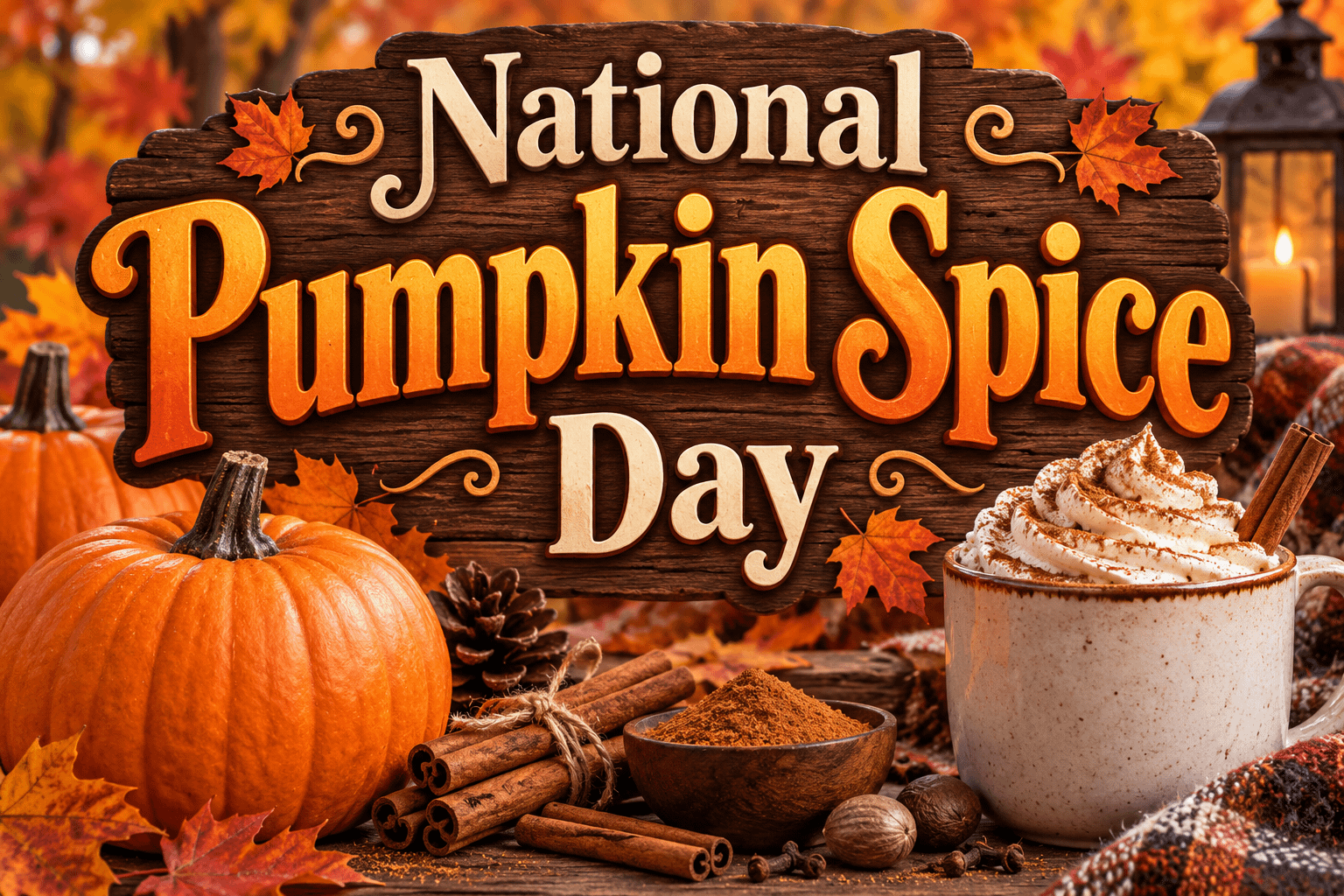
There are certain flavors that instantly remind us of a season. Watermelon tastes like summer, peppermint brings thoughts of Christmas, and pumpkin spice has become one of the unmistakable flavors of fall.
National Pumpkin Spice Day is a celebration of the warm, comforting blend of spices that has become a seasonal favorite in coffee shops, bakeries, kitchens, and homes across the country. From pumpkin spice lattes and muffins to pancakes, cookies, candles, and even creative savory dishes, pumpkin spice seems to appear everywhere once autumn arrives.
For some people, the first pumpkin spice drink of the year is almost an unofficial announcement that fall has begun.
But what exactly is pumpkin spice? Why did it become so popular? And how can you celebrate National Pumpkin Spice Day beyond ordering a latte?
Pour yourself something warm and discover what makes this famous fall flavor so special.
What Is Pumpkin Spice?
Despite its name, traditional pumpkin spice doesn’t necessarily contain pumpkin.
Pumpkin spice—often called pumpkin pie spice—is a mixture of warming spices traditionally associated with pumpkin pie. Recipes vary, but the blend commonly includes:
- Cinnamon
- Ginger
- Nutmeg
- Cloves
- Allspice
Cinnamon usually provides the dominant flavor, while ginger adds warmth and a little bite. Nutmeg contributes an earthy sweetness, and cloves and allspice provide deeper aromatic notes.
When these spices are combined, they create the familiar aroma many people immediately associate with freshly baked pumpkin pie.
Actual pumpkin can certainly be added to recipes, but pumpkin spice itself refers primarily to the spices.
The Connection to Pumpkin Pie
Long before pumpkin spice became a coffee-shop phenomenon, cooks were combining warming spices with pumpkin.
Pumpkins have been an important food in North America for centuries. As pumpkin pies and similar dishes developed, cooks experimented with combinations of cinnamon, ginger, nutmeg, cloves, mace, and other spices.
Over time, those flavors became closely connected with pumpkin desserts and autumn cooking.
Commercially prepared pumpkin pie spice eventually made things easier for home cooks. Instead of measuring several individual spices every time they baked a pie, they could purchase one convenient blend.
What began as a practical baking ingredient eventually became something much larger.
How Pumpkin Spice Became a Fall Phenomenon
Pumpkin spice’s modern popularity cannot be separated from coffee culture.
Seasonal pumpkin-flavored coffee drinks helped transform a traditional baking spice into a cultural symbol of autumn. The pumpkin spice latte became especially influential during the early 2000s, and the flavor combination rapidly spread beyond coffee.
Soon pumpkin spice could be found in everything from cereal and cookies to creamers, doughnuts, protein products, ice cream, and snack foods.
The flavor even moved outside the kitchen.
Pumpkin spice-inspired candles, soaps, air fresheners, lotions, and other scented products became part of the seasonal marketplace.
At some point, pumpkin spice stopped being merely an ingredient.
It became an experience.
Why Do We Associate Pumpkin Spice With Fall?
Part of pumpkin spice’s popularity comes from timing.
The spices commonly used in the blend are warm, aromatic, and comforting. Their fragrances complement the cooler weather and traditional foods of autumn.
Think about the experiences commonly associated with fall:
Cool mornings.
Changing leaves.
Sweaters.
Football games.
Pumpkin patches.
Halloween.
Thanksgiving.
Freshly baked pies.
Hot coffee.
Family gatherings.
Pumpkin spice fits naturally into that atmosphere.
There is also an emotional component. Smell and taste can become strongly connected to memories. A particular aroma may remind someone of Thanksgiving at a grandparent’s house, baking with their parents, visiting a pumpkin patch with their children, or enjoying coffee during a crisp autumn morning.
Sometimes we aren’t simply enjoying a flavor.
We’re revisiting a memory.
The Famous Pumpkin Spice Latte
If there is one beverage responsible for turning pumpkin spice into a modern phenomenon, it is the pumpkin spice latte.
The basic idea combines espresso or coffee with milk, pumpkin-inspired flavors, warming spices, and sweetness. Depending on the recipe, actual pumpkin puree may also be included.
The drink is frequently topped with whipped cream and another sprinkle of spice.
You don’t need to visit a coffee shop to enjoy one, either.
A simple homemade version can be created with brewed coffee, warmed milk, pumpkin puree, pumpkin pie spice, vanilla, and your preferred sweetener.
Blend or whisk everything together and top it with whipped cream and cinnamon for an easy autumn treat.
Pumpkin Spice Isn’t Just for Coffee
Coffee may get most of the attention, but pumpkin spice works beautifully in many foods and beverages.
Try adding a small amount to pancakes, waffles, oatmeal, French toast, muffins, banana bread, cheesecake, cookies, cinnamon rolls, smoothies, milkshakes, hot chocolate, or apple cider.
It can even be sprinkled over roasted nuts or mixed into homemade granola.
One of the easiest options is pumpkin spice oatmeal. Prepare your favorite oatmeal and stir in pumpkin puree, cinnamon or pumpkin spice, maple syrup, and chopped pecans.
You get the flavors of fall without having to bake anything.
Make Your Own Pumpkin Spice Blend
You can also make pumpkin pie spice at home.
A simple blend can be created by combining approximately:
4 tablespoons ground cinnamon
1 tablespoon ground ginger
2 teaspoons ground nutmeg
2 teaspoons ground allspice
1 teaspoon ground cloves
Mix the spices thoroughly and keep the blend in an airtight spice jar.
The exact proportions aren’t sacred. If you love cinnamon, increase it. If you enjoy the bold flavor of cloves, add a little more. If nutmeg isn’t your favorite, reduce it.
Creating your own blend lets you adjust the flavor to your preferences.
Pumpkin Spice and Actual Pumpkin Are Different
This is one of the biggest misconceptions surrounding pumpkin spice.
Pumpkin spice is not pumpkin.
Pumpkin provides a mild, earthy flavor and creamy texture. Pumpkin spice supplies the aromatic flavors people typically associate with pumpkin pie.
They work especially well together, which explains why they have become so closely connected.
You can make something pumpkin-flavored without pumpkin spice, and you can make something pumpkin-spiced without pumpkin.
Combine the two, however, and you get the classic fall flavor most people recognize.
Easy Ways to Celebrate National Pumpkin Spice Day
National Pumpkin Spice Day gives you an excuse to embrace autumn and experiment with this famous seasonal flavor.
Start your morning with pumpkin spice pancakes or oatmeal. Add a little pumpkin spice to your coffee. Bake pumpkin muffins or cookies in the afternoon. Make pumpkin spice hot chocolate after dinner.
You could also organize a pumpkin spice tasting with friends or family.
Choose several pumpkin spice foods and beverages and see which ones everyone prefers. Include traditional choices alongside unusual ones for a little fun.
If baking is your thing, make a pumpkin pie, pumpkin bread, pumpkin cheesecake, or pumpkin spice cinnamon rolls.
And if you’re ready for fall but don’t want anything sweet, simply light a pumpkin spice candle and enjoy the aroma.
Pumpkin Spice Pairs Well With Other Fall Flavors
Pumpkin spice doesn’t have to stand alone.
It pairs particularly well with:
Apple: Pumpkin spice can add warmth to apple pie, apple crisp, cider, and baked apples.
Maple: Maple syrup and pumpkin spice work beautifully together in coffee, oatmeal, pancakes, and desserts.
Caramel: Caramel adds richness and sweetness to pumpkin spice drinks and baked goods.
Chocolate: Pumpkin spice and chocolate can create a surprisingly satisfying combination in cookies, brownies, cakes, and hot cocoa.
Vanilla: Vanilla softens some of the stronger spices and adds another layer of sweetness.
Pecans: Toasted pecans bring crunch and a nutty flavor that complements pumpkin beautifully.
Experimenting with these combinations is one of the best parts of fall cooking.
More Than a Seasonal Trend
It’s easy to joke about how quickly pumpkin spice takes over stores every autumn.
But underneath all the marketing is something remarkably simple.
People enjoy traditions.
Seasons give us natural opportunities to create them.
Maybe your tradition is buying your first pumpkin spice latte when September arrives. Maybe it’s baking pumpkin bread with your children. Perhaps it’s visiting a pumpkin patch, carving pumpkins before Halloween, or making pumpkin pie for Thanksgiving.
Those seemingly small traditions can become important memories.
Years later, the smell of cinnamon and nutmeg may suddenly transport you back to those moments.
That’s one reason seasonal foods can mean more than we expect.
Celebrate the Comfort of Fall
National Pumpkin Spice Day isn’t really about arguing over whether pumpkin spice is amazing or overrated.
It’s an opportunity to enjoy one of autumn’s most recognizable flavors.
Make something you’ve never tried before. Bake an old family recipe. Visit your favorite local coffee shop. Experiment with your own pumpkin spice blend. Invite friends over for dessert. Sit outside on a cool evening with a warm drink.
Autumn doesn’t last forever.
That may be exactly why its traditions feel special.
Pumpkin spice has become part of those traditions for millions of people—a simple mixture of spices that somehow manages to bring thoughts of changing leaves, cozy evenings, family gatherings, and holidays still to come.
So on National Pumpkin Spice Day, sprinkle a little cinnamon and nutmeg into something you love and enjoy one of the signature flavors of the season.
What’s your favorite pumpkin spice treat—coffee, pumpkin pie, cookies, pancakes, or something completely different?
Leave a Reply