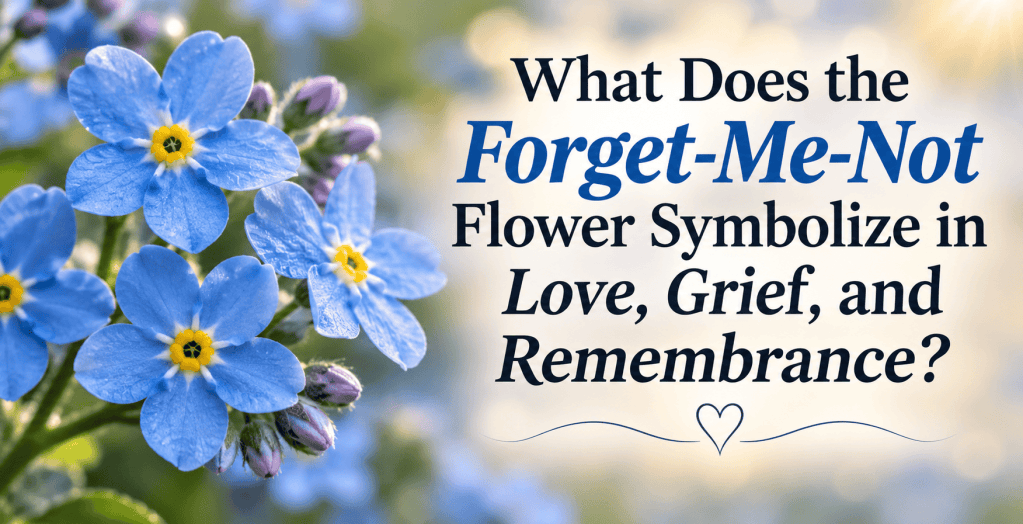
Some flowers are admired for their beauty, while others carry meanings that reach far beyond their appearance. The forget-me-not flower is one of those special blooms. Small, delicate, and often recognized by its soft blue petals and yellow center, this flower has become a powerful symbol of love, loyalty, memory, and the lasting connections we share with others.
For centuries, forget-me-nots have represented the desire to be remembered. They remind us that genuine love does not simply disappear when circumstances change, relationships end, or someone passes away.
In romantic relationships, forget-me-nots symbolize devotion and faithfulness. In grief, they represent the continuing love we feel for someone who has died. In remembrance, they offer a meaningful way to honor the people whose lives have forever changed our own.
Understanding the symbolism of the forget-me-not flower reveals why such a small blossom can carry such an extraordinary emotional message.
What Is the Meaning Behind the Forget-Me-Not Flower?
The forget-me-not flower belongs to a group of flowering plants commonly associated with the genus Myosotis. Its name comes from the Greek words meaning “mouse’s ear,” referring to the shape of the plant’s leaves.
Although forget-me-nots are often blue, some varieties produce pink, white, or purple flowers.
Their delicate appearance contrasts with the strength of their symbolism.
The flower traditionally represents several meaningful ideas:
-
True love that continues through time and distance.
-
Faithfulness and loyalty in relationships.
-
Remembering loved ones who have passed away.
-
Emotional connections that remain despite separation.
-
Cherished memories and meaningful experiences.
-
Hope, comfort, and the enduring influence of love.
At the center of these meanings is one simple message: Please do not forget me.
That message can carry different emotions depending on the circumstances. Between romantic partners, it may express devotion. Between friends, it may represent an unbreakable bond. For someone grieving a loved one, it can symbolize the promise that their memory will remain alive.
What Does the Forget-Me-Not Flower Symbolize in Love?
In romantic relationships, forget-me-nots are traditionally associated with faithful love, lasting affection, and emotional commitment.
Unlike flowers commonly connected with passionate romance, such as red roses, forget-me-nots often represent a quieter but equally powerful kind of love.
They symbolize the love that remains when two people are separated by distance, time, or circumstances beyond their control.
1. True Love That Lasts
One of the most recognized meanings of the forget-me-not flower is enduring love.
Giving someone forget-me-nots can communicate that your feelings are genuine and that the person holds a permanent place in your heart.
This symbolism makes the flower particularly meaningful for couples celebrating long relationships, anniversaries, or important milestones.
2. Faithfulness and Loyalty
Forget-me-nots also represent remaining faithful to someone you love.
Their symbolism emphasizes trust, devotion, and emotional loyalty.
In a world where relationships sometimes change unexpectedly, the forget-me-not serves as a reminder that meaningful love requires care, honesty, and commitment.
3. Love Across Distance
Long-distance relationships often involve missing someone while maintaining an emotional connection.
Forget-me-nots can symbolize the promise that physical separation does not have to weaken genuine affection.
A bouquet, piece of jewelry, or handwritten note featuring forget-me-nots can communicate a simple message:
“Even when we are apart, you are always in my heart.”
4. Love That Is Never Forgotten
Not every meaningful love story lasts forever in the way people originally imagined.
Sometimes relationships end, circumstances change, or two people follow different paths.
The forget-me-not can symbolize appreciation for a love that helped shape someone’s life, even when that relationship is no longer part of their present.
It represents the understanding that a relationship can remain meaningful without continuing in the same form.
What Does the Forget-Me-Not Flower Symbolize in Grief?
For people experiencing grief, the forget-me-not carries an especially profound meaning.
When someone we love dies, the relationship changes, but the love does not necessarily end.
We can no longer share ordinary moments with that person in the same way. We cannot call them, embrace them, or create new memories together.
Yet the emotional connection often remains.
The forget-me-not symbolizes this continuing bond between the living and those who have passed away.
Love Does Not End With Death
One of the most difficult parts of grief is learning to live in a world where someone deeply loved is no longer physically present.
The forget-me-not represents the belief that death does not erase the love, lessons, memories, and influence a person leaves behind.
For grieving parents, spouses, siblings, children, and friends, this symbolism can offer comfort.
It acknowledges that remembering someone is not necessarily a refusal to move forward.
Instead, remembrance can be a natural expression of continuing love.
Remembering Someone Who Has Passed Away
Many grieving people fear that their loved one will eventually be forgotten by others.
As years pass, conversations become less frequent. Friends and relatives may stop mentioning the person’s name. Important anniversaries may go unnoticed.
For someone grieving, this silence can be painful.
The forget-me-not offers a visible reminder that a person’s life deserves to be remembered.
Planting these flowers, displaying their image, or including them in memorial traditions can become a personal promise to keep someone’s memory alive.
The Continuing Bond Between Love and Loss
Grief is often described as the price of love.
The deeper the connection, the more profoundly a loss may affect someone.
Forget-me-nots symbolize the relationship between these two emotions.
They remind us that grief exists because someone mattered.
A person may gradually learn to carry their grief differently, but that does not mean the love behind it has disappeared.
For many bereaved people, remembering their loved one becomes an important part of living with loss.
Why Are Forget-Me-Nots Meaningful to Parents Who Have Lost a Child?
Few losses are as devastating as the death of a child.
Parents often imagine a lifetime of shared experiences, milestones, conversations, and memories with their children.
When a child dies, those expectations are shattered.
The forget-me-not can become a particularly meaningful symbol for bereaved mothers and fathers because it represents something many parents desperately want the world to understand:
Their child lived. Their child mattered. Their child is still loved.
For a grieving parent, the fear of a child being forgotten can be deeply painful.
Other people may gradually return to their routines, but a parent’s love continues through birthdays, holidays, anniversaries, and ordinary days.
A forget-me-not flower can symbolize a parent’s lifelong connection with their child.
It can also represent the importance of speaking a child’s name, sharing memories, and acknowledging the place that child will always hold within the family.
A Father’s Promise to Remember
Grieving fathers sometimes struggle to express their emotions openly.
Some feel pressure to remain strong, support everyone else, or keep their pain private.
Yet a father’s grief can be just as profound as anyone else’s.
For a father who has lost a son or daughter, the forget-me-not may represent a quiet but powerful promise.
It can mean continuing to speak about his child, honoring their life, remembering their personality, and carrying their influence into the future.
A father does not stop being a father when his child dies.
The relationship changes, but the love remains part of who he is.
The forget-me-not can serve as a symbol of that lifelong identity.
What Does the Forget-Me-Not Flower Symbolize in Remembrance?
Remembrance is about more than recalling the past.
It is about recognizing that certain people, experiences, and relationships continue to influence our lives.
Forget-me-nots have become meaningful symbols in memorial gardens, remembrance ceremonies, sympathy gifts, and personal tributes.
Their name makes them particularly appropriate for honoring people who are no longer physically present.
Honoring Someone’s Life
A memorial does not have to be elaborate to be meaningful.
Sometimes a small flower planted in a garden can carry more emotional significance than an expensive monument.
Forget-me-nots can represent gratitude for the life someone lived and the memories they left behind.
They can also remind family members that remembrance does not need to happen only on anniversaries or special occasions.
Keeping Memories Alive
Memories often become some of the most treasured possessions after a loss.
A familiar laugh, favorite song, shared joke, or ordinary conversation can take on extraordinary meaning.
The forget-me-not symbolizes the importance of preserving those memories.
It encourages people to tell stories, share photographs, and continue speaking about those they love.
Remembering Without Remaining Trapped in the Past
Some people worry that continuing to remember someone who has died will prevent them from healing.
However, maintaining a healthy emotional connection with a deceased loved one can be part of adapting to grief.
Remembering does not require someone to stop living.
A person can honor the past while continuing to build a future.
The forget-me-not beautifully represents this balance.
Its flowers return during the growing season, offering a natural reminder that remembrance and new experiences can exist together.
What Is the Legend Behind the Forget-Me-Not Flower?
One of the best-known European legends associated with forget-me-nots tells the story of a knight and his beloved walking beside a river.
According to the legend, the knight notices beautiful blue flowers growing near the water and attempts to gather them for the woman he loves.
While reaching for the flowers, he falls into the river.
Unable to escape, he throws the flowers toward his beloved and calls out, “Forget me not!”
The story is a romantic legend rather than a documented historical event, and different versions have been told over time.
Nevertheless, it helped reinforce the flower’s association with love, separation, devotion, and remembrance.
The legend captures the emotional meaning behind the flower’s name.
Even when two people cannot remain together, the desire to be remembered can endure.
What Do Different Colors of Forget-Me-Not Flowers Mean?
Although blue forget-me-nots are the most familiar, other colors can carry additional symbolic interpretations.
These color meanings are not universal rules. They are associations commonly used in floral symbolism and personal gift-giving.
| Flower color | Common symbolic meaning |
|---|---|
| Blue | True love, remembrance, loyalty, and lasting memories |
| Pink | Affection, tenderness, romance, and gentle love |
| White | Innocence, purity, peace, and respectful remembrance |
| Purple | Dignity, admiration, reflection, and spiritual connection |
Blue remains the color most strongly associated with remembrance and enduring love.
Its soft appearance makes it especially popular for sympathy arrangements, memorial gardens, and sentimental gifts.
However, the most meaningful color is often the one that holds personal significance for the person giving or receiving the flowers.
Why Are Forget-Me-Nots Associated With Alzheimer’s Awareness?
Forget-me-nots have also become associated with memory-related conditions, including Alzheimer’s disease and dementia.
The connection comes from the flower’s name and its traditional symbolism of remembering.
Organizations and awareness initiatives in different countries have used forget-me-not imagery to encourage compassion, recognition, and support for people experiencing memory loss.
The symbolism extends beyond remembering facts or events.
It emphasizes remembering the dignity, identity, and humanity of people affected by these conditions.
Even when someone’s ability to recall memories changes, their life and relationships continue to have value.
The forget-me-not can therefore symbolize patience, compassion, and the importance of maintaining meaningful human connections.
How Can You Use Forget-Me-Nots to Honor a Loved One?
There are many meaningful ways to incorporate forget-me-nots into personal remembrance traditions.
The most important consideration is choosing something that feels authentic to your relationship with the person being remembered.
1. Plant a Forget-Me-Not Memorial Garden
Planting forget-me-nots in a garden creates a living tribute.
Their delicate blooms can serve as a reminder of the person you love.
A memorial garden might also include a personalized stone, photograph, or favorite decorative object.
Because many forget-me-not varieties can reseed themselves, their seasonal return may hold special emotional meaning.
Choose a variety appropriate for your growing region, as some types can spread aggressively.
2. Include Forget-Me-Nots in Memorial Jewelry
Forget-me-not designs are commonly used in necklaces, bracelets, rings, and lockets.
Some pieces feature pressed flowers, engraved images, or blue floral patterns.
Memorial jewelry allows someone to carry a small symbol of remembrance throughout everyday life.
3. Create a Remembrance Tradition
Families may choose to include forget-me-nots in annual remembrance activities.
For example, flowers could be displayed on a loved one’s birthday, the anniversary of their passing, or another personally meaningful date.
The tradition can be as simple as placing a small bouquet beside a photograph.
4. Include Forget-Me-Nots in a Memorial Tattoo
Some people choose forget-me-not tattoos to honor someone who has died.
The flower may be accompanied by a name, initials, birth date, or meaningful phrase.
For bereaved parents, a forget-me-not tattoo can symbolize a permanent connection with their child.
5. Give Forget-Me-Nots as a Sympathy Gift
A small arrangement or potted forget-me-not plant can be a thoughtful gift for someone experiencing loss.
It communicates that their loved one has not been forgotten.
A personal message explaining why the flower was chosen can make the gesture especially meaningful.
6. Use Forget-Me-Nots in a Memory Book
Pressed flowers, illustrations, or floral designs can be incorporated into scrapbooks and memory journals.
These books may include photographs, letters, favorite memories, and stories.
For families grieving a child, memory books can help preserve details that might otherwise fade with time.
Are Forget-Me-Nots Appropriate for Funerals and Memorial Services?
Yes. Forget-me-nots can be appropriate for funerals, celebrations of life, and memorial services because of their strong association with remembrance.
Their small size makes them particularly suitable as accent flowers rather than the primary feature of a large arrangement.
They may be incorporated into floral displays, memorial tables, remembrance cards, or symbolic gifts for guests.
Some families also choose forget-me-not seeds as memorial favors, allowing attendees to plant flowers in memory of the person who died.
However, funeral traditions vary across cultures, religions, and families.
It is always important to consider the preferences of the bereaved family when choosing memorial flowers.
What Does Giving Someone Forget-Me-Nots Mean?
The meaning of giving forget-me-nots depends largely on the relationship between the giver and recipient.
For a romantic partner, the flowers may express lasting devotion.
For a close friend, they can symbolize appreciation for a meaningful friendship.
For someone moving away, they may represent a desire to maintain the connection despite distance.
For a grieving person, forget-me-nots can communicate compassion and a willingness to remember the person who died.
Unlike some flowers whose meanings are strongly connected with celebration or romance, forget-me-nots can communicate both happiness and sorrow.
That emotional versatility is one reason they remain such meaningful gifts.
What Is the Spiritual Meaning of the Forget-Me-Not Flower?
For some people, forget-me-nots carry spiritual meaning connected with hope, eternal love, and the belief that meaningful relationships extend beyond physical separation.
In Christian reflection, the flower may serve as a personal reminder of God’s love, faithfulness, and the comfort people seek during grief.
Others interpret forget-me-nots as symbols of the soul, enduring connection, or the possibility of reunion after death.
These are spiritual and personal interpretations rather than universal religious teachings.
The flower’s greatest spiritual significance often comes from what it represents to the individual.
For someone mourning a loved one, a forget-me-not may offer a quiet moment of reflection, prayer, or gratitude.
Can Forget-Me-Nots Help Someone Who Is Grieving?
Flowers cannot eliminate grief or replace the presence of someone who has died.
However, meaningful symbols can sometimes provide emotional comfort.
A forget-me-not may help someone express feelings that are difficult to put into words.
It can also become part of a personal remembrance ritual.
For example, tending a memorial garden may provide a peaceful opportunity to reflect on memories, speak a loved one’s name, or simply acknowledge feelings of sadness.
These activities do not work the same way for everyone.
Some grieving people find comfort in memorial objects and traditions, while others prefer private reflection or different forms of remembrance.
There is no single correct way to grieve.
What matters is finding meaningful ways to honor the relationship while caring for your own emotional well-being.
Why Does the Forget-Me-Not Flower Have Such a Powerful Emotional Meaning?
The emotional power of the forget-me-not comes partly from its simplicity.
Its name expresses a deeply human desire.
Most people want to know that their lives matter, that their love has meaning, and that they will be remembered by those closest to them.
The forget-me-not captures all these feelings in three simple words.
For someone in love, it can mean, “Remember what we share.”
For someone separated from a friend, it can mean, “Our connection still matters.”
For someone grieving, it can mean, “Your life will never be forgotten.”
The flower does not promise that memories will remain perfectly clear forever.
Instead, it represents the intention to cherish the people and relationships that have shaped our lives.
Frequently Asked Questions About Forget-Me-Not Flowers
Do forget-me-nots symbolize eternal love?
Yes. Forget-me-nots are commonly associated with enduring or eternal love. They represent devotion and emotional connections that continue despite time, distance, or death.
Are forget-me-nots a symbol of grief?
Yes. Forget-me-nots are widely used as symbols of remembrance and continuing love for deceased family members, friends, and other loved ones.
What do blue forget-me-nots symbolize?
Blue forget-me-nots traditionally represent loyalty, true love, cherished memories, and remembrance. They are particularly meaningful in memorial tributes.
Are forget-me-nots appropriate for someone who lost a child?
Yes. Forget-me-nots can be a deeply meaningful symbol for bereaved parents because they represent the continuing love between a parent and child and the desire to preserve the child’s memory.
What is the difference between forget-me-nots and roses in love symbolism?
Roses, especially red roses, are commonly associated with romance, passion, and desire. Forget-me-nots emphasize loyalty, lasting affection, memory, and devotion through separation.
Do forget-me-nots mean goodbye?
Not necessarily. Although forget-me-nots are sometimes associated with separation or farewell, their deeper meaning is the desire to maintain an emotional connection despite being apart.
When is National Forget-Me-Not Day?
National Forget-Me-Not Day is observed on November 10. The observance is associated with remembrance and has historical connections to recognizing the sacrifices of wounded American veterans.
The flower’s broader symbolism also makes the date meaningful for personal reflection on love, loss, and remembrance.
Final Thoughts: A Small Flower With a Meaning That Lasts Forever
The forget-me-not may be small, but its symbolism reaches into some of the deepest human emotions.
It represents the love we give, the relationships we cherish, and the memories we carry throughout our lives.
For couples, it symbolizes devotion and faithfulness.
For friends, it represents lasting connections.
For grieving families, it offers a meaningful reminder that someone who has died can continue to hold an important place in their hearts.
And for parents who have lost a child, the forget-me-not can represent a promise that words alone may never fully express.
Their child will always matter.
Their child’s name deserves to be spoken.
Their child’s life deserves to be remembered.
Grief may change over time, and life may continue in unexpected directions, but love does not have to disappear.
Sometimes the most meaningful way to honor someone is simply to keep telling their story, remembering their laughter, and carrying forward the love they brought into the world.
Because being gone is not the same as being forgotten. And when someone has truly touched our heart, their memory can remain part of us for the rest of our lives.






Leave a Reply