Growth isn’t about becoming perfect. It’s about becoming better.
Every one of us has strengths—the qualities, talents, and abilities that seem to come naturally. We also have weaknesses: areas where we struggle, habits that hold us back, skills we haven’t developed, and parts of ourselves we’d sometimes rather ignore.
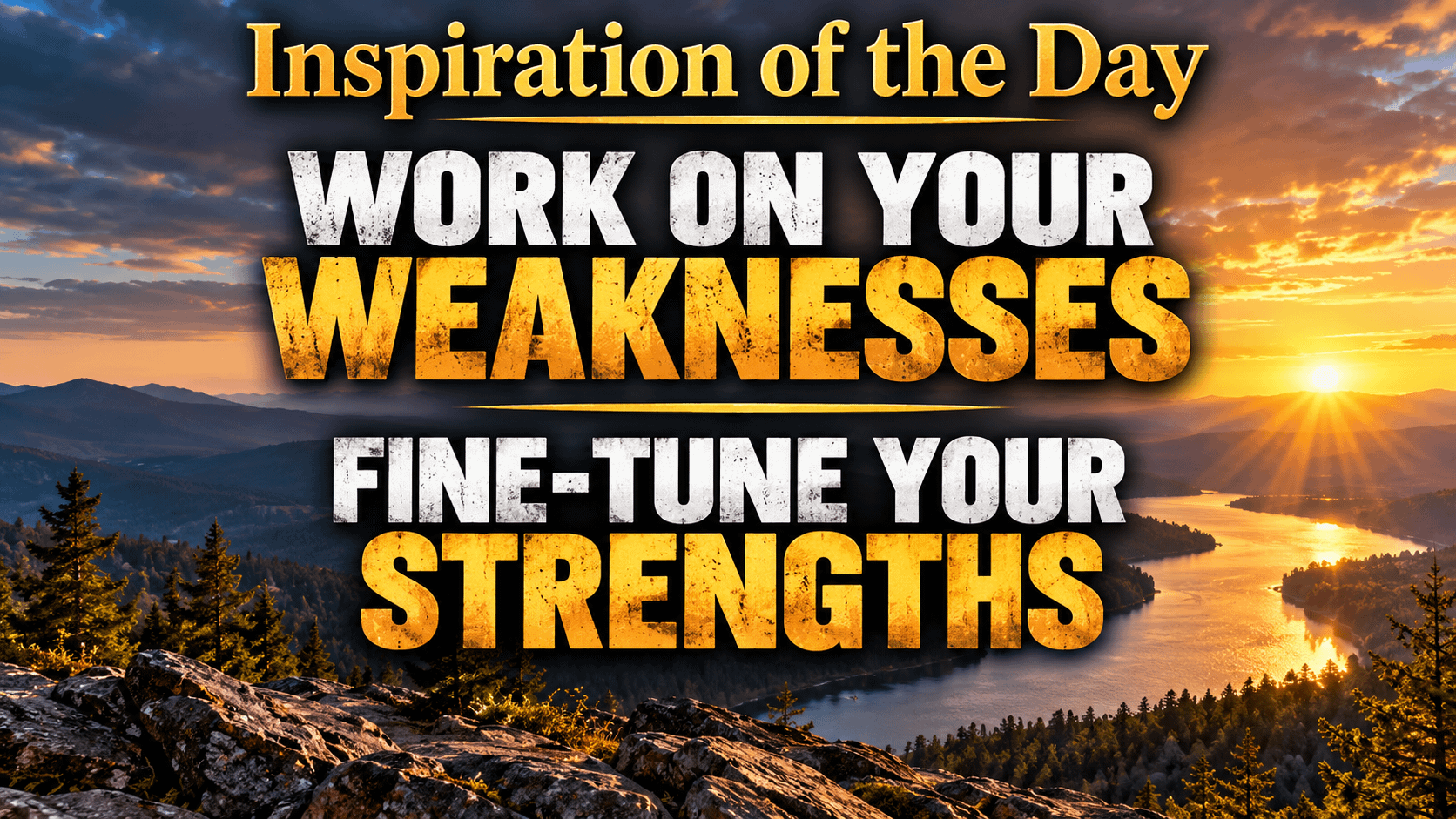
Real growth happens when we learn to do both: work on our weaknesses while fine-tuning our strengths.
You don’t need to become someone completely different. You need to keep developing the person you already are.
Don’t Be Afraid to Admit Where You’re Weak
Sometimes the hardest part of improving is admitting that improvement is needed.
Pride can convince us to hide our weaknesses. Fear can make us avoid them. We may worry that acknowledging where we struggle somehow makes us less capable.
But recognizing a weakness isn’t failure.
It’s self-awareness.
Maybe you struggle with patience. Maybe communication isn’t your strongest skill. Perhaps you procrastinate, have difficulty managing your time, give up too quickly, or allow self-doubt to interfere with opportunities.
Whatever it is, you can’t improve something you’re unwilling to acknowledge.
Instead of saying, “That’s just who I am,” try asking:
“What can I do to become better in this area?”
That small change in thinking can completely change your direction.
Weaknesses Can Become Opportunities
A weakness doesn’t have to remain a weakness forever.
Think about something you’re good at today. There was probably a time when you weren’t very good at it.
You learned.
You practiced.
You failed.
You adjusted.
You kept going.
Eventually, something difficult became easier.
That’s how growth works.
You don’t need to fix everything overnight. Choose one area and start working on it.
If you’re uncomfortable speaking in front of people, practice speaking more often.
If organization is difficult, create a simple daily system.
If you struggle with consistency, commit to one small action every day.
If you’re impatient, practice slowing down before reacting.
Small improvements repeated consistently can create enormous changes over time.
But Don’t Ignore What You’re Already Good At
Personal development isn’t only about fixing weaknesses.
You should also continue developing your strengths.
One of the biggest mistakes we can make is assuming that because we’re naturally good at something, we don’t need to work on it anymore.
Talent can give you a head start.
Practice determines how far you take it.
A great writer can become a better writer.
A strong leader can become a better leader.
A talented athlete can become a better athlete.
A good parent can continue becoming a better parent.
A successful business owner can continue learning.
There’s always another level.
Your strengths shouldn’t become places where you get comfortable. They should become areas you continue sharpening.
Fine-Tuning Creates Excellence
Sometimes improvement isn’t about making massive changes.
It’s about making small adjustments.
Think about an instrument. Even the most beautiful guitar won’t sound its best if it isn’t properly tuned.
People aren’t much different.
Sometimes you already have the ability—you simply need to fine-tune it.
Maybe you’re naturally good at communicating, but you could become a better listener.
Maybe you’re hardworking, but you need to become better at prioritizing.
Maybe you’re creative, but you need more discipline to turn ideas into finished projects.
Maybe you’re confident, but you could learn when to slow down and listen to other perspectives.
Maybe you’re compassionate, but you need stronger boundaries.
Fine-tuning means taking something good and intentionally making it better.
Stop Comparing Your Strengths and Weaknesses to Everyone Else
Comparison can destroy progress.
There will always be someone better than you at something.
There will also always be someone struggling with something that comes easily to you.
Neither matters.
Your goal isn’t to become somebody else.
Your goal is to become a stronger version of yourself.
Instead of asking, “Why can’t I be as good as them?”
Ask:
“Am I better than I was yesterday?”
That’s the comparison that matters.
Your competition should be the person you used to be.
Turn Your Strengths Into Tools
Your greatest strengths aren’t meant to sit unused.
Use them.
If you’re compassionate, encourage someone who’s struggling.
If you’re knowledgeable, teach someone.
If you’re creative, build something.
If you’re a strong communicator, use your words to bring people together.
If you’re resilient, use what you’ve survived to encourage someone who doesn’t believe they can make it through their own battle.
Your strengths become more powerful when they’re used for something beyond yourself.
Sometimes the very thing you’ve developed through your hardest experiences becomes something that can help another person through theirs.
Don’t Let Your Weaknesses Define You
You are going to make mistakes.
You will discover things about yourself that need work.
There will be moments when you fall back into old habits.
That’s part of being human.
Don’t turn a weakness into an identity.
There’s a big difference between saying:
“I struggle with this.”
and saying:
“This is just who I am.”
The first leaves room for growth.
The second closes the door.
You are not permanently trapped by the person you’ve been.
You can learn.
You can change.
You can improve.
You can rebuild.
You can become stronger.
Progress Requires Honesty
Growth requires looking at yourself honestly.
Ask yourself:
What am I doing well?
Then ask:
Where do I need to improve?
Both questions matter.
If you focus only on your weaknesses, you may eventually convince yourself that you’re never good enough.
If you focus only on your strengths, you may become comfortable and stop growing.
Balance the two.
Celebrate your progress without pretending you have nothing left to learn.
Recognize your weaknesses without allowing them to erase everything that’s good about you.
That’s maturity.
One Percent Better
You don’t need to reinvent your entire life today.
Just improve something.
Read a few pages.
Practice a skill.
Have the conversation you’ve been avoiding.
Take responsibility for a mistake.
Ask someone for advice.
Spend another twenty minutes improving your craft.
Replace one bad habit with a healthier one.
Do something slightly better than you did yesterday.
One percent doesn’t seem like much in the moment.
But consistent improvement compounds.
Days become weeks.
Weeks become months.
Months become years.
Eventually, you look back and realize you’re no longer the same person who started.
Your Strengths Can Carry You While Your Weaknesses Grow
You don’t have to wait until you’ve fixed every weakness before moving forward.
Use what you’re already good at while developing what you’re not.
Your courage can carry you while you’re building confidence.
Your discipline can help you develop patience.
Your compassion can help improve your communication.
Your determination can push you through the uncomfortable process of learning something new.
Often, our strengths give us the tools we need to work on our weaknesses.
That’s why both matter.
Today’s Inspiration
Work on your weaknesses, but don’t forget to fine-tune your strengths.
Be honest about where you need improvement.
Be grateful for what you already do well.
Don’t hide from your shortcomings, but don’t allow them to define you either.
Keep learning.
Keep practicing.
Keep adjusting.
Keep sharpening your abilities.
Keep becoming more disciplined, more patient, more knowledgeable, more compassionate, and more capable.
You don’t need perfection to make progress.
You simply need the willingness to look at who you are today and believe you can become better tomorrow.
Your weaknesses show you where you can grow. Your strengths show you what you can build with.
Use both.
And keep moving forward.
What is one weakness you can work on today—and one strength you can make even stronger?
Leave a Reply