Category: Inspiration & Motivation

  • Motivation of the Day: Learning from Failure

    Motivation of the Day: Learning from Failure

    Advertisements

    “Failure is not the end of your story. It is the chapter that teaches you how to write the next one better.”

    No one enjoys failing. Whether it’s losing a job, ending a relationship, missing a goal, or making a costly mistake, failure can leave us questioning our abilities and wondering if we are good enough. It hurts because we invest our hearts, time, and dreams into the things that matter most.

    But failure has something success can never offer—perspective.

    Every successful entrepreneur, athlete, artist, inventor, and leader has experienced failure. The difference is they refused to let failure define them. Instead, they allowed it to educate them.

    Failure Is Feedback

    Think of failure as information rather than defeat.

    Every setback answers important questions:

    • What worked?
    • What didn’t?
    • What can I improve?
    • What should I do differently next time?

    When we stop viewing failure as a verdict on our worth and instead see it as feedback, our entire mindset changes.

    Failure becomes a teacher instead of an enemy.

    The Lessons Hidden in Failure

    Every failure teaches something valuable.

    1. Failure Builds Humility

    Success can make us comfortable.

    Failure reminds us that there is always room to grow. It teaches us to stay humble, remain teachable, and continue learning.

    2. Failure Develops Resilience

    Life isn’t about avoiding difficult moments.

    It’s about learning how to recover from them.

    Each time you get back up after falling, your confidence becomes stronger because it is built on experience rather than comfort.

    3. Failure Reveals Character

    Anyone can remain positive when everything is going well.

    True character appears when life becomes difficult.

    Do you quit?

    Or do you adjust, learn, and keep moving?

    4. Failure Refines Your Goals

    Sometimes failure isn’t telling you to stop.

    It’s telling you to change your approach.

    The destination may still be right even if your current path isn’t.

    Some of History’s Greatest Failures

    Many of the world’s most successful people faced repeated failures before achieving greatness.

    • Thomas Edison reportedly tested thousands of materials before creating a practical light bulb.
    • Walt Disney was once told he lacked imagination.
    • Michael Jordan was cut from his high school varsity basketball team.
    • Abraham Lincoln lost numerous elections before becoming President.
    • Colonel Sanders was rejected hundreds of times before someone accepted his chicken recipe.

    Imagine if any of them had quit after their first failure.

    The world would have missed out on incredible contributions.

    Your Failure Doesn’t Define You

    Too many people begin believing lies after they fail.

    “I’ll never succeed.”

    “I’m not smart enough.”

    “I’m not talented enough.”

    “I’ll always fail.”

    These thoughts are understandable, but they are not facts.

    Your mistakes describe what happened.

    They do not describe who you are.

    Separate your identity from your circumstances.

    You failed at something.

    You are not a failure.

    Growth Comes Through Discomfort

    The strongest muscles are built through resistance.

    The greatest wisdom comes through experience.

    The deepest compassion often comes through pain.

    Growth rarely happens inside our comfort zones.

    Failure pushes us into places where we are forced to adapt, improve, and become stronger than we were before.

    Turning Failure Into Fuel

    Instead of asking:

    “Why did this happen to me?”

    Ask:

    • What is this trying to teach me?
    • How can I become better because of this?
    • What strengths did I discover?
    • How will this prepare me for future success?

    Those questions transform setbacks into stepping stones.

    The A.C.H.I.E.V.E. Method

    Use this simple framework whenever you experience failure.

    A – Accept what happened without making excuses.

    C – Choose to learn instead of complain.

    H – Honor the effort you put forth.

    I – Improve one thing for next time.

    E – Embrace the lesson.

    V – Value persistence over perfection.

    E – Execute again with greater wisdom.

    Success belongs to those who keep showing up.

    A Personal Reflection

    Some of life’s greatest failures aren’t public.

    They happen quietly.

    Broken relationships.

    Dreams that never happened.

    Trust that was shattered.

    Losses that changed everything.

    Sometimes we blame ourselves for years over something we couldn’t control.

    Sometimes we carry guilt that was never ours to carry.

    But every painful experience has the ability to shape us into someone wiser, stronger, and more compassionate.

    The goal isn’t to pretend failure never happened.

    The goal is to refuse to let failure have the final word.

    Daily Challenge

    Today, think about one failure that still weighs heavily on your heart.

    Instead of replaying the pain, write down three things it taught you.

    You may discover that your greatest lesson came from your hardest season.

    Growth begins when we stop asking, “Why did I fail?” and start asking, “What can this failure teach me?”

    Final Thoughts

    Failure is not proof that you should quit.

    It is proof that you are trying.

    Every expert was once a beginner.

    Every champion once lost.

    Every successful person has a story filled with setbacks that most people never see.

    Keep learning.

    Keep growing.

    Keep believing.

    Your next success may be built on the lessons you learned from today’s failure.

    Because failure is not your finish line—it is often the first step toward becoming the person you were meant to be.

    Today’s Motivation:
    “Failure may knock you down, but every lesson you learn gives you the strength to stand taller than before. Don’t fear failure—fear never trying again.”

    Read More Of Inspiration & Motivation

  • Inspiration of the Day: Working to Let Myself Love Again

    Advertisements

    There comes a point in every healing journey when the greatest obstacle is no longer the pain of yesterday—it is the fear of tomorrow.

    After experiencing deep heartbreak, betrayal, or unimaginable loss, our hearts naturally build walls. Those walls aren’t signs of weakness. They are evidence that we survived something we never wanted to endure.

    For many people, especially those who have lost someone they loved deeply, the idea of loving again can feel almost impossible. It can feel disloyal. It can feel terrifying. It can even feel undeserved.

    But healing eventually whispers a quiet question:

    “What if your heart was made to love more than once?”

    Working to let yourself love again isn’t about replacing anyone. It isn’t about forgetting your past. It is about believing your future still deserves joy.

    Love Leaves Scars

    Every meaningful relationship changes us.

    Some leave beautiful memories.

    Others leave painful lessons.

    Some leave both.

    When someone you loved is gone—whether through death, separation, or circumstances beyond your control—the absence becomes part of who you are.

    Those scars never completely disappear.

    But scars also prove something important.

    They prove healing happened.

    The wound closed.

    Life continued.

    And so can love.

    Fear Pretends to Protect You

    One of fear’s greatest lies is convincing us that avoiding love will prevent future pain.

    It sounds reasonable.

    “If I never let anyone close, they can’t hurt me.”

    Unfortunately, fear never stops with protection.

    Eventually it begins stealing experiences you were meant to have.

    It steals laughter.

    It steals companionship.

    It steals late-night conversations.

    It steals new memories.

    It steals the possibility that someone wonderful may be waiting for the version of you that survived.

    Avoiding pain also means avoiding many of life’s greatest blessings.

    Healing Doesn’t Mean You’re Finished

    Many people believe they have to become completely healed before opening their heart again.

    The truth is…

    None of us are ever completely healed.

    Everyone carries something.

    Some carry grief.

    Some carry disappointment.

    Some carry childhood wounds.

    Some carry regret.

    The goal isn’t perfection.

    The goal is progress.

    You don’t need a perfect heart.

    You simply need one willing to keep beating despite everything it has endured.

    Love Isn’t a Betrayal

    For those grieving someone who has died, loving again often brings unexpected guilt.

    Questions appear that few people understand.

    “Am I leaving them behind?”

    “Would they want this?”

    “Does loving someone new erase what we had?”

    The answer is no.

    Real love doesn’t compete.

    The people who truly loved us wanted us to live.

    To smile.

    To laugh.

    To find peace.

    To experience happiness.

    Choosing to love again doesn’t diminish the love you had.

    It honors it.

    The love you experienced helped shape the person you are becoming.

    Letting Someone In Is an Act of Courage

    Opening your heart isn’t easy.

    It means allowing someone to see your fears.

    Your scars.

    Your insecurities.

    Your grief.

    Your imperfections.

    It means risking disappointment again.

    But courage has never been the absence of fear.

    Courage is choosing hope despite fear.

    Every time you allow someone to know the real you, you’re making one of the bravest decisions possible.

    Healing Happens in Small Moments

    Few people wake up one morning completely ready to love again.

    Usually it happens slowly.

    You find yourself smiling during a conversation.

    You begin looking forward to someone’s message.

    You laugh without forcing it.

    You feel comfortable being yourself.

    You realize you aren’t surviving every day anymore.

    You’re actually living.

    Healing often arrives quietly.

    It rarely announces itself.

    You Don’t Have to Forget

    Some people think moving forward requires forgetting.

    It doesn’t.

    You can remember someone every day and still create new memories.

    You can honor yesterday while embracing tomorrow.

    Your heart is capable of carrying both grief and hope.

    Both memories and dreams.

    Both tears and laughter.

    Love is not limited.

    The human heart has an incredible capacity to expand.

    The Right Person Won’t Ask You to Erase Your Story

    The person meant for your future won’t be threatened by your past.

    They won’t expect you to pretend your pain never existed.

    Instead, they’ll appreciate the strength it took for you to keep going.

    They’ll understand why certain days are difficult.

    They’ll celebrate your victories.

    They’ll sit beside you during setbacks.

    Real love doesn’t erase your history.

    It accepts every chapter that made you who you are.

    Choosing Hope Every Day

    Working to let yourself love again isn’t a one-time decision.

    It’s something you choose repeatedly.

    You choose vulnerability.

    You choose forgiveness.

    You choose trust.

    You choose possibility.

    Some days those choices feel easy.

    Other days they feel impossible.

    Keep choosing them anyway.

    Because every step toward love is also a step away from fear.

    A Future Worth Believing In

    Your story isn’t over because your heart was broken.

    Your story isn’t over because you buried someone you loved.

    Your story isn’t over because life became different than you imagined.

    There are still conversations waiting to happen.

    Friendships waiting to grow.

    Smiles waiting to be shared.

    Adventures waiting to be lived.

    And perhaps…

    Love waiting to find you again.

    Not because you’ve forgotten where you’ve been.

    But because you’ve become strong enough to believe your heart still has something beautiful left to give.

    Final Thoughts

    Working to let yourself love again is one of the most courageous journeys a person can undertake. It requires patience, self-compassion, and faith that tomorrow can hold something beautiful, even after unimaginable pain. Love may never look exactly the way it once did, but that doesn’t make it any less meaningful.

    Your past shaped you, but it does not have to imprison you. Every step toward openness, trust, and connection is a declaration that pain will not have the final word. Give yourself permission to heal at your own pace. Give yourself permission to hope. Most of all, give yourself permission to believe that your heart—though changed forever—is still capable of extraordinary love.

    Because sometimes the greatest act of healing is not simply surviving what happened.

    It’s finding the courage to love again.

    Read More Of Inspiration & Motivation
  • Motivation of the Day: Earning the Chance to Love

    Advertisements

    Love is one of the greatest gifts we can experience, but it is also one of life’s greatest responsibilities. Too often, people believe love is something they deserve simply because they want it. In reality, lasting love is built on trust, character, consistency, and sacrifice. While everyone is worthy of being loved as a human being, healthy relationships flourish when we become the kind of person someone can safely trust with their heart.

    Today’s motivation is about earning the chance to love—not through manipulation, wealth, or perfection, but by becoming someone whose actions reflect genuine care, respect, and commitment.

    Love Is More Than a Feeling

    Movies often portray love as instant chemistry or overwhelming emotion. While attraction may happen in a moment, enduring love is built over time.

    Real love is demonstrated through:

    • Keeping your promises.
    • Being honest when the truth is difficult.
    • Showing up during hard times.
    • Respecting boundaries.
    • Choosing patience over pride.
    • Giving without constantly expecting something in return.

    Feelings may start a relationship, but character is what sustains it.

    Become Someone Worth Trusting

    Trust is the foundation of every meaningful relationship. Without it, love becomes fragile.

    Ask yourself:

    • Can people depend on your word?
    • Do you admit when you’re wrong?
    • Are you emotionally available?
    • Do you communicate with kindness?
    • Do your actions match your intentions?

    Trust isn’t earned with grand gestures. It grows through hundreds of small moments where someone discovers they can rely on you.

    If you want a trustworthy partner, strive to become one first.

    Heal Before You Ask Someone Else to Carry Your Pain

    Many people enter relationships hoping someone else will fix what is broken inside them.

    Love can support healing, but it should never become the only source of it.

    Unresolved anger, bitterness, insecurity, or past trauma can quietly damage even the healthiest relationships.

    Healing doesn’t mean becoming perfect.

    It means taking responsibility for your emotional health so someone else doesn’t have to carry burdens you refuse to address.

    Strong relationships are built by two people who continue growing together.

    Love Requires Effort Every Day

    The opportunity to love someone doesn’t end once the relationship begins.

    Every day you continue earning their trust through your choices.

    You earn it when you:

    • Listen before reacting.
    • Choose forgiveness over revenge.
    • Encourage instead of criticize.
    • Stay loyal when no one is watching.
    • Celebrate their victories as if they were your own.

    Love is not maintained through convenience.

    It is maintained through intentional effort.

    Let Go of Entitlement

    No one owes us their heart.

    Affection cannot be demanded.

    Respect cannot be forced.

    Commitment cannot be manipulated.

    One of the healthiest mindsets you can develop is understanding that every meaningful relationship is a gift.

    When someone chooses to spend their life with you, they are giving you something incredibly valuable: their trust, their time, and their vulnerability.

    Treat those gifts with gratitude.

    Build Yourself While You Wait

    If you’re currently single, don’t see this season as wasted time.

    Use it wisely.

    Develop your character.

    Strengthen your faith.

    Improve your health.

    Pursue your goals.

    Learn better communication.

    Discover your purpose.

    The stronger your foundation becomes, the healthier your future relationships are likely to be.

    Rather than asking, “When will I find the right person?”

    Ask,

    “What kind of person am I becoming?”

    That question changes everything.

    Love Is a Daily Decision

    Long-lasting love isn’t built because two perfect people found each other.

    It’s built because two imperfect people continually choose one another.

    They choose grace.

    They choose honesty.

    They choose sacrifice.

    They choose growth.

    And they choose love—even on the days when feelings alone aren’t enough.

    Those daily choices create relationships that withstand disappointment, hardship, and change.

    A Faith Perspective

    Scripture teaches us that love is active, not passive.

    It is patient.

    It is kind.

    It is humble.

    It keeps no record of wrongs.

    It protects, trusts, hopes, and perseveres.

    When we strive to love others with that kind of heart, we begin reflecting God’s love in our own relationships.

    The greatest example of love was never about receiving.

    It was always about giving.

    Final Thoughts

    Earning the chance to love isn’t about proving your worth through perfection. It’s about becoming a person whose life reflects integrity, compassion, humility, and commitment.

    The strongest relationships aren’t built by people searching for someone to complete them. They’re built by people who continually work to become better partners, better friends, and better human beings.

    Love is a privilege.

    Trust is precious.

    Character is unforgettable.

    If you invest in becoming the best version of yourself today, you’ll not only increase your ability to love someone well—you’ll also be prepared to recognize and appreciate genuine love when it finds you.

    Motivation of the Day: Don’t spend your life searching for someone to love you. Spend your life becoming someone who knows how to love well. When character leads the way, meaningful relationships have room to grow.

    Read More Of Inspiration & Motivation

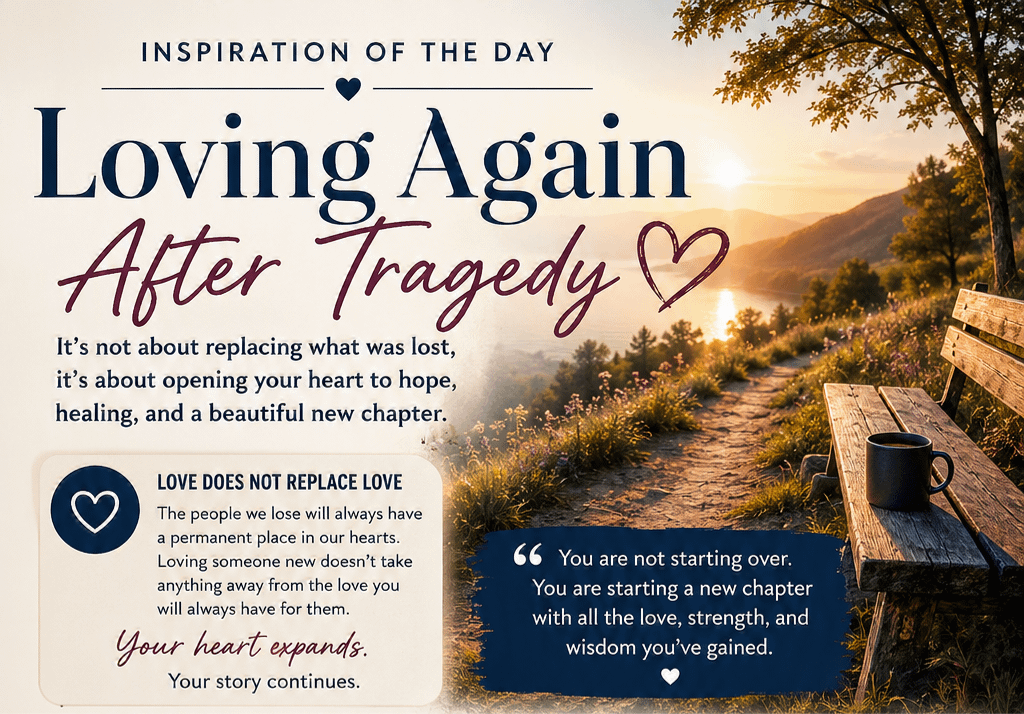
  • Inspiration of the Day: Loving Again After Tragedy

    Advertisements

    There are moments in life that divide our story into two parts: before and after. Tragedy has a way of changing us forever. Whether it is the loss of a child, a spouse, a parent, a close friend, or another life-altering event, the person we were before the tragedy no longer exists. We carry scars that cannot be seen, memories that never fade, and a heart that may wonder if it will ever truly feel whole again.

    For many people, one of the greatest fears after tragedy isn’t facing another difficult day—it’s the thought of loving again.

    Can you love again without betraying the one you lost?

    Can you trust someone after life has shown you how deeply pain can cut?

    Can your heart survive another heartbreak?

    These questions are normal. They are honest. They are part of healing.

    The truth is this: loving again is not forgetting. It is not replacing. It is not moving on from someone you loved. Loving again is choosing life when grief has taught you about death. It is allowing hope to exist beside sorrow.

    That takes incredible courage.

    Grief Changes the Way We Love

    After tragedy, love feels different.

    You become more aware of how fragile life truly is. You understand that every goodbye matters. Every hug may be the last. Every conversation becomes precious.

    The innocence of love is replaced by appreciation.

    Instead of taking people for granted, you begin valuing the ordinary moments:

    • A quiet dinner together.
    • A morning text.
    • Holding someone’s hand.
    • Laughing until your stomach hurts.
    • Sitting together in comfortable silence.

    Pain teaches us what truly matters.

    Your Heart Isn’t Broken Beyond Repair

    Many people convince themselves that their heart is too damaged to love again.

    They say things like:

    “I already gave everything I had.”

    “I don’t want to lose someone again.”

    “Nobody could ever understand me.”

    “It’s safer to stay alone.”

    Those feelings make sense.

    When tragedy steals someone you love, your heart naturally wants to protect itself from ever experiencing that kind of pain again.

    But protecting your heart can slowly become imprisoning your heart.

    There is a difference between healing and hiding.

    Healing allows you to grow stronger.

    Hiding keeps you from living.

    Love Does Not Replace Love

    One of the greatest misconceptions is believing that loving someone new somehow diminishes the love you have for the person you lost.

    Love doesn’t work that way.

    Parents who have multiple children don’t love one child less because another is born.

    Your heart expands.

    The same is true after tragedy.

    If you’ve lost someone deeply important to you, their place in your heart is permanent.

    No one can replace them.

    No one should.

    The people who enter your life later are not replacements.

    They are new chapters.

    Your story continues without erasing earlier pages.

    Let Go of Guilt

    Many grieving people carry guilt when they begin smiling again.

    They feel guilty enjoying vacations.

    They feel guilty laughing.

    They feel guilty dating.

    They feel guilty imagining a future.

    But guilt is one of grief’s greatest lies.

    The people we love rarely want us to spend the rest of our lives trapped in sadness.

    If they loved us, they wanted us to live.

    To smile.

    To experience joy.

    To find peace.

    To continue writing our story.

    Honoring someone isn’t measured by how long you remain miserable.

    Sometimes honoring them means becoming the person they always believed you could be.

    Love Requires Vulnerability

    Opening your heart after tragedy feels terrifying because you know exactly what’s at stake.

    You understand loss in a way many people never will.

    You know people aren’t guaranteed tomorrow.

    You know forever isn’t promised.

    Ironically, that understanding can make love even more meaningful.

    You stop chasing perfection.

    You start appreciating presence.

    Real love isn’t about guarantees.

    It’s about showing up today.

    The Right Person Won’t Ask You to Forget

    Someone who truly loves you won’t compete with your past.

    They won’t ask you to erase your memories.

    They won’t become jealous of someone who is no longer here.

    Instead, they will understand that your past helped shape who you are today.

    They’ll respect your scars.

    They’ll listen to your stories.

    They’ll recognize that your grief isn’t a weakness.

    It’s evidence that you loved deeply.

    And someone capable of loving that deeply can love again.

    Healing Doesn’t Follow a Schedule

    There is no calendar for grief.

    Some people begin dating after a year.

    Others wait several years.

    Some never pursue another relationship.

    Every journey is different.

    Don’t allow others to tell you when you should or shouldn’t move forward.

    Only you know your heart.

    The important question isn’t:

    “Has enough time passed?”

    The better question is:

    “Am I emotionally ready to allow someone into my life?”

    Healing isn’t measured by time.

    It’s measured by growth.

    Fear Will Always Whisper

    Fear may never disappear completely.

    It will whisper:

    “What if this ends too?”

    “What if you’re hurt again?”

    “What if you’re disappointed?”

    Those fears are understandable.

    But remember something important:

    Everything worthwhile requires vulnerability.

    Love has always involved risk.

    Before tragedy.

    After tragedy.

    Always.

    The possibility of pain has never stopped love from being one of life’s greatest gifts.

    Loving Again Honors the Life You Were Given

    If tragedy teaches us anything, it is that tomorrow is never guaranteed.

    Life is precious because it is temporary.

    That truth shouldn’t make us love less.

    It should inspire us to love more.

    More honestly.

    More openly.

    More intentionally.

    More courageously.

    The greatest tribute we can give to those we’ve lost is not refusing to live.

    It is living well.

    Give Yourself Permission

    You don’t need permission from society.

    You don’t need permission from strangers.

    You don’t need permission from people who don’t understand your journey.

    Give yourself permission.

    Permission to smile.

    Permission to laugh.

    Permission to dream.

    Permission to hope.

    Permission to trust again.

    Permission to love again.

    Because surviving tragedy wasn’t the end of your story.

    It was the beginning of a different one.

    Final Thoughts

    Love after tragedy isn’t about pretending the pain never happened.

    It’s about carrying both grief and gratitude in the same heart.

    It is about believing that memories can coexist with new experiences.

    It is about understanding that healing doesn’t erase loss—it teaches us how to live alongside it.

    If your heart has been shattered by tragedy, know this:

    Your capacity to love was not destroyed.

    It was transformed.

    And when the time is right, that transformed heart may become even more compassionate, patient, appreciative, and genuine than it was before.

    Never believe that tragedy has stolen your chance to love.

    Sometimes, after walking through unimaginable darkness, we discover that love shines even brighter.

    Because the bravest hearts are not the ones that have never been broken.

    They are the ones that choose to love anyway.

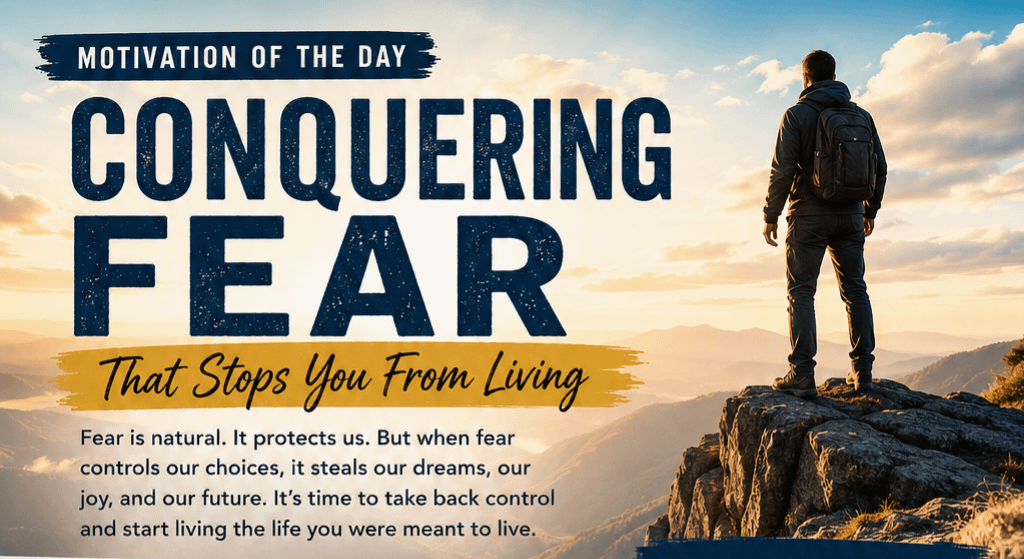
  • Motivation of the Day: Conquering the Fear That Stops You From Living

    Advertisements

    Fear is one of the most powerful emotions we experience. It has kept humanity alive for thousands of years by warning us of danger. But not all fear protects us. Sometimes, fear becomes a prison—one that locks us away from opportunities, relationships, dreams, and happiness. It whispers lies that convince us to stay comfortable, even when comfort is slowly stealing our lives.

    Living isn’t about avoiding fear. It’s about refusing to let fear make your decisions.

    Fear Wears Many Faces

    Most people imagine fear as standing at the edge of a cliff or facing a dangerous situation. In reality, the fears that stop us from living are often much quieter.

    They sound like:

    • “What if I fail?”
    • “What if they reject me?”
    • “What if I’m not good enough?”
    • “What if I get hurt again?”
    • “What if I lose everything?”

    These thoughts may seem harmless at first, but repeated often enough, they become beliefs. Those beliefs become habits, and eventually those habits become the life we live.

    The greatest tragedy isn’t failing.

    The greatest tragedy is never trying.

    Fear Creates Invisible Chains

    Fear convinces people to stay in jobs they hate because they’re afraid of uncertainty.

    It keeps people from telling someone they love them because they’re afraid of rejection.

    It prevents people from starting businesses because they’re afraid of losing money.

    It stops grieving parents from opening their hearts again because they’re afraid of experiencing another devastating loss.

    Fear tells us that avoiding pain is the safest choice.

    But avoiding pain often means avoiding joy.

    Every meaningful experience carries risk.

    Courage Isn’t the Absence of Fear

    One of the biggest misconceptions is believing brave people aren’t afraid.

    They are.

    The difference is they choose action anyway.

    Every firefighter feels fear.

    Every entrepreneur feels fear.

    Every athlete feels fear before competition.

    Every parent feels fear for their children.

    Every person rebuilding their life after tragedy feels fear.

    Courage simply means fear no longer has the final vote.

    Fear Grows When We Feed It

    Every time we avoid something because we’re afraid, fear grows stronger.

    Avoid the difficult conversation.

    Avoid applying for the promotion.

    Avoid asking someone out.

    Avoid taking the trip.

    Avoid chasing the dream.

    Each avoidance teaches your brain one dangerous lesson:

    “Fear was right.”

    Soon your comfort zone becomes smaller and smaller until your entire life exists inside it.

    The only way fear loses power is when we face it.

    Your Past Doesn’t Have to Control Your Future

    Many fears are born from painful experiences.

    Someone was betrayed.

    Someone failed publicly.

    Someone lost a loved one.

    Someone experienced heartbreak.

    Someone was told they would never succeed.

    Those experiences leave emotional scars.

    But scars tell stories of survival—not surrender.

    Your past explains your fear.

    It doesn’t have to define your future.

    Progress Lives Outside Comfort

    Growth has always required discomfort.

    Muscles grow because they’re challenged.

    Knowledge grows because we admit what we don’t know.

    Confidence grows because we repeatedly do difficult things.

    Relationships deepen because we choose vulnerability.

    Healing happens because we keep moving, even when it hurts.

    Nothing remarkable has ever been built by someone who waited until they felt completely fearless.

    Stop Waiting for the Perfect Moment

    Many people postpone living.

    “I’ll travel when…”

    “I’ll start exercising when…”

    “I’ll write the book when…”

    “I’ll ask her out when…”

    “I’ll forgive when…”

    “I’ll be happy when…”

    The perfect moment never arrives.

    Life is happening now.

    If you spend your entire life preparing to live, you’ll eventually realize you never truly did.

    Small Victories Build Great Confidence

    Conquering fear doesn’t require giant leaps.

    It starts with small decisions.

    Speak up during the meeting.

    Make the phone call.

    Take the first walk.

    Send the application.

    Say yes to the invitation.

    Try something new.

    Each small victory proves something important:

    You are stronger than your fear.

    Confidence isn’t something you’re born with.

    It’s something you build.

    Fear of Failure vs. Fear of Regret

    Ask yourself one question:

    Which hurts more—failing or wondering what could have been?

    Failure teaches.

    Regret lingers.

    Years from now, most people won’t regret the times they tried and failed.

    They’ll regret the dreams they abandoned because fear convinced them they weren’t capable.

    Living After Loss

    Some fears come after life’s deepest heartbreaks.

    When you’ve experienced profound grief, trauma, or disappointment, your heart naturally wants to protect itself.

    You may become afraid to love again.

    Afraid to hope again.

    Afraid to trust again.

    Afraid to dream again.

    Those fears are understandable.

    But closing your heart doesn’t eliminate pain.

    It only limits the possibility of joy.

    Healing doesn’t mean forgetting what happened.

    It means refusing to let yesterday permanently steal tomorrow.

    Faith Over Fear

    Faith isn’t believing life will always be easy.

    Faith is believing you can face whatever comes.

    Whether your strength comes from God, your family, your purpose, or your own determination, faith gives fear less room to grow.

    As Isaiah 41:10 reminds us:

    “Fear not, for I am with you; be not dismayed, for I am your God. I will strengthen you, I will help you, I will uphold you with my righteous right hand.”

    Fear asks, “What if everything goes wrong?”

    Faith answers, “What if everything works out better than I imagined?”

    Today’s Challenge

    Today, identify one fear that has been holding you back.

    Then take one small step toward it.

    Not tomorrow.

    Today.

    Because every step forward weakens fear’s grip and strengthens your confidence.

    Living isn’t about waiting until you’re fearless.

    Living begins the moment you decide fear will no longer write your story.

    Final Thoughts

    Fear will always exist. It is part of being human.

    But fear should be your passenger—not your driver.

    Life is too precious to spend hidden behind “what if.”

    Take the chance.

    Make the call.

    Chase the dream.

    Love deeply.

    Speak honestly.

    Forgive freely.

    Live boldly.

    Because at the end of life, you’ll rarely regret the risks you took—but you’ll almost always regret the life you never allowed yourself to live.

    Motivation of the Day: Fear will knock on your door every day. Courage is deciding you don’t have to invite it in.

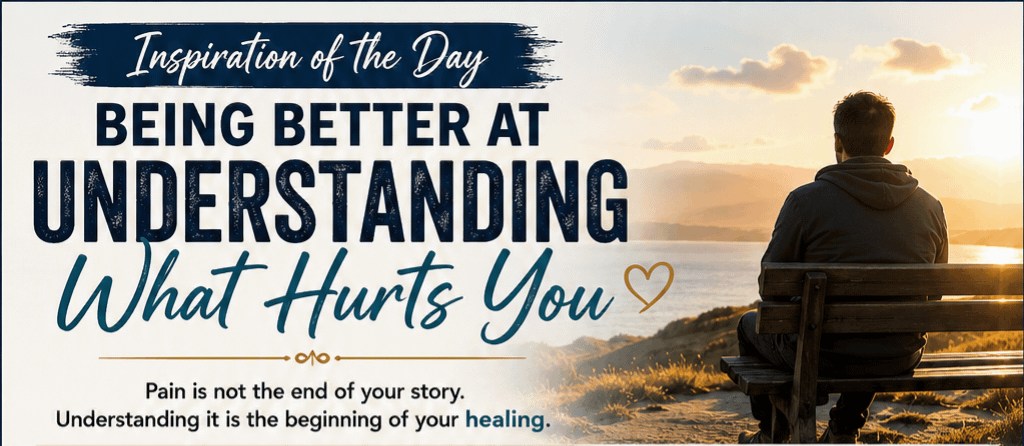
  • Inspiration of the Day: Being Better at Understanding What Hurts You

    Advertisements

    Pain has a way of getting our attention.

    Sometimes it arrives suddenly through a heartbreaking phone call, the end of a relationship, the loss of someone we love, or a failure we never saw coming. Other times it develops quietly over months or years until one day we realize we are carrying far more than we can handle. Regardless of how it enters our lives, pain always has something to teach us—if we are willing to understand it.

    Many people spend years trying to escape what hurts them. They bury it in work, distractions, unhealthy habits, anger, or silence. While those coping mechanisms may provide temporary relief, they rarely bring healing. Healing begins when we stop running and start asking an important question:

    “Why does this hurt me so deeply?”

    Understanding your pain isn’t about living in the past. It’s about learning from it so it no longer controls your future.

    Pain Is More Than an Emotion

    Pain is often viewed as something negative, something to eliminate as quickly as possible. But emotional pain serves a purpose much like physical pain.

    If you touch a hot stove, physical pain tells you something is wrong.

    Emotional pain works similarly.

    It tells you something important has been damaged:

    • A dream.
    • A relationship.
    • Your trust.
    • Your confidence.
    • Your identity.
    • Your sense of security.
    • Your hope.

    Instead of asking, “How do I stop hurting?” ask yourself, “What is this pain trying to tell me?”

    That question changes everything.

    Some Wounds Come From Long Ago

    Not every painful moment begins with today’s problem.

    Sometimes today’s disappointment awakens yesterday’s wound.

    A harsh comment may remind you of years of criticism.

    Being ignored may reopen childhood feelings of rejection.

    Losing someone may bring back every previous loss you’ve experienced.

    Understanding your pain means recognizing that not every emotional reaction is about the current situation. Sometimes you’re grieving multiple hurts at once.

    When you recognize those connections, you stop judging yourself for feeling “too emotional.”

    You’re simply carrying more than most people realize.

    Give Your Pain a Name

    One of the healthiest things you can do is accurately identify what you’re feeling.

    Instead of saying:

    “I’m just upset.”

    Try asking:

    • Am I disappointed?
    • Am I afraid?
    • Do I feel rejected?
    • Am I grieving?
    • Do I feel abandoned?
    • Am I embarrassed?
    • Am I lonely?
    • Am I overwhelmed?
    • Do I feel betrayed?

    Naming the emotion reduces its power.

    You can’t solve what you refuse to identify.

    Don’t Compare Your Pain to Someone Else’s

    One of the greatest mistakes people make is believing they don’t deserve to hurt because someone else has it worse.

    Pain isn’t a competition.

    Your broken heart matters.

    Your loss matters.

    Your disappointment matters.

    Your grief matters.

    Someone else’s suffering does not make yours less real.

    Everyone’s journey is different.

    Healing begins when you give yourself permission to acknowledge your own wounds without guilt.

    Learn Your Triggers

    Every person has emotional triggers.

    Certain words…

    Certain places…

    Certain songs…

    Certain dates…

    Certain memories…

    Certain smells…

    Certain people…

    Understanding what triggers your emotional pain doesn’t mean you’re weak.

    It means you’re becoming self-aware.

    The more you understand your triggers, the better prepared you’ll be when they appear.

    Instead of wondering why your emotions suddenly changed, you’ll recognize what happened and respond with wisdom instead of panic.

    Ask What Your Pain Is Teaching You

    Every painful experience leaves behind a lesson.

    Maybe it teaches you:

    • To establish healthier boundaries.
    • To value yourself more.
    • To forgive.
    • To trust wisely.
    • To slow down.
    • To appreciate the people who truly care.
    • To become more compassionate.
    • To depend more on your faith.

    Pain can either make us bitter or make us wiser.

    The choice often depends on whether we learn from it.

    Stop Hiding Behind Strength

    Many people believe being strong means never admitting they’re hurting.

    Real strength is different.

    Real strength says:

    “I need help.”

    “I’m struggling.”

    “This still hurts.”

    “I’m not okay today.”

    There is incredible courage in honesty.

    The people who heal the most are usually those willing to admit they’re still healing.

    Give Yourself Grace

    Healing is not a straight line.

    Some days you’ll feel hopeful.

    Other days you’ll feel like you’ve taken ten steps backward.

    That’s normal.

    Progress isn’t measured by never hurting again.

    It’s measured by recovering more quickly, understanding yourself more deeply, and choosing healthier responses over time.

    Be patient with yourself.

    You are growing even on the days it doesn’t feel like it.

    Faith Helps Us Understand Our Pain

    God never promised a life without suffering.

    He did promise His presence through it.

    Sometimes we don’t understand why painful things happen.

    But we can trust that God understands our hearts even when we don’t.

    Prayer allows us to bring our questions, fears, anger, and tears before Him.

    His comfort doesn’t always remove the pain immediately, but it gives us strength to carry it.

    Scripture reminds us:

    “The LORD is close to the brokenhearted and saves those who are crushed in spirit.” — Psalm 34:18

    That promise reminds us we are never suffering alone.

    Understanding Leads to Freedom

    Ignoring pain keeps it alive.

    Understanding pain begins to loosen its grip.

    When you recognize what hurts you, why it hurts, and what you can learn from it, you stop becoming a prisoner of your past.

    You become someone who grows through hardship instead of being defined by it.

    Your scars become reminders of survival instead of symbols of defeat.

    Final Thoughts

    The goal isn’t to become someone who never feels pain.

    The goal is to become someone who understands it.

    Every wound has a story.

    Every scar carries a lesson.

    Every hardship has the potential to shape a stronger, wiser, more compassionate version of you.

    Today, don’t run from what hurts.

    Sit with it.

    Pray about it.

    Learn from it.

    Heal from it.

    Because understanding your pain is one of the greatest gifts you can give yourself—and one of the first steps toward becoming the person you were created to be.

    Inspiration of the Day: The better you understand what hurts you, the better you can protect your peace, strengthen your heart, and grow into the person God is shaping you to become.

    Read More Of Inspiration & Motivation
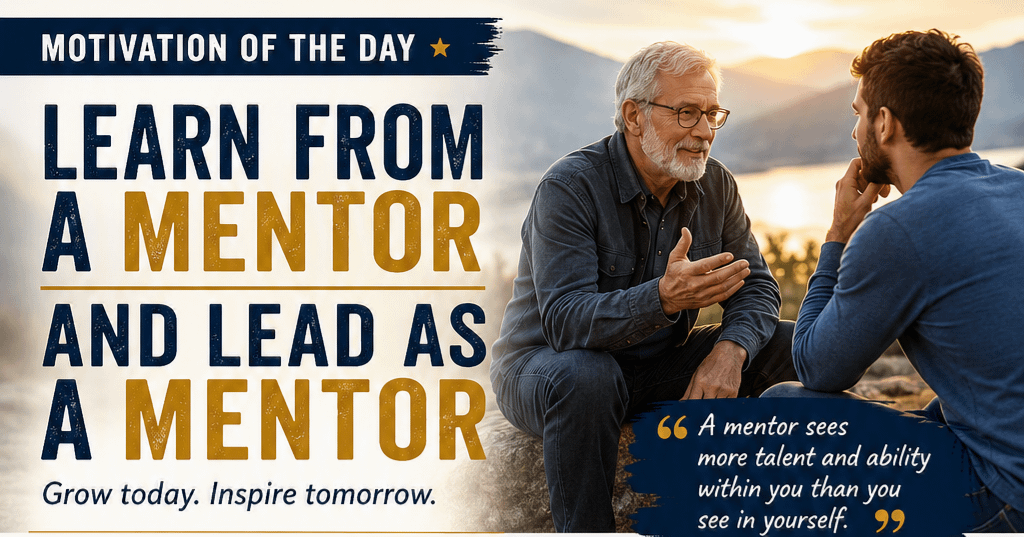
  • Motivation of the Day: Learn from a Mentor and Lead as a Mentor

    Advertisements

    Every successful person has a story of someone who believed in them before they fully believed in themselves. Behind many achievements stands a mentor—a teacher, coach, parent, friend, manager, or guide who shared wisdom, offered encouragement, and helped shape a better future.

    Today’s motivation is a reminder that life is not just about finding someone to teach you. It is also about becoming the kind of person who teaches others.

    Learn from a mentor. Lead as a mentor.

    This simple philosophy creates a cycle of growth that strengthens individuals, families, businesses, and entire communities.

    The Value of Having a Mentor

    No one is born knowing everything. Every skill we possess was learned from someone else. Whether it’s tying our shoes, driving a car, building a career, or becoming a better parent, someone invested their time in helping us grow.

    A mentor shortens the learning curve.

    Instead of making every mistake yourself, you benefit from someone else’s experience. They help you recognize opportunities, avoid common pitfalls, and develop confidence through encouragement and accountability.

    Great mentors don’t simply give answers—they ask the right questions.

    They help you think differently.

    They challenge your assumptions.

    They inspire you to become more than you imagined possible.

    Humility Opens the Door to Growth

    One of the greatest obstacles to success is believing we already know enough.

    People who remain teachable continue growing throughout their lives. They understand that wisdom can come from anyone—a seasoned executive, a new employee, a child, or even a stranger with a unique perspective.

    Humility isn’t weakness.

    It’s recognizing that there is always another lesson waiting to be learned.

    The most accomplished leaders are often the most curious learners.

    What Makes a Great Mentor?

    Being knowledgeable is only part of mentoring.

    Great mentors possess qualities that extend beyond expertise.

    They are patient when others struggle.

    They encourage instead of criticize.

    They listen before offering advice.

    They celebrate progress instead of demanding perfection.

    Most importantly, they genuinely want to see others succeed—even if those people eventually surpass them.

    True mentors aren’t threatened by someone else’s success.

    They are proud to have helped create it.

    Lessons Go Beyond Skills

    The best mentors teach much more than technical knowledge.

    They model integrity.

    They demonstrate resilience during difficult times.

    They show compassion when people fail.

    They reveal the importance of honesty, humility, discipline, and perseverance.

    People rarely remember every instruction they received.

    They remember how someone made them feel.

    A mentor who leads with kindness leaves an impact that lasts a lifetime.

    Leadership Begins with Service

    Many people think leadership is about authority.

    In reality, leadership begins with service.

    The strongest leaders ask:

    • How can I help?
    • How can I encourage?
    • How can I make someone else’s journey easier?

    Serving others builds trust.

    Trust builds influence.

    Influence creates lasting leadership.

    The greatest leaders never stop serving.

    Becoming a Mentor Yourself

    There comes a point when life shifts.

    Instead of only asking questions, people begin asking you.

    Your experiences become valuable.

    Your mistakes become lessons.

    Your victories become encouragement.

    You don’t have to be famous or wealthy to become a mentor.

    You simply need to be willing to share what you’ve learned with honesty and compassion.

    Mentoring happens every day.

    Parents mentor children.

    Teachers mentor students.

    Experienced employees mentor new coworkers.

    Coaches mentor athletes.

    Friends mentor friends.

    Even small conversations can change someone’s life forever.

    Lead by Example

    People watch actions far more closely than words.

    If you want to mentor effectively:

    • Keep your promises.
    • Admit when you’re wrong.
    • Continue learning.
    • Treat people with respect.
    • Stay consistent in difficult times.
    • Celebrate the success of others.
    • Show kindness even when it’s inconvenient.

    Your example often teaches louder than your advice.

    Every Generation Needs Guidance

    Today’s world moves quickly.

    Technology changes constantly.

    Information is everywhere.

    Wisdom, however, is still passed from person to person.

    Young people need guidance navigating careers, relationships, finances, and purpose.

    Adults benefit from mentors who help them grow professionally and personally.

    Older generations possess invaluable life experience that deserves to be shared rather than forgotten.

    Mentorship bridges generations and preserves knowledge that books alone cannot teach.

    The Ripple Effect of Mentorship

    One mentor can influence hundreds of lives.

    Consider this:

    A teacher inspires one student.

    That student becomes a nurse.

    The nurse comforts thousands of patients.

    Those patients encourage their families.

    Entire communities become healthier because one teacher invested in one child.

    The ripple effect continues far beyond what we can see.

    Every act of mentorship creates opportunities that may impact generations.

    Learning Never Ends

    Even after becoming a mentor, continue seeking mentors yourself.

    No matter your age or accomplishments, someone knows something you don’t.

    The best leaders remain lifelong students.

    Growth doesn’t stop because you’ve achieved success.

    It continues because you’re willing to keep learning.

    The strongest mentor is often someone who is still being mentored.

    Final Thoughts

    Success is rarely a solo journey.

    Every achievement carries fingerprints from those who encouraged, corrected, challenged, and believed in us along the way.

    Be grateful for those who have mentored you.

    Honor them by applying what they’ve taught.

    Then pay it forward.

    Share your knowledge.

    Encourage someone who’s struggling.

    Guide someone who’s just beginning.

    Offer hope when someone feels lost.

    Today’s lesson is simple but powerful:

    Learn with humility. Lead with compassion. Mentor with generosity.

    Because the greatest legacy isn’t measured by what you accomplish for yourself.

    It’s measured by how many people accomplish more because you took the time to help them believe they could.

    Read More Of Inspiration & Motivation

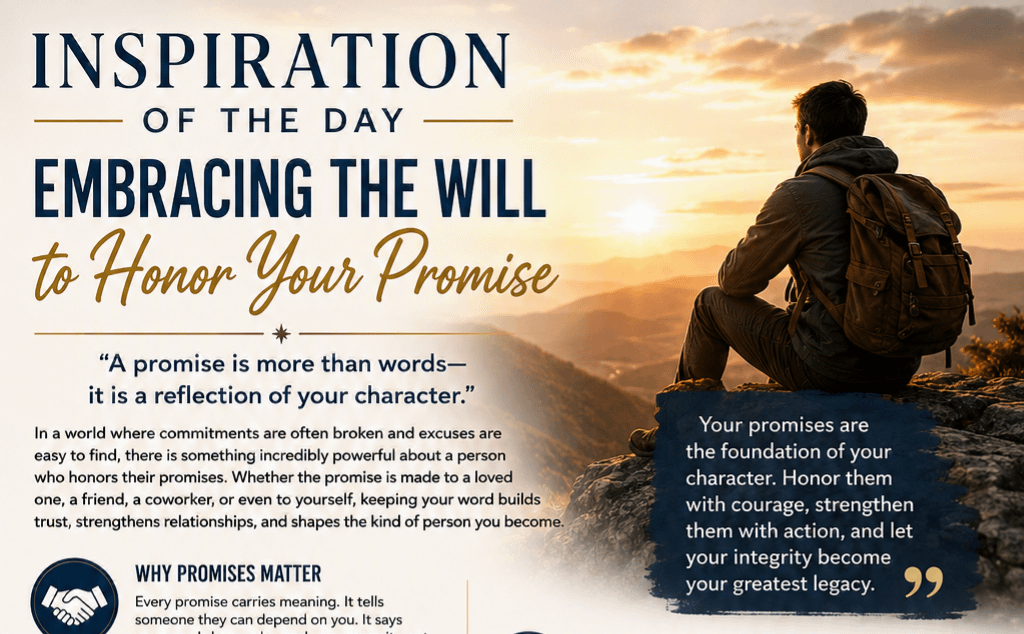
  • Inspiration of the Day: Embracing the Will to Honor Your Promise

    Advertisements

    “A promise is more than words—it is a reflection of your character.”

    In a world where commitments are often broken and excuses are easy to find, there is something incredibly powerful about a person who honors their promises. Whether the promise is made to a loved one, a friend, a coworker, or even to yourself, keeping your word builds trust, strengthens relationships, and shapes the kind of person you become.

    Honoring a promise isn’t always easy. Life changes. Unexpected obstacles appear. There are moments when following through requires sacrifice, discipline, and determination. Yet those are the very moments that define integrity. Anyone can keep a promise when it’s convenient. It takes true character to keep one when it’s difficult.

    Why Promises Matter

    Every promise carries meaning. It tells someone they can depend on you. It says your words have value and your commitment is genuine. Trust is built one promise at a time, but it can be damaged by a single broken commitment.

    When people know you keep your promises, they begin to rely on you with confidence. Your reputation grows not because of what you say, but because of what you consistently do.

    The Promise You Make to Yourself

    Some of the most important promises are never spoken aloud.

    You promise yourself that you’ll get healthier.
    You promise yourself that you’ll stop giving up.
    You promise yourself that you’ll forgive, grow, or chase your dreams.

    Unfortunately, these are often the easiest promises to break because no one else is holding us accountable.

    But every time you keep one of those personal commitments, you strengthen your confidence. You prove to yourself that your goals matter and that your future is worth investing in. Self-respect grows every time you honor the commitments you make to yourself.

    Keeping Your Word When It’s Hard

    There will be days when you’re tired.

    Days when circumstances change.

    Days when you wonder if anyone would even notice if you gave up.

    Those are the moments when integrity matters most.

    Honoring your promise isn’t about perfection. Sometimes unexpected emergencies truly make a promise impossible to keep. When that happens, honesty and communication become just as important. Explain the situation, apologize if necessary, and do everything you can to make things right.

    People usually understand honest mistakes.

    What they struggle to trust are repeated excuses.

    Every Promise Shapes Your Legacy

    Long after people forget your achievements, they’ll remember whether they could count on you.

    Children remember parents who showed up.

    Friends remember those who stood beside them.

    Coworkers remember teammates who followed through.

    Communities remember people whose word meant something.

    Your promises become part of your legacy because they demonstrate the values you chose to live by every day.

    Faith and Commitment

    The Bible reminds us that faithfulness is a virtue that reflects God’s own character. Throughout Scripture, God continually keeps His promises, providing an example of unwavering faithfulness for us to follow.

    When we strive to keep our promises, we demonstrate honesty, love, responsibility, and respect for others. We become people whose actions reflect the values we profess to believe.

    Even when keeping a promise requires sacrifice, it often produces blessings that extend far beyond what we can see in the moment.

    The Courage to Finish What You Started

    Many people begin with enthusiasm.

    Far fewer finish with commitment.

    The difference is determination.

    When you embrace the will to honor your promise, you choose discipline over convenience. You choose integrity over comfort. You choose character over excuses.

    Each fulfilled promise becomes another brick in the foundation of a trustworthy life.

    Today’s Challenge

    Think about one promise you’ve made recently.

    Maybe it’s to your family.

    Maybe it’s to a friend.

    Maybe it’s a promise you’ve made only to yourself.

    Today, take one step toward fulfilling it.

    Don’t wait for perfect conditions.

    Don’t wait until tomorrow.

    Honor your word today.

    Because every promise you keep becomes evidence of the person you’re becoming.

    Final Thoughts

    Life is built on trust, and trust is built on promises kept. The strongest relationships, the greatest leaders, and the most respected individuals all share one common trait—they honor their commitments even when it’s difficult.

    Embrace the will to honor your promise. Let your words carry weight. Let your actions reflect your integrity. And let every commitment you keep become another reminder that your character is defined not by what you intend to do, but by what you faithfully accomplish.

    Inspiration of the Day: Your promises are the foundation of your character. Honor them with courage, strengthen them with action, and let your integrity become your greatest legacy.

    Read More Of Inspiration & Motivation
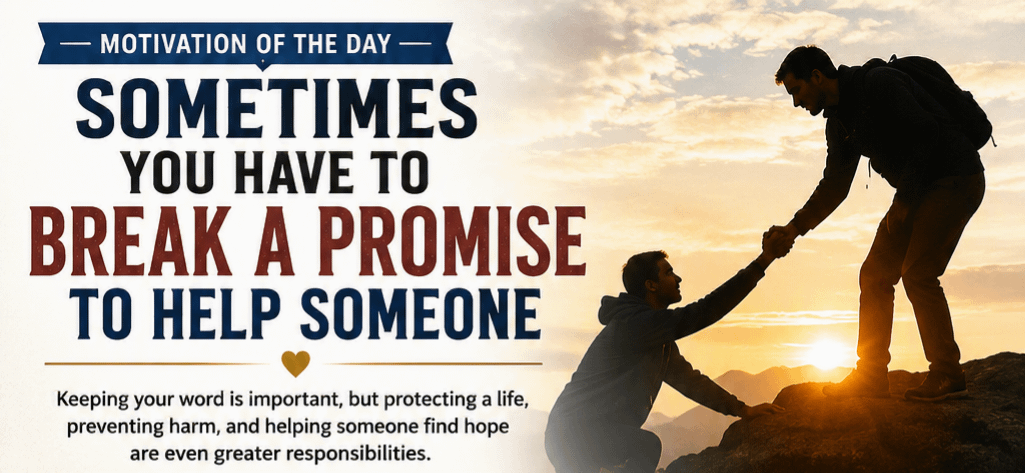
  • Motivation of the Day: Sometimes You Have to Break a Promise to Help Someone

    Advertisements

    We grow up believing that a promise should never be broken. We are taught that our word is our bond and that integrity means doing exactly what we said we would do. Most of the time, that is true. Keeping your promises builds trust, strengthens relationships, and reflects good character.

    But life is rarely black and white.

    There are moments when keeping a promise may actually cause harm, while breaking it could save someone from pain, danger, or even death. In those rare situations, compassion should take precedence over pride. Sometimes, doing the right thing means breaking a promise because another person’s well-being matters more than keeping your word exactly as you gave it.

    The Difference Between Loyalty and Blind Loyalty

    Loyalty is one of the greatest qualities a person can possess. It means standing beside those you care about through difficult times. However, blind loyalty can become destructive when it prevents you from doing what is morally right.

    Imagine someone asks you to promise never to tell anyone about their struggles. Later, you discover they are considering hurting themselves. Keeping that promise could have devastating consequences. Breaking it to get them help may feel like betrayal in the moment, but it is actually an act of love.

    Sometimes true loyalty means protecting someone—even if they are angry with you afterward.

    When Silence Causes Harm

    People often ask others to keep painful secrets. Some secrets involve addiction, abuse, dangerous behavior, or serious mental health struggles.

    If keeping a promise allows someone to continue suffering alone, it may no longer be a promise worth keeping.

    Helping someone receive counseling, medical care, or support from trusted family members may require breaking your silence. While that decision is never easy, saving a life or preventing tragedy is far more important than protecting a secret.

    The goal should never be to expose someone for embarrassment or gossip. The goal is to bring them toward healing.

    Integrity Includes Doing What Is Right

    Many people believe integrity means never changing your mind.

    Real integrity is deeper than that.

    Integrity means acting according to your values, even when the decision is difficult. If your values include kindness, compassion, justice, and protecting others, then there may be times when breaking a promise is actually the most ethical choice.

    Ask yourself:

    • Will keeping this promise hurt someone?
    • Am I protecting a person or protecting a problem?
    • Am I acting out of fear, or out of genuine concern for someone’s well-being?
    • Would I regret staying silent if something terrible happened?

    Those questions can help reveal the difference between selfishness and responsibility.

    Courage Sometimes Looks Uncomfortable

    Breaking a promise can damage a relationship in the short term.

    The other person may become angry, disappointed, or feel betrayed. You may even question yourself afterward.

    But courage is not choosing the easy path.

    Courage is making the difficult decision when you know it is necessary. It is accepting that someone may misunderstand your motives today because you care about their future more than their temporary approval.

    Years later, many people who were helped during their darkest moments admit they are grateful someone refused to keep a harmful secret.

    Choose Compassion Over Comfort

    There is a significant difference between breaking a promise for personal gain and breaking one to protect another person.

    One is selfish.

    The other is sacrificial.

    Your motivation matters.

    If your decision is rooted in genuine love, concern, and the desire to prevent harm, you are acting from compassion rather than convenience.

    Sometimes helping someone requires risking your own reputation, your comfort, or even the relationship itself.

    That sacrifice may be one of the greatest gifts you ever give.

    Learn to Make Better Promises

    One way to avoid impossible situations is to be careful before making promises.

    Instead of saying:

    “I promise I’ll never tell anyone.”

    Consider saying:

    “I’ll keep this private unless I believe you’re in danger or someone else could be harmed.”

    That kind of promise is both honest and responsible. It protects trust while also leaving room to do what is right if circumstances change.

    Motivation of the Day

    Sometimes the hardest choices are the ones made out of love. Keeping your word is important, but protecting a life, preventing harm, and helping someone find hope are even greater responsibilities. If you are ever forced to choose between a promise and someone’s safety, choose compassion. A broken promise can often be repaired. A lost life or missed opportunity to help cannot.

    Remember: H.E.L.P.

    When you’re faced with a difficult promise, remember H.E.L.P.:

    • HHonor what is right, even when it is difficult.
    • EEncourage someone to seek the help they need.
    • LLove people enough to protect them, even if it costs you.
    • PPut their well-being before your comfort.

    Sometimes the greatest act of integrity is having the courage to break a promise for the right reason.

    Read More Of Inspiration & Motivation

  • Inspiration of the Day: Taking and Doing the Advice from a Loved One

    Advertisements

    Sometimes the most valuable advice we will ever receive doesn’t come from a bestselling author, a famous speaker, or a successful entrepreneur. It comes from the people who know us best—the loved ones who have walked beside us through life’s highs and lows. They see our strengths when we doubt ourselves, recognize our potential when we cannot, and often speak truths we need to hear, even when they are difficult.

    Receiving advice is one thing. Acting on it is something entirely different.

    Too often we ask for guidance only to continue doing what we’ve always done. We nod in agreement, thank the person for their wisdom, and then return to old habits because they are familiar and comfortable. But advice only changes a life when it becomes action.

    Why Loved Ones Matter

    The people who genuinely love you usually have no hidden agenda. They aren’t trying to impress you or gain something from your success. They simply want what’s best for you.

    A spouse may encourage you to pursue your dream instead of settling for comfort.

    A parent may remind you to stay humble and work hard.

    A close friend may lovingly point out habits that are holding you back.

    A grandparent may offer wisdom gained from decades of experience.

    Sometimes the advice is encouraging. Other times it’s corrective. Either way, it comes from a place of love.

    That doesn’t mean loved ones are always right, but it does mean their words deserve thoughtful consideration.

    Listening Isn’t Enough

    Many people mistake hearing advice for following it.

    Listening requires your ears.

    Learning requires your mind.

    Doing requires your heart and your will.

    Real growth begins when you take the difficult step of applying what you’ve learned.

    Imagine someone tells you that improving your health requires daily walks and healthier eating. Knowing this information won’t lower your blood pressure or increase your energy. Only consistently putting that advice into practice will.

    The same principle applies to relationships, careers, finances, and personal growth.

    Pride Can Get in the Way

    Sometimes we ignore good advice because our pride whispers:

    “I already know that.”

    “I’ll figure it out myself.”

    “They don’t understand.”

    “I don’t need help.”

    Pride often convinces us that independence is strength.

    Wisdom reminds us that teachability is strength.

    Every successful person has listened to mentors, parents, coaches, teachers, friends, or family members at some point in their journey.

    The Blessing of Honest People

    One of life’s greatest gifts is having someone who loves you enough to tell you the truth.

    Anyone can compliment you.

    Few people are willing to lovingly confront you.

    Those conversations may sting in the moment, but they often become turning points years later.

    If someone who genuinely cares about you encourages you to forgive, slow down, seek help, change direction, or believe in yourself, don’t dismiss those words too quickly.

    They may be exactly what you need.

    Action Creates Change

    Advice without action is like planting seeds but never watering them.

    Every meaningful improvement starts with one decision.

    Call the person.

    Apply for the job.

    Apologize.

    Start exercising.

    Save money.

    Read the book.

    Take the class.

    Forgive.

    Pray.

    Believe.

    One small act today is worth more than a hundred good intentions.

    Sometimes Their Voice Stays With You

    Even after a loved one is gone, their advice can continue shaping your life.

    Many people still hear their father’s work ethic, their mother’s encouragement, a grandparent’s wisdom, or a friend’s reminder to never quit.

    Those words become part of who we are.

    Choosing to live out their advice can become one of the greatest ways to honor the people who have loved us.

    Their influence doesn’t end when the conversation does.

    Trust the People Who Want the Best for You

    Not every opinion deserves equal weight. But when advice consistently comes from someone who has proven their love, integrity, and genuine concern for your well-being, pay attention.

    Their perspective may help you avoid mistakes, overcome fear, or discover opportunities you would never have seen on your own.

    Sometimes the breakthrough you’ve been waiting for begins with finally acting on advice you’ve already received.

    Today’s Challenge

    Think of one piece of advice a loved one has given you that you’ve been putting off.

    Instead of waiting for the perfect time, take one step today.

    Send the application.

    Make the phone call.

    Start the habit.

    Repair the relationship.

    Begin the journey.

    Honor their love by putting their wisdom into action.

    Final Thoughts

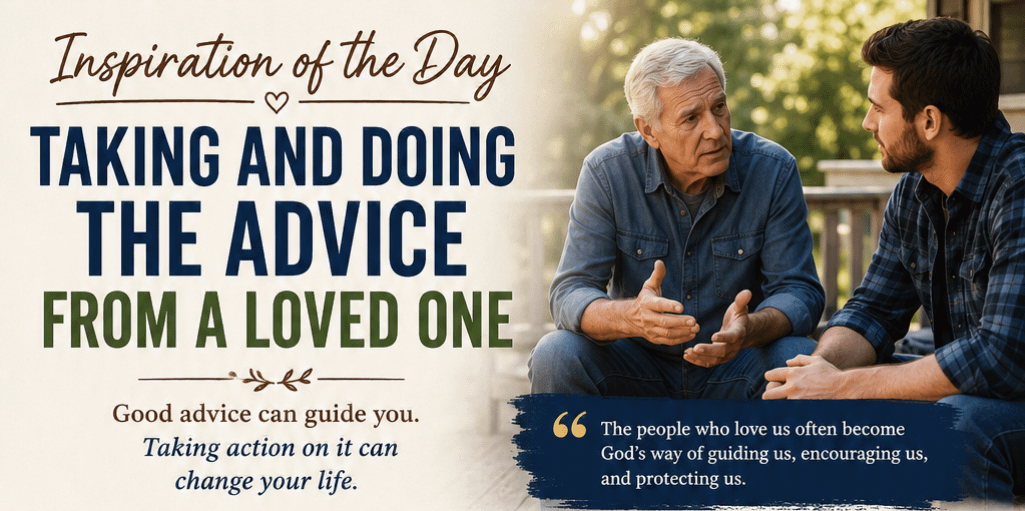
    The people who love us often become God’s way of guiding us, encouraging us, and protecting us. Their words carry weight because they come from hearts that care deeply about our future.

    Don’t simply collect good advice.

    Live it.

    Years from now, you’ll likely discover that some of the best decisions you ever made began with listening to someone who loved you enough to tell you the truth—and having the courage to do something about it.

    Inspiration of the Day

    The greatest way to honor the wisdom of someone who loves you isn’t by remembering what they said—it’s by living what they taught.

    Read More Of Inspiration & Motivation
Exit mobile version