Blog

  • Recipe of the Day: Taco Lasagna

    Recipe of the Day: Taco Lasagna

    Advertisements

    If you love tacos and lasagna, why choose between them when you can enjoy both in one delicious dish? Taco Lasagna is the perfect comfort food fusion — layered with seasoned beef, melted cheese, tortillas, salsa, and bold Tex-Mex flavors that bring excitement to every bite. It’s hearty, easy to make, and perfect for family dinners, potlucks, or game-day gatherings.

    This flavorful casserole combines the layered goodness of traditional lasagna with the spicy, savory taste of tacos. Every forkful delivers creamy cheese, seasoned meat, soft tortillas, and zesty toppings that make this dish unforgettable.

    Why Taco Lasagna Is So Popular

    Taco Lasagna has become a favorite because it is:

    Easy to customize
    Family-friendly
    Great for leftovers
    Perfect for feeding a crowd
    Packed with comforting flavor

    You can make it mild or spicy, add beans or vegetables, and top it with your favorite taco toppings. It’s one of those recipes that feels fun, filling, and satisfying all at once.

    Ingredients

    Here’s what you’ll need:

    1 pound ground beef
    1 packet taco seasoning
    1 cup water
    1 jar salsa
    8 small flour tortillas
    2 cups shredded cheddar cheese
    2 cups shredded Mexican blend cheese
    1 can black beans, drained
    1 cup corn
    1 cup sour cream
    1 small onion, diced
    1 can diced tomatoes with green chilies

    Optional toppings:

    Jalapeños
    Green onions
    Avocado
    Cilantro
    Crushed tortilla chips
    How to Make Taco Lasagna
    Step 1: Prepare the Meat

    Brown the ground beef and onion in a skillet over medium heat. Drain excess grease. Stir in taco seasoning and water, then simmer for several minutes until thickened.

    Step 2: Mix the Filling

    Add black beans, corn, diced tomatoes, and half the salsa to the meat mixture. Stir well.

    Step 3: Layer the Lasagna

    In a greased baking dish:

    Spread a thin layer of salsa
    Add tortillas
    Spread meat mixture
    Add sour cream
    Sprinkle cheese

    Repeat the layers until ingredients are used, finishing with plenty of cheese on top.

    Step 4: Bake

    Bake at 375°F for about 25–30 minutes until bubbly and golden.

    Step 5: Add Toppings

    Top with your favorite taco toppings and serve warm.

    Tips for the Best Taco Lasagna
    Use corn tortillas for a more authentic taco flavor
    Add refried beans for extra richness
    Try shredded chicken instead of beef
    Let the lasagna rest for 10 minutes before slicing
    Add hot sauce for extra heat
    Perfect for Any Occasion

    Taco Lasagna is ideal for:

    Family dinners
    Potlucks
    Taco Tuesday
    Football parties
    Weekend comfort meals

    Its bold flavor and cheesy layers make it a guaranteed crowd-pleaser.

    Final Thoughts

    Taco Lasagna takes two classic comfort foods and combines them into one unforgettable meal. It’s warm, cheesy, flavorful, and incredibly easy to customize for your family’s tastes. Whether you’re cooking for a busy weeknight or entertaining guests, this recipe is sure to become a favorite at the table.

    One bite of Taco Lasagna and you may never look at tacos or lasagna the same way again.

    Read More Recipes

  • Cocktail of the Day: The Scorpion Bowl

    Advertisements

    Few cocktails capture the spirit of celebration quite like the Scorpion Bowl. Bold, fruity, tropical, and meant to be shared, this iconic tiki drink has become a favorite at parties, Polynesian-style restaurants, and summer gatherings for decades. Served in an oversized bowl with long straws and dramatic garnishes, the Scorpion Bowl is more than just a cocktail — it is an experience.

    What Is a Scorpion Bowl?

    The Scorpion Bowl is a classic tiki cocktail traditionally made with rum, fruit juices, and a blend of tropical flavors. It is usually served in a large communal bowl designed for two or more people to enjoy together. Many versions are topped with fresh fruit, edible flowers, or even a flaming center for added flair.

    The drink became popular during the tiki craze of the mid-20th century, when Polynesian-inspired restaurants and exotic cocktails exploded in popularity across America. Its colorful presentation and sweet-yet-potent flavor quickly made it a standout favorite.

    What Does It Taste Like?

    A Scorpion Bowl delivers a smooth tropical punch with layers of citrus, sweetness, and rum warmth. Depending on the recipe, you may notice flavors like:

    Orange and pineapple
    Lime and lemon
    Almond or orgeat syrup
    Dark and light rum
    Brandy or other spirits

    The result is refreshing, slightly sweet, and dangerously easy to sip.

    Traditional Ingredients

    While recipes vary from bar to bar, a classic Scorpion Bowl often includes:

    Light rum
    Dark rum
    Orange juice
    Pineapple juice
    Lemon juice
    Orgeat syrup
    Brandy
    Crushed ice

    Some modern recipes also add grenadine, passion fruit, or tropical liqueurs for extra flavor and color.

    Why People Love the Scorpion Bowl

    The Scorpion Bowl stands out because it combines fun, flavor, and nostalgia all in one drink. It is perfect for:

    Summer parties
    Backyard barbecues
    Tropical-themed gatherings
    Date nights
    Group celebrations

    Its oversized presentation creates a festive atmosphere that encourages conversation and shared memories.

    A Symbol of Tiki Culture

    The Scorpion Bowl is deeply connected to classic tiki culture — a style known for escapism, island-inspired décor, tropical music, and elaborate cocktails. Tiki drinks became wildly popular after World War II as Americans embraced exotic flavors and vacation-style experiences.

    Today, the Scorpion Bowl remains one of the most recognizable tiki cocktails ever created.

    Final Sip

    The Scorpion Bowl is not just a drink — it is a centerpiece for fun, laughter, and connection. With its tropical flavors, eye-catching presentation, and rich tiki history, it continues to bring island vibes to gatherings everywhere.

    Whether you enjoy one at a tiki bar or make your own at home, the Scorpion Bowl is a reminder that some cocktails are meant to be shared and celebrated.

    Cheers to today’s Cocktail of the Day: the legendary Scorpion Bowl.

    Read More Of Drinks And Cocktails

  • Drink of the Day: Regret on the Rocks

    Advertisements

    Some drinks are created to celebrate. Others are made to forget. But every now and then, a cocktail comes along that feels like a conversation with the past. Regret on the Rocks is one of those drinks — bold, smoky, bittersweet, and hauntingly smooth. It is the kind of cocktail you sip slowly while replaying old memories, missed chances, and lessons learned the hard way.

    Whether enjoyed at the end of a long day or shared during deep late-night conversations, Regret on the Rocks is more than a drink. It is a mood.

    What Is Regret on the Rocks?

    Regret on the Rocks is a whiskey-forward cocktail known for its rich flavor profile and emotional name. Combining smoky bourbon or rye whiskey with dark bitters, a splash of coffee liqueur, and a hint of orange, the drink delivers warmth with a lingering bittersweet finish.

    The name captures the feeling perfectly — strong enough to sting, smooth enough to keep you coming back for another sip.

    Flavor Profile

    This cocktail balances boldness and depth:

    * Smoky bourbon or rye whiskey
    * Rich coffee undertones
    * Subtle sweetness
    * Bitter orange finish
    * Smooth but emotionally heavy character

    It tastes like stories told after midnight, old photographs, and memories that still echo years later.

    Simple Recipe

    Ingredients

    * 2 oz bourbon or rye whiskey
    * 1 oz coffee liqueur
    * 2 dashes Angostura bitters
    * Orange peel
    * Large ice cube

    Directions

    1. Fill a rocks glass with a large ice cube.
    2. Pour in whiskey and coffee liqueur.
    3. Add bitters and stir slowly.
    4. Express an orange peel over the glass and drop it in.
    5. Sip slowly and responsibly.

    Why People Love It

    Cocktails with personality always stand out, and Regret on the Rocks has plenty of it. The drink appeals to those who enjoy moody, reflective cocktails rather than sugary party drinks. It fits perfectly beside a campfire, on a quiet ranch porch, or during a rainy evening with classic country music playing in the background.

    Its emotional name also makes it memorable. Everyone has regrets — moments they wish they could change, words they wish they had said differently, or people they wish they had held onto longer. This cocktail captures that bittersweet feeling in a glass.

    The Atmosphere Matters

    Part of the experience is the setting. Regret on the Rocks pairs well with:

    * Dim lighting
    * Country or blues music
    * A quiet evening outdoors
    * Deep conversations with old friends
    * Moments of reflection and honesty

    This is not a fast drink. It is meant to be savored.

    Final Thoughts

    Regret on the Rocks reminds us that not every scar in life has to be hidden. Some memories shape us, strengthen us, and teach us what matters most. Like the drink itself, life can be bittersweet — smooth in one moment and heavy in the next.

    So tonight, pour a glass, breathe deep, and remember: regrets may stay with us, but so do the lessons they leave behind.

    Read More Of Drinks And Cocktails

  • National Sorry Day: Honoring Truth, Healing, and Reconciliation

    Advertisements

    very year on May 26, Australia observes National Sorry Day — a day dedicated to acknowledging the pain and suffering experienced by Aboriginal and Torres Strait Islander peoples, particularly the Stolen Generations. It is a day of remembrance, reflection, and reconciliation, encouraging people to learn from history while supporting healing for the future.

    National Sorry Day stands as one of the most emotionally significant observances in Australia’s modern history because it recognizes the lasting impact of policies that forcibly removed Indigenous children from their families, communities, and cultures for generations.

    The Meaning Behind National Sorry Day

    National Sorry Day was first held in 1998 following the release of the landmark “Bringing Them Home” report in 1997. The report documented the heartbreaking experiences of Indigenous children who were taken from their families under government policies that lasted for much of the 20th century.

    These children, now known as the Stolen Generations, often lost:

    * Their connection to family
    * Their cultural identity
    * Their language and traditions
    * A sense of belonging and emotional security

    For many survivors, the trauma carried into adulthood and affected future generations through grief, disconnection, and emotional pain.

    National Sorry Day exists to acknowledge these truths openly and respectfully.

    A Day of Reflection and Compassion

    National Sorry Day is not about guilt — it is about recognition, empathy, and understanding. It encourages people to listen to the stories of survivors and recognize the resilience of Indigenous communities who endured tremendous hardship.

    Across Australia, people observe the day by:

    * Attending memorial services and community gatherings
    * Participating in educational events
    * Wearing “Sorry Day” symbols such as native flowers
    * Sharing stories and conversations about reconciliation
    * Taking time to reflect on the importance of unity and healing

    Schools, workplaces, organizations, and local communities often use the day to educate others about Indigenous history and culture while promoting respect and inclusion.

    The Importance of Saying “Sorry”

    The word “sorry” carries deep emotional meaning. In the context of National Sorry Day, it represents acknowledgment of past wrongs and a commitment to building a better future.

    One of the most historic moments connected to the movement came in 2008, when former Australian Prime Minister Kevin Rudd formally apologized to the Stolen Generations on behalf of the Australian government.

    For many people, that apology marked an important step toward healing and national reconciliation.

    Yet National Sorry Day also reminds us that reconciliation is not a single moment — it is an ongoing journey requiring honesty, education, compassion, and action.

    Why National Sorry Day Still Matters Today

    The effects of historical trauma do not disappear overnight. Many Indigenous families and communities continue to experience social, emotional, and cultural challenges connected to the past.

    National Sorry Day encourages people to:

    * Learn the truth about history
    * Respect Indigenous voices and experiences
    * Support reconciliation efforts
    * Promote equality and understanding
    * Build stronger relationships between communities

    It is also a reminder that healing grows when people are willing to listen, acknowledge pain, and stand together with compassion and respect.

    Moving Forward Together

    National Sorry Day is ultimately about humanity — recognizing suffering, honoring resilience, and choosing understanding over silence. It reminds us that healing begins when truth is acknowledged and when people are willing to walk together toward reconciliation.

    As communities gather to remember the past and hope for the future, National Sorry Day continues to serve as a powerful reminder that compassion, respect, and unity can help create a more inclusive and understanding world for generations to come.

    Read More Holidays & National Days

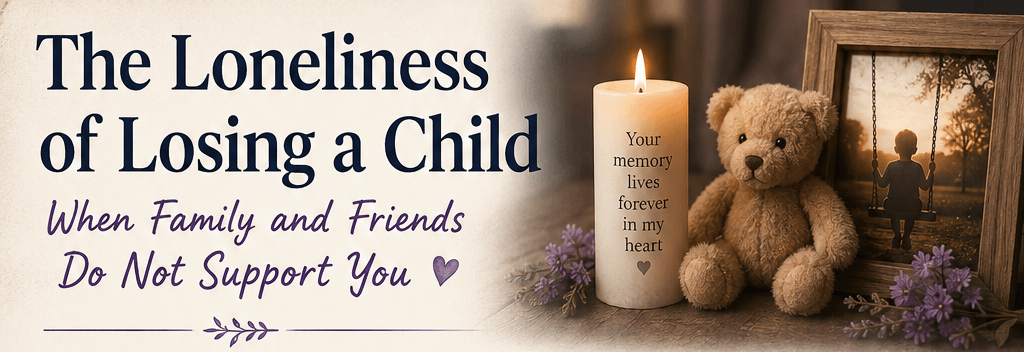
  • The Loneliness of Losing a Child When Family and Friends Do Not Support You

    Advertisements

    One of the most painful realities about losing a child is discovering that not everyone will walk beside you through the grief. Many grieving parents expect family and close friends to become their greatest source of comfort and strength. Sometimes they do. But sometimes the people you thought would hold you up emotionally begin to disappear, grow distant, avoid conversations, or act as though your grief should eventually fade away.

    That kind of abandonment creates a second heartbreak on top of the loss itself.

    Losing a child already leaves an emptiness no parent should ever experience. But when support from family and friends is missing, the grief can become even heavier. You begin feeling isolated not only from the world, but from the very people you thought would stand beside you during the darkest moment of your life.

    Many grieving parents quietly ask themselves painful questions:
    “Why has everyone stopped checking on me?”
    “Why do people act uncomfortable when I mention my child’s name?”
    “Why do I feel alone even when surrounded by people?”

    The truth is, grief makes many people uncomfortable. Some people simply do not know how to respond to a loss this deep. They fear saying the wrong thing, so they say nothing at all. Others expect grief to follow a timeline and become frustrated when months or years later you are still carrying pain. Some family members may even avoid your grief because it forces them to face emotions they do not want to deal with themselves.

    But understanding why people pull away does not erase the hurt when they do.

    For many parents, support disappears shortly after the funeral. In the beginning, people may send flowers, messages, and prayers. But as time passes, the calls become less frequent. The visits stop. The world moves on while the grieving parent remains stuck trying to survive each day without their child.

    That silence can feel devastating.

    It hurts when people stop speaking your child’s name as though mentioning them no longer matters. It hurts when birthdays and anniversaries are ignored. It hurts when people expect you to return to “normal” even though your entire life has been permanently changed.

    Some grieving parents also experience judgment instead of compassion. They may hear hurtful comments like:
    “You need to be strong.”
    “You should focus on the children you still have.”
    “Everything happens for a reason.”
    “At some point you have to move on.”

    Words like these can deepen emotional wounds because they dismiss the reality of child loss. There is no “moving on” from losing a child. Parents learn how to carry the pain, but they never stop loving or missing their child.

    Even within families, grief can create division. Some relatives may avoid talking about the child because it is too painful. Others may disagree about how grief should be expressed. One person may want to openly share memories while another shuts down emotionally. Over time, these differences can create tension, misunderstandings, and emotional distance.

    There are also grieving parents who feel unsupported because their loss is not acknowledged the way they hoped. Some people minimize miscarriages, stillbirths, infant loss, addiction-related deaths, or adult child loss as though the pain somehow matters less. But every child is deeply loved, and every loss leaves a permanent scar on the parent’s heart.

    The loneliness becomes especially difficult during holidays and special occasions. Watching other families celebrate while carrying the absence of your child can already feel unbearable. When family and friends fail to acknowledge your pain during those moments, it can make you feel invisible.

    Yet despite all of this, many grieving parents continue finding ways to survive. They become stronger than they ever wanted to be. They learn to lean on faith, support groups, counseling, online grief communities, or the few people who truly understand their pain. Sometimes complete strangers offer more compassion than lifelong friends.

    And while support from others matters, it is important to remember this truth: your grief is valid even when others fail to recognize it.

    Your child mattered.
    Your love still matters.
    Your pain deserves compassion.
    And your healing does not depend on other people’s ability to understand your loss.

    Some people will never fully understand the depth of child loss because they have never experienced it. But there are others who do understand — parents who have cried the same tears, carried the same silence, and survived the same heartbreak. In time, many grieving parents discover that healing often begins by connecting with people who are willing to sit with their pain instead of trying to erase it.

    If you are grieving without support from family or friends, know this: you are not weak for feeling hurt by their absence. Grief was never meant to be carried alone. The lack of support can leave emotional wounds that run deep. But even when others fail you, your child’s memory, your love, and your story still matter.

    And no amount of silence from others can ever erase the bond between a parent and their child.

    A Father’s Guide to Surviving the Loss of a Child

    Grief & Child Loss


  • When It Is Time to Open Up to Someone New

    Advertisements

    There comes a moment after heartbreak, betrayal, disappointment, or loss when silence begins to feel heavier than the pain itself. For a long time, keeping your guard up may have felt safe. You learned how to survive by hiding your feelings, protecting your heart, and convincing yourself that staying emotionally distant was easier than risking being hurt again.

    But healing has a quiet way of changing us.

    Eventually, you may meet someone who feels different. Someone patient. Someone kind. Someone who does not pressure you to speak, but makes you feel safe enough to consider it. And that can be terrifying.

    Opening up to someone new is not weakness. It is one of the bravest things a person can do after being wounded.

    Why It Is So Hard

    When you have been hurt deeply, vulnerability no longer feels natural. Your mind remembers every broken promise, every rejection, every moment you trusted someone who let you down. You begin to believe that staying guarded will protect you from future pain.

    The problem is that walls built to keep pain out also keep connection out.

    You may overthink every conversation. You may question whether someone genuinely cares. You may want closeness while simultaneously fearing it. This emotional push and pull is common for people carrying past pain.

    Trust does not return overnight. It returns slowly, through consistency, patience, and small moments that rebuild your sense of safety.

    Signs You May Be Ready to Open Up

    Opening your heart again does not mean you are fully healed. It means you are willing to try despite your fears.

    Here are a few signs it may be time to let someone in:

    You find yourself wanting deeper conversations instead of surface-level interactions.
    You feel emotionally exhausted from pretending you are always “fine.”
    You notice someone earning your trust through their actions, not just words.
    You no longer want to carry your struggles alone.
    You are beginning to believe that not everyone will hurt you.

    Readiness is not about being fearless. It is about recognizing that connection matters more than staying emotionally locked away forever.

    The Right Person Will Not Rush You

    One of the biggest fears people carry is being misunderstood when they finally open up. But the right person will never make you feel weak for having scars.

    They will listen without judgment.

    They will not use your pain against you.

    They will not demand every detail before you are ready.

    Healthy people understand that trust is earned slowly. They know healing takes time. Someone who truly cares about you will appreciate your honesty, not punish you for it.

    Start Small

    Opening up does not mean unloading every painful memory at once. Healing conversations often begin with small truths.

    “I’ve been through a lot.”
    “I struggle with trusting people.”
    “Sometimes I keep things bottled up.”
    “I’m trying to learn how to open up again.”

    Small honesty creates room for deeper connection over time.

    You do not have to hand someone your entire heart immediately. Trust can be built one conversation at a time.

    You Deserve Safe Connection

    Many people convince themselves they are “too damaged” to be loved properly after heartbreak or trauma. That is not true.

    Your past pain does not make you unworthy of understanding, kindness, or genuine connection.

    There are people in this world who will meet your honesty with compassion instead of judgment. People who will stay consistent. People who will value your heart instead of taking advantage of it.

    Opening up again is not forgetting what happened to you. It is choosing not to let the pain define your future forever.

    Final Thoughts

    There is courage in surviving pain. But there is also courage in letting someone see the parts of you that still ache.

    The day you decide to open up to someone new may feel uncomfortable, emotional, and uncertain. But it can also become the beginning of healing you never thought was possible.

    Not everyone who enters your life is meant to break your heart.

    Some people arrive to help you remember that trust, connection, and love can still exist after the pain.

    Read More Of Love & Relationships

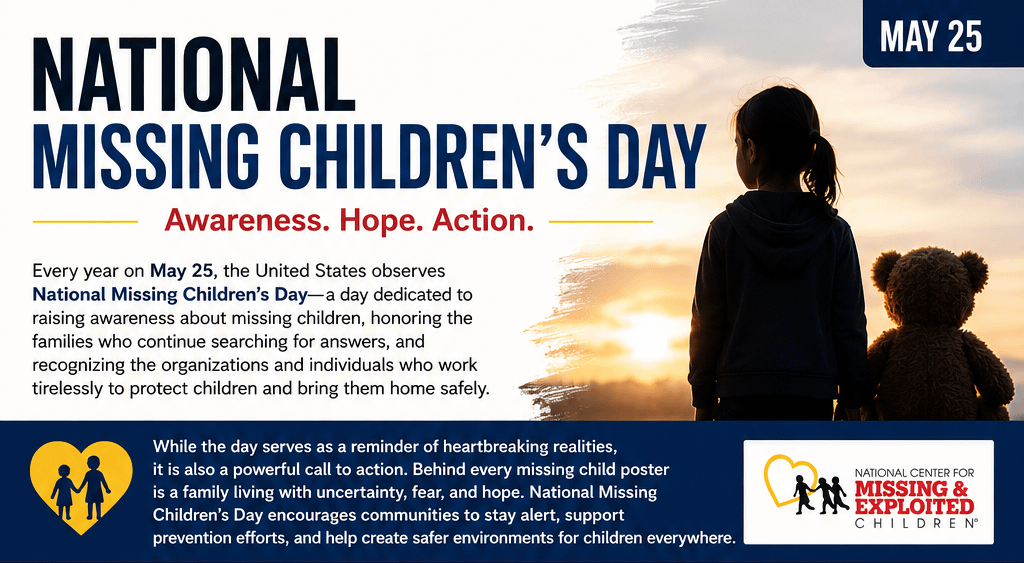
  • National Missing Children’s Day: Bringing Hope, Awareness, and Action

    Advertisements

    Every year on May 25, the United States observes National Missing Children’s Day — a day dedicated to raising awareness about missing children, honoring the families who continue searching for answers, and recognizing the organizations and individuals who work tirelessly to protect children and bring them home safely.

    While the day serves as a reminder of heartbreaking realities, it is also a powerful call to action. Behind every missing child poster is a family living with uncertainty, fear, and hope. National Missing Children’s Day encourages communities to stay alert, support prevention efforts, and help create safer environments for children everywhere.

    The Meaning Behind the Day

    National Missing Children’s Day was established in 1983 by President Ronald Reagan following the tragic disappearance and murder of six-year-old Etan Patz in New York City. Etan’s case became one of the first to receive widespread national media attention and helped bring awareness to the issue of child abductions in America.

    Since then, the day has evolved into more than remembrance. It has become a nationwide effort focused on education, child safety, prevention, and recovery.

    The observance also honors law enforcement officers, advocates, nonprofits, volunteers, and everyday citizens who assist in finding missing children and supporting affected families.

    The Reality Families Face

    When a child goes missing, time stands still for the people who love them. Families often experience overwhelming emotional pain, anxiety, helplessness, and unanswered questions that can last for days, months, or even years.

    For many parents, every phone call creates hope. Every knock at the door brings fear and possibility at the same time.

    National Missing Children’s Day reminds us that these families should never feel forgotten. Compassion, awareness, and community support can make an enormous difference during unimaginable circumstances.

    How Communities Can Help

    Protecting children is not only the responsibility of parents or law enforcement — it takes entire communities working together.

    Here are a few ways people can help:

    Learn and teach child safety practices
    Stay informed about local missing persons alerts
    Share verified missing child information responsibly
    Support organizations that assist missing and exploited children
    Encourage open communication between children and trusted adults
    Pay attention to suspicious activity and report concerns
    Help create safe schools, neighborhoods, and online spaces

    Even small actions can contribute to awareness and prevention.

    The Importance of Online Safety

    In today’s digital world, protecting children also means understanding online dangers. Social media, gaming platforms, messaging apps, and online communities can expose children to risks including exploitation, grooming, scams, and harmful interactions.

    Parents and guardians are encouraged to:

    Talk openly about internet safety
    Monitor online activity appropriately
    Teach children not to share personal information
    Encourage children to speak up if something feels wrong
    Build trust so children feel safe asking for help

    Education and communication remain some of the strongest tools for prevention.

    Honoring Hope and Resilience

    National Missing Children’s Day is also about hope — hope for reunions, healing, and safer futures for children everywhere.

    Across the country, there are countless stories of resilience: children safely recovered, communities uniting to help families, and advocates dedicating their lives to child protection. These stories remind us that awareness matters and that every effort can make a difference.

    Today is a reminder to remain vigilant, compassionate, and proactive. Every child deserves safety, protection, love, and the chance to come home.

    Final Thoughts

    National Missing Children’s Day is more than a date on the calendar. It is a day to remember the missing, support grieving and searching families, educate communities, and strengthen our commitment to protecting children.

    Awareness saves lives. Conversations matter. Community involvement matters. And hope should never disappear.

    On this day, let us stand together in support of every missing child and every family waiting for answers.

    Read More Holidays & National Days

  • Behind the Walls of My Heart

    Advertisements

    There’s a quiet kind of fear
    that doesn’t scream—
    it whispers.

    It hides behind guarded smiles,
    unfinished sentences,
    and hearts that learned
    how painful trust can be.

    The fear of being hurt again
    isn’t weakness.
    It’s the memory of wounds
    that never fully healed.

    It’s flinching
    when someone gets too close.
    It’s wanting love
    while building walls around your soul.

    You tell yourself
    you’re protecting your peace,
    but some nights
    the loneliness echoes louder
    than the pain you escaped.

    Because deep down,
    you still want to believe
    someone could hold your heart gently
    without breaking it apart.

    But fear remembers everything.
    The lies.
    The abandonment.
    The silence after promises.
    The way you gave your all
    and still ended up empty-handed.

    So now you hesitate.
    You overthink every word,
    question every intention,
    and brace yourself
    for endings before beginnings
    even have a chance to bloom.

    Yet somewhere beneath the fear,
    hope still breathes softly.

    A fragile reminder
    that not everyone comes to destroy you.
    Some people arrive
    to help you believe in softness again.
    To teach your heart
    that love should feel safe,
    not like survival.

    Healing doesn’t happen overnight.
    Trust returns slowly,
    one honest moment at a time.

    And maybe courage
    isn’t the absence of fear at all—
    maybe it’s choosing
    to let someone in
    despite the trembling.

    Because your heart
    was never meant to stay hidden forever.

    Read More Poetry

  • Motivation of the Day: H.U.S.T.L.E.

    Advertisements

    Success rarely happens overnight. Behind every achievement are long hours, setbacks, sacrifices, and moments when giving up seemed easier than continuing. That is where H.U.S.T.L.E. becomes more than just a word — it becomes a mindset for people who refuse to quit on their dreams.

    H.U.S.T.L.E.

    H – Have Vision

    Every meaningful journey begins with a vision. You cannot build a future you cannot see. Vision gives your life direction and purpose when distractions try to pull you away from your goals. Dream bigger than your current circumstances and keep your eyes focused on where you want to go, not just where you are today.

    U – Use Every Opportunity

    Opportunities do not always arrive perfectly packaged. Sometimes they look like hard work, uncomfortable challenges, or unexpected changes. People who hustle understand that every moment can become a stepping stone toward growth. Learn from failures, embrace new experiences, and use every chance to improve yourself.

    S – Stay Consistent

    Motivation comes and goes, but consistency creates results. Small daily actions eventually become life-changing progress. Even when you feel tired, discouraged, or unnoticed, keep showing up. The people who succeed are often the ones who simply refused to stop.

    T – Trust the Process

    There will be seasons where it feels like nothing is happening. Progress may seem slow, and setbacks may test your patience. But growth often happens quietly before results become visible. Trust that your hard work, discipline, and perseverance are shaping you into the person you are meant to become.

    L – Learn from Every Failure

    Failure is not the end unless you decide to quit. Every mistake teaches wisdom. Every disappointment builds resilience. Some of the strongest people are those who turned pain into purpose and setbacks into comebacks. Hustling means learning, adapting, and continuing forward no matter how difficult life becomes.

    E – Execute with Purpose

    Dreams without action remain dreams. Hustling is not just talking about goals — it is putting in the work every single day. Execute your plans with passion, discipline, and intention. Your effort today can create opportunities you once thought were impossible.

    Final Thoughts

    H.U.S.T.L.E. is not about chasing success at the cost of your peace. It is about becoming disciplined, determined, and committed to building a better life one day at a time. There will be obstacles, criticism, and moments of doubt, but never underestimate what can happen when you stay focused and refuse to give up.

    Keep grinding.
    Keep believing.
    Keep moving forward.

    Because your breakthrough may be closer than you think.

  • This Day in American History — May 25

    Advertisements

    May 25 has marked many important moments in American history — from major military achievements and constitutional milestones to cultural events that shaped the nation. Across different centuries, this day reflects the courage, innovation, sacrifice, and determination that continue to define the American story.

    The Constitutional Convention Nears Completion (1787)

    In late May of 1787, delegates from across the young United States gathered in Philadelphia for what would become one of the most important political meetings in American history — the Constitutional Convention. By May 25, enough delegates had arrived to officially begin discussions that would eventually lead to the creation of the United States Constitution.

    The gathering represented a turning point for the new nation. America was struggling under the Articles of Confederation, and leaders recognized the need for a stronger federal government. The debates that followed would shape the foundation of American democracy for generations to come.

    The Opening of the Brooklyn Bridge (1883)

    One of America’s greatest engineering achievements became a reality when the Brooklyn Bridge officially opened to the public in May 1883. The bridge connected Manhattan and Brooklyn across the East River and quickly became a symbol of innovation and progress.

    At the time, it was the longest suspension bridge in the world. Thousands of Americans crossed it on opening day, amazed by its size and beauty. Today, it remains one of the most iconic landmarks in the United States and a lasting reminder of American engineering ambition.

    Memorial Day Traditions and National Reflection

    May 25 often falls near Memorial Day weekend, a time when Americans honor military service members who gave their lives defending the nation. Throughout American history, communities have gathered around this time of year to place flags on graves, hold ceremonies, and remember those who sacrificed everything for freedom.

    The tradition grew after the Civil War and eventually became a national holiday dedicated to remembrance, gratitude, and patriotism.

    The Launch of “Star Wars” (1977)

    On May 25, 1977, Star Wars premiered in theaters and forever changed American cinema and pop culture. Created by George Lucas, the film introduced audiences to unforgettable characters, groundbreaking visual effects, and an epic storytelling universe that continues to inspire generations.

    What began as a risky science-fiction project became one of the most influential entertainment franchises in history. The movie reshaped Hollywood and became deeply woven into American culture.

    Americans in Space Exploration

    May 25 also carries historical importance in the story of American space exploration. In 1961, President John F. Kennedy challenged the nation to land a man on the moon before the end of the decade. His bold vision fueled innovation, scientific progress, and national pride during the Space Race.

    That challenge eventually led to the historic Apollo 11 Moon Landing in 1969, one of the greatest achievements in American history.

    A Day That Reflects the American Spirit

    From the birth of constitutional government to incredible engineering accomplishments, military remembrance, cinematic milestones, and space exploration, May 25 represents the enduring spirit of the United States.

    It is a day that reminds Americans of the power of perseverance, creativity, freedom, and unity — values that continue to shape the nation’s history and future.

    What moment in American history inspires you the most and why?

    Read More History & Culture

Exit mobile version