Blog

  • When You Want to Open Up to Someone Special

    When You Want to Open Up to Someone Special

    Advertisements

    There are moments in life when your heart becomes so full of unspoken emotions that silence itself starts to feel heavy. You carry conversations in your head that never leave your mouth. You replay memories, fears, disappointments, regrets, and hopes over and over, wishing someone could truly understand what is happening inside you.

    Most people become experts at hiding.

    They learn how to smile while hurting.
    How to laugh while feeling lonely.
    How to say “I’m okay” when they are emotionally exhausted.

    The world often teaches people to protect themselves emotionally. Some are taught not to cry. Some are taught not to burden others with their feelings. Others become silent because every time they tried to open up in the past, they were ignored, mocked, abandoned, or misunderstood.

    Pain changes people.

    It can make someone who was once open and trusting become guarded and distant. It can make a person afraid to become emotionally attached. It can make them overthink every conversation and second-guess every feeling.

    That is why meeting someone who makes you want to open up feels so powerful.

    There is something rare about finding a person who makes your heart feel calm instead of anxious. Someone whose presence feels safe. Someone who listens differently. Someone who notices the sadness hidden behind your smile. Someone who gently asks, “Are you really okay?” and actually waits for the honest answer.

    When you meet someone special like that, something inside you begins to shift.

    You want to tell them about the things you usually keep hidden.

    You want to tell them about the nights you cried when no one knew.
    The heartbreak you never fully healed from.
    The loneliness you carry even in crowded rooms.
    The mistakes you still regret.
    The fears you try to outrun.
    The dreams you rarely say out loud because you are afraid they might never happen.

    But at the same time, fear rises too.

    Because opening up means becoming vulnerable.

    And vulnerability can feel terrifying when life has taught you that people sometimes leave after learning the real you.

    You begin asking yourself questions like:

    “What if I say too much?”
    “What if they see me differently?”
    “What if they lose interest?”
    “What if I become too attached?”
    “What if they hurt me like others did?”

    So instead of speaking, many people stay quiet.

    They type messages and delete them.
    They almost open up, then pull back.
    They hint at their pain without fully explaining it.
    They wait for the “perfect moment” that never seems to come.

    The truth is, opening up to someone special is not easy because it requires trust, and trust is one of the hardest things to rebuild once it has been broken.

    Still, despite all the fear, the heart continues to long for connection.

    Human beings were never meant to carry every burden alone. Deep inside, most people want someone they can safely remove the mask around. Someone they do not have to impress. Someone they can cry in front of without feeling weak. Someone who will stay when life becomes messy and complicated.

    The desire to open up is not attention-seeking.
    It is not weakness.
    It is not emotional dependency.

    It is the natural desire to be emotionally known and emotionally accepted.

    There is healing in finally being honest.

    There is healing in hearing someone say:

    “I understand.”
    “You don’t have to go through this alone.”
    “Thank you for trusting me.”
    “I’m here.”
    “You don’t have to pretend with me.”

    Sometimes those simple words can touch wounds that years of silence never healed.

    The right person will not make you feel ashamed for having emotions. They will not rush you to “get over it.” They will not act annoyed when you are struggling. They will not use your vulnerability against you later during conflict.

    Instead, they will create safety.

    Real emotional safety feels peaceful.
    It feels patient.
    It feels understanding.
    It feels like you can breathe again.

    Opening up also teaches an important lesson: not everyone deserves access to your deepest emotions.

    Trust should be earned, not forced.

    It is okay to take your time. It is okay to open up slowly. You do not have to hand someone every broken piece of your heart all at once. Vulnerability happens in layers. One conversation. One truth. One honest moment at a time.

    Sometimes opening up starts small:

    “Lately I’ve been struggling emotionally.”
    “There’s something I’ve been carrying for a long time.”
    “I usually keep this to myself.”
    “I trust you enough to tell you this.”

    Those simple sentences often carry years of hidden pain behind them.

    And when someone responds with compassion instead of judgment, it can change you.

    For many people, the deepest fear is not rejection — it is being misunderstood.

    They fear someone hearing their pain but minimizing it. They fear being told they are “too emotional,” “too sensitive,” or “too much.” They fear exposing their heart only to feel foolish afterward.

    But the reality is this: the people who genuinely care about you will not punish you for being human.

    Everyone carries invisible battles.

    Some people hide grief.
    Some hide anxiety.
    Some hide trauma.
    Some hide depression.
    Some hide loneliness.
    Some hide the exhaustion of trying to stay strong for everyone else.

    You never truly know how much someone is holding inside.

    That is why kindness matters. That is why listening matters. That is why emotionally safe people are so rare and valuable.

    Opening up to someone special can also deepen love and connection in ways surface-level conversations never could. Real intimacy is not built only through attraction or shared interests. It is built through honesty. Through trust. Through emotional presence.

    When two people can speak openly about their fears, scars, hopes, and struggles without fear of judgment, a deeper kind of bond forms.

    That kind of connection is powerful because it allows people to stop pretending.

    No masks.
    No performances.
    No emotional hiding.

    Just two imperfect people choosing to be real with each other.

    Of course, not every story ends perfectly.

    Sometimes you open your heart and the other person does not know how to hold it. Sometimes people pull away. Sometimes trust is misplaced. Sometimes vulnerability is met with silence.

    And yes, that hurts deeply.

    But even then, your willingness to open up is not something to be ashamed of.

    It means your heart still has the courage to trust despite everything it has survived.

    That is strength.

    Far too many people spend their entire lives emotionally disconnected because fear convinced them that hiding was safer than feeling. They avoid vulnerability so completely that no one ever truly knows them.

    But real connection requires emotional risk.

    It requires honesty.

    It requires saying:

    “This is what hurts me.”
    “This is what I fear.”
    “This is what I carry.”
    “This is who I really am.”

    And hoping the other person stays.

    Sometimes they will.
    Sometimes they won’t.

    But every time you choose honesty over emotional isolation, you give yourself the opportunity to experience something genuine.

    Because in the end, most people are not looking for perfection.

    They are looking for someone who feels safe. Someone who listens. Someone who understands. Someone who sees their scars and chooses not to run away.

    When you want to open up to someone special, what your heart is truly saying is:

    “I’m tired of carrying this alone.”

    And there is nothing weak about that at all.

    Read More Of Love & Relationships

  • National Beverage Day: Raising a Glass to the Drinks We Love

    Advertisements

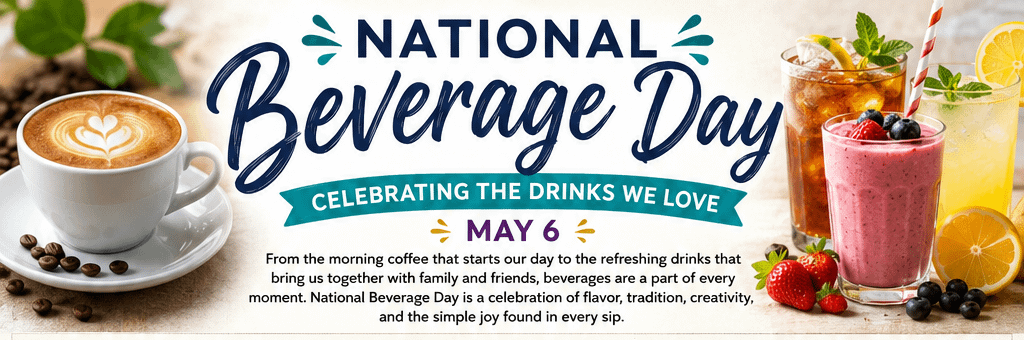
    Every year on May 6, people across the United States raise a glass in celebration of National Beverage Day, a fun and refreshing observance dedicated to the drinks we enjoy every single day. Whether it’s the first cup of coffee that starts the morning, an ice-cold lemonade on a hot afternoon, sweet tea shared with family, or a favorite smoothie after a workout, beverages are woven into nearly every part of life.

    National Beverage Day is more than just a celebration of drinks — it is a celebration of comfort, culture, creativity, hospitality, and connection. Drinks bring people together during meals, conversations, celebrations, business meetings, holidays, sporting events, and quiet moments of reflection. From simple glasses of water to handcrafted specialty creations, beverages have become part of daily routines and lifelong memories.

    The Long History of Beverages

    The story of beverages stretches back thousands of years. Since ancient times, civilizations around the world have created drinks not only for hydration but also for health, ceremonies, social gatherings, and enjoyment.

    Early cultures brewed teas using herbs and plants believed to have healing properties. Ancient Egyptians created beverages from grains and fruits. In China, tea became a major cultural tradition that still continues today. Coffee originated in regions of Africa and the Middle East before spreading across the globe and eventually becoming one of the world’s most consumed beverages.

    As trade routes expanded, new ingredients and flavors traveled between countries and cultures. Over time, beverages evolved from simple homemade drinks into massive industries filled with endless varieties and innovations.

    Today, the beverage world includes everything from classic sodas and juices to handcrafted coffees, wellness drinks, energy beverages, sparkling waters, smoothies, protein shakes, and gourmet mocktails.

    Why Beverages Matter in Everyday Life

    Beverages play a larger role in daily life than many people realize. They are tied to routines, traditions, emotions, and experiences.

    For many people, the day begins with coffee or tea. That morning drink becomes a ritual — a quiet moment before work, family responsibilities, or busy schedules begin. Others find comfort in afternoon iced tea, sports drinks after exercise, or warm cocoa during cold evenings.

    Drinks also help create social connections. Friends meet over coffee. Families gather around dinner tables with favorite beverages. Restaurants and cafés become gathering places where conversations happen and memories are made.

    Certain drinks can even trigger nostalgia and emotional memories. The smell of coffee may remind someone of childhood mornings. Homemade lemonade can bring back memories of summer vacations. Holiday drinks often become traditions passed down through generations.

    America’s Favorite Beverages

    Americans enjoy an enormous variety of drinks, and preferences often vary by region, season, and lifestyle. Some of the most popular beverages across the country include:

    Coffee

    Coffee remains one of America’s most beloved beverages. From classic black coffee to flavored lattes and cold brews, coffee culture continues growing every year. Local coffee shops and independent cafés have become central gathering places in many communities.

    Tea

    Tea is enjoyed both hot and cold, with sweet tea remaining especially popular in Southern states. Herbal teas, green teas, black teas, and specialty blends continue attracting new fans as people seek both flavor and wellness benefits.

    Lemonade

    Refreshing and timeless, lemonade remains a favorite during warm weather months. Homemade lemonade stands have even become a symbol of entrepreneurship and childhood memories.

    Soft Drinks

    Sodas have been a major part of American beverage culture for generations. While preferences have shifted toward healthier alternatives in recent years, soft drinks remain widely enjoyed.

    Smoothies and Wellness Drinks

    Health-conscious consumers continue fueling the popularity of smoothies, protein shakes, vitamin drinks, kombucha, and functional beverages designed to support energy, immunity, hydration, and fitness.

    Bottled and Sparkling Water

    Water has become one of the fastest-growing beverage categories, especially flavored sparkling waters and enhanced hydration products.

    Energy Drinks and Sports Drinks

    Busy lifestyles and fitness culture have helped energy beverages and sports drinks grow rapidly among consumers seeking performance and convenience.

    The Rise of Beverage Innovation

    The beverage industry is constantly evolving. Companies, cafés, and creators continue experimenting with new ingredients, healthier options, and visually appealing drinks that attract customers both in stores and online.

    Some of today’s biggest beverage trends include:

    Low-sugar and sugar-free drinks
    Organic and natural ingredients
    Plant-based milk alternatives
    Functional beverages with vitamins and probiotics
    Cold brew coffee
    Nitro drinks
    Protein-enhanced beverages
    Mocktails and alcohol-free creations
    Specialty café drinks
    Sparkling flavored waters
    Energy drinks with natural ingredients
    Customizable beverage experiences

    Social media has also transformed beverage culture. Eye-catching drinks with colorful layers, unique toppings, creative presentation, and latte art often become viral trends online. Consumers now look for drinks that are not only delicious but also visually memorable.

    Beverages and the Restaurant Industry

    Restaurants, cafés, food trucks, and beverage businesses play a major role in how people experience drinks today. Many businesses use beverages to create unique identities and increase customer loyalty.

    Specialty coffee shops have become community gathering spaces. Restaurants create signature drinks that customers specifically return for. Seasonal beverages like pumpkin spice lattes, summer lemonades, holiday hot chocolates, and tropical smoothies generate excitement year after year.

    For many businesses, beverage sales are also an important source of revenue. Limited-time drink promotions, happy hours, and social media drink campaigns often help attract new customers and boost engagement.

    The Cultural Importance of Drinks Around the World

    Beverages often reflect cultural traditions and heritage. Around the world, drinks carry deep meaning and symbolism.

    Tea ceremonies in Asia represent hospitality and mindfulness.
    Italian espresso culture emphasizes conversation and community.
    Latin American aguas frescas celebrate fresh fruits and vibrant flavors.
    Southern sweet tea traditions symbolize comfort and hospitality.
    Middle Eastern coffee customs often reflect respect and social connection.

    Every culture has drinks that help tell its story.

    How to Celebrate National Beverage Day

    There are countless ways to enjoy National Beverage Day. Whether simple or creative, the celebration can be fun for individuals, families, and businesses alike.

    Try Something New

    Use the day as an opportunity to explore a drink you’ve never tried before. Visit a local café or experiment with homemade recipes.

    Support Local Businesses

    Stop by a local coffee shop, smoothie bar, tea house, or restaurant and support small businesses in your community.

    Create Homemade Drinks

    Make fresh lemonade, fruit smoothies, iced coffee, herbal teas, or creative mocktails at home.

    Host a Beverage Tasting

    Invite friends or family to sample different coffees, teas, juices, or sparkling beverages.

    Share on Social Media

    Post a photo of your favorite drink and ask others to share theirs. Beverage-themed content often creates strong engagement online.

    Stay Hydrated

    National Beverage Day can also serve as a reminder to drink more water and focus on healthy hydration habits.

    The Emotional Connection to a Simple Drink

    One of the reasons beverages remain so meaningful is because they often represent comfort during both joyful and difficult times. A warm drink can calm anxiety. A cold drink can refresh a stressful day. Sharing a beverage with someone can create conversation, laughter, and connection.

    Sometimes, the simplest moments become the most memorable — sitting on a porch with coffee at sunrise, sharing sweet tea with family, enjoying lemonade on a summer afternoon, or winding down at night with hot tea.

    National Beverage Day reminds us that beverages are more than just drinks. They are part of routines, relationships, traditions, and memories that shape everyday life.

    A Toast to National Beverage Day

    No matter what your favorite beverage may be, National Beverage Day is the perfect time to slow down and appreciate the simple joy found in every sip. From coffee lovers and tea enthusiasts to smoothie fans and lemonade drinkers, everyone can join in the celebration.

    So grab your favorite cup, bottle, mug, or glass and enjoy the flavors, comfort, creativity, and connections that beverages bring into our lives every day.

    Happy National Beverage Day!

    Read More Holidays & National Days

  • National Nurses Day: Honoring the Heart of Healthcare

    Advertisements

    Every year on May 6, people across the United States pause to recognize and celebrate National Nurses Day — a day devoted to honoring the compassion, dedication, sacrifice, and strength of nurses everywhere. This meaningful observance also begins National Nurses Week, which continues through May 12, the birthday of Florence Nightingale, whose groundbreaking work forever transformed healthcare and nursing practices around the world.

    National Nurses Day is more than a healthcare observance. It is a reminder of the incredible individuals who spend their lives helping others through pain, uncertainty, healing, and hope. Nurses are there during some of life’s most emotional moments — the birth of a child, recovery from illness, difficult diagnoses, surgeries, emergencies, and even final goodbyes. Their care reaches far beyond medicine. They provide reassurance, comfort, emotional support, and human connection when people need it most.

    The Origins of National Nurses Day

    The idea of creating a national day to honor nurses dates back decades. In 1953, Dorothy Sutherland, an employee of the U.S. Department of Health, Education, and Welfare, proposed a day dedicated to recognizing the contributions of nurses. Although the proposal was not immediately accepted, efforts to establish official recognition continued for many years.

    In 1974, the International Council of Nurses declared May 12 as International Nurses Day in honor of Florence Nightingale’s birthday. Eventually, the movement gained momentum in the United States, and in 1982, President Ronald Reagan officially proclaimed May 6 as National Recognition Day for Nurses. Over time, the observance evolved into National Nurses Day and became part of National Nurses Week.

    Today, hospitals, healthcare organizations, schools, communities, and families throughout the country celebrate nurses and recognize the enormous impact they have on society every day.

    The Backbone of Healthcare

    Nurses are often described as the backbone of healthcare because they play such a vital role in patient care. They are the healthcare professionals who spend the most time with patients, often serving as the bridge between doctors, patients, and families.

    Their responsibilities go far beyond taking vital signs or administering medication. Nurses assess patient conditions, monitor progress, educate families, advocate for patient safety, assist during emergencies, and provide emotional support during some of life’s most difficult moments.

    Nurses work in countless environments, including:

    Hospitals
    Emergency rooms
    Intensive care units
    Pediatric clinics
    Nursing homes
    Rehabilitation centers
    Schools
    Military facilities
    Mental health centers
    Home healthcare services
    Community health programs

    No matter where they serve, nurses bring skill, professionalism, and compassion into every situation.

    The Heart Behind the Profession

    What makes nursing truly special is the human connection nurses create with patients and families. Nurses are often the comforting voice in moments of fear and uncertainty. They are the steady presence during long nights in hospitals and the reassuring hand patients hold during painful or emotional experiences.

    Patients may forget many details about their medical treatment, but they rarely forget how a nurse made them feel.

    Nurses often carry emotional burdens that many people never see. They witness suffering, heartbreak, trauma, and loss while continuing to care for others with patience and compassion. They celebrate recoveries and victories alongside patients while also helping families through grief and difficult decisions.

    The emotional strength required in nursing is extraordinary. Even after exhausting shifts and emotionally draining days, nurses continue to show up ready to help the next person who needs them.

    The Challenges Nurses Face

    While nursing is one of the most respected professions in the world, it is also one of the most demanding. Nurses frequently work long hours, overnight shifts, weekends, and holidays. Many spend entire shifts on their feet while managing physically and emotionally intense situations.

    Modern healthcare challenges have increased the pressures nurses face, including:

    Staff shortages
    Burnout
    Emotional exhaustion
    High patient demands
    Workplace stress
    Mental health strain
    Exposure to illness and emergencies

    The global health crises of recent years highlighted just how essential nurses truly are. During difficult times, nurses continued caring for patients despite risks to their own health and wellbeing. Their courage and commitment earned widespread appreciation and reminded the world how important healthcare workers are.

    National Nurses Day serves as an opportunity not only to thank nurses but also to recognize the importance of supporting them with better resources, mental health support, respect, and safe working conditions.

    Florence Nightingale’s Lasting Legacy

    No conversation about nursing is complete without honoring Florence Nightingale, widely regarded as the founder of modern nursing. During the Crimean War, Nightingale dramatically improved sanitation and patient care practices, helping reduce death rates among wounded soldiers.

    She became known as “The Lady with the Lamp” because of her habit of walking hospital halls late at night caring for patients.

    Her work transformed nursing into a respected and professional field focused on compassion, organization, cleanliness, and evidence-based care. The values she introduced continue to influence nursing around the world today.

    Different Types of Nurses

    Nursing is an incredibly diverse profession with many specialties and career paths. Some of the many types of nurses include:

    Registered Nurses (RNs)
    Licensed Vocational Nurses (LVNs)
    Nurse Practitioners (NPs)
    Pediatric Nurses
    Emergency Room Nurses
    Oncology Nurses
    Surgical Nurses
    ICU Nurses
    Hospice Nurses
    Labor and Delivery Nurses
    School Nurses
    Mental Health Nurses

    Each specialty requires unique skills, training, and dedication, but all nurses share the common goal of helping people heal and improving lives.

    How to Celebrate National Nurses Day

    There are many heartfelt ways to show appreciation for nurses on National Nurses Day and throughout Nurses Week.

    Say Thank You

    A simple thank-you can have a powerful impact. Nurses often work tirelessly behind the scenes, and hearing words of appreciation can mean more than people realize.

    Write a Card or Message

    Personal notes expressing gratitude can brighten a nurse’s day and remind them that their hard work matters.

    Support Local Healthcare Workers

    Businesses and communities often donate meals, snacks, coffee, or small gifts to healthcare staff during Nurses Week.

    Share Positive Stories

    Social media can be a wonderful place to honor nurses by sharing stories of nurses who made a difference in your life or the life of a loved one.

    Encourage Rest and Self-Care

    Nurses spend so much time caring for others that they often neglect their own wellbeing. Encouraging self-care, rest, and mental health support is one of the most meaningful ways to support them.

    The Lasting Impact of Nurses

    The impact nurses have on individuals and families lasts a lifetime. A nurse’s compassion during a frightening diagnosis, kindness during recovery, or comfort during grief can leave a permanent mark on someone’s heart.

    Nurses remind us that healing is not only about medicine — it is also about humanity, empathy, and connection.

    They inspire hope during difficult moments and bring comfort during uncertain times. Their work changes lives every single day, often in ways that go unseen or unrecognized.

    A Message of Gratitude to Nurses Everywhere

    On National Nurses Day, we honor the men and women who dedicate their lives to helping others. We recognize their sacrifices, resilience, compassion, and unwavering commitment to care.

    To every nurse working long shifts, comforting patients, supporting families, responding to emergencies, and showing kindness even during difficult days — thank you.

    Thank you for the care you provide.
    Thank you for the strength you show.
    Thank you for the hope you bring.
    Thank you for the lives you touch every day.

    The world is a better place because of nurses.

    Read More Holidays & National Days

  • Revenge of the Fifth: The Dark Side of Star Wars Day

    Advertisements

    Every year on May 5th, fans of the legendary Star Wars universe continue the celebration that began on May 4th—only this time, they step into the shadows. Known as Revenge of the Fifth, this unofficial holiday embraces the darker, more complex side of the galaxy, where villains rise, power is pursued, and the Force reveals its most dangerous potential.

    While Star Wars Day is filled with optimism, heroism, and the rallying cry of “May the Fourth be with you,” Revenge of the Fifth shifts the tone. It invites fans to explore what lies beyond the Jedi code—into the realm of ambition, conflict, and moral gray areas.

    The Origin of Revenge of the Fifth

    Revenge of the Fifth is a fan-created extension of Star Wars Day, cleverly playing off the title of Star Wars: Episode III – Revenge of the Sith. While May 4th became popular through a pun embraced by fans and eventually recognized by major brands and even official Star Wars channels, May 5th organically followed as a darker counterpart.

    The phrase “Revenge of the Fifth” captures the spirit of the Sith—revenge, power, and dominance. It’s not an official holiday recognized by Lucasfilm, but it has gained traction through fan communities, social media, and pop culture engagement. Over time, it has become a tradition for those who appreciate the complexity and depth of Star Wars antagonists.

    The Allure of the Dark Side

    At the heart of Revenge of the Fifth is the fascination with the dark side of the Force. Unlike the Jedi, who follow strict discipline and emotional restraint, the Sith embrace passion, ambition, and personal power. This contrast is what makes the Star Wars universe so compelling.

    Characters like Darth Vader represent more than just evil—they embody tragedy, loss, and redemption. Once a hopeful Jedi Knight, Vader’s fall shows how fear and attachment can lead even the strongest individuals astray. His story resonates because it reflects real human struggles: the battle between who we are and who we become.

    Similarly, Kylo Ren portrays inner conflict in a modern context. Torn between legacy and identity, light and darkness, Kylo Ren’s journey illustrates that the dark side is not always a clear-cut choice—it can be a path shaped by pain, expectation, and uncertainty.

    Even characters like Emperor Palpatine highlight the seductive nature of power. His calculated rise from politician to galactic ruler shows how manipulation and patience can reshape entire systems. He doesn’t just conquer—he orchestrates.

    Iconic Villains and Antiheroes

    Revenge of the Fifth gives fans a reason to celebrate some of the most memorable figures in cinematic history. These characters often steal the spotlight because they are layered, unpredictable, and powerful.

    Darth Maul, with his striking appearance and silent intensity, became a fan favorite despite limited screen time in his debut. His survival and expanded storylines in later series added depth and resilience to his character.

    Boba Fett is another example of a character who gained legendary status with minimal dialogue. His armor, demeanor, and reputation as a bounty hunter created a mystique that continues to captivate fans.

    These characters remind us that villains are not always defined by their actions alone—they are defined by their presence, their motivations, and the emotions they evoke.

    A Deeper Look at the Force

    One of the most fascinating aspects of Star Wars is the concept of the Force itself. The balance between the Jedi Order and the Sith reflects a larger philosophical question: can light exist without darkness?

    The Jedi seek harmony, selflessness, and peace, often suppressing emotion to maintain control. The Sith, on the other hand, draw strength from emotion—anger, passion, desire—and use it to fuel their power. Neither path is without consequence.

    Revenge of the Fifth encourages fans to explore these ideas more deeply. It’s not just about choosing sides—it’s about understanding the cost of each path and recognizing that both light and dark exist within everyone.

    How Fans Embrace the Day

    On Revenge of the Fifth, fans around the world celebrate in creative and meaningful ways. Social media fills with quotes from Sith Lords, discussions about favorite villains, and debates about who truly represents the dark side best.

    Many fans revisit darker chapters of the saga, particularly Star Wars: Episode III – Revenge of the Sith, which marks a turning point in the galaxy’s history. Others dive into animated series, novels, and expanded universe content that further explore Sith lore and character backstories.

    Cosplay also plays a big role, with fans dressing as their favorite villains—from masked enforcers to cloaked emperors. It’s a way to step into the story and experience the power and presence of these characters firsthand.

    The Cultural Impact

    Revenge of the Fifth highlights how deeply Star Wars has embedded itself in global culture. It’s more than a movie franchise—it’s a shared language of storytelling, symbolism, and imagination.

    The popularity of this unofficial holiday shows that fans are not just passive viewers—they actively shape the culture around what they love. By creating and celebrating Revenge of the Fifth, they’ve expanded the Star Wars experience beyond the screen.

    It also reflects a broader trend in storytelling: audiences are increasingly drawn to complex characters and morally ambiguous narratives. The clear-cut heroes and villains of the past have evolved into layered individuals whose choices and struggles feel more authentic.

    Final Thoughts

    Revenge of the Fifth is more than just a clever pun—it’s a celebration of depth, complexity, and the darker side of storytelling. It invites fans to look beyond the surface and explore the motivations, struggles, and philosophies that define the Star Wars universe.

    In a galaxy filled with heroes, it’s often the villains who leave the deepest impression. Their stories challenge us, intrigue us, and remind us that the line between light and dark is rarely as simple as it seems.

    So as May 5th arrives, take a moment to step into the shadows, reflect on the balance of the Force, and appreciate the characters who remind us that even darkness has a story worth telling.

    Read More Holidays & National Days

  • 🥪 National Hoagie Day: Celebrating America’s Iconic Sandwich

    Advertisements

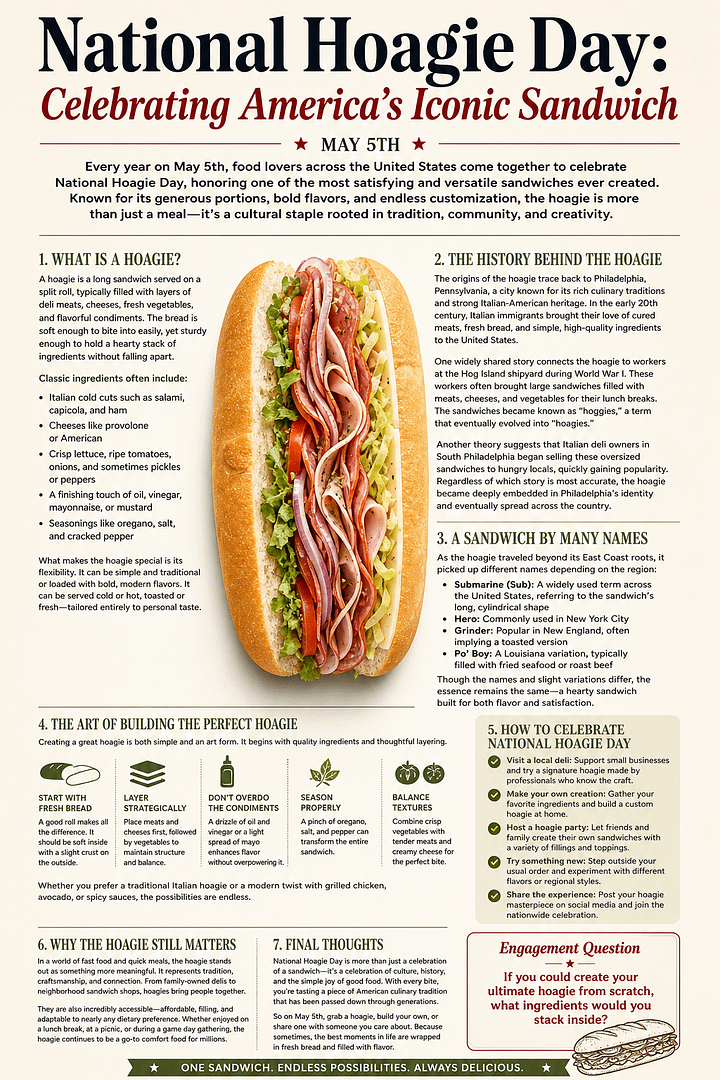
    Every year on May 5th, food lovers across the United States come together to celebrate National Hoagie Day, honoring one of the most satisfying and versatile sandwiches ever created. Known for its generous portions, bold flavors, and endless customization, the hoagie is more than just a meal—it’s a cultural staple rooted in tradition, community, and creativity.

    🥖 What Is a Hoagie?

    A hoagie is a long sandwich served on a split roll, typically filled with layers of deli meats, cheeses, fresh vegetables, and flavorful condiments. The bread is a defining feature—soft enough to bite into easily, yet sturdy enough to hold a hearty stack of ingredients without falling apart.

    While there’s no single “correct” way to build a hoagie, classic combinations often include:

    Italian cold cuts such as salami, capicola, and ham
    Cheeses like provolone or American
    Crisp lettuce, ripe tomatoes, onions, and sometimes pickles or peppers
    A finishing touch of oil, vinegar, mayonnaise, or mustard
    Seasonings like oregano, salt, and cracked pepper

    What makes the hoagie special is its flexibility. It can be simple and traditional or loaded with bold, modern flavors. It can be served cold or hot, toasted or fresh—tailored entirely to personal taste.

    📜 The History Behind the Hoagie

    The origins of the hoagie trace back to Philadelphia, a city known for its rich culinary traditions and strong Italian-American heritage. In the early 20th century, Italian immigrants brought their love of cured meats, fresh bread, and simple, high-quality ingredients to the United States.

    One widely shared story connects the hoagie to workers at the Hog Island shipyard during World War I. These workers often brought large sandwiches filled with meats, cheeses, and vegetables for their lunch breaks. The sandwiches became known as “hoggies,” a term that eventually evolved into “hoagies.”

    Another theory suggests that Italian deli owners in South Philadelphia began selling these oversized sandwiches to hungry locals, quickly gaining popularity. Regardless of which story is most accurate, the hoagie became deeply embedded in Philadelphia’s identity and eventually spread across the country.

    🌎 A Sandwich by Many Names

    As the hoagie traveled beyond its East Coast roots, it picked up different names depending on the region:

    Submarine (Sub): A widely used term across the United States, referring to the sandwich’s long, cylindrical shape
    Hero: Commonly used in New York City
    Grinder: Popular in New England, often implying a toasted version
    Po’ Boy: A Louisiana variation, typically filled with fried seafood or roast beef

    Though the names and slight variations differ, the essence remains the same—a hearty sandwich built for both flavor and satisfaction.

    🧑‍🍳 The Art of Building the Perfect Hoagie

    Creating a great hoagie is both simple and an art form. It begins with quality ingredients and thoughtful layering. Here are a few tips to elevate your hoagie game:

    Start with fresh bread: A good roll makes all the difference. It should be soft inside with a slight crust on the outside.
    Layer strategically: Place meats and cheeses first, followed by vegetables to maintain structure and balance.
    Don’t overdo the condiments: A drizzle of oil and vinegar or a light spread of mayo enhances flavor without overpowering it.
    Season properly: A pinch of oregano, salt, and pepper can transform the entire sandwich.
    Balance textures: Combine crisp vegetables with tender meats and creamy cheese for the perfect bite.

    Whether you prefer a traditional Italian hoagie or a modern twist with grilled chicken, avocado, or spicy sauces, the possibilities are endless.

    🎉 How to Celebrate National Hoagie Day

    National Hoagie Day is the perfect excuse to indulge in this classic sandwich and share it with others. Here are some meaningful ways to celebrate:

    Visit a local deli: Support small businesses and try a signature hoagie made by professionals who know the craft
    Make your own creation: Gather your favorite ingredients and build a custom hoagie at home
    Host a hoagie party: Let friends and family create their own sandwiches with a variety of fillings and toppings
    Try something new: Step outside your usual order and experiment with different flavors or regional styles
    Share the experience: Post your hoagie masterpiece on social media and join the nationwide celebration
    ❤️ Why the Hoagie Still Matters

    In a world of fast food and quick meals, the hoagie stands out as something more meaningful. It represents tradition, craftsmanship, and connection. From family-owned delis to neighborhood sandwich shops, hoagies bring people together.

    They are also incredibly accessible—affordable, filling, and adaptable to nearly any dietary preference. Whether enjoyed on a lunch break, at a picnic, or during a game day gathering, the hoagie continues to be a go-to comfort food for millions.

    🥪 Final Thoughts

    National Hoagie Day is more than just a celebration of a sandwich—it’s a celebration of culture, history, and the simple joy of good food. With every bite, you’re tasting a piece of American culinary tradition that has been passed down through generations.

    So on May 5th, grab a hoagie, build your own, or share one with someone you care about. Because sometimes, the best moments in life are wrapped in fresh bread and filled with flavor.

    Read More Holidays & National Days

  • Cinco de Mayo: More Than a Celebration

    Advertisements

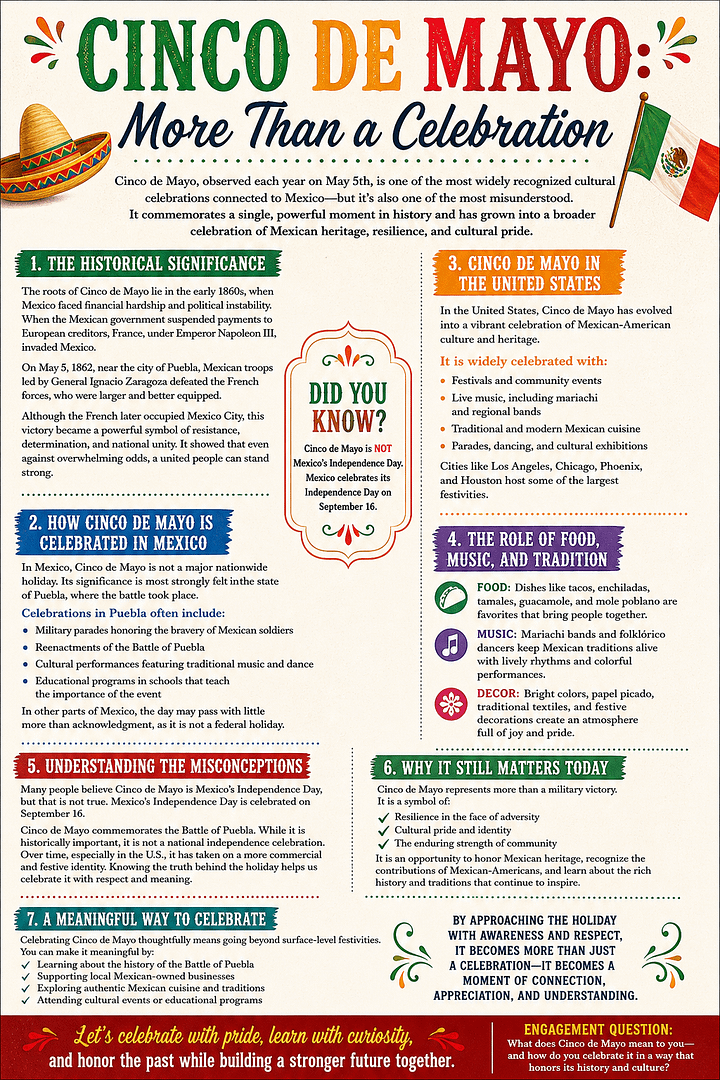
    Cinco de Mayo, observed each year on May 5th, is one of the most widely recognized cultural celebrations connected to Mexico—but it’s also one of the most misunderstood. Often mistaken for Mexico’s Independence Day, the holiday actually commemorates a single, powerful moment in history: the Mexican army’s victory over French forces at the Battle of Puebla in 1862. Beyond that historic event, Cinco de Mayo has grown into a broader celebration of Mexican heritage, resilience, and cultural pride—especially in the United States.

    📜 The Historical Significance

    The roots of Cinco de Mayo lie in a time of political and financial struggle for Mexico. In the early 1860s, Mexico was deeply in debt following years of internal conflict. When the Mexican government temporarily suspended payments to European creditors, France, under Emperor Napoleon III, saw an opportunity to expand its influence in the Americas.

    French forces invaded Mexico, expecting a swift victory. However, on May 5, 1862, near the city of Puebla, Mexican troops led by General Ignacio Zaragoza mounted a courageous defense. Despite being outnumbered and less equipped, the Mexican army defeated the French forces in a stunning upset.

    While the victory did not end the war—France would later occupy Mexico City—it became a powerful symbol of resistance, determination, and national unity. The Battle of Puebla showed that even in the face of overwhelming odds, a committed and unified people could stand their ground.

    🇲🇽 How Cinco de Mayo Is Celebrated in Mexico

    In Mexico, Cinco de Mayo is not a major nationwide holiday. Its significance is most strongly felt in the state of Puebla, where the battle took place. There, the day is marked with pride and historical reflection.

    Celebrations in Puebla often include:

    Military parades honoring the bravery of Mexican soldiers
    Reenactments of the Battle of Puebla, bringing history to life
    Cultural performances showcasing traditional music and dance
    Educational programs in schools that teach the importance of the event

    In other parts of Mexico, the day may pass with little more than acknowledgment, as it is not considered a federal holiday.

    🇺🇸 Cinco de Mayo in the United States

    In the United States, Cinco de Mayo has evolved into a much larger cultural celebration, particularly in communities with strong Mexican-American roots. The holiday began gaining popularity in the U.S. during the 20th century, especially as a way for Mexican-Americans to celebrate their heritage and identity.

    Today, it is widely celebrated across the country with:

    Festivals and community events
    Live music performances, including mariachi and regional bands
    Traditional and modern Mexican cuisine
    Parades, dancing, and cultural exhibitions

    Cities like Los Angeles, Chicago, Phoenix, and Houston host some of the largest festivities. For many, the day serves as a way to honor Mexican culture while also bringing communities together through food, music, and shared experiences.

    🌮 The Role of Food, Music, and Tradition

    Cinco de Mayo is often associated with vibrant celebrations filled with flavor, sound, and color. Food plays a central role, with popular dishes such as tacos, enchiladas, tamales, guacamole, and mole poblano taking center stage. These dishes reflect the rich culinary traditions of Mexico, blending indigenous and Spanish influences.

    Music is equally important. Mariachi bands, known for their lively rhythms and traditional attire, are a staple of many celebrations. Folklórico dancers, dressed in colorful, flowing garments, perform traditional dances that tell stories of Mexico’s regions and history.

    Decorations often include bright colors, papel picado (decorative paper banners), and festive displays that create an atmosphere of joy and celebration.

    ⚠️ Understanding the Misconceptions

    One of the most common misconceptions is that Cinco de Mayo marks Mexico’s independence from Spain. In reality, Mexico’s Independence Day is celebrated on September 16 and commemorates the start of the Mexican War of Independence in 1810.

    Cinco de Mayo is specifically about the Battle of Puebla. While it is historically significant, it is not a national independence celebration. Over time, particularly in the U.S., the holiday has taken on a more commercial and festive identity, sometimes overshadowing its historical roots.

    Understanding the true meaning behind Cinco de Mayo allows for a more respectful and meaningful celebration—one that honors history rather than simply using the day as an excuse to party.

    🌎 Cultural Significance Today

    Today, Cinco de Mayo represents more than a military victory. It has become a symbol of:

    Resilience in the face of adversity
    Cultural pride and identity
    The enduring strength of community

    For Mexican-Americans, the holiday can be a powerful expression of heritage, offering a chance to celebrate traditions, share stories, and pass cultural values down through generations.

    At the same time, it serves as an opportunity for others to learn about Mexican history and culture in a respectful and appreciative way.

    ❤️ A Meaningful Way to Celebrate

    Celebrating Cinco de Mayo thoughtfully means going beyond surface-level festivities. It can include:

    Learning about the history of the Battle of Puebla
    Supporting local Mexican-owned businesses
    Exploring authentic Mexican cuisine and traditions
    Attending cultural events or educational programs

    By approaching the holiday with awareness and respect, it becomes more than just a celebration—it becomes a moment of connection, appreciation, and understanding.

    Read More Holidays & National Days

  • ☕ Supermassive Black Coffee: Bold Flavor Meets a Rebel Mindset

    Advertisements

    SupermassiveBlackCoffee.com is not just another coffee brand—it’s a bold, identity-driven experience that combines artisan coffee craftsmanship with a message of independence and nonconformity. Built for those who want more than just caffeine, the brand blends premium coffee with a strong cultural voice.

    👉 Get 20% off your order here:
    Claim 20% Off Supermassive Black Coffee

    (Use your exclusive link: https://supermassiveblackcoffee.com/?ref=BRETTMURPHY
    )

    ☕ The Coffee: Organic, Fire-Roasted Excellence

    At its core, Supermassive Black Coffee is focused on quality and process. The brand highlights:

    100% organic gourmet coffee beans
    A Victorian-era fire-roasting method that enhances depth and flavor
    Flavor notes that include:
    Dark chocolate richness
    Smooth, smoky finish
    Low acidity and full-bodied taste

    This traditional roasting technique caramelizes the beans’ natural sugars, producing a bold yet smooth cup without bitterness, something many modern coffee drinkers look for.

    The flagship product, Blend No. 1, is available in multiple sizes and is designed to be enjoyed black—no cream or sugar required.

    🔥 More Than Coffee: A Brand with a Message

    What sets this brand apart is its unapologetic identity.

    Supermassive Black Coffee leans heavily into themes like:

    “Break the chains of mediocrity”
    “Fuel your rebellion”
    “Defy the ordinary”

    The brand positions itself as an alternative to:

    Corporate coffee giants
    Mass-produced, chemical-heavy products
    Mainstream, “safe” branding

    Instead, it appeals to independent thinkers and those who want their purchases to reflect their mindset.

    🧠 Content & Culture: The Blog Experience

    Beyond coffee, the site features a blog that dives into broader topics, including:

    Cultural commentary
    Corporate criticism
    Digital freedom and independence

    This reinforces the idea that the brand is not just selling a product—it’s building a community and philosophy around freedom of thought.

    ⭐ Customer Feedback & Experience

    Reviews on the site highlight strong reactions from customers:

    Many praise the coffee for being:
    Smooth and rich
    Easy to drink black
    Low in acidity
    Some mixed feedback includes:
    Occasional shipping delays
    Limited roast options (mostly medium to dark)

    Overall, the product seems to resonate most with people who enjoy bold, dark roasts and clean flavor profiles.

    📦 Products & Availability

    The current lineup is simple and focused:

    Blend No. 1 (12 oz)
    Blend No. 1 (5 lb bulk option)

    This limited selection reflects a quality-over-quantity approach, rather than offering dozens of blends.

    🧭 Final Thoughts

    SupermassiveBlackCoffee.com stands out in a crowded coffee market by combining:

    Premium organic coffee
    Old-world roasting techniques
    A strong, rebellious brand identity

    It’s not for everyone—and that’s exactly the point.

    For those who want their daily coffee to represent something bigger, this brand delivers both flavor and philosophy in every cup.

    Read More Of Drinks And Cocktails

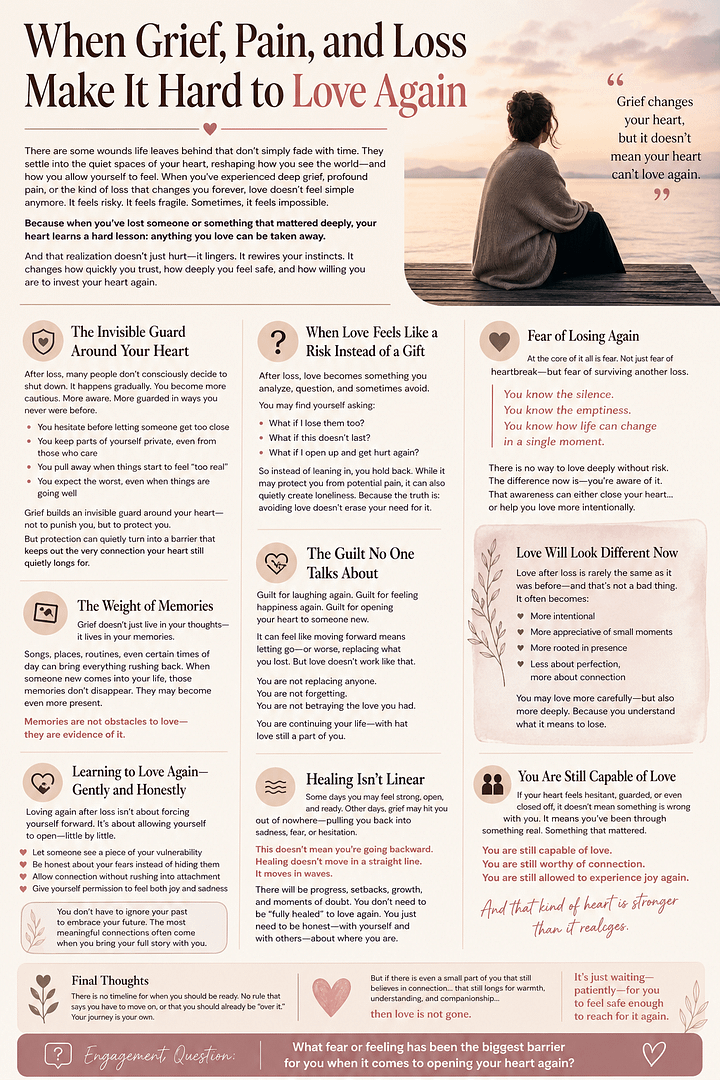
  • When Grief, Pain, and Loss Make It Hard to Love Again

    Advertisements

    There are some wounds life leaves behind that don’t simply fade with time. They settle into the quiet spaces of your heart, reshaping how you see the world—and how you allow yourself to feel. When you’ve experienced deep grief, profound pain, or the kind of loss that changes you forever, love doesn’t feel simple anymore. It feels risky. It feels fragile. Sometimes, it feels impossible.

    Because when you’ve lost someone or something that mattered deeply, your heart learns a hard lesson: anything you love can be taken away.

    And that realization doesn’t just hurt—it lingers. It rewires your instincts. It changes how quickly you trust, how deeply you feel safe, and how willing you are to invest your heart again.

    The Invisible Guard Around Your Heart

    After loss, many people don’t consciously decide to shut down. It happens gradually. You become more cautious. More aware. More guarded in ways you never were before.

    You might notice:

    You hesitate before letting someone get too close
    You keep parts of yourself private, even from those who care
    You pull away when things start to feel “too real”
    You expect the worst, even when things are going well

    Grief builds an invisible guard around your heart—not to punish you, but to protect you.

    It whispers:

    “Don’t get too attached.”
    “Don’t feel too deeply.”
    “You won’t survive that kind of pain again.”

    And in a way, that voice is rooted in truth—you did go through something painful. You did survive something that changed you. But the protection it offers can slowly become a barrier that keeps out the very connection your heart still quietly longs for.

    When Love Feels Like a Risk Instead of a Gift

    Before loss, love may have felt natural—something you leaned into without overthinking. But after loss, love becomes something you analyze, question, and sometimes avoid altogether.

    You may find yourself constantly asking:

    What if I lose them too?
    What if this doesn’t last?
    What if I open up and get hurt again?

    So instead of leaning in, you hold back.

    You might choose emotional distance over vulnerability. You may convince yourself that being alone is easier—safer—less complicated. And while that may protect you from potential pain, it can also quietly create loneliness.

    Because the truth is: avoiding love doesn’t erase your need for it.

    The Weight of Memories

    Grief doesn’t just live in your thoughts—it lives in your memories.

    Songs, places, routines, even certain times of day can bring everything rushing back. If you lost a partner, a child, or someone deeply connected to your life, those memories can feel sacred—and sometimes overwhelming.

    When someone new comes into your life, those memories don’t disappear. In fact, they may become even more present.

    You might compare without meaning to.
    You might feel emotional when you least expect it.
    You might struggle with moments where past and present collide.

    And that can make loving again feel complicated.

    But memories are not obstacles to love—they are evidence of it.

    The Guilt No One Talks About

    One of the quietest struggles people face after loss is guilt.

    Guilt for laughing again.
    Guilt for feeling happiness again.
    Guilt for opening your heart to someone new.

    It can feel like moving forward means letting go—or worse, replacing what you lost.

    But love doesn’t work like that.

    You are not replacing anyone.
    You are not forgetting.
    You are not betraying the love you had.

    You are continuing your life—with that love still a part of you.

    Grief and love can coexist. You can carry what you lost and still make space for something new.

    Fear of Losing Again

    At the core of it all is fear.

    Not just fear of heartbreak—but fear of surviving another loss.

    Because you already know what that feels like.

    You know the silence.
    You know the emptiness.
    You know how life can change in a single moment.

    And that kind of awareness changes you.

    It makes you more careful. More guarded. Sometimes even distant.

    But here’s the reality most people struggle to accept:
    There is no way to love deeply without risk.

    Love has always carried the possibility of loss. The difference now is—you’re aware of it.

    And that awareness can either close your heart… or help you love more intentionally.

    Healing Isn’t Linear

    Some days you may feel strong, open, and ready. Other days, grief may hit you out of nowhere—pulling you back into sadness, fear, or hesitation.

    This doesn’t mean you’re going backward.

    Healing doesn’t move in a straight line.

    It moves in waves.

    There will be progress, setbacks, growth, and moments of doubt. You might feel ready one day and unsure the next. That’s part of the process.

    You don’t need to be “fully healed” to love again. You just need to be honest—with yourself and with others—about where you are.

    Learning to Love Again—Gently and Honestly

    Loving again after loss isn’t about forcing yourself forward. It’s about allowing yourself to open—little by little.

    It may look like:

    Letting someone see a piece of your vulnerability
    Being honest about your fears instead of hiding them
    Allowing connection without rushing into attachment
    Giving yourself permission to feel both joy and sadness

    You don’t have to ignore your past to embrace your future.

    In fact, the most meaningful connections often come when you bring your full story with you.

    Love Will Look Different Now

    Love after loss is rarely the same as it was before—and that’s not a bad thing.

    It often becomes:

    More intentional
    More appreciative of small moments
    More rooted in presence than expectation
    Less about perfection, more about connection

    You may love more carefully—but also more deeply.

    Because you understand what it means to lose.

    You Are Still Capable of Love

    If your heart feels hesitant, guarded, or even closed off, it doesn’t mean something is wrong with you.

    It means you’ve been through something real.

    Something that mattered.

    Something that changed you.

    And that kind of heart—the one that has loved deeply, lost painfully, and still continues—is not broken beyond repair.

    It’s stronger than it realizes.

    You are still capable of love.
    You are still worthy of connection.
    And you are still allowed to experience joy again.

    Final Thoughts

    There is no timeline for when you should be ready. No rule that says you have to move on, or that you should already be “over it.”

    Your journey is your own.

    But if there is even a small part of you that still believes in connection…
    that still longs for warmth, understanding, and companionship…

    then love is not gone.

    It’s just waiting—patiently—for you to feel safe enough to reach for it again.

    And when you do, it won’t erase your past.

    It will simply become part of your healing.

    A Father’s Guide to Surviving the Loss of a Child

    Grief & Child Loss


  • Star Wars Day: May the Fourth Be With You

    Advertisements

    Every year on May 4th, fans across the globe unite to celebrate one of the most iconic franchises in entertainment history—Star Wars. Known as Star Wars Day, the date is a clever nod to the legendary phrase, “May the Force be with you,” transformed into the pun-filled greeting: “May the Fourth be with you.” What began as a simple play on words has evolved into a worldwide cultural phenomenon that bridges generations, cultures, and fandoms.

    The Origin of Star Wars Day

    While the films themselves began with the release of Star Wars: Episode IV – A New Hope in 1977, Star Wars Day wasn’t officially recognized until decades later. The phrase “May the Fourth be with you” first appeared in 1979 in a British newspaper celebrating Margaret Thatcher’s election victory.

    Over time, fans embraced the phrase, sharing it across forums, fan clubs, and eventually social media. By the early 2000s, the celebration had gained serious traction, with organized events, screenings, and conventions. Today, even major brands, streaming platforms, and official Star Wars channels participate—cementing May 4th as an unofficial global holiday.

    A Galaxy That Changed Pop Culture

    From its groundbreaking special effects to its mythological storytelling, Star Wars revolutionized cinema. Created by visionary filmmaker George Lucas, the saga introduced audiences to a universe filled with heroes, villains, and complex moral choices.

    Legendary characters like Luke Skywalker, Darth Vader, and Yoda have become deeply embedded in global culture. Quotes, symbols, and themes from the franchise appear everywhere—from classrooms to boardrooms—often used as metaphors for leadership, resilience, and personal growth.

    The influence extends far beyond film:

    Technology & filmmaking: Pioneered visual effects and sound design techniques
    Merchandising: One of the most successful franchises in product history
    Expanded universe: Books, comics, animated series, and live-action shows
    Gaming: Immersive Star Wars worlds that let fans live the adventure
    The Philosophy of the Force

    At the heart of Star Wars lies the concept of the Force—a spiritual energy field that connects all living things. Its dual nature, the light side and the dark side, reflects timeless human struggles between good and evil, discipline and temptation, hope and fear.

    Jedi teachings emphasize:

    Balance and inner peace
    Selflessness and service to others
    Trust in something greater than oneself

    Meanwhile, the Sith represent ambition, power, and emotional intensity—often showing how unchecked desire can lead to destruction. This philosophical depth is one reason Star Wars resonates far beyond entertainment—it speaks to the human condition.

    How Fans Celebrate Star Wars Day

    Star Wars Day is more than just watching the movies—it’s an immersive, creative celebration of fandom that brings people together in unique and meaningful ways.

    Popular Traditions
    Movie marathons: Watching the saga in release or chronological order
    Cosplay events: Fans dress as Jedi, Sith, droids, and bounty hunters
    Lightsaber duels: Friendly competitions and demonstrations
    Themed parties: Star Wars-inspired food, drinks, and decorations
    Fan art & content creation: Sharing creativity across social platforms
    Community & Events

    Many cities host fan gatherings, trivia nights, and charity events. Schools and families often use the day as a fun way to bond, introducing younger generations to the saga.

    The Role of Community and Legacy

    What truly makes Star Wars Day powerful is its community. Fans aren’t just spectators—they are storytellers, artists, collectors, and lifelong enthusiasts. Generations of families share the films together, creating traditions that pass from parent to child.

    The franchise has also inspired countless creators, filmmakers, and dreamers to pursue storytelling, design, and innovation. Its legacy continues to grow with new series, characters, and interpretations that keep the galaxy alive for future audiences.

    Why Star Wars Still Matters

    Decades after its debut, Star Wars remains relevant because it taps into universal truths:

    Hope can rise even in darkness
    Redemption is always possible
    Courage often comes from unlikely heroes
    Unity and friendship can overcome fear

    In a constantly changing world, these messages continue to resonate, offering both escapism and inspiration.

    May the Fourth—and the Force—Be With You

    Whether you’re a lifelong fan who knows every line or someone just stepping into the galaxy for the first time, Star Wars Day is a celebration of imagination, storytelling, and connection.

    So fire up your favorite film, grab your lightsaber, and take a moment to appreciate the journey. Because in the end, Star Wars is more than a story—it’s a shared experience that reminds us all:

    The Force is with us—always. 🌌✨

    Read More Holidays & National Days

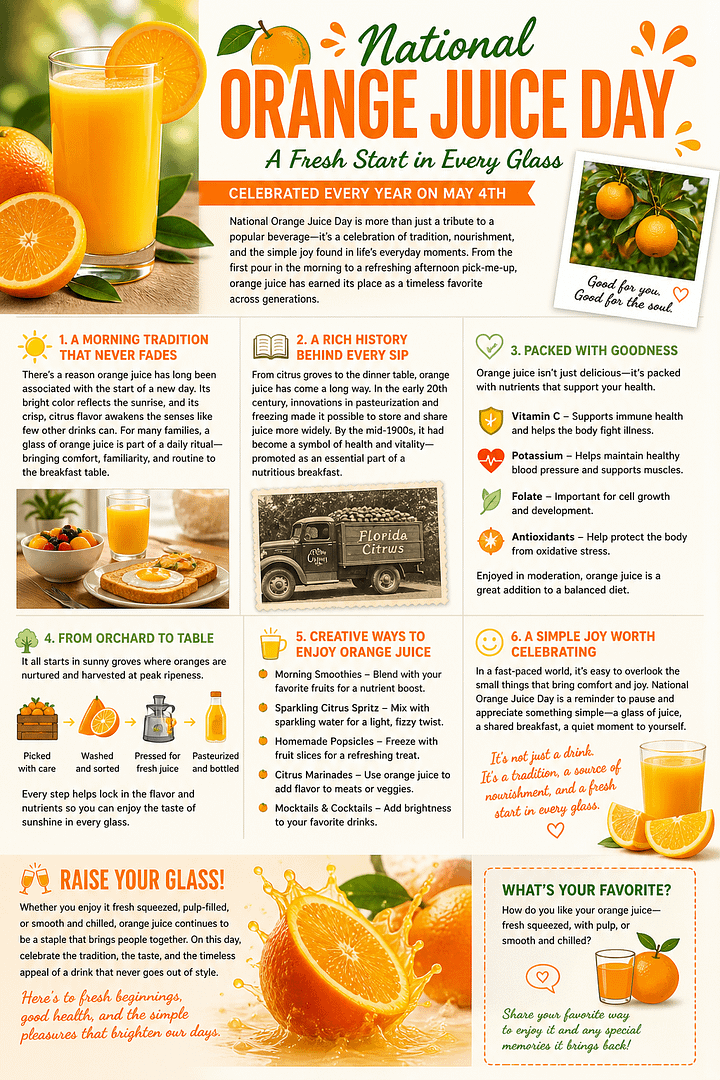
  • 🍊 National Orange Juice Day: A Fresh Start in Every Glass

    Advertisements

    National Orange Juice Day, celebrated each year on May 4th, is more than just a tribute to a popular beverage—it’s a celebration of tradition, nourishment, and the simple joy found in life’s everyday moments. From the first pour in the morning to a refreshing afternoon pick-me-up, orange juice has earned its place as a timeless favorite across generations.

    🌞 A Morning Tradition That Never Fades

    There’s a reason orange juice has long been associated with the start of a new day. Its bright color reflects the sunrise, and its crisp, citrus flavor awakens the senses like few other drinks can. For many families, pouring a glass of orange juice is part of a daily ritual—something that brings a sense of comfort, familiarity, and routine.

    Think about the memories tied to it: sitting around the breakfast table, sharing stories before heading out the door, or enjoying a quiet morning with a warm meal and a cold glass of juice. These small moments add up, and orange juice is often right there in the middle of them.

    🍊 A Rich History Behind Every Sip

    Orange juice didn’t always come in neatly packaged cartons. Its journey began with fresh oranges grown in warm climates, especially in places like Florida and California, where citrus farming became a major industry.

    In the early 20th century, advancements in pasteurization and freezing technology made it possible to store and distribute orange juice more widely. This innovation helped transform it from a seasonal treat into a household staple. By the mid-1900s, orange juice had become a symbol of health and vitality, often promoted as an essential part of a nutritious breakfast.

    Today, whether you prefer freshly squeezed juice or convenient bottled options, every glass carries a bit of that history.

    💪 Packed with Goodness

    One of the biggest reasons orange juice remains so popular is its impressive nutritional value. It’s widely recognized as an excellent source of vitamin C, which plays a key role in supporting the immune system and helping the body fight off illness.

    But the benefits don’t stop there. Orange juice also contains:

    Potassium, which supports heart and muscle function
    Folate, important for cell growth and development
    Natural antioxidants, which help protect the body from oxidative stress

    While it’s best enjoyed in moderation due to its natural sugar content, orange juice can absolutely be part of a healthy and balanced diet.

    🌿 From Orchard to Table

    There’s something special about understanding where your food and drink come from. Orange juice begins in sun-soaked groves, where oranges are carefully grown, nurtured, and harvested at peak ripeness.

    After picking, the fruit is washed, sorted, and pressed to extract its juice. Depending on the type, it may be pasteurized, concentrated, or bottled fresh. Each step is designed to preserve flavor and quality, ensuring that what reaches your glass is as close to nature as possible.

    For those who enjoy a more hands-on approach, squeezing your own oranges at home adds an extra level of appreciation. It connects you directly to the process and delivers a taste that’s hard to beat.

    🍹 Creative Ways to Enjoy Orange Juice

    While a classic glass of orange juice is always a great choice, there are plenty of ways to get creative and make the most of this refreshing drink:

    Morning Smoothies – Blend orange juice with fruits like bananas, strawberries, or mango for a nutrient-packed start
    Sparkling Citrus Spritz – Mix orange juice with sparkling water for a light, fizzy twist
    Homemade Popsicles – Freeze orange juice with slices of fruit for a refreshing treat
    Citrus Marinades – Use orange juice as a base for marinades to add flavor to meats or vegetables
    Mocktails & Cocktails – From simple blends to classics like mimosas, orange juice adds brightness to any drink
    ❤️ A Simple Joy Worth Celebrating

    In a fast-paced world, it’s easy to overlook the small things that bring comfort and joy. National Orange Juice Day is a reminder to pause and appreciate something simple—a glass of juice, a shared breakfast, a quiet moment to yourself.

    It’s not just about the drink itself, but what it represents: nourishment, energy, and a fresh start. Sometimes, the smallest rituals can have the biggest impact on how we feel.

    So today, take a moment. Pour a glass. Sit down. Breathe. Enjoy the flavor, the refreshment, and the meaning behind it.

    🥂 Raise Your Glass

    Whether you enjoy it fresh squeezed, pulp-filled, or smooth and chilled, orange juice continues to be a staple that brings people together. On this day, celebrate the tradition, the taste, and the timeless appeal of a drink that never goes out of style.

    🍊 Here’s to fresh beginnings, good health, and the simple pleasures that brighten our days.

    Read More Holidays & National Days

Exit mobile version