Blog

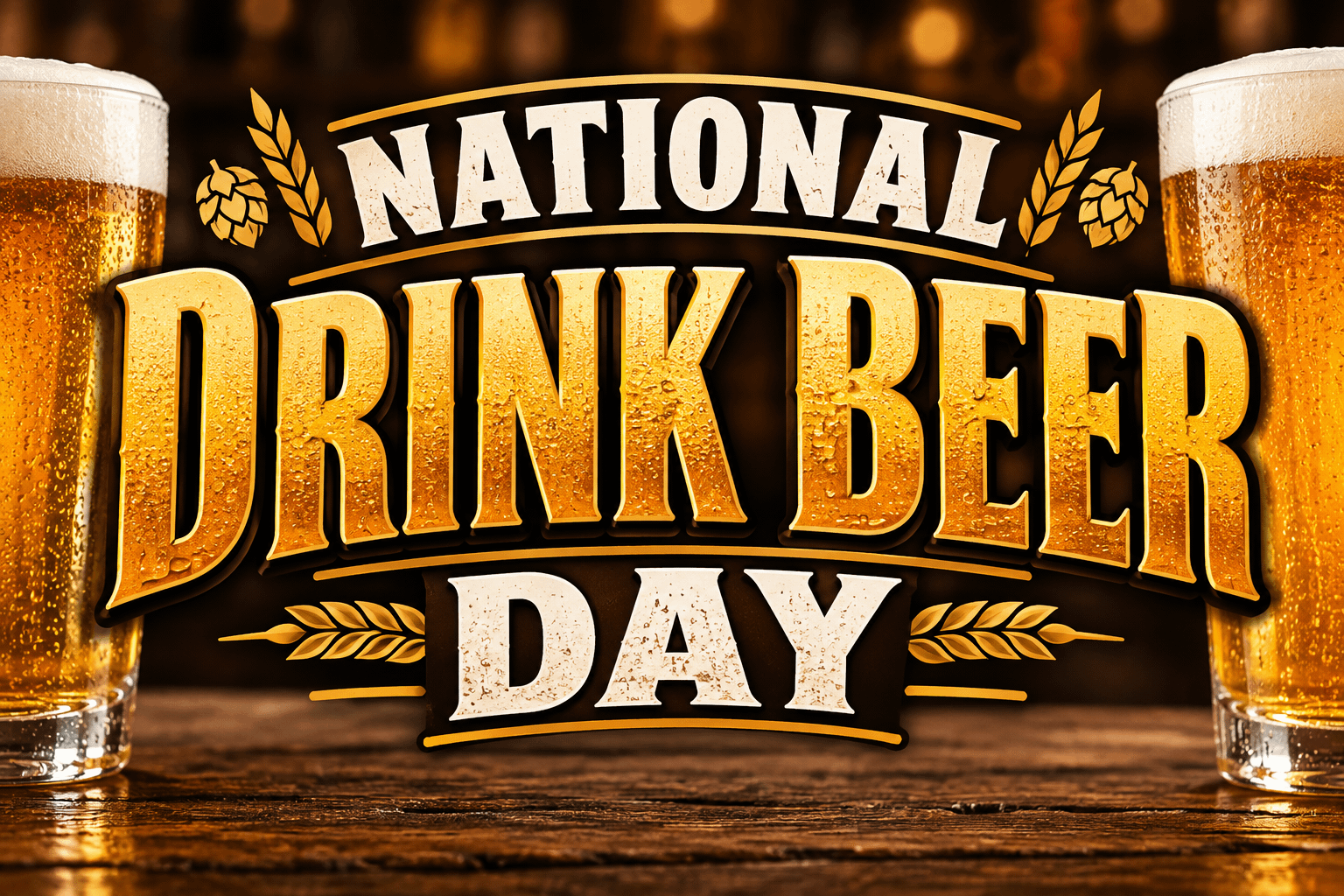
  • National Drink Beer Day: Raise a Glass to One of the World’s Oldest Drinks

    National Drink Beer Day: Raise a Glass to One of the World’s Oldest Drinks

    Advertisements

    Every year on September 28, beer lovers have a simple reason to raise a glass: National Drink Beer Day.

    Beer has been part of human culture for thousands of years. It has been enjoyed at celebrations, served alongside meals, shared among friends, and produced by everyone from small neighborhood breweries to major brewing companies. National Drink Beer Day is an opportunity to appreciate that long history while discovering the enormous variety of beer available today.

    Whether you prefer a crisp lager, a hoppy IPA, a smooth stout, a refreshing wheat beer, or an alcohol-free brew, September 28 is a day to celebrate the traditions, craftsmanship, and social experiences surrounding beer.

    A Drink With Thousands of Years of History

    Beer isn’t a modern invention.

    Evidence of fermented grain beverages goes back thousands of years, and brewing developed alongside some of the world’s earliest agricultural societies. Ancient civilizations learned that grains, water, and fermentation could produce a flavorful beverage that eventually evolved into what we recognize as beer today.

    The ancient Mesopotamians were particularly well known for brewing. Beer became part of everyday life, commerce, religious practices, and social gatherings.

    Brewing traditions continued to develop as techniques spread across cultures and generations.

    Over time, brewers discovered how different grains, fermentation methods, herbs, hops, temperatures, and storage techniques could dramatically change the finished drink.

    Eventually, beer became one of the world’s most recognizable beverages.

    What Exactly Is Beer?

    At its simplest, beer is generally made using four fundamental ingredients:

    Water makes up most of the finished beverage.

    Malted grain, often barley, provides fermentable sugars as well as much of the beer’s flavor and color.

    Hops contribute bitterness and aroma while helping balance the sweetness from malt.

    Yeast converts sugars into alcohol and carbon dioxide during fermentation.

    That sounds simple, but changing any of those ingredients—or how they’re handled—can create dramatically different results.

    Roasting malt longer can produce darker flavors reminiscent of coffee, caramel, toast, or chocolate.

    Different hop varieties can contribute citrus, pine, tropical fruit, floral, herbal, or earthy characteristics.

    Different yeasts can produce their own distinctive flavors and aromas.

    This versatility helps explain why beer comes in so many different styles.

    Exploring Different Types of Beer

    National Drink Beer Day can be an opportunity to try something outside your usual order.

    Lagers are often crisp, refreshing, and clean tasting. This broad family includes many familiar American lagers as well as pilsners and numerous traditional European styles.

    Pale ales typically provide a balance between malt and hops, although individual examples can vary considerably.

    India pale ales (IPAs) tend to emphasize hops. Depending on the recipe, they can feature citrus, tropical fruit, pine, floral, or intensely bitter characteristics.

    Wheat beers use a significant amount of wheat and are frequently refreshing, making them popular during warmer weather.

    Stouts are dark beers commonly associated with roasted flavors such as coffee, chocolate, caramel, or toasted grain.

    Porters are another dark style with rich malt characteristics and a long brewing history.

    Sour beers intentionally incorporate tart or acidic characteristics and can sometimes include fruit.

    And those are only a few examples.

    Modern breweries continue experimenting with ingredients and brewing methods, producing everything from traditional recipes to unusual seasonal creations.

    The Rise of Craft Beer

    One of the biggest changes in modern beer culture has been the growth of independent and craft brewing.

    Smaller breweries have helped introduce consumers to an enormous range of styles and flavors. Taprooms have also become community gathering places where people can sample locally produced beers and learn more about brewing.

    Many breweries release seasonal offerings throughout the year.

    Fall might bring Oktoberfest-style lagers, amber ales, pumpkin beers, and darker malt-forward selections.

    Winter often brings stronger ales, porters, stouts, and spiced seasonal releases.

    Spring and summer frequently feature lighter lagers, wheat beers, fruit beers, and refreshing pale ales.

    National Drink Beer Day falls right around the beginning of fall, making it a particularly interesting time to explore seasonal selections.

    Beer and Food

    Beer can also be paired with food much like wine.

    A cold lager can work well alongside pizza, burgers, fried foods, and grilled dishes.

    IPAs can complement spicy foods, barbecue, and strongly flavored dishes.

    Wheat beers can pair nicely with salads, seafood, chicken, and lighter meals.

    Porters and stouts can complement smoked meats, rich stews, chocolate desserts, and other bold foods.

    There aren’t absolute rules, however.

    One of the enjoyable parts of pairing food and beer is experimenting until you discover combinations you personally enjoy.

    Beer and Pizza: A Classic Combination

    Few food-and-drink combinations are as familiar as pizza and beer.

    The carbonation of beer can provide a refreshing contrast to melted cheese, while hops can balance rich or greasy toppings. Malt flavors can also complement toasted pizza crust.

    Different pizzas offer opportunities for different beer pairings.

    A traditional pepperoni pizza might work well with a lager, pale ale, or IPA. A meat-heavy pizza can stand up to something richer or hoppier, while a vegetable pizza might pair nicely with a lighter lager or wheat beer.

    Ultimately, the best combination is simply the one you enjoy.

    Support a Local Brewery

    National Drink Beer Day can also be a reason to explore your local brewing community.

    Independent breweries often create beers that aren’t widely distributed outside their immediate region. Visiting a local taproom gives you an opportunity to discover those beers while supporting a local business.

    Consider ordering a flight rather than committing to one full serving. A tasting flight allows you to compare several styles side by side and discover differences you might otherwise overlook.

    You might find that the style you thought you disliked simply wasn’t represented by the right beer.

    You Don’t Have to Drink Alcohol to Participate

    Beer culture has changed significantly in recent years, including the growing availability of nonalcoholic and alcohol-free beers.

    People avoid alcohol for many different reasons, and nobody needs alcohol to participate in the social side of the day.

    Modern alcohol-free brewing offers lagers, IPAs, wheat beers, dark beers, and other styles designed to provide familiar beer flavors without the same alcohol content.

    You can also simply enjoy another favorite beverage while spending time with friends who are celebrating.

    The important part is enjoying the occasion in a way that works for you.

    How to Celebrate National Drink Beer Day

    There are plenty of ways to recognize September 28. You could visit a local brewery, order a beer you’ve never tried, create a small tasting flight at home, pair a favorite beer with dinner, learn about the history of brewing, or invite a few friends over for pizza and drinks.

    You could even turn the occasion into an informal tasting.

    Choose several noticeably different styles—perhaps a pilsner, wheat beer, IPA, amber ale, and stout. Pour small samples and compare their appearance, aroma, bitterness, sweetness, body, and finish.

    It can make you appreciate just how different two beverages made from essentially the same basic ingredients can become.

    Celebrate Responsibly

    National Drink Beer Day should always be celebrated responsibly.

    If you choose an alcoholic beer, know your limits and never drink and drive. Arrange a designated driver, use a rideshare or taxi, take public transportation where available, or simply celebrate at home.

    Anyone who doesn’t drink alcohol should feel completely comfortable skipping it.

    Celebrating a national day is supposed to be fun—not an obligation to drink.

    Raise a Glass on September 28

    National Drink Beer Day celebrates more than what’s inside the glass.

    Beer represents thousands of years of brewing history, evolving traditions, craftsmanship, experimentation, food culture, and countless social gatherings.

    So on September 28, you might crack open an old favorite, discover something brewed locally, experiment with a new style, pair a beer with your favorite pizza, or enjoy an alcohol-free alternative.

    Whatever you choose, enjoy it responsibly and appreciate the remarkable history behind one of humanity’s oldest fermented beverages.

    What beer style would you choose to celebrate National Drink Beer Day?

  • History & Culture of the Day: September 28

    Advertisements

    September 28 is a date filled with discoveries, traditions, cultural observances, scientific breakthroughs, and moments that changed the course of history. From Alexander Fleming’s discovery of penicillin to celebrations honoring teachers, knowledge, and public health, the day offers a fascinating look at how human achievement can shape generations.

    Alexander Fleming and the Discovery That Changed Medicine

    One of the most important events associated with September 28 happened in 1928, when Scottish bacteriologist Alexander Fleming noticed something unusual in his laboratory.

    Fleming had been studying Staphylococcus bacteria when he observed that mold contaminating one of his culture dishes had prevented bacteria from growing around it. That observation eventually led to the identification of penicillin.

    The discovery helped launch the antibiotic era and transformed modern medicine. Antibiotics made previously dangerous bacterial infections far more treatable and eventually became essential to surgery, battlefield medicine, childbirth, and countless other areas of health care.

    Fleming’s discovery is also a reminder that major breakthroughs do not always begin with carefully planned moments. Sometimes they begin because someone notices something unexpected and decides to investigate instead of ignoring it.

    September 28 therefore holds an important place in the history of science and medicine.

    The First Aerial Journey Around the World

    September 28 also represents an extraordinary chapter in aviation history.

    On September 28, 1924, U.S. Army aviators completed the first successful aerial circumnavigation of the world.

    The journey had begun months earlier and required pilots to navigate enormous distances during an era when aviation technology was still relatively young. The expedition traveled approximately 175 days before completing its historic journey.

    Imagine attempting such a flight in the 1920s.

    There were no modern satellite navigation systems, sophisticated weather radar, or many of the technological safeguards today’s pilots rely upon. Long-distance aviation was still experimental and dangerous.

    The achievement demonstrated how rapidly aviation had advanced in only two decades since the Wright brothers’ famous 1903 flight.

    What once seemed impossible was quickly becoming reality.

    The Siege of Yorktown Begins

    Another historically significant September 28 occurred during the American Revolution.

    On September 28, 1781, American and French forces began operations that would become the Siege of Yorktown in Virginia.

    General George Washington’s Continental Army, working alongside French forces under the Comte de Rochambeau, surrounded British troops commanded by Lord Cornwallis.

    French naval power also played an essential role by limiting British opportunities to reinforce or evacuate Cornwallis.

    The siege ultimately resulted in Cornwallis’s surrender in October 1781.

    Although the Revolutionary War did not officially end immediately afterward, Yorktown effectively became the final major land battle of the American Revolution and dramatically strengthened the push toward negotiations that ultimately recognized American independence.

    September 28 and the Integration of the University of Mississippi

    September 28 also appears in the history of the American civil rights movement.

    In 1962, Mississippi Governor Ross Barnett was found in contempt of court after resisting federal orders connected with the enrollment of James Meredith at the University of Mississippi.

    Meredith, an African American veteran of the U.S. Air Force, had fought through the courts for the right to attend the university.

    His eventual enrollment became one of the defining confrontations of the civil rights era.

    The struggle illustrated the enormous resistance faced by African Americans attempting to exercise rights guaranteed under federal law while also demonstrating the growing involvement of the federal government in enforcing desegregation.

    Ted Williams Finishes Above .400

    September 28 has an important place in American sports culture as well.

    On this date in 1941, Boston Red Sox star Ted Williams completed his season with a batting average of .406.

    Williams entered the final day with an average already above .400 and could have protected the achievement by sitting out. Instead, he played.

    He performed well enough to finish at .406.

    No qualified Major League Baseball player has finished a season at .400 or higher since Williams.

    The accomplishment remains one of baseball’s most celebrated individual achievements and helped cement Williams’ reputation as one of the greatest hitters in the history of the sport.

    World Rabies Day

    September 28 carries an important modern public-health meaning because it is also World Rabies Day.

    The observance is held annually to raise awareness about rabies prevention and efforts to eliminate deaths caused by the disease.

    The date was chosen because September 28 marks the anniversary of the death of Louis Pasteur, the French scientist whose work contributed to development of the first effective rabies vaccine.

    Today, vaccines for both humans and animals provide powerful tools for preventing rabies. Education, responsible animal vaccination, rapid treatment following possible exposure, and cooperation between medical and veterinary professionals remain essential.

    For 2026, the World Health Organization lists the theme as “Stronger Together,” emphasizing cooperation among communities, veterinarians, health workers, governments, educators, and international organizations.

    World Rabies Day demonstrates how history and modern culture often intersect. Pasteur’s scientific work belongs to the nineteenth century, yet its influence continues through worldwide public-health efforts today.

    International Day for Universal Access to Information

    September 28 is also recognized internationally as the International Day for Universal Access to Information.

    UNESCO proclaimed the observance in 2015, and the United Nations General Assembly later recognized September 28 at the UN level.

    The idea behind the observance is simple but significant: people benefit when they can obtain reliable information and participate meaningfully in society.

    Access to information can support education, scientific research, journalism, transparency, innovation, and informed decision-making.

    In the digital age, however, having enormous amounts of information available does not automatically mean people have access to accurate information.

    That challenge is particularly relevant in 2026.

    The theme for the 2026 International Day for Universal Access to Information is “Upholding Information Integrity in the Digital Age: The role of access to Information in addressing Information Disorder.” UNESCO’s global conference for the observance is scheduled to take place in Sierra Leone.

    The theme reflects one of the defining cultural challenges of our time: learning how to navigate a world where information can travel across the planet almost instantly while misinformation can travel just as quickly.

    Celebrating Teachers and Confucius

    September 28 also carries special cultural meaning in parts of Asia.

    In Taiwan, September 28 is associated with Teachers’ Day and the traditional commemoration of Confucius, one of history’s most influential philosophers and teachers.

    Confucian philosophy placed tremendous importance on education, learning, ethical conduct, family relationships, responsibility, and respect.

    For centuries, Confucian ideas influenced educational systems, governments, family traditions, and social customs throughout East Asia.

    Ceremonies honoring Confucius have therefore become more than remembrances of one historical figure. They represent a much larger cultural respect for teachers and education.

    The connection between September 28 and education gives the day another interesting dimension.

    While some events associated with the date celebrate scientific discovery or political change, this tradition celebrates something responsible for making many of those achievements possible in the first place: teaching.

    A Day Connected by Knowledge

    When the events and observances of September 28 are viewed together, an interesting theme emerges.

    Knowledge changes lives.

    Alexander Fleming’s observation helped transform medicine.

    Aviation pioneers expanded humanity’s understanding of what transportation could accomplish.

    Civil rights struggles challenged societies to examine whether their institutions were living up to their stated principles.

    Teachers pass knowledge from one generation to another.

    Public-health organizations spread information capable of preventing disease.

    And the International Day for Universal Access to Information reminds the world that knowledge becomes far more powerful when people can actually reach it.

    Different centuries.

    Different cultures.

    Different challenges.

    Yet each demonstrates how human progress depends upon people being willing to learn, question, discover, teach, and share what they know.

    Remembering September 28

    History is sometimes presented as a collection of names and dates that must simply be memorized.

    But history becomes far more meaningful when we recognize the connections between those events and the world around us.

    The antibiotics prescribed today have roots in discoveries made generations ago.

    Modern international air travel grew from the dangerous experimental flights of early aviation pioneers.

    Rights that may appear established today often exist because previous generations fought long battles to secure them.

    Public-health campaigns build upon scientific discoveries made centuries earlier.

    And the ability to instantly search for information represents the latest chapter in humanity’s centuries-long effort to preserve and share knowledge.

    That is what makes September 28 worth remembering.

    It is not simply another date on the calendar. It represents discovery, courage, education, health, information, and the continuing human desire to understand the world.

    History tells us where we have been.

    Culture tells us how people give meaning to their experiences.

    And September 28 reminds us that both continue to shape who we are today.

    What piece of history from September 28 do you find the most interesting?

  • This Day in American History – September 28

    Advertisements

    September 28 has witnessed moments of exploration, revolution, aviation, civil rights, science, and technological achievement. From the shores of California to the battlefields of Virginia and the skies above Seattle, events connected to this date reveal how American history has continually been shaped by exploration, courage, conflict, innovation, and the struggle to expand opportunity.

    One of the most consequential events associated with September 28 came during the American Revolution, when George Washington and allied French forces began closing in on British troops at Yorktown. More than a century later, American military aviators completed an unprecedented journey around the globe. And in the 21st century, a privately developed American rocket reached orbit and helped mark a new era of commercial spaceflight.

    Here is a look back at September 28 in American history.

    1542 – European Explorers Reach the San Diego Area

    Around September 28, 1542, an expedition sailing under the Spanish flag entered what is now San Diego Bay. The expedition is generally associated with Juan Rodríguez Cabrillo and represented the first recorded European exploration of this part of the California coast.

    The Library of Congress notes that the explorers became the first Europeans known to have reached this area of California.

    Of course, California was far from an uninhabited land waiting to be discovered. Indigenous peoples had lived throughout the region for thousands of years before Europeans arrived. The Kumeyaay and other Native peoples had established communities, cultures, trade networks, traditions, and relationships with the land long before the Spanish expedition appeared.

    The 1542 voyage nevertheless became an important event in the written history of European exploration of the future United States.

    Over the centuries that followed, Spain would claim large portions of western North America. California eventually passed from Spanish to Mexican control before becoming part of the United States in the 19th century.

    September 28 therefore connects with one of the earliest chapters in the recorded history of European exploration along the Pacific coast of what would eventually become the United States.

    1781 – The Siege of Yorktown Begins

    Perhaps the most important American event associated with September 28 occurred during the Revolutionary War.

    On September 28, 1781, American and French forces marched from Williamsburg toward Yorktown, Virginia, beginning the investment of British positions commanded by General Charles Cornwallis. The National Park Service records that the allied army left Williamsburg that day and began surrounding the British defenses.

    General George Washington commanded the American forces alongside French troops under General Jean-Baptiste Donatien de Vimeur, comte de Rochambeau.

    Their target was Cornwallis and his British army.

    The situation at Yorktown had become increasingly dangerous for the British. French naval forces had helped prevent an effective British evacuation or reinforcement by sea, while American and French troops closed in on land.

    Washington recognized the opportunity.

    Rather than continuing to focus primarily on British forces around New York, the allied armies moved south toward Virginia.

    By September 28, the trap was tightening.

    Washington and the French Alliance

    The Yorktown campaign also demonstrated something sometimes overlooked when discussing the American Revolution: the United States did not achieve independence entirely on its own.

    French military and naval assistance played a major role.

    French troops fought alongside American soldiers, while French naval forces helped prevent British ships from easily rescuing Cornwallis.

    Washington and Rochambeau coordinated their armies as they moved toward Yorktown.

    The combined operation became one of the most successful examples of American-French military cooperation during the Revolution.

    Over the following weeks, allied forces constructed siege lines and positioned artillery around the British defenses.

    The pressure on Cornwallis steadily increased.

    Eventually, the British position became nearly impossible to maintain.

    Cornwallis agreed to surrender in October 1781, with the formal surrender ceremony taking place on October 19.

    Although fighting did not instantly end everywhere, Yorktown effectively destroyed Britain’s ability and political willingness to continue the war in the same way.

    Peace negotiations followed.

    In 1783, the Treaty of Paris formally recognized the independence of the United States.

    That makes September 28, 1781, one of the pivotal dates leading toward the successful conclusion of the American Revolution.

    1924 – American Aviators Complete the First Flight Around the World

    More than 140 years after Washington’s army marched toward Yorktown, another remarkable American achievement occurred on September 28.

    This time, the history was made in the air.

    On September 28, 1924, U.S. Army Air Service aviators completed the first aerial circumnavigation of the world.

    The journey had begun on April 6, 1924, from the Seattle area.

    The aviators flew specially modified Douglas World Cruiser aircraft on an extraordinary journey that crossed oceans, continents, difficult terrain, and unpredictable weather.

    The Air Force Historical Foundation records the journey as lasting 175 days and covering more than 27,000 miles.

    Think about what that accomplishment represented in 1924.

    The Wright brothers’ first powered flight had occurred only about two decades earlier.

    Aviation technology was still developing rapidly. Aircraft lacked the navigation systems, satellite communications, advanced weather forecasting, and reliable engines that modern pilots take for granted.

    Flying around the world required extraordinary planning.

    Pilots faced mechanical problems, dangerous weather, unfamiliar territory, and the possibility that assistance could be hundreds or thousands of miles away.

    Yet the expedition continued.

    On September 28, the surviving crews returned to Seattle.

    Their arrival marked the completion of one of the great aviation accomplishments of the early 20th century.

    Aviation Changes America

    The round-the-world flight was more than an impressive adventure.

    It demonstrated how quickly aviation was developing.

    Aircraft had initially been viewed largely as experimental machines. World War I accelerated their development, but by the 1920s Americans were beginning to imagine aviation as something much larger.

    Planes could transport mail.

    They could connect distant cities.

    They could carry passengers.

    They could support military operations.

    And eventually, they could connect the entire world.

    The 1924 flight demonstrated that global aviation was possible.

    The aircraft were primitive compared with modern airplanes, but the accomplishment helped show what aviation might become.

    Today, someone can board an airplane in the United States and travel across the country in a matter of hours. International flights routinely cross oceans that once presented enormous obstacles to early pilots.

    The aviators who returned to Seattle on September 28, 1924, helped demonstrate the possibilities of that future.

    1941 – Ted Williams Finishes a Legendary Baseball Season

    September 28 also holds a special place in American sports history.

    On September 28, 1941, Boston Red Sox star Ted Williams finished the regular season with a .406 batting average.

    It remains one of the most famous statistical achievements in Major League Baseball history.

    Williams entered the final day of the season with his average already around the .400 mark. He could have protected the achievement by sitting out, but he chose to play.

    He played both games of a doubleheader against the Philadelphia Athletics and collected six hits in eight at-bats.

    His final batting average was .406.

    No qualified Major League Baseball player has finished a season batting .400 or better since Williams accomplished it in 1941.

    Baseball statistics may seem small compared with wars, political movements, or technological breakthroughs, but sports are deeply woven into American cultural history.

    Williams’ 1941 season became part of baseball legend and remains one of the sport’s most enduring records.

    1962 – James Meredith and the Fight to Integrate the University of Mississippi

    September 28 also connects to one of the defining struggles of the Civil Rights Movement.

    James Meredith, a Black Air Force veteran, sought admission to the University of Mississippi.

    His effort became a major confrontation between federal authority and resistance to racial integration.

    Mississippi Governor Ross Barnett opposed Meredith’s enrollment despite federal court orders.

    On September 28, 1962, a federal appeals court found Barnett in civil contempt over his resistance to Meredith’s admission.

    The confrontation intensified over the following days.

    Meredith ultimately enrolled at the University of Mississippi on October 1, 1962, protected by federal authorities.

    His enrollment became a major milestone in the struggle to dismantle segregation in American higher education.

    The episode demonstrated that court decisions alone did not automatically eliminate discriminatory systems. Federal enforcement, personal courage, activism, and continued legal challenges were often necessary.

    Meredith’s determination made him an important figure in American civil rights history.

    2008 – Falcon 1 Reaches Orbit

    September 28 also produced an important milestone in American spaceflight.

    On September 28, 2008, SpaceX’s Falcon 1 successfully reached Earth orbit.

    The achievement came after three previous unsuccessful attempts.

    Falcon 1 became the first privately developed, liquid-fueled launch vehicle to successfully reach orbit.

    At the time, commercial spaceflight was still a relatively small part of the broader aerospace industry.

    For decades, orbital launches had largely been associated with national governments and major aerospace contractors.

    The Falcon 1 flight demonstrated that a comparatively young private company could design, develop, and successfully launch an orbital-class rocket.

    The achievement helped signal a major transformation in the American space industry.

    Commercial companies would increasingly become involved in launching satellites, delivering cargo, developing spacecraft, and supporting human spaceflight.

    The successful Falcon 1 mission therefore represented more than the success of one rocket.

    It helped demonstrate a new model for American space exploration and commercial launch services.

    From Wooden Ships to Rockets

    There is an interesting historical connection between several September 28 events.

    In 1542, explorers traveled along the California coast aboard sailing vessels.

    In 1781, armies marched toward Yorktown.

    In 1924, American aviators completed a journey around the planet.

    And in 2008, an American-developed commercial rocket reached orbit.

    Each event reflects a different stage of transportation, exploration, and technology.

    Ships expanded humanity’s ability to cross oceans.

    Aircraft transformed international travel.

    Rockets expanded humanity’s reach beyond the atmosphere.

    The technologies changed dramatically, but the desire to explore, travel farther, and overcome physical boundaries remained.

    Why September 28 Matters

    September 28 demonstrates why studying history is about more than memorizing dates.

    Each date represents people making decisions in circumstances where the outcome was not guaranteed.

    Washington could not know with absolute certainty how Yorktown would end when his forces marched toward the British defenses.

    The aviators attempting to fly around the world in 1924 faced dangers that modern travelers rarely experience.

    James Meredith challenged an entrenched system of segregation despite intense opposition.

    Engineers developing Falcon 1 continued working after repeated failures.

    History often looks inevitable when viewed backward.

    It rarely feels inevitable to the people living through it.

    The individuals involved were making choices, accepting risks, solving problems, and responding to the world around them.

    Some events produced progress.

    Others revealed conflicts and injustices that Americans were still struggling to overcome.

    Together, they became part of the complicated story of the United States.

    Remembering September 28

    From the opening movements of the Siege of Yorktown to groundbreaking achievements in aviation and spaceflight, September 28 has repeatedly appeared at important moments in American history.

    It reminds us that America’s story has been shaped on battlefields, in airplanes, in courtrooms, on baseball fields, aboard ships, and even beyond Earth’s atmosphere.

    Some moments changed the nation almost immediately.

    Others became important only when viewed through the perspective of decades or centuries.

    That is one reason looking back at history each day can be valuable.

    Behind every date are stories of ordinary and extraordinary people whose actions helped shape the world inherited by later generations.

    Which September 28 event do you think had the greatest long-term impact on American history?

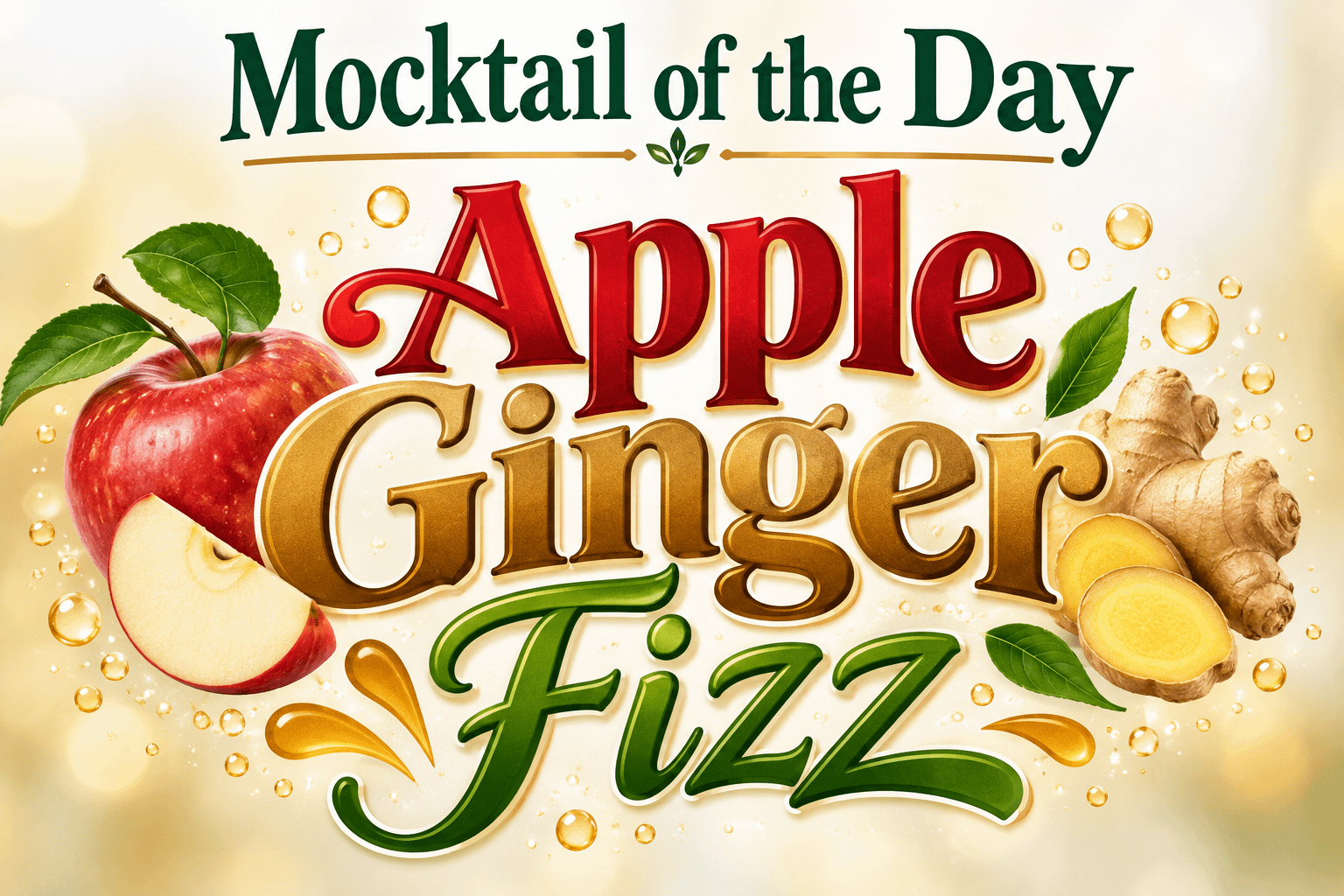
  • Mocktail of the Day: Apple Ginger Fizz

    Advertisements

    There is something refreshing about the combination of crisp apples, spicy ginger, bright citrus, and sparkling bubbles. Put them together, and you have a drink that feels sophisticated enough for a celebration while remaining simple enough to enjoy on an ordinary afternoon.

    Today’s Mocktail of the Day is the Apple Ginger Fizz, a sparkling alcohol-free drink filled with fresh fall flavor.

    Apple brings natural sweetness and a familiar fruitiness, while ginger adds warmth and a little bite. Fresh lemon juice keeps the drink from becoming overly sweet, and sparkling water gives everything a lively, fizzy finish.

    The result is a refreshing mocktail that works especially well during late summer and fall but can easily be enjoyed throughout the year.

    Why Apple and Ginger Work So Well Together

    Apple and ginger are almost opposites, which is exactly why they complement each other.

    Apple juice or cider is sweet, mellow, and fruity. Ginger is sharp, warming, and slightly spicy. When ginger is added to an apple-based drink, it cuts through some of the sweetness and gives the beverage considerably more character.

    Then comes the citrus.

    A splash of fresh lemon juice adds acidity and brightness, helping balance both the apple and ginger. Finally, sparkling water provides the bubbles that turn a simple juice mixture into a proper fizz.

    Every sip gives you a little sweetness, tartness, spice, and carbonation.

    Apple Ginger Fizz Recipe

    Ingredients

    • 4 ounces chilled apple cider or unfiltered apple juice
    • 1 ounce fresh lemon juice
    • 1/2 ounce ginger syrup
    • 2 to 3 ounces chilled sparkling water
    • Ice
    • Thin apple slices for garnish
    • Fresh ginger slice or rosemary sprig for garnish, optional

    Directions

    Fill a tall glass with ice.

    Pour the apple cider or apple juice over the ice.

    Add the fresh lemon juice and ginger syrup.

    Stir gently until everything is combined.

    Slowly pour sparkling water over the mixture.

    Give the drink one final gentle stir so you preserve as much carbonation as possible.

    Garnish with thin apple slices. For an extra seasonal presentation, add a rosemary sprig or a thin piece of fresh ginger.

    Serve immediately while cold and bubbly.

    Making Homemade Ginger Syrup

    You can buy ginger syrup, but making your own is surprisingly easy.

    You Will Need

    • 1 cup water
    • 1 cup sugar
    • About 1/2 cup sliced fresh ginger

    Combine the water, sugar, and ginger in a small saucepan.

    Bring the mixture to a gentle simmer while stirring until the sugar dissolves.

    Allow it to simmer for approximately 10 minutes.

    Remove the saucepan from the heat and let the ginger steep for another 15 to 20 minutes.

    Strain out the ginger and allow the syrup to cool completely.

    Store the syrup in a covered container in the refrigerator.

    If you prefer stronger ginger flavor, allow the ginger to steep longer before straining.

    Apple Juice or Apple Cider?

    Either works, but they create slightly different drinks.

    Regular apple juice generally produces a lighter, sweeter Apple Ginger Fizz. It is a great choice when you want something crisp and refreshing without an especially strong apple flavor.

    Unfiltered apple cider provides a richer flavor. It usually tastes more like fresh apples and gives the mocktail a distinctly autumn-inspired personality.

    During apple season, cider is my preferred choice.

    There is something about cider, ginger, and cool weather that simply works.

    Adjust the Ginger to Your Taste

    Ginger can quickly become the dominant flavor in a drink, so start conservatively.

    If you enjoy just a hint of spice, use approximately 1/4 ounce of ginger syrup.

    For a balanced drink, use around 1/2 ounce.

    If you love that unmistakable ginger kick, increase it toward 3/4 ounce.

    Remember that you can always add more syrup after tasting the drink.

    Make It Less Sweet

    One advantage of making mocktails at home is controlling the sweetness.

    If your apple cider is particularly sweet, reduce the amount of ginger syrup or increase the sparkling water.

    You can also add additional lemon juice.

    Another option is using unsweetened apple juice.

    The goal isn’t necessarily to make the drink taste like soda. A good Apple Ginger Fizz should have enough sweetness to highlight the apples while still allowing the ginger and citrus flavors to come through.

    Try It With Ginger Beer

    Want considerably more ginger flavor?

    Replace the sparkling water with a nonalcoholic ginger beer.

    Use:

    • 4 ounces apple cider
    • 1 ounce lemon juice
    • 3 ounces ginger beer
    • Ice

    Because ginger beer is already sweet and strongly flavored, you may not need ginger syrup.

    This variation creates a bolder, spicier Apple Ginger Fizz.

    Apple Cinnamon Ginger Fizz

    Few combinations say autumn quite like apples and cinnamon.

    Make the regular recipe and add a small pinch of ground cinnamon or use cinnamon syrup instead of part of the ginger syrup.

    Garnish the finished drink with an apple slice and cinnamon stick.

    It becomes an excellent drink for fall parties, Thanksgiving gatherings, Halloween celebrations, or cool evenings at home.

    Apple Cranberry Ginger Fizz

    For another seasonal variation, add cranberry juice.

    Try combining:

    • 3 ounces apple cider
    • 1 ounce cranberry juice
    • 1 ounce lemon juice
    • 1/2 ounce ginger syrup
    • 2 ounces sparkling water

    The cranberry adds tartness and creates a beautiful color.

    Garnish with apple slices and fresh cranberries for a festive presentation.

    Apple Ginger Lime Fizz

    Lemon isn’t your only citrus option.

    Replace the lemon juice with fresh lime juice for a sharper, slightly more tropical version.

    Lime works especially well if you’re using ginger beer rather than sparkling water.

    Add a lime wheel and apple slice for garnish.

    Honey Apple Ginger Fizz

    For a softer sweetness, replace the ginger syrup with a small amount of honey syrup.

    Mix equal parts honey and warm water until combined, then allow the mixture to cool.

    Use fresh grated ginger or muddled ginger to maintain the spicy component.

    Honey, apples, ginger, and lemon create an especially comforting flavor combination.

    Make It a Fall Party Drink

    The Apple Ginger Fizz is easy to transform into a larger batch for parties.

    For approximately eight servings, combine:

    • 4 cups apple cider
    • 1 cup fresh lemon juice
    • 1/2 cup ginger syrup

    Refrigerate the mixture until you’re ready to serve.

    Immediately before serving, add approximately 2 cups of chilled sparkling water.

    Adding the sparkling water at the last minute helps preserve the carbonation.

    Serve the drink in a pitcher with thinly sliced apples and lemon wheels.

    Keep additional sparkling water nearby so guests can make their drinks lighter if desired.

    Presentation Makes a Difference

    Mocktails deserve the same attention to presentation as cocktails.

    Instead of simply pouring everything into an ordinary glass, take a few seconds to make your Apple Ginger Fizz look special.

    Use a tall clear glass so you can see the bubbles.

    Add plenty of ice.

    Slice an apple extremely thin and fan several slices along the inside of the glass.

    A rosemary sprig creates a beautiful green contrast against the golden apple drink.

    For fall gatherings, you could even garnish with a cinnamon stick.

    Small touches can turn an easy homemade beverage into something that looks like it came from a restaurant or cocktail bar.

    A Great Alcohol-Free Option for Gatherings

    One reason I enjoy featuring mocktails is that celebrations don’t have to revolve around alcohol.

    People choose not to drink for many different reasons. Some simply don’t enjoy alcohol. Others may be driving, taking medication, participating in a sober lifestyle, or simply wanting something different that evening.

    Offering a thoughtful mocktail means everyone can have something more interesting than plain water or soda.

    The Apple Ginger Fizz works particularly well because it doesn’t feel like an afterthought.

    It has layers of flavor.

    It has an attractive presentation.

    And most importantly, it tastes good on its own.

    Perfect for Fall

    Although you can make this drink throughout the year, fall is where the Apple Ginger Fizz truly shines.

    Apple orchards are busy.

    Fresh cider begins appearing everywhere.

    The weather starts cooling down.

    Pumpkin, cinnamon, maple, apples, and warming spices begin taking over seasonal menus.

    Ginger fits perfectly into that atmosphere.

    Serve an Apple Ginger Fizz at a fall barbecue, football gathering, Halloween party, Thanksgiving dinner, harvest celebration, or simply while relaxing outside on a cool afternoon.

    It gives you those comforting seasonal flavors without being heavy.

    Pairing Apple Ginger Fizz With Food

    Because the drink balances sweetness, acidity, and spice, it pairs nicely with many foods.

    Try it alongside barbecue chicken, pulled pork sandwiches, roasted turkey, grilled sausages, sharp cheddar cheese, charcuterie, roasted vegetables, or fall salads.

    It also works beautifully with desserts.

    Apple pie is an obvious choice, but don’t stop there.

    Try it with cinnamon rolls, pumpkin cheesecake, caramel apple desserts, pecan pie, gingerbread, snickerdoodle cookies, or vanilla pound cake.

    The carbonation can provide a refreshing contrast to rich foods and desserts.

    Turn It Into a Frozen Mocktail

    If the weather is still warm, make a frozen version.

    Freeze apple cider in ice cube trays.

    Once frozen, blend the cider cubes with lemon juice, ginger syrup, and a small amount of regular apple cider.

    Blend until slushy.

    Pour into a chilled glass and top with sparkling water.

    You get all the flavors of the original Apple Ginger Fizz in an icy, refreshing drink.

    Don’t Forget the Ice

    Ice seems like a minor detail, but it can make a noticeable difference.

    Use plenty of fresh ice and make sure all your ingredients are chilled before building the drink.

    Starting with cold apple cider and cold sparkling water prevents the ice from melting too quickly.

    Large ice cubes also melt more slowly than crushed ice, helping prevent dilution.

    If you’re making these drinks for a party, keep the apple mixture refrigerated until guests arrive and add the sparkling water individually whenever possible.

    A Mocktail Worth Making Again

    The best drinks don’t always need complicated ingredients or elaborate techniques.

    Sometimes simplicity wins.

    Apple.

    Ginger.

    Lemon.

    Bubbles.

    Those four basic flavors create a drink that manages to be refreshing, flavorful, seasonal, and easy to customize.

    Make it sweeter.

    Make it spicier.

    Add cinnamon.

    Add cranberry.

    Switch lemon for lime.

    Use sparkling water for a lighter drink or ginger beer when you want a bigger ginger kick.

    That’s part of what makes the Apple Ginger Fizz such a useful recipe. You can start with the basic formula and make it your own.

    Mocktail of the Day: Apple Ginger Fizz

    Today’s Apple Ginger Fizz is proof that an alcohol-free drink doesn’t have to be boring.

    Crisp apple provides the sweetness. Fresh lemon adds brightness. Ginger delivers warmth and spice. Sparkling water finishes everything with refreshing bubbles.

    Whether you’re enjoying a quiet afternoon, hosting a fall gathering, preparing Thanksgiving dinner, or simply looking for something different to drink, this is an easy mocktail worth adding to your recipe collection.

    Pour it over ice, add a few apple slices, watch those bubbles rise, and enjoy a refreshing taste of the season.

    Would you make your Apple Ginger Fizz with sparkling water for a lighter drink or ginger beer for an extra kick?

  • Shot of the Day: Pumpkin Pie

    Advertisements

    There are certain flavors that instantly make it feel like fall. Pumpkin, cinnamon, nutmeg, vanilla, and creamy sweetness bring back thoughts of cool evenings, changing leaves, Thanksgiving gatherings, and fresh pumpkin pie sitting on the kitchen counter.

    Today’s Shot of the Day: Pumpkin Pie takes those familiar autumn flavors and turns them into a small, creamy dessert drink.

    Sweet, smooth, and filled with pumpkin-spice flavor, the Pumpkin Pie Shot is perfect for fall parties, Halloween celebrations, Thanksgiving gatherings, football weekends, or any evening when you want something that tastes more like dessert than a traditional shot.

    What Is a Pumpkin Pie Shot?

    A Pumpkin Pie Shot is a creamy dessert-style shot inspired by the flavors of traditional pumpkin pie.

    There are several ways to make one, but this version combines Irish cream, vanilla vodka, pumpkin puree, and pumpkin pie spice. The result is rich, creamy, slightly spicy, and unmistakably autumn.

    The whipped cream on top turns it into a miniature pumpkin pie in a glass.

    Ingredients

    For one shot:

    • 1/2 ounce vanilla vodka
    • 1/2 ounce Irish cream liqueur
    • 1 teaspoon pumpkin puree
    • Small pinch of pumpkin pie spice
    • Whipped cream
    • Ground cinnamon or additional pumpkin pie spice for garnish

    Optional: Add a small amount of crushed graham cracker around the rim to recreate the flavor of pumpkin pie crust.

    How to Make the Pumpkin Pie Shot

    If you want a graham cracker rim, lightly wet the edge of your shot glass with water or a little Irish cream and dip it into finely crushed graham crackers.

    Add the vanilla vodka, Irish cream, pumpkin puree, and pumpkin pie spice to a cocktail shaker filled with ice.

    Shake vigorously for about 15 seconds. Pumpkin puree is thicker than most cocktail ingredients, so shaking well helps create a smoother consistency.

    Strain the mixture into the prepared shot glass.

    Finish with a small swirl of whipped cream and a dusting of cinnamon or pumpkin pie spice.

    Serve immediately.

    What Does It Taste Like?

    The Pumpkin Pie Shot is closer to a liquid dessert than a traditional hard shot.

    The Irish cream provides richness and sweetness, while vanilla vodka adds both alcohol and the familiar vanilla flavor commonly found in desserts. Pumpkin puree provides authentic pumpkin flavor rather than relying entirely on pumpkin spice.

    Then comes the pumpkin pie spice.

    Most pumpkin pie spice blends contain some combination of cinnamon, ginger, nutmeg, cloves, and allspice. Those warming spices are responsible for much of the flavor people associate with pumpkin desserts.

    Top everything with whipped cream and you have a tiny drink reminiscent of a slice of pumpkin pie.

    Make It Even More Decadent

    If you’re serving these for a fall party, presentation can make the Pumpkin Pie Shot even more fun.

    Try coating the rim with crushed graham crackers mixed with a little cinnamon and sugar.

    Another option is to drizzle a tiny amount of caramel inside the shot glass before pouring in the mixture. Caramel adds another layer of sweetness and pairs naturally with pumpkin and warming spices.

    For an especially rich version, place whipped cream on top and finish it with graham cracker crumbs and a light caramel drizzle.

    At that point, you practically have pumpkin pie in a shot glass.

    Pumpkin Pie Shots for a Fall Party

    This shot works especially well when you’re entertaining because you can prepare several servings at once.

    For six shots, combine:

    • 3 ounces vanilla vodka
    • 3 ounces Irish cream
    • 2 tablespoons pumpkin puree
    • About 1/4 teaspoon pumpkin pie spice

    Shake everything thoroughly with ice and divide among six shot glasses.

    Top each one with whipped cream immediately before serving.

    Preparing the base shortly before guests arrive can also save time. Keep it refrigerated, then shake it again with ice before serving.

    Perfect for Halloween

    Pumpkin drinks naturally belong at Halloween parties.

    You can make these shots more festive by serving them in orange, black, or clear shot glasses and surrounding the serving tray with miniature pumpkins or other fall decorations.

    For a Halloween dessert table, pair Pumpkin Pie Shots with pumpkin cookies, cinnamon doughnuts, caramel apples, brownies, or chocolate desserts.

    They can also provide a fun contrast to darker or spookier Halloween cocktails.

    A Thanksgiving Dessert Shot

    The Pumpkin Pie Shot might be even more appropriate for Thanksgiving.

    After a large Thanksgiving meal, not everyone wants another full dessert immediately. A miniature dessert-inspired drink can be a fun addition to the evening.

    Serve these alongside actual pumpkin pie, pecan pie, apple pie, cheesecake, or coffee.

    You could even create a small Thanksgiving dessert-shot station where adults can garnish their own shots with whipped cream, cinnamon, caramel, or graham cracker crumbs.

    Try a Cinnamon-Sugar Rim

    If you don’t have graham crackers, cinnamon sugar makes an excellent alternative.

    Mix approximately two parts granulated sugar with one part ground cinnamon.

    Moisten the rim of the glass and gently roll it through the mixture.

    The cinnamon-sugar rim gives you an extra burst of sweetness before you even taste the drink.

    Pumpkin Pie Shot Variations

    Once you’ve made the basic version, there are plenty of ways to experiment.

    For a Pumpkin Cheesecake Shot, add a splash of cream cheese-flavored liqueur if available or use a cheesecake-inspired cream liqueur.

    For a Caramel Pumpkin Pie Shot, add a small splash of caramel-flavored vodka or caramel liqueur.

    For a Spiced Pumpkin Pie Shot, replace the vanilla vodka with spiced rum for deeper warming spice notes.

    For an Espresso Pumpkin Pie Shot, add a small splash of chilled espresso or coffee liqueur. Pumpkin, coffee, vanilla, and cream naturally work together.

    You can also make the original version sweeter with a tiny amount of maple syrup.

    Just remember that a little goes a long way.

    Don’t Forget the Whipped Cream

    You could technically serve the Pumpkin Pie Shot without whipped cream, but you’re missing half the fun.

    Pumpkin pie and whipped cream belong together.

    Use just enough whipped cream to cover the top of the shot, then sprinkle it lightly with cinnamon.

    For an impressive finishing touch, place a tiny piece of graham cracker into the whipped cream.

    It transforms a simple shot into a miniature fall dessert.

    Serve It Cold

    This shot tastes best thoroughly chilled.

    Cream-based drinks can become heavy when served too warm, while chilling gives the mixture a smoother and more refreshing texture.

    Use plenty of ice in your cocktail shaker and shake vigorously.

    If you’re hosting a party, chilling the vodka and Irish cream beforehand can help keep everything cold.

    The Flavor of Autumn in a Glass

    Pumpkin season doesn’t have to stop with pumpkin spice coffee, pumpkin bread, or pumpkin pie.

    The Pumpkin Pie Shot takes some of the most recognizable flavors of fall and transforms them into a fun adult dessert drink.

    You get creamy Irish cream, sweet vanilla, real pumpkin, warming spices, whipped cream, and—if you choose—a graham cracker crust around the rim.

    It’s sweet.

    It’s creamy.

    It’s unmistakably pumpkin.

    And it looks great sitting on a tray at an autumn celebration.

    Shot of the Day: Pumpkin Pie

    Whether you’re planning a Halloween party, Thanksgiving dinner, autumn get-together, or simply experimenting with seasonal drinks at home, the Pumpkin Pie Shot deserves a place on your fall drink list.

    Make the graham cracker rim. Shake the ingredients until they’re ice cold. Add the whipped cream. Sprinkle a little cinnamon over the top.

    Then raise your glass to cool nights, changing leaves, good company, and pumpkin season.

    Cheers to fall—and pumpkin pie you can drink.

    Please enjoy responsibly. This recipe is intended only for adults of legal drinking age.

    Would you try the classic Pumpkin Pie Shot, or would you add caramel, maple, coffee, or extra cinnamon to make it your own?

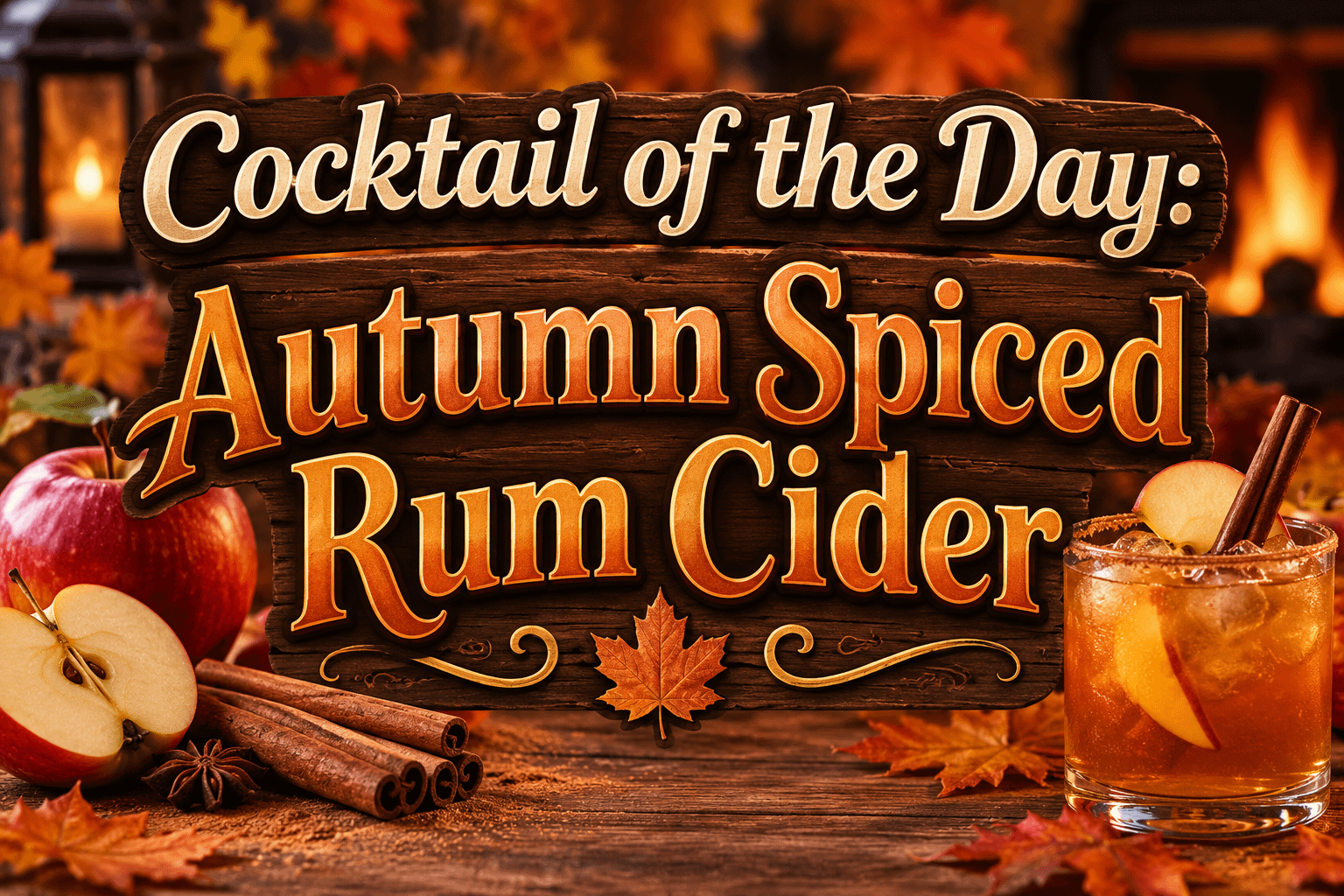
  • Cocktail of the Day: Autumn Spiced Rum Cider

    Advertisements

    When autumn arrives, there is something special about the combination of crisp apples, warming spices, and a smooth splash of rum. Cooler evenings call for drinks that feel a little richer, warmer, and more comforting—and Autumn Spiced Rum Cider delivers exactly that.

    This cocktail brings together apple cider, spiced rum, cinnamon, citrus, and seasonal spices for a drink that tastes like fall in a glass. It can be served warm beside a fire or poured over ice when the afternoons are still holding onto the last bit of summer warmth.

    Whether you are relaxing at home, gathering around a backyard fire, watching football, celebrating the beginning of fall, or hosting friends for an autumn dinner, this is an easy cocktail that fits the season perfectly.

    Why Apple Cider and Spiced Rum Work So Well Together

    Apple cider already contains many of the flavors we associate with autumn. It is sweet, slightly tart, fruity, and rich enough to stand up to bold spices.

    Spiced rum brings another layer of warmth. Depending on the rum, you may notice flavors reminiscent of vanilla, caramel, cinnamon, cloves, nutmeg, or other baking spices.

    Put the two together and neither ingredient has to work very hard.

    The cider provides the crisp apple foundation while the rum deepens the drink and gives it a warming finish. Cinnamon and orange then bring everything together.

    The result is a cocktail that feels seasonal without requiring a complicated list of ingredients or advanced bartending techniques.

    Autumn Spiced Rum Cider Recipe

    Serves: 1

    Ingredients:

    • 2 ounces spiced rum
    • 4 ounces apple cider
    • 1/2 ounce fresh orange juice
    • 1/4 ounce fresh lemon juice
    • 1 teaspoon maple syrup, optional
    • Pinch of ground cinnamon
    • Tiny pinch of ground nutmeg
    • Ice
    • Apple slices for garnish
    • Cinnamon stick for garnish
    • Orange peel or orange slice for garnish

    How to Make It

    Fill a cocktail shaker about halfway with ice.

    Add the spiced rum, apple cider, orange juice, lemon juice, maple syrup, cinnamon, and nutmeg.

    Shake for approximately 10–15 seconds.

    Fill a rocks glass with fresh ice and strain the cocktail into the glass.

    Garnish with a thin apple slice, cinnamon stick, and orange peel.

    For an extra touch of autumn, lightly sprinkle cinnamon over the top.

    Your Autumn Spiced Rum Cider is ready to enjoy.

    Make It Warm

    This cocktail is equally delicious served hot.

    Pour the apple cider into a small saucepan and warm it over medium-low heat. Add a cinnamon stick and a small pinch of nutmeg.

    Allow the cider to become hot without bringing it to a hard boil.

    Remove it from the heat and stir in the orange juice, lemon juice, maple syrup, and spiced rum.

    Pour everything into a heat-resistant mug.

    Garnish with an apple slice, cinnamon stick, or orange peel.

    Adding the rum after taking the cider off the heat helps preserve more of its flavor and aroma.

    The warm version is especially good on cold evenings when you want something you can slowly sip.

    Turn It Into a Fall Party Cocktail

    One of the best things about Autumn Spiced Rum Cider is how easily it can be transformed from a single cocktail into a party drink.

    For approximately eight servings, combine:

    • 4 cups apple cider
    • 2 cups spiced rum
    • 1/2 cup fresh orange juice
    • 1/4 cup fresh lemon juice
    • 2–3 tablespoons maple syrup
    • 3 cinnamon sticks
    • 2–3 whole cloves
    • Several thin apple and orange slices

    For a cold version, combine everything in a pitcher except the ice. Refrigerate until your guests arrive and serve over ice.

    For a warm version, heat the cider, citrus, maple syrup, cinnamon, cloves, apples, and oranges in a slow cooker. Keep it warm on the lowest setting and stir the rum into individual servings or into the batch shortly before serving.

    A slow cooker filled with warm spiced cider also makes the room smell incredible.

    Give It More Apple Flavor

    If you want apple to dominate the cocktail, there are several easy ways to intensify it.

    Use fresh, high-quality apple cider rather than ordinary filtered apple juice. The fuller flavor makes a noticeable difference.

    You can also muddle a couple of thin apple slices in the shaker before adding the remaining ingredients.

    Another option is to reduce a small amount of apple cider on the stove until it becomes concentrated, allow it to cool, and add a teaspoon to your cocktail.

    That produces a deeper, almost caramelized apple flavor.

    Make It Sweeter

    Apple cider provides plenty of natural sweetness, so taste your drink before adding additional sweetener.

    If you prefer sweeter cocktails, maple syrup is a natural choice.

    Maple complements apple, cinnamon, vanilla, and rum beautifully. It also provides more depth than ordinary simple syrup.

    Honey can work as well, particularly in the warm version.

    Just remember that you want the cocktail to taste like apples and spices—not liquid candy.

    Start with a small amount and adjust from there.

    Add a Little Sparkle

    Want something lighter and more refreshing?

    Prepare the cold version but use only about three ounces of apple cider. Once the cocktail has been strained over fresh ice, top it with one or two ounces of club soda or ginger ale.

    Club soda keeps the cocktail relatively dry.

    Ginger ale makes it sweeter while adding another autumn-friendly spice.

    Ginger beer can provide an even stronger ginger kick.

    The Importance of Fresh Citrus

    Orange and lemon might seem like minor ingredients, but they play an important role.

    Without acidity, apple cider and spiced rum can become overly sweet.

    Fresh lemon juice cuts through that sweetness while orange reinforces the fruitiness and adds a softer citrus character.

    You do not need much.

    The goal isn’t to turn this into a citrus cocktail. The citrus should quietly brighten the apple and rum.

    Choosing Your Garnish

    A good garnish should complement the drink rather than simply make the glass look pretty.

    For Autumn Spiced Rum Cider, there are several excellent choices.

    A cinnamon stick reinforces the cocktail’s warming spices and releases additional aroma as you drink.

    A thin apple fan immediately tells you that cider is the star.

    An orange peel adds citrus oils and fragrance.

    For entertaining, combine all three.

    You can even place a dried apple wheel on top for a rustic fall presentation.

    Create a Cinnamon-Sugar Rim

    For a more dessert-like version, give the glass a cinnamon-sugar rim.

    Combine approximately two tablespoons of sugar with 1/2 teaspoon of ground cinnamon on a small plate.

    Rub an orange or lemon wedge around half of the glass rim and gently dip it into the cinnamon sugar.

    Rimming only half the glass gives the drinker the option of sipping with or without the additional sweetness.

    Foods to Serve With Autumn Spiced Rum Cider

    This cocktail works particularly well with hearty fall foods.

    Try serving it alongside roasted pork, barbecue, smoked meats, baked ham, grilled sausages, roasted vegetables, sharp cheddar cheese, baked brie, apple desserts, cinnamon doughnuts, pumpkin bread, pecan pie, or apple crisp.

    For a simple autumn gathering, create a cheese and snack board with sharp cheddar, smoked gouda, crackers, sliced apples, roasted nuts, dried cranberries, and a little honey.

    Then serve Autumn Spiced Rum Cider alongside it.

    You have an easy fall appetizer spread without spending hours in the kitchen.

    Perfect for a Backyard Fire

    Some cocktails belong beside a swimming pool.

    Others belong next to a fireplace.

    Autumn Spiced Rum Cider belongs beside a fire.

    Picture a cool evening with friends gathered around a backyard fire pit. The temperature has dropped enough for jackets and sweatshirts. There is music playing quietly, something good cooking nearby, and everyone has a warm mug of spiced cider.

    Sometimes the best drinks aren’t about complicated recipes.

    They’re about creating an atmosphere.

    This is one of those cocktails.

    Make the Cocktail Your Own

    Once you understand the basic combination of rum and cider, there is plenty of room for experimentation.

    Add ginger beer for extra spice.

    Use maple syrup for additional richness.

    Add a dash of aromatic bitters for complexity.

    Muddle fresh ginger for a stronger kick.

    Try star anise in the warm version.

    Add cranberry juice for a tart holiday variation.

    Use a smoked cinnamon stick for dramatic presentation.

    You could even replace part of the apple cider with pear cider for something slightly different.

    The foundation remains simple: apple + spice + rum + citrus.

    From there, you can build the version you enjoy most.

    A Cocktail That Celebrates Autumn

    Fall has its own collection of flavors.

    Apples.

    Cinnamon.

    Maple.

    Nutmeg.

    Caramel.

    Orange.

    Warm baking spices.

    Autumn Spiced Rum Cider brings many of those flavors together without becoming overly complicated.

    It can be cold and refreshing on a warm September afternoon or hot and comforting when November evenings begin getting chilly.

    That versatility makes it a great cocktail to keep around throughout the entire season.

    Cocktail of the Day

    Autumn Spiced Rum Cider is simple, flavorful, and unmistakably fall.

    Spiced rum gives the drink warmth and depth. Apple cider brings sweetness and fresh fruit flavor. Lemon and orange provide balance, while cinnamon, nutmeg, and maple bring those familiar autumn notes together.

    Serve it over ice while watching the leaves begin to change.

    Serve it hot around the fire.

    Make a pitcher for friends.

    Prepare a slow cooker batch for a fall gathering.

    However you decide to serve it, enjoy it slowly and responsibly.

    When autumn arrives, what better way to welcome the season than with apples, cinnamon, spice, and a little rum in your glass?

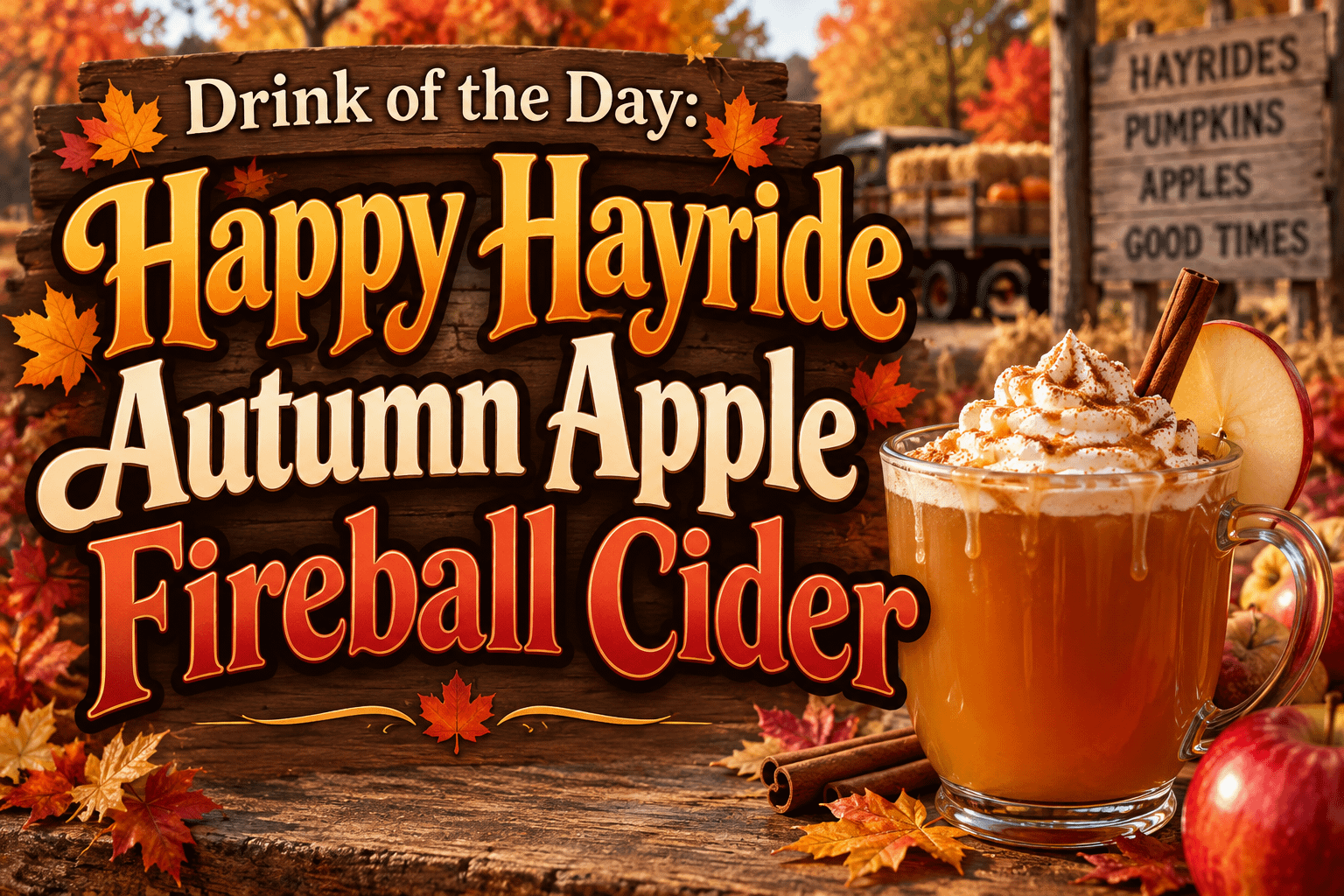
  • Drink of the Day: Happy Hayride Autumn Apple Fireball Cider

    Advertisements

    There is something about autumn that makes a warm apple drink feel just right. The cooler evenings, changing leaves, pumpkins on porches, football weekends, bonfires, and harvest celebrations all seem to call for a mug filled with something sweet, spicy, and comforting.

    Today’s Drink of the Day — Happy Hayride Autumn Apple Fireball Cider — brings those fall flavors together in one simple adult drink.

    Warm apple cider provides the sweet, familiar taste of freshly picked apples, while Fireball Cinnamon Whisky adds a bold cinnamon kick and warming finish. A little caramel can make it even richer, and a cinnamon stick or fresh apple slice turns an easy drink into something that feels made for an autumn celebration.

    Whether you are sitting beside a fire, hosting a Halloween party, enjoying a fall barbecue, or simply relaxing on a chilly evening, this cider is designed to taste like autumn in a mug.

    Why Call It the Happy Hayride?

    Hayrides have become one of those traditions closely associated with fall.

    Picture a cool October evening. You are bundled up in a sweatshirt or jacket as a tractor slowly makes its way through the countryside. There are pumpkins nearby, leaves crunching underfoot, and maybe a bonfire waiting when everyone returns.

    That relaxed autumn atmosphere inspired the Happy Hayride Autumn Apple Fireball Cider.

    You certainly don’t need an actual hayride to enjoy one. The idea is simply to capture that fun, rustic fall feeling in a drink.

    Happy Hayride Autumn Apple Fireball Cider Recipe

    Serves: 1

    Ingredients

    • 6 ounces apple cider
    • 1½ ounces Fireball Cinnamon Whisky
    • ½ ounce caramel syrup, optional
    • 1 cinnamon stick
    • 1 thin apple slice
    • Pinch of ground cinnamon, optional
    • Whipped cream, optional
    • Caramel drizzle, optional

    Directions

    Pour the apple cider into a small saucepan and warm it over medium-low heat. You want the cider hot and steaming but not aggressively boiling.

    Remove the cider from the heat and pour it into a heat-safe mug.

    Add the Fireball Cinnamon Whisky and stir gently.

    For additional sweetness, stir in about half an ounce of caramel syrup.

    Add a cinnamon stick and garnish the mug with a fresh apple slice.

    For a dessert-style version, top the drink with whipped cream, a light caramel drizzle, and a small sprinkle of cinnamon.

    Serve immediately while warm.

    What Does It Taste Like?

    The first flavor you notice is apple.

    Warm cider has a natural sweetness with a slight tartness that keeps it from tasting too much like candy. Then comes the cinnamon.

    Fireball intensifies the spice already associated with traditional apple cider, giving the drink a noticeably warmer cinnamon character.

    If you add caramel, another layer develops.

    Apple, caramel, and cinnamon naturally complement one another, creating flavors reminiscent of caramel apples, apple pie, and other classic fall treats.

    The result is sweet, warming, spicy, and unmistakably autumn-inspired.

    Make It a Caramel Apple Hayride

    If you love caramel apples, this variation is worth trying.

    Drizzle a small amount of caramel around the inside of your mug before adding the cider. Prepare the drink normally and finish it with whipped cream and another light caramel drizzle.

    You can even add a tiny pinch of flaky salt on top for a salted-caramel twist.

    Just remember that both apple cider and caramel syrup contain plenty of sweetness, so you don’t need much caramel to change the character of the drink.

    Turn Up the Fall Spices

    Cinnamon may be the star, but it doesn’t have to be the only spice.

    When warming your apple cider, try adding a whole clove, a small piece of star anise, or a tiny pinch of nutmeg.

    You can also simmer the cider with an orange slice for a subtle citrus note.

    Remove whole spices before pouring the cider into your mug.

    These additions make the drink especially enjoyable when preparing a larger batch for a fall gathering because the aroma of warm apples and spices fills the room.

    Make a Cold Version

    Autumn doesn’t always mean cold weather.

    If you want the same flavors in a refreshing drink, serve the Happy Hayride over ice.

    Fill a rocks glass with ice and add:

    • 4 ounces chilled apple cider
    • 1½ ounces Fireball Cinnamon Whisky
    • ½ ounce caramel syrup, if desired

    Stir well and garnish with an apple slice and cinnamon stick.

    For a little sparkle, top it with a splash of ginger ale.

    The chilled version is particularly good for early fall afternoons when temperatures are still warm but you are ready for autumn flavors.

    Make a Party Batch

    This drink can easily become a fall party favorite.

    For approximately eight servings, warm the following together in a slow cooker:

    • 6 cups apple cider
    • 2 cinnamon sticks
    • 4 whole cloves
    • 2 orange slices

    Keep the cider warm on the low setting.

    Rather than adding whisky directly to the entire slow cooker, adults can add Fireball to their individual mugs after serving the cider. This also makes it easy to keep a clearly separated alcohol-free option available.

    Place apple slices, cinnamon sticks, caramel syrup, and other garnishes nearby so guests can customize their drinks.

    Perfect Occasions for Happy Hayride Cider

    This is the kind of drink that fits naturally into autumn entertaining.

    Serve it during a Halloween party, pumpkin-carving night, football gathering, backyard bonfire, Thanksgiving weekend, harvest celebration, fall birthday party, or evening around the firepit.

    It can also be enjoyable without any special occasion.

    Sometimes the best reason to make a warm cider is simply that the temperature dropped, you have nowhere else to be, and you want to relax at home.

    Create an Autumn Cider Bar

    If you’re entertaining several people, consider turning the drink into a build-your-own cider station.

    Prepare a large batch of warm apple cider and offer toppings and additions such as cinnamon sticks, apple slices, orange slices, whipped cream, caramel sauce, maple syrup, nutmeg, cloves, ginger ale, and sparkling apple cider.

    Keep alcoholic ingredients clearly separated from the regular cider.

    Guests who want an adult Happy Hayride can add their preferred spirit, while children and anyone avoiding alcohol can enjoy the same warm spiced cider without it.

    What Food Goes With It?

    Apple and cinnamon work surprisingly well with both sweet and savory foods.

    For something sweet, try serving this cider alongside apple pie, apple crisp, cinnamon doughnuts, pumpkin bread, caramel popcorn, snickerdoodle cookies, pecan pie, or cinnamon rolls.

    For savory food, consider barbecue pulled pork, smoked sausage, grilled chicken, roasted pork, sharp cheddar cheese, baked brie, or a fall-inspired charcuterie board.

    The apple flavor is especially good alongside smoky or salty foods because the cider’s sweetness provides contrast.

    Choosing the Apple Cider

    Because cider makes up most of the drink, its flavor matters.

    Look for a cider with a strong natural apple flavor rather than something overwhelmingly sweet.

    Fresh local cider can be excellent during apple season, but refrigerated supermarket cider works perfectly well too.

    If your cider is already heavily spiced, consider leaving out additional cinnamon or cloves until you taste the finished drink.

    The goal isn’t to overpower the apple. The spices should support it.

    A Simple Alcohol-Free Happy Hayride

    The basic idea is easy to turn into a family-friendly drink.

    Warm 6 ounces of apple cider with a cinnamon stick and a small orange slice. Add a little caramel syrup if desired.

    Pour it into a mug and garnish with an apple slice.

    For additional cinnamon flavor without whisky, add a pinch of ground cinnamon or warm the cider with extra cinnamon sticks.

    You still get the comforting apple-and-cinnamon character that inspired the original drink.

    A Drink Made for Sweater Weather

    Some drinks are about elaborate ingredients and complicated techniques.

    The Happy Hayride Autumn Apple Fireball Cider isn’t one of them.

    Its appeal comes from familiar flavors.

    Apple.

    Cinnamon.

    Caramel.

    Warm spices.

    Together, they create something that feels perfectly suited to the season.

    Imagine sitting outside as the sun goes down earlier than it did during summer. There’s a slight chill in the air. Leaves are scattered across the yard, a fire is crackling nearby, and you’re holding a warm mug of cider.

    That is exactly the atmosphere this Drink of the Day is meant to capture.

    Drink of the Day Final Sip

    The Happy Hayride Autumn Apple Fireball Cider combines warm apple cider with cinnamon whisky for an easy fall drink that can be customized in countless ways.

    Keep it simple with cider, Fireball, and a cinnamon stick. Add caramel for a sweeter treat. Serve it cold over ice when the weather is warmer. Make a large batch of cider for a fall gathering and let guests build their own mugs.

    However you prepare it, the combination of apples and cinnamon delivers the flavors people look forward to when autumn arrives.

    So pull on your favorite sweatshirt, find a comfortable place by the fire, pour yourself a warm mug, and enjoy a little taste of fall.

    What is the one drink that immediately makes you think of autumn?

    Please enjoy responsibly. This recipe is intended only for adults of legal drinking age.

  • Health Tip of the Day: Turn Pain Into Action

    Advertisements

    Pain has a way of stopping us in our tracks. Whether it comes from physical struggles, emotional wounds, grief, disappointment, stress, heartbreak, or circumstances we never expected, pain can make it difficult to see beyond what we are experiencing right now.

    But pain does not always have to leave us standing still.

    Sometimes one of the healthiest things we can do is turn pain into action.

    That does not mean ignoring what hurts. It does not mean pretending everything is fine, pushing through an injury, or forcing yourself to be positive when you are struggling. It means recognizing what you are feeling and asking yourself a powerful question:

    What is one healthy thing I can do with this pain today?

    The answer does not need to change your entire life. Sometimes the smallest action is enough to begin moving forward.

    Pain Is a Signal, Not an Instruction to Give Up

    Pain can tell us that something needs attention.

    Physical pain may tell us that our body needs rest, treatment, rehabilitation, or medical evaluation. Emotional pain may reveal that we need support, boundaries, connection, healing, or time to process what has happened.

    The problem begins when pain convinces us that there is nothing we can do.

    When we feel overwhelmed, withdrawing and doing nothing can seem easier. We may stop exercising, stop talking to people, abandon healthy routines, lose motivation, or spend hours thinking about circumstances we cannot change.

    That can create a difficult cycle.

    Pain leads to inactivity. Inactivity can contribute to isolation, frustration, disrupted sleep, and unhealthy habits. Those problems may then make everything feel even heavier.

    Action can interrupt that cycle.

    Start With What You Can Control

    You cannot control everything that happens to you.

    You cannot erase every painful memory. You cannot immediately repair every relationship. You cannot make every physical problem disappear overnight. You cannot rewrite yesterday.

    But there are usually small things you can influence today.

    You can drink another glass of water.

    You can make a healthier meal.

    You can take a short walk if your body allows it.

    You can schedule the appointment you have been postponing.

    You can call someone you trust.

    You can write down what you are feeling.

    You can spend a few minutes outside.

    You can go to bed earlier.

    You can ask for help.

    These actions may seem small compared with the size of the pain you are carrying, but small actions matter because they return some control to your hands.

    You are no longer simply reacting to pain.

    You are responding to it.

    Turn Emotional Pain Into Healthy Movement

    Emotional pain can create physical tension. Stress can leave your shoulders tight, your mind racing, and your body exhausted.

    Movement can sometimes provide a healthy outlet.

    You do not have to complete an intense workout. Depending on your health and physical abilities, movement might mean walking around the neighborhood, stretching, gardening, cleaning the house, swimming, riding a stationary bike, or doing gentle exercises.

    The goal is not punishment.

    You are not exercising because you are angry with yourself. You are moving because your body deserves care.

    If you are experiencing significant, unexplained, worsening, or injury-related pain, however, “turn pain into action” should not mean exercising through it. Appropriate action may instead be resting, modifying activity, or seeking medical care.

    Sometimes stopping is an action too.

    Turn Stress Into a Plan

    Stress often grows when everything feels tangled together.

    Instead of carrying twenty problems around in your head, write them down.

    Then separate them into two categories: things you can do something about and things you cannot control right now.

    Focus your energy on the first group.

    If money is causing stress, perhaps today’s action is reviewing your spending.

    If your health concerns you, perhaps it is scheduling a checkup.

    If your home feels overwhelming, clean one room.

    If loneliness is hurting, contact one person.

    If work is exhausting you, identify one boundary that could make tomorrow more manageable.

    You do not have to solve your entire life tonight.

    Handle the next thing you can handle.

    Turn Grief Into Something Meaningful

    Some pain cannot simply be fixed.

    Grief is one of those experiences.

    When someone you love dies, taking action does not erase your grief or replace the person you miss. There is no project, exercise routine, or positive thought that makes profound loss disappear.

    But action can sometimes give love somewhere to go.

    You might honor someone’s memory, help another grieving person, support a cause that mattered to them, write about your memories, create something in their honor, volunteer, donate, or simply live according to something they taught you.

    There will still be painful days.

    There may also be days when doing something meaningful with that love gives you a reason to keep moving.

    Grief and purpose can exist together.

    Turn Anger Into Improvement

    Anger contains energy.

    Left unchecked, that energy can lead to arguments, impulsive decisions, unhealthy coping mechanisms, or words we later regret.

    But anger can also reveal something.

    Maybe you were treated unfairly. Maybe someone crossed a boundary. Maybe you are disappointed with yourself. Maybe circumstances changed your life without your permission.

    Before reacting, ask:

    What is this anger trying to tell me?

    Then decide whether there is a constructive action available.

    Set a boundary.

    Have the difficult conversation when you are calm.

    Work toward a goal.

    Exercise safely.

    Write instead of sending the angry message.

    Make the change you have been postponing.

    Channel the energy into building something rather than destroying something.

    Turn Fear Into Preparation

    Fear often focuses on what might happen.

    Action focuses on what you can do if it does.

    If you are worried about your health, learn what preventive care is appropriate for you and talk with a healthcare professional.

    If you fear losing your job, update your résumé and strengthen your skills.

    If you are worried about an upcoming challenge, prepare for it.

    If you are nervous about trying something new, break it into smaller steps.

    Preparation cannot eliminate uncertainty, but it can help replace helplessness with readiness.

    Do One Thing Today

    When life becomes painful, people sometimes make the mistake of trying to change everything at once.

    They create a massive diet plan.

    They decide they will exercise every day.

    They promise themselves they will completely change their sleep schedule.

    They try to repair every relationship.

    They attempt to rebuild their entire life in one weekend.

    Then exhaustion arrives.

    Instead, choose one action.

    Drink more water today.

    Walk for ten minutes if it is safe and comfortable.

    Prepare one nutritious meal.

    Call one friend.

    Make one appointment.

    Clean one small area.

    Write one page.

    Spend five minutes stretching.

    Turn off your phone thirty minutes before bed.

    One healthy decision may lead naturally to another.

    Rest Can Be Action

    We often associate action with doing more.

    Sometimes healthy action means doing less.

    If your body is exhausted, sleep may be the action you need.

    If you are emotionally overwhelmed, stepping away from a stressful situation may be productive.

    If you are physically injured, recovery may require temporarily reducing activity.

    Rest is not automatically laziness.

    There is a difference between giving your body time to recover and allowing fear to keep you permanently stuck.

    Learning to recognize that difference is an important part of caring for yourself.

    Ask for Help When You Need It

    Taking action does not mean handling everything alone.

    In fact, asking for help can be one of the strongest actions available.

    Talk with someone you trust. Contact a healthcare professional about concerning physical symptoms. Consider professional mental-health support when emotional distress is persistent, severe, or interfering with everyday life.

    If pain is controlling your life, getting appropriate support is action.

    You do not receive extra credit for suffering silently.

    Progress Does Not Have to Be Dramatic

    We often notice dramatic transformations while overlooking quiet progress.

    But health is frequently built through ordinary choices repeated over time.

    Getting out of bed when you wanted to stay there.

    Taking the walk.

    Making the appointment.

    Choosing water instead of another sugary drink.

    Turning off the television and getting some sleep.

    Talking about what is bothering you.

    Taking your medication as prescribed.

    Cooking instead of ordering another fast-food meal.

    Returning to a healthy routine after falling away from it.

    These decisions rarely look impressive from the outside.

    They still count.

    Pain Can Become a Turning Point

    You may not have chosen the pain that entered your life.

    You may not be able to change what happened.

    But you can decide what your next response will be.

    Use frustration to improve something.

    Use fear to prepare.

    Use heartbreak to learn.

    Use grief to honor.

    Use stress to identify what needs attention.

    Use physical discomfort as a reason to listen more carefully to your body rather than ignore it.

    And when you cannot take a giant step, take a small one.

    Healing is rarely a straight line. There will be days when you move forward and days when your greatest accomplishment is simply making it through.

    Both matter.

    Health Tip of the Day

    Turn pain into action—but make sure it is healthy action.

    Do not punish yourself. Do not ignore serious symptoms. Do not pretend you are okay when you need support.

    Instead, listen to what your body and mind are telling you.

    Then ask yourself:

    What is one healthy action I can take today that could make tomorrow a little better?

    You do not have to transform your entire life today.

    You only have to decide what you will do next.

  • Love Tip of the Day: Love With All Your Heart

    Advertisements

    Love is one of the greatest gifts we can give another person. It can bring two people together, create memories that last a lifetime, provide comfort during difficult seasons, and give us someone with whom to share both our happiest and hardest moments.

    But meaningful love requires something from us.

    It requires vulnerability.

    It requires courage.

    And sometimes, it requires us to stop protecting our hearts so much that nobody can ever truly reach them.

    Today’s love tip is simple: Love with all your heart.

    When you find someone you genuinely love, don’t spend the entire relationship holding part of yourself back because you’re afraid of what could happen. Love them intentionally. Appreciate them. Communicate with them. Support them. Make memories together. Tell them how much they mean to you.

    Life moves quickly, and tomorrow is never guaranteed.

    Don’t Love Halfway

    Sometimes people enter relationships while keeping one foot outside the door.

    They care, but they are afraid to care too much.

    They love, but they hesitate to show it.

    They want closeness, but when someone gets too close, they pull away.

    Often, fear is underneath it.

    What if I get hurt?

    What if they leave?

    What if I trust them and they betray me?

    What if I give everything and the relationship still doesn’t work?

    Those fears are understandable. Loving someone makes us vulnerable because another person suddenly has the ability to affect us deeply.

    But constantly protecting yourself can also prevent you from experiencing the depth of love you’re looking for.

    There are no guarantees in relationships. Loving wholeheartedly doesn’t guarantee that you’ll never experience disappointment or heartbreak. It means choosing to be present rather than allowing fear of tomorrow to steal what you could experience today.

    Tell Them You Love Them

    Never assume someone knows how much they mean to you.

    Tell them.

    Say, “I love you.”

    Say, “I appreciate you.”

    Say, “I’m grateful you’re in my life.”

    Say, “You matter to me.”

    Words aren’t everything, but they matter.

    Sometimes we become comfortable with the people closest to us and stop saying the things we once said naturally. Compliments become less frequent. Appreciation goes unspoken. Affection becomes routine.

    Don’t allow familiarity to turn into neglect.

    Tell your person why you love them.

    Tell them what you admire about them.

    Tell them when you’re proud of them.

    Tell them when they’ve made your day better simply by being there.

    Don’t save beautiful words for someday.

    Say them while the person you love can hear them.

    Show Love Through Your Actions

    Love should be spoken, but it should also be demonstrated.

    You can tell someone you love them every morning and every night, but your actions need to support those words.

    Show up.

    Listen.

    Be dependable.

    Keep your promises.

    Pay attention when they speak.

    Remember the little things.

    Make time for them.

    Support their goals.

    Comfort them when they’re struggling.

    Celebrate their accomplishments.

    Apologize when you’re wrong.

    Love is often revealed through ordinary moments rather than extraordinary gestures.

    Making their favorite meal after they’ve had a difficult day can be love.

    Sending a message just to say you’re thinking about them can be love.

    Holding their hand when they’re nervous can be love.

    Sitting quietly beside them when there are no words can be love.

    Remembering something they mentioned weeks ago can be love.

    Sometimes the smallest gestures say the biggest things.

    Be Present

    One of the greatest gifts you can give someone is your presence.

    We live in a world filled with distractions. Phones buzz. Notifications appear. Work follows us home. Social media constantly demands attention.

    It is possible to sit beside someone while being emotionally somewhere else entirely.

    Make intentional time for the person you love.

    Put the phone down sometimes.

    Look into their eyes.

    Ask how they’re doing—and actually listen to the answer.

    Have conversations without constantly checking notifications.

    Take walks.

    Eat together.

    Laugh together.

    Create traditions.

    Go somewhere you’ve never been.

    Or simply sit together doing absolutely nothing.

    Not every meaningful memory requires money, travel, or elaborate plans.

    Sometimes love grows strongest during the quietest moments.

    Love Them on Their Difficult Days

    It’s easy to love someone when everything is going well.

    Real relationships also include difficult days.

    Your partner might become stressed.

    They might feel discouraged.

    They might have moments when they’re frustrated, exhausted, insecure, or overwhelmed.

    There will also be days when you’re the difficult one.

    Love doesn’t require pretending that bad behavior is acceptable, but it does mean recognizing that nobody is at their best every day.

    Offer patience.

    Ask what’s wrong.

    Listen before immediately trying to fix everything.

    Give space when space is needed.

    Offer closeness when closeness is needed.

    Learn how the person you love experiences comfort.

    Sometimes they need advice.

    Sometimes they need encouragement.

    And sometimes they simply need someone beside them who says, “I’m here.”

    Don’t Keep Score

    Healthy love shouldn’t become a constant competition over who did more.

    “I did this for you, so you owe me.”

    “I apologized last time, so you should apologize first.”

    “I planned our last date, so now it’s your responsibility.”

    Keeping score slowly turns love into a transaction.

    There should absolutely be mutual effort in a healthy relationship. One person shouldn’t carry everything indefinitely.

    But mutual effort is different from keeping a running scoreboard.

    Do good things because you love the person.

    Give affection because you mean it.

    Help because you care.

    When something feels consistently unbalanced, talk about it honestly rather than silently collecting resentment.

    Communication is healthier than scorekeeping.

    Protect Trust

    If you love someone with all your heart, protect the trust between you.

    Trust can take years to build and only moments to damage.

    Be truthful.

    Keep your word.

    Don’t intentionally hide things that your partner reasonably deserves to know.

    Don’t create unnecessary reasons for them to question your intentions.

    Respect boundaries you’ve agreed upon together.

    And when problems arise, bring them into the relationship rather than allowing secrecy to grow around them.

    Trust creates emotional safety.

    When two people know they can depend on each other’s honesty, love has room to deepen.

    Love With Boundaries Too

    Loving with all your heart doesn’t mean abandoning yourself.

    This distinction matters.

    Wholehearted love is not tolerating disrespect, manipulation, repeated dishonesty, abuse, or betrayal.

    It doesn’t mean sacrificing every personal need to keep someone else happy.

    You can love deeply while maintaining boundaries.

    You can be generous without allowing yourself to be used.

    You can forgive someone without giving them unlimited opportunities to hurt you.

    You can care about another person’s happiness without making yourself responsible for every emotion they experience.

    Healthy love should allow both people to remain individuals while building something meaningful together.

    Love them deeply.

    But don’t disappear inside the relationship.

    Don’t Let Past Heartbreak Control Future Love

    Heartbreak changes people.

    When someone has been betrayed, abandoned, rejected, or deeply disappointed, the natural reaction is often to build walls.

    You tell yourself:

    I’ll never let anyone get that close again.

    It feels safer.

    But walls don’t only keep pain out.

    They can keep love out too.

    Healing doesn’t require forgetting what happened. Your experiences can teach you what you need, what you won’t accept, and which warning signs deserve attention.

    But the person standing in front of you today shouldn’t automatically be sentenced for something another person did yesterday.

    Let trust develop at a healthy pace.

    Pay attention to actions.

    Maintain your boundaries.

    But when someone consistently demonstrates honesty, kindness, respect, and genuine care, allow yourself the possibility of opening your heart again.

    Appreciate Them While They’re Here

    One of life’s hardest truths is that nothing lasts forever.

    Relationships change.

    People change.

    Circumstances change.

    And eventually, every life reaches its end.

    That shouldn’t make us afraid to love.

    It should remind us to appreciate the people we have while we have them.

    Take the picture.

    Plan the date.

    Make the phone call.

    Give the hug.

    Say you’re sorry.

    Say you’re proud of them.

    Say thank you.

    Say I love you.

    Don’t wait for the perfect moment because ordinary moments often become the memories we treasure most.

    Someday you may look back and realize that the random Tuesday evening when you sat together laughing about something ridiculous was one of the beautiful moments of your life.

    Recognize those moments while you’re living them.

    Love Requires Courage

    It takes courage to love another person completely.

    You are allowing someone to see parts of you that most people never see.

    Your fears.

    Your insecurities.

    Your dreams.

    Your weaknesses.

    Your hopes.

    Your scars.

    Your weirdness.

    Your tenderness.

    Your heart.

    That’s vulnerability.

    And vulnerability can be frightening.

    But there’s something beautiful about finding someone with whom you don’t constantly have to perform.

    Someone who knows your imperfections and still wants to sit beside you.

    Someone who celebrates your strengths without expecting perfection.

    Someone who makes you feel safe enough to become more of yourself rather than less.

    When you find that kind of love, nurture it.

    Choose Each Other

    Long-lasting love isn’t sustained by feelings alone.

    Feelings naturally fluctuate.

    Some days you’ll feel incredibly connected. Other days life becomes busy, stressful, exhausting, or complicated.

    That’s where intentional love becomes important.

    Choose to communicate.

    Choose affection.

    Choose honesty.

    Choose patience.

    Choose to repair after disagreements.

    Choose to keep learning about each other.

    Choosing someone doesn’t mean ignoring serious problems or remaining in an unhealthy relationship. It means recognizing that healthy relationships require ongoing effort from both people.

    Love isn’t something you find once and then place on a shelf.

    It needs attention.

    Never Become Too Busy to Love

    Careers matter.

    Responsibilities matter.

    Goals matter.

    Money matters.

    But don’t become so focused on building a life that you forget to experience the people you’re building it with.

    Make time.

    You don’t need hours every day.

    Sometimes ten uninterrupted minutes of genuine connection matters more than an entire evening spent sitting together while staring at separate screens.

    Ask questions.

    Give affection.

    Check in.

    Laugh.

    Flirt.

    Hold hands.

    Be silly.

    Keep dating each other.

    Keep discovering each other.

    Don’t stop doing the things that made you fall in love simply because you’ve been together for years.

    Love With All Your Heart

    Love is always a risk.

    There is no way to care deeply without becoming vulnerable.

    But the answer isn’t to stop loving.

    The answer is to love wisely, intentionally, honestly, and wholeheartedly.

    Love with your words.

    Love with your actions.

    Love through patience.

    Love through honesty.

    Love through forgiveness.

    Love through boundaries.

    Love through presence.

    Love during ordinary days.

    Love during difficult seasons.

    And when someone genuinely matters to you, don’t make them spend their life guessing how you feel.

    Tell them.

    Show them.

    Make memories with them.

    Appreciate them.

    Because life moves faster than we realize.

    There may never be a perfect time to open your heart.

    Sometimes the most meaningful thing you can do is simply decide that while love is in front of you, you’re going to embrace it rather than spend your life afraid of losing it.

    Love deeply. Love intentionally. Love honestly. And when you find a love worth protecting, love with all your heart.

    Who is someone in your life who deserves to hear how much they mean to you today?

  • Grief of the Day: Why You Should Not Use Alcohol to Avoid Grief

    Advertisements

    Grief can create a kind of pain that is difficult to describe to anyone who has never experienced a devastating loss.

    When someone you deeply love dies, you do not simply miss them. You may miss your routines, conversations, plans, traditions, and the future you thought you would share. Ordinary places can suddenly be filled with memories. Songs can hurt. Photographs can bring both comfort and tears. Birthdays, holidays, anniversaries, and seemingly random days can become emotionally overwhelming.

    Sometimes you simply want the pain to stop.

    That desire is understandable.

    And when the pain becomes unbearable, alcohol can appear to offer an escape.

    A few drinks might make you feel calmer. They might temporarily quiet your thoughts or make it easier to fall asleep. For a few hours, you might not feel the full weight of what has happened.

    But alcohol cannot heal grief.

    It can only temporarily change how you experience it.

    When the effects wear off, the loss is still there. And sometimes the sadness, anxiety, loneliness, exhaustion, or anger feels even stronger than before.

    Healing from grief does not require forgetting the person you lost. It requires slowly learning how to carry your love and your loss while continuing to live.

    Alcohol can interfere with that process.

    Wanting Relief From Grief Is Human

    There is an important difference between wanting relief from grief and actually healing from grief.

    When grief becomes overwhelming, almost anyone would want a break from it.

    You might want one night when your mind stops racing.

    You might want to sleep without waking up thinking about the person you lost.

    You might want to attend a family gathering without feeling the empty space where someone should be.

    You might want to stop thinking about the hospital, accident, funeral, final conversation, or moment your life changed.

    Alcohol may temporarily make some of those feelings less noticeable.

    That temporary relief can become dangerous when your mind begins making a connection:

    Pain = drink.

    A terrible day leads to drinking.

    A difficult anniversary leads to drinking.

    Loneliness leads to drinking.

    A painful memory leads to drinking.

    Eventually, alcohol can become the automatic response whenever grief appears.

    But grief needs more than an escape route.

    It needs somewhere safe to go.

    Alcohol Numbs Pain — It Doesn’t Resolve It

    Grief involves emotions that often need to be acknowledged and processed over time.

    Sadness.

    Anger.

    Confusion.

    Regret.

    Loneliness.

    Fear.

    Guilt.

    Love.

    Longing.

    Sometimes even moments of happiness followed immediately by guilt for having enjoyed yourself.

    Alcohol may temporarily dull some of those emotions, but when you sober up, the underlying loss remains unchanged.

    Imagine grief as something sitting in a room waiting for you.

    Drinking might allow you to leave the room temporarily.

    But eventually you have to return.

    And the grief is still sitting there.

    That does not mean you should force yourself to confront every painful feeling at once. Grieving people need breaks. There is nothing wrong with watching a movie, spending time with friends, taking a walk, working on a hobby, exercising, praying, traveling, or doing something enjoyable.

    Healthy distractions can give your mind and body needed rest.

    The difference is that healthy coping helps you recharge.

    Numbing yourself repeatedly can prevent you from dealing with what is underneath the pain.

    Grief Can Make Alcohol Feel More Appealing

    Loss can change your entire daily life.

    Maybe evenings suddenly feel incredibly quiet.

    Maybe you no longer have the person you used to talk to.

    Maybe friends stopped checking in.

    Maybe everyone assumes you should be doing better because months or years have passed.

    But grief does not operate according to someone else’s calendar.

    That loneliness can make alcohol particularly tempting.

    You might think:

    “I just need something to take the edge off.”

    And occasionally having a drink is not automatically the same thing as using alcohol to avoid grief.

    The concern is when alcohol becomes your primary coping mechanism.

    When you start needing it to sleep.

    When you drink whenever memories appear.

    When you cannot imagine getting through an anniversary without drinking.

    When you regularly drink alone because you do not want to feel what you are feeling.

    Those can be signs that alcohol is becoming less about enjoyment and more about escape.

    Alcohol Can Make Difficult Emotions Harder

    Alcohol is a depressant that affects the brain and nervous system. Although it may initially create relaxation or temporary emotional relief, heavier or repeated drinking can worsen mood, anxiety, sleep, and emotional regulation.

    That combination can be especially difficult when you are already grieving.

    You may drink because you feel sad.

    Then alcohol contributes to poorer sleep.

    Poor sleep leaves you exhausted.

    Exhaustion makes emotions harder to manage.

    You feel overwhelmed again.

    So you drink again.

    A cycle can develop:

    Grief → alcohol → temporary relief → poor sleep or worse emotions → more grief → more alcohol.

    What originally felt like a solution can gradually become another problem layered on top of your grief.

    Alcohol Can Affect Your Sleep

    One reason people sometimes drink during grief is insomnia.

    Nighttime can be brutal after losing someone.

    During the day, there may be work, errands, conversations, television, appointments, and responsibilities to occupy your mind.

    Then everything becomes quiet.

    You lie in bed.

    And memories arrive.

    Alcohol may make you sleepy initially, but it can disrupt normal sleep patterns and reduce sleep quality later in the night.

    You may fall asleep faster but wake frequently or feel exhausted the following morning.

    And grief is already exhausting.

    Your body and mind need genuine rest.

    You Need Your Support System

    One of the most important things during grief is human connection.

    Unfortunately, grief sometimes causes people to withdraw.

    You may stop answering messages.

    You may decline invitations.

    You may feel that nobody understands.

    Alcohol can increase that isolation, especially when drinking becomes something you do privately.

    Instead of calling someone, you drink.

    Instead of telling someone you are struggling, you drink.

    Instead of asking for company, you drink.

    Eventually people may have no idea how much pain you are carrying.

    There is strength in saying:

    “Today is a difficult day. I don’t want to be alone.”

    You do not have to explain everything.

    Sometimes you simply need another person nearby.

    Feeling Your Grief Doesn’t Mean Staying Miserable Forever

    People sometimes misunderstand the idea of “feeling your grief.”

    It does not mean sitting around suffering every minute of every day.

    You are allowed to laugh.

    You are allowed to have good days.

    You are allowed to travel.

    You are allowed to fall in love again.

    You are allowed to build friendships.

    You are allowed to pursue dreams.

    You are allowed to create a new life.

    None of those things erase the person you lost.

    Grief and joy can exist together.

    You can miss someone desperately and still enjoy dinner with friends.

    You can cry in the morning and laugh that afternoon.

    You can wish they were standing beside you while still being grateful for the people who are.

    Healing does not require choosing between remembering them and living your life.

    You can do both.

    Find Healthier Ways to Survive the Hard Moments

    When grief becomes overwhelming, you need coping strategies that help you move through the moment rather than simply numb it.

    Try going for a walk.

    Call someone you trust.

    Write down what you are feeling.

    Listen to music that comforts you.

    Exercise if you are physically able.

    Spend time outdoors.

    Talk with a grief counselor.

    Attend a grief support group.

    Pray.

    Read Scripture or another source of spiritual comfort if faith is important to you.

    Look through photographs when you feel ready.

    Write a letter to the person you lost.

    Cook their favorite meal.

    Visit somewhere that reminds you of good memories.

    Do something meaningful in their honor.

    There will still be painful days.

    Healthy coping does not magically eliminate grief.

    What it does is help you survive those days without creating another problem for yourself.

    Give Yourself Permission to Ask for Help

    Sometimes grief becomes too heavy to carry alone.

    There is no requirement that you handle everything yourself.

    A grief counselor can provide a private place to talk about things you may not feel comfortable discussing with family or friends.

    Support groups can connect you with people who understand aspects of what you are experiencing.

    And if alcohol has already become difficult to control, getting help early matters.

    You do not have to wait until your life falls apart before talking to someone.

    You can simply recognize:

    “This isn’t helping me anymore.”

    That realization can be the beginning of change.

    If you have been drinking heavily or regularly, however, do not suddenly stop without medical guidance. Alcohol withdrawal can sometimes be medically dangerous, and a healthcare professional can help you determine the safest approach.

    Your Grief Comes From Love

    There is another reason alcohol cannot solve grief.

    At the center of grief is love.

    You hurt because someone mattered.

    You miss them because they were part of your life.

    You remember them because the relationship meant something.

    There is no drink capable of erasing that love.

    And you probably would not truly want it erased.

    The goal of healing is not to reach a point where the person no longer matters.

    It is learning how to remember them without every memory destroying you.

    It is reaching a place where sometimes a photograph brings a smile before the tears.

    Where you can tell stories about them.

    Where you can say their name.

    Where you can celebrate what they gave you.

    Where you can continue living while carrying them with you.

    You Deserve More Than Temporary Numbness

    Grief may convince you that you only need to survive tonight.

    Sometimes that really is the goal.

    Get through tonight.

    Then tomorrow.

    Then the next day.

    But try to choose things that help tomorrow become slightly easier instead of making tomorrow another battle.

    Drink some water.

    Eat something.

    Call someone.

    Take a shower.

    Go outside.

    Write what you are feeling.

    Cry if you need to.

    Rest.

    Pray if that brings you comfort.

    Ask for help.

    You do not have to accomplish something extraordinary every day.

    Sometimes surviving grief means doing very ordinary things while carrying extraordinary pain.

    Carry the Love Forward

    The person you lost was part of your story.

    Death changed your relationship with them, but it did not erase what existed.

    Their influence can continue through you.

    The things they taught you.

    The memories you shared.

    The traditions you continue.

    The stories you tell.

    The kindness you show someone because you understand pain differently now.

    The ways you honor their memory.

    Alcohol cannot give you those things.

    It can only offer temporary distance from the pain.

    Healing gives you something different.

    It gives you the possibility of carrying the memory forward while slowly rebuilding your own life.

    Some days you may feel strong.

    Other days you may feel like you have made no progress at all.

    That is grief.

    Healing is rarely a straight line.

    But every time you choose to face another day instead of trying to permanently escape what you feel, you are taking another step.

    You do not have to forget.

    You do not have to “get over” the person you lost.

    You simply have to keep learning how to live while carrying the love that remains.

    When grief becomes overwhelming, don’t ask yourself how you can stop feeling. Ask yourself what you need to safely make it through this moment.

    What is one healthy way you can give yourself comfort today without trying to numb the grief?

Exit mobile version