Blog

  • The Rise of Pickax: A New Platform Challenging the Rules of Social Media

    The Rise of Pickax: A New Platform Challenging the Rules of Social Media

    Advertisements

    In an era where digital platforms increasingly shape how people communicate, create, and build communities, a growing number of users are asking a simple question: Who really controls our online voices? A new platform, Pickax, is stepping into that conversation — and its upcoming launch signals a shift toward a more creator-focused social experience.

    Set to officially launch its mobile app on February 24, Pickax is positioning itself not merely as another social network, but as a response to what many users believe modern platforms have lost: authenticity, reach, and human connection.

    A Platform Arriving at the Right Moment

    Social media was once celebrated as a digital town square — a place where ideas flowed freely and communities formed naturally. Over time, however, algorithm-driven visibility, monetization barriers, and shifting moderation systems have changed how content reaches audiences.

    Pickax enters the space with a different philosophy: build a platform where creators and communities grow together, not compete against unseen systems deciding what deserves attention.

    For early adopters, timing may be everything. Joining before widespread adoption offers users the chance to establish their presence while the ecosystem is still forming — a rare opportunity in today’s crowded digital landscape.

    The Early-Adopter Advantage

    Historically, the earliest members of emerging platforms often become its most influential voices. Pickax is encouraging users to step in early and help shape the culture from the ground up.

    Early users can:

    Increase visibility by establishing their presence before the platform reaches mass adoption.

    Build meaningful engagement within a growing and active community.

    Share content freely, without navigating complicated posting restrictions or reduced reach.

    Rather than chasing trends, early adopters have the opportunity to help define them.

    Designed Around People, Not Algorithms

    At the core of Pickax’s identity is a promise that resonates strongly with creators and independent thinkers: visibility should be earned through connection, not controlled by automation.

    The platform highlights several defining features:

    No Algorithms Controlling Reach

    Content is designed to reach followers directly, allowing engagement to grow organically instead of being filtered through opaque ranking systems.

    Open Expression Without “Censorship Games”

    Pickax emphasizes open dialogue and transparency, aiming to reduce uncertainty about whether content is being quietly limited or suppressed.

    Real Monetization Opportunities

    Creators are offered ways to earn without mandatory subscription fees or paid verification requirements — a model intended to lower entry barriers for new voices.

    Full-Length Publishing

    Users can publish complete articles directly on the platform, expanding beyond short-form posting into long-form storytelling and commentary.

    Integrated Video Sharing

    Rumble videos can be shared directly into feeds, allowing creators to combine written and video content seamlessly.

    Community That Actually Sees You

    The platform’s guiding principle is straightforward: followers should actually see the content they choose to follow.

    The slogan reflects this vision clearly:

    Made for humans. Not algorithms.

    The February 24 Launch

    The official app release on February 24 marks Pickax’s transition from emerging platform to public launch. Availability on both iOS and Google Play ensures accessibility across major mobile ecosystems, allowing users to join and begin building immediately.

    For many observers, the launch represents more than a technical milestone — it’s an experiment in whether social media can return to a more human-centered model.

    Building Something From the Ground Up

    What ultimately sets Pickax apart may not be any single feature, but its timing. As digital audiences increasingly look for alternatives to established platforms, new spaces have the opportunity to rethink old assumptions.

    Pickax invites users not just to sign up, but to participate in building a community from its earliest stages — shaping conversations, culture, and creative possibilities along the way.

    For those interested in being part of that beginning, the invitation is simple:

    👉 Join Pickax:
    https://pickax.com/?referralCode=0mvx4ds&refSource=copy

    As launch day approaches, Pickax represents a familiar yet ambitious idea: social media that works with its users instead of around them — a platform striving to restore connection in a digital world often dominated by algorithms.

    Read More Opportunities & Growth

  • Random Acts of Kindness Day: The Power of Small Gestures That Change the World

    Advertisements

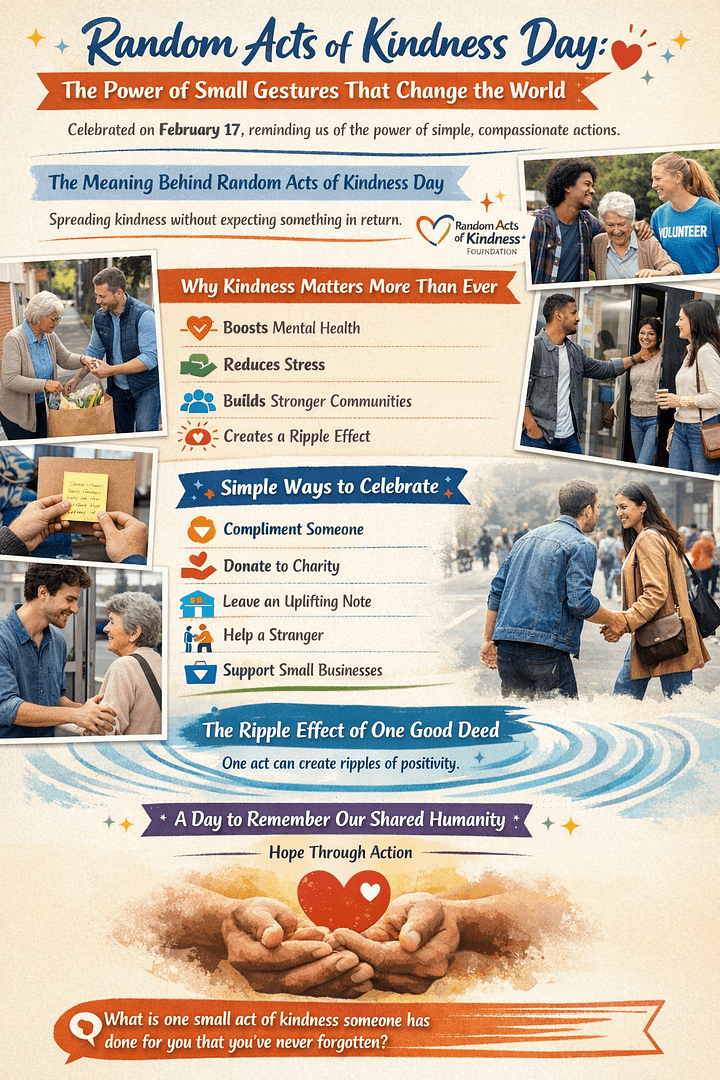
    Random Acts of Kindness Day, celebrated each year on February 17, is a reminder that even the smallest acts of compassion can create powerful ripples throughout our communities and our lives. In a world often dominated by fast schedules, digital noise, and daily stress, this day invites people to slow down, look around, and intentionally choose kindness.

    More than just a feel-good idea, kindness is a force capable of strengthening relationships, improving mental health, and fostering unity among strangers.

    🌼 The Meaning Behind Random Acts of Kindness Day

    Random Acts of Kindness Day encourages individuals to perform thoughtful gestures without expecting recognition or reward. Whether it’s buying coffee for someone in line, leaving an encouraging note, or simply offering a sincere smile, the focus is on generosity that comes from genuine compassion.

    The movement gained global momentum through organizations like the Random Acts of Kindness Foundation, which promotes kindness in schools, workplaces, and communities worldwide. Their mission is simple yet profound: make kindness the norm rather than the exception.

    💛 Why Kindness Matters More Than Ever

    Kindness is not just emotionally uplifting — it has measurable benefits:

    Boosts mental health: Acts of kindness release dopamine and serotonin, often called “feel-good” chemicals.

    Reduces stress: Helping others shifts focus away from personal worries.

    Builds stronger communities: Compassion fosters trust and cooperation.

    Creates a ripple effect: Witnessing kindness inspires others to do the same.

    One small gesture can influence dozens of people indirectly. A single positive interaction may change the entire course of someone’s day — or even their outlook on life.

    🌎 Simple Ways to Celebrate Random Acts of Kindness Day

    You don’t need grand gestures or large resources to participate. Kindness thrives in simplicity.

    Ideas you can try today:

    Compliment someone sincerely.

    Write a thank-you message to a teacher, coworker, or friend.

    Donate food, clothing, or supplies.

    Let someone go ahead of you in line.

    Check in on someone who may feel lonely.

    Leave uplifting notes in public places.

    Support a local small business.

    The key is spontaneity — kindness given freely, without obligation.

    🤝 Kindness in Everyday Life

    Random Acts of Kindness Day isn’t meant to be a once-a-year event. Instead, it serves as a starting point for building daily habits of compassion.

    Kindness can become part of how we communicate, lead, parent, and live. Listening patiently, showing empathy, and offering understanding are acts just as meaningful as grand gestures.

    When kindness becomes intentional, it transforms ordinary moments into opportunities for connection.

    ✨ The Ripple Effect of One Good Deed

    Imagine kindness as a stone dropped into water. The initial splash may seem small, but the ripples travel far beyond what we can see. A person helped today may help another tomorrow — creating a chain reaction that spreads far wider than the original act.

    In times when division and negativity often dominate headlines, kindness offers a quiet but powerful alternative: hope through action.

    🌈 A Day to Remember Our Shared Humanity

    Random Acts of Kindness Day reminds us that compassion is universal. It crosses cultures, beliefs, and backgrounds, connecting people through something deeply human — the desire to care and be cared for.

    You don’t need wealth, status, or special skills to make a difference. Sometimes, all it takes is a moment of intention and a willingness to see someone else’s humanity.

    Because in the end, kindness is never random to the person receiving it.

    Read More Holidays & National Days

  • Fat Tuesday: A Celebration of Joy, Tradition, and Renewal

    Advertisements

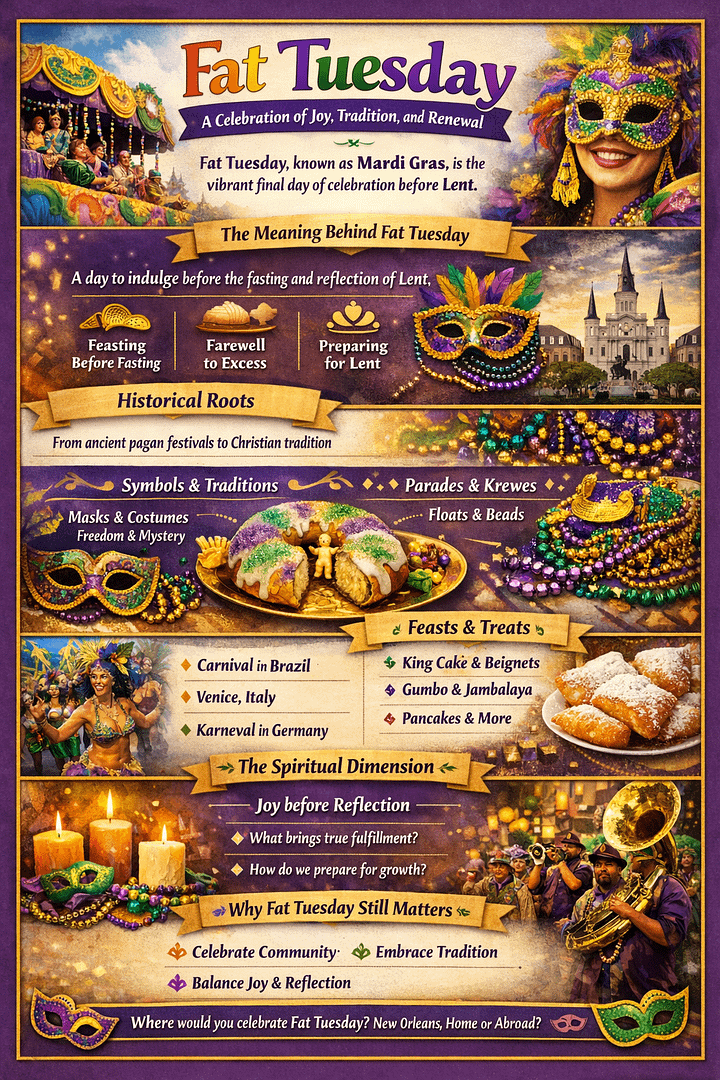
    Fat Tuesday, widely known as Mardi Gras, stands as one of the world’s most energetic and culturally rich celebrations. Bursting with color, music, food, and community spirit, the day represents both an ending and a beginning — the grand finale of Carnival season and the gateway into the reflective period of Lent.

    While many recognize Fat Tuesday for its lively parades and festive atmosphere, its meaning runs far deeper, connecting centuries of history, faith traditions, cultural identity, and shared human celebration.

    The Meaning Behind Fat Tuesday

    Fat Tuesday occurs the day before Ash Wednesday, marking the final opportunity for indulgence before Lent begins in many Christian denominations. Lent traditionally emphasizes fasting, self-discipline, repentance, and spiritual renewal leading up to Easter.

    Historically, families used up rich ingredients that would be restricted during Lent — butter, eggs, sugar, and meats — resulting in feasts filled with hearty and sweet dishes. The day became a symbolic farewell to excess and a preparation for spiritual reflection.

    The tradition reflects an enduring human pattern: moments of celebration balanced by seasons of introspection.

    Historical Roots: From Ancient Festivals to Christian Tradition

    Long before it became associated with Christianity, pre-spring festivals across Europe celebrated renewal, fertility, and the changing seasons. These gatherings included costumes, feasting, and public merriment — themes that still define Fat Tuesday today.

    As Christianity spread, church leaders incorporated existing cultural celebrations into the liturgical calendar, transforming them into the Carnival season. The word Carnival itself comes from the Latin carne vale, meaning “farewell to meat.”

    French and Spanish settlers brought these traditions to the Americas in the 17th and 18th centuries. Nowhere did they flourish more than in New Orleans, where diverse cultural influences — French, African, Spanish, and Caribbean — blended into a uniquely American expression of Mardi Gras.

    Over time, organized social groups known as krewes began hosting elaborate parades and masked balls, shaping the celebration into the spectacle recognized worldwide today.

    Symbols and Traditions of Fat Tuesday
    🎭 Masks: Freedom Through Disguise

    Masks allow participants to step outside everyday identities. Historically, masking blurred class distinctions, enabling people from all walks of life to celebrate equally. Today, masks remain symbols of creativity, mystery, and liberation.

    🎉 Parades and Krewes

    Krewes organize themed parades featuring extravagant floats, costumes, and performances. Beads, coins, and small treasures are tossed to crowds as symbols of goodwill and shared celebration.

    Each parade tells a story — blending satire, art, and tradition — turning city streets into moving theaters of culture.

    👑 The King Cake Tradition

    The King Cake is central to Fat Tuesday celebrations. Decorated in purple, green, and gold icing, the cake honors the biblical Three Kings.

    Hidden inside is a small figurine representing the Christ child. The person who finds it is said to receive good luck — along with the responsibility of hosting the next gathering, ensuring the celebration continues.

    🎶 Music as the Heartbeat

    Music defines Fat Tuesday, especially in New Orleans, where jazz, brass bands, and street performances fill the air. The rhythms symbolize resilience and cultural heritage, reflecting generations of artistic expression born from community experience.

    Global Celebrations of Fat Tuesday

    Though New Orleans may be the most famous American destination, Fat Tuesday is celebrated worldwide in unique ways:

    Brazil: Massive Carnival parades featuring samba dancers and elaborate costumes.

    Italy: Elegant masquerade balls in Venice.

    Germany: “Karneval” celebrations filled with satire and humor.

    Caribbean Nations: Street festivals blending African, European, and indigenous traditions.

    United Kingdom & Ireland: Pancake races and community meals on Shrove Tuesday.

    Each culture interprets the celebration differently, yet all share themes of joy, renewal, and communal unity.

    Food: The Language of Celebration

    Food plays a central role because it represents abundance and togetherness. Traditional Fat Tuesday dishes include:

    King Cake

    Pancakes and crepes

    Gumbo and jambalaya

    Fried pastries like beignets

    Rich stews and savory feasts

    These foods are not merely indulgent; they symbolize gratitude for provision and the shared experience of gathering around a table.

    The Spiritual Dimension

    Despite its festive reputation, Fat Tuesday holds profound spiritual symbolism. It invites participants to fully embrace joy while acknowledging life’s deeper rhythms.

    The celebration encourages reflection on questions such as:

    What brings true fulfillment?

    What habits should we release?

    How can celebration prepare us for growth?

    In this way, Fat Tuesday becomes not just a party, but a transition — a joyful exhale before a season of inward focus.

    Fat Tuesday in Modern Culture

    Today, Fat Tuesday has expanded beyond religious observance. Schools, workplaces, and communities host themed events, cultural festivals, and charity fundraisers. Social media has also helped spread traditions globally, allowing people everywhere to participate in the spirit of Mardi Gras.

    Importantly, modern celebrations increasingly emphasize inclusivity, cultural appreciation, and community engagement rather than excess alone.

    Why Fat Tuesday Still Matters Today

    In a world often dominated by stress and routine, Fat Tuesday reminds people of the importance of celebration. It encourages individuals to:

    Pause and enjoy the present moment

    Connect with community

    Express creativity

    Celebrate cultural heritage

    It teaches that joy is not frivolous — it is essential. Celebration strengthens relationships, renews emotional energy, and prepares people for the challenges ahead.

    Fat Tuesday ultimately reflects a timeless truth: life is richest when moments of celebration and moments of reflection exist in balance.

    Read More Holidays & National Days

  • Unfinished Beside Your Light

    Advertisements

    I love you
    in the quiet way a shoreline loves the sea—
    knowing each wave will touch it
    and still belong to something deeper,
    something vast
    it can never hold.

    You walk through the world with light in your hands,
    as if kindness were effortless,
    as if grace were simply the way you breathe.
    And I stand beside you
    counting my flaws like loose change,
    wondering how someone so whole
    could ever choose someone still unfinished.

    You deserve poetry written in certainty,
    not verses shaped by doubt.
    You deserve a man without hesitation,
    without shadows trailing behind his name.
    Yet here I am—
    loving you with trembling honesty,
    afraid my heart is both my greatest gift
    and my greatest insufficiency.

    I watch the way you smile at small things,
    how compassion finds you first in every room,
    how your laughter repairs parts of me
    I never admitted were broken.
    You do not see what I see—
    the distance between who I am
    and who I believe you deserve.

    Loving you feels like standing beneath stars,
    aware they are beautiful
    because they are unreachable.
    Still, I make wishes I pretend not to make,
    hopes I pretend not to carry.

    If I am not enough,
    it is not because my love is small—
    it is because you are extraordinary,
    and loving you demands a better version of me
    than I have yet become.

    So I try.
    Quietly.
    Daily.
    Not to earn you—
    but to grow into the man
    who can stand beside your light
    without feeling the need to apologize for his shadow.

    And if someday you look at me
    and see worth where I see doubt,
    know this truth has always lived here:

    I may believe I am not good enough for you,
    but I have never loved you
    with anything less
    than everything I am.

    Read More Poetry

  • Broken, But Still Trying: The Quiet Courage of Continuing

    Advertisements

    There are moments in life when strength does not look like confidence, success, or certainty. Instead, it looks like survival. It looks like waking up tired but choosing to face the day anyway. It looks like breathing through pain no one else can see. It looks like trying — even when part of you feels broken.

    Many people carry wounds that remain invisible to the outside world. Behind ordinary routines and polite smiles are stories filled with loss, disappointment, heartbreak, and unanswered questions. These experiences shape us in ways that words often fail to capture. The truth is, not all pain announces itself loudly. Some of it settles quietly into the soul, appearing only in moments of solitude when memories return and emotions can no longer be distracted away.

    To feel broken is deeply human.

    It often comes after loving deeply, trusting fully, or believing in something that didn’t unfold as hoped. Brokenness can come from grief, betrayal, failure, loneliness, or simply the weight of life’s accumulated struggles. Over time, these experiences can leave a person feeling exhausted — as though they are carrying pieces of a life that no longer fit together the way they once did.

    Yet within that brokenness lies something remarkable: endurance.

    The Strength No One Sees

    Society often celebrates visible victories — achievements, milestones, and outward success. But some of the greatest acts of courage happen quietly, without applause. Choosing to keep going when motivation is gone is strength. Allowing yourself to feel pain rather than hiding from it is strength. Admitting that you do not have all the answers is strength.

    There is bravery in vulnerability.

    When someone says, “I’m still trying,” they are expressing one of the most powerful declarations a person can make. It means they have faced moments that could have defeated them but chose persistence instead. It means hope still exists, even if only as a small flicker in the darkness.

    Trying does not always look impressive. Sometimes it means completing small tasks that once felt effortless. Sometimes it means getting through the day without falling apart. Sometimes it means simply breathing deeply and reminding yourself that this moment will pass.

    These quiet victories matter more than we often realize.

    Living With the Weight of Memory

    Memories have a way of lingering long after circumstances change. Certain songs, places, or conversations can reopen emotions thought to be healed. The mind revisits moments that once held meaning, replaying them in search of understanding or closure.

    This is part of the human process of healing.

    We are storytelling beings, constantly trying to make sense of our experiences. When something meaningful ends or changes, the heart struggles to reconcile what was with what is. Missing what once meant everything does not make someone weak — it makes them honest.

    Healing does not require forgetting. Instead, it asks us to learn how to carry memories differently, allowing them to exist without controlling our present.

    The Myth of Having It All Together

    One of the greatest pressures people face is the belief that they must appear strong at all times. Social expectations often encourage perfection — emotional stability, confidence, certainty — even when reality feels far from those ideals.

    But no one truly has everything figured out.

    Life is not a straight path toward clarity. It is messy, unpredictable, and filled with moments of doubt. Accepting this truth can be liberating. Not having all the answers does not mean failure; it means you are still growing.

    Growth rarely feels comfortable. In fact, it often feels like falling apart before coming back together in a new way.

    Small Steps Forward

    Healing rarely arrives in dramatic breakthroughs. More often, it comes quietly through small, consistent acts of self-compassion:

    Choosing rest when exhaustion takes over

    Speaking kindly to yourself instead of harshly

    Allowing emotions to exist without judgment

    Taking one step forward, even when the destination feels unclear

    These small steps may seem insignificant, but over time they create movement. Progress is not measured by speed but by persistence.

    Each day you continue is evidence of resilience.

    Redefining Brokenness

    Perhaps the word broken itself deserves reconsideration. Brokenness suggests something damaged beyond repair, yet human beings are not objects. We adapt, evolve, and rebuild in ways that often make us stronger and more compassionate than before.

    What feels like brokenness may actually be transformation.

    Pain reshapes perspective. It deepens empathy. It teaches patience and humility. Those who have struggled often become the ones who understand others most deeply because they recognize the silent battles behind a stranger’s smile.

    The cracks we carry sometimes become the places where light enters.

    The Power of Trying Again

    Every morning presents a quiet choice: to give up or to try again. Choosing to try does not erase pain, but it creates possibility. It opens space for healing, connection, and unexpected joy.

    Trying again is an act of hope.

    Hope does not always feel optimistic or cheerful. Sometimes hope is stubborn. Sometimes it whispers instead of shouting. Sometimes it simply says, “Maybe tomorrow will be a little easier.”

    And that is enough.

    A Message for Anyone Still Trying

    If you feel tired, overwhelmed, or incomplete, know that you are not alone. Many people are walking similar paths, carrying unseen burdens while doing their best to move forward.

    You do not need to be fully healed to keep living.
    You do not need certainty to take the next step.
    You do not need perfection to be worthy.

    The simple act of continuing — breathing, trying, hoping — is already a victory.

    Because strength is not the absence of struggle.

    Strength is waking up, facing the day, and saying:

    “I may feel broken, but I haven’t given up. I’m still trying.”

    Read More Health & Wellness

  • Brotherhood & Sisterhood Week: Celebrating Unity, Support, and Human Connection

    Advertisements

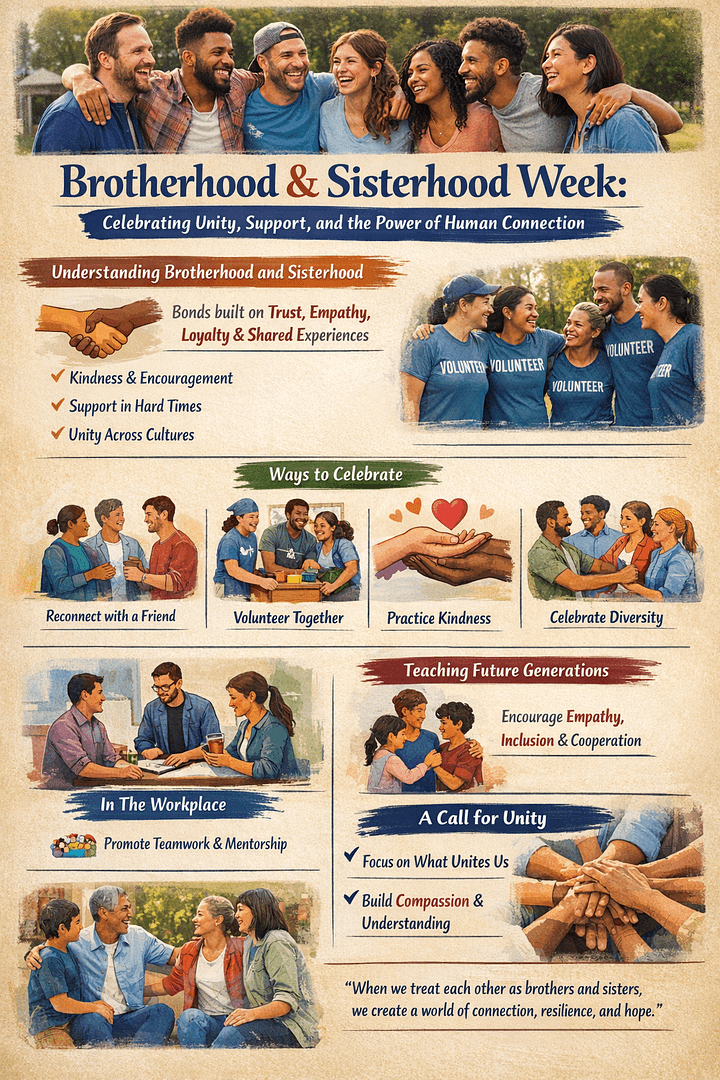
    Brotherhood and Sisterhood Week is a heartfelt observance dedicated to celebrating the meaningful bonds that unite people through friendship, compassion, and shared humanity. While families connected by blood form the foundation of many lives, brotherhood and sisterhood remind us that some of the strongest relationships are those we build through trust, loyalty, and mutual care.

    This week encourages individuals, communities, and organizations to reflect on the importance of standing together — uplifting one another through both triumphs and challenges. At its heart, Brotherhood and Sisterhood Week celebrates the simple yet powerful truth that no one thrives alone.

    Understanding Brotherhood and Sisterhood

    Brotherhood and sisterhood represent emotional and social connections rooted in respect, empathy, and unity. These bonds can exist between friends, coworkers, neighbors, classmates, and even strangers who come together for a shared purpose.

    Unlike relationships formed by obligation, these connections are chosen and nurtured over time. They are strengthened through:

    Shared experiences

    Honest communication

    Acts of kindness

    Mutual encouragement

    Loyalty during difficult moments

    Brotherhood and sisterhood are often revealed not during easy times but during moments of hardship, when people show up for each other without hesitation.

    Historical and Cultural Significance

    Throughout history, societies have relied on forms of brotherhood and sisterhood to survive and grow. From tribal communities supporting one another for survival to social movements advocating equality and justice, unity has always played a vital role in human progress.

    Many cultures emphasize collective responsibility and communal care. Traditions around the world teach that individuals are strongest when they act as part of a supportive group rather than as isolated individuals.

    Today, Brotherhood and Sisterhood Week continues this tradition by encouraging modern communities to rediscover the strength found in cooperation and compassion.

    Why Brotherhood and Sisterhood Matter in Modern Life

    In an age dominated by technology and fast-paced routines, genuine human connection can sometimes be overlooked. Social media may connect people digitally, but emotional connection requires presence, empathy, and intentional effort.

    Combating Loneliness

    Loneliness has become a growing global concern. Meaningful relationships help people feel valued and understood, improving mental and emotional well-being.

    Building Resilient Communities

    Communities built on mutual support recover more quickly from crises. Whether facing natural disasters, economic struggles, or personal hardships, unity provides stability.

    Encouraging Inclusivity

    Brotherhood and sisterhood encourage acceptance across cultural, racial, and generational differences. They promote understanding rather than division.

    Strengthening Personal Growth

    Supportive relationships inspire confidence and personal development. People often achieve more when surrounded by encouragement rather than competition.

    Everyday Examples of Brotherhood and Sisterhood

    The spirit of this week appears in countless ordinary yet powerful moments:

    A friend offering a listening ear during a difficult time

    Coworkers collaborating rather than competing

    Neighbors helping one another during emergencies

    Mentors guiding younger generations

    Communities organizing charitable efforts

    These acts may seem small individually, but together they create a culture of compassion.

    Ways to Celebrate Brotherhood & Sisterhood Week

    Participation does not require large events — meaningful actions often begin with simple gestures.

    1. Reconnect With Someone

    Reach out to a friend or family member you haven’t spoken to recently. A simple message can reignite a valuable connection.

    2. Practice Active Kindness

    Offer help without expecting recognition. Small acts — holding a door, offering encouragement, or checking in on someone — can make a lasting impact.

    3. Volunteer Together

    Community service strengthens bonds while helping those in need. Working toward a shared goal fosters unity and purpose.

    4. Celebrate Diversity

    Learn about another culture, attend a community event, or engage in conversations that broaden understanding.

    5. Express Gratitude

    Take time to thank the people who have supported you. Gratitude strengthens relationships and deepens emotional connections.

    Brotherhood and Sisterhood in the Workplace

    Professional environments also benefit greatly from these values. Teams built on respect and cooperation tend to be more innovative, productive, and positive.

    Encouraging mentorship, collaboration, and inclusive leadership helps create workplaces where individuals feel valued rather than replaceable. When coworkers treat each other like allies instead of competitors, morale and creativity flourish.

    Teaching Future Generations

    Children learn the meaning of brotherhood and sisterhood through observation. When adults model kindness, fairness, and cooperation, young people carry those values forward.

    Schools and families can promote these ideals by encouraging:

    Teamwork and collaboration

    Conflict resolution through empathy

    Inclusion of those who feel left out

    Acts of service and community involvement

    These lessons help shape compassionate leaders of tomorrow.

    The Emotional Impact of Connection

    Human beings are naturally social. Studies consistently show that strong relationships contribute to longer, healthier, and happier lives. Emotional support reduces stress, increases resilience, and provides a sense of belonging that cannot be replaced by material success.

    Brotherhood and sisterhood remind us that emotional strength often comes from shared experiences — laughter, struggles, celebrations, and growth experienced together.

    A Call for Unity in a Divided World

    In times when differences can feel amplified, Brotherhood and Sisterhood Week serves as a gentle call to focus on what unites us rather than what separates us. It encourages listening instead of judging, understanding instead of assuming, and compassion instead of conflict.

    Unity does not require agreement on everything; it simply requires respect and a willingness to care about one another’s humanity.

    Conclusion: Choosing Connection Every Day

    Brotherhood and Sisterhood Week is more than a calendar observance — it is a reminder of how powerful human connection truly is. By nurturing relationships, offering support, and embracing empathy, we help create communities where everyone feels valued and included.

    The spirit of brotherhood and sisterhood lives in everyday choices: checking on a friend, welcoming someone new, standing beside others in difficult moments, and celebrating shared successes.

    When we treat one another as brothers and sisters, we build a world grounded in compassion, resilience, and hope — a world where connection becomes our greatest strength.

    Read More Holidays & National Days

  • National Pancake Week: A Delicious Celebration of Tradition, Comfort, and Community

    Advertisements

    National Pancake Week is a warm and flavorful celebration dedicated to one of the world’s most comforting and universally loved foods — pancakes. More than just a breakfast favorite, pancakes represent tradition, creativity, and togetherness. From family kitchens to neighborhood diners, this special week invites people to slow down, gather around the table, and enjoy meals that create lasting memories.

    Observed during the colder months when comfort foods feel especially inviting, National Pancake Week encourages both seasoned cooks and beginners to rediscover the joy of homemade breakfasts and shared moments.

    🕰️ A Rich History: Pancakes Through the Ages

    Pancakes are among humanity’s oldest prepared foods. Archaeologists believe early versions existed over 30,000 years ago, when grains were ground into flour and cooked with water over heated stones.

    Ancient civilizations embraced pancake-like dishes:

    Ancient Greece and Rome enjoyed flat cakes sweetened with honey.

    Medieval European cooks refined recipes using eggs and milk.

    Early American settlers adapted pancakes using cornmeal and locally available ingredients.

    Over centuries, pancakes became a symbol of resourcefulness — a simple yet satisfying meal made from everyday staples.

    🌎 A Global Food With Local Identity

    Nearly every culture has developed its own version of pancakes, proving that comfort food transcends borders.

    Popular Pancake Variations Around the World

    France: Thin, delicate crêpes filled with sweet or savory ingredients

    Japan: Thick soufflé pancakes known for their airy texture

    Russia & Eastern Europe: Blini served with sour cream or fish

    Ethiopia: Injera, a fermented flatbread used as both food and utensil

    North America: Fluffy buttermilk pancakes topped with butter and syrup

    Each variation reflects local ingredients, traditions, and cultural storytelling through food.

    ❤️ Why National Pancake Week Matters

    In modern life, meals are often rushed or eaten alone. National Pancake Week reminds us that food is not only nourishment — it is connection.

    Emotional Benefits of Shared Meals

    Strengthens family relationships

    Encourages conversation and bonding

    Creates traditions children remember into adulthood

    Provides comfort and emotional warmth

    Cooking pancakes together is especially meaningful because it invites participation — mixing batter, flipping cakes, and choosing toppings become shared experiences.

    🍳 Pancakes and Community Traditions

    Across North America, pancake breakfasts are popular community events. Schools, churches, and nonprofits often host gatherings during this week to bring neighbors together while supporting good causes.

    Restaurants also join the celebration. Chains like IHOP frequently run special promotions, helping turn pancakes into a shared national experience.

    These events highlight how food can unite people across generations and backgrounds.

    🧑‍🍳 Creative Ways to Celebrate National Pancake Week

    You don’t need professional cooking skills to participate. The fun lies in experimentation and creativity.

    Daily Pancake Challenge Ideas

    Try a different theme each day:

    Classic Monday: Traditional buttermilk pancakes

    Fruit Tuesday: Blueberry or strawberry pancakes

    Chocolate Wednesday: Chocolate chip or cocoa batter

    Healthy Thursday: Oatmeal or whole-grain pancakes

    Savory Friday: Cheese, herbs, or vegetable pancakes

    Family Saturday: Cook together as a group

    Brunch Sunday: Host friends or neighbors

    Creating themes adds excitement and turns the week into a memorable tradition.

    🥗 Healthier Pancake Options

    Pancakes can easily be adapted for modern dietary preferences.

    Health-Conscious Variations

    Whole wheat or oat flour for added fiber

    Banana or applesauce as natural sweeteners

    Plant-based milk alternatives

    Protein pancakes using yogurt or protein powder

    Gluten-free blends for dietary needs

    Balanced toppings like fresh fruit, nuts, or yogurt can transform pancakes into a nutritious meal.

    🏡 Pancakes as Family Tradition

    Many families associate pancakes with weekends, holidays, or special mornings. The familiar scent of batter cooking on a griddle often signals relaxation and connection.

    Simple rituals can turn National Pancake Week into a lasting tradition:

    Let children design their own pancake shapes

    Share stories while cooking together

    Write favorite recipes in a family cookbook

    Take annual “pancake morning” photos

    These moments become emotional anchors that families cherish for years.

    🌟 The Psychology of Comfort Food

    Pancakes are often categorized as comfort food because they trigger positive memories and feelings of safety. Warm textures, sweet flavors, and familiar routines activate nostalgia, helping reduce stress and promote relaxation.

    In uncertain or busy times, returning to simple traditions like cooking breakfast together can provide a powerful sense of stability.

    ✨ More Than a Meal

    National Pancake Week celebrates creativity, culture, generosity, and connection. It reminds us that happiness doesn’t always come from grand occasions — sometimes it comes from a warm kitchen, shared laughter, and a stack of pancakes enjoyed together.

    Because at its heart, this week isn’t just about food — it’s about slowing down long enough to savor life’s sweetest moments.

    Read More Holidays & National Days

  • Family Day: Celebrating the Heart of Home and Togetherness

    Advertisements

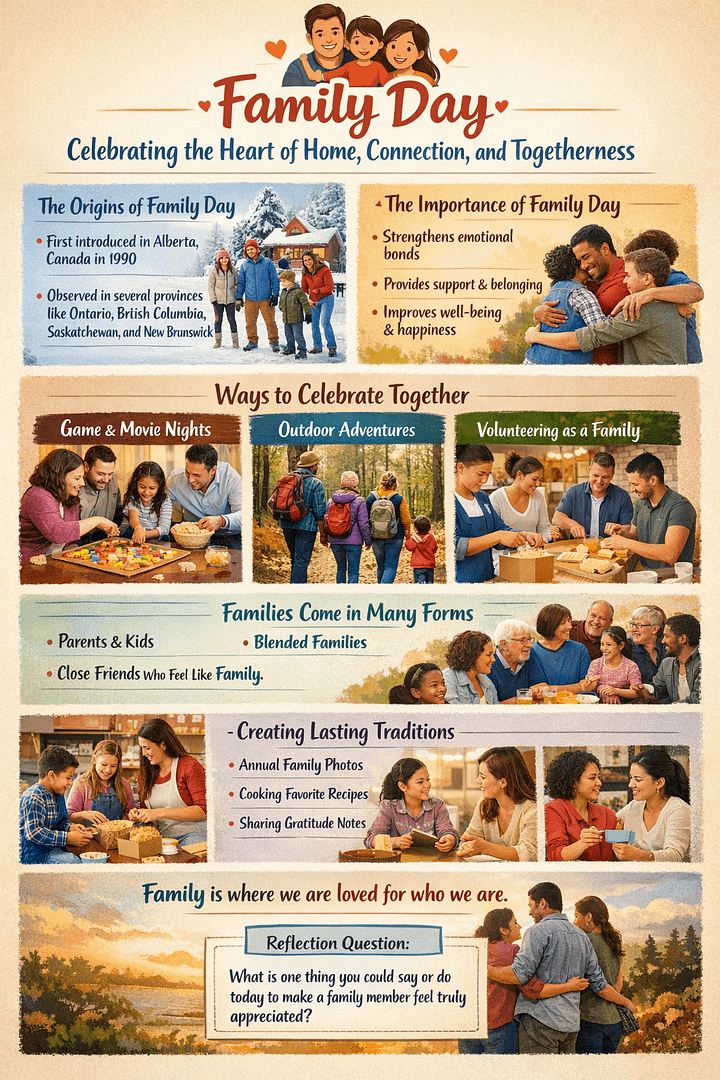
    Family Day is more than just a holiday — it is a celebration of connection, belonging, and the relationships that shape who we are. In a world filled with deadlines, responsibilities, and constant digital noise, Family Day reminds us to pause and focus on the people who provide love, support, and stability throughout our lives.

    Whether celebrated through large gatherings or quiet moments at home, the day emphasizes something deeply human: the need to feel connected and valued within a family unit.

    🌎 The History and Origins of Family Day

    Family Day is most widely observed in Canada, where it serves as a public holiday in several provinces. The holiday was first introduced in Alberta in 1990 as a way to recognize the importance of family life and promote a healthier balance between work and personal time.

    Over the years, other provinces embraced the idea, including:

    Ontario

    British Columbia

    Saskatchewan

    New Brunswick

    Although Family Day is not a nationwide statutory holiday everywhere, its influence has spread globally as communities recognize the growing need to prioritize family relationships and mental well-being.

    ❤️ The Deeper Meaning Behind Family Day

    Family Day highlights a powerful truth: strong families build strong societies. Families are often the first place where individuals learn empathy, communication, responsibility, and resilience.

    Emotional and Social Importance

    Family relationships provide:

    Emotional security during difficult times

    Encouragement and motivation for personal growth

    A sense of identity and belonging

    Support networks that improve mental health

    Studies in psychology consistently show that people who maintain close family connections tend to experience lower stress levels and greater life satisfaction.

    🧠 Family Day in a Modern World

    Modern life has transformed how families interact. Work-from-home schedules, social media, and busy lifestyles often mean people share spaces without truly connecting.

    Family Day encourages intentional interaction by asking families to:

    Put away phones and digital distractions

    Engage in meaningful conversations

    Share experiences rather than simply time in the same room

    Even small acts — cooking together or taking a walk — can rebuild closeness that daily routines sometimes weaken.

    🎉 Meaningful Ways to Celebrate Family Day

    Celebrations don’t need to be elaborate. The most memorable moments often come from simple shared experiences.

    At-Home Activities

    Host a family movie or game night

    Cook a meal together from scratch

    Create a scrapbook or memory journal

    Share stories about childhood memories

    Outdoor Adventures

    Go hiking, skating, or biking

    Visit a park or nature reserve

    Plan a picnic or backyard gathering

    Giving Back Together

    Volunteer at a shelter or food bank

    Help a neighbor in need

    Donate clothes or toys as a family project

    These activities reinforce teamwork, compassion, and shared purpose.

    🏡 Redefining What “Family” Means Today

    Family Day celebrates inclusivity by recognizing that families come in many forms. Today’s families may include:

    Single parents and children

    Blended households

    Grandparents as caregivers

    Close friends who become chosen family

    Long-distance families connected through technology

    The essence of family lies not in structure but in commitment, care, and mutual respect.

    🌱 Creating Traditions That Strengthen Generations

    Traditions help families build continuity and shared identity. Even small yearly rituals can become treasured moments over time.

    Ideas for lasting traditions:

    Writing letters to future selves each year

    Sharing gratitude around the dinner table

    Taking annual photos in the same location

    Cooking a signature Family Day meal together

    These traditions give children emotional anchors and provide adults with meaningful reflection points.

    💬 Communication: The Core of Strong Families

    Family Day also reminds us that relationships thrive through communication. Honest conversations build trust and understanding.

    Helpful practices include:

    Listening without interruption

    Expressing appreciation openly

    Checking in emotionally with one another

    Resolving conflicts with empathy instead of blame

    A single heartfelt conversation can strengthen bonds more than hours spent together without engagement.

    🌟 The Lasting Impact of Family Connection

    The memories created during family moments often become life’s most treasured experiences. Long after achievements fade or routines change, people remember laughter around the table, shared challenges, and unconditional support.

    Family Day encourages us to invest in these moments intentionally — not just once a year, but as an ongoing priority.

    Because ultimately, family is where people learn they are loved not for what they accomplish, but for who they are.

    ✨ A Reminder Worth Carrying Forward

    Family Day is not simply about celebration; it is about appreciation. It invites us to slow down, reconnect, forgive, and express gratitude for those who walk beside us through life’s journey.

    The true spirit of the day lies in presence — being fully there for one another.

    Read More Holidays & National Days

  • Random Acts of Kindness Week: Small Gestures, Big Impact

    Advertisements

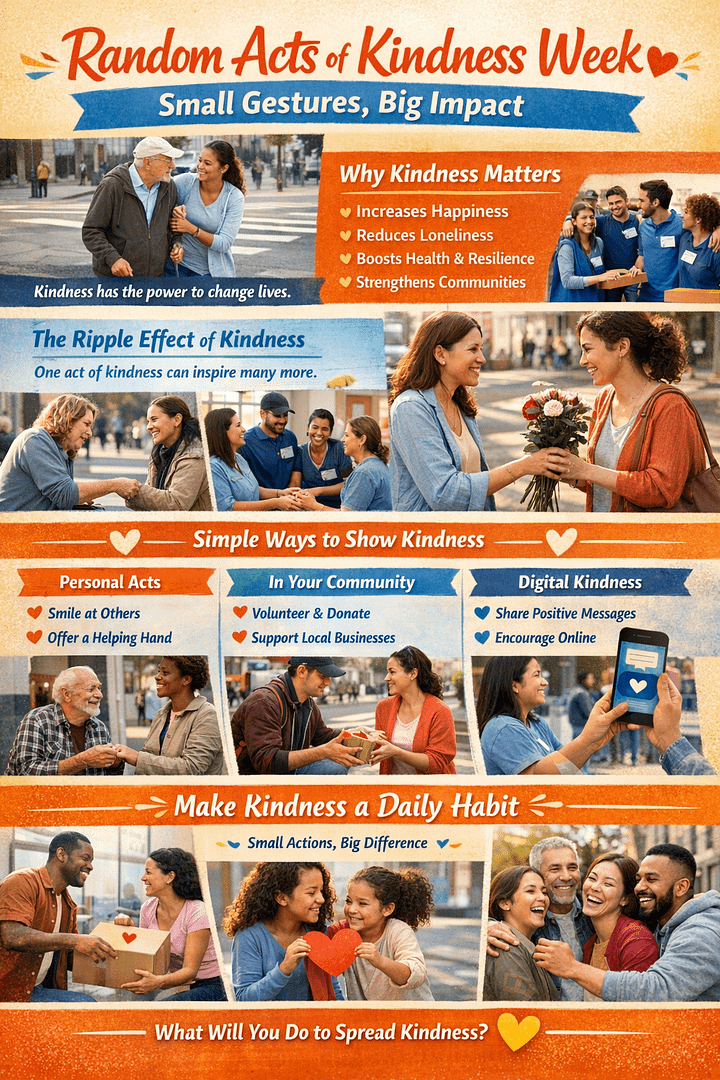
    Every year, Random Acts of Kindness Week reminds us that kindness is one of the most powerful forces we possess — and one that costs nothing to give. In a world often filled with busy schedules, digital distractions, and daily stress, this special week encourages people to pause, look around, and intentionally brighten someone else’s day.

    Kindness may seem simple, but its impact is profound. A thoughtful gesture, a caring word, or a moment of compassion can shift someone’s entire outlook. Random Acts of Kindness Week celebrates these moments and inspires individuals and communities to make kindness a daily habit rather than an occasional act.

    The Meaning Behind Random Acts of Kindness Week

    Random Acts of Kindness Week was created to promote compassion and inspire people to practice generosity without expectation of reward. The emphasis is not on recognition or publicity but on sincerity — doing something good simply because it is the right thing to do.

    Unlike organized charity events, kindness during this week often happens quietly:

    Anonymous good deeds

    Unexpected help

    Genuine encouragement

    Simple human connection

    These actions remind us that kindness doesn’t require wealth, status, or influence. Anyone, anywhere, can participate.

    Why Kindness Is More Important Than Ever

    Modern life can sometimes feel disconnected. Social media comparisons, fast-paced routines, and personal struggles can leave people feeling unseen or isolated. Kindness helps rebuild connection by reminding individuals that they are valued and not alone.

    Studies have shown that acts of kindness can:

    Increase happiness and life satisfaction

    Lower feelings of loneliness

    Strengthen emotional resilience

    Improve physical health through reduced stress

    Create stronger social bonds

    When kindness becomes common, communities become safer, more supportive, and more understanding places to live.

    The Ripple Effect of Kindness

    One of the most beautiful aspects of kindness is its ability to multiply. A single act often inspires others to “pay it forward,” creating a chain reaction that spreads far beyond the original moment.

    For example:

    Someone receives unexpected help and later helps another person.

    A compliment boosts confidence, encouraging kindness toward others.

    A supportive message motivates someone during a difficult time.

    Kindness travels in ways we may never see. A brief interaction today could influence decisions, attitudes, and relationships long into the future.

    Everyday Opportunities for Kindness

    Kindness does not need to be grand or dramatic. In fact, the smallest gestures are often the most meaningful because they show genuine awareness of others.

    💛 Simple Personal Acts

    Smile and make eye contact with people you encounter

    Say “thank you” sincerely

    Check in on a friend you haven’t spoken to recently

    Offer patience during stressful situations

    🏡 Kindness at Home

    Listen without interruption

    Express appreciation to loved ones

    Help with chores without being asked

    Write a heartfelt note of gratitude

    🌎 Community Kindness

    Volunteer your time or skills

    Support local businesses

    Donate unused items to those in need

    Help someone carry groceries or navigate a challenge

    💻 Digital Kindness

    Share encouraging posts instead of negativity

    Defend kindness in online discussions

    Celebrate others’ successes

    Send uplifting messages privately

    Online spaces, often criticized for negativity, can become powerful platforms for encouragement when kindness leads the conversation.

    The Science Behind Kindness

    Kindness is not just emotionally rewarding — it is biologically beneficial. When people perform acts of kindness, the brain releases chemicals such as dopamine, serotonin, and oxytocin, which contribute to feelings of happiness, connection, and trust.

    This neurological response explains why helping others often leaves people feeling energized and fulfilled. Scientists sometimes refer to this experience as the “helper’s high,” showing that kindness supports both mental and physical wellness.

    Kindness in Challenging Times

    Acts of kindness become especially meaningful during periods of hardship. Whether someone is dealing with loss, stress, financial difficulty, or emotional struggles, small gestures can provide comfort and hope.

    You may never know what someone is facing internally. A kind word or thoughtful action can serve as a reminder that compassion still exists — and sometimes that reminder is enough to help someone keep going.

    Teaching Kindness to Future Generations

    Random Acts of Kindness Week also provides an opportunity to teach children and young adults the importance of empathy. When kindness is modeled consistently, it becomes part of a person’s character.

    Parents, educators, and mentors can encourage kindness by:

    Praising compassionate behavior

    Encouraging sharing and cooperation

    Teaching gratitude practices

    Demonstrating respect in everyday interactions

    Children who learn kindness early often grow into adults who value community, understanding, and inclusion.

    Making Kindness a Year-Round Habit

    The ultimate goal of Random Acts of Kindness Week is lasting change. While the celebration lasts only a week, its message encourages a lifelong commitment to compassion.

    You can extend kindness beyond the week by:

    Setting a daily kindness intention

    Keeping a gratitude journal

    Practicing patience during conflict

    Looking for opportunities to help without being asked

    Over time, kindness becomes less of an effort and more of a natural response.

    The Lasting Power of One Kind Act

    History and everyday life both show that change often begins with small actions. A single moment of compassion can restore faith, strengthen relationships, and inspire hope.

    Kindness reminds us of our shared humanity. It bridges differences, softens hardships, and creates connections that words alone cannot express.

    This Random Acts of Kindness Week, remember: you don’t need to change the entire world. You only need to change one moment for one person — and that moment may change everything.

    Read More Holidays & National Days

  • Singles Awareness Day: Celebrating Independence, Self-Love, and the Joy of Being You

    Advertisements

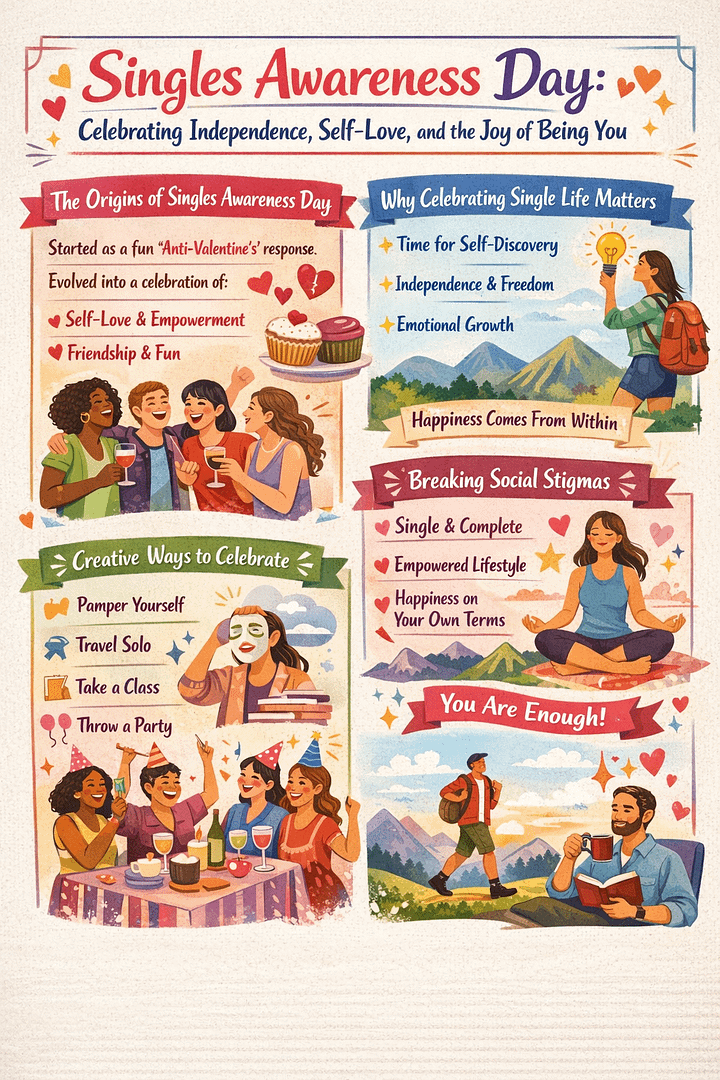
    Every year on February 15, the world quietly shifts focus from roses and romance to something equally meaningful — Singles Awareness Day (SAD). Falling just after Valentine’s Day, this unofficial holiday has grown into a powerful celebration of individuality, self-worth, friendship, and personal freedom.

    Rather than serving as a reaction to romance, Singles Awareness Day has become a reminder that happiness and fulfillment are not defined by relationship status. It honors the idea that being single is not a gap in life’s story — it is a chapter filled with growth, discovery, and possibility.

    The Origins and Evolution of Singles Awareness Day

    Singles Awareness Day began as a playful counterbalance to Valentine’s Day, often marked by humor and lighthearted gatherings among friends. Early celebrations included anti-Valentine’s parties, group dinners, and social events designed to ease the pressure many felt during a romance-centered holiday season.

    Over time, cultural attitudes changed. Society began recognizing that singlehood is not something to “fix” but something that can be deeply fulfilling. Today, Singles Awareness Day represents:

    Emotional independence

    Personal empowerment

    Mental wellness

    Community and friendship

    Self-celebration without apology

    It has evolved from satire into a meaningful cultural moment encouraging people to appreciate themselves exactly as they are.

    Why Celebrating Single Life Matters

    Modern life places heavy expectations on relationships. Movies, social media, and traditions often portray romantic love as the ultimate goal. While relationships can be beautiful, this narrative can unintentionally create pressure or feelings of inadequacy for those who are single.

    Singles Awareness Day challenges this mindset by emphasizing an important truth:

    A meaningful life is built through purpose, connection, and self-understanding — not relationship status alone.

    Being single offers unique opportunities that are sometimes overlooked:

    1. Time for Self-Discovery

    Single life allows individuals to explore identity without compromise. People often learn:

    What truly brings them joy

    Their values and priorities

    Personal boundaries and emotional needs

    This self-awareness becomes the foundation for healthier relationships later in life.

    2. Independence and Freedom

    Without shared obligations, singles often have greater flexibility to:

    Travel spontaneously

    Change careers or pursue education

    Explore hobbies and passions

    Build financial independence

    Freedom becomes a space for creativity and personal reinvention.

    3. Emotional Growth

    Learning to enjoy one’s own company builds resilience. Confidence grows when happiness comes from within rather than external validation.

    The Psychology of Self-Love

    Psychologists often emphasize that the relationship people have with themselves shapes every other relationship they experience. Singles Awareness Day encourages intentional self-love practices that strengthen mental health and emotional stability.

    Self-love is not selfishness — it is self-respect.

    It includes:

    Speaking kindly to yourself

    Forgiving past mistakes

    Setting healthy boundaries

    Prioritizing mental and physical well-being

    Celebrating personal achievements, big or small

    When individuals develop strong self-worth, they create lives rooted in authenticity rather than comparison.

    Friendship: The Heart of the Celebration

    One of the most beautiful aspects of Singles Awareness Day is its emphasis on friendships. Romantic relationships often receive the spotlight, but friendships provide enduring emotional support and shared joy.

    Many people celebrate by:

    Hosting group dinners or game nights

    Planning outings with close friends

    Writing appreciation messages to loved ones

    Creating traditions centered on connection rather than romance

    These moments reinforce that love exists in many forms — and friendship is one of the strongest.

    Creative Ways to Celebrate Singles Awareness Day

    There are endless ways to honor the day, depending on personality and interests.

    🌿 Invest in Yourself

    Start a new fitness or wellness routine

    Take a class or learn a skill

    Create a personal vision board

    ✨ Practice Intentional Self-Care

    Enjoy a digital detox

    Take a long walk or meditation session

    Treat yourself to your favorite meal or experience

    🌎 Embrace Adventure

    Go on a solo outing or day trip

    Visit a museum, park, or new café

    Try something you’ve always wanted to do alone

    🎉 Celebrate With Humor

    Some embrace the playful side with themed parties, comedy nights, or movie marathons that remind everyone not to take life too seriously.

    Breaking Social Stigmas Around Being Single

    Despite changing attitudes, societal myths about singlehood still exist — such as the belief that single people are lonely or incomplete. In reality, research increasingly shows that many singles report strong social networks, personal satisfaction, and emotional independence.

    Singles Awareness Day helps dismantle these myths by reframing singlehood as:

    A valid lifestyle choice

    A time for personal expansion

    A period of empowerment rather than absence

    It encourages people to redefine success and happiness on their own terms.

    Singles Awareness Day in the Digital Age

    Social media has played a significant role in reshaping the holiday. Instead of comparison-driven posts, many individuals now use platforms to share messages of self-acceptance, humor, and encouragement.

    Online communities celebrate by:

    Sharing self-love affirmations

    Posting solo achievements

    Encouraging authenticity over perfection

    Building supportive digital friendships

    The message spreads globally: you are enough exactly as you are.

    Looking Ahead: A Celebration Beyond One Day

    While Singles Awareness Day happens once a year, its philosophy extends far beyond February 15. The goal is not simply to celebrate being single for a day but to cultivate lifelong self-respect and independence.

    Whether someone remains single, enters a relationship, or moves between seasons of life, the lesson remains constant:

    Happiness begins with knowing and valuing yourself first.

    Final Reflection

    Singles Awareness Day transforms what was once considered an “alternative holiday” into a powerful affirmation of individuality. It celebrates freedom, growth, friendship, and the quiet confidence that comes from standing comfortably on your own.

    Love is not limited to romance. It lives in laughter with friends, personal achievements, peaceful solitude, and the courage to embrace who you truly are.

    And perhaps the greatest message of all is this:

    The most important relationship you will ever have is the one you build with yourself.

    Read More Holidays & National Days

Exit mobile version