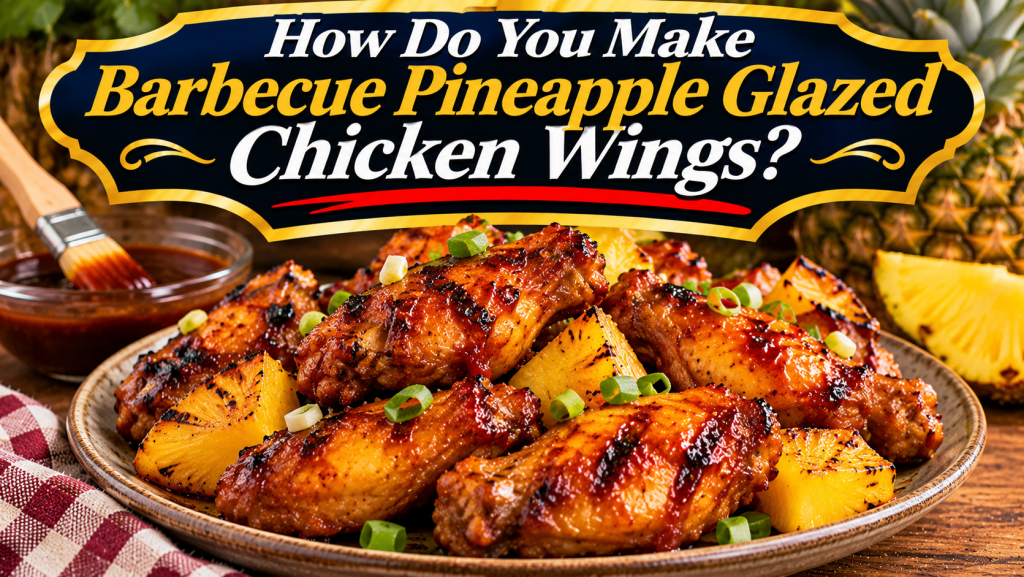
Barbecue pineapple glazed chicken wings combine smoky grilled chicken with a sticky, sweet and tangy sauce. Pineapple juice lends a tropical sweetness that complements the savory barbecue flavor, while a splash of vinegar and a little garlic keep the glaze from tasting overly sugary. The best way to prepare these wings is to cook them over indirect heat until the skin has rendered and the chicken is cooked through, then brush on the glaze toward the end. This keeps the natural sugars from burning before the wings are ready.
Recipe at a Glance
Yield: about four to six appetizer servings. Preparation time: 15 minutes. Grilling time: approximately 35–50 minutes. Sauce preparation: 10–15 minutes, which can overlap with grilling. Total time: approximately one hour, excluding grill preheating. Equipment includes a gas or charcoal grill with a lid, tongs, a small saucepan, a basting brush and an instant-read food thermometer. Actual cooking time depends on wing size, weather and grill temperature.
Ingredients for the Chicken Wings
Use 3 pounds chicken wings, separated into flats and drumettes; 1 tablespoon neutral cooking oil; 1 teaspoon kosher salt; 1 teaspoon smoked paprika; 1 teaspoon garlic powder; ½ teaspoon onion powder; and ½ teaspoon ground black pepper. If you purchase whole wings, separate them at the joints and reserve the tips for making stock. A small amount of oil helps the seasoning adhere, but the chicken skin already contains fat, so there is no need to coat it heavily.
Ingredients for the Pineapple Barbecue Glaze
Gather ¾ cup unsweetened pineapple juice, ½ cup your favorite barbecue sauce, 1 tablespoon apple cider vinegar, 1 tablespoon reduced-sodium soy sauce, 2 teaspoons brown sugar, 1 finely minced garlic clove and ½ teaspoon grated fresh ginger. Add a pinch of crushed red pepper flakes if you like a little heat. For garnish, use sliced green onions and optional toasted sesame seeds. If your barbecue sauce is particularly sweet, omit the brown sugar at first and adjust the finished glaze to taste.
Step 1: Prepare and Season the Wings
Pat the chicken wings thoroughly dry with paper towels. Do not rinse raw poultry, because splashing water can spread bacteria around the kitchen. Combine the salt, smoked paprika, garlic powder, onion powder and pepper. Toss the wings with the oil and seasoning until lightly and evenly coated. Place them on a clean tray designated for raw chicken. If you have extra time, refrigerate the seasoned wings uncovered on a rack over a rimmed tray for a few hours on the lowest shelf, away from ready-to-eat foods. This helps dry the skin for better browning.
Step 2: Set Up the Grill for Two-Zone Cooking
Preheat a gas grill with one side lit and the other side unlit, or arrange charcoal on one side of a charcoal grill. Aim for a covered grill temperature of approximately 375–400°F. The cooler side is your indirect cooking zone, while the hotter side is available for final crisping. Clean the grates before cooking and lightly oil them using a safe method appropriate to your grill. This setup gives the wings time to cook evenly without exposing dripping fat and sugary glaze to continuous direct flames.
Step 3: Make the Pineapple Glaze
Combine the pineapple juice, barbecue sauce, vinegar, soy sauce, brown sugar, garlic, ginger and optional red pepper in a small saucepan. Bring the mixture to a gentle simmer over medium heat, then reduce the heat and cook uncovered for 10–15 minutes. Stir periodically to prevent sticking. The glaze should become glossy and thick enough to lightly coat the back of a spoon. It will thicken a little more as it cools. If it becomes too thick, stir in a tablespoon of pineapple juice or water. Divide the glaze into a basting portion and a separate clean serving portion.
Step 4: Grill the Wings Over Indirect Heat
Arrange the wings on the cooler side of the grill with a little room between each piece. Close the lid and cook for about 30–40 minutes, turning every 10–15 minutes. Adjust the burners or vents as necessary to maintain a steady temperature. Check several wings with an instant-read thermometer inserted into the thickest meaty portion without touching bone. Chicken must reach an internal temperature of at least 165°F. Wings often develop a more tender texture when cooked to around 175–185°F, as additional cooking helps soften connective tissue. Avoid relying solely on the color of the skin.
Step 5: Crisp and Glaze the Wings
Once the wings are cooked through, move them briefly over direct medium heat if the skin needs additional crisping. Turn frequently and move them away from any flare-ups. Return the wings to the indirect side and brush a thin layer of pineapple barbecue glaze over each piece. Close the lid for two to three minutes, then turn and apply another light coating. Continue cooking just until the glaze becomes tacky, watching closely because pineapple juice and barbecue sauce contain sugars that can burn. Discard any basting sauce contaminated by contact with chicken or used brushes.
Step 6: Serve While Hot
Transfer the finished wings to a clean platter using clean tongs. Brush or drizzle them with a little of the reserved, uncontaminated glaze if desired. Sprinkle sliced green onions and toasted sesame seeds over the top. Serve with extra sauce on the side and napkins for the sticky glaze. Grilled pineapple wedges make an attractive accompaniment, especially when lightly charred and served separately. Allow the wings to rest for a few minutes before eating so the glaze has time to settle.
Why Pineapple Works So Well in Barbecue Sauce
Pineapple juice contains natural sugars and acidity that pair nicely with smoky chicken. When simmered with barbecue sauce, it creates a glossy glaze without requiring a large amount of additional sugar. Fresh pineapple also contains an enzyme called bromelain, which breaks down proteins. An extended raw pineapple marinade can make chicken surfaces unpleasantly soft, so this recipe uses pineapple in a cooked finishing sauce rather than a long marinade. Canned or bottled pasteurized juice is convenient and provides a relatively consistent flavor.
How to Get Crispy Wings Without Burning the Sauce
Drying the chicken before adding seasoning is a useful first step. Indirect heat allows the fat beneath the skin to render gradually, and a brief period over direct heat can improve browning. Apply the sticky sauce after the skin has developed its texture. A thin coating sets more effectively than a thick layer, which can make the skin soggy and cause drips to burn. If you want extra sauce, serve it separately so the wings do not sit in liquid. Never leave glazed wings unattended over open flames.
How to Make Pineapple Barbecue Wings in the Oven
Preheat the oven to 425°F. Arrange the seasoned wings on a lightly greased oven-safe wire rack set over a rimmed baking sheet. Bake for approximately 40–50 minutes, turning halfway through, until the wings reach at least 165°F and the skin is browned. Brush with the prepared glaze during the last five minutes or toss the cooked wings in a small portion of the sauce after baking. For extra caramelization, broil briefly if your equipment is broiler-safe, watching continuously. Cooking times vary according to the oven and wing size.
Easy Flavor Variations
For spicy pineapple wings, add cayenne pepper or a small amount of hot sauce to the glaze. For a smoky version, use a smoky barbecue sauce and increase the smoked paprika slightly. A ginger-forward variation can include an additional half teaspoon of grated ginger. For a tangier finish, add a small squeeze of lime juice after removing the glaze from the heat. If you prefer less sweetness, omit the brown sugar and choose an unsweetened or lower-sugar barbecue sauce. Adjust seasonings gradually to preserve the balance between pineapple and smoke.
What to Serve With Pineapple Glazed Wings
These wings pair well with crisp coleslaw, grilled corn, potato salad, baked beans or roasted sweet potatoes. A cucumber salad provides a cooling contrast to a spicy glaze, while steamed rice turns the wings into a more substantial dinner. For a backyard gathering, arrange fresh vegetables and fruit alongside the platter. Serve creamy dips separately rather than coating the wings with them, allowing guests to enjoy the pineapple flavor on its own.
Storage and Reheating
Refrigerate cooked wings in a shallow covered container within two hours, or within one hour if the ambient temperature is above 90°F. Use refrigerated leftovers within three to four days. Freeze cooled wings for up to three months for best quality and thaw them overnight in the refrigerator. Reheat on a rack in a 350°F oven or in an air fryer until the internal temperature reaches 165°F. Add a little separately stored glaze near the end if the wings appear dry. Avoid overheating sugary sauce, which may scorch during reheating.
Frequently Asked Questions
Can I use fresh pineapple juice?
Yes. Freshly squeezed pineapple juice works well in the cooked glaze. Strain out large pieces of pulp if you prefer a smooth sauce, and adjust the sweetener based on the fruit’s natural sweetness.
Can I use frozen chicken wings?
Yes. Thaw them completely in the refrigerator before seasoning and grilling. Pat them dry thoroughly for better browning and more even cooking.
When should I put barbecue sauce on the wings?
Apply the glaze during the final few minutes of cooking, after the wings are cooked through and browned. This reduces the chance of burning the natural sugars.
Can I make the pineapple glaze ahead of time?
Yes. Cool and refrigerate the sauce in a clean airtight container for up to three or four days. Reheat gently and thin with water if necessary before using.
Can I substitute another fruit juice?
Orange or mango juice can produce a tasty variation, although it will not have the same pineapple flavor. Choose unsweetened juice and adjust the vinegar and sugar as needed.
Final Tips
The combination of steady indirect heat, dry seasoned chicken skin and a late application of pineapple barbecue glaze is the foundation of this recipe. Use a thermometer to confirm doneness and keep the wings away from intense flames once they are coated. Serve the wings hot with a little extra glaze and fresh toppings for a flavorful appetizer or casual family meal.
Leave a Reply