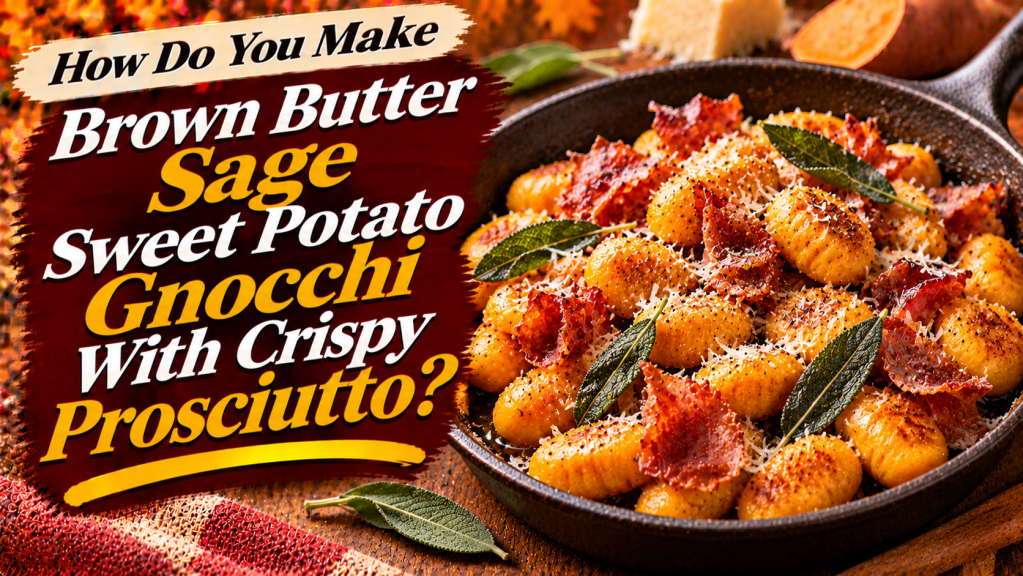
Brown butter sage sweet potato gnocchi with crispy prosciutto combines soft homemade dumplings with a nutty butter sauce, fragrant sage, and delicate shards of salty cured ham. Roasted sweet potatoes give the gnocchi their golden-orange color and gentle sweetness, while the savory topping brings contrast. This is a comforting dinner that feels special enough for a holiday meal without requiring an elaborate sauce.
The most important part of making sweet potato gnocchi is managing moisture. Roast the potatoes rather than boiling them, let their flesh cool, and add flour gradually. A dough that is soft and slightly tacky usually produces lighter dumplings than one that has been kneaded until completely dry.
Recipe at a Glance
Servings: 4. Preparation time: 35 minutes. Potato roasting time: 45–60 minutes. Gnocchi cooking and finishing time: 15–20 minutes. Equipment: rimmed baking sheet, potato ricer or masher, mixing bowl, bench scraper, large pot, slotted spoon, and wide light-colored skillet.
Ingredients for Sweet Potato Gnocchi
For the dough, use 1 pound orange-fleshed sweet potatoes, 1 large egg yolk, ½ teaspoon fine salt, ¼ teaspoon ground nutmeg if desired, and approximately 1 to 1½ cups all-purpose flour, plus additional flour for dusting. The exact quantity depends on the moisture in the potatoes. Measure out the flour but do not add it all at once.
For the sauce and garnish, use 5 tablespoons unsalted butter, 8–12 fresh culinary sage leaves, 3 ounces thinly sliced prosciutto, ¼ cup finely grated Parmesan cheese, freshly ground black pepper, and 1–2 teaspoons fresh lemon juice if desired. Reserve about half a cup of the gnocchi cooking water before draining. The recipe contains wheat, egg, and milk; check packaged ingredients for additional allergens.
How to Roast Sweet Potatoes for Gnocchi
Preheat the oven to 400°F. Wash the sweet potatoes, dry them, and pierce each several times with a fork. Place them on a rimmed baking sheet and roast for approximately 45–60 minutes, until a knife easily reaches the center. Larger potatoes may need extra time. Roasting concentrates their flavor and avoids the additional moisture introduced by boiling.
Once the potatoes are cool enough to handle, split them open and scoop the flesh into a bowl. Measure approximately 1½ cups mashed flesh, saving any excess for another meal. Pass it through a potato ricer or mash thoroughly until smooth. Spread the mash out briefly so excess steam can escape, then allow it to cool before adding the egg yolk.
How to Make Homemade Sweet Potato Gnocchi
Prepare the dough on a clean lightly floured surface. Keep a baking sheet dusted with flour nearby for the shaped dumplings.
Step 1: Mix the dough
Combine the cooled sweet potato mash with the egg yolk, salt, and optional nutmeg. Stir in one cup of flour using a fork or flexible spatula. Add the remaining flour a tablespoon or two at a time until the dough can be handled. Stop adding flour as soon as it holds together well enough to shape. Avoid tasting raw dough because it contains uncooked flour and egg.
Step 2: Shape the gnocchi
Turn the dough onto a lightly floured work surface and divide it into four portions. Gently roll each portion into a rope about three-quarters of an inch thick. Use a bench scraper or knife to cut each rope into pieces about an inch long. If the dough sticks, dust your hands and the work surface lightly rather than kneading large amounts of flour into it.
Step 3: Add ridges if desired
Roll each piece gently along the back of a fork or a gnocchi board to create ridges. This step is optional, but the grooves can help the brown butter cling to the dumplings. Arrange the shaped gnocchi in a single layer on the floured sheet pan. Do not stack them, since their soft surfaces may stick together.
Step 4: Test the dough
Bring a large pot of lightly salted water to a gentle boil. Cook one gnocchi as a test before adding a full batch. It should hold its shape, rise to the surface, and become tender after another minute or two of cooking. Cut the test dumpling open to check that the center is cooked through without a raw floury texture. If it falls apart, gently incorporate a little more flour into the remaining dough.
Step 5: Cook in batches
Lower batches of gnocchi into the gently boiling water. Stir gently once so they do not stick to the bottom. When they float, continue cooking for approximately one to two minutes, checking that they are fully cooked. Remove them with a slotted spoon and transfer to a lightly buttered plate. Reserve some cooking water before draining the pot.
How to Make Crispy Prosciutto
Arrange the prosciutto slices in a dry skillet over medium heat and cook for about two to three minutes per side, depending on thickness, until they become crisp. Alternatively, bake in a single layer on a parchment-lined baking sheet at 400°F for approximately 8–12 minutes. Watch closely because thin slices can darken quickly.
Transfer to a paper towel-lined plate and let cool briefly. The slices will generally become firmer as they cool. Break them into bite-sized shards and reserve them for serving. Adding them at the very end keeps their crisp texture rather than allowing them to soften in the butter sauce.
How to Make Brown Butter Sage Sauce
Place the butter in a wide, light-colored skillet over medium-low heat. Allow it to melt and foam, swirling the pan occasionally. As the water evaporates, the milk solids settle and gradually become golden brown. Watch closely for tiny amber flecks and a nutty aroma. This process typically takes several minutes.
Add the dry sage leaves as the butter begins to turn golden, allowing them to sizzle briefly until crisp. Remove the pan from direct heat when the butter is amber rather than dark brown. Transfer the sage leaves to a plate if they are browning too quickly. Butter can progress from pleasantly nutty to burnt within seconds, so do not leave the skillet unattended.
Finishing the Gnocchi
Return the skillet to low heat and add the cooked gnocchi. Toss gently in the brown butter, letting a few surfaces develop lightly golden edges if desired. Add one or two tablespoons of reserved cooking water and swirl to form a light sauce. Additional water can be added in small amounts if the dish seems too oily or dry.
Remove from the heat and stir in half the Parmesan, a little black pepper, and optional fresh lemon juice. Divide among warm plates and finish with the remaining Parmesan, crisp sage, and crumbled prosciutto. Taste before adding salt, since both prosciutto and Parmesan contribute considerable saltiness.
Tips for Light, Tender Gnocchi
Use roasted rather than boiled potatoes and allow the mash to cool before mixing. Add only enough flour to make a workable dough. Excessive kneading encourages gluten development and can make the dumplings chewy. Shape them gently and cook in small batches rather than crowding the pot.
Sweet potatoes vary considerably in moisture, so the flour measurement cannot always be exact. If the first test gnocchi holds together, resist adding flour simply because the dough feels a little sticky. A light dusting on the outside is usually sufficient. If the dough is extremely wet, add flour gradually and test again.
Delicious Variations
For a vegetarian version, omit prosciutto and choose a vegetarian hard cheese made with non-animal rennet. Toasted pumpkin seeds or crispy sautéed mushrooms can provide savory texture. For a more autumn-inspired version, add a small pinch of cinnamon to the dough and finish with toasted pecans if nut allergies are not a concern.
You can also use store-bought sweet potato gnocchi and prepare only the brown butter sauce and prosciutto. Follow the package cooking instructions. For a dairy-free alternative, use an appropriate plant-based butter and cheese substitute, although plant-based butter may not develop the same browned milk-solid flavor.
What to Serve With Sweet Potato Gnocchi
A simple arugula salad with lemon vinaigrette balances the rich butter sauce. Roasted Brussels sprouts, green beans, or sautéed spinach also make flavorful accompaniments. Because the gnocchi are substantial, keep additional starches optional. For a dinner party, serve smaller portions as a first course before a roasted main dish.
Make-Ahead, Storage, and Reheating
Roast and mash the sweet potatoes a day ahead and refrigerate them promptly in a covered container. For longer preparation, freeze uncooked shaped gnocchi in a single layer until firm, then transfer them to a freezer-safe bag. Use within two months for best quality. Cook directly from frozen in gently boiling water, allowing extra time and checking the centers for doneness.
Refrigerate cooked leftovers in shallow covered containers within two hours, or one hour above 90°F, and use within three to four days. Reheat gently in a skillet with a little water until the leftovers reach 165°F throughout. Store the crispy prosciutto separately when possible and add it after reheating.
Frequently Asked Questions
Why are my sweet potato gnocchi gummy?
Too much flour, excessive kneading, or overcooking may be responsible. Roast the potatoes, mix gently, and test a single dumpling before cooking the batch.
Can I use canned sweet potato purée?
Yes, if it is plain and unsweetened. It may contain more moisture than roasted potatoes, so drain or gently reduce it first and cool completely before making the dough.
Do I need a gnocchi board?
No. A fork creates simple ridges, and you can also leave the dumplings plain.
Can I substitute bacon for prosciutto?
Yes. Cook bacon thoroughly until crisp, drain it, and crumble over the finished gnocchi. Its smoky flavor will change the character of the dish.
Why did my brown butter burn?
The skillet may have been too hot or the butter cooked too long. Use moderate heat, watch for amber flecks, and remove it from direct heat as soon as it smells nutty.
Final Thoughts
Brown butter sage sweet potato gnocchi with crispy prosciutto balances tender homemade dumplings with aromatic butter and a salty, crunchy topping. Roast the potatoes to reduce moisture, use flour sparingly, and watch the butter carefully as it browns. Finish with crisp sage and prosciutto just before serving for a comforting and flavorful meal.
Leave a Reply