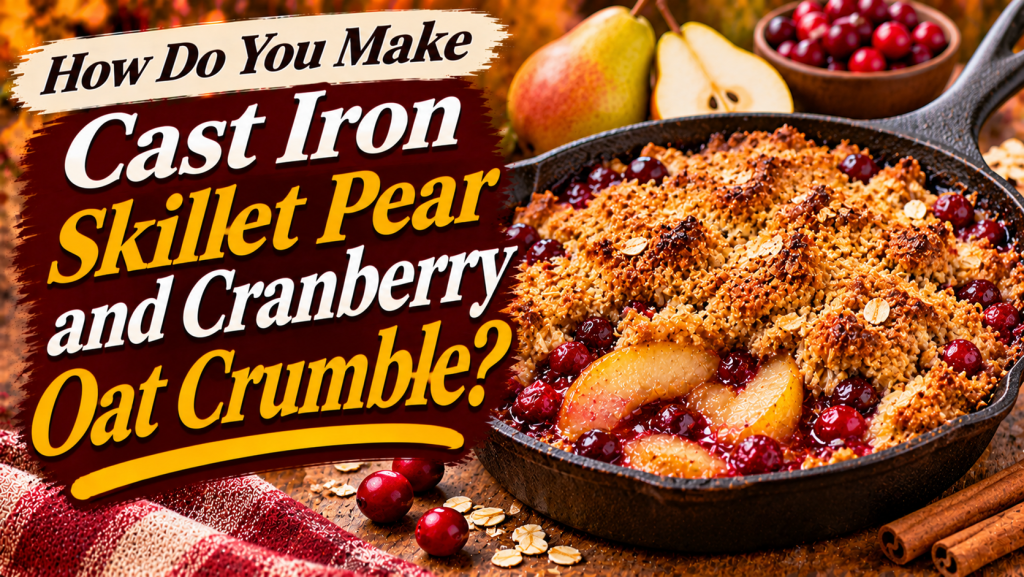
Cast iron skillet pear and cranberry oat crumble is a warm fruit dessert with tender pears, tart cranberries, and a buttery golden oat topping. Pears provide natural sweetness that softens the sharper flavor of cranberries, while cinnamon and vanilla bring a comforting aroma to the kitchen. Baking everything in a cast iron skillet gives the dessert a rustic presentation and helps keep it warm at the table.
The best crumble has a bubbling fruit filling that is neither watery nor overly thick, and a topping that stays crisp instead of sinking into the fruit. A little cornstarch, evenly sliced pears, and cold butter help achieve that balance. This recipe is especially useful for fall and winter gatherings, but frozen cranberries make it possible to prepare throughout the year.
Recipe at a Glance
Servings: 6–8. Preparation time: 20 minutes. Baking time: 35–45 minutes. Resting time: 15–20 minutes. Oven temperature: 375°F. Equipment: 10-inch seasoned cast iron skillet, mixing bowls, sharp knife, cutting board, and oven mitts.
Ingredients for Pear and Cranberry Oat Crumble
For the fruit filling, use 5 medium firm-ripe pears (about 5 cups sliced), 1½ cups fresh or frozen cranberries, ⅓ cup granulated sugar, 2 tablespoons cornstarch, 1 tablespoon fresh lemon juice, 1 teaspoon vanilla extract, ½ teaspoon ground cinnamon, and a small pinch of salt. For greasing the skillet, use 1 teaspoon unsalted butter.
For the oat crumble topping, use 1 cup old-fashioned rolled oats, ¾ cup all-purpose flour, ½ cup packed light brown sugar, ½ teaspoon ground cinnamon, ¼ teaspoon salt, and ½ cup cold unsalted butter cut into small cubes. Optional additions include ¼ cup chopped pecans or walnuts and a little finely grated orange zest. Nuts are optional and should be omitted when preparing a nut-free dessert.
Choosing the Right Pears
Bosc and Anjou pears are particularly useful for baking because firm-ripe examples tend to retain some shape as they soften. Bartlett pears also work, but very ripe ones may release more juice and become softer during baking. Choose fruit that yields slightly near the stem without feeling mushy or displaying signs of spoilage.
Peeling the pears is optional. Leaving thin skins on adds texture and reduces preparation time, while peeling creates a smoother filling. Remove the cores and slice the fruit into pieces roughly a quarter inch thick. Avoid cutting some slices much thicker than others, since even sizing helps the filling become tender at approximately the same time.
How to Make Cast Iron Skillet Pear and Cranberry Oat Crumble
Follow these steps to prepare the fruit filling, mix the oat topping, and bake the dessert.
Step 1: Preheat the oven
Set an oven rack near the center and preheat to 375°F. Lightly grease a 10-inch cast iron skillet with butter. Make sure the skillet is oven-safe and well seasoned. If you do not have one, use a similarly sized oven-safe baking dish with enough depth to contain the bubbling fruit.
Step 2: Prepare the fruit filling
Wash the pears and cranberries. Core and slice the pears, then combine them with the cranberries in a large bowl. Add granulated sugar, cornstarch, lemon juice, vanilla, cinnamon, and salt. Toss gently until the cornstarch and seasonings are evenly distributed. Frozen cranberries can generally be added directly, although the filling may take a few extra minutes to bubble.
Step 3: Make the oat topping
In a separate bowl, stir together the rolled oats, flour, brown sugar, cinnamon, and salt. Add the cold cubed butter. Rub the butter into the dry ingredients with your fingertips or use a pastry cutter until the mixture resembles coarse crumbs with some larger clumps. Avoid working it into a uniform dough. The uneven clumps create a pleasant variety of crunchy textures.
Step 4: Assemble the crumble
Transfer the fruit mixture and any juices in the bowl to the greased skillet. Spread it into an even layer. Scatter the oat topping loosely over the fruit, covering most of the surface without pressing it down. A few small openings allow steam to escape and make it easier to see when the filling is bubbling.
Step 5: Bake until golden
Place the skillet on a rimmed baking sheet to catch any overflowing juices. Bake for approximately 35–45 minutes. The topping should become golden brown, and the filling should bubble around the edges and through several openings. Check the pears with the tip of a thin knife; they should be tender. If the oats brown before the fruit is ready, loosely cover the skillet with foil and continue baking.
Step 6: Rest before serving
Carefully remove the skillet using oven mitts and place it on a heat-resistant surface. Let the crumble rest for 15–20 minutes so the fruit juices thicken slightly. Remember that the skillet handle remains hot for a considerable time after baking. Serve warm with vanilla ice cream, whipped cream, or a spoonful of plain Greek yogurt if desired.
How to Keep the Oat Topping Crispy
Old-fashioned rolled oats offer a substantial texture and make the topping less uniform than flour alone. Cold butter creates small pockets of fat that melt during baking, helping the crumbs become crisp. Avoid packing the topping tightly against the fruit. A loosely scattered layer allows heat to reach more of its surface.
If the crumble is prepared too far ahead before baking, moisture from the fruit can soften the raw topping. For make-ahead preparation, refrigerate the fruit and topping separately and assemble shortly before baking. Store leftovers covered in the refrigerator, but reheat them uncovered in the oven to restore some of their original crispness.
How to Prevent a Watery Fruit Filling
Pears differ in moisture content, and cranberries release liquid as their skins split. Cornstarch helps thicken the juices as they heat. Mix it thoroughly with the sugar and fruit rather than sprinkling a large amount directly into the skillet. The filling needs to bubble for the starch to thicken properly. Allowing the dessert to rest also helps the sauce settle.
Do not add excessive cornstarch before you know how juicy the pears are. Too much can create a stiff or gummy filling. If the pears are especially ripe, use slightly less lemon juice or choose a firmer variety the next time. If the filling seems a little loose immediately after baking, wait until the resting period is complete before deciding whether it is too thin.
Delicious Recipe Variations
For an orange cranberry version, add a teaspoon of finely grated orange zest to the fruit and replace half the lemon juice with orange juice. For a ginger pear crumble, add a quarter teaspoon of ground ginger or a little freshly grated ginger. A small pinch of nutmeg can also complement the cinnamon.
Apples can replace half the pears for a slightly firmer filling. Slice them thinly so they soften evenly with the pears. Chopped pecans or walnuts can be mixed into the topping for additional crunch. For a dairy-free option, use a suitable baking butter substitute. To make a gluten-free variation, choose certified gluten-free oats and a gluten-free all-purpose baking blend, checking all ingredient labels and avoiding cross-contact.
What to Serve With Pear and Cranberry Crumble
Vanilla ice cream is a classic accompaniment because the cold, creamy texture contrasts with the warm fruit and crunchy oats. Lightly sweetened whipped cream, vanilla yogurt, or a small drizzle of maple syrup also works. The dessert is flavorful enough to enjoy without a topping if you prefer something less rich.
For a Thanksgiving or Christmas dinner, serve the crumble directly from the skillet on a sturdy heat-resistant trivet, or spoon portions into individual bowls. Its colorful cranberry filling makes it a festive alternative to pie. Be sure to remind guests that the skillet and handle may still be hot.
Storage and Reheating
Refrigerate leftovers in shallow covered containers within two hours of baking, or within one hour if the surrounding temperature exceeds 90°F. Use refrigerated leftovers within three to four days. It is preferable to transfer the acidic fruit filling out of the cast iron skillet rather than storing it there for several days. Freeze portions in airtight freezer-safe containers for up to three months for best quality.
Thaw frozen leftovers in the refrigerator. Reheat individual portions in a 350°F oven until the filling reaches 165°F and the topping is warm and crisp. Cover loosely with foil if the oats begin to darken too quickly. A microwave reheats the fruit conveniently but will generally soften the crumble topping.
Frequently Asked Questions
Can I make this crumble in a regular baking dish?
Yes. An approximately 9-inch square or similarly sized oven-safe dish is suitable. Check the dessert near the indicated baking time because different materials transfer heat differently.
Can I use quick oats instead of rolled oats?
Yes, but the topping will usually have a finer and less substantial texture. Avoid using sweetened instant oatmeal packets as a direct substitute.
Can I use dried cranberries instead of fresh ones?
Dried cranberries do not release the same amount of juice and are often sweetened. For a closer result, use fresh or frozen berries. If using dried cranberries, use a smaller quantity and adjust the sugar and liquid.
Why is my crumble topping soggy?
The fruit may have released too much moisture, or the topping may have been compressed into a dense layer. Scatter the crumbs loosely and bake until the filling bubbles and the topping is golden.
Can I make the dessert in advance?
Yes. Prepare the fruit and oat mixture separately, refrigerate both, and assemble before baking. You can also bake the entire dessert ahead and reheat it before serving.
Final Thoughts
Cast iron skillet pear and cranberry oat crumble offers a practical way to turn seasonal fruit into a comforting homemade dessert. Firm-ripe pears, tart cranberries, and a loosely scattered buttery oat topping create a satisfying contrast. Bake until the fruit bubbles, allow the filling to rest, and serve warm with your favorite accompaniment.
Leave a Reply