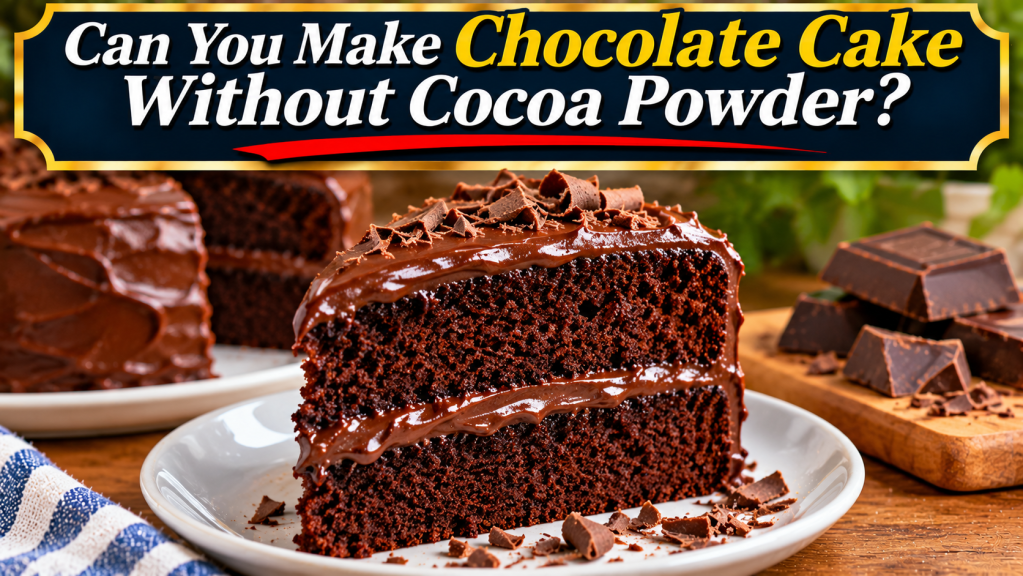
Yes, you can make chocolate cake without cocoa powder by using melted unsweetened or semisweet baking chocolate in the batter. Chocolate bars contain cocoa solids as well as cocoa butter, so they provide both chocolate flavor and fat. The important thing is to use a recipe designed for solid chocolate rather than simply replacing cocoa powder with the same weight of chocolate. A balanced batter produces a tender cake with a rich, rounded chocolate flavor.
Why Baking Chocolate Works
Cocoa powder is made from cocoa solids after much of the cocoa butter has been removed. Solid baking chocolate retains more of that fat. Semisweet chocolate also contains sugar, while unsweetened chocolate contains little or none. These differences affect the amount of butter, sugar and flour a cake needs. Melted chocolate gives the batter richness and can make the crumb feel particularly smooth. It is a convenient option when there is a chocolate bar in the pantry but no cocoa powder.
Choose the Right Chocolate
A semisweet baking bar with approximately 55 to 65 percent cocoa is a useful choice for this recipe. A very dark bar may produce a more bitter cake, while milk chocolate gives a milder flavor and contains more sugar and milk solids. Chocolate chips can work in a pinch, but some brands contain ingredients that help them retain their shape and make melting less predictable. Avoid filled candy bars, which may introduce caramel, wafers or other ingredients that interfere with the batter.
Chocolate Cake Recipe Without Cocoa Powder
This recipe makes one eight-inch square cake, serving approximately nine people. Allow twenty minutes to prepare it, thirty to forty minutes to bake it and additional time for cooling. You will need a mixing bowl, whisk or electric mixer, heatproof bowl, spatula and baking pan. The recipe is designed around semisweet chocolate and does not require any cocoa powder, even in the optional frosting. It is a home recipe, not a commercially tested formula.
Cake Ingredients
Gather 4 ounces semisweet baking chocolate, chopped; 1/2 cup unsalted butter, softened; 3/4 cup granulated sugar; 2 large eggs; 1 teaspoon vanilla extract; 1 1/4 cups all-purpose flour (about 150 grams); 1 1/2 teaspoons baking powder; 1/4 teaspoon fine salt; and 1/2 cup whole milk. Use room-temperature eggs and milk for easier mixing, but do not leave perishable ingredients on the counter for extended periods. Measure the flour by weight whenever possible.
Step 1: Prepare the Pan
Preheat the oven to 350°F. Grease an eight-inch square metal baking pan and line the bottom with parchment paper. Leave a little overhang if you want to lift the entire cake out before cutting. Position a rack in the center of the oven. A dark metal or glass pan may alter the cooking time, so watch the edges carefully if you use one. Have all the ingredients measured before you begin.
Step 2: Melt the Chocolate
Place the chopped chocolate in a dry microwave-safe bowl. Heat in short intervals of fifteen to twenty seconds, stirring after each interval, until almost melted. Stir until the remaining pieces dissolve. Alternatively, set a heatproof bowl over barely simmering water without allowing the bowl to touch the water. Keep splashes out of the chocolate. Let it cool until lukewarm and still fluid before adding it to the batter.
Step 3: Combine the Dry Ingredients
Whisk the flour, baking powder and salt together in a separate bowl. This helps distribute the leavening and prevents concentrated pockets of salt. If you measure flour with cups, fluff it first, spoon it into the cup and level the surface with a straight edge. Scooping from a compacted flour bag can add substantially more flour than intended and produce a dry cake. Set the bowl aside.
Step 4: Cream Butter and Sugar
Beat softened butter and sugar together for two to three minutes until lighter and fluffy. The butter should yield easily when pressed but should not be melted or greasy. Creaming traps small air bubbles that contribute to the cake’s rise. Scrape the bowl once or twice for even mixing. Add the eggs one at a time, beating until each is incorporated, and stir in the vanilla.
Step 5: Add the Melted Chocolate
Pour the lukewarm chocolate into the butter mixture and beat briefly until evenly colored. Hot chocolate can melt the creamed butter and change the texture, while cold chocolate may harden into small pieces. If the chocolate has become thick, warm it very gently and stir before proceeding. Scrape the bottom of the mixing bowl to make sure no streaks remain.
Step 6: Finish the Batter
Add the flour mixture in three additions, alternating with the milk in two additions. Begin and end with the flour. Mix on low speed or fold by hand just until the ingredients are combined. Avoid beating for several minutes after adding the flour because that can make the cake tough. The finished batter should be thick but spreadable. Transfer it to the prepared pan and smooth the top.
Step 7: Bake and Cool
Bake for approximately thirty to forty minutes, checking at thirty minutes. The center should spring back gently and a toothpick should emerge without wet batter. A few moist crumbs are fine. Cool in the pan for ten to fifteen minutes before transferring to a rack if desired. Allow the cake to cool completely before frosting. Cutting into a very hot cake can compress the soft crumb and make it appear gummy.
Easy Chocolate Ganache Without Cocoa Powder
For the topping, chop 4 ounces of semisweet chocolate and place it in a heatproof bowl. Heat 1/2 cup heavy cream until steaming but not vigorously boiling. Pour it over the chocolate and let stand for three minutes. Stir gently from the center until smooth. Allow the ganache to cool and thicken slightly, then spread it over the cooled cake. Refrigerate leftover ganache-topped cake promptly because the topping contains dairy.
Can You Substitute Unsweetened Chocolate for Cocoa Powder?
In some recipes, one ounce of unsweetened baking chocolate can replace roughly three tablespoons of unsweetened cocoa powder, with about one tablespoon of added fat removed. This is only a starting point, not a universal conversion. Natural and Dutch-process cocoa powders differ in acidity, and chocolate bars contain varying proportions of cocoa solids and fat. For reliable results, especially in a layer cake, use a recipe formulated for the chocolate you have rather than changing several ingredients at once.
What About Milk Chocolate?
Milk chocolate can make a pleasant mild chocolate cake, but it generally has more sugar and less cocoa solids than semisweet chocolate. A direct substitution may create a sweeter cake with a less pronounced chocolate taste. If milk chocolate is your only option, look for a recipe written specifically for it. You can also use it in a frosting or drizzle to complement a vanilla cake. Do not assume that every chocolate bar will behave like baking chocolate.
Can Hot Chocolate Mix Replace Cocoa Powder?
Hot chocolate mix is usually a combination of sugar, cocoa and sometimes powdered milk, flavorings or other ingredients. Its cocoa content varies widely. Substituting it directly for unsweetened cocoa powder can make a cake too sweet and alter the dry ingredient balance. Melted baking chocolate is generally a more predictable choice. If using drinking chocolate powder, choose a recipe designed for that product and account for its added sugar.
How to Make the Chocolate Flavor Stronger
A teaspoon of instant espresso powder can deepen the chocolate flavor without making the cake taste strongly of coffee. Dissolve it in a small portion of the milk before adding it. A small pinch of salt and good vanilla also enhance flavor. For a more intense chocolate experience, use a darker semisweet chocolate in the ganache rather than adding extra melted chocolate to an already balanced cake batter.
Why the Cake Became Dense
Dense chocolate cake can result from too much flour, expired baking powder, excessive mixing or chocolate that was too hot when added to the creamed butter. Check your measuring technique and preheat the oven completely. Beat the butter and sugar well, but mix gently once the flour is included. If the batter is unusually stiff, review the quantities before automatically adding more milk, which may change the cake structure.
Why the Chocolate Seized
Chocolate can turn into a thick, grainy mass if a small amount of water enters it during melting. Use dry bowls and utensils and heat gently. If the chocolate has scorched or seized badly, starting with fresh chocolate is the most predictable option for this cake. When making ganache, however, a sufficient amount of warm cream can combine with chocolate to form a smooth mixture. The amount and method of adding liquid matter.
Storage and Freezing
Store plain cooled cake in an airtight container at room temperature for up to two days under cool conditions. Refrigerate ganache-topped cake and use it within three to four days. For longer storage, wrap the unfrosted cooled cake tightly and freeze for up to two to three months for best quality. Thaw while wrapped, then frost. Bring a refrigerated slice toward room temperature briefly before serving for a softer texture.
Frequently Asked Questions
Is chocolate cake possible without cocoa powder?
Yes. Melted baking chocolate supplies cocoa solids and chocolate flavor.
Can I use chocolate chips?
Yes, semisweet chips may work, although baking bars often melt more smoothly.
Does melted chocolate replace cocoa powder one for one?
No. Solid chocolate adds cocoa butter and sometimes sugar, so the other ingredients may need adjustment.
Can I make cupcakes with this recipe?
Divide the batter into lined muffin cups and start checking at eighteen minutes at 350°F. Bake until the centers are set.
Final Thoughts
Chocolate cake without cocoa powder is easy when you start with a recipe built around melted chocolate. Choose a suitable semisweet baking bar, melt it gently, measure the flour accurately and avoid overbaking. A simple chocolate ganache completes the dessert without requiring any cocoa powder. The result is a practical alternative when your pantry is missing a familiar baking ingredient.
Leave a Reply