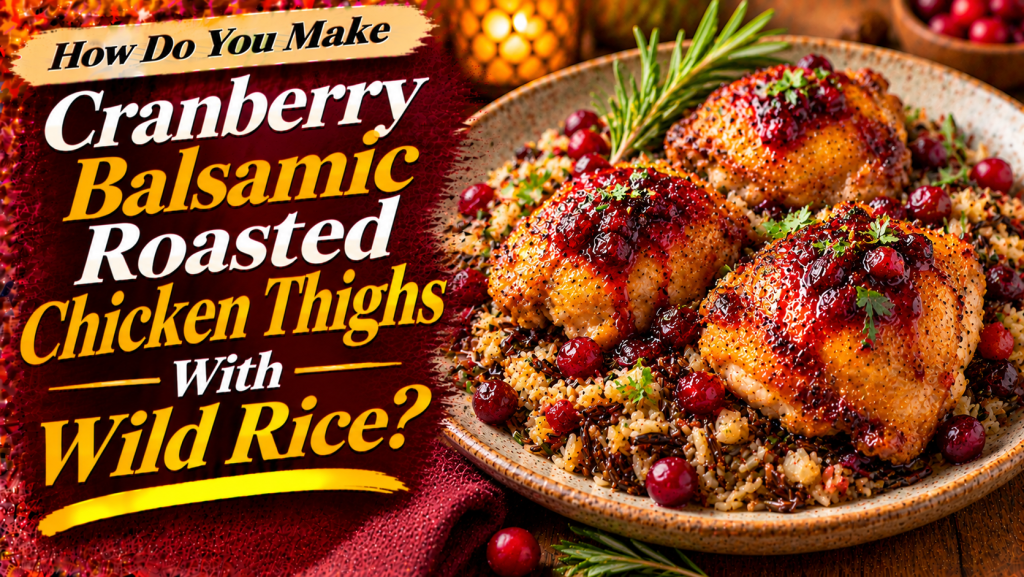
Cranberry balsamic roasted chicken thighs with wild rice combine golden, savory chicken with a tangy fruit glaze and a nutty, hearty grain. Fresh cranberries soften as they roast, forming a colorful sauce with balsamic vinegar, maple syrup, and rosemary. The wild rice absorbs the flavorful pan juices and provides a pleasant contrast to the tender chicken. It is an inviting dinner for cool autumn evenings, holiday gatherings, or a weekend family meal.
The key is to brown the chicken before adding the cranberry glaze and cook the wild rice separately so each component reaches its ideal texture. Cranberries and balsamic vinegar bring considerable acidity, so use a little maple syrup to balance them rather than making the sauce heavily sweet. A food thermometer helps ensure the chicken is safely cooked without relying on its exterior color.
Recipe at a Glance
Servings: four. Preparation time: 15–20 minutes. Cooking time: approximately 45–60 minutes, depending on rice and chicken size. Oven temperature: 400°F. Equipment: oven-safe skillet or baking dish, medium saucepan, mixing bowl, tongs, cutting board, and instant-read food thermometer.
Ingredients for the Chicken
Use four bone-in, skin-on chicken thighs, approximately 2 pounds total; 1 tablespoon olive oil; ½ teaspoon kosher salt; ½ teaspoon ground black pepper; ½ teaspoon garlic powder; and 1 teaspoon dried thyme. Boneless thighs can also work, but they generally cook faster.
Ingredients for the Cranberry Balsamic Glaze
Use 1 cup fresh or frozen cranberries, 2 tablespoons balsamic vinegar, 2 tablespoons pure maple syrup, ½ cup low-sodium chicken broth, 2 minced garlic cloves, and 1 teaspoon finely chopped fresh rosemary. Optional additions include ½ teaspoon finely grated orange zest or a small pinch of crushed red pepper.
Ingredients for the Wild Rice
Use 1 cup uncooked wild rice or a wild rice blend, water or low-sodium broth according to its package directions, 1 tablespoon unsalted butter or olive oil, one finely diced shallot, and 2 tablespoons chopped fresh parsley. Add black pepper and salt to taste. Optional garnishes include toasted pecans or pumpkin seeds.
Check packaged broth and rice blends for allergens or other dietary requirements. Butter contains milk, and the optional pecans are tree nuts. Use olive oil instead of butter for a dairy-free version. Pure wild rice is naturally gluten-free, but verify packaged blends and seasonings when gluten avoidance is important.
Choosing Chicken Thighs
Bone-in, skin-on thighs are especially well suited to roasting because the skin can develop a golden crust and the darker meat remains relatively tender. Choose pieces of comparable size for even cooking. Keep raw chicken refrigerated until preparing it, and do not wash it, since splashing water may spread bacteria around the kitchen.
Pat the skin dry with paper towels before seasoning. Remove loose pieces of excess fat if necessary, but keep the skin intact to help protect the meat during roasting. Wash your hands, utensils, and work surfaces after handling raw poultry.
Choosing Cranberries and Balsamic Vinegar
Fresh cranberries should be firm and brightly colored. Rinse them and discard any visibly spoiled or soft berries. Frozen unsweetened cranberries work as well and can usually be added without thawing, though they may release a little more liquid.
Ordinary balsamic vinegar is preferable to thick sweetened balsamic glaze for this recipe. Balsamic glaze has a concentrated sweetness that may scorch easily or make the finished sauce overly sugary. Taste the sauce while it simmers and adjust maple syrup according to the natural tartness of the berries.
How to Make Cranberry Balsamic Roasted Chicken Thighs With Wild Rice
Begin cooking the rice first, since pure wild rice often takes longer than the chicken. Prepare the cranberry sauce while the chicken browns.
Step 1: Preheat the oven
Heat the oven to 400°F. Set a rack near the center and prepare a large oven-safe skillet. If your skillet cannot go into the oven, have a lightly greased baking dish ready for transferring the browned chicken.
Step 2: Cook the wild rice
Rinse the wild rice if directed by the package. Place it in a saucepan with the recommended amount of water or broth. Bring to a boil, reduce the heat, and simmer according to package instructions. Pure wild rice often requires approximately 40–55 minutes, while blends can cook considerably faster. The grains should become tender and pleasantly chewy.
Step 3: Season the chicken
Pat the chicken thighs dry. Sprinkle with salt, pepper, garlic powder, and dried thyme, concentrating on an even coating rather than heavily seasoning individual pieces. Keep the chicken separate from prepared vegetables and cooked rice.
Step 4: Brown the chicken skin
Heat olive oil in the oven-safe skillet over medium to medium-high heat. Place the thighs skin-side down and cook for approximately five to seven minutes until the skin is golden and releases relatively easily from the pan. Turn and sear the other side for two minutes. Transfer the chicken temporarily to a plate reserved for partially cooked poultry.
Step 5: Prepare the cranberry sauce
Carefully remove excess fat from the skillet, leaving roughly one tablespoon for flavor. Reduce the heat to medium-low. Add minced garlic and chopped rosemary and cook for about 30 seconds, then stir in cranberries, broth, balsamic vinegar, and maple syrup.
Step 6: Simmer briefly
Allow the sauce to simmer for three to five minutes until a few cranberries begin to split. Stir gently, scraping browned bits from the pan. The mixture should still contain some whole berries. If it thickens rapidly, add a splash of broth.
Step 7: Roast the chicken
Return the thighs to the skillet skin-side up, keeping most of the cranberry sauce around them rather than covering the skin. Transfer to the oven and roast approximately 25–35 minutes, depending on thickness. Check the internal temperature in the thickest part without touching bone. Chicken must reach at least 165°F before serving.
Step 8: Rest and check the sauce
Transfer the fully cooked chicken to a clean platter and rest for five minutes. If the sauce is too thin, simmer it briefly on the stovetop until spoonable. If too thick, loosen with a little broth. Use oven mitts because the skillet handle will remain hot.
Step 9: Finish the wild rice
Drain any excess cooking liquid from the tender rice. In a small skillet, melt butter or warm olive oil and sauté the diced shallot for two to three minutes until softened. Stir into the cooked wild rice with parsley and black pepper. Taste before adding salt, particularly if you used broth.
Step 10: Plate and serve
Divide warm wild rice among four plates. Place one chicken thigh on each serving and spoon cranberry balsamic sauce around the meat. Garnish with parsley or fresh rosemary. Toasted pumpkin seeds or pecans add extra crunch if desired.
How to Keep the Chicken Skin Crisp
Moisture is the main obstacle to crisp skin. Dry it thoroughly before seasoning, preheat the skillet, and avoid crowding the chicken. Do not move the thighs repeatedly while the skin is browning. Once the crust forms, the meat will usually release more easily.
During roasting, keep the skin above the liquid rather than submerging it in sauce. Spoon the glaze around the chicken at serving time to preserve the texture. If a particularly crisp finish is desired, briefly broil the fully cooked thighs, watching constantly so the sugary cranberry mixture does not burn.
How to Balance Cranberry Tartness
Cranberries are naturally sour, while balsamic vinegar adds additional acidity. Maple syrup softens those sharp notes and contributes a mild caramel flavor. Begin with the suggested amount and taste the fully cooked sauce before increasing sweetness.
If the sauce is too tart, add a teaspoon of maple syrup. If too sweet, stir in a small amount of balsamic vinegar or broth. Make adjustments gradually. Orange zest provides additional fragrance without requiring a large amount of sweet juice.
What Makes Wild Rice Different From White Rice?
Wild rice consists of the seeds of aquatic grasses rather than the same species commonly used for white or brown rice. It has a distinctive nutty, earthy flavor and pleasantly chewy texture. Some grains split open during cooking, revealing lighter interiors.
Commercial wild rice blends often contain other grains, so their cooking times and liquid needs differ. Check the package rather than assuming every blend needs the same simmering time. Cook until tender, then drain extra liquid if needed to keep the finished side dish from becoming mushy.
Easy Recipe Variations
For a citrus version, add orange zest and a tablespoon of fresh orange juice to the cranberry mixture, reducing maple syrup if needed. For a warmer herbal flavor, replace some rosemary with thyme or sage. A small pinch of crushed red pepper gives the sauce gentle heat.
Boneless chicken thighs can replace bone-in thighs and may need less oven time. Chicken breasts are another possibility, although they are leaner and can dry out more quickly. All poultry should reach 165°F for safe serving. Use a thermometer to adjust timing for the specific cut.
For a vegetarian interpretation, serve cranberry balsamic sauce with roasted cauliflower or tofu over wild rice, using vegetable broth. The preparation and cooking time will differ, but the fruit and herb combination is equally appealing with vegetables.
What to Serve With Cranberry Balsamic Chicken
Roasted Brussels sprouts, green beans, sautéed spinach, and steamed broccoli all complement the tangy sauce. A crisp arugula salad with a light vinaigrette also works well. Because the wild rice provides a substantial starch, a green vegetable is often enough to complete the meal.
For a holiday table, serve the chicken on a large platter surrounded by wild rice and spoon some cranberries between the portions. Keep extra sauce in a separate bowl so guests can control the amount and maintain the crisp chicken skin.
Make-Ahead Instructions
Cook the wild rice a day ahead and cool it promptly before transferring it to a covered shallow container in the refrigerator. Measure the cranberry sauce ingredients in advance and store perishable items chilled. Raw chicken may be seasoned ahead and kept covered in the refrigerator, separate from ready-to-eat foods.
For the best texture, brown and roast the chicken shortly before eating. If necessary, prepare the sauce separately and refrigerate it, then reheat gently with a splash of broth. Avoid keeping cooked chicken or rice at room temperature for prolonged periods.
Storage and Reheating
Refrigerate leftovers in shallow airtight containers within two hours of cooking, or within one hour if the surrounding temperature exceeds 90°F. Store chicken, rice, and extra sauce separately where practical. Use refrigerated leftovers within three to four days.
Reheat leftovers to 165°F throughout. Warm the chicken in a moderate oven, uncovering briefly at the end to recover some crispness. Stir a little broth into the rice while reheating to prevent drying. Cooked chicken and wild rice can be frozen for two to three months for best quality; thaw in the refrigerator before reheating.
Frequently Asked Questions
Can I use frozen cranberries?
Yes. Unsweetened frozen cranberries work well. Add them directly to the skillet and allow extra simmering time if they release substantial liquid.
Can I use dried cranberries?
Fresh or frozen berries are preferable. Dried cranberries are often sweetened and have less moisture. If substituting, soften a smaller amount in broth and reduce the maple syrup.
Can I use boneless chicken thighs?
Yes. They generally cook faster, so begin checking early and ensure the center reaches 165°F.
Can I substitute brown rice?
Absolutely. Cook it according to its package instructions and finish with shallot and parsley. The texture will be softer than pure wild rice.
Why is my cranberry glaze too sour?
The cranberries or vinegar may be particularly acidic. Add maple syrup a teaspoon at a time, tasting the fully cooked sauce between adjustments.
Can I make this without balsamic vinegar?
Apple cider vinegar can provide a different tangy flavor. Use a smaller amount initially and adjust with broth or maple syrup after tasting.
Final Thoughts
Cranberry balsamic roasted chicken thighs with wild rice bring golden poultry, tangy seasonal berries, fragrant herbs, and hearty grains together in one satisfying dinner. Brown the chicken first, keep its skin above the sauce while roasting, and balance the cranberries with a modest amount of maple syrup. Serve with warm wild rice and fresh herbs for a flavorful meal that suits both everyday dinners and special occasions.
Leave a Reply