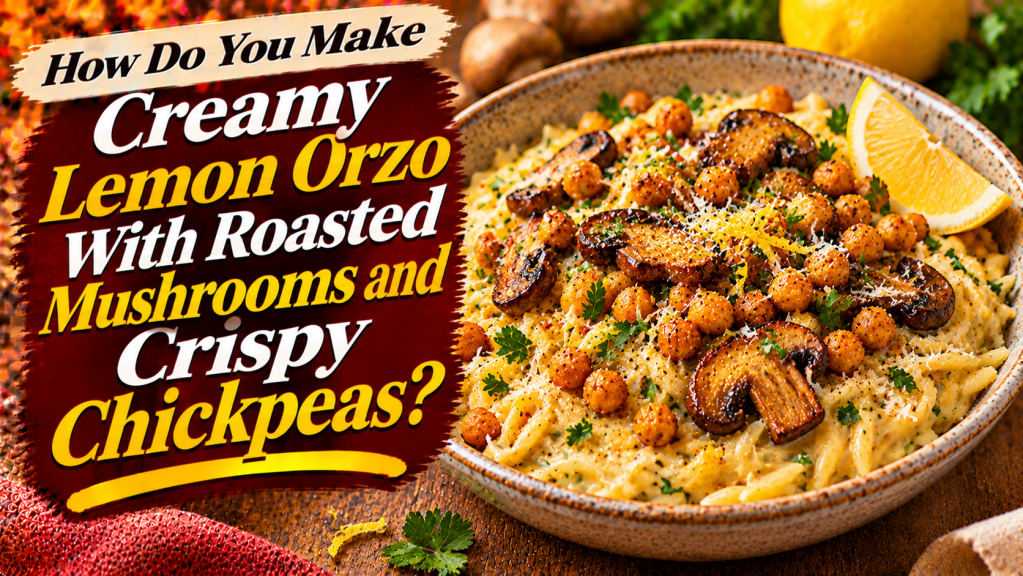
Creamy lemon orzo with roasted mushrooms and crispy chickpeas is a comforting one-pot-style pasta dinner finished with flavorful sheet-pan toppings. Tender orzo absorbs a light, lemony Parmesan sauce, while roasted mushrooms bring savory depth and seasoned chickpeas add crunch. The combination makes a satisfying meatless meal with a balance of creamy, bright, and crisp textures.
The secret is keeping the components separate until serving. Orzo needs frequent stirring and enough broth to cook into a silky sauce. Mushrooms brown best when spread out, and chickpeas become crisp only after their surface moisture is removed. Adding both toppings at the end prevents the orzo sauce from softening their edges.
Recipe at a Glance
Servings: 4. Preparation time: 15–20 minutes. Roasting time: 25–30 minutes. Orzo cooking: approximately 15–18 minutes. Oven temperature: 425°F. Equipment: two rimmed baking sheets, large deep skillet or sauté pan, colander, whisk, wooden spoon, and fine grater.
Ingredients
For the toppings, use 12 ounces cremini mushrooms, quartered or thickly sliced; one 15-ounce can chickpeas, drained and rinsed; 2 tablespoons olive oil divided; ½ teaspoon smoked paprika; ½ teaspoon garlic powder; ¼ teaspoon black pepper; and a small pinch of salt.
For the creamy lemon orzo, use 1 tablespoon olive oil, 1 small shallot finely diced, 3 minced garlic cloves, 1 cup dry orzo pasta, 2½–3 cups warm low-sodium vegetable broth, ½ cup whole milk or half-and-half, ⅓ cup finely grated Parmesan, 1 teaspoon lemon zest, 1½ tablespoons freshly squeezed lemon juice, 2 tablespoons chopped parsley, and black pepper to taste. Keep extra broth on hand because different brands of orzo absorb different amounts.
Orzo contains wheat and the sauce contains milk. Chickpeas may be packaged in facilities that handle other allergens. Check ingredient labels and prepare appropriate substitutions if needed. Parmesan made with animal rennet is not vegetarian; select a vegetarian hard cheese if that distinction matters.
Choosing and Preparing the Mushrooms
Cremini mushrooms have a savory flavor and firm texture that work well with the lemon sauce. White button mushrooms are a good substitute, while shiitake caps add a deeper earthy flavor. Remove tough stems from specialty mushrooms. Choose firm mushrooms without slimy surfaces or signs of spoilage.
Brush off visible dirt or rinse briefly, then dry thoroughly. Slice the mushrooms thick enough that they will not shrink into tiny pieces during roasting. If they are crowded on the pan, their moisture will create steam and prevent browning. Using a second baking sheet is worthwhile when preparing a larger batch.
How to Make the Chickpeas Extra Crispy
After draining and rinsing the chickpeas, spread them on a clean kitchen towel and pat dry. Remove any loose skins if you wish, although this is optional. The drier the surface, the more readily the chickpeas develop a crisp exterior. Toss with a little olive oil before adding the seasoning so it adheres evenly.
Chickpeas become crisp while hot but can soften again as they cool or absorb moisture from the pasta. Roast them separately from the mushrooms and add them just before serving. The exact roasting time varies with the oven, chickpea brand, and how thoroughly they were dried.
How to Make Creamy Lemon Orzo With Roasted Mushrooms and Crispy Chickpeas
Start the oven toppings first, then prepare the orzo while they roast. This allows everything to finish at nearly the same time.
Step 1: Preheat the oven
Preheat to 425°F and position racks near the center. Prepare two rimmed baking sheets with a light coating of oil or parchment rated for the oven temperature. Keep the mushrooms and chickpeas on separate trays so their different moisture levels and cooking times can be managed independently.
Step 2: Season and roast the mushrooms
Toss the prepared mushrooms with 1 tablespoon olive oil, black pepper, and a small pinch of salt. Spread in a single layer. Roast for approximately 20–25 minutes, turning halfway through, until their moisture evaporates and their edges become golden. Avoid constantly stirring them because contact with the hot sheet helps create browning.
Step 3: Season and roast the chickpeas
Pat the chickpeas dry and toss with the other tablespoon of olive oil, smoked paprika, garlic powder, and a small pinch of salt. Spread on the second sheet. Roast for 25–30 minutes, shaking the pan gently once or twice, until lightly browned and crisp. Watch the last few minutes carefully; the seasonings can darken before the beans become crunchy.
Step 4: Sauté the aromatics
While the toppings roast, warm 1 tablespoon olive oil in a large deep skillet over medium heat. Add the diced shallot and cook for about three minutes until softened. Stir in the minced garlic and cook for 30 seconds until fragrant. Avoid browning the garlic, which can give the creamy sauce an unpleasant bitter note.
Step 5: Toast and simmer the orzo
Add dry orzo to the skillet and stir in the fragrant oil for approximately one minute. Pour in 2½ cups warm broth and bring to a gentle simmer. Stir frequently, especially around the bottom of the pan, to prevent the pasta from sticking. Continue cooking for about 9–12 minutes, adding more warm broth in small amounts as necessary, until the orzo is tender and the mixture remains saucy.
Step 6: Add the milk and cheese
Reduce the heat to low and stir in the milk or half-and-half. Warm gently for one or two minutes. Remove the skillet from direct heat before adding the Parmesan, stirring until it melts. Avoid a rolling boil after adding dairy, which can make the sauce grainy. If the pasta becomes too thick, loosen it with an extra splash of warm broth.
Step 7: Finish with lemon
Stir in the finely grated lemon zest and fresh lemon juice. Add black pepper and taste before adding salt, since broth and cheese can already be salty. The lemon should taste fresh and lively rather than overpowering. Add a small amount at a time if you prefer a softer citrus finish.
Step 8: Assemble and serve
Divide the creamy orzo among warm shallow bowls. Spoon the roasted mushrooms over each portion, then scatter the crispy chickpeas on top. Finish with chopped parsley, a little extra Parmesan, and a lemon wedge if desired. Serve immediately for the best contrast between the creamy pasta and crunchy toppings.
Why the Orzo Turns Creamy
Orzo is a small rice-shaped pasta that releases starch as it cooks. Simmering it in broth and stirring frequently creates a silky texture similar to a quick risotto, without using rice. A modest amount of milk and grated cheese adds richness, but the starch is responsible for much of the sauce’s body.
Orzo thickens as it stands. If preparing several servings, keep warm broth available to adjust the texture just before serving. Avoid cooking until every trace of liquid disappears; the pasta should move easily when stirred and settle into a soft mound on the plate.
How to Prevent Watery Mushrooms
High heat and space are essential. When mushrooms overlap, their liquid cannot evaporate efficiently. A large metal baking sheet works better than a deep dish for browning. Dry the mushrooms before seasoning and resist pouring excess marinade into the pan.
If the mushrooms remain pale after 20 minutes, continue roasting in short intervals while checking their tenderness. Larger pieces release more liquid and may need extra time. A few darker edges are desirable, but pieces that have turned black and bitter should not be used.
Delicious Variations
For a dairy-free version, replace the milk with unsweetened oat cooking cream and omit the Parmesan or choose a suitable plant-based alternative. The broth and pasta starch will still create a rich consistency. To make the dish gluten-free, use a suitable gluten-free orzo-style pasta and follow its cooking instructions; some substitutes behave differently when simmered directly in broth.
For extra greens, stir baby spinach into the orzo just before adding the lemon and allow it to wilt. Roasted asparagus, peas, or zucchini can replace part of the mushrooms, with the cooking times adjusted. Fresh dill or basil offers a different herbal finish.
A pinch of crushed red pepper adds gentle heat. For a more robust savory flavor, stir a teaspoon of white miso into the broth before adding dairy, keeping in mind that miso contributes salt and may contain soy or barley. A few toasted pine nuts can replace the chickpeas for crunch if there are no nut allergies, but the meal will contain less legume protein.
What to Serve With Lemon Orzo
The pasta, vegetables, and chickpeas make a satisfying meal on their own. A crisp cucumber salad, lightly dressed arugula, or roasted green beans provide a refreshing contrast. Serve lemon wedges at the table so guests can adjust the brightness to their tastes.
For a larger dinner, the orzo can accompany baked chicken, grilled fish, or roasted tofu. Cook additional proteins separately to their appropriate safe internal temperatures and avoid overcrowding the sheet pans. For a vegetarian spread, pair the dish with warm bread and a tomato salad.
Make-Ahead Tips
Prepare the mushrooms and chickpeas ahead if needed, then refrigerate promptly in separate containers. Roast the chickpeas again briefly before serving to refresh their texture. Chop the shallot, garlic, and parsley in advance and keep them refrigerated. The orzo is best cooked fresh because it continues absorbing liquid during storage.
If preparing the pasta ahead, stop when it is just tender and retain extra broth to loosen it. Add the lemon shortly before serving for a brighter flavor. Keep the roasted toppings separate until plating; mixing them into stored orzo will soften their browned surfaces.
Storage and Reheating
Refrigerate leftovers in shallow covered containers within two hours of cooking, or within one hour when the temperature exceeds 90°F. Use within three to four days. Store chickpeas separately when possible. Freeze the cooked orzo for up to two months for best quality, recognizing that its texture and the dairy sauce may change after thawing.
Reheat the orzo in a saucepan over low heat with a splash of broth, stirring until hot throughout and the leftovers reach 165°F. Reheat the mushrooms and chickpeas in a 375°F oven until thoroughly heated. Top the pasta with them immediately before serving. A microwave is convenient but will not restore the chickpeas’ crispness.
Frequently Asked Questions
Can I use canned mushrooms?
Fresh mushrooms give the best roasted texture. Canned mushrooms contain more moisture and are already cooked, so drain and dry them thoroughly and sauté rather than roasting for an extended period.
Can I use regular pasta instead of orzo?
Yes, but the cooking method and liquid quantity will differ. Small pasta shapes work best. Cook according to package directions and adjust the sauce with broth as needed.
Why did my orzo become sticky?
It may have cooked without enough broth or stood too long after finishing. Stir frequently while simmering and loosen with warm liquid immediately before serving.
Can I make the recipe vegan?
Yes. Choose vegetable broth, unsweetened plant-based cooking cream, and a suitable Parmesan alternative or nutritional yeast. Confirm that the pasta and other ingredients meet your needs.
How do I get the chickpeas crispy?
Drain and dry them carefully, spread in a single layer, and roast until browned. Keep them separate from the moist pasta until the moment of serving.
Final Thoughts
Creamy lemon orzo with roasted mushrooms and crispy chickpeas is a satisfying way to combine pantry staples with fresh ingredients. Roast the toppings separately, simmer the pasta in broth until silky, and finish with lemon and Parmesan. Serve immediately for a meal that balances creamy orzo, savory mushrooms, and crunchy chickpeas.
Leave a Reply