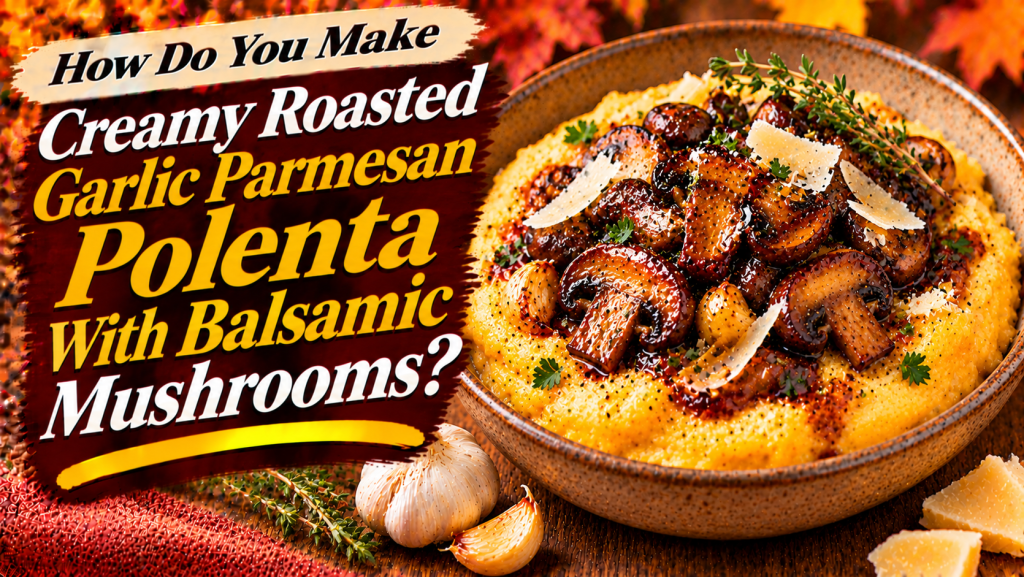
Creamy roasted garlic Parmesan polenta with balsamic mushrooms is a comforting dinner built around silky cornmeal, mellow garlic, and deeply browned mushrooms. Roasting a whole garlic bulb softens its sharpness and creates a sweet, spreadable paste. The mushrooms are sautéed until golden, then finished with balsamic vinegar and thyme for a savory topping that contrasts with the rich polenta.
This dish can stand alone as a vegetarian main course or accompany roasted chicken or vegetables. The most important technique is to cook the mushrooms in a wide pan without crowding and keep the polenta loose enough to spoon. Because polenta firms as it cools, serve it soon after cooking or keep warm water or broth available for adjusting its consistency.
Recipe at a Glance
Servings: four as a main, or six as a side. Preparation: 15 minutes. Garlic roasting: 35–45 minutes. Polenta cooking: 20–30 minutes for quick-cooking varieties, longer for traditional coarse cornmeal. Mushroom cooking: 15 minutes. Oven temperature: 400°F. Equipment: small baking dish, foil or oven-safe covered dish, large saucepan, whisk, wide skillet, and wooden spoon.
Ingredients
For the polenta, use 1 cup dry polenta or coarse cornmeal, 4 cups water or low-sodium vegetable broth, ½ cup milk, ¾ cup finely grated Parmesan cheese, 2 tablespoons unsalted butter, one whole garlic bulb, 1 teaspoon olive oil, ½ teaspoon kosher salt, and black pepper to taste. Keep another cup of warm water or broth nearby for thinning.
For the mushrooms, use 1 pound cremini mushrooms, sliced thickly; 2 tablespoons olive oil; one small shallot, finely chopped; 2 teaspoons fresh thyme leaves; 2 tablespoons balsamic vinegar; ¼ cup low-sodium vegetable broth; and freshly ground black pepper. Optional garnishes include chopped parsley, extra Parmesan, and a little fresh lemon juice.
Polenta is naturally corn-based, but check the package for gluten cross-contact if needed. This recipe contains dairy from milk, butter, and Parmesan. Some Parmesan uses animal rennet; for a vegetarian version, choose an appropriate hard cheese made with non-animal rennet.
How to Roast Garlic Until Sweet and Tender
Preheat the oven to 400°F. Slice roughly ¼ inch from the top of the garlic bulb to expose the clove tips, leaving the outer skin to hold the bulb together. Drizzle with a teaspoon of olive oil and wrap loosely in foil or place in a small covered oven-safe dish. Roast for 35–45 minutes until the cloves are soft and lightly golden.
Let the bulb cool enough to handle. Squeeze the roasted cloves into a small bowl and mash with a fork to form a smooth paste. Discard the skins. If a few cloves remain firm, return the bulb to the oven briefly. Properly roasted garlic should have a mellow aroma, not a sharp raw bite.
Roasted garlic can be prepared a day ahead and refrigerated promptly in a covered container. Do not store homemade garlic submerged in oil at room temperature because of botulism risk. Keep prepared garlic refrigerated and use promptly.
Choosing the Best Polenta
Packages labeled polenta may contain traditional coarse-ground cornmeal or faster-cooking varieties. Both are suitable, but cooking times differ considerably. Read the label before starting. Traditional coarse polenta often requires 35–45 minutes of gentle cooking; quick-cooking polenta may be ready in considerably less time.
Avoid substituting instant polenta without changing the directions. It thickens quickly and may require a different amount of water. Use a heavy-bottomed saucepan to distribute heat evenly. A whisk helps prevent initial lumps, while a wooden spoon is useful once the mixture becomes thicker.
How to Make Creamy Roasted Garlic Parmesan Polenta With Balsamic Mushrooms
Roast the garlic first. Prepare the mushrooms while the polenta cooks so both components can be served warm.
Step 1: Prepare the ingredients
Wipe the mushrooms clean or rinse briefly and dry thoroughly. Slice them into thick, even pieces. Finely chop the shallot and strip the leaves from the thyme stems. Set the balsamic vinegar and broth near the stove. Have the roasted garlic paste, cheese, milk, and butter ready before the polenta finishes.
Step 2: Bring the cooking liquid to a simmer
In a large heavy saucepan, combine four cups of water or low-sodium broth with ½ teaspoon salt. Bring to a gentle boil over medium heat. Lower the heat before adding the cornmeal so the mixture does not bubble over.
Step 3: Whisk in the polenta
Pour the polenta slowly into the hot liquid in a thin stream while whisking continuously. This prevents dry clumps from forming. Reduce the heat to low and continue stirring frequently, scraping the bottom and corners of the pan. Polenta can bubble and splatter when thick, so use a long spoon and take care.
Step 4: Simmer until tender
Cook according to the package directions until the grains soften and no longer taste gritty. Add more warm water or broth a few tablespoons at a time if the mixture becomes stiff before it is cooked through. Stir frequently to prevent scorching. The finished polenta should be thick enough to coat a spoon but soft enough to flow.
Step 5: Brown the mushrooms
Heat the olive oil in a wide skillet over medium-high heat. Add mushrooms in a single layer, working in two batches if needed. Let them cook for three to four minutes without moving them, then turn and continue until browned and their released moisture has mostly evaporated. Crowding creates steam and reduces browning.
Step 6: Add shallot and thyme
Lower the heat to medium and add the shallot and thyme. Cook two to three minutes, stirring, until the shallot is softened and fragrant. If the pan becomes dry, add a small splash of broth instead of pouring in lots more oil. Season with black pepper.
Step 7: Make the balsamic pan sauce
Pour in balsamic vinegar and ¼ cup vegetable broth, carefully scraping browned bits from the skillet. Simmer two to four minutes until the liquid reduces slightly and coats the mushrooms. Taste before adding salt, particularly if the broth is seasoned. Avoid reducing the vinegar until syrupy and bitter.
Step 8: Finish the polenta
Once the polenta is tender, lower the heat and stir in roasted garlic paste, milk, and butter. Remove from direct heat before adding the finely grated Parmesan. Stir until creamy and smooth. Add black pepper to taste, and thin with warm water or broth if needed. Do not boil vigorously after adding the cheese.
Step 9: Assemble and serve
Spoon warm polenta into shallow bowls. Divide the balsamic mushrooms among them, including a little of the pan sauce. Sprinkle with chopped parsley and Parmesan if desired. A few drops of lemon juice can brighten a very rich serving. Serve immediately while the polenta remains silky.
How to Keep Polenta Smooth and Creamy
Slowly adding the cornmeal to hot liquid while whisking is the easiest way to prevent lumps. After that, maintain low heat and stir regularly. If the mixture thickens before the grains have softened, add more warm liquid instead of turning up the heat.
Polenta absorbs liquid as it rests. A finished batch may look perfect when the stove is turned off and become firm ten minutes later. Keep a kettle of warm water or some broth available and stir in small amounts shortly before serving. Grated cheese also thickens the mixture, so add it only at the end.
How to Get Deeply Browned Mushrooms
Dry mushrooms before cooking and choose a broad pan. A wet, crowded skillet traps moisture and makes the mushrooms gray instead of golden. Cook in batches rather than piling them up, and let each side remain against the hot surface long enough to brown.
Add shallots only after the mushrooms are well on their way to browning, since shallots can burn during a long high-heat cook. Balsamic vinegar goes in near the end to deglaze the pan and produce a light savory sauce. Adding it too early can prevent the desired searing.
Why Roasted Garlic Works Better Than Raw Garlic Here
Raw garlic has a sharp, assertive flavor that can dominate delicate cornmeal. Roasting changes its character, making the cloves softer, sweeter, and easier to incorporate into a creamy mixture. A mashed garlic paste blends evenly throughout the polenta without leaving pronounced raw pieces.
If you enjoy a stronger garlic flavor, use more roasted cloves rather than adding a large amount of raw garlic at the end. Taste after incorporating half the paste, then add the rest gradually. The bulb’s size and strength can vary.
Balancing Balsamic and Parmesan
Balsamic vinegar is tangy and often naturally sweet, while Parmesan adds rich savory saltiness. Mushrooms absorb and concentrate both flavors. If the topping seems too sharp, add a tablespoon of broth and simmer briefly. If it tastes flat, a teaspoon of balsamic or a squeeze of lemon may help.
Use a good everyday balsamic vinegar rather than an expensive aged finishing vinegar for cooking. Very sweet bottled balsamic glazes are not a direct substitute: reduce the amount substantially, since their sugar concentration can overwhelm the mushrooms.
Delicious Variations
For a vegan version, use olive oil instead of butter, unsweetened plant-based cooking milk, and a suitable vegan Parmesan substitute or nutritional yeast. The flavor will differ, but the roasted garlic and mushroom topping still provide considerable depth.
Add sautéed spinach or chopped kale to the mushroom mixture near the end for extra greens. Roasted cherry tomatoes give a tangy, juicy contrast, while white beans or lentils can make a more substantial main dish. A small pinch of red pepper flakes adds mild heat.
For a fall variation, add a little fresh sage to the mushrooms or serve them beside roasted butternut squash. For richer polenta, replace some milk with half-and-half. Be mindful that extra dairy may thicken the dish further as it cools.
What to Serve With Mushroom Polenta
This dish works as a vegetarian entrée alongside a crisp green salad or roasted Brussels sprouts. As a side, it pairs well with roasted chicken, pork tenderloin, or braised short ribs. The creamy cornmeal is especially good for catching savory pan juices.
For entertaining, spoon the polenta onto a large platter and mound the mushrooms in the center. Keep extra warm broth available so you can loosen the polenta before serving. Garnish at the end to preserve the fresh herbs’ color.
Make-Ahead and Storage Tips
Roast the garlic and clean the mushrooms a day ahead. You can also cook the mushroom topping in advance and refrigerate it in a shallow covered container. Polenta is best made close to serving because it firms as it cools, but it can be reheated with added broth or water.
Refrigerate leftovers promptly within two hours, or within one hour if the surrounding temperature exceeds 90°F. Use within three to four days. To reheat, place the polenta in a saucepan over low heat with warm water or broth and stir until creamy and heated to 165°F. Warm the mushrooms separately so their texture remains more appealing.
Cooked polenta can be refrigerated in a shallow pan until firm, then cut into squares and pan-fried. This offers a different way to enjoy leftovers. The mushrooms may be frozen for best quality for up to two months, though their texture may soften after thawing.
Frequently Asked Questions
Can I use instant polenta?
Yes. Follow the package’s liquid ratio and cooking time, then stir in the roasted garlic, butter, milk, and Parmesan after the grains are cooked.
Can I use white button mushrooms?
Yes. White button mushrooms work well. Cremini provide a slightly deeper flavor, but proper browning matters more than the variety.
Why did my polenta become lumpy?
The cornmeal may have been added too quickly or without whisking. Pour it slowly into hot liquid while whisking continuously. Some lumps can be broken up during cooking.
Can I make the recipe gluten-free?
Corn-based polenta is naturally gluten-free, but check the package for gluten cross-contact and verify your broth, cheese, and seasonings are appropriate.
Can I make this without milk?
Yes. Use additional broth or water and a little extra olive oil or butter for richness. The texture will still become creamy as the cornmeal cooks.
How do I reheat firm leftover polenta?
Stir it over gentle heat with a splash of hot water or broth until smooth. Add more liquid gradually, since the amount needed depends on how long it has been refrigerated.
Final Thoughts
Creamy roasted garlic Parmesan polenta with balsamic mushrooms is a satisfying combination of simple ingredients prepared with care. Roast the garlic until mellow, simmer the polenta gently, and brown the mushrooms before adding balsamic. Serve promptly to enjoy the contrast of silky cornmeal and savory, tangy mushrooms.
Leave a Reply