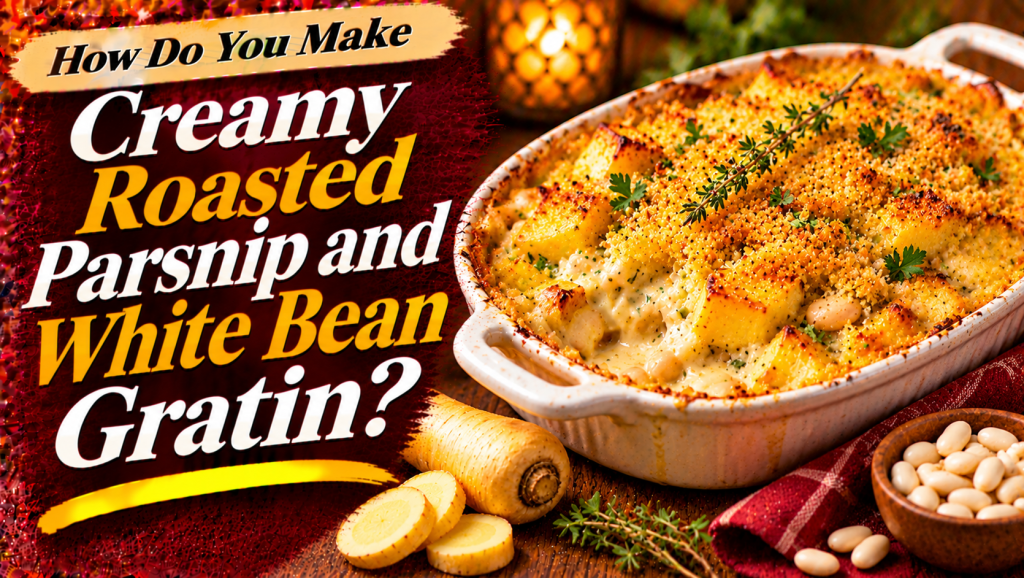
Creamy roasted parsnip and white bean gratin combines the naturally sweet, earthy flavor of roasted root vegetables with tender cannellini beans, garlic, herbs, and a golden breadcrumb topping. The beans make this comforting casserole substantial enough for a meatless dinner, while a lightly thickened cream sauce brings the ingredients together without hiding the flavor of the parsnips.
Roasting the parsnips before assembling the gratin is the key to developing caramelized edges and avoiding a watery filling. The beans are already cooked, so they need only a short bake in the sauce. A crisp topping of breadcrumbs and grated cheese adds a satisfying contrast to the soft vegetables.
Recipe at a Glance
Serves six as a side or four as a main course. Preparation time: 20 minutes. Cooking time: approximately 45–55 minutes. Oven temperatures: 425°F for roasting and 400°F for baking. Equipment: rimmed baking sheet, saucepan, whisk, mixing bowl, and two-quart baking dish.
Ingredients for the Gratin
Use 1½ pounds parsnips, peeled and cut into ½-inch pieces; two 15-ounce cans cannellini beans, drained and rinsed; 2 tablespoons olive oil; one small shallot, diced; three garlic cloves, minced; 2 tablespoons unsalted butter; 2 tablespoons all-purpose flour; 1¼ cups whole milk; ½ cup low-sodium vegetable broth; 1 teaspoon fresh thyme leaves; 1 teaspoon Dijon mustard; and salt and black pepper to taste.
Ingredients for the Crunchy Topping
Use ½ cup panko breadcrumbs, ¼ cup finely grated Parmesan-style cheese, 1 tablespoon olive oil, and 2 tablespoons chopped fresh parsley. Choose a cheese made with vegetarian rennet if preparing a vegetarian meal. This recipe contains milk and wheat, and mustard may also be an allergen. Check packaged ingredients for individual dietary needs.
How to Choose and Prepare Parsnips
Look for firm, pale cream-colored parsnips without deeply wrinkled surfaces or soft spots. Medium-sized roots are especially convenient because they tend to have a more tender center. Very large parsnips sometimes have a tough woody core that is best removed before cooking.
Wash the roots, peel them, and trim both ends. Cut each parsnip lengthwise before slicing it into evenly sized pieces. If the center feels particularly fibrous, cut it away with a small knife. Uniform pieces help the entire batch roast at the same rate and prevent thin ends from burning while thicker sections remain firm.
Choosing White Beans
Cannellini beans have a creamy interior and a relatively sturdy skin, making them a good choice for a baked gratin. Great Northern beans are an easy substitute, and butter beans can create a larger, more substantial texture. Canned beans save time because they are already fully cooked.
Drain and rinse the beans gently in a colander. If using home-cooked dried beans, cook them fully before beginning this recipe. The short baking time is not sufficient to cook dried beans. Avoid stirring too vigorously after adding cooked beans, as their skins can split and make the sauce overly thick.
How to Make Creamy Roasted Parsnip and White Bean Gratin
Begin by roasting the parsnips, then prepare the cream sauce as the vegetables cook. Assemble the gratin and bake just until the filling is hot and the topping becomes golden.
Step 1: Preheat the oven
Heat the oven to 425°F. Lightly grease a large rimmed baking sheet or line it with parchment rated for that temperature. Prepare a separate two-quart baking dish for the finished casserole.
Step 2: Season and roast the parsnips
Toss the peeled parsnip pieces with two tablespoons olive oil and a little salt and pepper. Spread in a single layer across the baking sheet. Roast for approximately 20–25 minutes, turning once halfway through, until the pieces are lightly golden and nearly fork-tender.
Step 3: Soften the aromatics
While the parsnips roast, melt the butter in a medium saucepan over medium-low heat. Add diced shallot and cook for three minutes until translucent. Stir in minced garlic and thyme and cook for another 30 seconds, avoiding dark browning.
Step 4: Make the cream sauce
Sprinkle flour over the shallot mixture and stir for about one minute. Gradually whisk in milk and vegetable broth, adding the liquid in small portions at first to prevent lumps. Bring to a gentle simmer and cook for three to five minutes, stirring frequently until lightly thickened.
Step 5: Season the sauce
Remove from direct heat and stir in Dijon mustard and black pepper. Taste before adding salt, since the broth, beans, and cheese may already contain enough. The sauce should coat the back of a spoon yet remain pourable. If too thick, add a splash of milk or broth.
Step 6: Assemble the gratin
Reduce the oven temperature to 400°F. Gently fold roasted parsnips and drained white beans into the sauce. Transfer the mixture to the prepared baking dish, spreading ingredients evenly. Avoid pressing them into a dense layer.
Step 7: Prepare the topping
Combine panko breadcrumbs, grated cheese, and one tablespoon olive oil in a small bowl. Toss until the crumbs are lightly coated, then scatter evenly over the gratin. Reserve the fresh parsley until after baking so it retains its color and aroma.
Step 8: Bake until bubbling
Place the baking dish on a rimmed sheet pan and bake for 18–25 minutes, until the filling bubbles around the edges and the topping is golden. If the crumbs brown too quickly, loosely cover the dish with foil. If additional color is needed, briefly broil in a broiler-safe dish while watching continuously.
Step 9: Rest and serve
Allow the gratin to rest for five to ten minutes before serving. The sauce thickens slightly as it cools, making portions easier to lift. Sprinkle with chopped parsley and serve warm.
Why Roasting the Parsnips First Matters
Parsnips contain natural sugars that develop a deeper flavor during roasting. Dry oven heat encourages browning, while simmering the vegetables directly in milk would create a milder flavor and potentially release unwanted moisture into the sauce.
Do not crowd the roasting pan. Closely packed pieces trap steam and develop fewer browned surfaces. The parsnips need not be completely soft at this stage because they will continue cooking in the gratin. Nearly tender pieces are easier to mix without falling apart.
How to Make the Sauce Smooth and Creamy
A simple flour-and-butter roux helps stabilize the milk and broth as they simmer. Whisk the liquid in gradually and scrape the bottom of the saucepan to prevent sticking. Moderate heat is more effective than a rolling boil, which can scorch milk and make the sauce difficult to control.
If the sauce develops small lumps, whisk firmly before adding the vegetables. A little extra warm broth loosens an overly thick sauce. If it remains too thin, gently simmer another minute or two. Remember that the beans and breadcrumbs absorb some moisture during baking.
How to Balance the Sweetness of Parsnips
The naturally sweet flavor of roasted parsnips works particularly well with savory beans, thyme, garlic, and mustard. Dijon adds acidity and sharpness without introducing much liquid. If the finished dish tastes too sweet, serve it with a squeeze of lemon or a crisp green salad dressed with vinegar.
Avoid adding maple syrup or other sweeteners automatically. The vegetables generally provide enough sweetness already. Fresh black pepper, chopped parsley, or a small pinch of nutmeg can create additional depth while preserving the savory character of the gratin.
Easy Recipe Variations
For a mushroom version, sauté eight ounces of sliced mushrooms until their moisture evaporates, then fold them into the sauce. Baby spinach can be wilted in a separate skillet and drained before adding. Roasted carrots or celery root may replace some of the parsnips for a more varied vegetable filling.
For a dairy-free variation, use plant-based butter, unsweetened cooking milk, and a suitable dairy-free savory topping. For gluten-free preparation, use an appropriate gluten-free flour blend for the sauce and gluten-free breadcrumbs. Verify the broth, mustard, and seasonings as well.
For a richer gratin, replace a portion of the milk with half-and-half or add a small amount of grated Gruyère to the sauce. For a lighter version, use reduced-fat milk and a smaller amount of cheese. The beans contribute body, so the dish does not require a heavy cheese sauce.
What to Serve With Parsnip and White Bean Gratin
As a vegetarian main course, pair the gratin with steamed green beans, sautéed kale, roasted broccoli, or a fresh arugula salad. A simple citrus vinaigrette provides contrast to the creamy casserole. Warm crusty bread is optional, although the beans and root vegetables make the dish fairly substantial on its own.
As a side dish, serve a smaller portion alongside roast chicken, baked fish, or another holiday centerpiece. A shallow casserole dish provides more surface area for the crisp topping, making it particularly attractive for a family-style table.
Make-Ahead Instructions
Roast the parsnips and prepare the sauce up to one day ahead. Cool both promptly and refrigerate in separate covered containers. The drained beans can be incorporated before assembling. Prepare the breadcrumb mixture just before baking so it does not absorb moisture.
If baking the assembled casserole directly from the refrigerator, allow additional cooking time and ensure the center reaches 165°F. Keep the topping separate until the gratin goes into the oven. This helps preserve its texture and prevents the crumbs from becoming damp.
Storage and Reheating
Refrigerate leftovers in shallow covered containers within two hours of cooking, or within one hour when the ambient temperature exceeds 90°F. Use within three to four days. Reheat portions to 165°F throughout, preferably in a moderate oven to recover some of the topping’s crispness.
If the filling has thickened during refrigeration, add a spoonful of broth around the edge of the portion before reheating. Freezing is possible for approximately two months for best quality, but the dairy sauce and beans may change texture after thawing. Thaw in the refrigerator before reheating.
Frequently Asked Questions
Can I use carrots instead of parsnips?
Yes. Carrots roast in a similar way and supply a slightly different sweetness. Cut them evenly and check tenderness before assembling.
Can I use butter beans instead of cannellini beans?
Absolutely. Butter beans provide a larger, creamy texture. Drain thoroughly and fold gently into the sauce.
Why is my gratin watery?
The roasted vegetables may have retained too much moisture or the sauce may not have simmered long enough. Roast vegetables with adequate spacing and thicken the sauce before assembling.
Can I make this without cheese?
Yes. Use breadcrumbs, olive oil, and herbs for the topping. Nutritional yeast is another optional savory addition.
Can I prepare the entire gratin in advance?
Yes. Refrigerate the assembled filling promptly and add the topping just before baking. Allow additional time for a cold casserole to heat to 165°F.
Is parsnip and white bean gratin vegan?
The original recipe contains dairy. It can be adapted with plant-based butter, unsweetened plant milk, and a suitable dairy-free topping.
Final Thoughts
Creamy roasted parsnip and white bean gratin turns simple seasonal vegetables and pantry beans into a comforting baked dinner. Roast the parsnips first, keep the sauce smooth and lightly seasoned, and finish with golden breadcrumbs for a satisfying contrast of textures. Serve it as a hearty vegetarian centerpiece or a flavorful companion to a special meal.
Leave a Reply