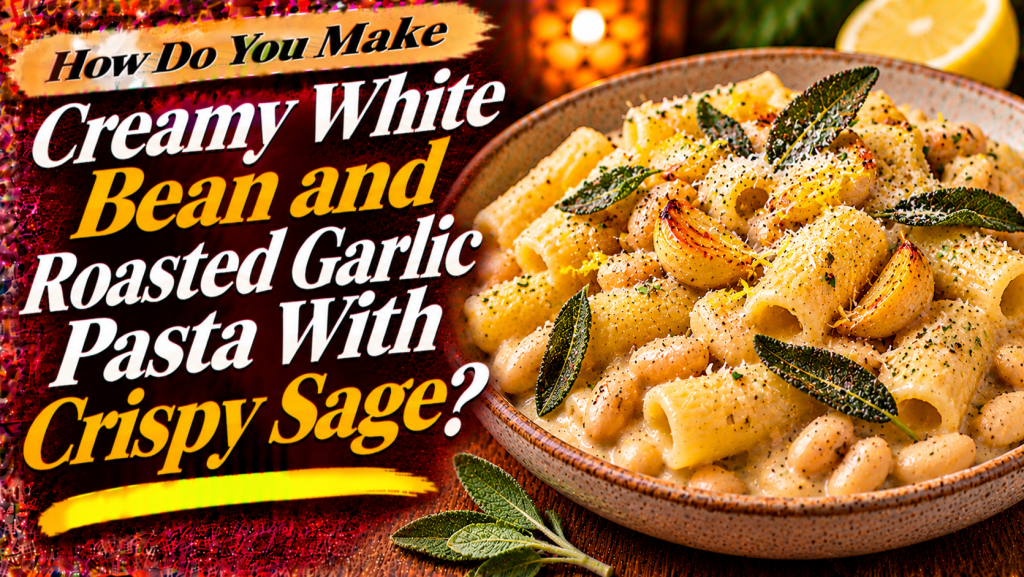
Creamy white bean and roasted garlic pasta with crispy sage is a comforting dinner that uses blended cannellini beans to create a silky sauce without heavy cream. Roasted garlic gives the sauce a mellow sweetness, lemon adds freshness, and sage leaves fried briefly in olive oil provide a fragrant, crisp finish. The result is a satisfying pasta dish made from straightforward pantry ingredients.
The key is roasting the garlic until completely soft and reserving some starchy pasta cooking water. The beans need enough liquid to blend smoothly, but the sauce should remain thick enough to cling to every piece of pasta. Adding the crispy sage immediately before serving preserves its delicate texture.
Recipe at a Glance
Serves four. Preparation time: 15 minutes. Cooking time: 45–55 minutes. Oven temperature: 400°F. Equipment: saucepan, large pasta pot, blender, skillet, small baking dish, colander and tongs.
Ingredients
Use 12 ounces dry rigatoni or penne, one large head of garlic, two 15-ounce cans cannellini beans (drained and rinsed), three tablespoons extra-virgin olive oil divided, three-quarters cup low-sodium vegetable broth, one tablespoon fresh lemon juice, one teaspoon grated lemon zest, 12 fresh culinary sage leaves, half a teaspoon black pepper, and salt to taste. Reserve one cup pasta cooking water. Optional: one-quarter cup finely grated Parmesan-style cheese and a pinch of crushed red pepper.
Choosing the Best Pasta
Short pasta shapes with ridges or hollow centers hold the creamy sauce particularly well. Rigatoni, penne and fusilli are all practical choices. Fettuccine can work, too, although it requires gentle tossing to distribute the thicker sauce. Choose a gluten-free pasta if needed and follow its specific package instructions.
Choosing White Beans
Cannellini beans have a mild flavor and creamy interior that blends smoothly. Great Northern beans or cooked butter beans are useful substitutes. Canned beans are already fully cooked and save time. Rinse them to remove the packing liquid and drain them before measuring. If starting with dried beans, cook them completely according to reliable package directions before preparing the sauce.
How to Roast Garlic
Choose a firm head of garlic without mold or soft spots. Remove loose outer paper without separating the cloves, then trim approximately one-quarter inch from the top to expose the tips. Place it in a small oven-safe dish, drizzle with one teaspoon of the measured oil and cover with foil. Roast at 400°F for 35–45 minutes until the cloves are soft and golden. Allow the head to cool enough to handle before squeezing the cloves from their skins.
How to Make Creamy White Bean and Roasted Garlic Pasta With Crispy Sage
Begin roasting the garlic first. Prepare the beans and sage while it cooks, then boil the pasta shortly before blending the sauce.
Step 1: Boil the pasta
Bring a large pot of water to a boil and season lightly with salt. Add the pasta and cook according to the package directions until al dente. Before draining, carefully scoop out one cup of the cooking water and set it aside. Do not rinse the drained pasta.
Step 2: Blend the white bean sauce
Place one and a half cans of drained beans, the softened roasted garlic cloves, vegetable broth, lemon juice, lemon zest and one tablespoon olive oil in a blender. Blend until smooth, adding a little pasta water if needed. Reserve the remaining half can of beans for texture. Taste and season with black pepper.
Step 3: Prepare the sage
Wash the fresh culinary sage leaves and pat them completely dry. Heat the remaining olive oil in a small skillet over medium heat. Add the leaves in a single layer and fry briefly, approximately 15–30 seconds per side, until crisp. Use caution because moisture can cause hot oil to splatter. Lift the leaves out with tongs and drain on a paper towel.
Step 4: Warm the sauce
Transfer the blended bean mixture to a large skillet over medium-low heat. Stir gently until hot, adding reserved pasta water a few tablespoons at a time to achieve a smooth, pourable consistency. Avoid a vigorous boil, which can cause the thick mixture to stick or splatter.
Step 5: Combine the pasta and beans
Add the drained pasta and remaining whole beans to the warm sauce. Toss gently until evenly coated. Continue adding small amounts of pasta water if the sauce becomes too thick. Stir in the optional grated cheese off the heat and taste before adding more salt.
Step 6: Garnish and serve
Divide the pasta among four warm bowls and top each portion with crispy sage leaves. Add freshly ground black pepper, a little lemon zest or a pinch of crushed red pepper if desired. Serve immediately while the sauce remains silky and the sage is crisp.
Why White Beans Make a Creamy Pasta Sauce
Cooked white beans contain starch and soluble components that create body when blended. Their mild flavor allows roasted garlic and herbs to become prominent. Unlike a traditional cream sauce, the blended beans also contribute fiber and plant protein. Keeping some beans whole provides a pleasant contrast to the smooth sauce.
How to Keep the Sauce From Becoming Too Thick
Bean-based sauces naturally thicken as they cool, and pasta continues absorbing moisture after cooking. Keep reserved cooking water available and add it gradually while tossing. The ideal sauce coats the pasta without pooling heavily at the bottom of the skillet. If you run out of pasta water, warm vegetable broth is a suitable substitute.
How to Prevent Crispy Sage From Burning
Use moderately heated oil rather than smoking-hot oil. Sage leaves are thin and cook very quickly. Remove them as soon as they become crisp, before they turn dark brown. Let them drain in a single layer and avoid adding them to the simmering sauce. A few leaves per serving are enough to provide a distinctive fragrance.
How to Balance Roasted Garlic and Lemon
Roasting garlic softens its sharp raw flavor and introduces a gentle sweetness. Lemon juice and zest counterbalance the richness of the beans. If the finished pasta tastes flat, add a small squeeze of lemon and freshly ground pepper before reaching for extra salt. If too acidic, add a little broth or another spoonful of blended beans.
Easy Recipe Variations
Fold in wilted baby spinach, sautéed mushrooms or roasted cherry tomatoes for extra vegetables. For a spicier version, add a small pinch of chili flakes to the sauce. Rosemary or thyme can replace sage as an aromatic garnish, although their texture will differ. For a richer version, stir in a small amount of cream or cheese if dairy is appropriate.
For a vegan version, omit the optional cheese or choose a suitable plant-based alternative. The main sauce does not require dairy. For gluten-free preparation, use appropriate gluten-free pasta and check the broth and other packaged ingredients. Conventional Parmesan contains milk and may use animal rennet; select a vegetarian alternative when relevant.
What to Serve With White Bean and Roasted Garlic Pasta
A crisp arugula salad, roasted broccoli, steamed green beans or lemon-dressed asparagus complements the creamy sauce. Garlic bread is optional, though the pasta is already substantial. Serve smaller portions as a side alongside grilled fish or herb-roasted chicken if desired.
Make-Ahead Instructions
Roast the garlic and blend the sauce up to a day ahead, cool promptly and refrigerate in a shallow covered container. Do not store roasted garlic submerged in oil at room temperature. Cook the pasta and fry the sage shortly before serving. Reheat the sauce thoroughly, thinning it with a little warm broth or pasta water.
Storage and Reheating
Refrigerate leftovers in shallow covered containers within two hours of cooking, or within one hour if the surrounding temperature exceeds 90°F. Use within three to four days. Reheat to 165°F throughout, stirring in a splash of broth to restore the sauce’s consistency. Freeze the plain bean sauce for up to two months for best quality; thaw in the refrigerator before reheating. Prepare fresh crispy sage when serving.
Frequently Asked Questions
Can I use canned white beans?
Yes. Canned cannellini beans are fully cooked and convenient. Drain and rinse them before blending.
Can I use fresh garlic instead of roasted garlic?
Yes, but use fewer cloves and gently sauté them first. The flavor will be sharper and less sweet.
Can I make this without a blender?
Yes. Mash the beans and roasted garlic thoroughly with a potato masher, gradually adding broth. The sauce will have a rustic texture.
Why is my sauce grainy?
It may need more blending or liquid. Add warm broth gradually and blend until smooth, following your blender’s instructions for warm ingredients.
Can I use dried sage?
Dried culinary sage can season the sauce in small amounts, but it will not produce the same crisp garnish as fresh leaves.
Is this pasta vegan?
The basic recipe can be vegan when the vegetable broth and pasta are suitable and the optional dairy cheese is omitted.
Final Thoughts
Creamy white bean and roasted garlic pasta with crispy sage transforms simple pantry staples into a rich, comforting dinner. Roast the garlic until soft, blend the beans with enough liquid to create a silky sauce, and add crisp sage just before serving. Fresh lemon and herbs provide a balanced finish without the need for heavy cream.
Leave a Reply