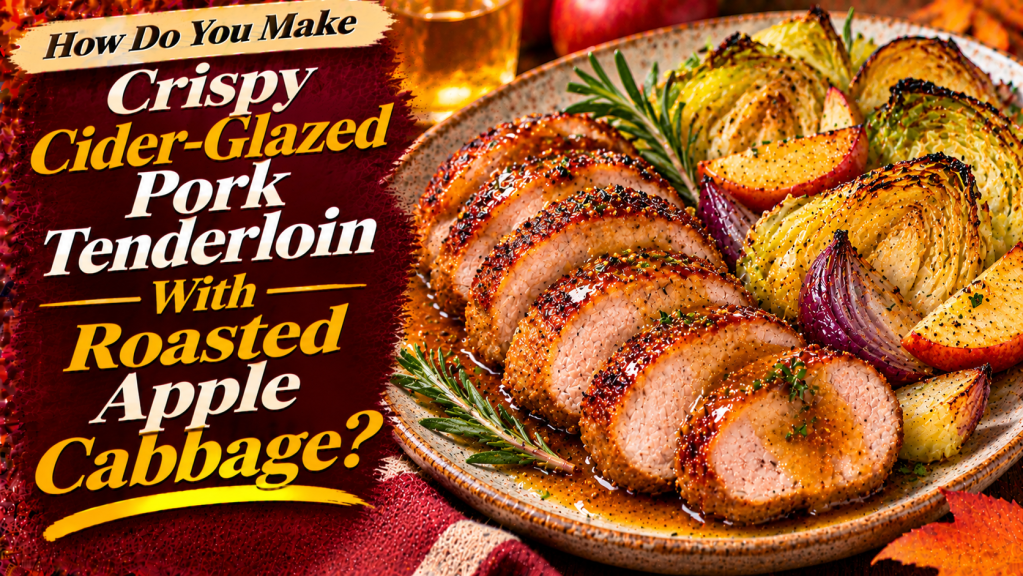
Crispy cider-glazed pork tenderloin with roasted apple cabbage is a savory fall dinner that combines juicy pork, caramelized cabbage, tart-sweet apples, and a glossy apple-cider mustard glaze. The meal uses one oven and familiar ingredients but delivers contrasting textures: a deeply browned pork exterior, tender slices inside, and golden vegetable edges.
The secret is to roast the cabbage first, sear the pork before finishing it in the oven, and brush on the cider glaze near the end so its sugars do not scorch. Rest the meat before slicing and keep the vegetables spread out on a hot pan so they roast instead of steam.
Recipe at a Glance
Yield: four servings. Prep time: 20 minutes. Cooking: 30–40 minutes, depending on pork thickness. Oven: 425°F. Equipment: rimmed sheet pan, oven-safe skillet, saucepan, tongs, whisk, cutting board, and instant-read meat thermometer.
Ingredients for the Pork
Use one pork tenderloin weighing about 1¼–1½ pounds, 1 tablespoon neutral oil, ½ teaspoon kosher salt, ½ teaspoon ground black pepper, ½ teaspoon dried thyme, and ½ teaspoon garlic powder. Choose pork tenderloin rather than pork loin: they are different cuts with substantially different cooking times.
Ingredients for the Apple Cabbage
Use one small green cabbage, about 1½ pounds; two firm apples such as Pink Lady or Granny Smith; one medium red onion; 2 tablespoons olive oil; ½ teaspoon caraway seeds, optional; ½ teaspoon salt; and black pepper. A little apple cider vinegar added after roasting gives the vegetables a bright finish.
Ingredients for the Cider Glaze
Use ½ cup pasteurized nonalcoholic apple cider, 1 tablespoon Dijon mustard, 1 tablespoon pure maple syrup, 2 teaspoons apple cider vinegar, and 1 teaspoon fresh chopped rosemary. If the cider is especially sweet, reduce the maple syrup. Hard cider is alcoholic and is not intended for this recipe.
Choosing and Preparing Pork Tenderloin
Select a tenderloin that is evenly colored, with no unpleasant odor or damaged packaging. Refrigerate promptly and follow the package’s use-by guidance. If a thin silvery membrane remains on the surface, slide a small sharp knife beneath it and remove it carefully; this tough silver skin does not soften during cooking.
Pat the pork dry with paper towels so it sears instead of steams. Fold the very thin tail end underneath and secure with kitchen twine if you want the tenderloin to cook more evenly. Always handle raw pork separately from washed produce and clean utensils afterward.
How to Cut Cabbage for Roasting
Remove wilted outer leaves and rinse the cabbage. Cut into wedges about an inch thick, keeping a little core attached so each wedge holds together. Slice the onion into thick crescents rather than thin slivers, which may burn. Core the apples and cut into wedges of similar thickness.
Leaving apple skins on helps the wedges hold their shape. Choose firm apples, since soft eating apples may collapse during roasting. Arrange cabbage, apples, and onion on a large metal sheet pan without stacking, using two pans if necessary.
How to Make Crispy Cider-Glazed Pork Tenderloin With Roasted Apple Cabbage
Begin with the vegetables because they take longer to brown. Prepare the cider glaze while they roast, then sear and finish the pork.
Step 1: Preheat the oven
Heat the oven to 425°F with a rack near the center. Use a large rimmed metal baking sheet. If lining it with parchment, verify that the parchment is rated for this temperature. Leave the pork skillet available for stovetop searing.
Step 2: Season the vegetables
Toss cabbage wedges, apples, and red onion with olive oil, salt, black pepper, and optional caraway. Spread across the baking sheet in one layer. Place cabbage wedges cut-side down to encourage browning.
Step 3: Start roasting
Roast the vegetables for 15–20 minutes until the undersides begin browning. Turn carefully with a wide spatula and continue roasting while the pork cooks. Total roasting time is usually 30–40 minutes, depending on wedge thickness and pan crowding.
Step 4: Reduce the glaze
Combine apple cider, Dijon mustard, maple syrup, vinegar, and chopped rosemary in a small saucepan. Simmer over medium-low heat for 7–10 minutes until reduced to a lightly syrupy consistency. Stir periodically and remove from the heat before it becomes sticky or burns.
Step 5: Season and sear the pork
Pat the tenderloin dry. Rub with salt, pepper, dried thyme, and garlic powder. Warm one tablespoon neutral oil in an oven-safe skillet over medium-high heat. Sear the meat for about two minutes per side, turning until several surfaces are deeply golden. Browning builds flavor, but the center will not yet be cooked.
Step 6: Roast the pork
Brush a thin layer of clean cider glaze over the browned pork. Transfer the skillet to the oven. Roast for approximately 10–18 minutes, checking the thickest section with a thermometer. Pork tenderloin is safely cooked at 145°F followed by at least three minutes of rest. Cooking time varies considerably with size and the skillet.
Step 7: Rest before slicing
Transfer the cooked tenderloin to a clean cutting board and rest for five minutes, ensuring at least three minutes of rest. The juices redistribute, making the slices moister. Do not use the same unwashed board or utensils that touched raw pork.
Step 8: Finish the cabbage and apples
Check the vegetables. Cabbage should be tender at the core and browned on its edges; apples should be softened while retaining their shape. If necessary, roast another five minutes. Sprinkle with a little apple cider vinegar after cooking and taste for seasoning.
Step 9: Plate and glaze
Slice the pork into medallions about half an inch thick. Divide cabbage, apples, and onion among four plates and arrange pork slices on top. Warm any reserved, uncontaminated glaze and drizzle lightly over the meat. Garnish with a little fresh rosemary or parsley.
How to Keep Pork Tenderloin Juicy
Pork tenderloin is naturally lean, so overcooking is the most common reason it turns dry. Use a thermometer in the thickest part rather than judging doneness by color. Searing develops a flavorful crust, while finishing in the oven gives more even heat.
Remove pork at 145°F and allow the required rest rather than cooking until it is uniformly gray. A little pink color can remain in safely cooked whole-muscle pork. If a family member prefers a higher final temperature, individual slices can be cooked further without drying the whole tenderloin.
How to Get Crispy, Caramelized Cabbage
Dry the cabbage after washing, use enough oil to lightly coat its surfaces, and give it adequate pan space. When the pieces are crowded together, moisture accumulates and the cabbage steams. A hot metal sheet pan helps the cut surfaces caramelize.
Do not turn the wedges repeatedly. Let one side brown, then carefully flip once. Apple wedges contain more moisture and may soften before the cabbage is ready; remove them early if they are becoming mushy. Deep golden edges are desirable, but blackened cabbage will taste bitter.
How to Balance the Cider Glaze
The apple cider adds sweetness and fruitiness, mustard supplies savory sharpness, and vinegar keeps the glaze bright. Maple syrup deepens the flavor but is not essential when the cider is already sweet. Taste as the glaze reduces and adjust with a few drops of vinegar if it becomes cloying.
The glaze thickens as it cools. If it becomes too sticky, stir in a teaspoon or two of warm water. Avoid heavy layers on the pork before oven roasting because concentrated sugars can scorch against the hot skillet.
Delicious Variations
For a mustard-herb version, add chopped fresh thyme or a small amount of whole-grain mustard to the glaze. For a smoky variation, season the pork with a quarter teaspoon smoked paprika. A pinch of fennel seed complements the cabbage and apple.
You can replace green cabbage with red cabbage, though the color and texture will differ slightly. Pear wedges can replace apples for a softer, sweeter result. If maple syrup is unavailable, a small amount of honey works, but monitor the glaze carefully because it also browns quickly.
For a dairy-free meal, the basic recipe requires no butter or cheese. To reduce added sugar, omit maple syrup and let the cider reduce naturally. If you prefer chicken instead of pork, use boneless breasts or thighs and cook poultry to 165°F rather than the pork temperature.
What to Serve With This Dinner
The roasted vegetables make a generous side, but mashed potatoes, cooked farro, or wild rice turn the meal into a heartier plate. Steamed green beans or a simple arugula salad add freshness. A little lemon juice or vinegar in the salad contrasts pleasantly with the sweet apple glaze.
For guests, slice the pork on a warm platter and arrange the roasted cabbage wedges around it. Tuck apple slices between the vegetables and serve extra glaze on the side. This keeps the pork crust from becoming overly wet.
Make-Ahead Tips
Cut the cabbage and onion a day ahead and refrigerate in covered containers. Mix the dry pork seasoning in advance. Prepare the cider glaze up to two days ahead and refrigerate promptly; reheat gently before serving. Slice apples closer to roasting so they do not brown unnecessarily.
For the best crust and texture, sear the pork and roast vegetables shortly before serving. If cooking ahead, keep the pork and vegetables separate. Reheat only until warmed thoroughly to avoid excessive drying.
Storage and Reheating
Refrigerate leftovers in shallow airtight containers within two hours, or within one hour if the surrounding temperature is above 90°F. Use within three to four days. Store remaining glaze separately when practical.
Reheat leftovers to 165°F throughout. Warm sliced pork gently in a covered baking dish with a small splash of broth and roast the cabbage uncovered at 375°F to recover some texture. Microwaving is convenient but will soften the browned vegetables.
Frequently Asked Questions
Can I use pork loin instead of tenderloin?
Yes, but pork loin is a larger and different cut. Its cooking time will be significantly longer, so adjust the method and use a thermometer.
Is slightly pink pork tenderloin safe?
Whole-muscle pork can be safely cooked to 145°F with at least three minutes of rest. Use a thermometer rather than judging by color.
Can I use apple juice instead of cider?
Yes. Unsweetened apple juice is a practical substitute but may taste less rich than cloudy cider. Reduce maple syrup if the juice is sweet.
What is the best apple for roasting?
Firm varieties such as Pink Lady, Granny Smith, and Honeycrisp hold their shape well and provide a pleasant sweet-tart flavor.
Why did my cabbage turn soggy?
The pan may have been crowded, the vegetables may have been wet, or the oven may not have been hot enough. Spread them in a single layer and roast cut-side down initially.
Can I cook this without maple syrup?
Yes. Omit it and reduce the cider slightly longer. The glaze will be less sweet but still flavorful.
Final Thoughts
Crispy cider-glazed pork tenderloin with roasted apple cabbage offers a balanced combination of savory meat, tangy mustard, sweet orchard fruit, and deeply browned vegetables. Give the cabbage a head start, apply glaze near the end, and use a thermometer for juicy pork. Finish with a splash of vinegar and fresh herbs for a comforting seasonal dinner.
Leave a Reply