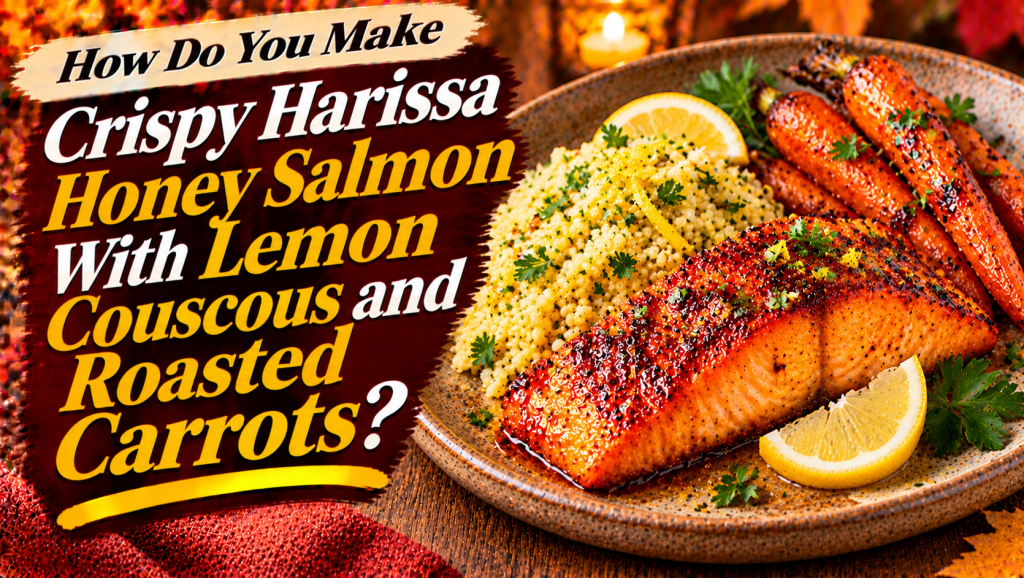
Crispy harissa honey salmon with lemon couscous and roasted carrots is a colorful sheet-pan-inspired dinner with a balanced mix of heat, sweetness, citrus, and savory flavor. The salmon cooks until its edges are lightly caramelized, the carrots become tender and golden, and fluffy couscous catches the bright lemony juices. It is satisfying enough for a family dinner but looks especially inviting when plated for guests.
The key is timing the components rather than putting everything into the oven at once. Carrots generally take longer to roast than salmon. Starting them first gives their surfaces time to caramelize before the fish is added. A thin honey-harissa glaze goes on late enough to reduce scorching, while couscous can be prepared on the stove as the salmon finishes.
Recipe at a Glance
Servings: four. Active preparation: 20 minutes. Cooking time: approximately 30–40 minutes. Oven temperature: 425°F. Equipment: two rimmed baking sheets or one roomy sheet pan, mixing bowls, a small saucepan with a lid, pastry brush, fork, and instant-read food thermometer.
Ingredients for the Salmon and Carrots
Use four salmon fillets, approximately 5–6 ounces each; 1½ pounds carrots; 2 tablespoons olive oil divided; 1½ tablespoons harissa paste; 1 tablespoon honey; 1 tablespoon fresh lemon juice; 1 teaspoon finely grated lemon zest; ½ teaspoon garlic powder; ½ teaspoon ground cumin; ½ teaspoon kosher salt, or to taste; and black pepper.
For lemon couscous, use 1 cup dry Moroccan-style couscous, 1 cup low-sodium vegetable or chicken broth, 1 tablespoon olive oil, 1 tablespoon lemon juice, 1 teaspoon lemon zest, and 2 tablespoons chopped fresh parsley. Optional toppings include sliced scallions, toasted sliced almonds, and plain Greek yogurt. Salmon contains fish; couscous contains wheat; yogurt contains milk; and almonds are tree nuts.
What Is Harissa?
Harissa is a North African chili paste made with peppers and aromatic spices. Its flavor and heat vary widely between brands, from relatively mild and smoky to distinctly hot. Some versions are blended with olive oil, garlic, caraway, coriander, or cumin. Taste a tiny amount before using it so you can decide whether to start with less than the recipe calls for.
Harissa’s savory spice provides a contrast to sweet honey and rich salmon. You do not need a very hot paste to make the dish flavorful. A milder harissa allows the salmon and lemon to remain the focus, while a hotter brand can be used in a smaller quantity and thinned with a little olive oil.
Choosing and Preparing the Salmon
Select salmon fillets of similar thickness so they cook evenly. Skin-on fillets work well because the skin helps hold the fish together during baking; skinless portions are also suitable. If buying frozen salmon, thaw it safely in the refrigerator according to the package instructions. Pat the fillets dry with paper towels to help the glaze adhere.
Keep raw fish refrigerated until cooking and use a clean cutting board and utensils. Do not rely on color alone to assess doneness. For a straightforward food-safety target, cook fish to 145°F in its thickest part, checking with a thermometer. Remove cooked salmon carefully to avoid breaking the flakes.
How to Cut Carrots for Even Roasting
Use medium carrots that feel firm and have no soft or spoiled spots. Wash and scrub them thoroughly. Peel if desired, then cut into long batons about ½ inch thick. Halve thinner carrots lengthwise, and quarter large ones. Similar thickness matters more than identical length because evenly sized pieces roast at a similar rate.
Dry the cut carrots before tossing with oil. Excess surface moisture causes steam and can slow browning. The carrots should fit in a single layer with room between pieces. If the baking sheet is crowded, use a second one rather than stacking vegetables beneath the salmon.
How to Make Crispy Harissa Honey Salmon With Lemon Couscous and Roasted Carrots
Begin with the carrots and mix the glaze while they roast. Prepare the couscous near the end so it is fluffy and warm when everything is ready.
Step 1: Heat the oven
Preheat the oven to 425°F and position a rack near the middle. Line a rimmed baking sheet with parchment suitable for that temperature or lightly coat the metal surface with oil. Have a second small tray ready for the salmon if the carrots occupy most of the first pan.
Step 2: Season the carrots
Toss the cut carrots with 1 tablespoon olive oil, the ground cumin, a pinch of salt, and black pepper. Spread in a single layer. Roast for approximately 18–22 minutes, turning once, until they begin to develop browned edges but are not yet fully tender.
Step 3: Prepare the glaze
In a small clean bowl, whisk the harissa paste, honey, lemon juice, lemon zest, garlic powder, and remaining tablespoon olive oil. The mixture should be spreadable but not watery. If your harissa is very thick, add a teaspoon of water. Reserve a little glaze in a separate clean container for finishing before any of it touches raw salmon.
Step 4: Prepare and glaze the salmon
Pat the fillets dry and season lightly with salt and black pepper. Arrange skin-side down on the second baking sheet or in the open space on the carrot pan. Brush a thin layer of glaze over the top and sides of each fillet. Avoid a heavy coating that pools around the fish, because the honey can burn on the hot pan.
Step 5: Roast the salmon
When the carrots have had their head start, place the salmon in the oven. Roast for approximately 10–15 minutes, depending on thickness. Check the center with a food thermometer and continue cooking until it reaches 145°F. The edges should look lightly caramelized and the fish should separate into moist flakes when gently pressed.
Step 6: Finish the carrots
While the salmon roasts, check that the carrots are tender when pierced with a fork. If needed, give them another five minutes, turning gently. A squeeze of lemon after roasting brightens the natural sweetness. Do not pour glaze that contacted raw fish over the finished carrots unless it has been thoroughly cooked.
Step 7: Prepare the lemon couscous
Bring 1 cup low-sodium broth and 1 tablespoon olive oil to a boil in a saucepan. Stir in the dry couscous, remove from the heat, and cover tightly. Let stand about five minutes, or according to the package instructions. Fluff with a fork, then fold in lemon juice, lemon zest, and chopped parsley. Add a splash of warm broth if the grains seem dry.
Step 8: Assemble the plates
Spoon lemon couscous into four shallow bowls or onto plates. Add roasted carrots and a salmon fillet to each portion. Drizzle with a small amount of reserved clean glaze if desired, or use a fresh squeeze of lemon. Garnish with parsley and a spoonful of plain Greek yogurt for a cooling contrast.
How to Get Caramelized Edges Without Burning the Glaze
Honey browns quickly in a hot oven. Brushing on a thin layer rather than coating salmon heavily helps keep the surface golden instead of blackened. Leave space around the fish and check it near the end of the cooking time. If the glaze darkens faster than the salmon cooks, loosely cover the fillet with foil.
For especially crisp skin, you can cook the salmon skin-side down in a lightly oiled oven-safe skillet over medium heat for a few minutes before finishing in the oven. Add the glaze to the flesh side, not the skin. This is an optional variation; the regular oven method keeps preparation simpler.
Balancing Spicy Harissa, Honey, and Lemon
Harissa contributes heat and savory complexity, honey provides sweetness, and lemon adds bright acidity. If the finished salmon tastes too spicy, serve it with more couscous, plain yogurt, or an additional squeeze of lemon. If the glaze is too sweet, use less honey next time and slightly more lemon.
The strength of the harissa paste is the biggest variable. Begin with one tablespoon when trying a new brand, then increase after tasting. A little heat should complement the fish rather than overwhelm it. The carrots and couscous also help soften the spice in the final meal.
How to Keep Couscous Light and Fluffy
Moroccan-style couscous is tiny steamed pasta that generally hydrates quickly in hot liquid. It should be covered off the heat rather than simmered continuously like rice. Fluff gently with a fork to separate the grains. Stirring aggressively while the couscous is wet can make it clump together.
For additional flavor, use broth instead of plain water and stir in lemon zest and herbs after fluffing. Pearl couscous, sometimes called Israeli couscous, is a different, larger pasta and must be simmered according to its package directions. It is not an equal-time replacement in this recipe.
Easy Recipe Variations
For a maple harissa version, substitute pure maple syrup for honey. A small amount of orange zest can replace some lemon zest for a sweeter citrus aroma. For extra greens, serve the dish with sautéed spinach or add chopped parsley and mint to the couscous.
Chicken thighs can replace the salmon, but cooking time changes substantially and poultry must reach 165°F. Roast until safe and tender before serving. For a vegetarian plate, use firm tofu or fully cooked chickpeas with the harissa glaze, adjusting cooking time and avoiding raw-fish cross-contact.
If you need a gluten-free meal, substitute quinoa or rice cooked separately according to package instructions. Confirm that the harissa paste and broth are gluten-free. If you are avoiding nuts, omit the optional almonds and use pumpkin seeds for crunch when appropriate.
What to Serve With This Dinner
The salmon, couscous, and carrots already form a complete and satisfying plate. A cucumber salad, steamed green beans, or lightly dressed arugula can add refreshing contrast. For guests who enjoy a creamier sauce, mix plain Greek yogurt with lemon juice, a little grated garlic, and parsley.
If making the meal for a gathering, place the couscous on a large warm platter and arrange the salmon and carrots on top. Keep extra lemon wedges and yogurt sauce on the side so guests can adjust the spice and acidity.
Make-Ahead Preparation
Cut the carrots up to one day ahead and refrigerate in a covered container. Prepare the glaze in advance and refrigerate it separately. Keep raw salmon chilled and do not brush with glaze until close to cooking time. Chop herbs before dinner if desired, but squeeze the lemon close to serving for the freshest aroma.
Couscous is quick enough to make while the salmon roasts, so it is usually best prepared fresh. If cooking it in advance, cool promptly and refrigerate. Reheat with a little water or broth and fluff before serving. Keep the fish and vegetables separate until plating for the best texture.
Storage and Reheating
Refrigerate leftovers promptly in shallow airtight containers within two hours of cooking, or within one hour when the surrounding temperature exceeds 90°F. Use within three to four days. Keep the salmon, couscous, and carrots separate when practical so they do not become soggy.
Reheat leftovers thoroughly to 165°F. Warm the couscous with a tablespoon of water or broth, and heat the carrots on a baking sheet for a slightly firmer texture. Salmon can dry out if reheated aggressively, so use gentle heat. The dish can be frozen, but couscous and cooked salmon may have a softer texture after thawing.
Frequently Asked Questions
Can I use frozen salmon?
Yes. Thaw it safely in the refrigerator, pat it dry, and cook until the center reaches 145°F. Cooking time depends on fillet thickness.
Is harissa always very spicy?
No. Heat varies greatly by brand. Taste a small amount and start with less when using an unfamiliar paste.
Can I use maple syrup instead of honey?
Yes. Pure maple syrup is an easy substitution and gives the glaze a slightly different sweetness. Monitor closely because it can also burn.
Can I make the recipe without couscous?
Absolutely. Serve the salmon and carrots with rice, quinoa, or mashed potatoes. Follow the separate cooking instructions for the replacement.
Can I use pearl couscous?
Yes, but pearl couscous needs a different cooking method and typically takes longer. Follow its package directions rather than using the five-minute soaking method.
How do I know when salmon is cooked?
Use an instant-read thermometer in the thickest part. Cook to 145°F for a straightforward food-safety target.
Final Thoughts
Crispy harissa honey salmon with lemon couscous and roasted carrots is an approachable way to serve a bold, colorful dinner. Give the carrots a head start, keep the glaze light, and roast salmon just until safely cooked. Finish with fluffy lemon couscous and fresh herbs for a combination of sweet, spicy, savory, and bright flavors.
Leave a Reply