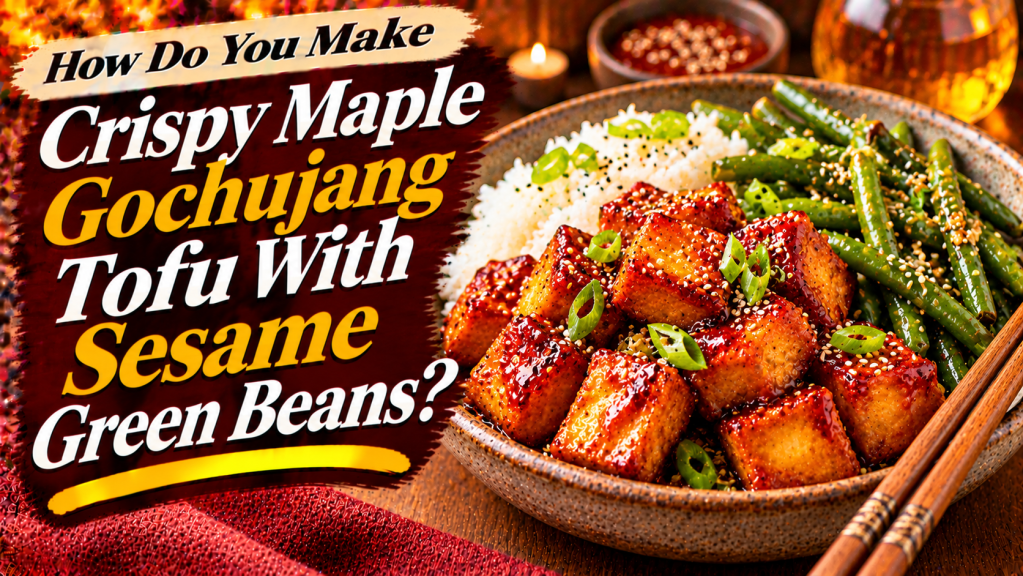
Crispy maple gochujang tofu with sesame green beans is a flavorful dinner built around golden tofu cubes, a sticky sweet-spicy sauce, and crisp-tender vegetables. Gochujang, a fermented Korean chili paste, brings savory heat; maple syrup balances its sharpness; and sesame oil adds a nutty finish. Served over rice, the combination offers a satisfying contrast of crunchy edges, tender centers, and glossy sauce without requiring complicated kitchen equipment.
The secret is to press and dry the tofu thoroughly, coat it lightly with cornstarch, and bake or pan-fry it before adding sauce. If the tofu simmers in liquid too early, its crispy coating can soften. Cook the beans separately and toss everything together just before serving for the best texture.
Recipe at a Glance
Yield: four servings. Preparation: 20 minutes, plus optional pressing time. Cooking: 25–35 minutes. Oven: 425°F for the baked tofu method. Equipment: rimmed baking sheet, large skillet, mixing bowls, whisk, paper towels or a clean kitchen towel, and a spatula. Serve with steamed rice or another cooked grain.
Ingredients for Crispy Tofu
Use two 14- to 16-ounce blocks of extra-firm tofu, drained; 2 tablespoons cornstarch; 1 tablespoon neutral cooking oil; ½ teaspoon garlic powder; ¼ teaspoon black pepper; and a small pinch of salt if needed. If your tofu is packed in water, press it briefly to remove excess moisture before coating.
Ingredients for Maple Gochujang Sauce
Whisk together 2 tablespoons gochujang, 2 tablespoons pure maple syrup, 1½ tablespoons reduced-sodium soy sauce, 1 tablespoon rice vinegar, 1 teaspoon toasted sesame oil, 2 minced garlic cloves, 1 teaspoon grated fresh ginger, and 3 tablespoons water. Gochujang brands differ in heat, sweetness, and saltiness, so taste the sauce before cooking and adjust conservatively.
Ingredients for Sesame Green Beans
Use 1 pound fresh green beans, trimmed; 1 tablespoon neutral oil; 1 teaspoon toasted sesame oil; 1 teaspoon soy sauce; 1 tablespoon sesame seeds; and one thinly sliced scallion. Optional garnishes include fresh lime, chopped cilantro, and additional sesame seeds. Gochujang commonly contains wheat and soy, so check labels if avoiding gluten or soy. Sesame is also a major allergen.
Choosing the Best Tofu
Extra-firm tofu is the easiest style to crisp because it holds its shape and contains less water than soft or silken tofu. Super-firm tofu can be even more convenient and may require little pressing. Do not use silken tofu for this particular method; its delicate texture will break apart when tossed and coated.
Drain the tofu and wrap it in a clean towel. Place a lightweight plate or cutting board on top and press gently for 15–20 minutes if necessary. Avoid using an unstable stack of heavy objects. Pat dry again, then tear into rough bite-sized pieces or cut into one-inch cubes. Torn surfaces provide extra edges that can brown in the oven.
What Is Gochujang?
Gochujang is a Korean fermented chili paste with spicy, sweet, and savory flavors. It is often made using red pepper powder, fermented soybean ingredients, a starch source, and salt. The exact ingredients vary, and many brands contain wheat or barley. Check the package for allergens and choose a gluten-free product if required.
Some gochujang products are moderately spicy, while others are much hotter. Start with one tablespoon if you are sensitive to heat, then build toward the suggested two tablespoons. Unlike a simple hot sauce, gochujang has body and fermented depth, so replacing it with a thin chili sauce will change the consistency and flavor.
How to Make Crispy Maple Gochujang Tofu With Sesame Green Beans
Prepare the sauce and green beans while the tofu bakes. The ingredients can come together quickly when organized in advance.
Step 1: Preheat the oven
Heat the oven to 425°F. Line a large rimmed baking sheet with parchment suitable for that temperature or lightly grease the metal surface. Leave enough room to spread the tofu without overcrowding. Use two pans if needed, since crowded pieces release steam and brown less effectively.
Step 2: Dry and season the tofu
Press, drain, and pat the tofu dry. Cut or tear it into evenly sized pieces and place in a wide mixing bowl. Add the neutral oil and toss carefully. Sprinkle the garlic powder, pepper, and cornstarch over the pieces and fold gently until each one has a thin coating. Avoid heavy clumps of starch, which may remain powdery after baking.
Step 3: Bake until golden
Spread the tofu in one layer, leaving gaps between pieces. Bake for approximately 25–30 minutes, turning after about 15 minutes, until the surfaces are golden and crisp at the edges. Actual timing depends on the tofu’s moisture content and the size of the pieces. Let the tofu rest on the pan briefly while you finish the other components.
Step 4: Whisk the glaze
While the tofu cooks, whisk the gochujang, maple syrup, soy sauce, rice vinegar, sesame oil, garlic, ginger, and water in a small bowl. Stir until smooth. If the paste is thick, an additional tablespoon of water can help it spread evenly. Taste a small amount and adjust acidity or sweetness before heating.
Step 5: Prepare the green beans
Rinse the beans and trim their stem ends. Dry them well to avoid excessive spattering when they enter a hot skillet. Leave them whole or cut longer beans in half for easier serving. Choose firm green beans without slimy patches or brown soft spots.
Step 6: Sauté the beans
Heat one tablespoon neutral oil in a large skillet over medium-high heat. Add the green beans in a single layer and cook for six to eight minutes, stirring occasionally. They should become bright green and lightly blistered while staying crisp-tender. Add one or two tablespoons water and cover briefly if they need more time to soften.
Step 7: Season with sesame
Reduce the heat to low and toss the green beans with one teaspoon sesame oil, one teaspoon soy sauce, and the sesame seeds. Remove from the skillet and keep warm. If you prefer fully tender beans, cook them a little longer; they should no longer taste raw or overly firm.
Step 8: Heat the gochujang sauce
Pour the prepared sauce into a clean skillet over medium-low heat. Stir for one or two minutes until it bubbles gently and thickens enough to coat a spoon. Do not boil aggressively, since maple syrup can reduce quickly and scorch. Add a splash of water if it becomes too thick.
Step 9: Glaze the tofu
Add the hot crispy tofu to the skillet and toss gently for about 30–60 seconds, just until coated. The goal is a glossy finish without leaving the tofu in liquid long enough to lose all its crunch. Remove from heat immediately once the sauce is distributed.
Step 10: Plate and finish
Divide cooked rice among four bowls, add the sesame green beans, and top with maple gochujang tofu. Sprinkle with sliced scallions and extra sesame seeds. A squeeze of lime can brighten the finished dish. Serve immediately for the best contrast between the crisp tofu and sticky sauce.
How to Make Tofu Extra Crispy
Moisture is the main obstacle to crisp tofu. Press water-packed tofu and pat dry before coating. A light layer of cornstarch helps develop a delicate crust, but too much produces a chalky surface. A hot oven and wide spacing allow moisture to evaporate so the outside can brown.
Avoid stirring or turning the tofu constantly. Let the pieces remain against the pan long enough for the coating to set, then flip once. Adding glaze only after cooking is equally important. Sauce naturally softens crisp coatings, so keep the final tossing time short.
Pan-Fried Tofu Option
For a stovetop method, heat two tablespoons neutral oil in a large nonstick or well-seasoned skillet over medium-high heat. Add the cornstarch-coated tofu in a single layer, working in batches. Cook for three to four minutes per side until golden. Turn with a spatula and avoid moving the pieces before a crust forms.
Transfer the fried tofu to a plate while cooking the remaining batches. Drain excess oil if necessary before heating the glaze in the skillet. Pan-frying can be faster than baking, but it requires more attention and may use a little additional oil.
Balancing Heat, Sweetness, and Acidity
The flavor depends on the gochujang brand. Maple syrup balances the fermented chili notes, while rice vinegar prevents the glaze from feeling too heavy. Soy sauce brings savory saltiness, so do not add much extra salt until you taste the finished dish.
If the glaze is too spicy, add a small amount of maple syrup and extra water, then serve with more plain rice. If it is too sweet, add a teaspoon of rice vinegar. For a less salty result, choose reduced-sodium soy sauce and start with a smaller quantity of gochujang.
Delicious Recipe Variations
For a citrus version, add finely grated orange zest to the glaze. For a peanut-inspired variation, stir a teaspoon of smooth peanut butter into the warm sauce and use an additional tablespoon of water; note that this adds a major allergen. For more vegetables, add sliced bell pepper, broccoli, or snow peas, adjusting cooking times so they retain some texture.
For a gluten-free version, use a clearly labeled gluten-free gochujang and gluten-free tamari in place of soy sauce. For a less spicy dinner, combine one tablespoon gochujang with one tablespoon tomato paste, then adjust maple and vinegar to taste. A small amount of fresh grated garlic added after cooking makes the flavor sharper.
If tofu is not available, the glaze also works with roasted cauliflower or fully cooked chicken. Cook poultry separately to at least 165°F before glazing it. For a vegetarian meal, confirm the sauce ingredients meet your dietary preferences and use tofu or vegetables rather than meat.
What to Serve With Gochujang Tofu
Steamed jasmine rice, brown rice, or quinoa all work well. A cool cucumber salad provides a refreshing counterpoint to the chili paste, while lightly dressed shredded cabbage adds crunch. A side of edamame or sautéed spinach makes the meal more substantial.
For a family-style dinner, place rice in a large serving bowl and offer tofu, beans, and extra sauce separately. Keeping the glaze apart until serving lets guests control the spice and helps preserve more of the tofu’s crispy surface.
Make-Ahead Tips
Drain and press the tofu earlier in the day, then refrigerate in a covered container until ready to cook. Mix the sauce up to two days ahead and store refrigerated in a clean jar. Wash and trim the green beans a day ahead and keep them dry in the refrigerator.
For best quality, bake or pan-fry the tofu close to mealtime. If cooking ahead, store it separately from the glaze. Reheat until hot, then toss briefly in warm sauce. Prepare rice according to safe food-handling practices, cool it promptly when making ahead, and refrigerate rather than letting cooked rice sit at room temperature.
Storage and Reheating
Refrigerate leftovers in shallow airtight containers within two hours of cooking, or within one hour if the surrounding temperature exceeds 90°F. Use within three to four days. Store tofu, sauce, rice, and beans separately when possible to preserve texture and reduce moisture transfer.
Reheat tofu on a baking sheet in a 375°F oven until heated throughout, with leftovers reaching 165°F. Warm the sauce separately and toss just before serving. Reheat rice thoroughly and promptly, following careful storage practices. Microwaving works for convenience, but the tofu will be softer.
Frequently Asked Questions
Can I use firm tofu instead of extra-firm?
Yes, but press it thoroughly and handle gently. Extra-firm or super-firm tofu gives the most reliable crispy texture.
Can I cook the tofu in an air fryer?
Yes. Cook the coated tofu in a single layer at approximately 390°F for 12–18 minutes, shaking or turning partway through. Follow appliance guidance and adjust to the size of the pieces.
Is gochujang gluten-free?
Not always. Many brands contain wheat or barley. Check the label and select a certified gluten-free variety when necessary.
Can I make the sauce without maple syrup?
Yes. Honey can replace maple in a similar amount, though the dish will no longer be vegan. Brown sugar dissolved in a little warm water is another option.
Why did my tofu turn soggy?
The tofu may not have been dried thoroughly, the pan may have been overcrowded, or the glazed tofu may have sat in sauce too long. Cook the tofu until crisp and add sauce only before serving.
Can I use frozen green beans?
Yes. Thaw or cook them according to their package instructions, then dry well and sauté. They may soften more than fresh beans.
Final Thoughts
Crispy maple gochujang tofu with sesame green beans combines simple cooking methods with bold sweet-spicy flavor. Dry and crisp the tofu first, prepare the beans separately, and glaze at the last moment. Serve with rice and fresh garnishes for a colorful meal that balances crunchy, tender, savory, and bright elements.
Leave a Reply