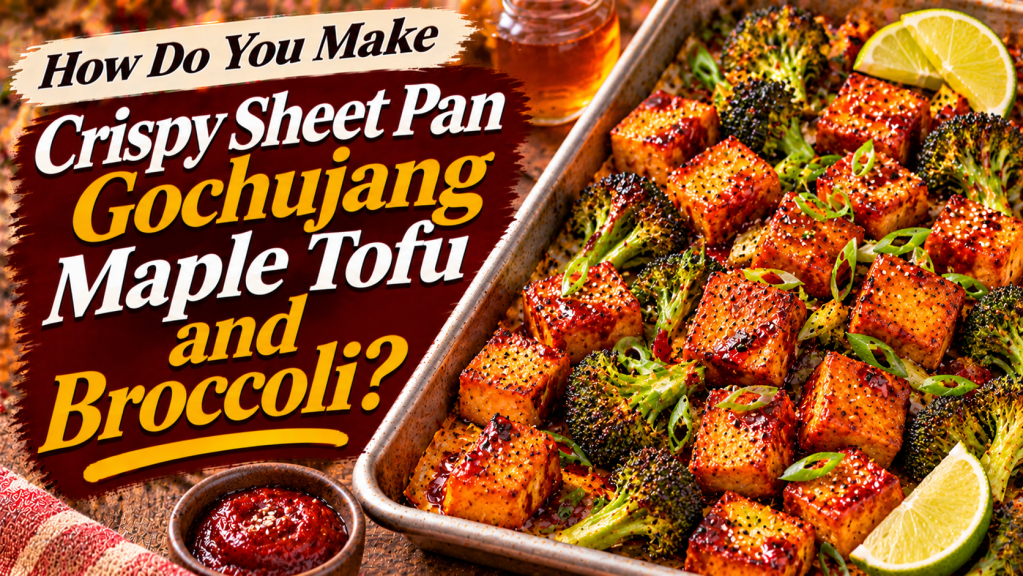
Crispy sheet pan gochujang maple tofu and broccoli is a flavorful dinner that combines golden-edged tofu, roasted broccoli, and a glossy sweet-spicy sauce. Gochujang, a Korean fermented chili paste, adds savory depth and heat, while pure maple syrup softens the spice. A splash of rice vinegar brightens the finished dish, making it satisfying over rice, noodles, or another favorite grain.
The secret to crispy tofu is removing excess moisture, tossing it in a little cornstarch, and roasting it in a single layer. Broccoli cooks more quickly than tofu, so adding it partway through helps produce browned florets without burning. The maple gochujang glaze goes on near the end so its sugars do not scorch during the full roasting time.
Recipe at a Glance
Yield: 4 servings. Prep time: 20 minutes plus 15 minutes to drain the tofu. Cooking time: 30–40 minutes. Oven temperature: 425°F. Equipment: one or two large rimmed baking sheets, clean kitchen towels, mixing bowls, whisk, spatula, and a small saucepan or microwave-safe bowl.
Ingredients
For the tofu and broccoli, use two 14-ounce packages extra-firm tofu, drained; one large head broccoli (about 1 pound), cut into evenly sized florets; 2 tablespoons neutral oil, divided; 2 tablespoons cornstarch; ½ teaspoon garlic powder; and ¼ teaspoon black pepper.
For the sauce, use 2 tablespoons gochujang, 1½ tablespoons pure maple syrup, 1 tablespoon reduced-sodium soy sauce, 1 tablespoon rice vinegar, 1 teaspoon toasted sesame oil, 1 teaspoon finely grated fresh ginger, one grated garlic clove, and 1–2 tablespoons warm water to thin. For serving, use sliced green onions, optional sesame seeds, lime wedges, and cooked rice.
Gochujang and soy sauce can contain wheat and soy. Some gochujang products have added sweetener, and heat levels vary substantially. Check product labels for gluten, soy, and sesame allergens, and use certified alternatives when appropriate.
How to Choose the Best Tofu
Extra-firm tofu is the easiest starting point because it holds its shape when cut and tossed. Firm tofu also works but generally needs more thorough draining and gentler handling. Silken or soft tofu is not suitable for this crispy sheet-pan technique; it contains more moisture and is likely to break apart.
A tofu press can help, but it is not required. Place the blocks between clean towels on a plate, then put a moderately weighted pan on top for about 15 minutes. The goal is to gently remove moisture, not crush the tofu. Change the towel if it becomes saturated. After pressing, cut or tear the tofu into bite-sized pieces, approximately ¾ to 1 inch wide. Torn edges offer extra surface area for browning.
How to Make Crispy Sheet Pan Gochujang Maple Tofu and Broccoli
Follow these steps to roast the tofu, cook the broccoli, and finish everything with a balanced glaze.
Step 1: Preheat the oven and prepare the pans
Preheat your oven to 425°F and position the rack near the center. Prepare a large rimmed baking sheet or two sheets if necessary. A light coating of oil or oven-safe parchment helps prevent sticking. Do not crowd the ingredients: spreading the pieces out allows steam to escape and makes the edges crispier.
Step 2: Coat the tofu
Place the drained tofu pieces in a mixing bowl. Drizzle with 1 tablespoon neutral oil and toss gently. Sprinkle with cornstarch, garlic powder, and black pepper, then toss until each piece has a light, even coating. Cornstarch absorbs surface moisture and encourages a thin crispy layer. Avoid a thick, powdery coating; any excess can remain chalky after cooking.
Step 3: Roast the tofu first
Spread the coated tofu pieces in one layer, leaving space between them. Roast for 15–20 minutes, then turn the pieces carefully with a thin spatula. The bottoms should begin to look golden and firm. If they stick, allow them another minute rather than pulling them apart. Continue roasting while you prepare the broccoli.
Step 4: Prepare the broccoli
Wash the broccoli and dry it thoroughly. Cut the florets into similar sizes and slice thick stalk pieces into smaller sections if you wish to use them. Toss with the remaining tablespoon of oil and a small pinch of pepper. If the first baking sheet is crowded, spread the broccoli on a second sheet. Keep the broccoli dry so it roasts rather than steams.
Step 5: Add the broccoli and continue cooking
Add the broccoli to the sheet pan after the tofu has had its head start, or place the second sheet into the oven. Roast for another 12–18 minutes, stirring the broccoli once, until it is tender with lightly browned edges. Rotate the pans if your oven heats unevenly. The tofu should become golden and crisp on several surfaces.
Step 6: Whisk the gochujang maple sauce
While the ingredients roast, whisk together the gochujang, maple syrup, soy sauce, rice vinegar, sesame oil, ginger, and garlic. Add a tablespoon of warm water, then a little more if needed to make a pourable glaze. Taste cautiously: gochujang varies in spiciness and saltiness. If it is too spicy, dilute with extra warm water and a little maple syrup rather than adding more soy sauce.
Step 7: Glaze toward the end
When the tofu is crisp and the broccoli is nearly tender, transfer both to a clean large bowl or drizzle lightly on the sheet pan. Toss with just enough glaze to coat. Return to the oven for 3–5 minutes, watching closely because the maple syrup can burn. Reserve any sauce that never touched uncooked ingredients for serving. The glazed pieces should be glossy without a pool of liquid.
Step 8: Garnish and serve
Divide hot cooked rice among bowls and add the tofu and broccoli. Sprinkle with sliced green onions, optional sesame seeds, and a squeeze of lime. If you prefer milder heat, serve additional plain rice and use a smaller amount of sauce. Enjoy the dish immediately while the tofu still has its crisp exterior.
Why Gochujang and Maple Syrup Work Together
Gochujang contains fermented chili and other seasonings that give it a complex, savory-sweet character. Maple syrup contributes a distinct mellow sweetness that balances the pepper heat. Rice vinegar adds acidity to prevent the glaze from feeling heavy, while ginger and garlic provide aromatic contrast.
Because different brands of gochujang may be much hotter or sweeter than others, the listed amount is a starting point. For a milder sauce, use just one tablespoon of gochujang and replace the other tablespoon with a small amount of tomato paste or water. For stronger heat, add gochujang gradually after tasting.
How to Make the Tofu Extra Crispy
Dry tofu thoroughly and give it space on the pan. A little cornstarch creates more surface texture, and a preheated oven helps start browning quickly. Resist pouring sauce onto the tofu at the beginning of roasting. The glaze contains both water and sugar, which can interfere with crisping and burn before the tofu is ready.
If you like especially crisp edges, use two sheet pans so the broccoli does not release moisture directly beside the tofu. You can also roast the tofu for several minutes longer before adding the sauce. Keep an eye on the final minutes, since tofu pieces with thin edges may brown faster than thick ones.
Can You Make This Recipe in an Air Fryer?
Yes. Prepare and coat the pressed tofu as directed. Arrange it in a single layer in the air fryer basket and cook at about 390°F for approximately 12–18 minutes, shaking or turning carefully halfway through. Cook the broccoli separately for around 7–10 minutes, checking frequently. Exact times depend on the appliance and piece size.
Transfer the cooked tofu and broccoli to a bowl and toss with the prepared sauce. If desired, return the glazed pieces briefly to the air fryer for a minute or two to warm the glaze, taking care not to scorch it. Follow your appliance’s instructions and avoid overcrowding the basket.
Delicious Variations
For a slightly sweeter version, replace half the maple syrup with orange juice concentrate or add finely grated orange zest. For a peanut-style bowl, finish with a little smooth peanut sauce and omit the sesame garnish if needed. Peanuts are a common allergen; check all ingredient labels and avoid cross-contact.
Cauliflower florets, bell peppers, and thick sliced mushrooms can replace part of the broccoli. Cooking times will vary, and very watery vegetables should be roasted separately. Tempeh is another plant-based protein option, though it has a denser texture and may need a different cooking time. For a nonvegetarian variation, cooked chicken pieces can be glazed separately; poultry must reach 165°F internally before serving.
What to Serve With Gochujang Maple Tofu
Steamed jasmine rice or short-grain rice is an easy way to turn the tofu and broccoli into a complete bowl. Brown rice and quinoa are also good choices. For a noodle dinner, toss the roasted ingredients with cooked rice noodles and a few spoonfuls of warm water to loosen the sauce.
Fresh cucumber slices, quick-pickled carrots, or a crisp cabbage salad provide contrast to the sweet-spicy glaze. A squeeze of lime is especially useful when serving the dish with rice, which can soften the perception of acidity.
Make-Ahead and Storage Tips
Press and cut the tofu a few hours ahead, then keep it covered in the refrigerator. The sauce can be mixed ahead and refrigerated in a clean sealed container for up to four days. Wash and dry the broccoli before cooking, but keep it separate from the tofu so moisture does not build up.
Refrigerate leftovers promptly in shallow airtight containers within two hours of cooking, or within one hour when the surrounding temperature exceeds 90°F. Use within three to four days. To reheat, spread the tofu and broccoli on a baking sheet in a 375°F oven until heated to 165°F throughout. The sauce may darken during reheating, so check often. A microwave works but softens the crisp coating.
Frequently Asked Questions
Can I use firm tofu instead of extra-firm?
Yes, but press it longer and handle it carefully because it may crumble more readily. Extra-firm tofu usually gives a more predictable crisp texture.
Can I make the sauce without gochujang?
You can substitute a modest amount of another chili paste and a little miso for savory depth, but the flavor will change. Check salt and heat levels before adding the full amount.
Is this recipe vegan?
It can be vegan when prepared with plant-based tofu, maple syrup, and other vegan-certified ingredients. Check your gochujang, soy sauce, and garnishes if strict vegan suitability is important.
Why did my tofu turn out soft?
It may have contained too much water, been crowded on the sheet pan, or been glazed before developing a crust. Press well, roast in one layer, and add sauce only at the end.
Can I use frozen broccoli?
Yes, but frozen broccoli releases more water during roasting. Roast it separately from the tofu at high heat, and expect a somewhat softer texture than with fresh broccoli.
Final Thoughts
Crispy sheet pan gochujang maple tofu and broccoli is an easy way to build a bold, satisfying dinner with affordable ingredients. Press and coat the tofu, roast the broccoli separately or add it partway through, and glaze everything near the end. The combination of crispy edges, sweet-spicy sauce, and fresh lime makes a versatile meal that works well over rice or noodles.
Leave a Reply