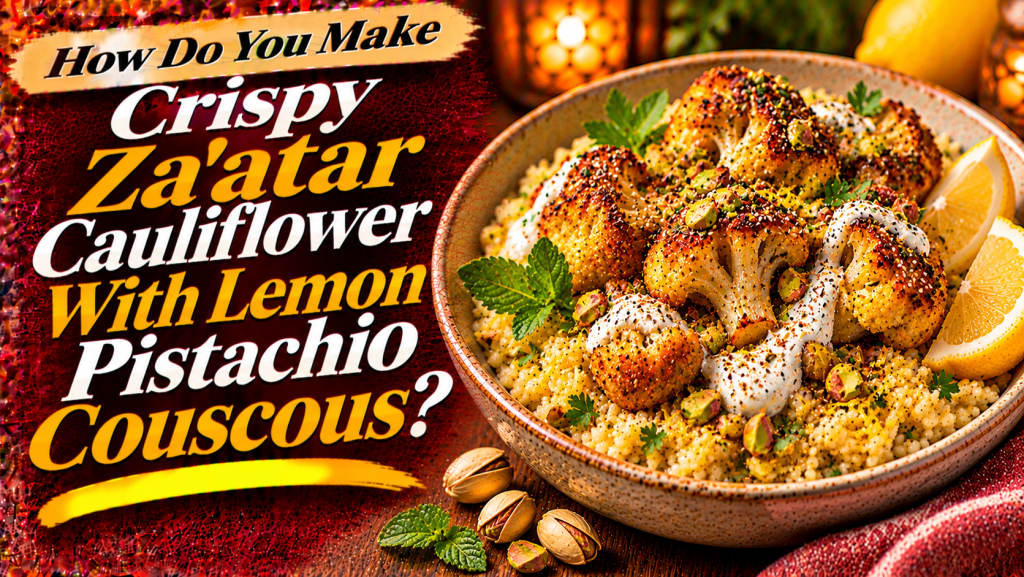
Crispy za’atar cauliflower with lemon pistachio couscous brings roasted, spice-coated florets together with fluffy pasta, toasted nuts, bright citrus, and fresh herbs. The cauliflower develops golden edges in a hot oven while the couscous cooks in just minutes, creating a colorful vegetarian dinner that feels substantial without requiring a complicated sauce.
The best results come from drying the cauliflower thoroughly, roasting it in a single layer, and adding the lemon to the couscous after cooking. Za’atar varies by brand, but typically includes thyme or other herbs, sumac, and sesame. Its tangy, nutty aroma pairs naturally with sweet roasted cauliflower and creamy yogurt.
Recipe at a Glance
Serves four as a light main or six as a side dish. Preparation: 20 minutes. Cooking: 25–35 minutes. Oven: 425°F. Equipment: large rimmed baking sheet, mixing bowls, medium saucepan with lid, fine grater, and fork.
Ingredients for the Za’atar Cauliflower
Use one large cauliflower head (approximately 2 pounds before trimming), 2½ tablespoons olive oil, 2 tablespoons za’atar seasoning, ½ teaspoon garlic powder, ¼ teaspoon black pepper, and a small pinch of salt if needed. Add one tablespoon fresh lemon juice after roasting. Different za’atar blends contain different amounts of salt, so taste the seasoning before adding more.
Ingredients for Lemon Pistachio Couscous
Use 1 cup dry regular Moroccan-style couscous, 1 cup low-sodium vegetable broth or water (or the liquid amount specified on the package), 1 tablespoon olive oil, ½ cup shelled unsalted pistachios, 1 lemon for its zest and approximately 2 tablespoons juice, ¼ cup chopped parsley, 2 tablespoons chopped fresh mint, 2 sliced scallions, and black pepper. Optional: ¼ cup crumbled feta.
Optional Yogurt Sauce
For a creamy finish, stir together ½ cup plain Greek yogurt, one tablespoon lemon juice, one small grated garlic clove, and a tablespoon of cold water. Season lightly with black pepper. This sauce is optional, and the dish can remain vegan when the yogurt and feta are omitted or replaced with suitable dairy-free products.
Allergen and Ingredient Notes
Za’atar frequently contains sesame. Couscous is made from wheat and contains gluten, pistachios are tree nuts, and the optional yogurt and feta contain milk. Read every packaged ingredient label when preparing food for people with allergies. For a gluten-free adaptation, replace couscous with cooked quinoa or rice, following that grain’s separate instructions.
How to Choose Cauliflower
Choose cauliflower with compact florets, a firm stem, and no slimy patches or unpleasant odor. White cauliflower is traditional, although purple or orange cauliflower also roasts well. Fresh cauliflower creates the best crisp edges because it generally holds less surface water than thawed frozen florets.
If using frozen cauliflower, roast it directly from frozen according to its package directions, using a large pan and allowing extra time for moisture to evaporate. The result may be softer than fresh florets, but still flavorful. Avoid overcrowding the baking sheet.
How to Prepare Cauliflower for Roasting
Remove the outer leaves and trim the tough base, then cut the cauliflower into similarly sized florets approximately 1½ inches across. Dry the pieces thoroughly with a clean towel. Flat sides are particularly useful because they make more contact with the hot metal pan and brown more evenly.
Do not discard the entire stem. The tender inner stalk can be peeled if necessary, cut into bite-sized pieces, and roasted alongside the florets. Uniform pieces help prevent tiny tips from burning before larger sections are tender.
How to Make Crispy Za’atar Cauliflower
Start the cauliflower first, because the couscous needs only a short cooking time and is best made near the end of roasting.
Step 1: Preheat the oven
Heat the oven to 425°F with a rack near the middle. Lightly grease a large rimmed baking sheet or use parchment rated for this temperature. A metal pan usually provides more effective browning than a deep casserole dish.
Step 2: Dry and season the florets
Place the washed, thoroughly dried cauliflower in a large bowl. Toss with olive oil, za’atar, garlic powder, and black pepper until evenly coated. Add salt only after considering the seasoning blend’s sodium content.
Step 3: Spread in a single layer
Arrange the cauliflower on the baking sheet with a little space between florets. Position flat cut surfaces against the pan where possible. If the cauliflower will not fit comfortably, use two baking sheets rather than stacking pieces.
Step 4: Roast until golden
Roast for approximately 25–35 minutes, turning once after 15–20 minutes. The florets should be tender in the center and deep golden on their edges. Oven performance and floret size vary, so check regularly near the end. Avoid letting the herb coating burn black.
Step 5: Finish with fresh lemon
Remove the pan from the oven and toss the cauliflower with a tablespoon of fresh lemon juice. Add the juice after roasting rather than before to preserve browning and brighten the za’atar flavor. Keep the cauliflower uncovered while preparing the serving bowls.
How to Make Lemon Pistachio Couscous
Prepare the couscous while the cauliflower finishes roasting. Check the product label: these steps are for small, quick-cooking Moroccan couscous, not pearl or Israeli couscous, which needs a different cooking method.
Step 6: Toast the pistachios
Place shelled pistachios in a dry skillet over medium-low heat. Stir frequently for two to four minutes, just until fragrant. Transfer them to a plate to cool, then chop coarsely. Do not leave nuts in the hot pan, as residual heat can scorch them.
Step 7: Heat the broth
Bring the vegetable broth or water to a boil in a covered saucepan. Stir in one tablespoon olive oil and a small pinch of salt only if the broth is unsalted. Remove from the heat once the liquid reaches a boil.
Step 8: Steam the couscous
Stir in the dry couscous, cover immediately, and let stand for about five minutes, or according to the package directions. Uncover and fluff gently with a fork. Avoid stirring aggressively while wet because that can compact the grains.
Step 9: Add citrus, herbs, and nuts
Stir in the lemon zest, approximately two tablespoons fresh lemon juice, chopped parsley, mint, scallions, and toasted pistachios. Taste before adding extra salt. Add a little more olive oil or broth if the couscous seems dry.
Step 10: Assemble the bowls
Divide the fluffy couscous among four bowls and arrange the hot za’atar cauliflower on top. Add a spoonful of optional yogurt sauce, a scattering of feta if desired, and fresh herbs or lemon wedges. Serve immediately so the cauliflower retains its crisp edges.
Why Za’atar Works So Well With Cauliflower
Za’atar brings several complementary flavors: earthy herbs, bright sumac, and often toasted sesame. Cauliflower has a mild natural sweetness that intensifies as its surfaces brown. Together, they create a savory dish with more complexity than plain roasted vegetables.
Za’atar recipes differ across regions and brands, so the flavor can range from especially tangy to primarily herbal. Begin with the recommended amount and adjust next time based on your blend. If it already contains substantial salt, reduce the salt elsewhere in the meal.
Tips for Extra-Crispy Cauliflower
Drying and spacing matter more than adding excessive oil. Water trapped on florets produces steam, and crowded pans prevent the edges from caramelizing. Cut a few broad, flat surfaces, then place them directly against the hot pan.
Do not cover the cauliflower immediately after roasting. Trapped steam softens the browned surfaces. If you must prepare it ahead, reheat on an uncovered sheet pan in a hot oven until heated through rather than microwaving it in a covered container.
How to Prevent Sticky Couscous
Use the liquid amount recommended on the specific package and remove the pan from direct heat once the dry couscous is added. Leave it covered for the indicated time, then fluff with a fork. Too much liquid or constant stirring may produce a heavy, clumped texture.
If the couscous seems dry after steaming, fluff in a tablespoon of warm broth. If slightly wet, leave uncovered briefly to allow excess steam to escape before folding in the nuts and herbs. Add lemon juice gradually if using a very tart lemon.
Variations for Different Diets
For a vegan dish, use vegetable broth and omit dairy cheese and yogurt or select appropriate plant-based alternatives. For a gluten-free option, use quinoa, brown rice, or another suitable grain instead of couscous and verify the za’atar blend. For a nut-free version, replace pistachios with toasted pumpkin seeds if those are suitable for your guests.
For additional protein, add rinsed cooked chickpeas or warm lentils to the couscous. Roasted red peppers and diced cucumber provide extra vegetable color, although cucumber is best added after cooking. A small amount of pomegranate arils adds a sweet-tart contrast at the table.
If you prefer more spice, add a small pinch of Aleppo pepper or crushed red pepper to the cauliflower. A smoked paprika variation gives the florets a deeper roasted flavor. Keep the extra seasonings modest so the za’atar remains recognizable.
What to Serve With It
This dish works as a light vegetarian main course with the optional yogurt sauce, or as a side dish alongside grilled chicken, baked fish, or roasted chickpeas. A tomato and cucumber salad, hummus, or simple lentil soup pairs naturally with the herb and citrus flavors.
For entertaining, serve the couscous on a wide platter and arrange the cauliflower on top. Present yogurt sauce and extra pistachios separately so guests can select their toppings, and clearly identify foods containing sesame, wheat, tree nuts, or dairy.
Make-Ahead Instructions
Cut and dry the cauliflower a day ahead, then refrigerate it in a covered container. Prepare the pistachios and chop herbs shortly before serving. Couscous can be cooked in advance, cooled promptly, and refrigerated, but it tastes freshest when fluffed and dressed close to serving time.
For best texture, roast the cauliflower just before eating. If preparing it earlier, store it separately from the couscous and sauce. Reheat uncovered on a baking sheet and add the fresh lemon only when ready to serve.
Storage and Reheating
Refrigerate leftovers in shallow covered containers within two hours of cooking, or within one hour when the temperature exceeds 90°F. Store cauliflower, couscous, and yogurt sauce separately where possible. Use cooked leftovers within three to four days.
Reheat cauliflower and couscous to 165°F throughout. Warm the cauliflower on an uncovered baking sheet at 375°F until heated through, and reheat the couscous with a small splash of water or broth. Keep the yogurt sauce refrigerated and add it only after reheating.
Frequently Asked Questions
Can I use frozen cauliflower?
Yes. Roast it from frozen using plenty of pan space and allow extra cooking time. It may be softer than fresh cauliflower.
Can I use pearl couscous?
Yes, but pearl couscous must be simmered like pasta or rice according to its package directions. The quick steeping method in this recipe is intended for small Moroccan couscous.
What can replace pistachios?
Toasted pumpkin seeds or sunflower seeds are alternatives if appropriate for your dietary needs. They provide crunch but change the flavor.
Does za’atar contain sesame?
Many blends do, though ingredients vary. Always read the label, particularly when serving anyone with a sesame allergy.
Can I make the dish gluten-free?
Yes. Replace wheat couscous with cooked quinoa or rice, and check the labels on seasoning blends and broth.
Why is my cauliflower soft instead of crispy?
The pieces may have been wet or crowded, or the pan temperature may have been too low. Dry thoroughly, spread in a single layer, and roast until golden.
Final Thoughts
Crispy za’atar cauliflower with lemon pistachio couscous combines roasted vegetables, fresh citrus, fragrant herbs, and crunchy nuts in a flavorful meal. Roast the cauliflower without crowding, fluff the couscous gently, and add toppings just before serving. The result is colorful, adaptable, and suitable for a casual weeknight dinner or a shared table.
Leave a Reply