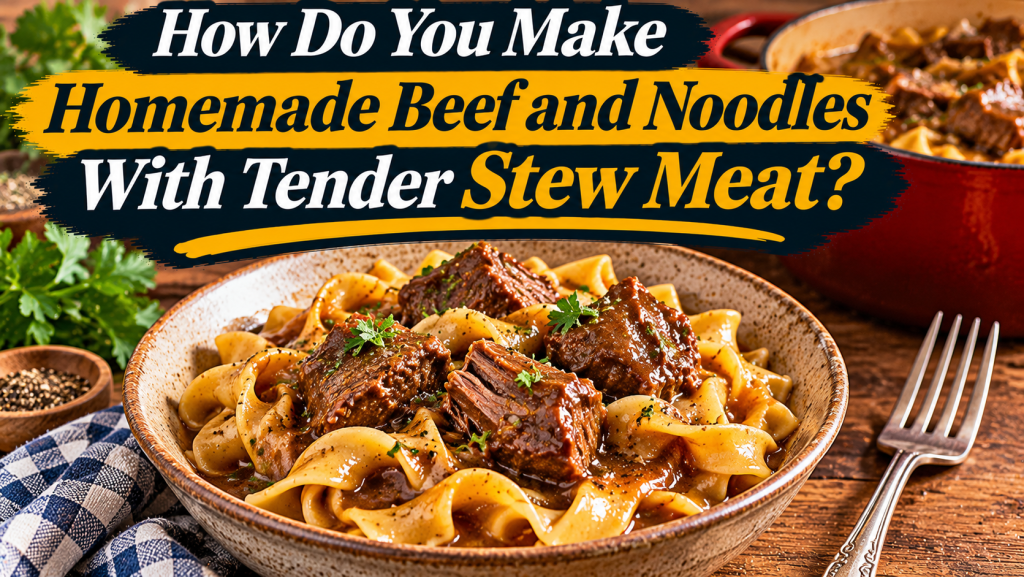
Homemade beef and noodles is a hearty comfort food dinner made with fork-tender chunks of beef, wide egg noodles, and rich brown gravy. The secret to making stew meat tender is to brown it first and then simmer it slowly in a covered pot until the connective tissue softens. Adding the noodles near the end keeps them from becoming mushy.
This old-fashioned stovetop beef and noodles recipe uses a Dutch oven or heavy-bottomed pot rather than a slow cooker. The gravy develops naturally from beef broth, browned meat, onions, and simple seasonings, making it possible to prepare a flavorful family dinner without condensed soup or a packaged gravy mix.
Homemade beef and noodles recipe
Servings: 6. Preparation time: 20 minutes. Cooking time: approximately 2 to 2 1/2 hours. Total time: approximately 2 hours and 20 minutes to 2 hours and 50 minutes.
Ingredients
- 2 pounds beef stew meat, preferably cubed chuck roast
- 1 teaspoon kosher salt, plus more to taste
- 1/2 teaspoon ground black pepper
- 2 tablespoons all-purpose flour
- 2 tablespoons vegetable oil
- 1 medium yellow onion, diced
- 3 cloves garlic, minced
- 1 tablespoon tomato paste
- 4 cups low-sodium beef broth
- 1 tablespoon Worcestershire sauce
- 1/2 teaspoon dried thyme
- 1 bay leaf
- 12 ounces wide egg noodles
- 2 tablespoons cornstarch, optional
- 3 tablespoons cold water, if using cornstarch
- 1 tablespoon unsalted butter, optional
- Chopped fresh parsley, for serving
Equipment
- Large Dutch oven or heavy-bottomed pot with lid
- Wooden spoon
- Tongs
- Separate saucepan for cooking noodles
- Colander
- Measuring cups and spoons
How to make beef and noodles on the stovetop
Step 1: Prepare and season the stew meat
Pat the beef dry using paper towels. If necessary, cut particularly large pieces into cubes approximately 1 to 1 1/2 inches across. Uniform pieces tend to cook more evenly.
Season with salt and pepper, then toss the beef with the flour until lightly coated. Shake off excessive flour. Discard any leftover flour that has contacted raw meat.
A light flour coating helps develop a browned surface and contributes some thickness to the gravy.
Step 2: Brown the beef in batches
Heat the vegetable oil in a Dutch oven over medium-high heat. When the oil is hot, add enough beef to form a single layer without crowding the pot.
Brown the cubes on several sides, turning them with tongs. Transfer the browned meat to a plate and repeat with the remaining beef. Add a little more oil if needed.
The meat does not need to cook through at this stage. Browning creates savory flavor that will become part of the gravy during simmering.
Step 3: Cook the onions and garlic
Reduce the heat to medium. Add the diced onion to the pot and cook for approximately five minutes, stirring occasionally until softened.
Stir in the garlic and tomato paste. Cook for about one minute, stirring frequently to prevent burning.
The tomato paste adds depth to the broth without making the finished dish taste strongly of tomatoes.
Step 4: Deglaze the pot and add the broth
Pour in approximately half a cup of beef broth. Scrape the bottom of the pot with a wooden spoon to loosen the browned bits.
Return the beef and collected juices to the pot. Add the remaining broth, Worcestershire sauce, thyme, and bay leaf.
Bring the liquid to a gentle simmer. Reduce the heat to low and cover the pot, leaving the lid slightly ajar if the simmer is too vigorous.
Step 5: Simmer until the beef is fork-tender
Cook the beef gently for approximately 1 1/2 to 2 hours, checking occasionally. Stir as needed and add a little water or broth if too much liquid evaporates.
Begin checking tenderness after 90 minutes. A fork should slide into the pieces easily, and the meat should separate with gentle pressure. Depending on the cut and size of the cubes, cooking may take longer.
Avoid a rolling boil. Gentle, sustained heat helps tough cuts become tender while reducing excessive evaporation.
Once the beef is tender, remove the bay leaf.
Step 6: Cook the egg noodles
While the beef finishes cooking, bring a separate pot of water to a boil. Cook the wide egg noodles according to their package instructions, stopping when they are just tender.
Drain the noodles. Cooking them separately gives you greater control over their texture and prevents them from absorbing too much of the beef gravy.
If you prefer to serve the noodles and gravy separately, divide the noodles among bowls before spooning the beef mixture over them.
Step 7: Thicken the beef gravy
If the gravy is thinner than you prefer, mix the cornstarch and cold water until smooth. Stir half of the slurry into the simmering broth.
Let the gravy simmer for a minute or two, stirring gently. Add more slurry only if necessary to achieve your desired consistency.
For a richer finish, stir in a tablespoon of butter after removing the pot from the heat. Taste and adjust the salt and pepper.
Step 8: Combine and serve
Gently fold the drained noodles into the beef and gravy, or serve the beef over individual portions of noodles.
Sprinkle with chopped parsley and serve warm. The finished gravy should coat the noodles without becoming excessively thick or pasty.
What is the best stew meat for beef and noodles?
Beef chuck is an excellent choice because it contains connective tissue and has a rich flavor that suits prolonged cooking. As chuck braises, its collagen gradually converts to gelatin, helping create a tender texture and giving the broth additional body.
Packaged stew meat can contain pieces from several different cuts. Some may become tender sooner than others. Buying a boneless chuck roast and cutting it into cubes yourself allows greater control over the size and consistency of the pieces.
Lean cuts may become dry or firm during prolonged cooking. If using packaged stew meat, check it periodically and judge doneness by tenderness rather than relying exclusively on the clock.
Why is my stew meat still tough?
Stew meat that remains chewy after an hour of cooking often needs additional time. Beef that contains substantial connective tissue does not become tender as soon as it reaches a safe internal temperature.
Maintain a gentle simmer and continue checking at intervals of 15 to 20 minutes. Keep enough liquid in the pot to prevent the meat from drying out.
However, longer cooking is not always the solution. Very lean beef can become dry and stringy when overcooked. Starting with a cut suitable for braising makes a significant difference.
How do you make beef and noodles without a gravy mix?
The combination of browned beef, sautéed onions, broth, Worcestershire sauce, and seasonings forms the foundation of homemade brown gravy.
The flour used to coat the beef contributes some thickening. During cooking, gelatin released by suitable cuts of beef and the gradual reduction of the broth add body.
If the gravy needs additional thickness, use a cornstarch slurry or simmer it uncovered briefly before combining it with the noodles. Taste before adding extra salt, since reducing broth concentrates its seasoning.
Easy beef and noodles variations
Beef and noodles with mushrooms
Brown eight ounces of sliced cremini mushrooms in a separate skillet. Stir them into the beef gravy during the last 15 minutes of cooking. Browning the mushrooms separately helps develop their earthy flavor.
Creamy beef and noodles
After thickening the gravy, remove the pot from the heat and stir in half a cup of sour cream. Temper it with a little warm gravy first, and avoid boiling the mixture afterward.
Beef and noodles with vegetables
Add diced carrots during the final 30 to 40 minutes of simmering. Stir in frozen peas during the final few minutes, cooking until hot. Adjust the broth if the vegetables absorb or release additional liquid.
Beef and noodles with homemade egg noodles
Replace dried egg noodles with freshly prepared egg noodles. Cook them separately until tender, allowing for differences in cooking time based on their thickness. Fresh noodles typically require less time than dried varieties.
What should you serve with homemade beef and noodles?
Steamed green beans, roasted broccoli, glazed carrots, and a simple green salad provide fresh flavors that complement the rich gravy.
For a traditional comfort food dinner, serve smaller portions of beef and noodles alongside mashed potatoes or buttered dinner rolls. Since noodles already provide a substantial starch component, vegetables are also an excellent accompaniment on their own.
How to store, freeze, and reheat leftovers
Refrigerate beef and noodles in shallow, covered containers within two hours of cooking, or within one hour if the temperature is above 90°F. Keep leftovers at 40°F or below and use within three to four days.
For the best freezer texture, freeze the cooked beef and gravy separately from the noodles. Use freezer-safe containers and enjoy within two to three months for best quality.
Thaw frozen portions in the refrigerator and reheat leftovers to 165°F. Add a splash of broth if needed, because noodles continue absorbing liquid during storage. Prepare fresh noodles when serving thawed beef and gravy if you prefer a firmer texture.
Frequently asked questions
Can I use beef broth instead of beef stock?
Yes. Either works well. Choose a lower-sodium product so you can control the seasoning as the liquid reduces.
Can I cook the noodles directly in the beef gravy?
Yes, but you will need enough additional broth to cook the noodles without making the gravy excessively thick. Add the noodles only after the beef is tender and follow the package cooking guidance. Cooking separately is more predictable.
Can I make beef and noodles a day ahead?
Yes. Cook the beef and gravy completely, cool promptly in shallow containers, and refrigerate. Reheat to 165°F the next day and prepare fresh noodles shortly before serving.
Do I have to brown the beef first?
Browning is not essential for tenderness, but it helps develop the deep savory flavor and color of homemade gravy. For the best stovetop results, take the time to brown the meat in batches.
How can I fix gravy that is too thick?
Add warm beef broth a little at a time, stirring until the gravy reaches the desired consistency. Taste and adjust the seasoning.
Bring old-fashioned comfort food back to the dinner table
Homemade beef and noodles is a reminder that simple ingredients and patient cooking can produce a deeply satisfying meal. By choosing suitable stew meat, browning it thoroughly, and allowing it to simmer gently, you can create tender beef and a flavorful gravy that coats every noodle.
Serve it fresh from the stovetop for a comforting family dinner, or prepare the beef and gravy ahead of time for an easier meal later in the week.
Leave a Reply