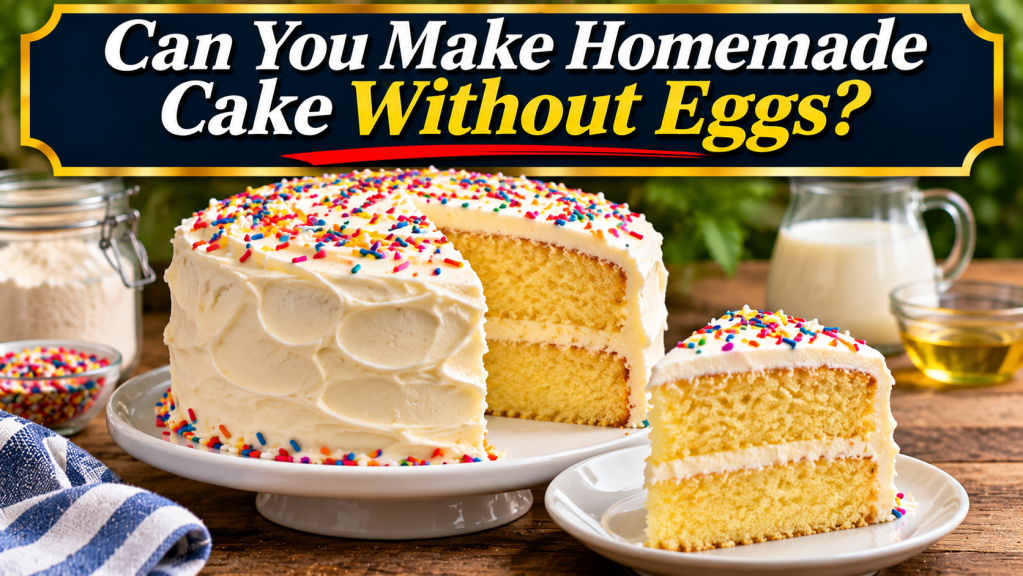
Yes, you can make homemade cake without eggs. A simple vanilla cake can rise and stay tender using baking soda, an acidic ingredient such as vinegar, and a balanced mixture of flour, sugar, oil, and milk. Eggs normally help bind, emulsify, and provide structure, but a carefully designed egg-free recipe can achieve a soft crumb without them. The most reliable approach is to follow an eggless cake formula rather than remove the eggs from an ordinary recipe without replacing their functions.
How Egg-Free Cake Works
Eggs perform several jobs in traditional cake batter. They add moisture, protein, structure, and emulsification, and whipped eggs can help cakes rise. In an eggless cake, flour provides the main structure, oil contributes tenderness, and chemical leavening supplies lift. Baking soda reacts with vinegar or another acid to create carbon dioxide bubbles. The batter must go into a preheated oven promptly after mixing so the reaction helps the cake rise.
What Does an Egg Substitute Actually Do?
Not all egg substitutes are interchangeable. Applesauce and mashed banana add moisture and some binding but can make a cake dense. Yogurt gives tenderness and a little acidity. Ground flaxseed mixed with water helps bind, though it can produce a heavier crumb. Commercial egg replacers are formulated for particular applications. For a light vanilla cake, using a tested egg-free recipe with baking soda and vinegar is often easier than experimenting with multiple substitutes.
Easy Eggless Vanilla Cake Recipe
This recipe makes one eight-inch round cake, approximately eight servings. Preparation takes fifteen minutes, baking takes about twenty-eight to thirty-five minutes, and cooling takes at least forty-five minutes before frosting. You need an eight-inch round pan, mixing bowls, whisk, spatula, and wire rack. The cake is dairy-optional: use regular milk or unsweetened plant milk. Check ingredient labels if preparing the cake for someone with an egg allergy.
Ingredients
Use one and one-half cups all-purpose flour, approximately 180 grams; three-quarters cup granulated sugar; one teaspoon baking soda; one-half teaspoon fine salt; one cup milk or unsweetened plant milk; one-third cup neutral vegetable oil; one tablespoon white vinegar or apple cider vinegar; and two teaspoons vanilla extract. For optional vanilla frosting, use one-half cup softened unsalted butter or plant-based baking stick, two cups powdered sugar, one to two tablespoons milk, and one teaspoon vanilla.
Step 1: Prepare the Oven and Pan
Preheat the oven to 350°F. Grease an eight-inch round cake pan and line the bottom with parchment paper. This helps prevent sticking and makes it easier to remove the finished cake. Position the oven rack in the middle. Do not begin mixing the wet and dry ingredients until the oven is ready, because the baking soda and vinegar start reacting once combined.
Step 2: Whisk the Dry Ingredients
In a large bowl, whisk together the flour, sugar, baking soda, and salt. Break up any lumps so the leavening distributes evenly. Baking soda must be measured accurately: too much can leave a soapy taste and cause uneven rising. Spoon flour into a measuring cup and level it rather than packing it down. Excess flour can make an eggless cake dry and heavy.
Step 3: Combine the Wet Ingredients
In a separate bowl, stir together the milk, oil, vinegar, and vanilla. The mixture may look slightly separated because oil and milk do not naturally combine fully, but this is normal. Use a neutral oil such as canola or sunflower oil so it does not overpower the vanilla. Unsweetened plant milk works in many versions, although the flavor and texture may vary by brand.
Step 4: Mix Gently and Quickly
Pour the wet ingredients into the dry mixture and whisk just until the flour disappears. A few small lumps are acceptable. Avoid beating the batter for several minutes because that can develop gluten and make the cake tough. The mixture should be smooth enough to pour but not watery. Immediately transfer it to the prepared pan so the leavening reaction occurs during baking.
Step 5: Bake Until Set
Bake at 350°F for approximately twenty-eight to thirty-five minutes. The cake should rise, become lightly golden, and spring back when touched gently near the center. Insert a toothpick into the middle; it should come out clean or with a few moist crumbs, not wet batter. If the top browns too quickly, check oven accuracy and pan placement rather than removing the cake before the center is cooked.
Step 6: Cool Before Frosting
Rest the cake in its pan for ten minutes, then loosen the edges and turn it onto a wire rack. Allow it to cool completely before adding frosting. Warm cake melts buttercream and can cause the top to tear. For a simple finish, dust with powdered sugar or serve with berries. If frosting, spread a thin crumb coat first, chill briefly, and then add the final layer.
Simple Vanilla Frosting
Beat softened butter until smooth, then add powdered sugar gradually. Mix in vanilla and enough milk to reach a spreadable consistency. If the frosting is too thick, add milk one teaspoon at a time; if too loose, add a little more powdered sugar. For a dairy-free cake, use a suitable plant-based baking stick and plant milk. Check that all ingredients meet the needs of anyone with food allergies.
Why Vinegar Does Not Make the Cake Sour
The small amount of vinegar reacts with baking soda and helps create lift. In the finished cake, its flavor is generally subtle, especially with vanilla and sugar present. Do not add several extra tablespoons in an attempt to make the cake rise higher; too much acid can affect taste and structure. Lemon juice can work in some recipes, but the acidity and flavor may differ.
Can You Use Applesauce Instead of Eggs?
Unsweetened applesauce is a common substitute in some cakes and muffins, often around one-quarter cup per egg. It adds moisture but does not provide the same protein structure or emulsification as eggs. The finished cake may be denser or softer. If a recipe contains several eggs, replacing all of them with applesauce may not work well. Choose a recipe designed for applesauce if you want predictable results.
Can You Use Mashed Banana?
Mashed ripe banana can replace an egg in certain quick breads and snack cakes, but it contributes a noticeable banana flavor. It also makes the crumb heavier and moister. For a plain vanilla birthday cake, banana may not be the best option. It works better in chocolate cake, banana cake, and spice cake where its taste complements the other ingredients.
Can You Use Yogurt?
Plain yogurt adds moisture, fat, and acidity, making it useful in some eggless cakes. About one-quarter cup is sometimes used in place of one egg, but the exact substitution depends on the recipe. Yogurt does not duplicate every function of eggs, so replacing several eggs may produce a dense result. For a dairy-free cake, choose a tested formula using plant milk rather than assuming every yogurt substitute behaves the same way.
What About Flax Eggs?
A flax egg is commonly made by mixing one tablespoon ground flaxseed with three tablespoons water and allowing it to thicken. It provides some binding and works well in hearty muffins and certain cakes. However, flaxseed can add speckles, flavor, and a denser texture. It does not create the same lift as whipped eggs. For a light vanilla layer cake, a baking-soda-and-vinegar formula may give a more delicate crumb.
Can You Make Chocolate Cake Without Eggs?
Yes. Eggless chocolate cake is especially forgiving because cocoa powder gives a strong flavor and oil keeps the crumb moist. Many recipes use flour, cocoa powder, sugar, baking soda, vinegar, oil, and water or milk. The method is similar to the vanilla cake above. Avoid adding cocoa powder to this vanilla formula without adjusting the dry ingredients and liquid, since cocoa changes the batter’s balance.
Why Your Eggless Cake Is Dense
A dense cake may result from old baking soda, inaccurate flour measurement, overmixing, or letting the batter sit too long before baking. Check that the oven is preheated and that the vinegar is included. Too much fruit purée can also weigh down the crumb. Measure carefully and stir only until combined. If the cake is consistently flat, verify your baking soda is active and your oven temperature is accurate.
Why Your Cake Sinks in the Middle
A cake can sink when the center has not set before it is removed from the oven. Excess leavening, too much liquid, or opening the oven early can also contribute. Use the correct pan size and check the center with a toothpick. Do not increase baking soda to force more rise; too much gas can make the cake collapse. Allow the finished cake to cool gradually on a rack.
Why the Cake Turns Out Dry
Dryness usually comes from excess flour, overbaking, or too little oil. Weigh the flour if possible and begin checking for doneness a few minutes before the expected finish. Eggless cakes can dry out when baked in a pan that is too large because the batter forms a thin layer. Once cooled, store the cake covered. A light frosting or fruit topping can add moisture to individual slices.
Can You Make Cupcakes With This Batter?
Yes. Divide the batter among lined muffin cups, filling each about two-thirds full. Bake at 350°F and begin checking after sixteen to eighteen minutes. Cupcakes cook faster than a full cake, so do not use the same baking time. Remove them when a toothpick comes out without wet batter. Cool completely before frosting to prevent the topping from melting.
Can You Make a Layer Cake?
You can double the recipe and divide it between two eight-inch round pans, provided you measure accurately and bake the layers evenly. Do not fill the pans too high. The baking time may differ from a single cake, so check each layer independently. Cool both layers fully before stacking. A simple buttercream or whipped dairy-free frosting can hold the layers together.
Egg Allergy and Cross-Contact
If baking for someone with an egg allergy, read labels on baking mixes, chocolate, frosting, sprinkles, and other packaged ingredients. Use clean bowls, pans, and utensils to avoid cross-contact. A recipe that contains no eggs is not automatically safe if it was prepared on equipment contaminated with egg residue. Follow the person’s allergy guidance and avoid making assumptions about tolerated ingredients.
Storage and Freezing
Store unfrosted eggless cake in an airtight container at room temperature for about two days, depending on conditions. Cakes with perishable frostings should be refrigerated. For longer storage, wrap cooled cake layers tightly and freeze for two to three months for best quality. Thaw wrapped layers in the refrigerator or at room temperature before frosting. Do not freeze a warm cake, because trapped steam can affect its texture.
Frequently Asked Questions
Can you make cake without eggs? Yes, with a recipe designed to rise and bind without them. What replaces eggs in vanilla cake? A balanced combination of oil, milk, baking soda, and vinegar works well. Does vinegar change the flavor? Usually not noticeably in the small amount used. Can applesauce replace eggs? In some recipes, but it may make the cake denser. Is eggless cake vegan? Only if the milk and frosting ingredients are also plant-based. Why is my cake flat? Old leavening, overmixing, or delayed baking may be factors. Can this batter make cupcakes? Yes, with a shorter baking time. Can you freeze the cake? Yes, after cooling.
Final Thoughts
Homemade cake does not need eggs to be soft, flavorful, and suitable for celebrations. A reliable egg-free formula uses baking soda and an acidic ingredient for lift, oil for tenderness, and careful mixing for a delicate crumb. Measure ingredients accurately, bake promptly, and remove the cake when its center is set. With those techniques, you can make a simple vanilla cake without eggs and adapt it with frosting, berries, or other favorite toppings.
Leave a Reply