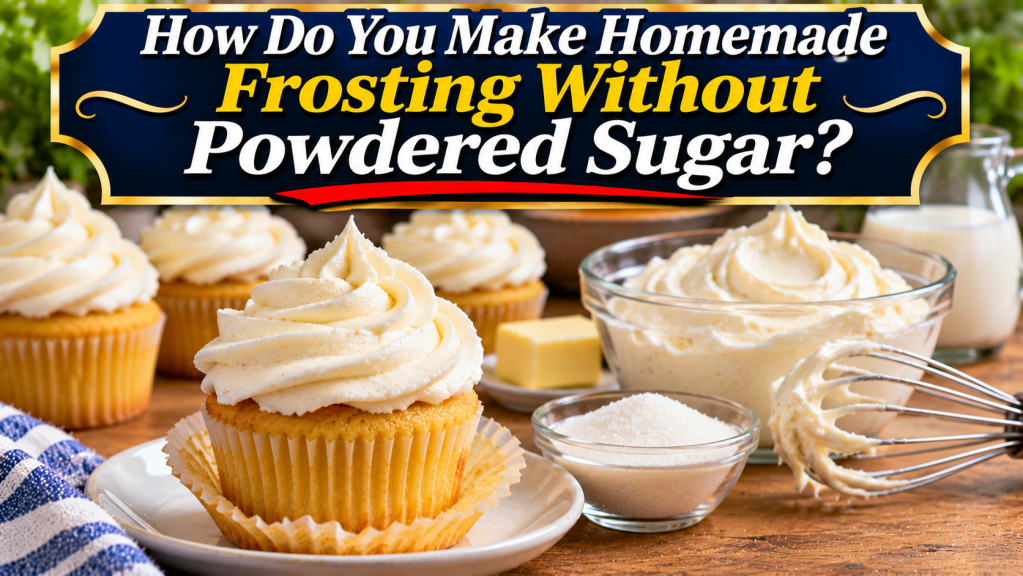
You can make homemade frosting without powdered sugar by cooking granulated sugar with milk and flour, cooling the mixture, and whipping it into softened butter. Known as ermine frosting, this traditional topping is light, creamy and less intensely sweet than many American buttercreams. Cooking the sugar helps it dissolve, so the finished frosting should not feel gritty. It is an excellent option for cupcakes, chocolate cake, red velvet cake and other homemade desserts.
What Is Ermine Frosting?
Ermine frosting is sometimes called boiled milk frosting or cooked flour frosting. Unlike American buttercream, which relies on powdered sugar for sweetness and body, ermine frosting gets much of its structure from a cooked flour and milk mixture. Once cooled, this thick base is beaten with butter until fluffy. The flavor is mild and buttery, and the texture resembles a cross between whipped cream and traditional buttercream. Despite its name, the flour should not taste raw when properly cooked.
Why Granulated Sugar Cannot Simply Replace Powdered Sugar
Powdered sugar consists of finely ground sugar, often with a small amount of starch to limit clumping. Granulated sugar has larger crystals that do not dissolve easily when beaten directly into butter. Replacing powdered sugar with the same volume of granulated sugar in an ordinary buttercream recipe can produce a sandy texture. Cooking the granulated sugar in milk solves this problem by making a smooth base before the butter is added.
Easy Homemade Frosting Recipe
This recipe yields approximately three cups, enough for roughly twelve generously frosted cupcakes or a lightly frosted two-layer eight-inch cake. Allow fifteen to twenty minutes for cooking and mixing, plus sufficient time for the cooked base to cool. You will need a small saucepan, whisk, heatproof bowl, electric mixer and spatula. This is a home recipe rather than a laboratory-tested formula; yield and whipping time can vary.
Ingredients
Use 1 cup whole milk, 1 cup granulated sugar, 5 tablespoons all-purpose flour, 1 cup unsalted butter softened to cool room temperature, 2 teaspoons vanilla extract and 1/4 teaspoon fine salt. Whole milk provides a rich flavor, while ordinary all-purpose flour thickens the cooked base. Use unsalted butter so you can control the seasoning. Measure the flour with level tablespoons rather than heaping ones.
Step 1: Whisk the Flour and Sugar
Combine the flour and granulated sugar in a small saucepan while it is still cool. Whisk them thoroughly before adding any liquid. Distributing the dry ingredients helps prevent flour from forming lumps when the milk is introduced. Add the milk gradually, whisking after each addition, until the mixture looks smooth. If you notice a stubborn lump at this stage, press it against the side of the saucepan with the whisk.
Step 2: Cook the Frosting Base
Place the saucepan over medium heat. Whisk constantly, paying particular attention to the corners and bottom of the pan, where the mixture can stick. As it heats, the flour begins to thicken the milk. Bring it to a gentle bubble and continue whisking for about one to two minutes, until it resembles a thick pudding. Avoid high heat, which can scorch the milk before the flour cooks evenly.
Step 3: Cool the Mixture
Transfer the cooked base to a clean shallow heatproof bowl. Cover its surface directly with food-safe wrap to prevent a skin from forming. Let it cool, then refrigerate if necessary to speed the process. Before whipping, allow the base to reach approximately the same cool room temperature as the butter. A hot base will melt the butter, while a very cold base can cause the frosting to look curdled. Do not leave the dairy mixture unrefrigerated for more than two hours.
Step 4: Whip the Butter
Place softened butter in a mixing bowl and beat on medium speed for about three to five minutes, until noticeably lighter and fluffy. The butter should be pliable but not oily or partially melted. Scrape the bowl as needed. Whipping the butter first creates an airy foundation for the frosting, so there is no need to beat the cooked milk mixture separately for a long time.
Step 5: Add the Cooked Base Slowly
Add the cooled milk mixture to the whipped butter one spoonful at a time, beating until each addition is incorporated before adding more. Scrape down the sides and bottom of the bowl periodically. Gradual addition helps the butter and milk form a stable emulsion. Once everything is combined, beat in the vanilla and salt. Continue whipping briefly until the frosting looks smooth, light and spreadable.
Step 6: Frost the Dessert
Make sure the cake or cupcakes are completely cool. Spread the frosting with an offset spatula or transfer it to a piping bag fitted with your preferred tip. Ermine frosting holds simple swirls and borders when cool, but it softens in warm conditions. For a layer cake, apply a thin crumb coat first, chill until firm and then add the remaining frosting. Keep the dessert away from direct sunshine and heat.
How to Make Chocolate Frosting Without Powdered Sugar
For a chocolate variation, melt three ounces of semisweet baking chocolate and let it cool until fluid but no longer warm. Beat it gradually into the finished vanilla frosting. This adds chocolate flavor and may make the chilled frosting firmer. You can also experiment with unsweetened cocoa powder, but add it gradually because it absorbs moisture and changes the consistency. Taste before adding extra sugar.
Other Frosting Options Using Granulated Sugar
Swiss meringue buttercream uses egg whites and granulated sugar that are heated together before whipping and adding butter. It is silky and suitable for layer cakes but requires careful temperature control; recipes using egg whites should reach 160°F during the heating step for safety. Italian meringue buttercream uses hot sugar syrup and is more technically demanding. Ganache combines chocolate and cream and requires no added powdered sugar at all. Each option has different sweetness, stability and preparation requirements.
Can You Make Frosting Without Flour?
Yes. Chocolate ganache and meringue-based buttercreams do not require flour. Whipped cream can also be sweetened with a small amount of granulated sugar, which dissolves during whipping if the crystals are fine enough. Whipped cream is lighter and less suitable for elaborate decorations or warm rooms. If you avoid wheat due to an allergy or celiac disease, select a flour-free recipe and check ingredient labels and equipment for cross-contact.
Why Is My Frosting Gritty?
Grittiness can occur if the sugar has not fully dissolved during cooking or if the cooked mixture develops lumps. Whisk thoroughly while heating and avoid shortening the cooking step. If you see flour lumps, pass the cooked base through a fine-mesh sieve before cooling. Once the butter has been added, reheating the entire frosting can destroy its whipped structure, so prevention is more reliable than trying to dissolve sugar afterward.
How to Fix Runny Frosting
If the finished frosting looks loose or greasy, the butter or cooked base may have been too warm. Refrigerate the bowl for ten to fifteen minutes, then whip again. Repeat briefly if necessary, without letting the butter become completely hard. If the cooked base was very thin because it was undercooked, chilling alone may not solve the problem. Do not add raw flour to finished frosting; it will taste unpleasant and raw flour may contain harmful bacteria.
How to Fix Curdled Frosting
A frosting that resembles cottage cheese often contains ingredients at mismatched temperatures. If the bowl feels cold, let it sit briefly at room temperature or warm its exterior very gently, then continue whipping. If it feels warm and greasy, chill briefly instead. Many separated buttercreams recover once the temperature is corrected and the mixture is re-emulsified. Avoid melting the whole batch.
How to Flavor Homemade Frosting
Vanilla is a versatile starting point, but the finished frosting can also be flavored with a little almond extract, finely grated lemon zest or instant espresso dissolved in a very small amount of liquid. Add flavorings gradually and taste as you go. Large amounts of juice, fruit purée or syrup can loosen the frosting. Use concentrated flavorings when possible, particularly if you plan to pipe decorations.
Storage and Food Safety
Because this frosting contains cooked milk, store it and frosted desserts in the refrigerator at 40°F or below. Keep covered and use within three to four days. For serving, allow the frosting to soften slightly at room temperature, limiting total unrefrigerated time to two hours, or one hour above 90°F. You can also freeze the frosting in an airtight container for about one month for best quality. Thaw overnight in the refrigerator, soften slightly and rewhip if needed.
Frequently Asked Questions
Can I use granulated sugar instead of powdered sugar?
Yes, when the recipe is designed to dissolve the sugar first, as in ermine frosting. A direct substitution in ordinary buttercream is not recommended.
Does ermine frosting taste like flour?
It should not have a raw flour flavor when the milk mixture has been thoroughly cooked.
Can I pipe this frosting onto cupcakes?
Yes. It works well for simple swirls when cool, but it is less heat-resistant than some decorating buttercreams.
Can I make it ahead of time?
Yes. Refrigerate it in an airtight container, then allow it to soften slightly and rewhip before using.
Final Thoughts
Homemade frosting without powdered sugar is straightforward when you use a recipe built around granulated sugar. Cooking the milk, flour and sugar creates a smooth foundation, and whipping it into softened butter gives the finished topping its light texture. Cool the base carefully, add it gradually and refrigerate the finished frosting when not serving.
Leave a Reply