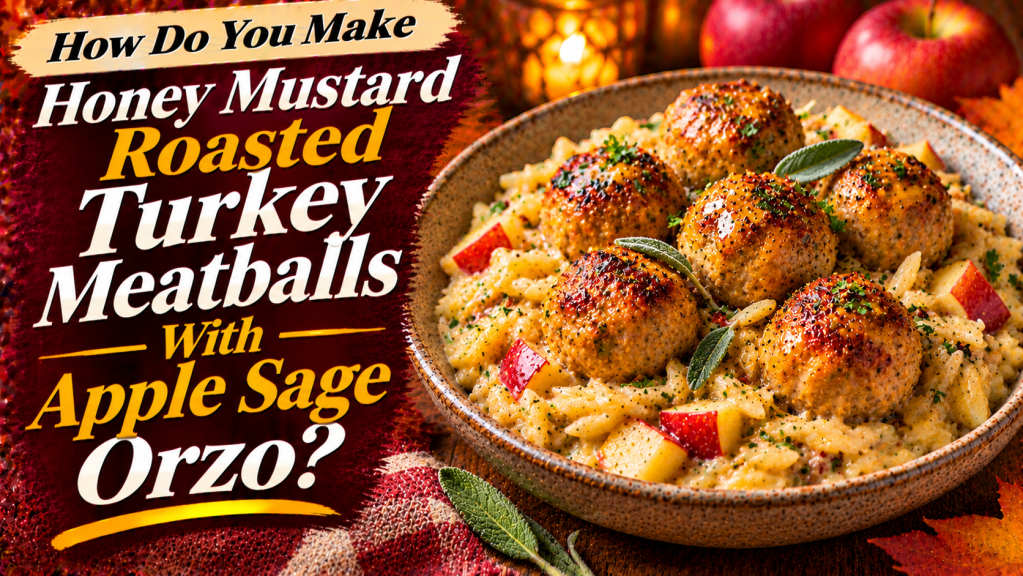
Honey mustard roasted turkey meatballs with apple sage orzo bring together savory ground turkey, a tangy-sweet glaze, tender pasta, and the comforting flavors of apple and fresh sage. The meatballs roast until lightly golden, then receive a thin coating of honey-Dijon sauce. Meanwhile, orzo cooks with sautéed shallots, diced apple, and broth for a rich, aromatic side that makes the meal feel especially inviting in autumn.
The key to a tender result is mixing the turkey gently, shaping evenly sized meatballs, and using a thermometer instead of relying on color alone. Ground turkey must reach 165°F in the center. Add most of the honey mustard glaze toward the end so its sugars do not burn, and finish the orzo with a little lemon to keep the apple and butter from making it taste too sweet.
Recipe at a Glance
Servings: four. Preparation time: 20 minutes. Meatball roasting: approximately 18–25 minutes. Orzo preparation: 20–25 minutes. Oven temperature: 425°F. Equipment: rimmed baking sheet, large mixing bowl, measuring spoons, saucepan or deep skillet with lid, whisk, and instant-read food thermometer.
Ingredients for the Turkey Meatballs
Use 1 pound ground turkey, ⅓ cup plain breadcrumbs, one large egg, 2 tablespoons finely minced onion, one garlic clove minced, 1 teaspoon dried thyme, ½ teaspoon rubbed sage, ½ teaspoon kosher salt, ¼ teaspoon black pepper, and 1 tablespoon olive oil. For a little extra freshness, add 1 tablespoon finely chopped parsley. Choose ground turkey with a modest amount of fat for the most tender texture.
Ingredients for the Honey Mustard Glaze
Whisk together 1½ tablespoons Dijon mustard, 1 tablespoon honey, 1 teaspoon apple cider vinegar, and 1 teaspoon olive oil. Divide the glaze into separate clean portions if brushing during cooking and reserving some to serve afterward. Never reuse glaze or utensils contaminated with raw turkey unless the glaze is thoroughly cooked.
Ingredients for Apple Sage Orzo
Use 1 cup dry orzo pasta, one medium crisp apple, 1 small shallot finely diced, 1 tablespoon unsalted butter, 1 tablespoon olive oil, 1 tablespoon finely chopped fresh sage, 2½ cups low-sodium chicken or vegetable broth, 2 tablespoons grated Parmesan if desired, 1 tablespoon fresh lemon juice, and freshly ground black pepper. Keep extra hot broth available if needed during cooking.
Standard orzo and breadcrumbs contain wheat, and this recipe also contains egg, mustard, and optional milk from Parmesan. Choose suitable substitutions for specific allergies or dietary needs. Make sure broth, condiments, and any packaged ingredients are appropriate for the people you serve.
Choosing the Best Ground Turkey
Ground turkey can be very lean, particularly products labeled extra lean. A blend with a little fat generally makes juicier meatballs because the meat is less prone to drying out. If using extra-lean turkey, avoid overmixing and consider adding another teaspoon of olive oil. The egg and breadcrumbs help the mixture stay tender and hold its shape.
Ground turkey should be kept refrigerated until mixing. Use separate utensils for raw poultry and ready-to-eat ingredients, and wash hands and surfaces thoroughly afterward. The finished meatballs must reach 165°F, even if they appear lightly colored on the outside.
Choosing Apples for Savory Orzo
A firm apple with balanced sweetness and acidity works best. Honeycrisp, Pink Lady, and Granny Smith are useful options; Granny Smith produces a tangier side dish, while Honeycrisp gives a sweeter note. Avoid very soft or mealy apples because they may break down into mush during cooking.
Wash the apple, remove the core and seeds, and dice into small ¼-inch cubes. Leaving the peel on adds color and texture, but peeling is fine if you want a smoother result. Cut the apple shortly before cooking to limit browning.
How to Make Honey Mustard Roasted Turkey Meatballs
Prepare the meatballs before starting the orzo so the oven can do most of the work while the pasta cooks.
Step 1: Preheat the oven
Heat the oven to 425°F and position a rack near the middle. Line a rimmed baking sheet with parchment rated for this temperature, or lightly oil the pan. Leave room between meatballs so hot air can circulate around them.
Step 2: Combine the binder and seasonings
In a mixing bowl, stir together breadcrumbs, egg, minced onion, garlic, thyme, rubbed sage, salt, black pepper, and olive oil. Mixing these ingredients first helps distribute the seasonings evenly without repeatedly working the ground turkey.
Step 3: Add ground turkey gently
Add the ground turkey and fold the mixture together just until combined. Avoid kneading or packing the meat, which can produce dense meatballs. Do not taste the raw mixture because it contains uncooked poultry and egg.
Step 4: Shape the meatballs
Divide the mixture into approximately 16 equally sized portions and roll gently into 1½-inch balls. Slightly damp hands can help prevent sticking. Arrange in a single layer on the baking sheet with some room between each portion.
Step 5: Begin roasting
Roast for 12–15 minutes, until the exterior begins to firm and lightly brown. While the meatballs cook, whisk the honey mustard glaze in a clean bowl. Reserve a separate uncontaminated portion if you want a little finishing drizzle.
Step 6: Brush with glaze
Carefully remove the hot tray and brush a thin layer of glaze over the partially cooked meatballs. Return to the oven for another 5–10 minutes, checking frequently because honey can darken quickly. Cook until a thermometer inserted into the center of each representative meatball reads at least 165°F.
Step 7: Rest briefly
Transfer the cooked meatballs to a clean platter and rest for about three minutes. If using reserved clean glaze, drizzle lightly over the top. Do not put cooked meatballs back onto a plate that previously held raw turkey.
How to Make Apple Sage Orzo
The orzo is prepared in a deep skillet or saucepan so the pasta absorbs broth as it cooks. Keep heat moderate and stir occasionally to prevent sticking.
Step 8: Sauté the shallot and apple
Warm the butter and olive oil in a deep skillet over medium heat. Add diced shallot and cook for two minutes. Stir in the small apple cubes and cook another three to four minutes, until they begin to soften while maintaining their shape.
Step 9: Add fresh sage
Add chopped sage and stir for approximately 30 seconds until fragrant. Sage can become strong and slightly bitter if overheated, so keep it moving and avoid frying it until dark.
Step 10: Toast the orzo
Stir the dry orzo into the skillet and cook for about one minute, coating the pasta with the butter and oil. The grains may become lightly golden in spots. Toasting adds a pleasantly nutty note but should not be continued until the pasta turns brown.
Step 11: Simmer in broth
Pour in approximately two cups warm broth, stirring to loosen any browned bits from the bottom. Bring to a gentle simmer, cover partly, and cook according to package directions, usually 8–12 minutes, stirring occasionally. Add the remaining broth as needed until the pasta is tender and most liquid is absorbed.
Step 12: Finish with lemon and Parmesan
Once the orzo is tender, remove it from direct heat and stir in lemon juice, Parmesan if using, and black pepper. Add a splash of warm broth if the mixture feels too thick. Taste before adding salt, since broth and Parmesan can already contribute substantial sodium.
Step 13: Assemble the dinner
Spoon the creamy apple sage orzo into four shallow bowls and add four glazed turkey meatballs to each. Garnish with parsley or a few finely chopped sage leaves. Serve immediately, with lemon wedges on the side if anyone prefers extra brightness.
Tips for Tender Turkey Meatballs
Ground turkey dries out more easily than fattier ground meats, so gentle mixing and a quick cooking process make a real difference. Bread crumbs absorb some moisture while the egg helps bind the ingredients. Uniformly sized meatballs finish at a similar time and reduce the risk of some becoming overcooked.
A food thermometer is more reliable than color. Turkey may remain lightly pinkish in some circumstances even when it reaches its safe temperature, while browned meatballs can still be undercooked in the middle. Check 165°F before serving.
How to Keep Honey Mustard Glaze From Burning
Honey caramelizes at high heat, which gives the meatballs attractive color but can also lead to dark, bitter patches. Apply a thin layer only after the meatballs have partially cooked. Avoid letting pools of glaze gather on the baking sheet. If the coating darkens too quickly, cover the tray loosely with foil.
A little vinegar keeps the honey from tasting overly sweet, while Dijon gives savory sharpness. If the glaze seems too thick to brush, thin it with a teaspoon of water. Adjust sweetness and mustard gradually instead of coating the meatballs heavily.
How to Balance Apple and Sage in the Orzo
Apple gives mild sweetness and a little crunch, while sage contributes an earthy herb flavor. Lemon juice is the ingredient that keeps these flavors fresh and savory. If the orzo tastes too sweet, add more lemon or a little black pepper; if it seems flat, a small pinch of salt or a tablespoon of broth may help.
Use fresh sage modestly, especially if the leaves are large. Too much sage can create a strong medicinal aroma that overwhelms the apple. The goal is a gentle herbal background that complements the turkey rather than dominating the pasta.
Easy Recipe Variations
For a creamy mushroom variation, sauté eight ounces of sliced mushrooms before adding the apple, cooking until their moisture evaporates. For a vegetable-forward version, stir baby spinach into the finished orzo until wilted. A small spoonful of Dijon can be added to the orzo for extra savory tang.
Ground chicken may replace turkey, but it must also reach 165°F. For an egg-free meatball, use an appropriate packaged egg replacer according to its instructions, understanding that the texture may change. For a gluten-free dinner, substitute suitable gluten-free breadcrumbs and rice or gluten-free small pasta, following separate cooking instructions.
Maple syrup can replace honey in the glaze, giving a different kind of sweetness. A small pinch of smoked paprika is another optional addition to the turkey mixture. If dairy-free preparation is needed, omit Parmesan and use olive oil instead of butter in the orzo.
What to Serve With This Dinner
Roasted broccoli, green beans, sautéed spinach, or a crisp arugula salad bring freshness to this meal. The apple sage orzo already provides a hearty starch, so vegetables are generally the best accompaniment. A simple lemon vinaigrette can cut through the glaze and creamy pasta.
For a gathering, serve the orzo on a wide platter and place the meatballs in rows over the top. Add herbs at the last moment and keep any extra honey mustard sauce separately. This makes it easier for guests to choose their preferred amount of glaze.
Make-Ahead Preparation
Shape the raw turkey meatballs up to one day ahead and refrigerate them in a sealed container on a lower shelf away from ready-to-eat foods. The glaze can be mixed ahead and stored separately. Dice the apple closer to cooking time, since exposed flesh can brown.
The meatballs may also be fully cooked, promptly chilled, and reheated for a later meal. Orzo is best prepared fresh because it continues to absorb liquid as it sits. If making it ahead, keep extra broth available and stir it in during reheating.
Storage and Reheating
Refrigerate leftovers in shallow airtight containers within two hours of cooking, or within one hour if the ambient temperature exceeds 90°F. Store meatballs and orzo separately when practical and use within three to four days.
Reheat leftovers to 165°F throughout. Warm meatballs covered in a 350°F oven with a small amount of broth to prevent drying, and stir warm broth into the orzo as it reheats in a saucepan. Cooked turkey meatballs may be frozen for approximately two to three months for best quality; thaw them in the refrigerator before reheating.
Frequently Asked Questions
Can I use ground chicken instead of turkey?
Yes. Ground chicken is a straightforward substitute and also must be cooked to an internal temperature of at least 165°F.
Can I make the meatballs in an air fryer?
Yes. Arrange them in a single layer and cook around 375°F, checking the center with a thermometer. Add the honey mustard glaze toward the end and cook to 165°F.
Can I replace orzo with rice?
Yes. Cook the rice using its own liquid ratio and timing, then fold in sautéed apple, sage, lemon, and any optional cheese.
Will Granny Smith apples work?
Yes. They create a tarter, less sweet orzo that pairs nicely with the honey mustard glaze. Dice them small so they cook evenly.
Why are my meatballs dry?
The mixture may be too lean, overmixed, or overcooked. Mix gently, keep sizes uniform, and check the temperature instead of relying only on cooking time.
Can I make the glaze without honey?
Yes. Pure maple syrup works as an alternative. Adjust the quantity to taste and brush it on late to avoid burning.
Final Thoughts
Honey mustard roasted turkey meatballs with apple sage orzo offer a comforting balance of sweet, savory, tangy, and herbal flavors. Roast the meatballs until safely cooked, apply the honey mustard glaze late, and finish the orzo with fresh lemon and broth for a creamy texture. Add a green vegetable for an easy dinner with a seasonal twist.
Leave a Reply