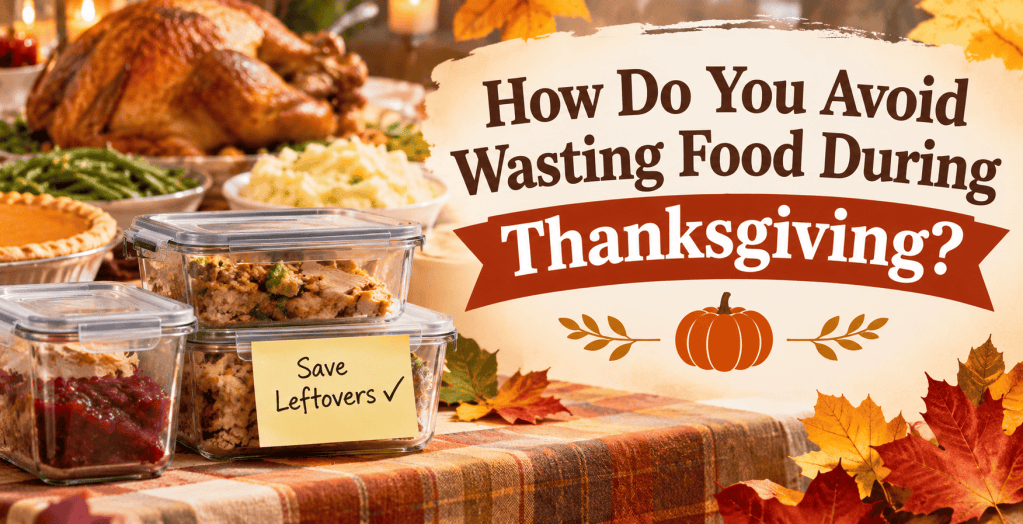
Thanksgiving is a time for gathering with family and friends, enjoying delicious homemade meals, and appreciating everything we have. Unfortunately, it is also a holiday when large amounts of perfectly good food end up in the trash.
Between oversized turkeys, overflowing casserole dishes, extra dinner rolls, and desserts that nobody finishes, Thanksgiving food waste can quickly become a problem. Many families prepare far more food than they actually need because they worry about running out or disappointing their guests.
The good news is that avoiding food waste during Thanksgiving does not mean serving smaller, less satisfying meals or giving up your favorite holiday traditions. It simply means planning carefully, preparing realistic portions, storing leftovers properly, and finding creative ways to use everything you cook.
Whether you are hosting a large family gathering or preparing Thanksgiving dinner for just two people, a few practical strategies can help you save money, reduce waste, and enjoy your holiday meals for several days.
Why Is So Much Food Wasted During Thanksgiving?
Thanksgiving food waste happens for several reasons, and most of them begin before anyone sits down to eat.
Many households purchase more ingredients than necessary, prepare oversized portions, or make too many different dishes. When everyone fills their plates with their favorites, less popular foods may remain untouched.
Common causes of Thanksgiving food waste include:
-
Buying a turkey that is much larger than needed.
-
Preparing too many side dishes.
-
Making multiple desserts when guests only want small portions.
-
Purchasing ingredients without checking what is already available.
-
Leaving perishable food at room temperature too long.
-
Forgetting about leftovers stored in the refrigerator.
-
Throwing away usable vegetable scraps and turkey bones.
-
Cooking extra food simply because it has always been part of the holiday tradition.
The biggest mistake is assuming that more food automatically creates a better Thanksgiving celebration.
A thoughtfully planned meal with reasonable portions can be just as satisfying as a table overflowing with dishes that nobody finishes.
1. Plan Your Thanksgiving Menu Before Shopping
One of the easiest ways to reduce Thanksgiving food waste is to create a complete menu before visiting the grocery store.
Start by deciding exactly which dishes you want to serve.
A traditional Thanksgiving menu might include roasted turkey, mashed potatoes, stuffing, green bean casserole, cranberry sauce, dinner rolls, and pumpkin pie.
You do not necessarily need three different potato dishes, four casseroles, and several desserts.
Choose the foods your family genuinely enjoys rather than preparing dishes simply because they are traditionally associated with Thanksgiving.
Before finalizing your menu, consider:
-
How many people will attend?
-
Are there children who will eat smaller portions?
-
Will guests bring additional dishes?
-
Does anyone have dietary restrictions?
-
Which Thanksgiving foods are usually left untouched?
-
How many days do you realistically want to eat leftovers?
Thanksgiving food waste prevention begins with cooking what people actually want to eat.
If nobody enjoys cranberry sauce, for example, there is no reason to prepare a large homemade batch.
2. Calculate How Much Thanksgiving Food You Actually Need
Preparing realistic portions is one of the most effective ways to prevent unnecessary leftovers.
Many Thanksgiving hosts cook enough food for twice as many people as they are expecting.
Although having a little extra is convenient, excessive portions can lead to spoiled food and unnecessary spending.
Thanksgiving portion planning guide
The following estimates provide a useful starting point for planning your meal.
| Thanksgiving food | Suggested amount per adult |
|---|---|
| Whole turkey | 1–1½ pounds raw, bone-in |
| Mashed potatoes | ½–¾ cup |
| Stuffing | ½–¾ cup |
| Green bean casserole | ½ cup |
| Cranberry sauce | 2–3 tablespoons |
| Gravy | ¼ cup |
| Dinner rolls | 1–2 rolls |
| Pumpkin pie | 1 slice |
These estimates are flexible.
If you are serving several side dishes, guests may take smaller portions of each one. If turkey is the main attraction and you want leftovers, purchasing slightly more may make sense.
For a Thanksgiving dinner serving six adults, a turkey weighing approximately 8–10 pounds may provide enough meat for dinner and some leftovers, depending on the bird’s yield and your guests’ appetites.
If you want several days of turkey sandwiches, soups, and casseroles, plan for those meals rather than purchasing a larger bird without a purpose.
3. Check Your Pantry, Refrigerator, and Freezer First
Before buying Thanksgiving groceries, inspect the ingredients you already have.
Many households purchase duplicate items because they forget about ingredients stored in cabinets or freezers.
You may already have:
-
Chicken or turkey broth.
-
Flour and sugar.
-
Canned pumpkin.
-
Canned vegetables.
-
Butter.
-
Frozen green beans.
-
Potatoes or onions.
-
Seasonings and baking ingredients.
Checking your kitchen first prevents unnecessary purchases and helps you use ingredients before they expire.
It is also helpful to organize your refrigerator before Thanksgiving.
Move older ingredients toward the front so they are easier to see, and make room for the groceries and leftovers you will need to refrigerate.
Remember that printed food dates do not always indicate when a product becomes unsafe. Evaluate shelf-stable foods according to their labeling, storage history, and signs of spoilage, while following applicable safety guidance.
4. Avoid Making Too Many Thanksgiving Side Dishes
Thanksgiving side dishes are often responsible for a surprising amount of leftover food.
Mashed potatoes, stuffing, macaroni and cheese, sweet potato casserole, green bean casserole, and roasted vegetables may all sound appealing.
However, preparing every possible side dish can result in far more food than your guests can finish.
Instead, choose three or four favorite sides that complement the main course.
For example, a balanced Thanksgiving menu could include:
-
Creamy mashed potatoes.
-
Traditional stuffing.
-
Green bean casserole.
-
Roasted carrots.
-
Homemade gravy.
This combination provides plenty of variety without requiring an excessive number of dishes.
If your family loves macaroni and cheese, consider replacing one of the other sides rather than adding another full casserole.
Another useful strategy is to prepare smaller portions of rich dishes that guests typically eat in limited quantities.
5. Buy a Smaller Turkey or Consider Turkey Alternatives
Turkey is usually the centerpiece of Thanksgiving dinner, but purchasing an oversized bird can create unnecessary waste.
A large turkey may look impressive on the holiday table, yet it can leave families struggling to finish leftovers for days.
If you are hosting a small gathering, consider preparing:
-
A bone-in turkey breast.
-
A boneless turkey roast.
-
Turkey tenderloins.
-
A small whole turkey.
-
Roasted chicken.
Turkey breast is particularly convenient for households that prefer white meat and do not need an entire bird.
For Thanksgiving dinner for two, a small turkey breast may provide plenty of food without producing excessive leftovers.
Choosing a smaller main course can also reduce cooking time, simplify preparation, and leave more room in the refrigerator.
6. Serve Smaller Portions and Allow Guests to Return for Seconds
Large serving portions often lead to unfinished plates.
Instead of encouraging everyone to pile their plates high, let guests begin with smaller servings and return for seconds.
This approach allows people to sample several dishes without taking more than they can comfortably eat.
Buffet-style serving can work especially well for Thanksgiving because guests control their portions.
You can also use smaller serving utensils for rich foods such as stuffing, macaroni and cheese, and sweet potato casserole.
Keep additional food refrigerated or properly hot-held until needed rather than placing every prepared dish on the table at once.
Guests can always enjoy another serving, but food that has been sitting on someone’s plate generally cannot be saved for another meal.
7. Store Thanksgiving Leftovers Properly
Proper food storage is essential for preventing Thanksgiving food waste.
Even delicious leftovers become unusable when they are stored incorrectly.
Refrigerate perishable Thanksgiving foods within two hours of cooking or serving, or within one hour if temperatures are above 90°F.
Do not wait for a large pot or casserole to cool completely on the counter.
Instead, divide hot food into shallow containers so it cools quickly in the refrigerator.
How long do Thanksgiving leftovers last?
| Food | Refrigerator storage |
|---|---|
| Cooked turkey | 3–4 days |
| Stuffing | 3–4 days |
| Mashed potatoes | 3–4 days |
| Gravy | 3–4 days |
| Cooked vegetables | 3–4 days |
| Green bean casserole | 3–4 days |
| Pumpkin pie | 3–4 days |
Keep your refrigerator at 40°F or below.
Most cooked Thanksgiving leftovers should be eaten or frozen within three to four days. Pumpkin pie made with eggs and dairy also requires refrigeration.
If you know you cannot finish everything within that period, freeze the extra portions promptly.
Reheat leftovers to an internal temperature of 165°F.
Never rely solely on smell or appearance to determine whether perishable leftovers are safe to eat.
8. Freeze Thanksgiving Leftovers Before They Spoil
Freezing leftovers is one of the simplest ways to extend the usefulness of your Thanksgiving meal.
Instead of forcing yourself to eat turkey for several consecutive days, freeze individual portions for future meals.
Thanksgiving foods that generally freeze well include cooked turkey, stuffing, gravy, dinner rolls, and many casseroles.
Mashed potatoes can also be frozen, although their texture may change slightly after thawing.
For the best results, divide leftovers into meal-sized portions, use freezer-safe containers, remove excess air from freezer bags, and label everything with the contents and date.
Frozen leftovers kept continuously at 0°F remain safe indefinitely, although quality gradually declines. For the best flavor and texture, aim to use most frozen Thanksgiving leftovers within two to three months.
Freezing smaller portions makes it easier to thaw exactly what you need without wasting another large container of food.
9. Turn Leftover Turkey Into New Meals
One of the biggest advantages of preparing Thanksgiving turkey is that the leftover meat can become several entirely different meals.
Rather than reheating the same holiday plate repeatedly, transform cooked turkey into dishes your family will look forward to eating.
Some easy leftover turkey ideas include:
-
Turkey and vegetable soup.
-
Turkey pot pie.
-
Turkey salad sandwiches.
-
Turkey and rice casserole.
-
Turkey quesadillas.
-
Turkey noodle soup.
-
Turkey tacos.
-
Turkey and stuffing sandwiches.
-
Turkey fried rice.
-
Turkey chili.
A turkey and vegetable soup is particularly useful because it can incorporate leftover carrots, celery, onions, and other vegetables.
Turkey quesadillas are another convenient option because they require only cooked turkey, tortillas, cheese, and your favorite seasonings.
Using leftovers in new recipes helps prevent food fatigue, which is one of the reasons people eventually throw away perfectly good holiday meals.
10. Find Creative Uses for Leftover Thanksgiving Side Dishes
Turkey is not the only Thanksgiving food that can be repurposed.
Many traditional side dishes can become ingredients in new meals.
Leftover mashed potatoes
Turn mashed potatoes into crispy potato pancakes, potato croquettes, or a topping for shepherd’s pie.
Leftover stuffing
Use stuffing as a filling for stuffed mushrooms, make stuffing patties, or combine it with turkey in a baked casserole.
Leftover cranberry sauce
Add cranberry sauce to oatmeal, spread it on turkey sandwiches, or stir it into plain yogurt.
Leftover sweet potatoes
Use cooked sweet potatoes in breakfast hash, pancakes, muffins, or soup.
Leftover vegetables
Add roasted vegetables to omelets, soups, rice bowls, or pasta dishes.
The key is to think of Thanksgiving leftovers as ingredients rather than unfinished holiday dishes.
This small change in perspective can dramatically reduce the amount of food your household throws away.
11. Use Turkey Bones and Vegetable Scraps to Make Homemade Stock
After carving your Thanksgiving turkey, do not automatically throw away the carcass.
Turkey bones can be used to prepare flavorful homemade stock.
Combine the turkey carcass with water, onions, celery, carrots, and herbs.
Simmer gently until the liquid develops a rich flavor, then strain and refrigerate or freeze the stock promptly.
Homemade turkey stock can be used in soups, gravies, rice dishes, and casseroles.
You can also save clean vegetable scraps, including onion ends, carrot peels, and celery trimmings, for stock.
Avoid using moldy, spoiled, or contaminated scraps.
Making stock helps you get additional value from ingredients you have already purchased.
12. Ask Guests to Take Leftovers Home
If you are hosting a large Thanksgiving gathering, sending guests home with leftovers can help prevent food waste.
Before Thanksgiving, purchase a few inexpensive reusable or disposable food containers.
At the end of the meal, invite guests to take home portions of their favorite dishes.
This is particularly helpful when several family members live in separate households.
Rather than leaving one person with an overwhelming refrigerator full of food, leftovers can be divided among several households.
Make sure the food has been kept at safe temperatures, and package it promptly.
You can even create small Thanksgiving leftover meal containers containing turkey, stuffing, mashed potatoes, and vegetables.
Guests will appreciate having a ready-made meal for the following day.
13. Make Smaller Thanksgiving Desserts
Thanksgiving desserts are another common source of food waste.
Pumpkin pie, pecan pie, apple pie, cheesecake, and assorted cookies may all sound wonderful, but most guests have limited room for dessert after a large meal.
Instead of preparing several full-sized desserts, consider making smaller portions.
Mini pumpkin pies, individual apple crisps, and bite-sized desserts allow guests to enjoy variety without leaving large amounts of food untouched.
You can also ask guests which desserts they prefer before deciding what to bake.
For a small Thanksgiving dinner, one homemade pie may be more than enough.
If you do prepare multiple desserts, freeze suitable extras or offer guests portions to take home.
14. Use a Thanksgiving Leftover Meal Plan
Planning leftover meals before Thanksgiving makes it easier to use food while it is still fresh.
Instead of opening the refrigerator each day and wondering what to eat, create a simple schedule.
Example Thanksgiving leftover meal plan
| Day | Meal idea |
|---|---|
| Thanksgiving Thursday | Traditional holiday dinner |
| Friday | Turkey and cranberry sandwiches |
| Saturday | Turkey and vegetable soup |
| Sunday | Turkey and stuffing casserole |
| Monday | A meal made with previously frozen leftovers |
For this plan, refrigerate only what you expect to eat within the recommended storage period. Freeze Monday’s portions promptly rather than keeping Thanksgiving leftovers refrigerated until then.
This approach prevents leftovers from being forgotten and helps you plan meals around the ingredients you already have.
You can also avoid purchasing additional groceries immediately after Thanksgiving by using the food you prepared for the holiday.
15. Compost Food Scraps That Cannot Be Used
Even with careful planning, some Thanksgiving food scraps are unavoidable.
Vegetable peels, fruit scraps, and other suitable organic materials may be composted rather than thrown into the regular trash.
Composting helps turn food scraps into nutrient-rich material that can support gardens and landscaping.
Common compostable materials include vegetable peels, fruit scraps, coffee grounds, and many plant-based food remnants.
Check your local composting program before including meat, bones, dairy products, or oily foods, since accepted materials vary.
Home composting systems generally require more care when handling animal products.
Composting should be the final option after preventing waste and using edible food.
What Are the Biggest Thanksgiving Food Waste Mistakes?
Even families that try to reduce waste sometimes make avoidable mistakes.
One common mistake is purchasing ingredients based on habit rather than actual needs.
Another is preparing too many dishes because everyone expects a traditional Thanksgiving feast.
Improper storage is also a major problem. Leaving food on the table for several hours can make it unsafe to save.
Other mistakes include forgetting to label leftovers, storing everything in oversized containers, and waiting too long to freeze food.
Perhaps the most overlooked mistake is failing to plan how leftovers will be used.
A refrigerator full of Thanksgiving food is only valuable if someone actually eats it.
How Can You Save Money by Reducing Thanksgiving Food Waste?
Food waste and grocery spending are closely connected.
Every unused ingredient, discarded casserole, and spoiled leftover represents money that could have been saved.
Reducing food waste helps households spend more efficiently by purchasing realistic quantities, using ingredients across multiple dishes, and avoiding unnecessary grocery trips.
For example, leftover turkey can replace the meat you would otherwise purchase for soup, sandwiches, or casseroles.
Homemade turkey stock can reduce the need to buy additional broth.
Extra mashed potatoes can become an inexpensive breakfast or side dish.
Even small changes can make Thanksgiving more affordable without sacrificing the foods that make the holiday special.
Frequently Asked Questions About Thanksgiving Food Waste
How do you prevent Thanksgiving leftovers from going bad?
Refrigerate perishable food within two hours, store it in shallow airtight containers, and eat or freeze most cooked leftovers within three to four days. Label containers with dates so you know which foods should be used first.
What Thanksgiving foods are wasted the most?
Commonly wasted Thanksgiving foods include turkey, stuffing, mashed potatoes, casseroles, dinner rolls, cranberry sauce, and desserts. The amount varies by household, but oversized portions and too many dishes frequently contribute to waste.
Is it better to cook less food for Thanksgiving?
Cooking realistic amounts is usually better than preparing excessive quantities. A little extra food is useful for leftovers, but it helps to decide in advance how much you want to save.
Can you freeze an entire Thanksgiving dinner?
Many Thanksgiving dishes can be frozen, including cooked turkey, stuffing, gravy, and some casseroles. For convenience, divide them into individual meal containers. Some foods, such as fresh salads, do not freeze well.
How can you reduce food waste when hosting a large Thanksgiving dinner?
Confirm your guest count, coordinate dishes with anyone bringing food, calculate realistic portions, serve smaller initial helpings, and prepare containers for leftovers. Refrigerate food promptly and send safe leftovers home with guests.
What can you do with leftover Thanksgiving vegetables?
Use cooked vegetables in soups, omelets, casseroles, pasta, rice bowls, or breakfast hash. Vegetables that are still fresh can also be frozen for future cooked meals.
How long can Thanksgiving food sit out?
Perishable Thanksgiving foods should not remain at room temperature for more than two hours. If the surrounding temperature exceeds 90°F, the limit is one hour. Foods kept properly hot at 140°F or above or cold at 40°F or below can be held longer under appropriate food-safety conditions.
What is the easiest way to avoid wasting Thanksgiving food?
The simplest strategy is to plan your menu and portions before shopping, then decide how you will store and use leftovers. Buying only what you need and freezing extras promptly can make a substantial difference.
Final Thoughts: Enjoy Thanksgiving Without Wasting Food
Thanksgiving should be about gratitude, togetherness, and enjoying a meaningful meal—not worrying about how much food will end up in the trash.
Avoiding food waste does not require eliminating your favorite traditions or serving a disappointing holiday dinner.
It simply means making thoughtful decisions about what you purchase, how much you prepare, and what you do with the food that remains.
By planning realistic portions, limiting unnecessary side dishes, storing leftovers safely, and finding creative ways to reuse ingredients, you can enjoy a delicious Thanksgiving celebration while reducing waste and saving money.
A smaller turkey, fewer casseroles, and a practical leftover meal plan can make a surprisingly big difference.
The goal is not to have an empty Thanksgiving table. It is to make sure the food you prepare is appreciated, enjoyed, and used rather than wasted.
After all, Thanksgiving is a celebration of gratitude, and making the most of what we have is one meaningful way to put that gratitude into practice.






Leave a Reply